Modernism is a loaded term. To some, it means the art of today. And to others, it’s a movement pioneered by bold new artists a century ago. For Colorado-based painter, Sushe Felix (pronounced “su-shi” like the food), it’s a little of both.
“It’s messing with it and turning it into your own interpretation,” Felix says of modernist landscape painting. “For some artists, that involved some cubism, for other artists, no,” she explains, referencing regionalist painters from the 1920s, ’30s and ’40s who traveled west in search of fresh opportunities and inspiration.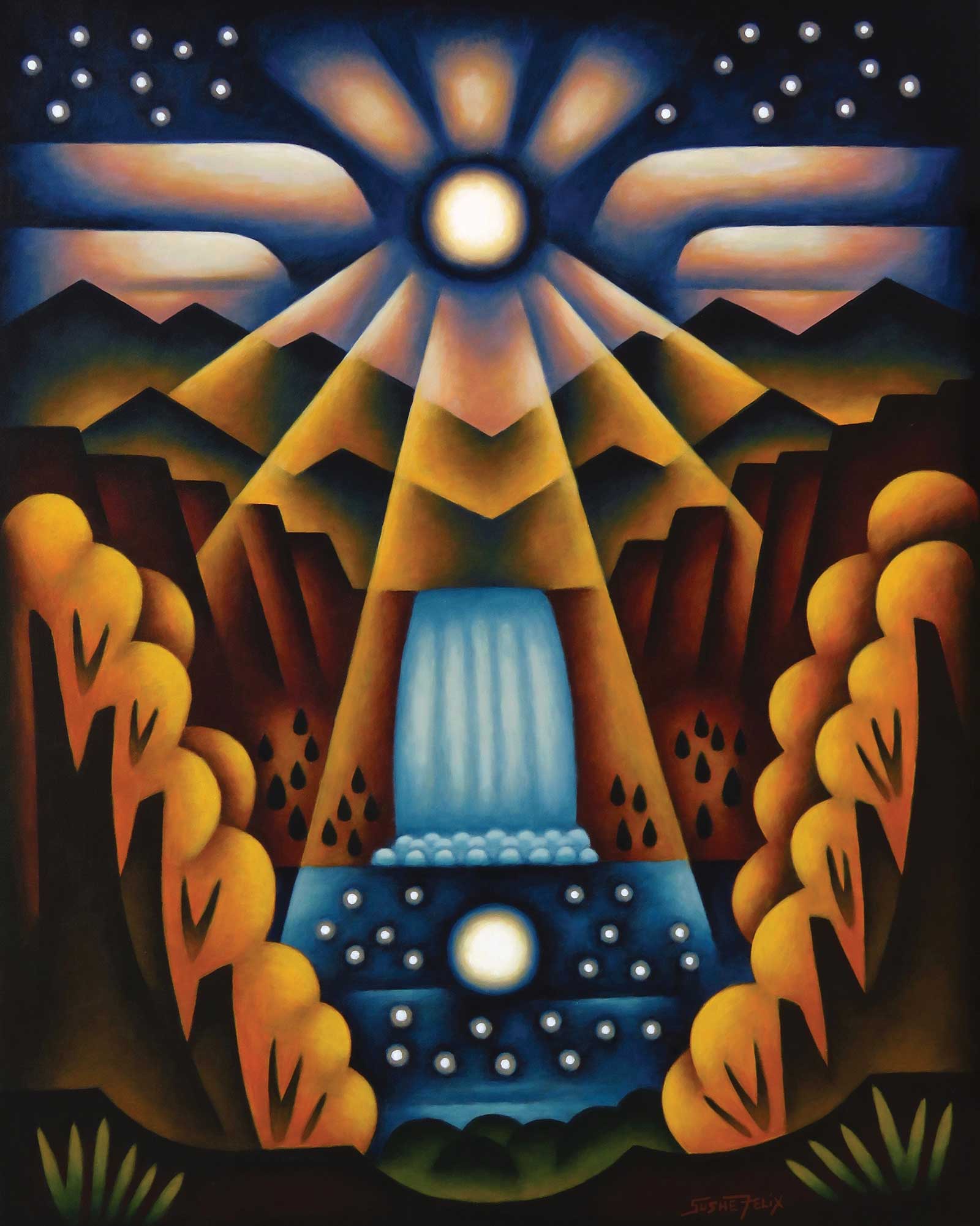 Magical Moonbeam Falls, acrylic on panel, 30 x 24”“They were looking at this landscape and they didn’t want to do it realistically,” says Felix. The artists brought abstraction and open mindedness with them when they came to the Southwest, she tells us. “And so they started stylizing it that way and they called it modernism.”
Picking up the torch from forebearers like Emil Bisttram and Raymond Jonson, Felix has created her own rendition of the Western landscape. Her show, Imaginative Realms, opens October 7 at Manitou Galleries in Santa Fe, showcasing the artist’s mature, dare we say, modern style. 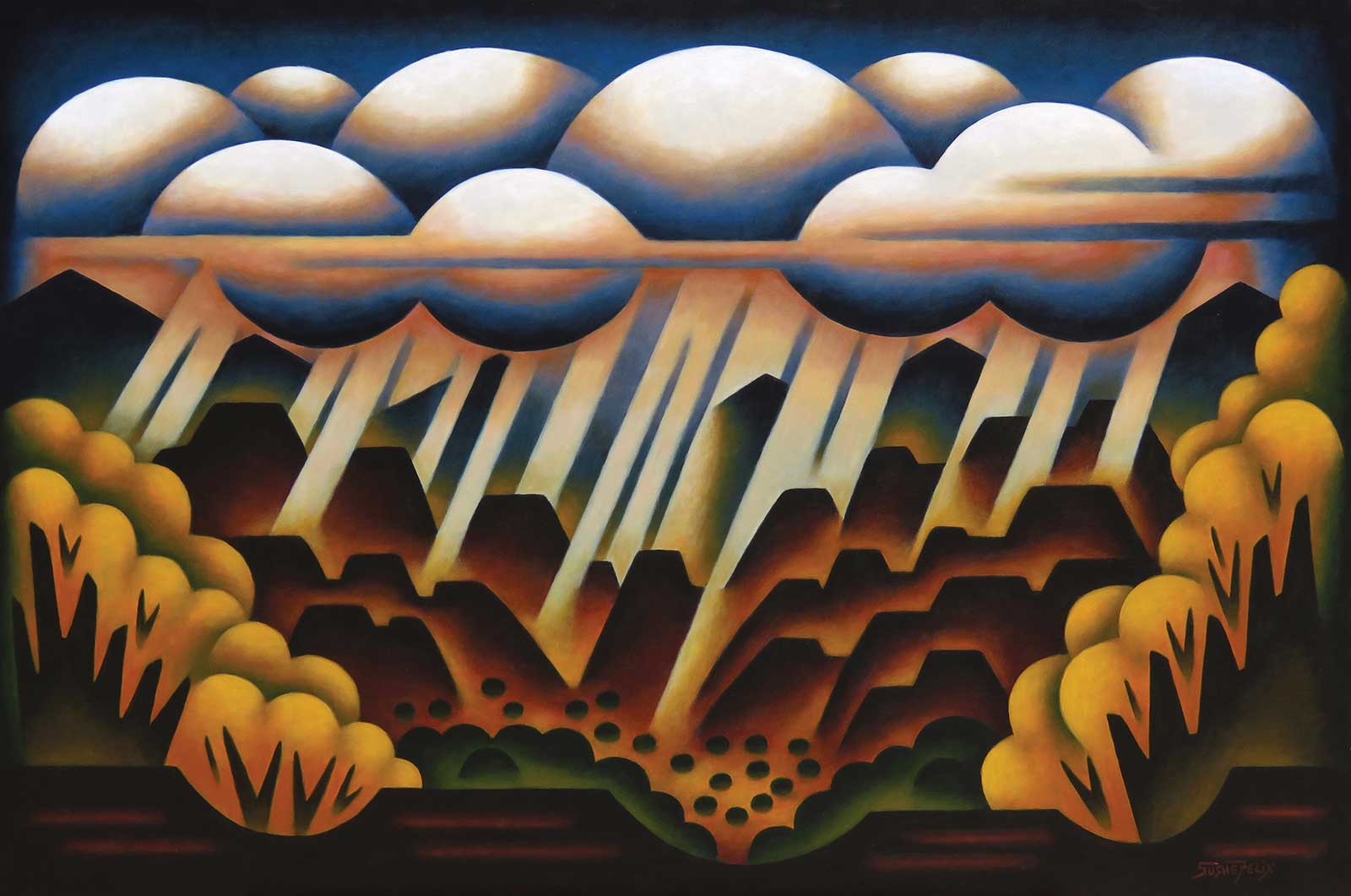 Blessed Rain, acrylic on panel, 24 x 36”
Her smooth, highly modeled scumbling technique was something she learned while assisting fellow Colorado Springs artist Eric Bransby, a muralist who traced his own creative lineage directly to Thomas Hart Benton and Josef Albers. “It really is an old thing,” she says of the dry brushing style popular among the Works Progress artists of the Depression era.
“I must say, there is one other artist—kind of in a subliminal way—that inspired me with the landscape, and that’s Georgia O’Keeffe,” says Felix. “She was great at tweaking the Southwest landscape.” For those familiar with Felix’s cityscapes, a red thread between the two artists isn’t difficult to divine. 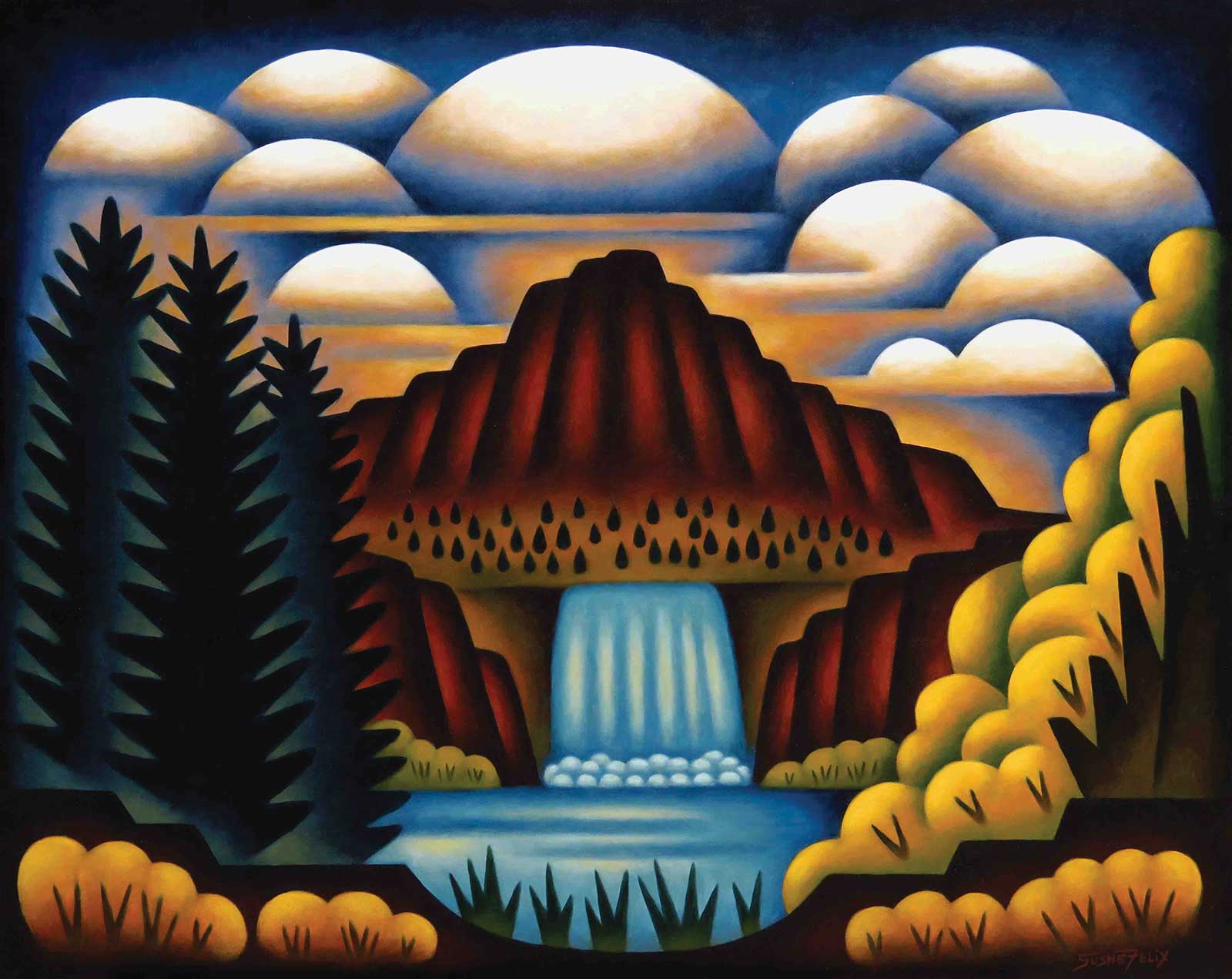 Clear Skies & Crystal Waters, acrylic on panel, 24 x 30”
Early in her 38-year career, Felix experimented with what she calls “constructive abstraction,” later evolving her practice to include representations of real forms with geometric beats. Regarding pure abstraction, she says, “I decided this doesn’t have enough of a heart and soul to it. So I started putting more nature elements into it, and slowly and surely, I realized my heart and soul are connected to earth mother.” 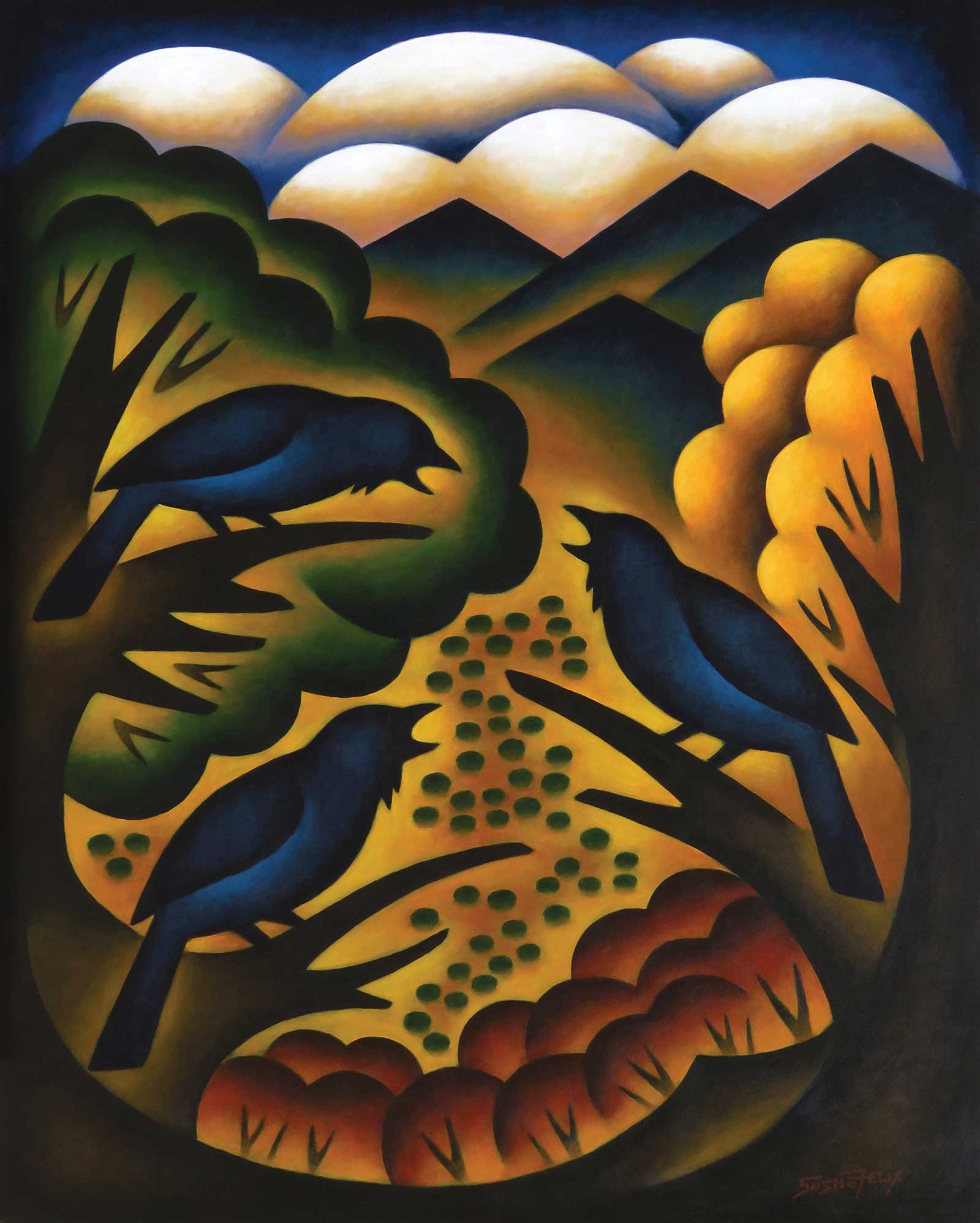 Clamoring Choir, acrylic on panel, 30 x 24”
That connection is clear in her latest body of work, which features luminous mountains, clouds, rainbows and moonbeams. “I wanted them to feel magical. I wanted people to connect to them,” she says, noting how the drought has inspired her to paint more water and lush landscapes. “I just want my work to be very positive and joyful for people to look at,” says Felix. “Put all the joy of life you can into it.” —
Powered by Froala Editor