Many of us grew up in the early days of television with shows on cowboys and Indians, sheriffs and robbers, cattlemen and ranchers—the whole romantic panoply of the West. We may have known the fictional characters but we didn’t know much about the actual characters who peopled the West. Ironically, Westerns were more real to young people in Ireland than to those of us who grew up on the East Coast of the United States—although I was very proud of my Hopalong Cassidy outfit. In the 1950s, beef was Ireland’s main export and cattle were herded down the streets of Dublin, the capital city. 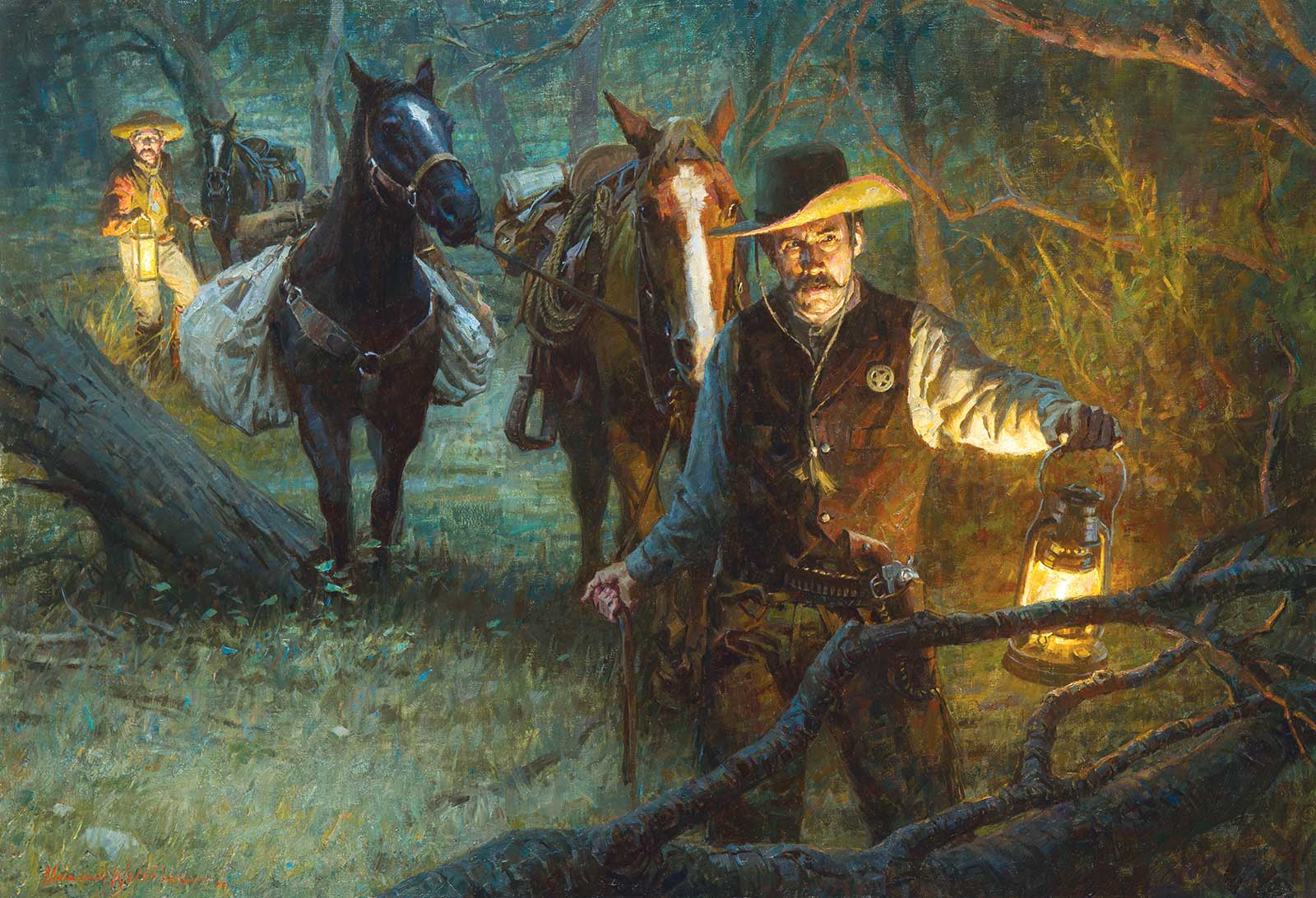 Trailside Galleries, A Marshal’s Pursuit, “Mysterious Dave” Mather, 1880, oil on linen, 25 x 36", by Morgan Weistling. Private Collection. Courtesy the Artist and Trailside Galleries.
Bass Reeves (1838-1910) was a legendary 6-foot-2-inch lawman, the first black deputy U.S. marshal west of the Mississippi. He was born to slave parents in Arkansas and fought in the Civil War with the Confederate son of his master. Reeves escaped into Indian Territory until he was freed by the Emancipation Proclamation in 1863 when he returned to Arkansas and began farming. Because of his experience in Indian Territory, he was recruited as a deputy in 1875. It is said that he arrested 3,000 men and women who had broken federal law.
Aaron Hazel based his portrait of the lawman Bass Reeves II on a 1907 photo in which Reeves is wearing a fancy, checked, three-piece suit. Working from black-and-white photographs allows Hazel to develop his own color palette. Known for his portraits of athletes, Indigenous people and Black cowboys of the West, Hazel conducts research into his subjects, exploring their humanity, before beginning his colorful, thickly impasto’d palette-knife portraits. 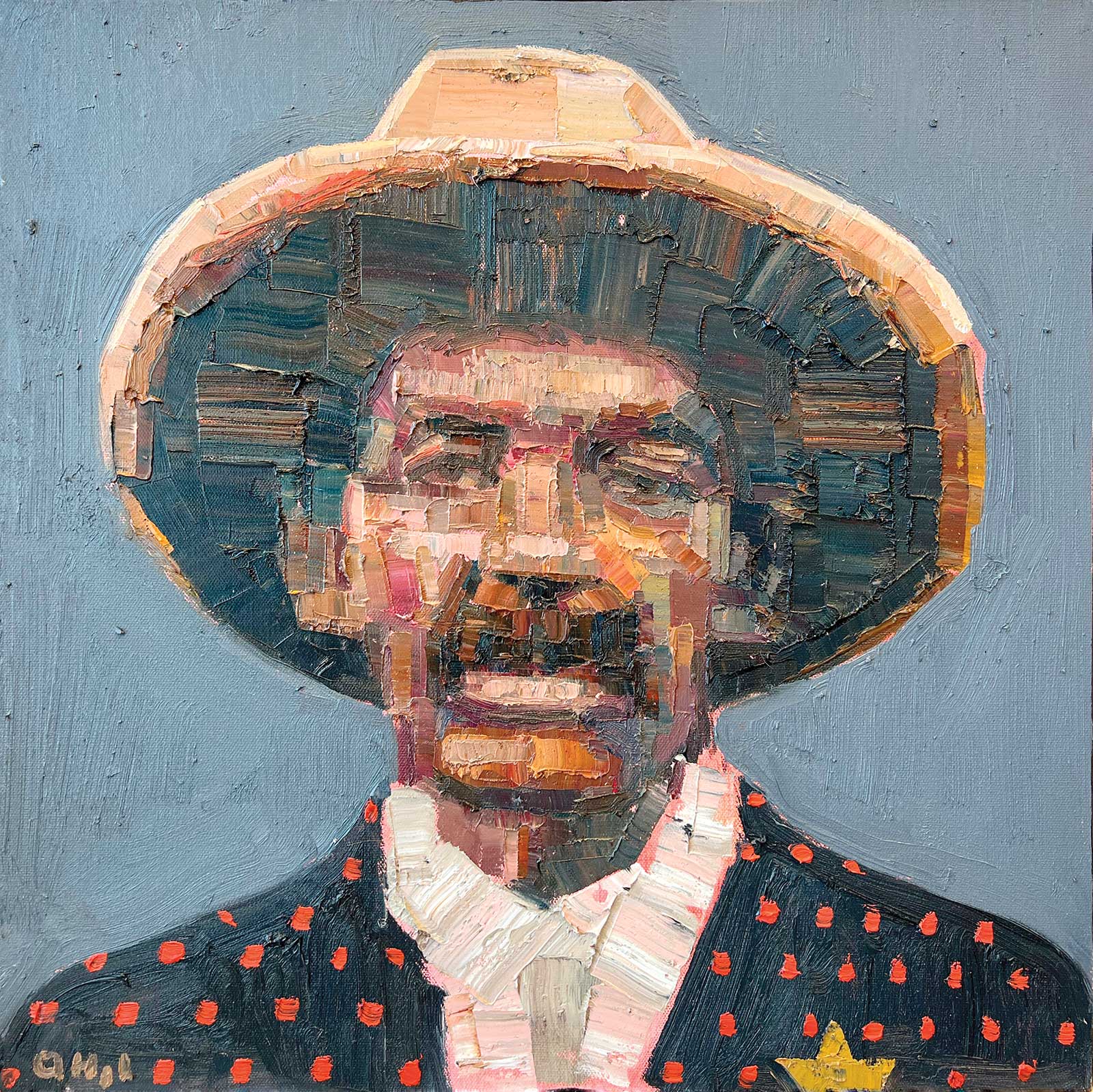 Gallery Wild, Bass Reeves II, oil on canvas, 20 x 20", by Aaron Hazel.
Black-and-white photographs are a great resource for researchers of late-19th century subjects. Among them is an intriguing 1882 portrait of Jesse James (1847-1882), which sold in 2019 at one of Brian Lebel’s Old West Events in Mesa, Arizona. Duded up with slicked back hair and a fancy tie, the outlaw bank and train robber had fought as a Confederate guerilla in the Civil War. After the war, James and his brother Frank formed a gang that robbed stagecoaches and banks that had connections to the North. He was shot in the back of the head by a trusted member of the gang, Bob Ford, who had been invited to live with the James family. Ford had hoped to claim a large reward, was given only a small portion of it, and was later shot and killed by a man who became known as “the man who shot the man who shot Jesse James.”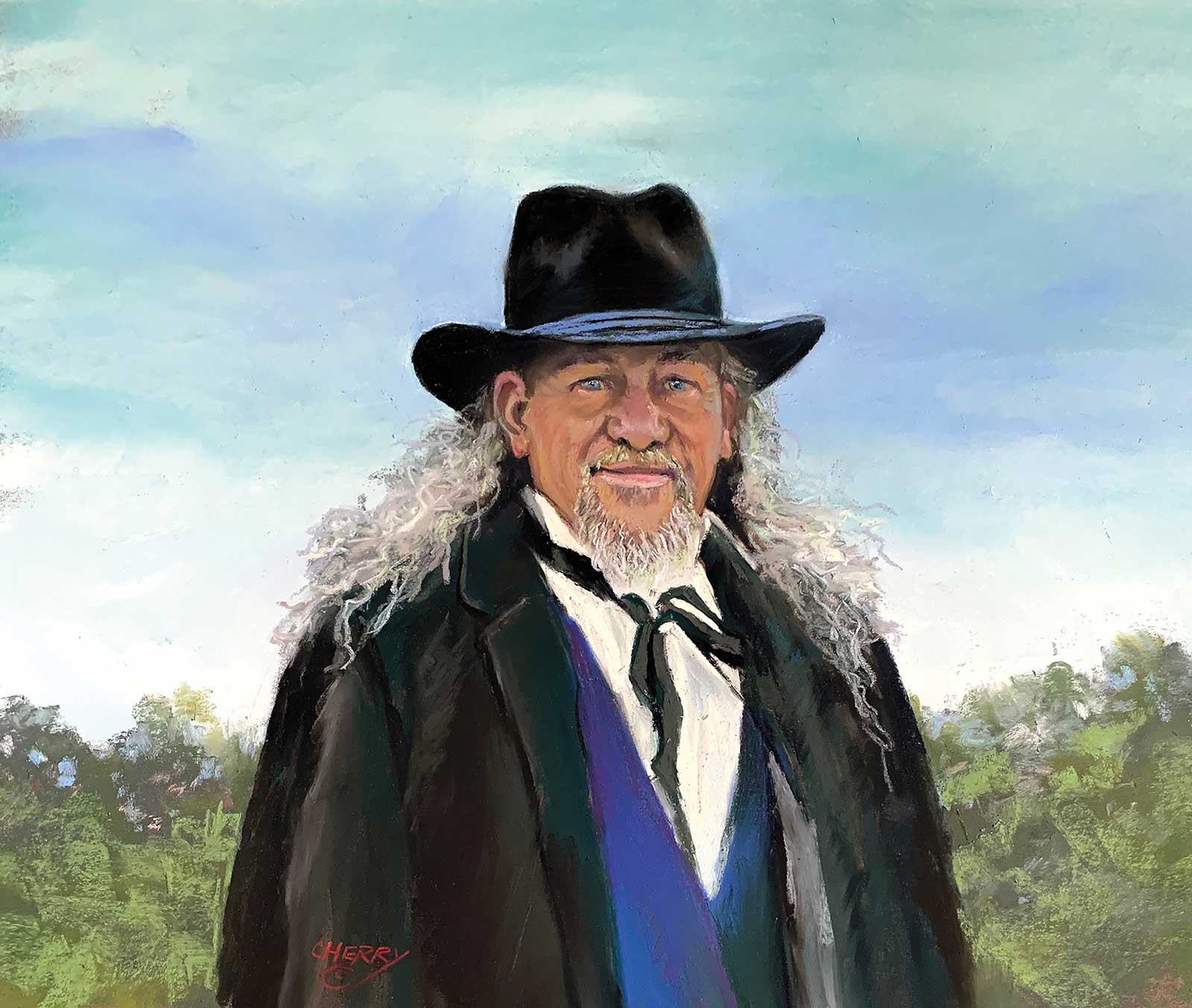 Mary Ann Cherry, Always an Ace up His Sleeve—Riverboat Gambler, pastel, 14 x 17"
Morgan Weistling was recognized for his portrayals of the lawmen of the Old West by being named an honorary deputy sheriff, complete with a badge, by Florida’s Lee County Sheriff’s Department. He describes his painting A Marshal’s Pursuit, “Mysterious Dave” Mather, 1880. “I first learned about ‘Mysterious Dan’ from the gentleman who posed for me. He told me that Wild West historians have often told him of the close resemblance he bears to Mather. I then began researching more and found that he served as a deputy marshal in various places but I was inspired by one story of when he was living in Nevada. While serving as assistant marshal, he and his boss were involved in a shootout with four men. The marshal was killed and Mather (1851-1885) became acting marshal. This painting depicts the manhunt for the two that got away after the shooting. I enjoy depicting real stories of the Old West and Mather’s personality (that earned him his nickname), inspired the more dramatic lighting and scenario here that draws the viewer into the painting.”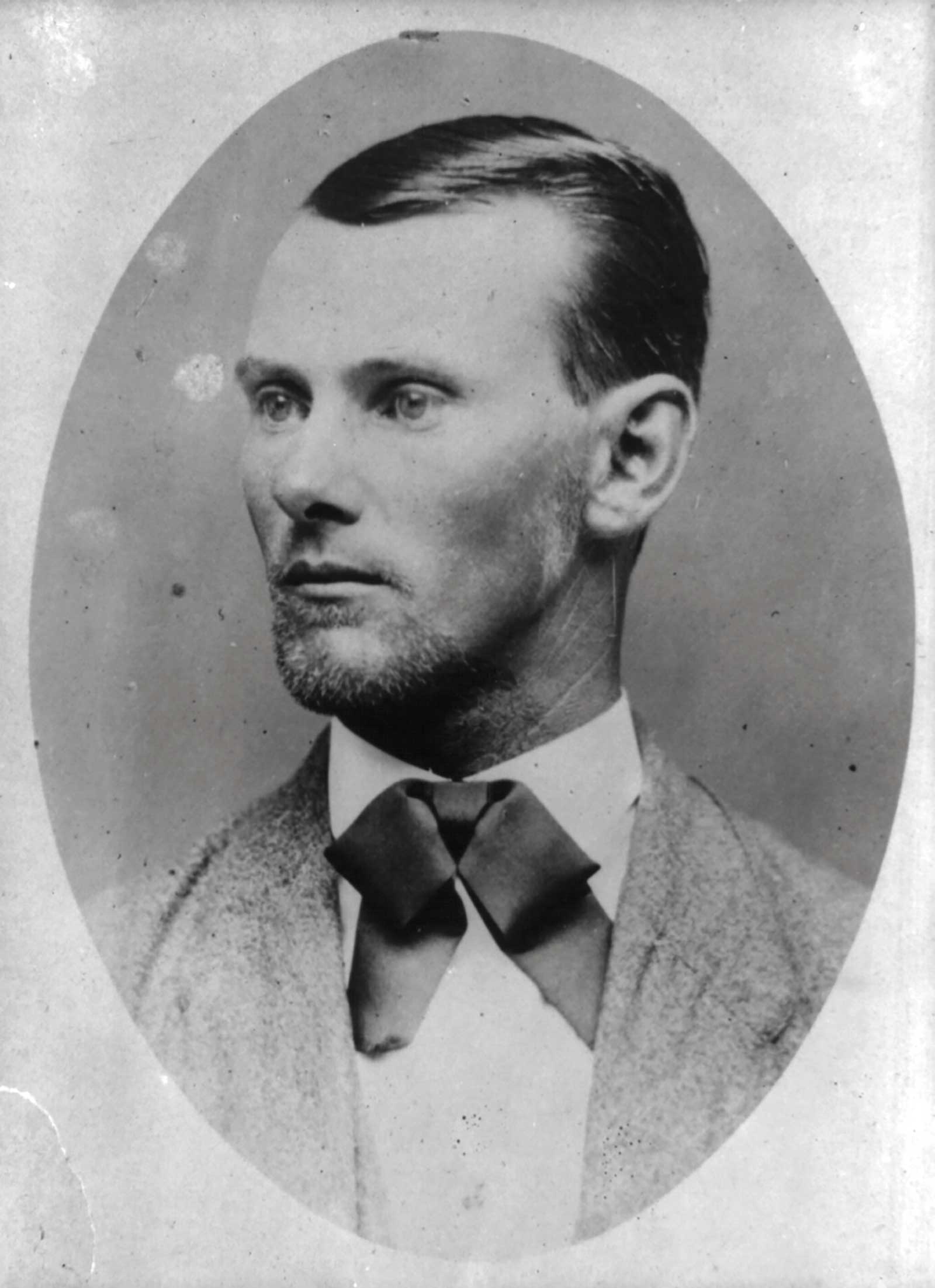 Brian Lebel Old West Events, Jesse James, ca. 1822, photograph. Courtesy Library of Congress Prints and Photographs Division, Washington, D.C., and Brian Lebel Old West Events.
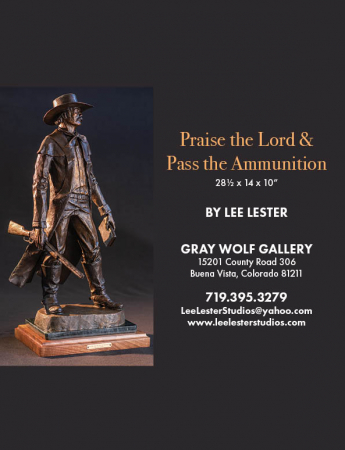
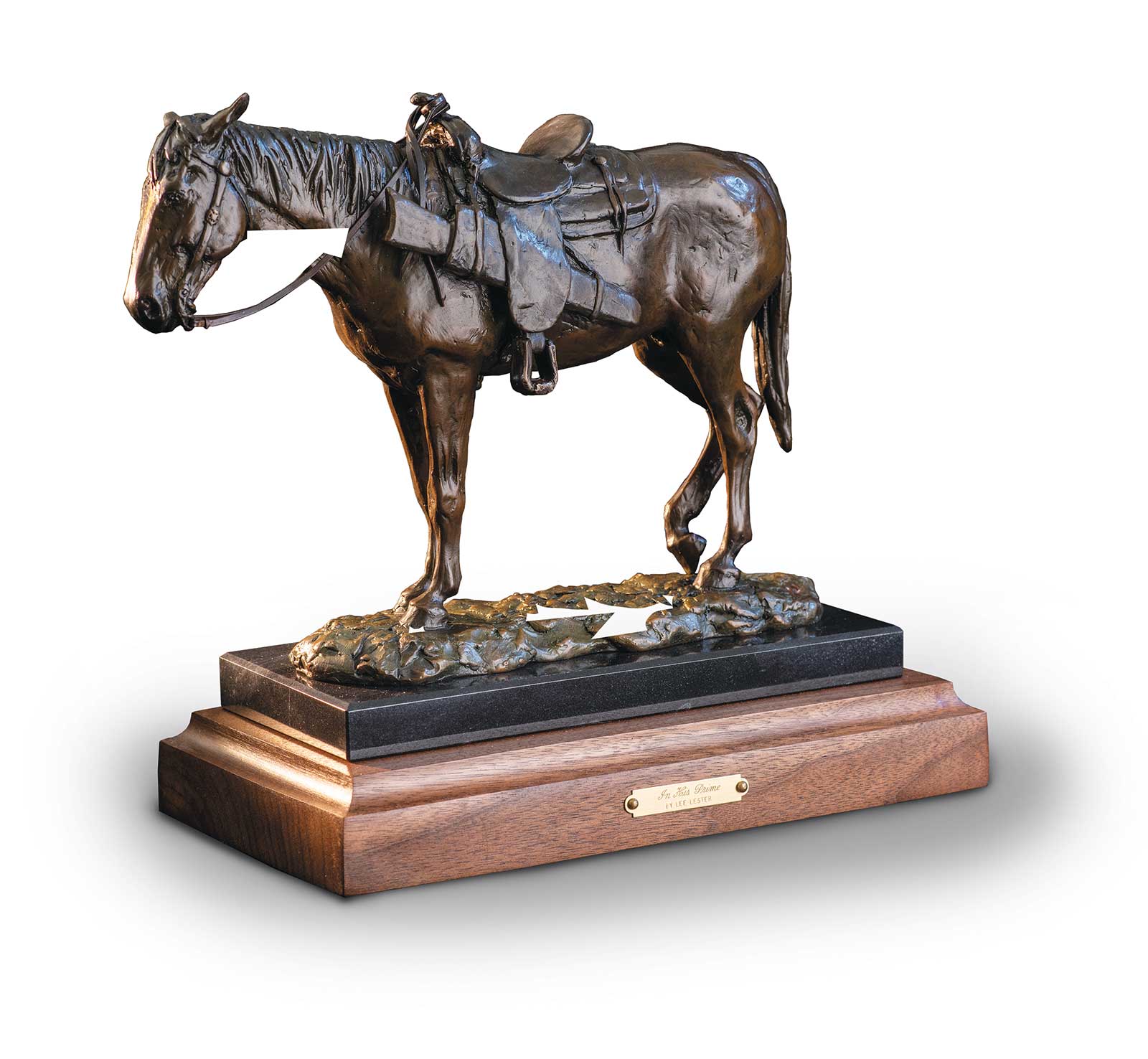 Lee Lester, Rode Hard and Put Out Wet, bronze
Another artist that is exploring the role of law and order in the West is Lee Lester, an artist, hunter and fishing guide out of Colorado. His art spans half a century and many pieces can be seen in collections all around the world. His career, formed by his expertise as a big-game hunter and guide, began early in his life on the high plains of the Rockies. Today, his studio is in central Colorado. “Early in adult life I studied at Denver’s Rocky Mountain School of Art—drawing, painting, sculpture, both human and animal anatomy, as well as landscape painting,” he says, adding that he credits God for his talent. “Composition, drawing, color harmony…the foundation of a piece of art, these are the elements I am constantly working to improve. My intent is to express the essence or spirit of what I see in my subjects and portray it in such a way that my audience will sense the same spirit.”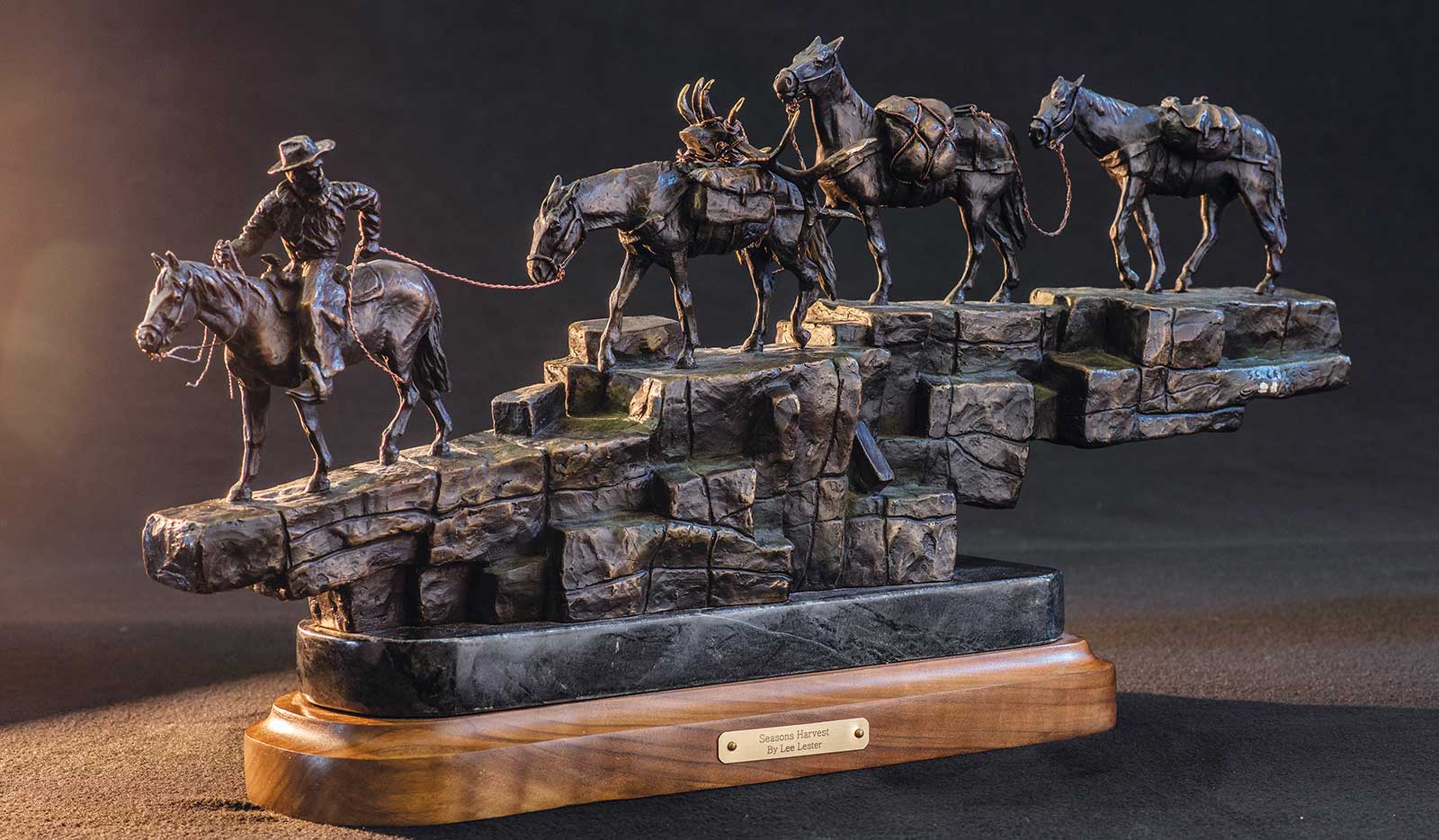 Lee Lester, Packin Out, bronze, 6 x 24"
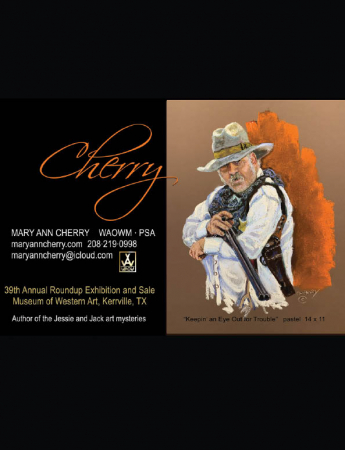
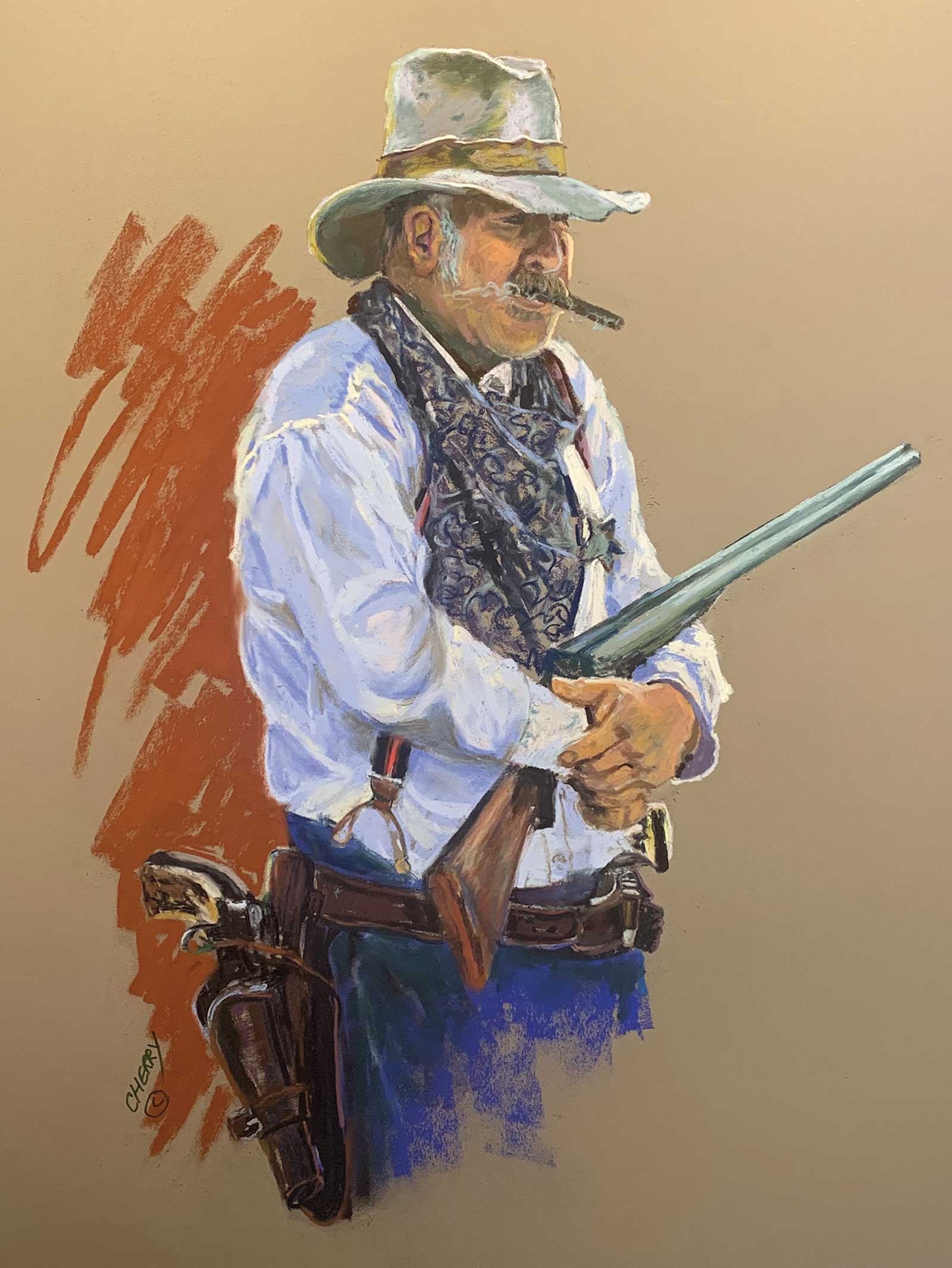 Mary Ann Cherry, Waiting for All Hell to Break Loose, pastel, 24 x 18"
Another artist exploring the subject of law enforcement in the Old West is Mary Ann Cherry, who has a close connection to this subject matter. “My granddad, a saloon owner in the 1800s, was one of Montana’s Rosebud Vigilantes. It was a vicious group in a sense—many would say there was only a hair’s width difference between the outlaws and the lawmen of the Rosebud ‘hang’em high’ vigilantes,” Cherry says. “Handed-down family stories of the Old West spiked my interest in painting characters from the era. I create the book covers for my brother, an author of historical Westerns. It is challenging since one line can make or break a portrait, and when creating pieces that are historical, research is key. It’s a great deal of fun. My advice to those who would purchase paintings that recreate an era is to buy the piece because you love it and it makes you feel that tug back to the past.” —
Featured Artists & Galleries
Brian Lebel Old West Events
1041 Westend Drive, Suite 107,
Greensboro, GA 30642, (480) 779-9378,
www.oldwestevents.com
Gallery Wild
80 W. Broadway Avenue, Jackson, WY 83001
(307) 203-2322, www.gallerywild.com
Lee Lester Studios
(719) 395-3279, www.leelesterstudios.com
leelesterstudios@yahoo.com
Represented by Grey Wolf Gallery
Mary Ann Cherry
(208) 219-0998, www.maryanncherry.com
Represented by Lost Creek Gallery
517 S. Main (St. Hwy 6), Calvert, Texas 77837
(979) 383-2249, www.lostcreekfineart.com
Trailside Galleries
(307) 733-3186, www.trailsidegalleries.com
Powered by Froala Editor