The Brigham Young University Museum of Art houses the largest public collection of Maynard Dixon (1875-1946) paintings in the world. A selection of those paintings are always on view, but it’s been more than 20 years since it has displayed a majority of the collection together simultaneously as it will be doing over the next year.
What it has never done—what no one has ever done before—is pair Dixon’s paintings with the poetry he wrote throughout his life. By doing so, Maynard Dixon: Searching for a Home, presents a fresh way to see the legendary artist and his artwork.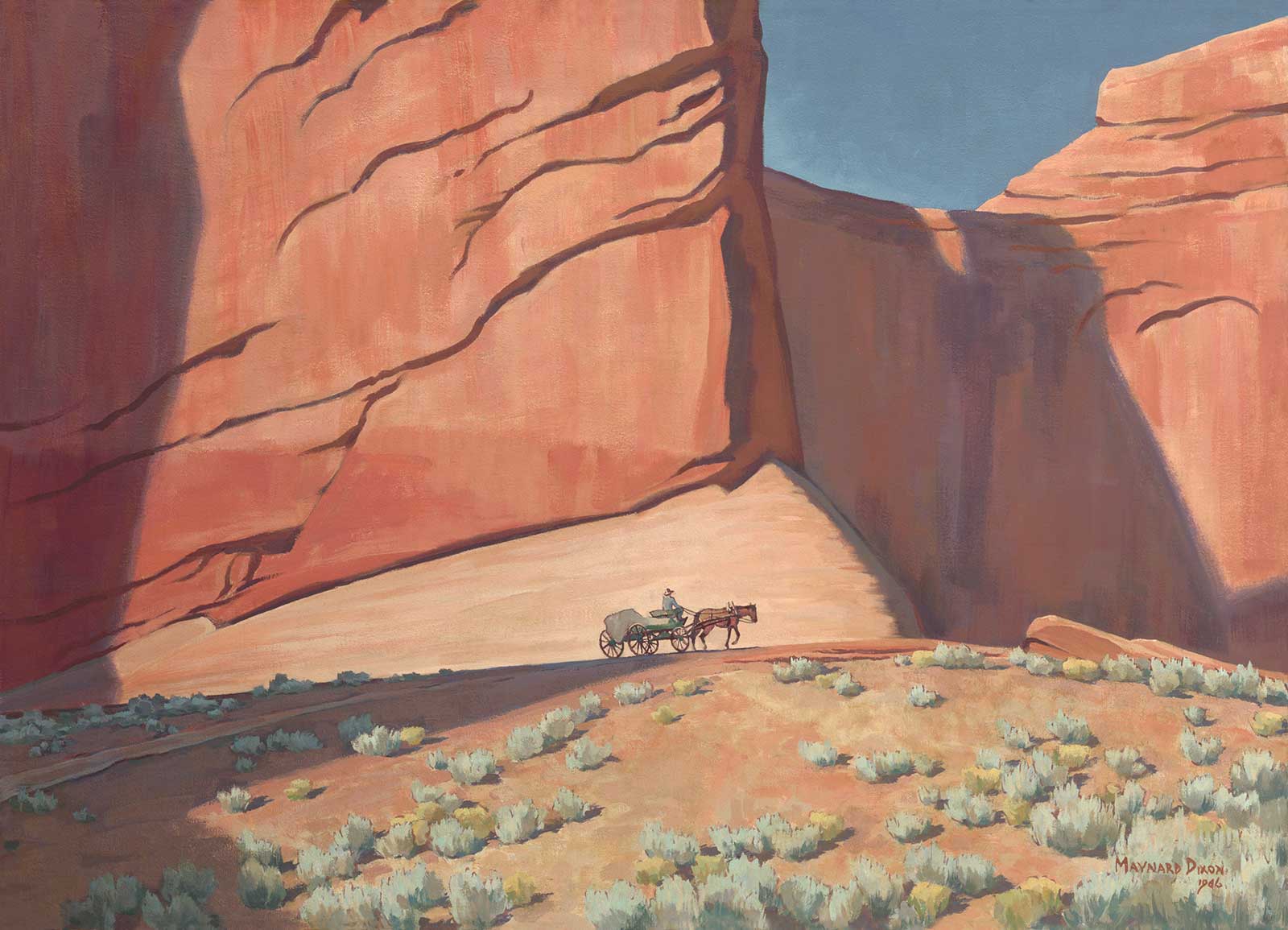 Lonesome Journey, 1946, oil on canvas, 26 1∕8 x 36”. Brigham Young University Museum of Art, gift of Dickman Investment, 1974.
“People who know Dixon and have presented shows on Dixon have certainly been aware of his poetry for a long time, but I don’t think anyone’s ever taken it seriously as a way of appreciating his art,” exhibition curator Kenneth Hartvigsen says. “He wrote poetry that was similar to some of the paintings he’s best known for. Before he paints the West, he is writing poetry about the landforms, talking about mesas, talking about the broad expanse of the blue skies in the western landscape.”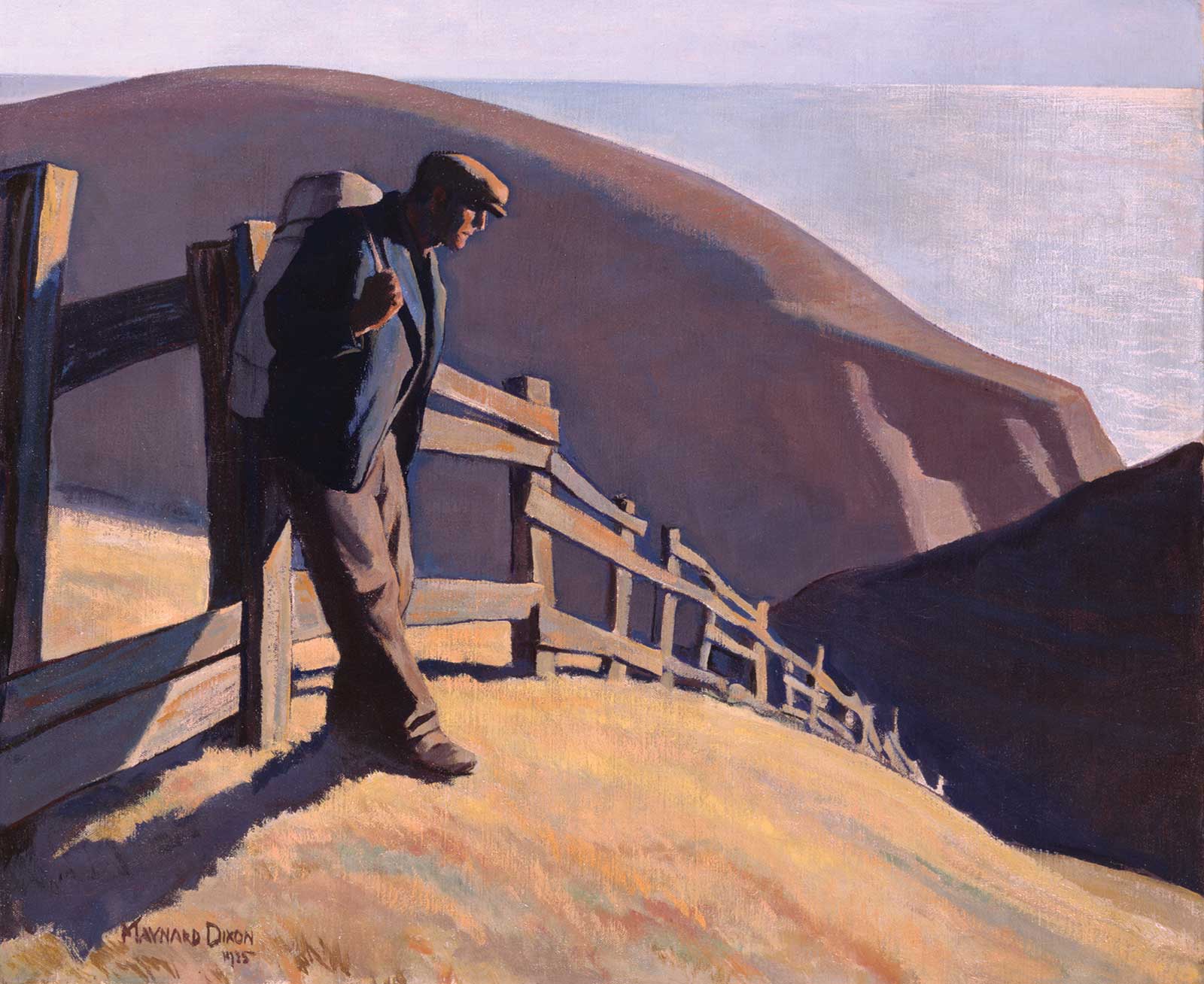 No Place to Go, 1935, oil on canvas, 25 x 30”. Brigham Young University Museum of Art, 1937.
Dixon’s poetry, like his painting, provides more than a description of the landscape, he loads it with emotional content.
“If we read his poetry and then re-engage with his paintings, we can return to the things that he loves to paint having a better understanding of what they meant to him personally,” Hartvigsen says. “That gives a renewed sense of experiencing this landscape not just for its physical beauty, but also for the great, almost spiritual power that it held for Dixon.”
Dixon’s poetry won’t be the only surprise for visitors. Among the 70 pieces on view spanning the breadth of his career are lesser-known social realist paintings created during the Great Depression when he was living in California and married to Dorothea Lange. Clear connections can be seen between her iconic photographs of the era and what he was painting.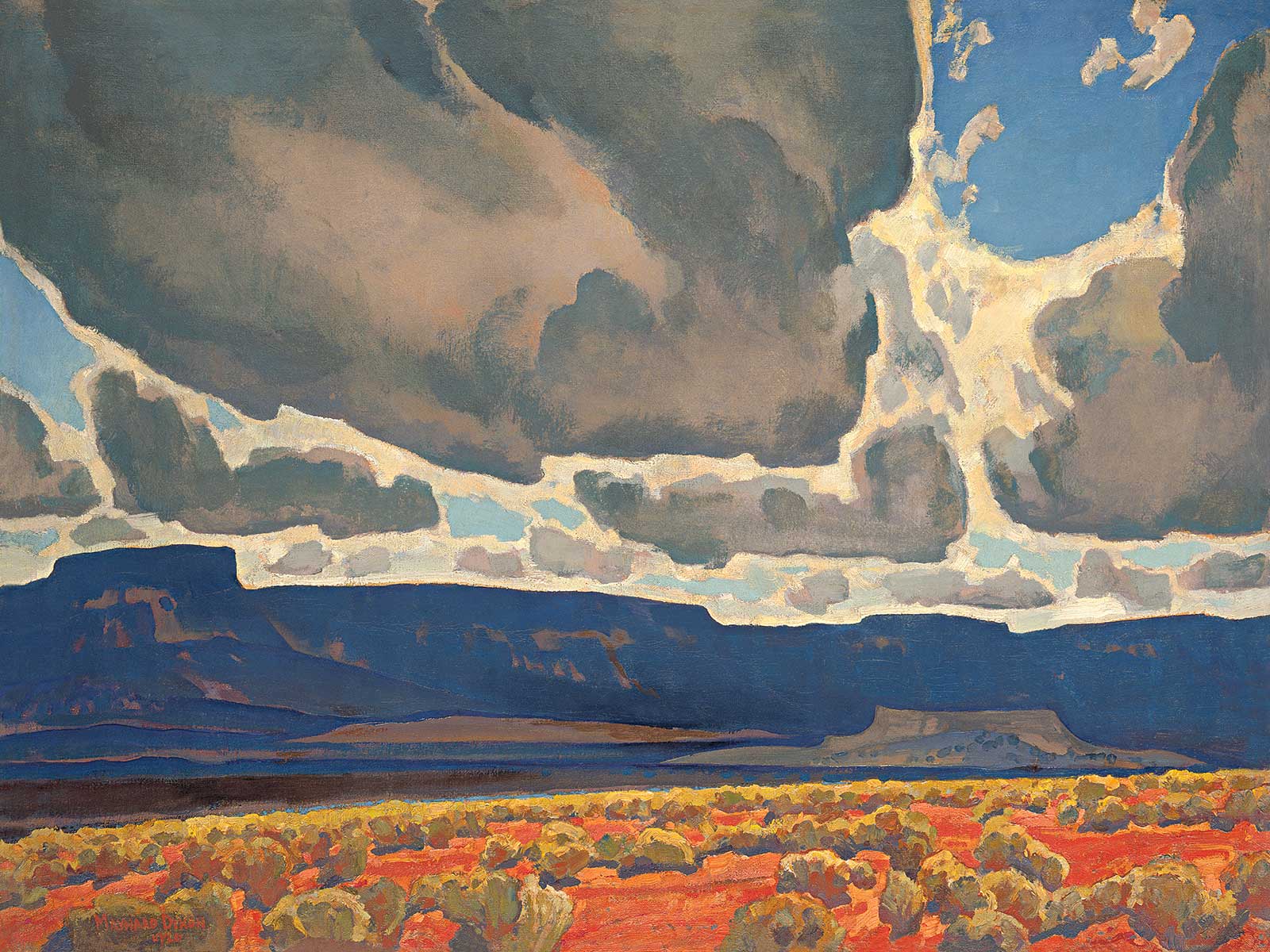 Mesas in Shadow, 1926, oil on canvas, 30¼ x 40”. Brigham Young University Museum of Art, 1937.
Dixon and Lang didn’t merely document the Great Depression, they experienced it. Work for artists dried up the same as it did for everyone else. Their living situation was as precarious as the striking dock workers he painted.
Dixon referred to the subjects of these paintings as “the forgotten men.” Hartvigsen views them as self-portraits. “Looking at these forgotten men that the world was passing by, I think (Dixon) was seeing himself,” he says.
Between his poetry and his paintings of Indigenous people, Mexican Americans throughout the Southwest and Mormon farmers he encountered in Utah, a richer portrait of the artist, his artwork and his era comes into view.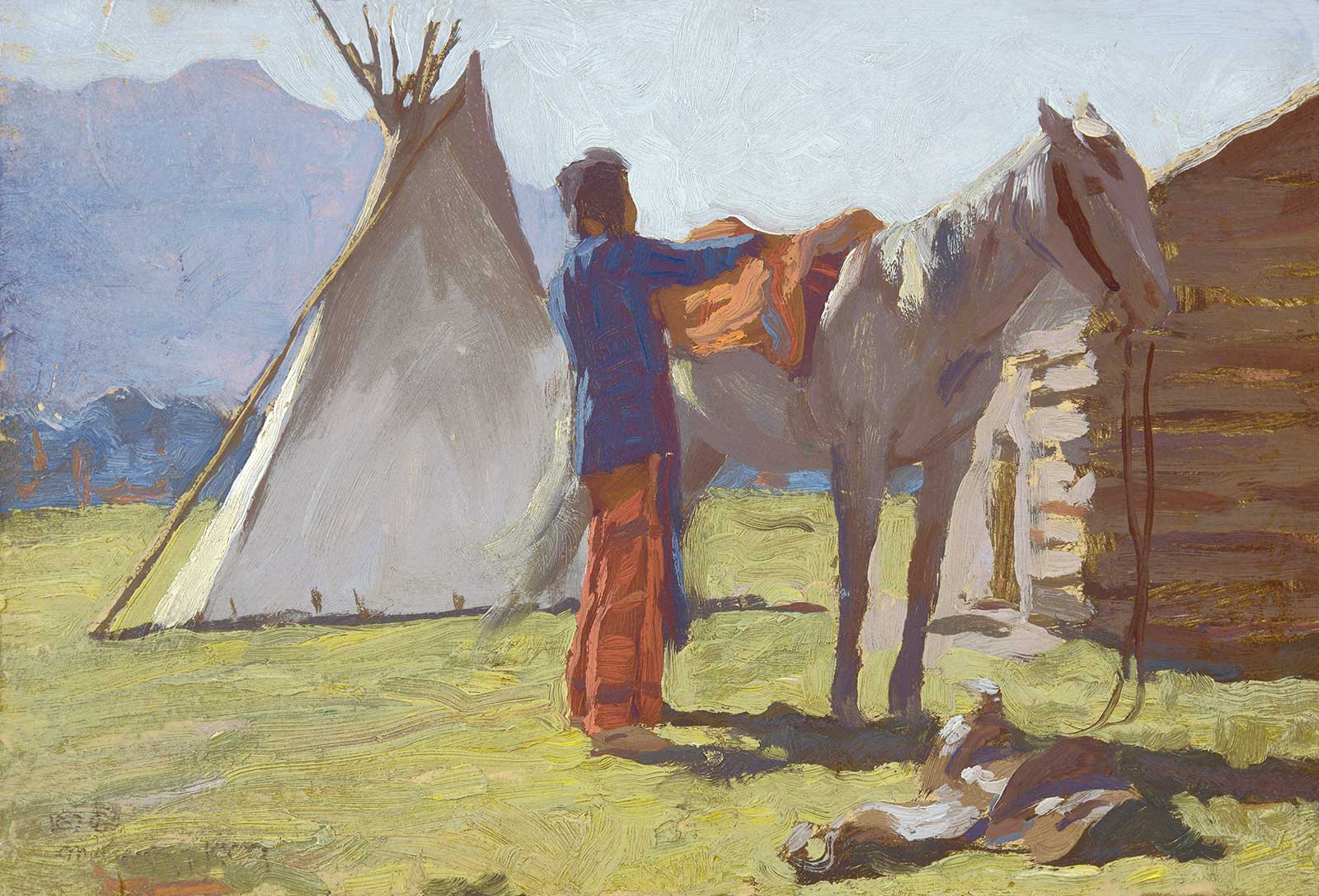 Flathead Indian and Pony, 1909, oil on chipboard, 7 x 10¼”. Brigham Young University Museum of Art, 1937.
“Seeing all of these works together is a wonderful reminder that while we celebrate and champion [Dixon’s] landscape paintings, his Western world was a complicated world,” Hartvigsen says. “It wasn’t just beautiful landscapes, it was also hard working people, it was Native Americans who were being culturally suppressed by oppressive government policies, the Depression that is creating this horrible economic situation for so many Americans. He was really engaging with all of the complicated stories of the West.” —
Maynard Dixon: Searching for a Home
September 30, 2022- September 16, 2023
Brigham Young University Museum of Art
North Campus Drive, Provo, UT 84602
(801) 422-8287, moa.byu.edu
Powered by Froala Editor