Edward Aldrich says he has always loved wildlife and continues to be “enamored of a lot different artists I looked at many years ago at the National Museum of Wildlife Art—artists like Bruno Liljefors and Edwin Landseer,” he says. “Every time I see their work I’m blown away by their abilities—their technique and their way of conveying a mood.” The work of contemporary artists such as “Tim Lawson, Dan Sprick and Jeremy Lipking, [they] put their paintings together in a way that’s just jaw dropping.”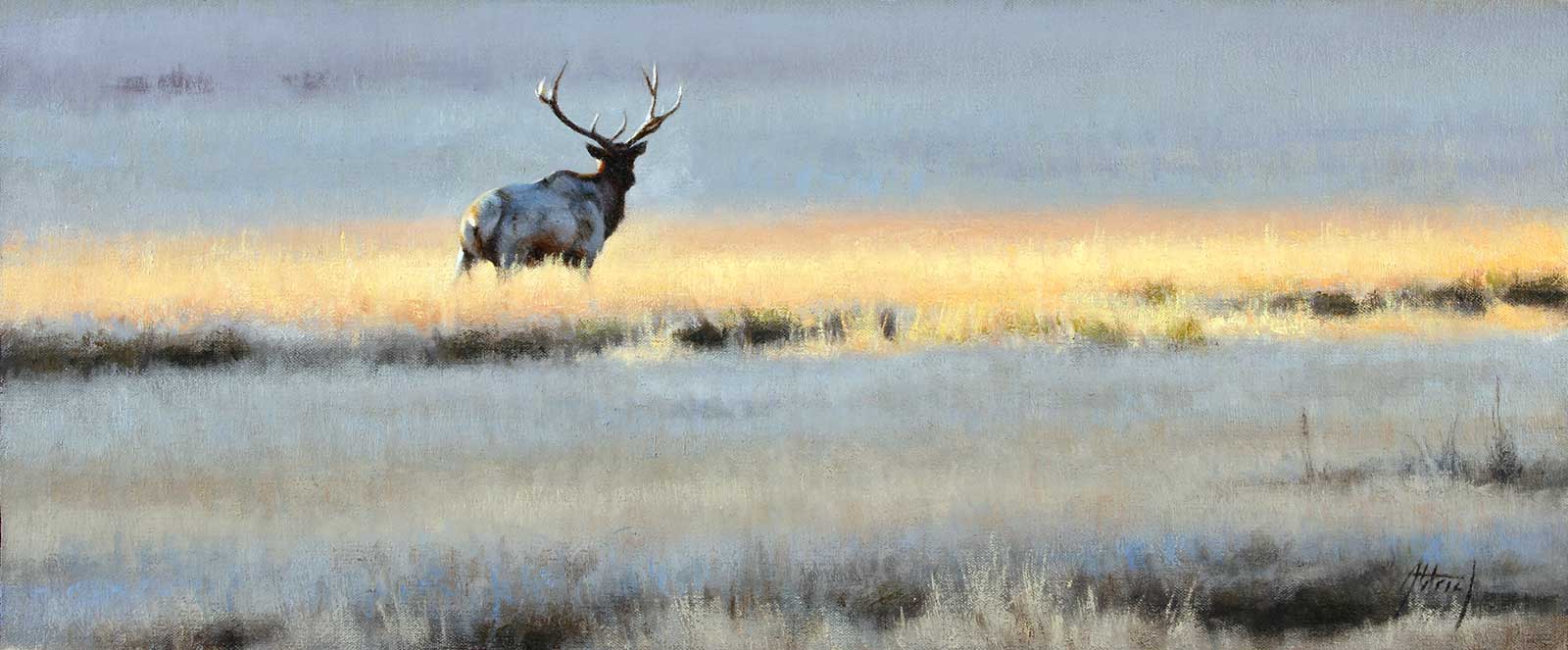 A Light on the Sea of Grass, oil, 10 x 24”
Aldrich demonstrates his own jaw-dropping technique in an exhibition of his latest work, Wildlife Encounters, at Sorrel Sky Gallery in Durango, Colorado, October 21 through 31.
He strives to portray the “inherent being” of his subjects in natural settings with subtle lighting illuminating their unique colors, textures and forms.
In A Light on the Sea of Grass, the elk is the real subject, but in this graphic composition the shaft of light across the grass is the first thing to catch the eye. “I had the image around for years,” he says, “and I would pass it by. The light gave it a whole new life.” Although the shaft of light dominates, the elk becomes an integral part of the environment as the points of its horns are picked out by the same light.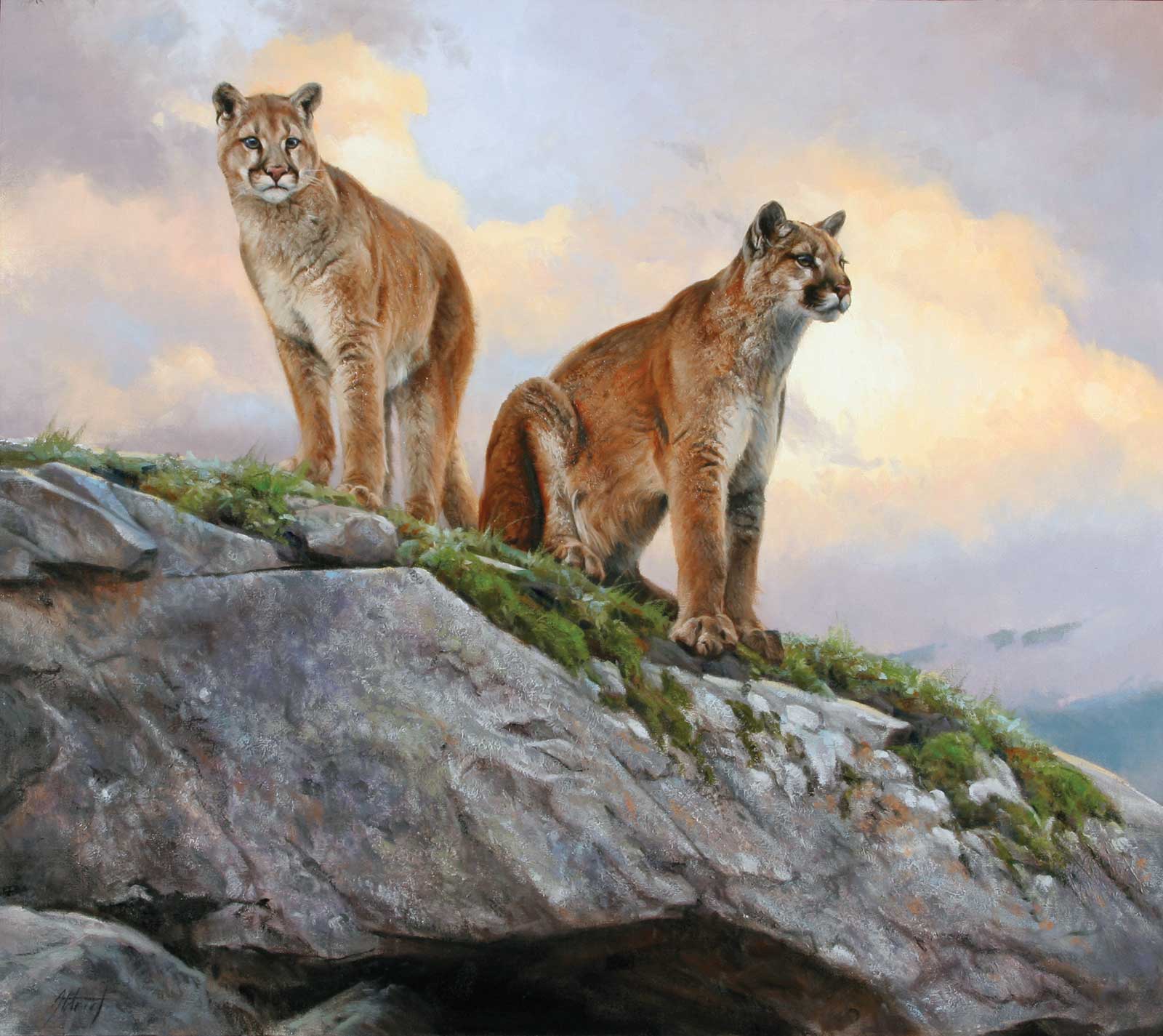 Siblings, oil, 32 x 36”
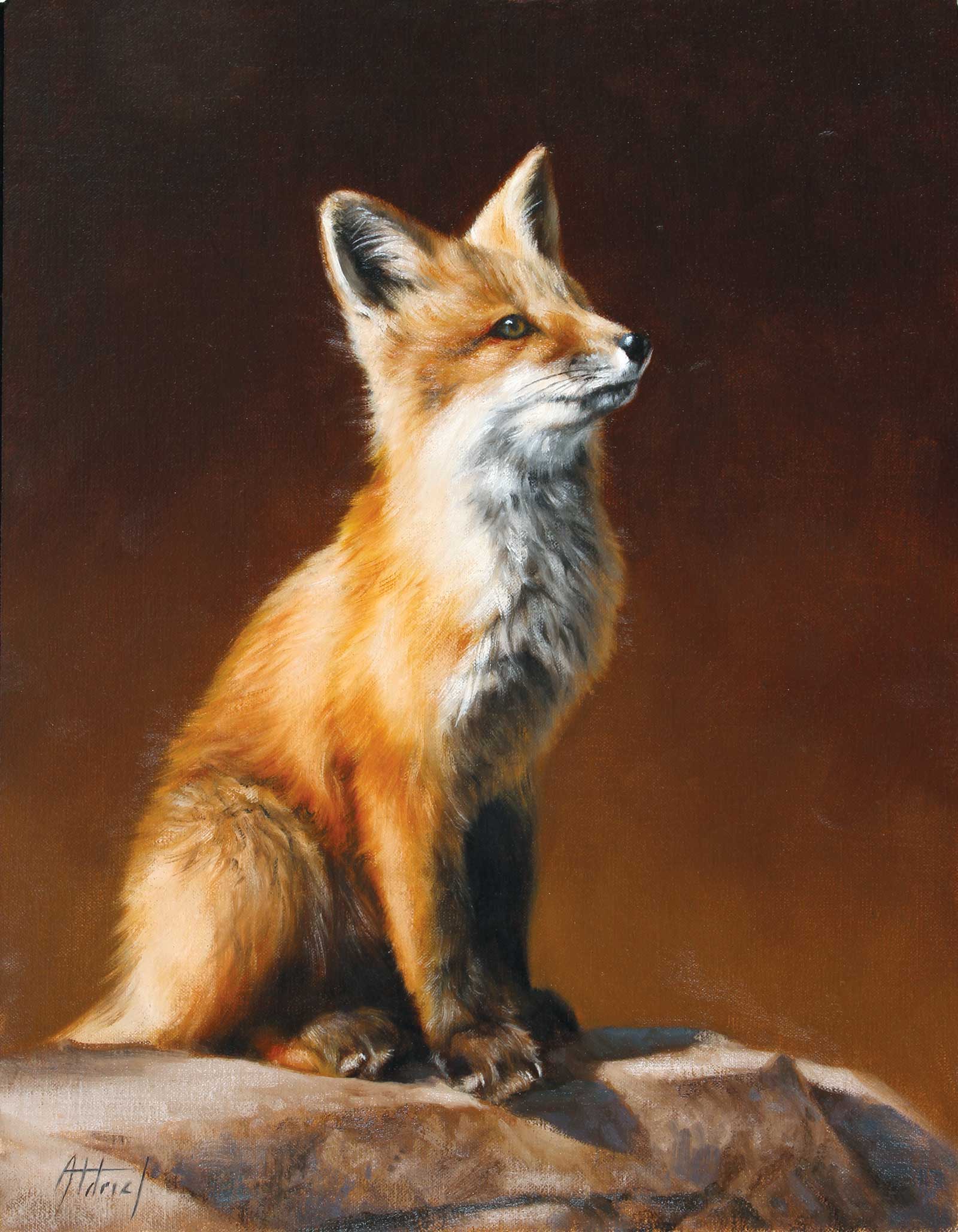 Fox Kit, oil, 18 x 14”
Aldrich photographs in the wild and also draws animals at the zoo, sometimes just capturing a few strokes of a moving animal. “Photography is a huge help,” he says, “but it can be a crutch.”
Siblings is an assemblage from a number of sources resulting in a dramatic composition.
“I started with the rock,” he explains. “I like its shape, the textures of the rock and the mosses and the dark cave-like form at the bottom. It’s so interesting, I wanted to build a painting around it. I wondered what would be sitting on the rock and the cougars seemed appropriate.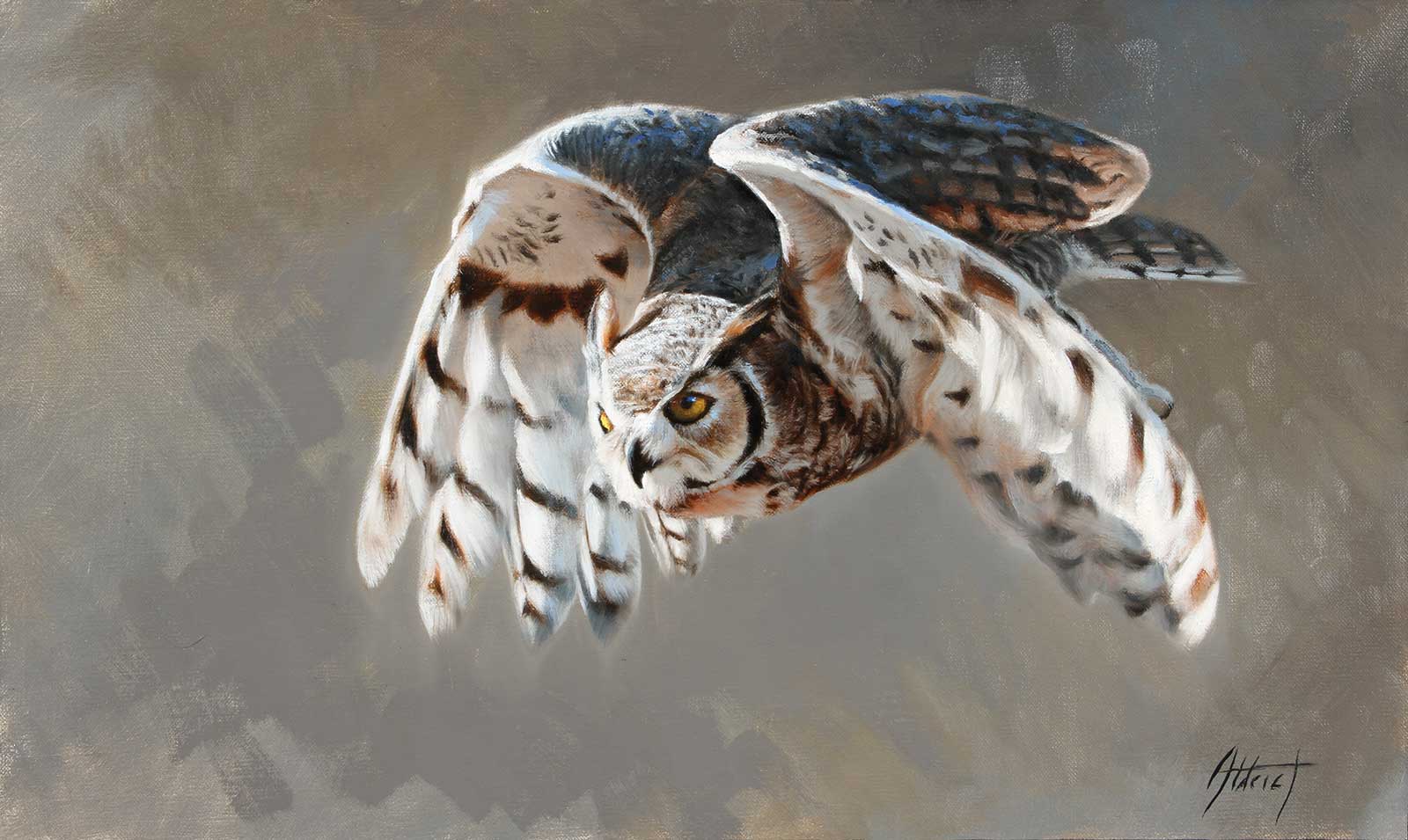 Silent Wings, oil, 12 x 20”I wanted to give some impact to the background and added an image I had of the roiling clouds. They heighten the sense of drama. It’s so much fun to work on the texture of the fur that follows the form of the animal and then to build up impasto on the top to enliven the surface.” —
Powered by Froala Editor