Jim Fowler, the zoologist and host of TV’s Wild Kingdom, said, “The continued existence of wildlife and wilderness is important to the quality of life of humans. Our challenge for the future is that we realize we are very much a part of the earth’s ecosystem, and we must learn to respect and live according to the basic biological laws of nature.”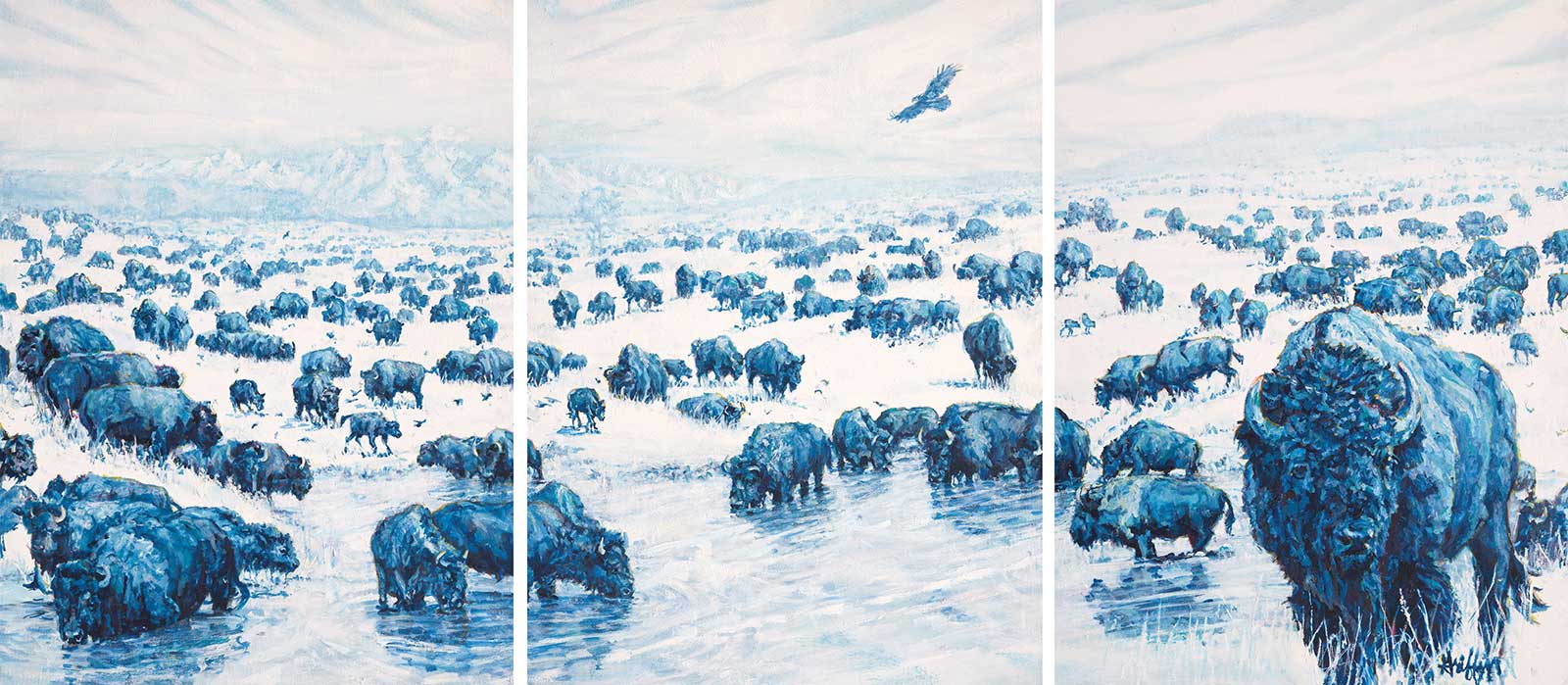 Gallery Wild, 1859 (triptych), oil on board, 24 x 54”, by Patricia A. Griffin.
Animal habitat and wildlife itself have been diminished by hunting, community expansion and natural phenomena. Recently, near Santa Fe, New Mexico, the Calf Canyon-Hermits Peak Fire burned through an area larger than the city of Los Angeles.
Kat Kinnick makes paintings, prints and pottery featuring the flora and fauna of her native northern New Mexico. She lives within sight of the smoke plumes and pyrocumulus clouds of the Calf Canyon-Hermits Peak Fire.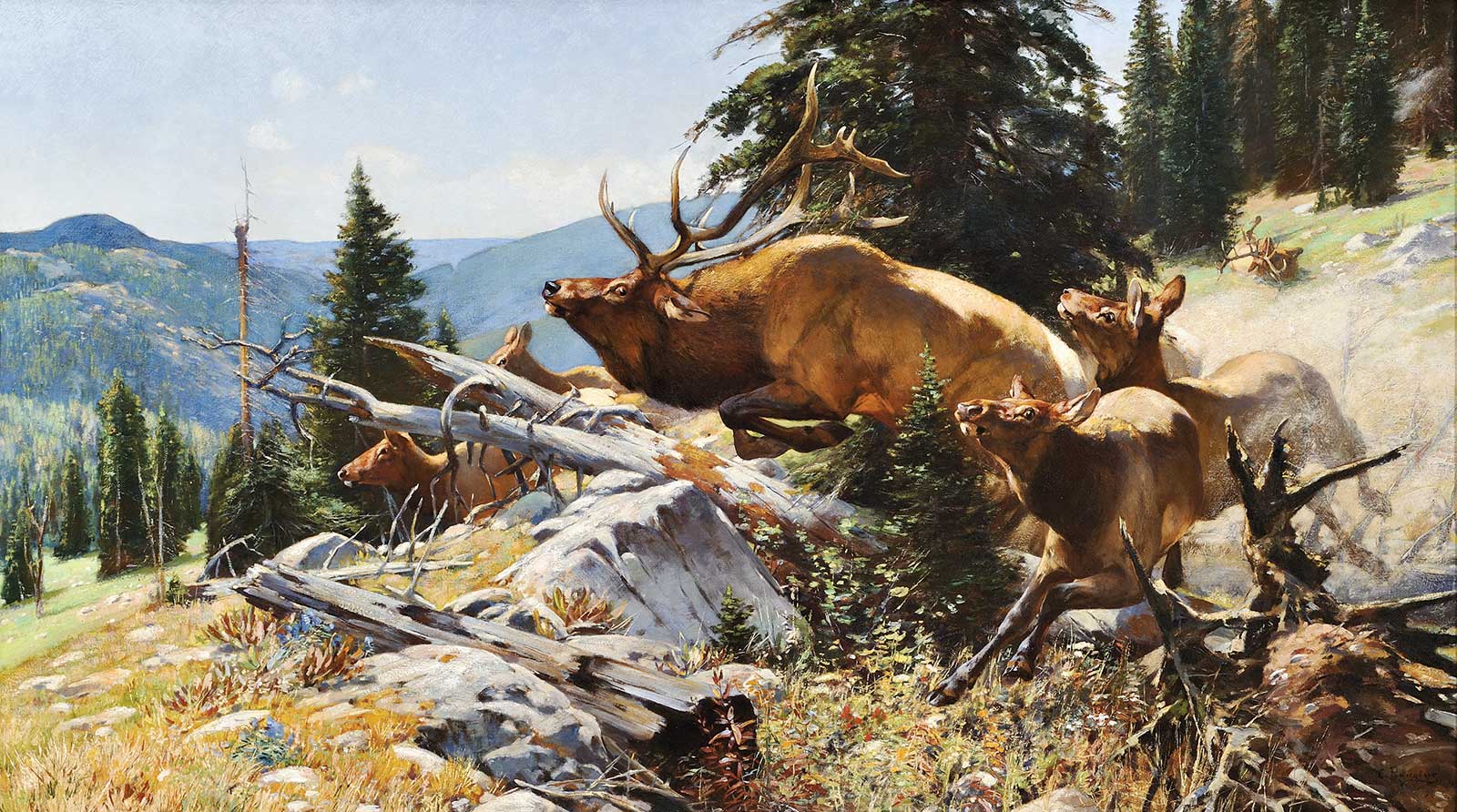 National Museum of Wildlife Art, The Stampede, 1899, oil on canvas, 26 x 46", by Carl Rungius (1869-1959). Purchased with Funds Generously Donated by a Consortium of Anonymous Donors, National Museum of Wildlife Art. © Estate of Carl Rungius.
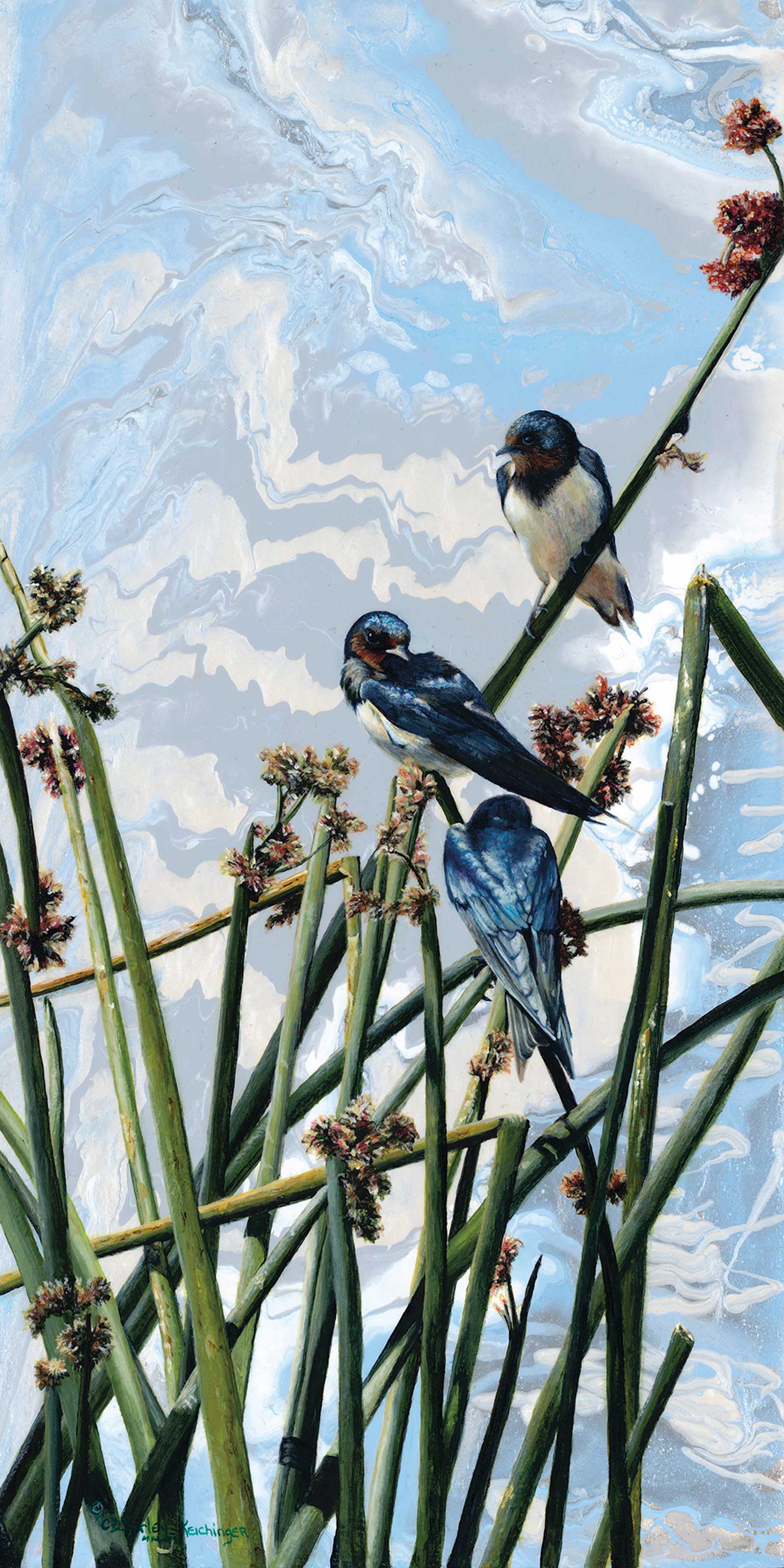 Cindy Sorley-Keichinger, Swallow Dream, acrylic, 18 x 9"
Her painting, Wildfire Season in the Southwest, 2022, depicts natural predation and man-made destruction of human and animal habitat. Through her art, she invites the viewer “to strengthen a kinship with wilderness, to instill a sense of abundant beauty and a comfort of being at home and belonging. The paintings emerge from a love of wildlife, craft and reverence for the natural world. What are we going to do throughout this time of cultural and ecological erasure as we’re losing species, ecologies & wilderness?”
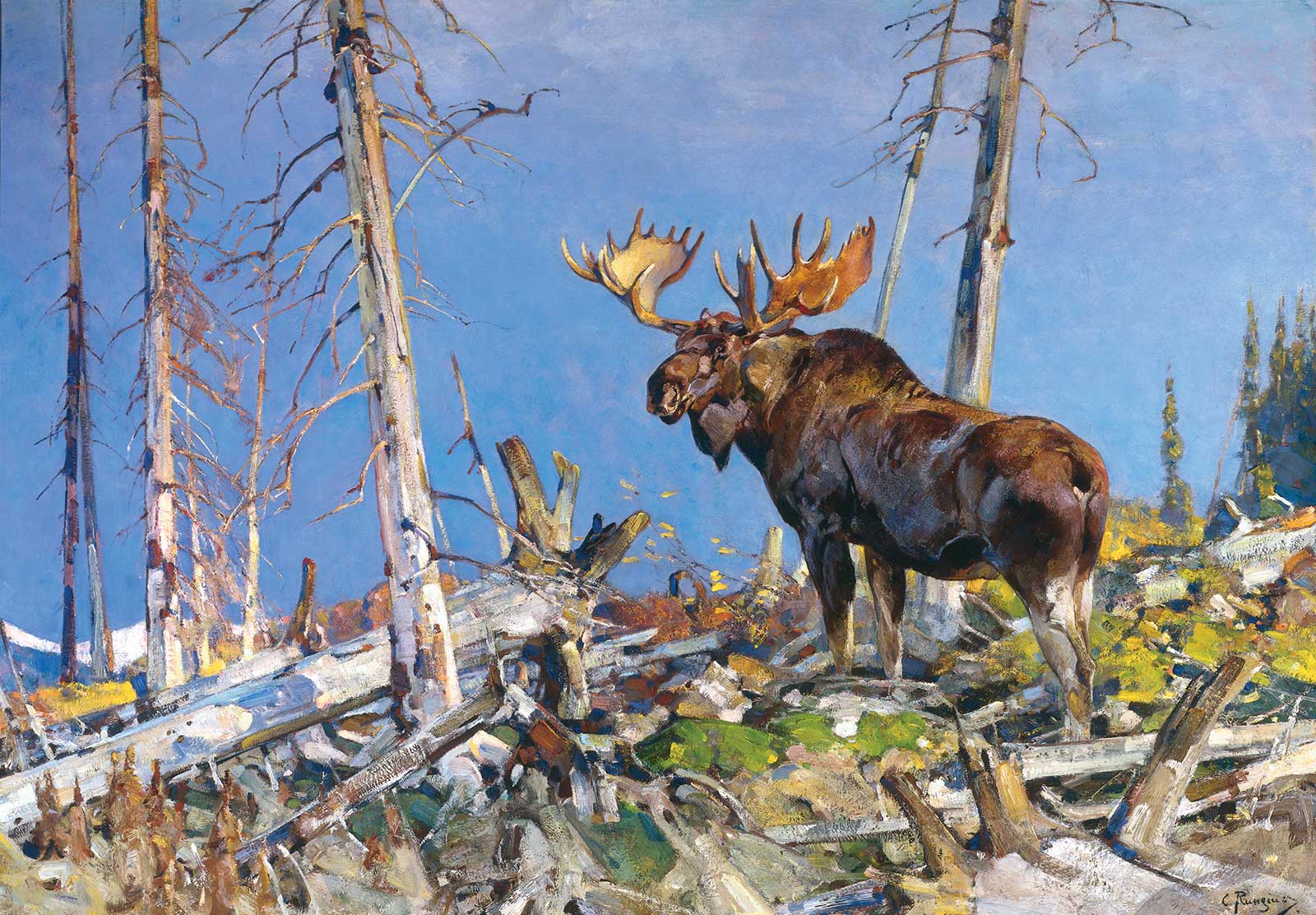 National Museum of Wildlife Art, Northern King, 1926, oil on canvas, 42 x 60", by Carl Rungius (1869-1959). JKM Collection, National Museum of Wildlife Art. © Estate of Carl Rungius.
In the 19th century, “erasure” was a matter of policy. Bison once covered the Great Plains, 50 to 60 million of them peacefully grazing and supplying Indigenous people with food, clothing and the “canvas” for their art.
Patricia A. Griffin, who has studios in the Tetons of Wyoming and the Poconos of Pennsylvania, points out other benefits of bison. She writes, “Bison are a critical component of carbon sequestration and have the ability to continually regenerate the land through their movement which causes aeration of the soils, trampling and reseeding of grasses and fertilization from bison waste. The native prairie grass root structure grows 11 feet deep, pulling carbon down through the roots and trapping it into the soil. Carbon sequestration is one of the critical environmental needs we face today.”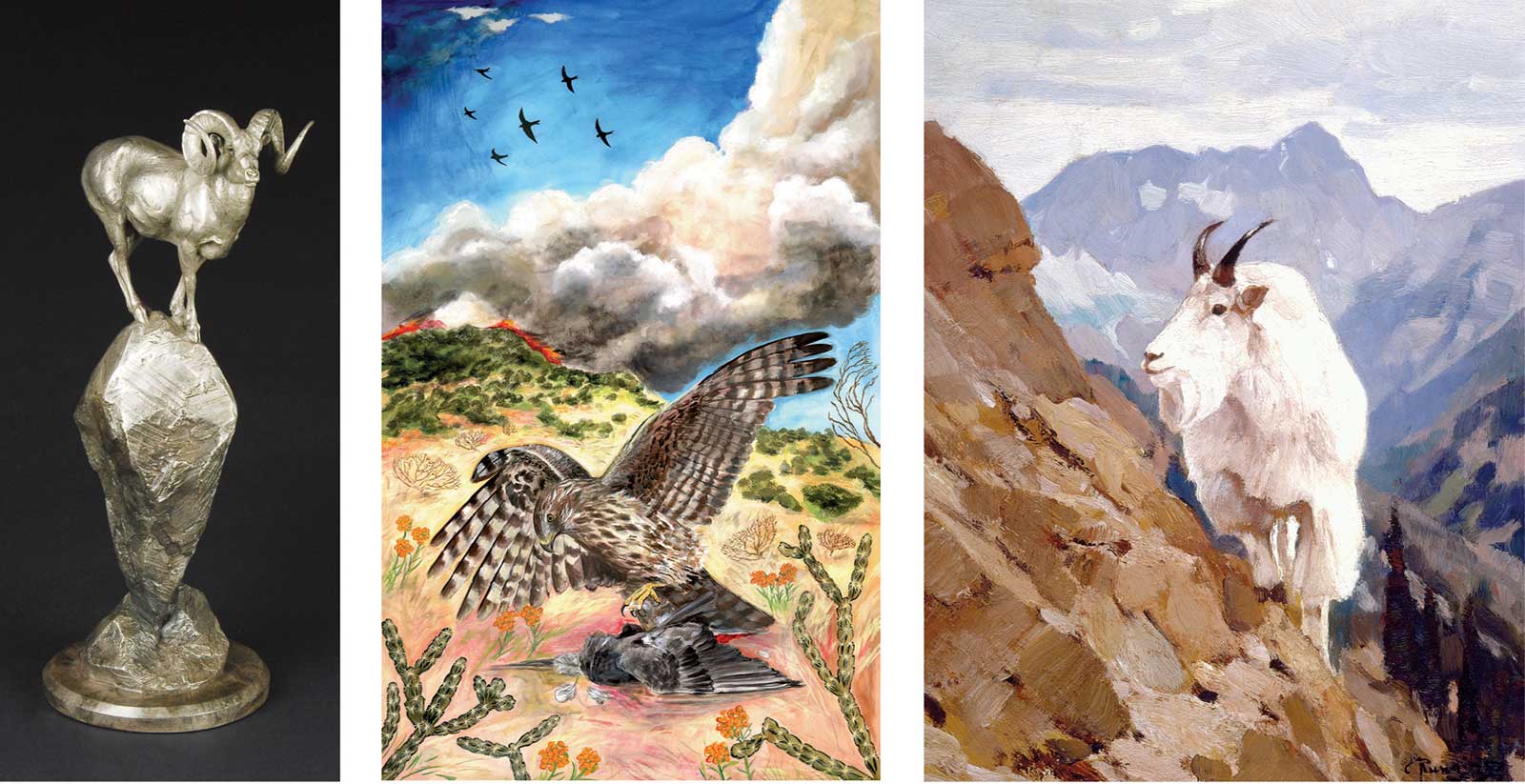 From left: Coeur d’Alene Galleries, Ultima Thule, bronze, 21½ x 10½ x 9", by Tim Shinabarger; Hecho Gallery, Wildfire Season in the Southwest, gouache on paper, 55 x 36", by Kat Kinnick; National Museum of Wildlife Art, The Cragmaster, 1912, oil on canvas, 16½ x 12¼", by Carl Rungius (1869-1959). JKM Collection, National Museum of Wildlife Art. © Estate of Carl Rungius.
Her triptych, 1859, depicts vast bison herds prior to 1868 when the transcontinental railroad was completed. She comments, “Guns and ammo were given to passengers to shoot bison from the train as entertainment, leaving millions to waste. Their numbers were reduced from millions to less than 2,000, subsequently changing the landscape forever.” 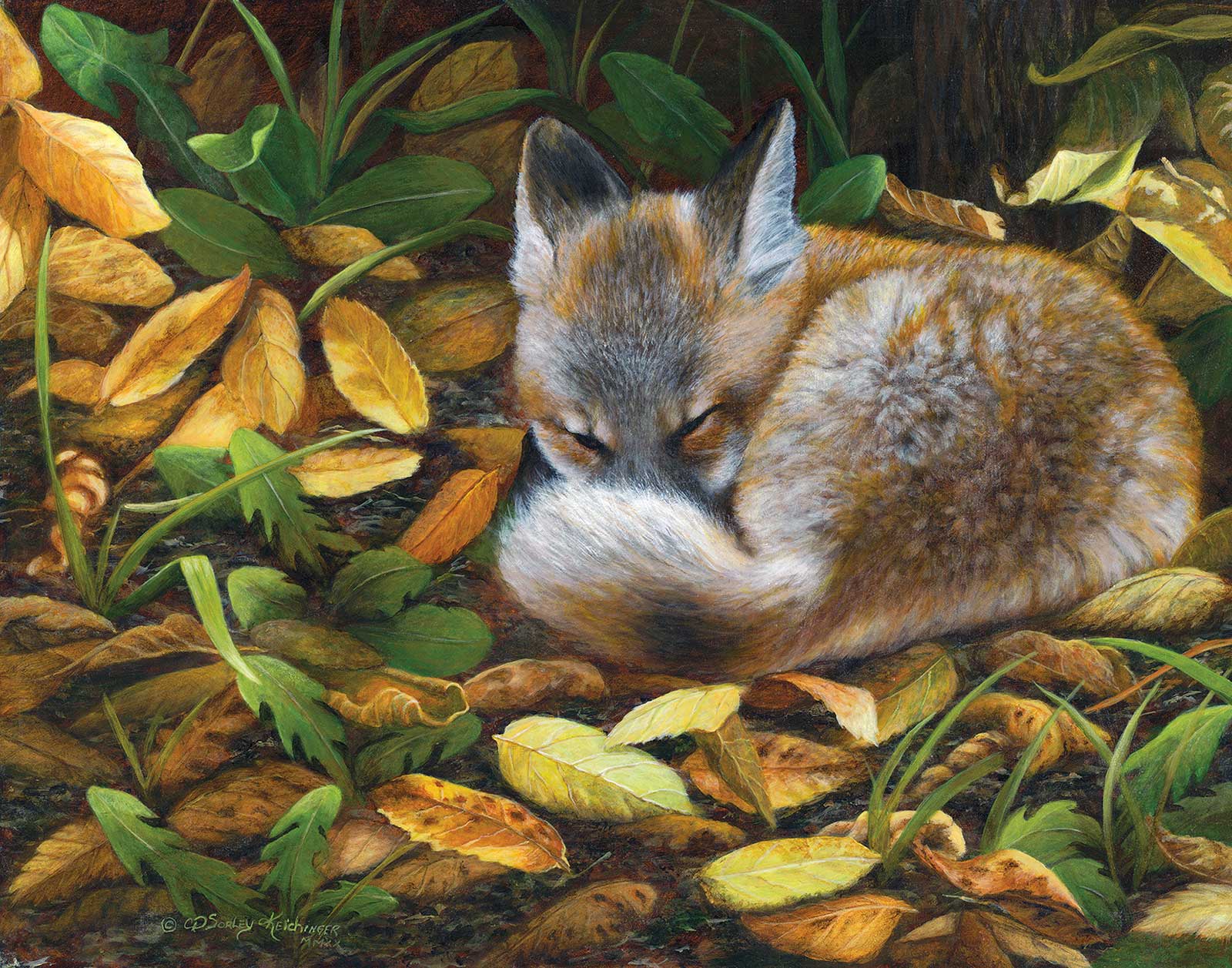 Cindy Sorley-Keichinger, Autumn Snooze, acrylic, 11 x 14"
Destruction of the bison herds was a way to force Native American tribes into submission and relocation to reservations. Civil War generals William Tecumseh Sherman and Phillip Sheridan were assigned by President Ulysses S. Grant to command armies on the Great Plains. Sheridan wrote to Sherman that they needed to make Native Americans “poor by the destruction of their stock, and then settle them on the lands allotted to them.”
Today, major efforts are under way to return bison herds to Native lands as an ecological and cultural imperative.
The environment, itself, is the biggest challenge to the dall sheep of central and northern Alaska. They occupy precipitous mountain ridges in the rugged terrain where they can be safe from predators. If their numbers increase too much, many have to graze at lower levels where their numbers are reduced by wolves.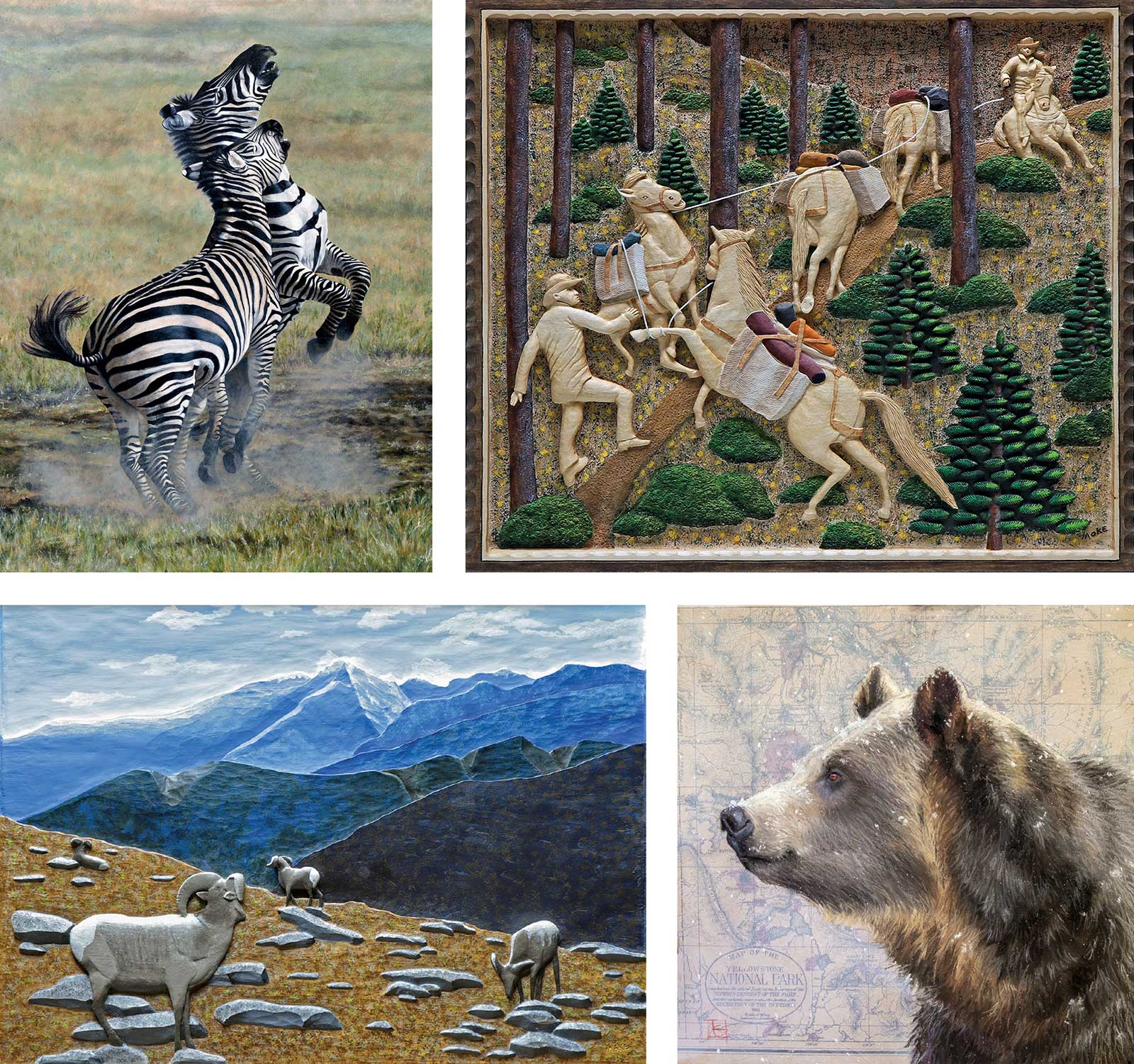 Top: Cindy Sorley-Keichinger, Contested, acrylic, 24 x 18"; Don Woodard, Pack-Horse Rodeo, linden wood and mixed media, 27¼ x 30" . Bottom: Don Woodard, Bighorn View, linden wood and mixed media, 27½ x 34"; Lisa Gleim, Something in the Air, pastel on Yellowstone map, 14 x 14"
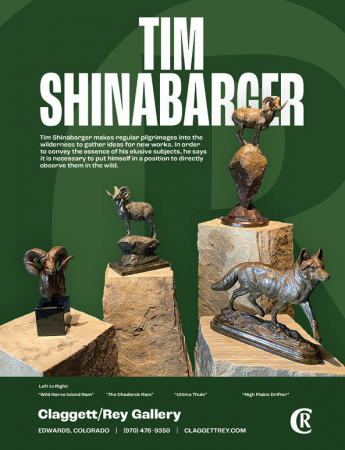
Tim Shinabarger’s bronze sculpture Ultima Thule, shown here with a silver nitrate patina, is the working model for a monumental sculpture. He comments, “Dall sheep are an iconic species of one of the greatest wilderness regions left on earth. It requires great stamina and desire to traverse these areas with heavy backpack and ice ax in hand. To witness these animals in their habitat is to feel the ominous power of nature at work. From the creek and groan of the glacier that you have pitched your tiny tent on, to the almost constant fall of rock and ice. It is a land that is literally changing right before your eyes.”
“Great stamina and desire” will also be required when he delivers the approximately 8-foot version to its final destination at the Ultima Thule Lodge “100 miles from any road” in Wrangell-St. Elias National Park. With its adjoining parks in the United States and Canada, Shinabarger describes the region as “the largest protected continuous wilderness area in the world.” 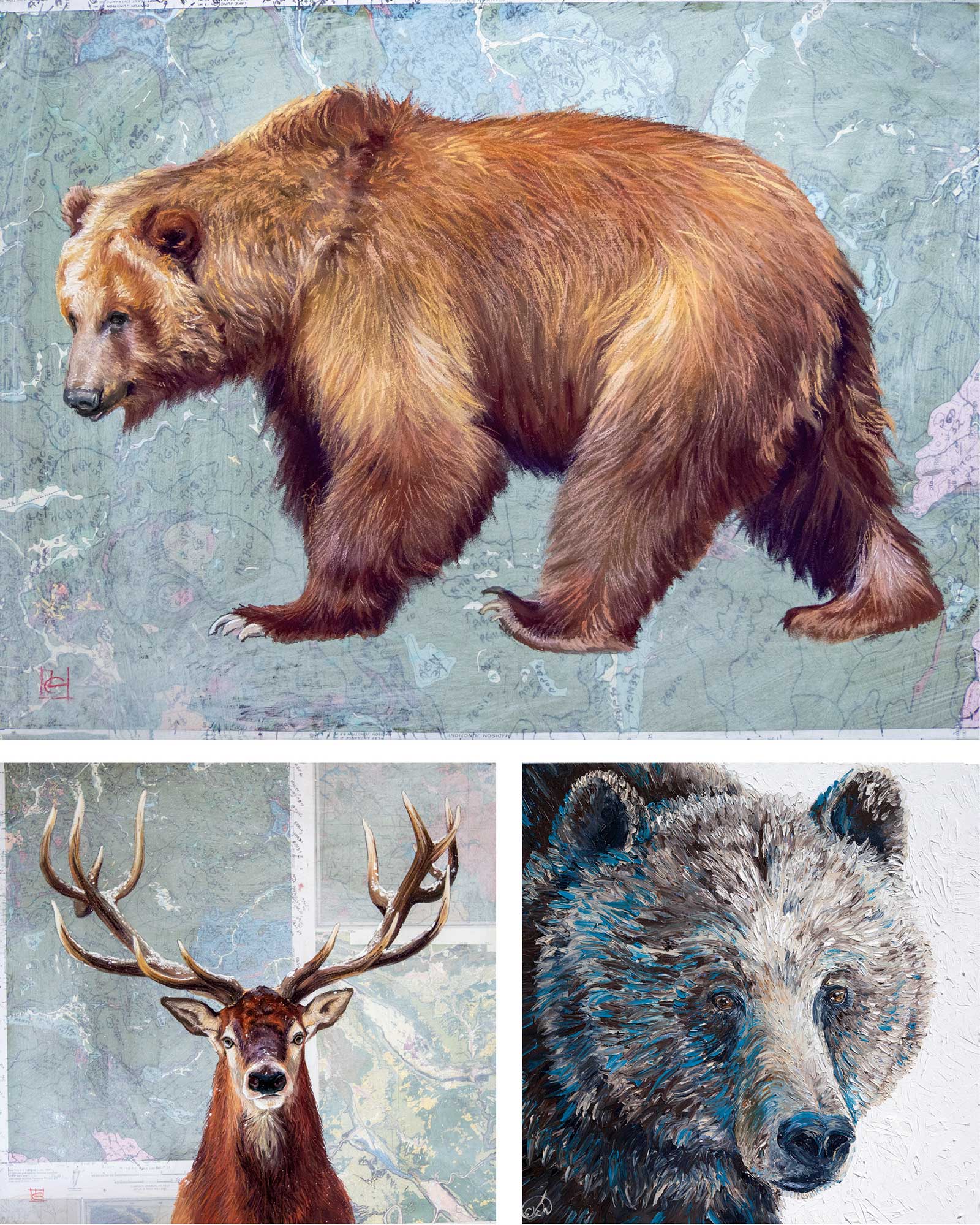 Top: Lisa Gleim, Can’t Bear to See You Go, pastel on Yellowstone geographic map, 15 x 20". Bottom: Lisa Gleim, Ice-Cold Ginger Deer, pastel on Western geological maps, 24 x 26"; Elizabeth Mordensky, Portrait of a Grizzly Bear, oil finger painting, 24 x 24"
“Delivery of the sculpture will be about a year from now and should be quite interesting,” he says. “I will have to transport it up to Alaska on the ferry and then into the remote town of McCarthy where we will have to fit it into a large bush plane for the final leg into the lodge.”
Continue reading to hear from artists, museums and galleries that also share stories and inspirations behind the creation of wildlife art, and learn about expanding or establishing a collection of the genre. 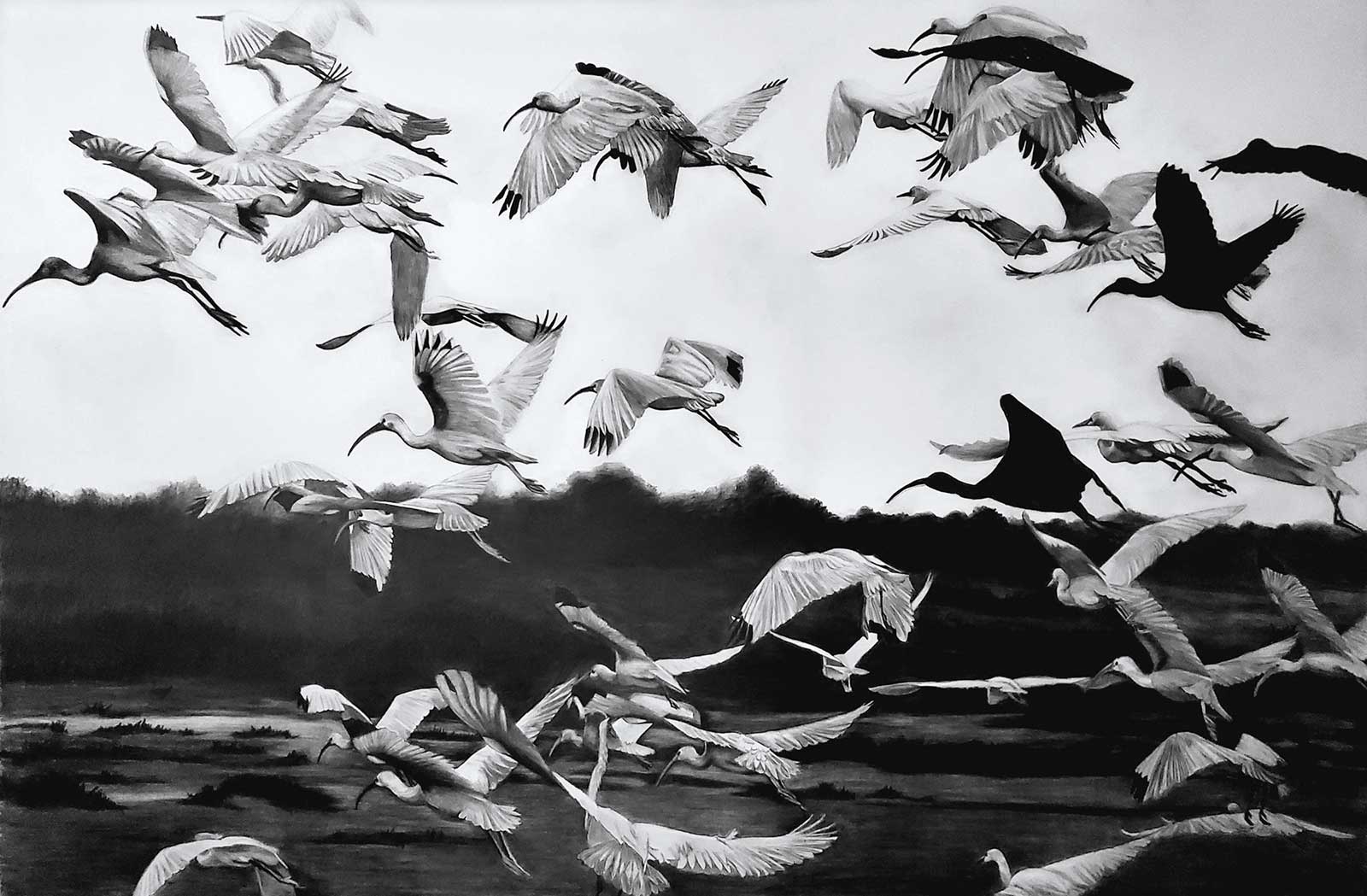 Patsy Lindamood, Take Flight II, graphite on cradled Ampersand Claybord sealed with acrylic, 24 x 26"
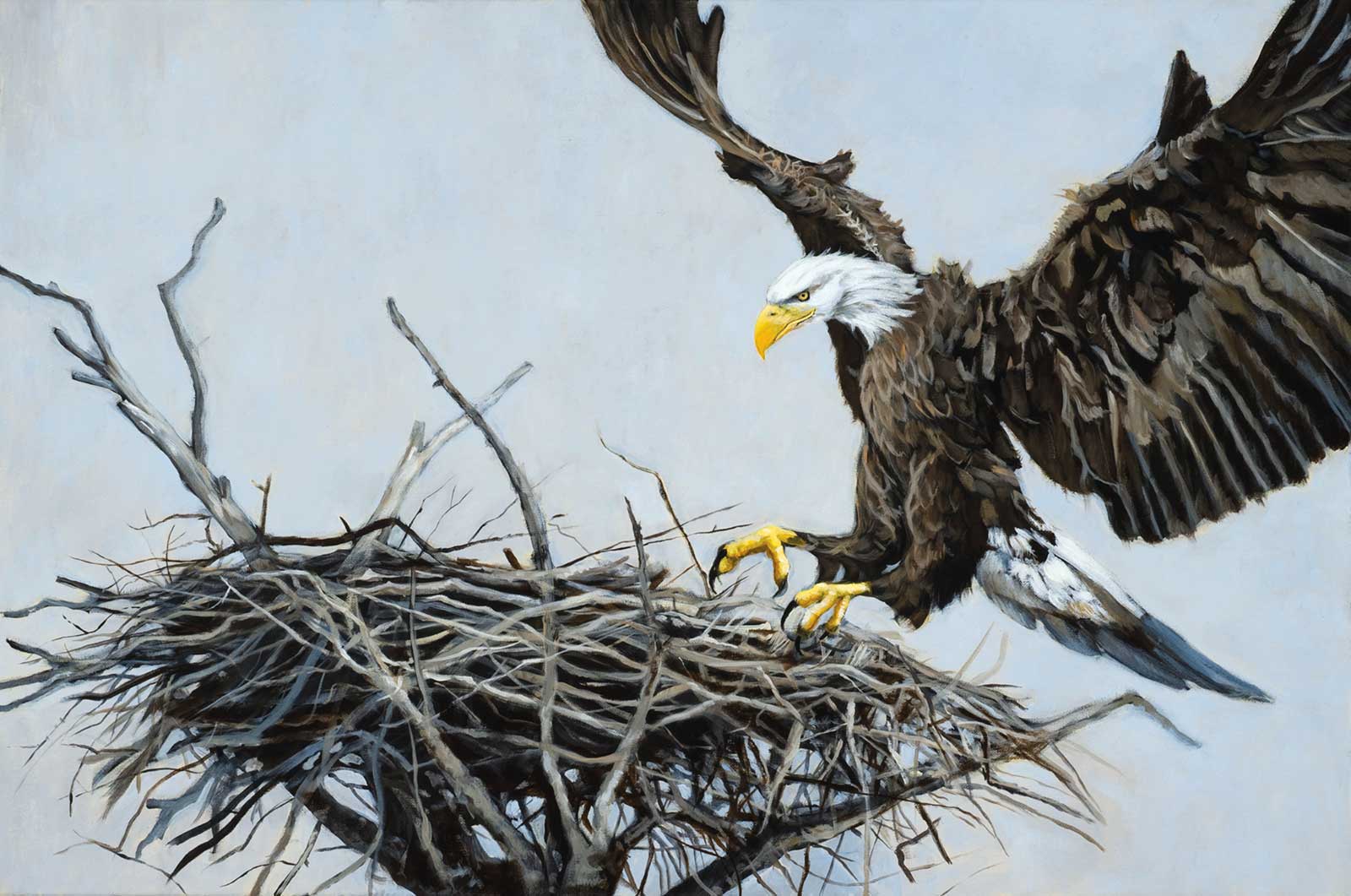 Victor Blakey, Eagle’s Nest, oil on canvas, 24 x 36"
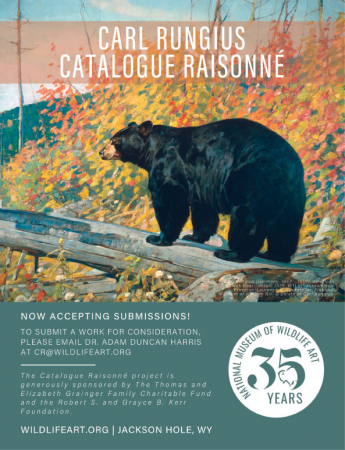
In 2020, the National Museum of Wildlife Art in Jackson Hole, Wyoming, initiated the Carl Rungius Catalogue Raisonné, with a goal to document all of the acclaimed wildlife artist’s finished paintings. The museum holds the largest collection of work by Rungius in the United States and he plays a key part in museum exhibits and programs. Dr. Adam Duncan Harris, Grainger/Kerr Director of the Carl Rungius Catalogue Raisonné shares that “Carl Rungius has long been hailed as the premiere painter of North American wildlife. Rungius gained firsthand knowledge of his subjects during summer and fall seasons spent in the wilderness of Wyoming and British Columbia, focusing on native species like elk, bear, bighorn sheep and mountain goats. The subject he painted most often was moose.”
In this special section is one such moose depiction titled Northern King, along with The Cragmaster, an image of a mountain goat, and The Stampede featuring elk. All three illuminate Rungius’ distinct, romantic style. 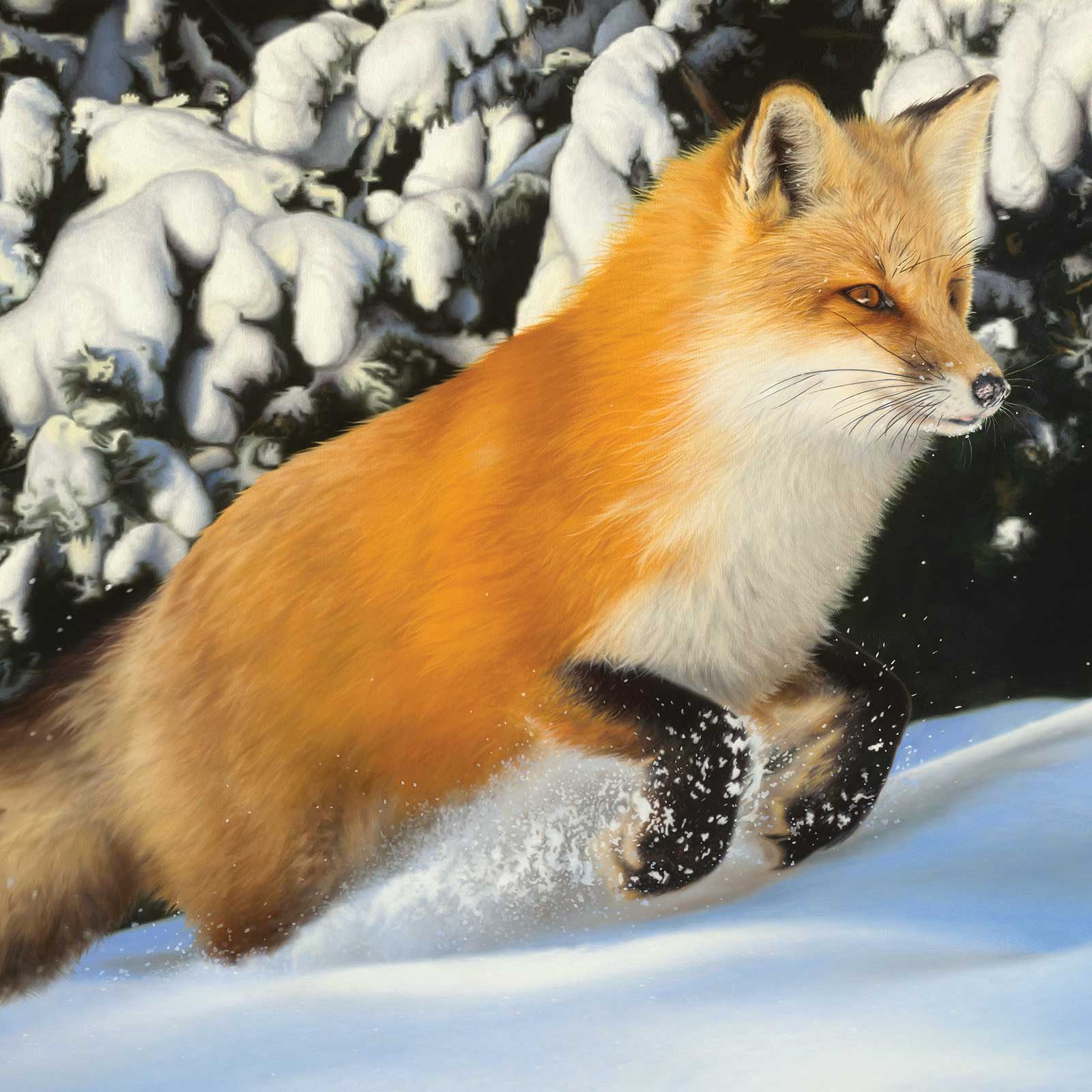 Nikita Coulombe, Fresh Powder, oil on canvas, 24 x 24"
Since 1983, the Southeastern Wildlife Exposition, held in Charleston, South Carolina, has celebrated the finest in wildlife art and the sporting lifestyle. From February 17 to 19, 2023, SEWE will feature another incredible event that includes art exhibits, conservation education, sporting demonstrations and additional entertainment. Attendees can expect to see significant wildlife works on display by artists like Julie Jeppsen, Kathleen Dunphy and John Banovich.
For her piece The Matriarch, an up-close, detailed view of a longhorn, Dunphy explains, “On a drive in the backcountry near where we live in Northern California, I came upon a herd of longhorns gathered under the sole oak tree in their pasture. Longhorns aren’t too common in my area, and their majestic stature and calm demeanor made for perfect painting subject matter. After several sketches and observing them for a while, I decided to feature the grand dame of the herd in an iconic portrait format, hoping to convey the nobility of these beautiful beasts.”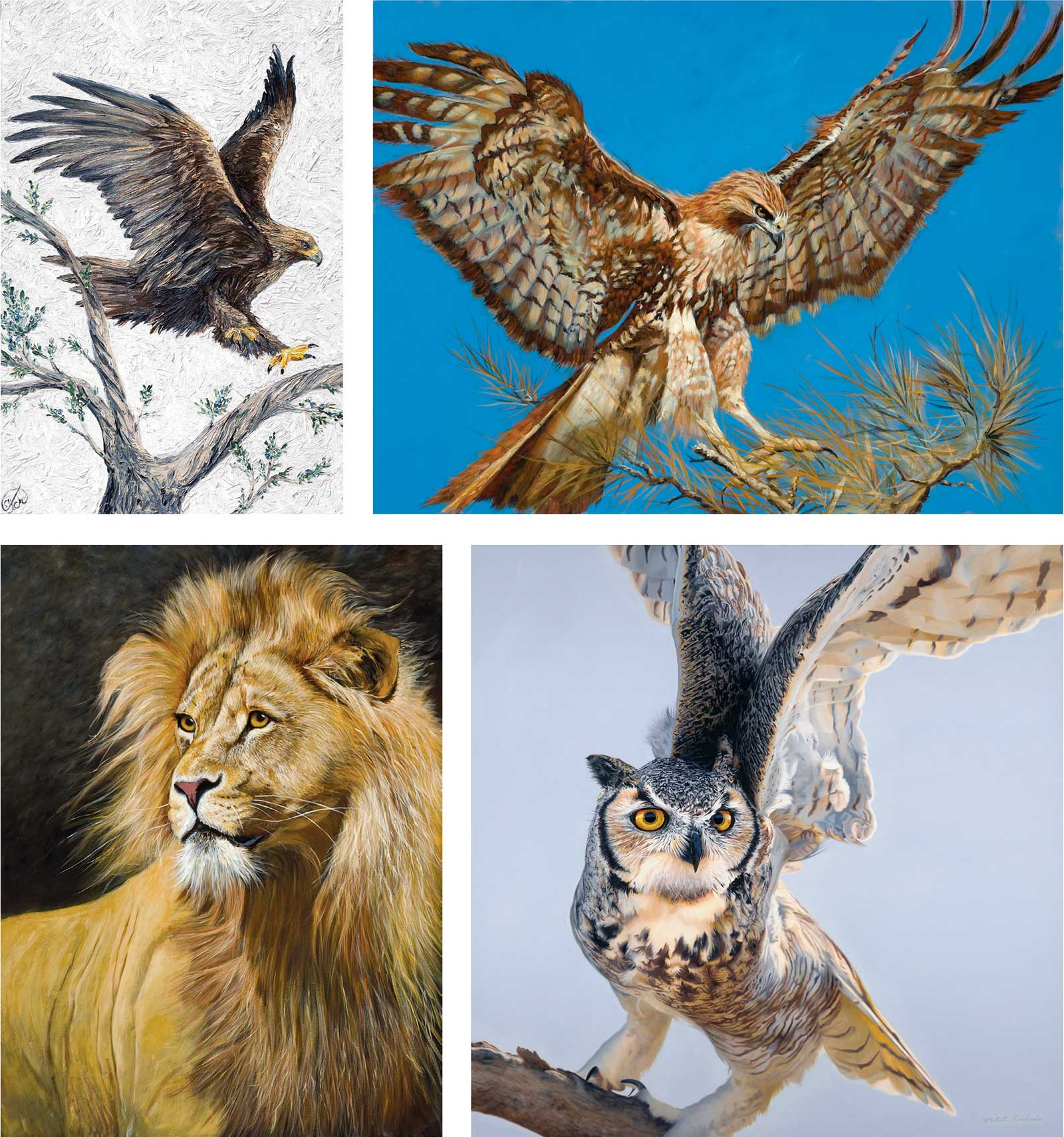 Top: Elizabeth Mordensky, The Golden Eagle: A Witness to Change, oil finger painting, 36 x 24"; Victor Blakey, Perfect Landing, oil on canvas, 30 x 40". Bottom: Victor Blakey, Head of State, oil on canvas, 46 x 36"; Nikita Coulombe, Your Time Will Come, oil on canvas, 40 x 40"
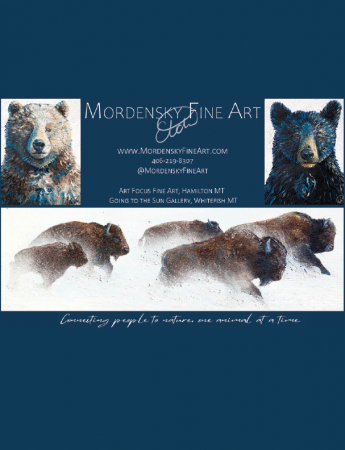
Elizabeth Mordensky, like many artists in this section, has loved wildlife since a young age, leading her to a career as a wildlife guide in Yellowstone National Park for many years. The ability to observe wildlife in a natural setting on a daily basis provides her with endless inspiration for her art. “I spend hours in the field, watching these magnificent creatures, and taking note of their movements and personalities,” she remarks. “This gives me the confidence to capture the true essence of the animal when I get back to the studio.” Mordensky’s unique oil finger painting style gives her pieces a fresh appearance that is loaded with texture and movement that brings the animals to life.
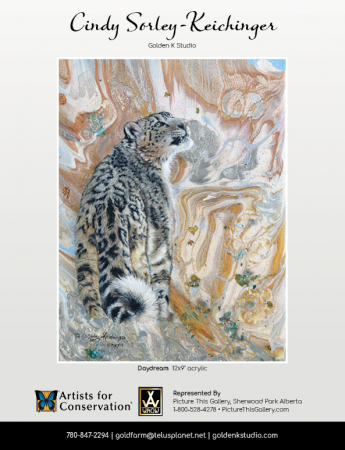
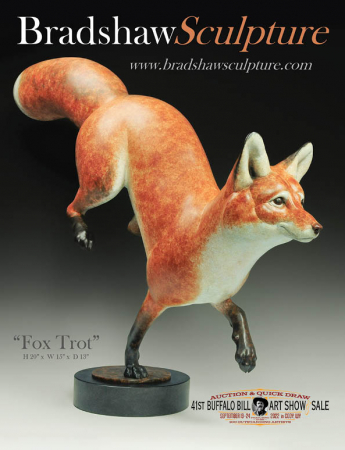
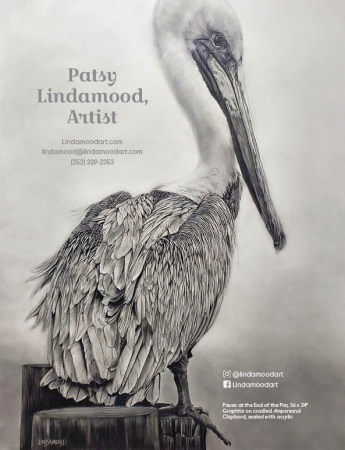
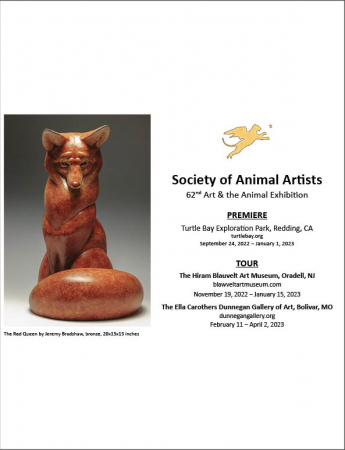
Cindy Sorley-Keichinger is a primarily self-taught Canadian artist whose subjects of choice are landscapes and wildlife—finding the genre calming, which she then projects in her work. “In today’s busy world,” she says, “a little bit of calm and peace is a necessity.” Keichinger continues, “Over the years my style has evolved to where it is now. The main point of my work is that we are not the only ones on the planet, and I would like people to see and enjoy images of our neighbors. To see and know something is to take an interest in it. Urban life, and to a lesser degree rural life, insulates us from the world...I hope to introduce people to what they do not see every day, and to see beauty in what they do see.”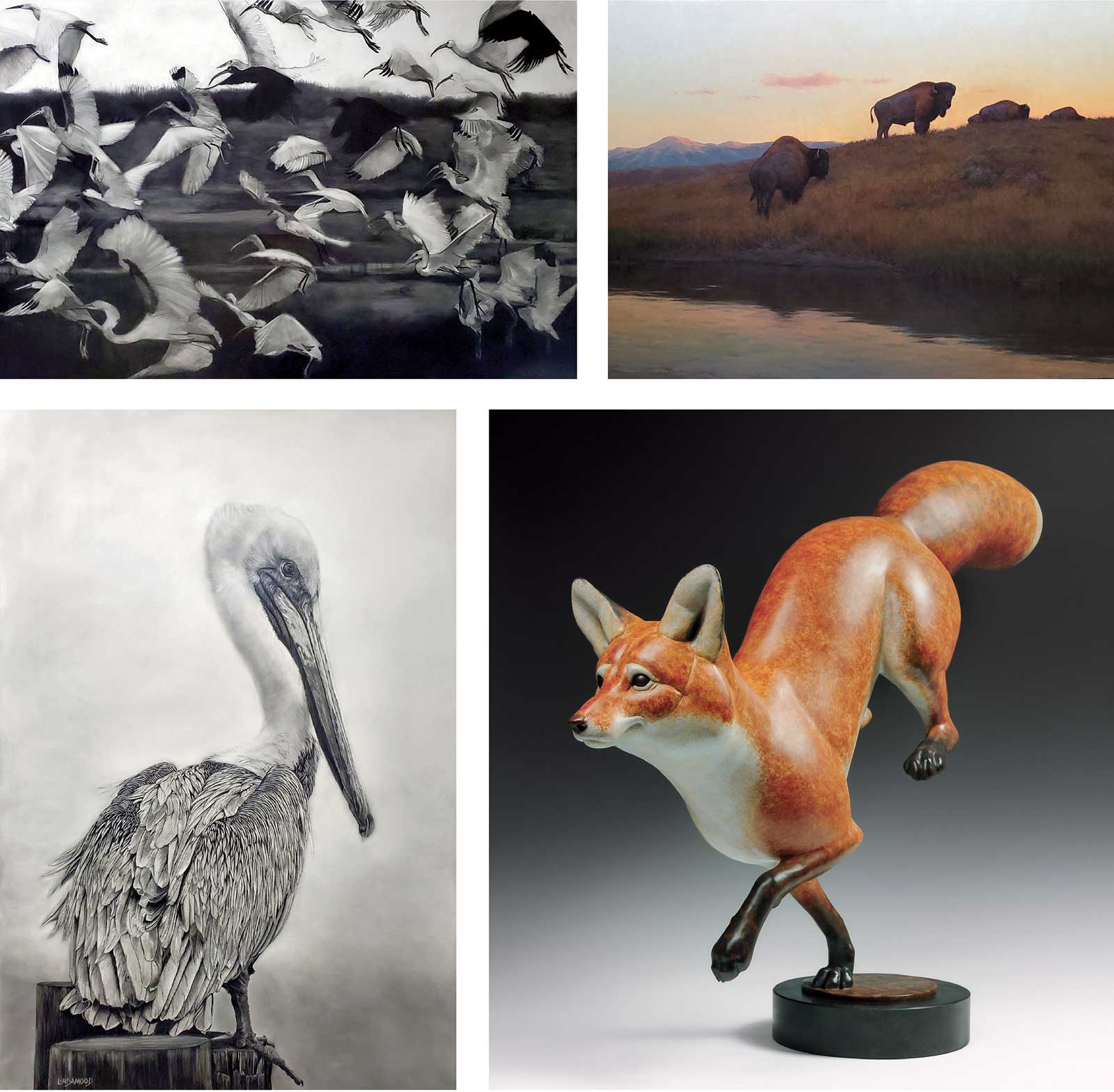 Top: Patsy Lindamood, Take Flight, graphite on cradled Ampersand Claybord sealed with acrylic, 24 x 36"; Scott Yeager, Edge of the Herd, oil on canvas, 36 x 48". Bottom: Patsy Lindamood, Pause at the End of the Pier, graphite on cradled Ampersand Claybord sealed with acrylic, 36 x 24" ; Gallery Wild, Fox Trot, bronze, ed. of 25, 29 x 38 x 11", by Jeremy Bradshaw.
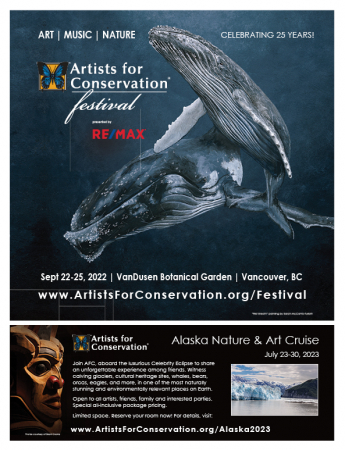
Keichinger will be part of the Artists for Conservation show in Vancouver for the month of September and is shortlisted for the David Shepherd Wildlife Foundation’s Artist of the Year 2022. These shows feature artists of note from all over the world.
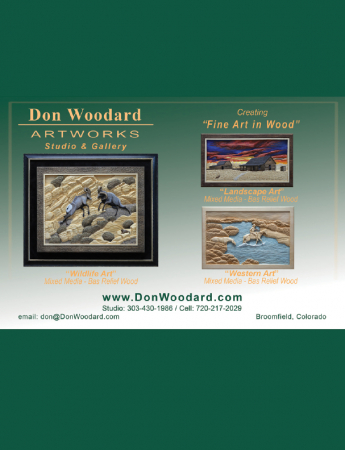
Don Woodard has become well recognized for creating a distinctive style of bas relief, mixed-media artworks known as “Fine Art in Wood.” His subject matter includes primarily wildlife, Western and landscape scenery and has been creating his unique style of art for over 20 years. Woodard’s artworks are influenced and inspired by events he has participated in or been fortunate to see and experience in person, like his time spent leading pack-horse trips into the Rocky Mountain wilderness—seen in Pack-Horse Rodeo. His piece Bighorn View, also pictured here, is included in a recent exhibition Above the Clouds: Art of the Alpine at the National Museum of Wildlife Art.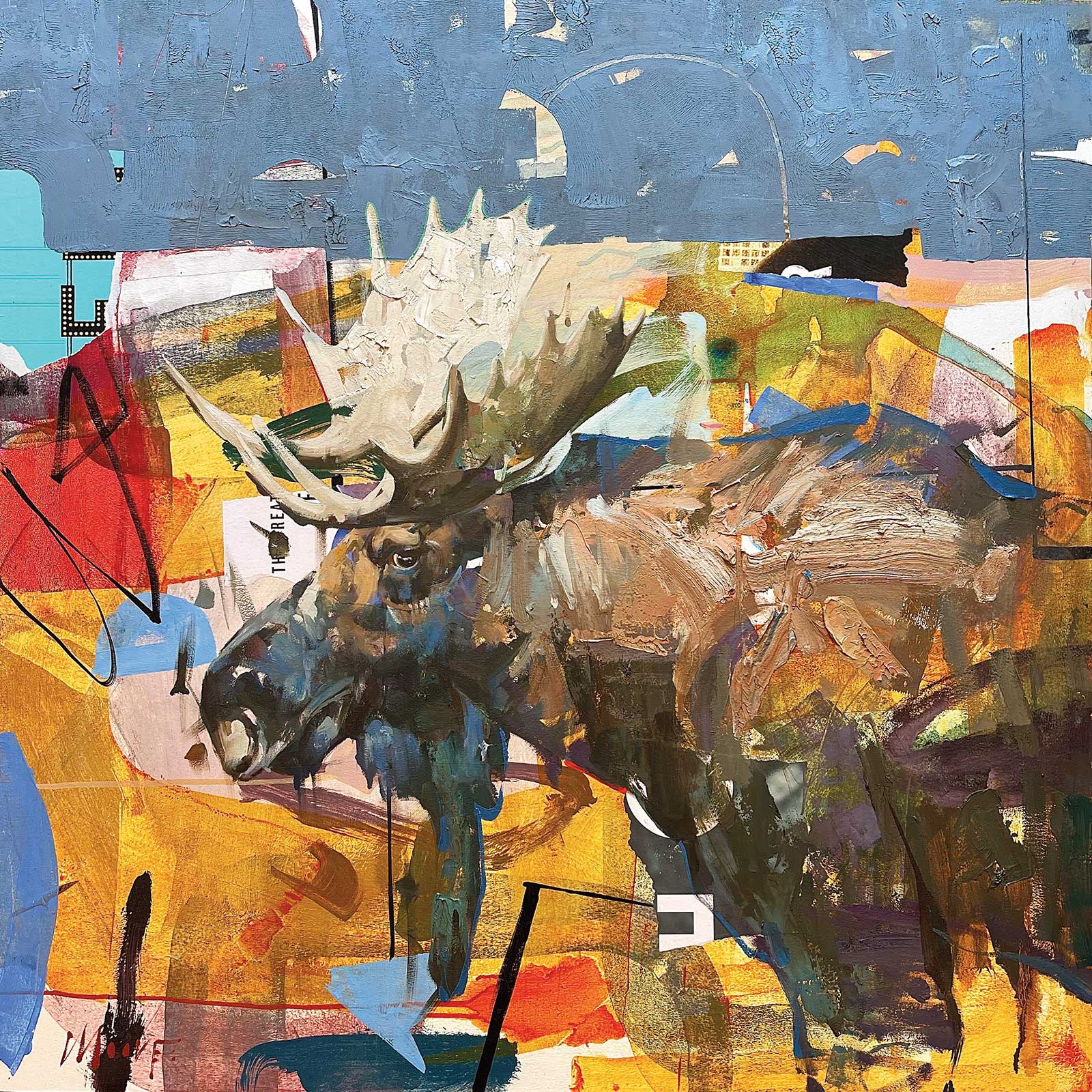 Gallery Wild, Loose Moose, oil and collage on panel, 40 x 40", by Larry Moore
“When someone says they want to get back to nature, what they are really saying is that they need to find inner harmony,” says artist Victor Blakey. “They are seeking a sense of freedom and wildlife art fosters this feeling...The art viewer identifies with the passion of the animal in the painting. One sees wild animals dealing with the world on an instinctive level, and it is this passion that enables one to find harmony in nature or artwork that depicts nature.”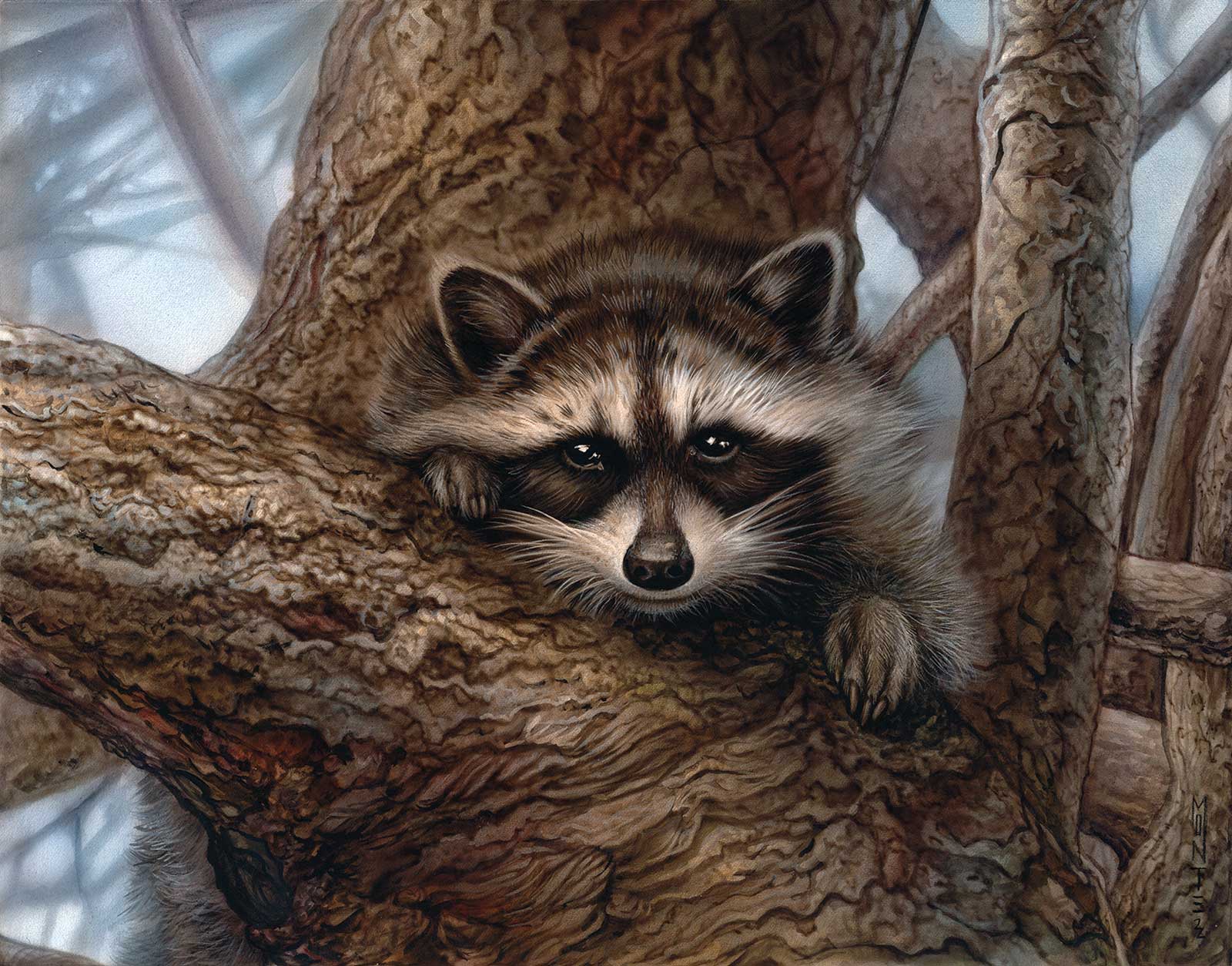 Monte M. Moore, Peek A Boo, mixed media watercolor, 10 x 14"
It is precisely this desire for freedom that first attracted Blakey to wildlife art. The image of a bird taking flight or a wolf running in the snow, sparks his imagination. To art collectors who seeks to buy wildlife art, he says, “find the work that creates a feeling of freedom within you.”
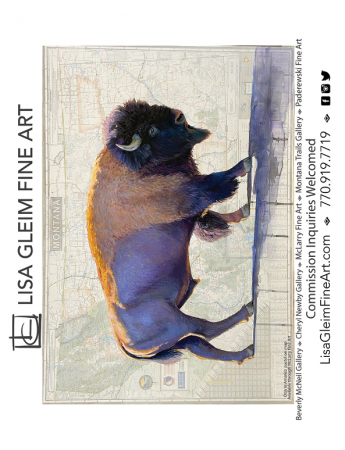
Lisa Gleim’s journey to wildlife art began as a commissioned portrait artist, where her initial approach was to depict subjects absent any background. Instead, each focused all attention on the person’s individual physical characteristics and personality. “With wildlife, my work expanded the narrative realism,” she says. “A bear might be delving into a hive in search of honey as bees circle overhead or a fox listening intently to a couple of ravens. In addition to such interactions, backgrounds began to take shape.” Gleim now uses vintage maps and collectible memorabilia associated with each creature’s habitat to draw a viewer into the story. The elements are soft and subtle, so as not to distract from the subject, but very discernable. 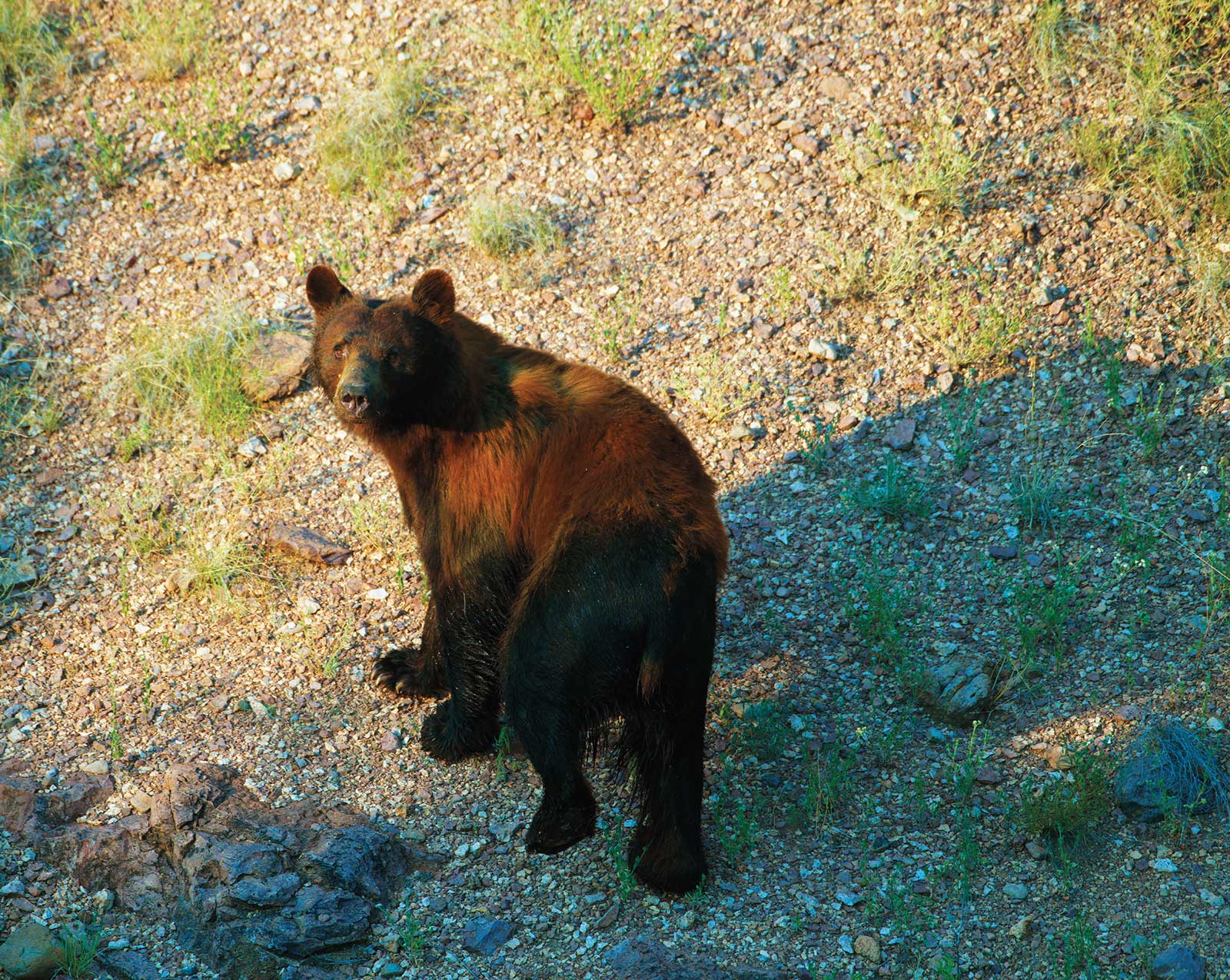 Booth Western Art Museum, Black Bear on the Ladder Ranch, 2020, archival pigment inkjet print on Rag Baryta Paper, Courtesy of Rhett Turner and Rizzoli New York, by © Rhett Turner.
“I find many collectors share my fondness for such nostalgia and although informative, they are also very personal elements that add to the story I am trying to tell,” she explains. Gleim is vice-president of American Women Artists and resides in Montana and Georgia.
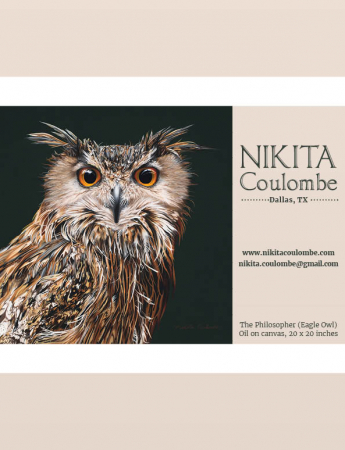
“The fight for survival demands extremes and presents dualities,” Nikita Coulombe explains of her process in painting the eyes of an animal first. “I believe the intensity of an animal’s eyes expresses the balance between the kindness and warmth, and the cruelty and harshness of nature. The feathers, fur and scales then get built up around this central focus.” Reminiscent of 20th-century Canadian artist Robert Bateman as well as 19th-century American artist Alexander Pope, Coulombe’s style brings animals to life through their gazes and captures the vitality of the moment with detail, light and shadow.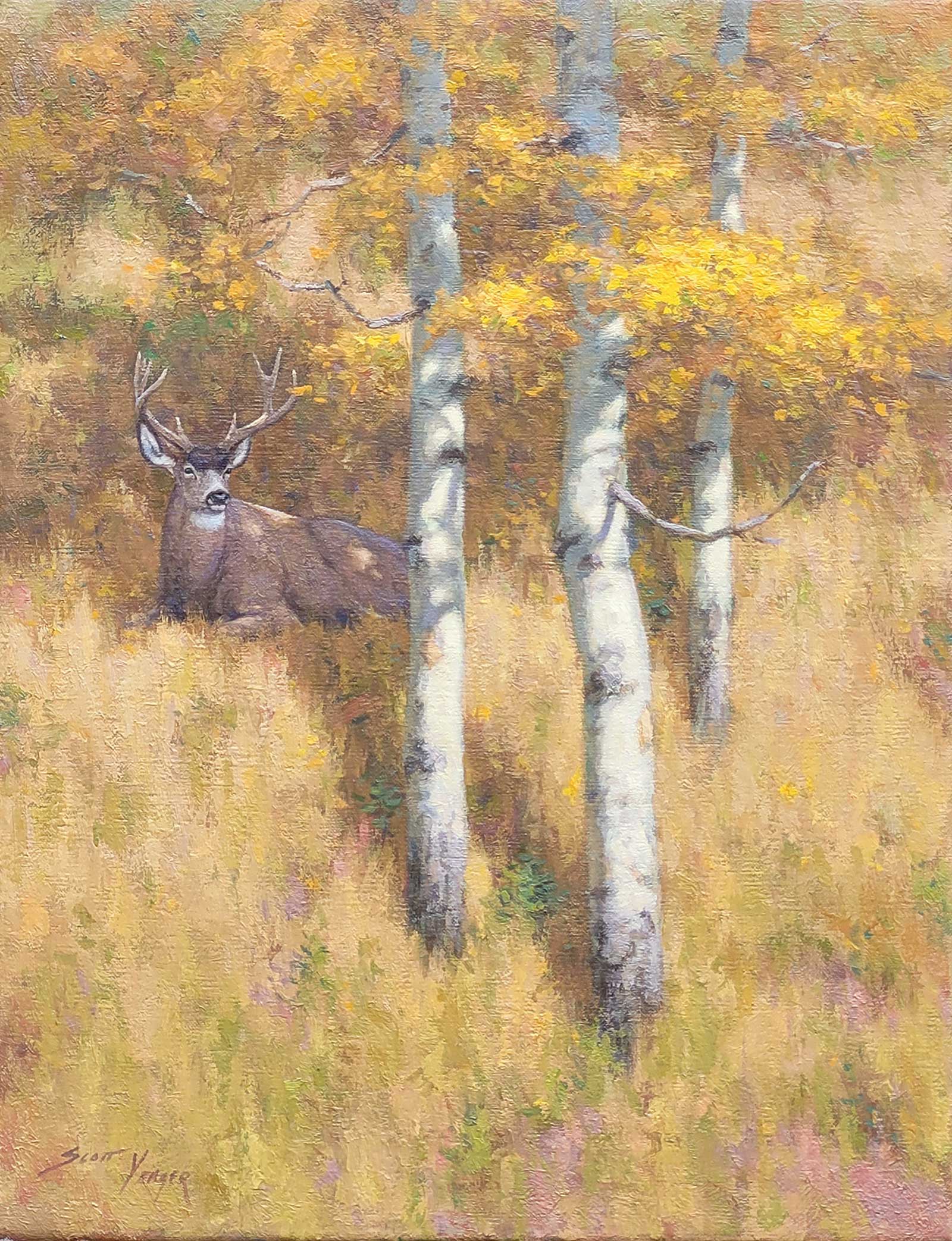 Scott Yeager, Aspen Shade, oil on canvas, 18 x 14"
When collecting Coulombe expresses, “So much of art is about energy. The feeling you have while making it and the feeling that others have while being in its presence. The art you buy should be the art that reflects you and what speaks to you regardless of genre.”
Originally, Patsy Lindamood, who began her career portraying mammals, started drawing birds on kind of a dare. “A business friend of mine who saw some of my early sketches of mammals insisted that I ought to try my hand at birds,” she explains. “I did, and from those early efforts, I developed not only a passion for drawing birds, but for birding and the conservation of the bird population. While my avian art originated from a challenge, my continued pursuit of art featuring birds derives from a simple fascination with them. My favorites are shore birds, followed by predators. I find their behaviors infinitely captivating, and I can easily consume a twelve-hour day tracking and photographing birds. The birding excursions provide the foundation for my art, helping me to acquire a more thorough understanding my subjects, their habitats and behaviors.”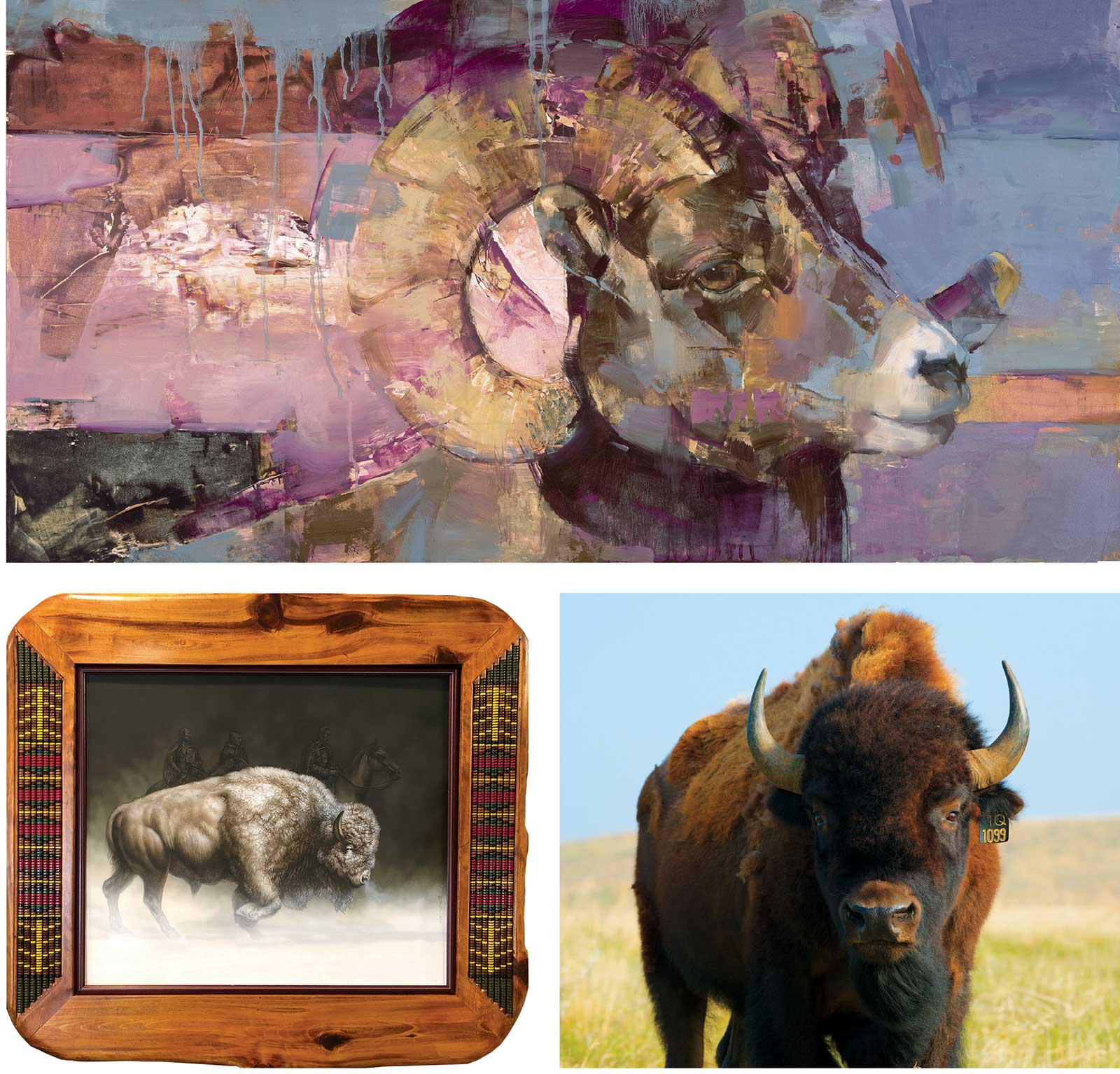 Top: Gallery Wild, Too Sexy, mixed media on panel, 18 x 36", by Julie T. Chapman. Bottom: Monte M. Moore, Sacred, mixed media watercolor, 20 x 30"; Booth Western Art Museum, Bison Bull, 2020, archival pigment inkjet print on Rag Baryta Paper, Courtesy of Rhett Turner and Rizzoli New York, by © Rhett Turner.
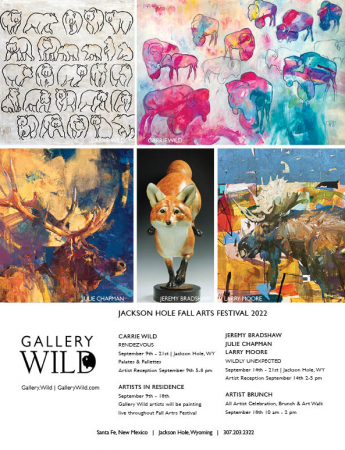
For a show opening September 14, during the Jackson Hole Fall Arts Festival in Wyoming, Gallery Wild features the work of Jeremy Bradshaw, Julie T. Chapman and Larry Moore. “These three artists transform their inspiration, pulled from personal experiences with wildlife into completely different, yet complementary creations,” says gallery manager Jenny Fitzgerald. “The result is three styles of work that offer collectors the opportunity to explore what they appreciate about aspects of each. Moore places animals in thought provoking scenarios you wouldn’t expect like city streets or on an incredible color palette of graffiti abstraction…Chapman uses dramatic, abstract brushstrokes and paint splashes that seem to weave through and around her subjects, leaving just enough of the form that your mind fills in what’s missing...Finally, Bradshaw’s sculpture creates a sense of lightness in the moments of an animal’s life…through his rounded shapes and smooth surfaces, suggesting softness in a hard medium.”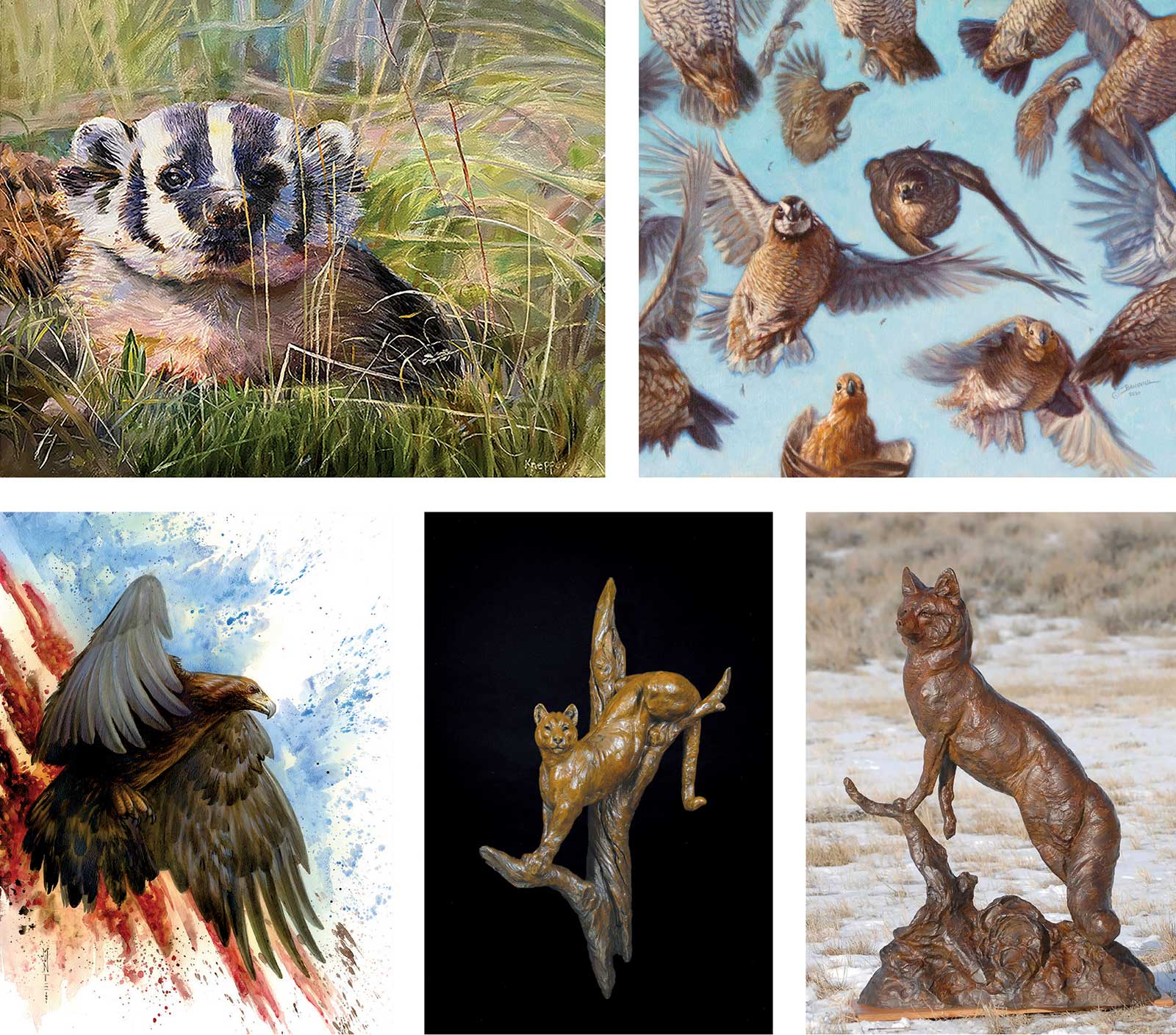 Top: Dan Knepper, Badger Stories, oil on canvas, 16 x 20"; Southeastern Wildlife Exposition, The Blue Darter Coopers Hawk and Bobwhite Quail, oil on Belgian linen, 16 x 18", by John Banovich. Bottom: Monte M. Moore, Protected, mixed media watercolor, 15 x 20"; Claggett/Rey Gallery, The Apparition, bronze, 19 x 19 x 15", by Tim Shinabarger; Claggett/Rey Gallery, Curious, bronze, 48 x 35 x 17", by Tim Shinabarger.
When collecting, Fitzgerald advises adding art to your collection “that will make something arise within you every time you take the time to stop and look at it.”
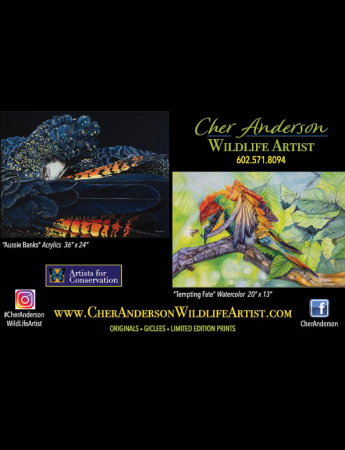
For Monte M. Moore, he feels fortunate to have studied with many great wildlife artists including Carl Brenders, John Seerey-Lester, Rod Lawrence and Morten Solberg Jr. to broaden his artistic understanding of materials, composition and technique. He also feels that “collectors should seek art that connects with them on a personal level and brings them joy in the ownership and viewing of the original wildlife art in their collection. Wildlife art in particular forms a bond or ‘relationship’ between both artist and collector to our beloved animals, their habitats and the Mother Earth that we all share. 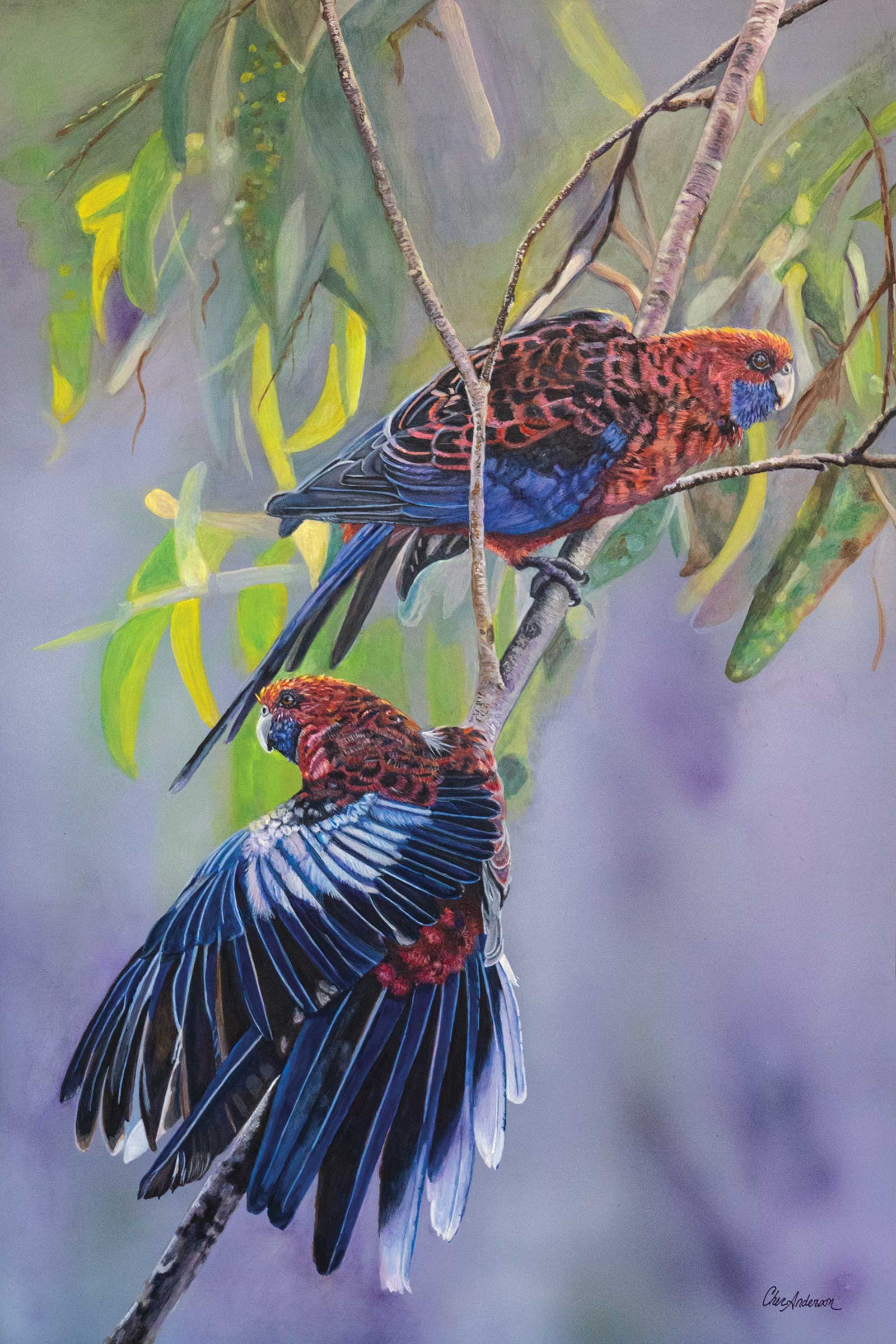 Cher Anderson, Aussie Rosellas (Rosella Platycerus), acrylic on gesso board, 36 x 24"
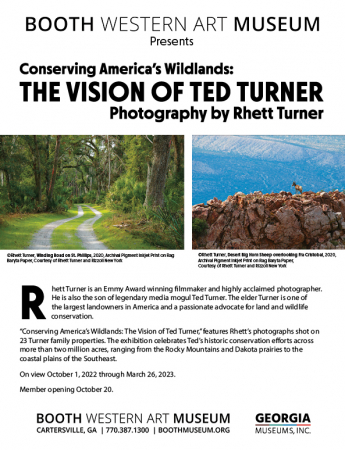
The exhibition Conserving America’s Wildlands: The Vision of Ted Turner – Photography by Rhett Turner at the Booth Western Art Museum, is based on a new book by the same name, published by Rizzoli, New York. Rhett is an Emmy Award-winning filmmaker and highly acclaimed photographer. He is also the son of legendary media mogul Ted Turner. The elder Turner is one of the largest private landowners in America and a passionate advocate for land and wildlife conservation. The exhibition features Rhett’s photographs shot on 23 Turner family properties, and celebrates Ted’s historic conservation efforts across more than two million acres, ranging from the Rocky Mountains and Dakota prairies to the coastal plains of the Southeast.
In the book’s foreword, former President Jimmy Carter praised Rhett’s images: “Rhett’s photographs convey the power of different places carried forward by a common ethic. More than pretty pictures, they are testaments to the importance of habitat that helps perpetuate the survival of hundreds of species. Rhett Turner’s imagery speaks to the dividends of giving back to society and to nature. Rhett Turner keenly understands stewardship and why healthy environments matter…”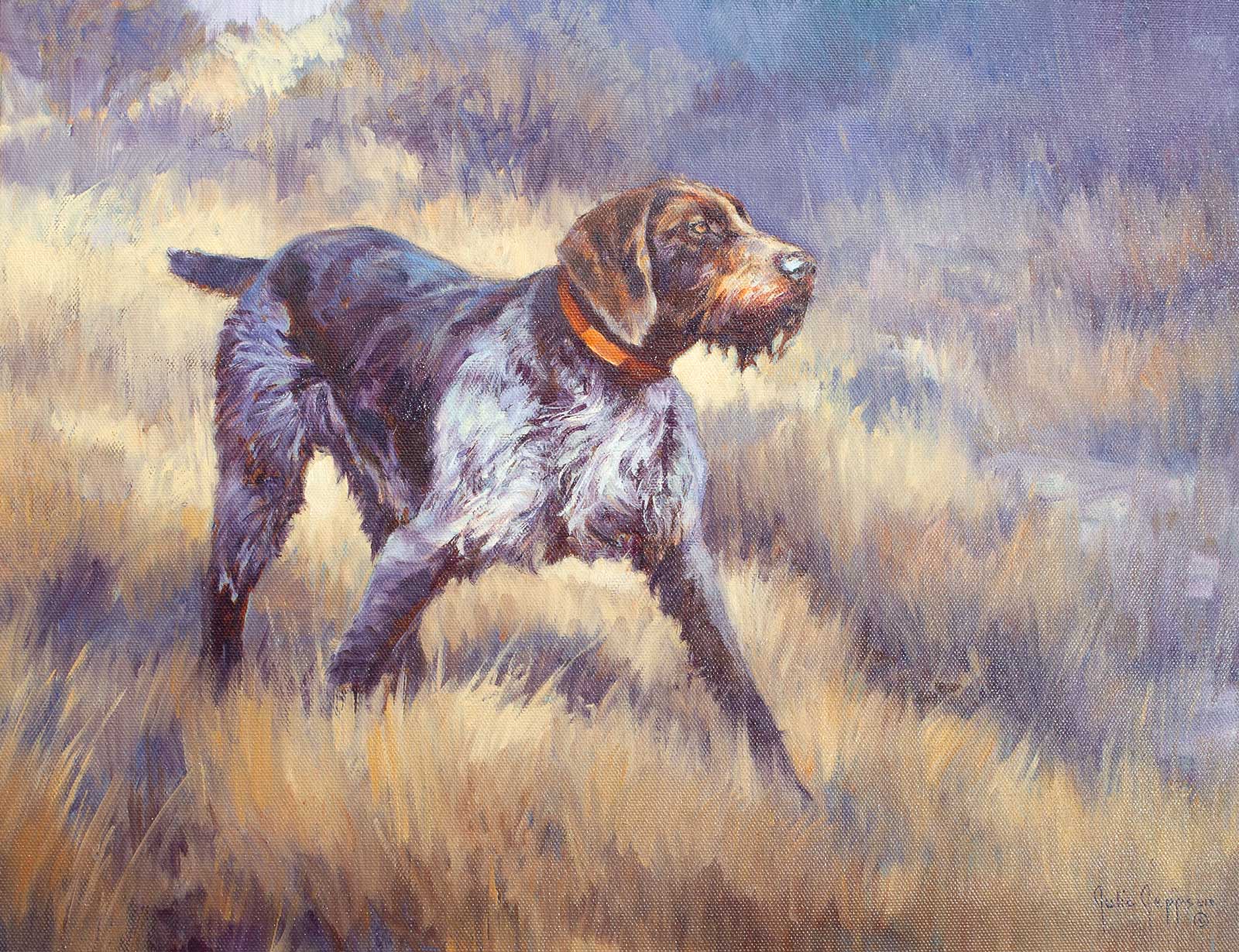 Southeastern Wildlife Exposition, On the Wire, oil on canvas, 14 x 18", by Julie Jeppsen
Time in the field observing, painting, photographing and living in wild places have led sculptor Tim Shinabarger, represented by Claggett/Rey Gallery, on a greater quest…Comfortable in wild places and at ease with nature’s environs, allows Shinabarger to be able to look deeper at the surroundings and the creatures who call it home. “His sculptures are his visual diary of the animals, circumstances and experiences he has captured in his mind’s eye,” says gallery owner Bill Rey. “The deep thought of what and how he wishes to sculpt in clay, and the stories of his artistic voice, are enthusiastically pursued until they live up to the original idea in his head. He is as concerned with the rough castings as he is with the welding, metal chasing and patinas of each piece. They need to reflect his original intention and thus, he is very involved in the processes which ensures a level of quality with every single casting.”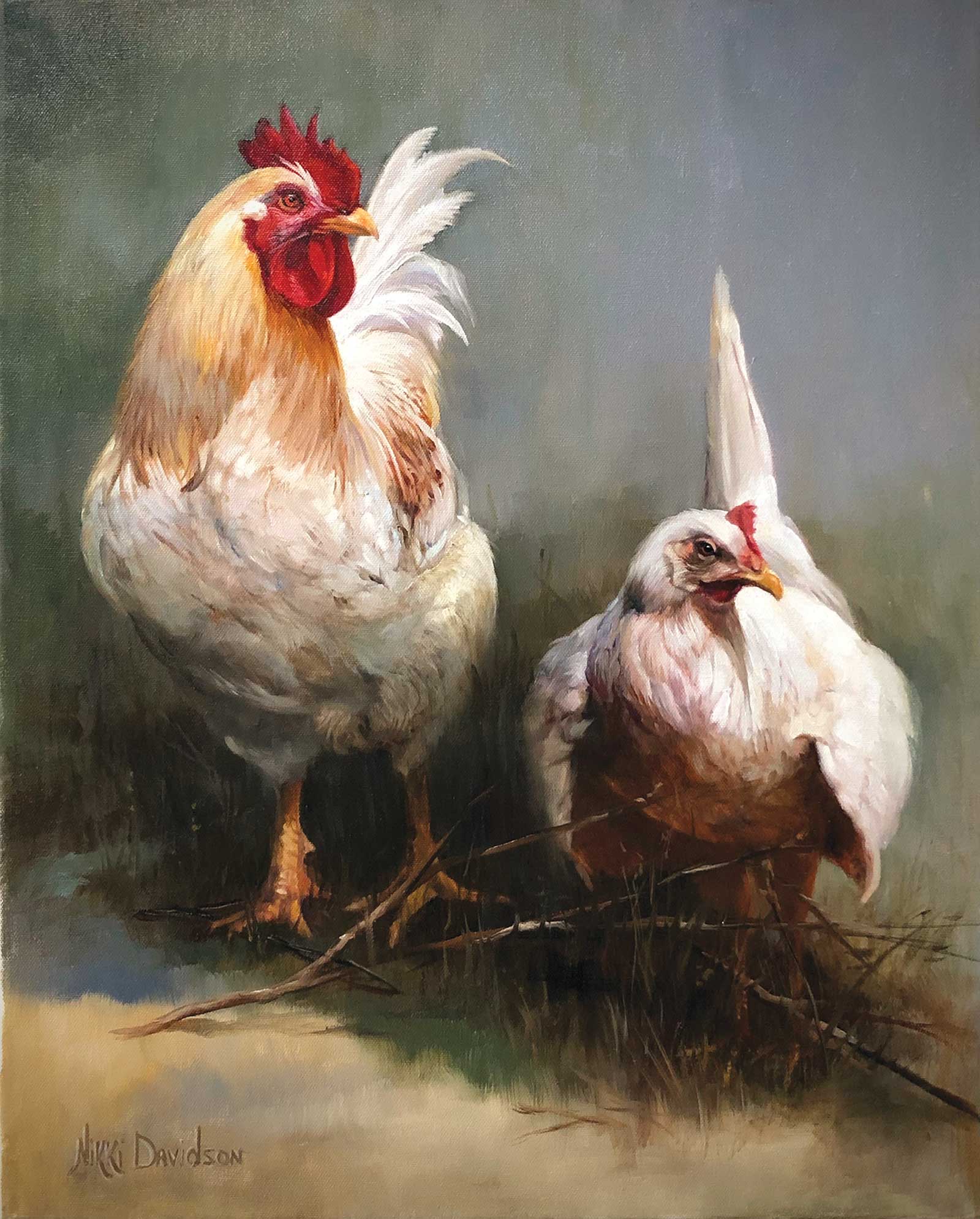 Nikki Davidson, Les Poulets, oil, 20 x 16"
From miniature to monumental, Shinabarger has honored the world in which he lives, whether from Africa, Alaska or the Rocky Mountains of North America, his sculptures are each a masterful creation and reflection of a life lived wild.
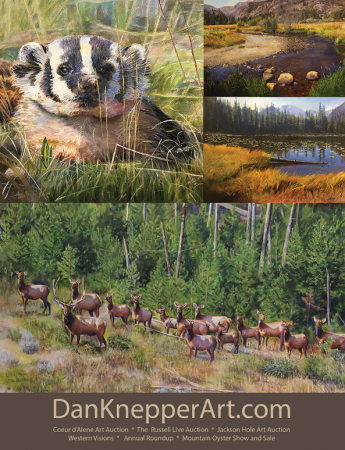
Some of Dan Knepper’s favorite moments in the mountains involve wildlife. He shares, “The thrill of having a beautiful cinnamon bear in Glacier Pass so close I could have touched him or finding a moose in the cool forest shade of Colorado with my son, Jordan; the scents and sounds experiencing bison with their calves in Montana and Wyoming; watching a grizzly with her cubs in Yellowstone and loving the sound of the elk bugling in Rocky Mountain National Park. I’ve watched a family of otter’s frolic, a pair of coyotes play with their dinner while a magpie stood nearby hoping for a scrap, and had a conversation with a badger who listened, then dug and stopped to listen again. I hope my work brings you into those conversations and experiences, to share in my awe of the moment.”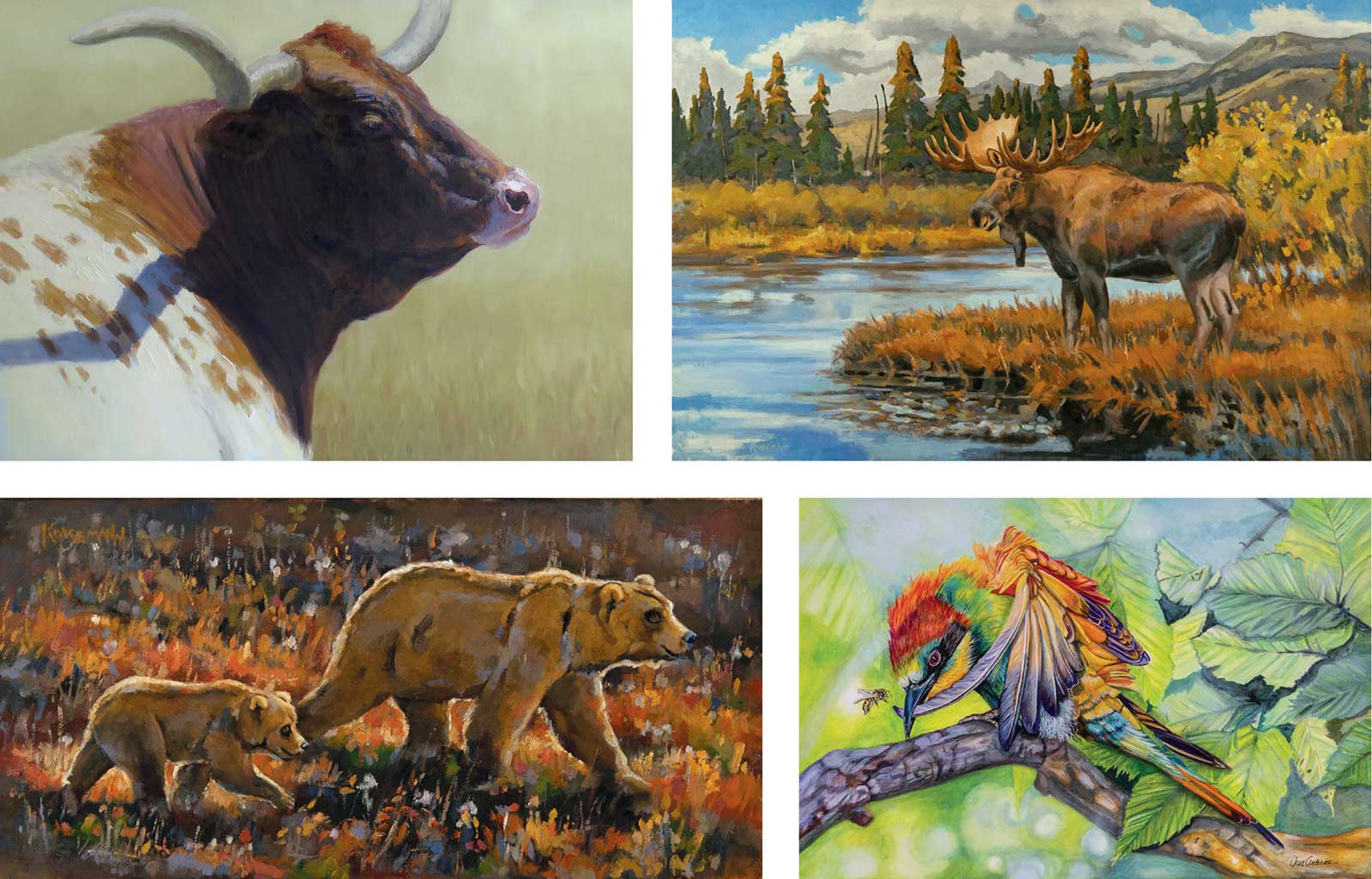 Top: Southeastern Wildlife Exposition, The Matriarch, oil on linen, 21 x 29", by Kathleen Dunphy; Stephen J. Krasemann, This Side of Autumn, oil, 24 x 36". Bottom: Stephen J. Krasemann, Evening Light, Grizzlies, oil, 8 x 16"; Cher Anderson, Tempting Fate (European Bee Eater), watercolor, 13 x 20"
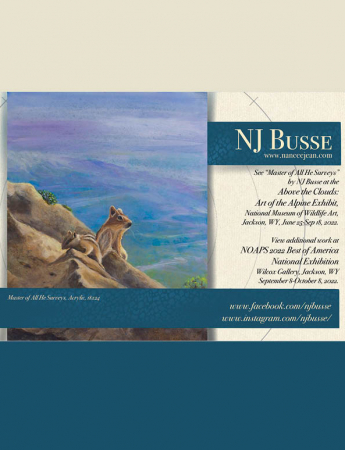
Painter of the West, Nancee Jean Busse, refers to the famous Keats quote: “Truth is Beauty; Beauty Truth,” as entirely applicable to the genre of wildlife art. “All I have to do is look at a timber wolf painted by Edward Aldrich or a grizzly painted by Robert Bateman to see the potential that a great wildlife artist has to transcend the mundane and reveal the grand spirit of a wild animal,” she says. “From the time I was a kid being chided for getting sticky fingerprints on the family copy of Audubon’s Birds of America, I wanted to participate in this grand art form. To those who collect wildlife art I would say, find the painting that speaks to your spirit! Some of us respond to birds in a spiritual way, others find their spirit animal in large mammals: bear, lions, wolves. Share your space with the painting that provides you with a lodestone to the mightiness and perfect beauty within you. A wildlife painting can provide an alter to your wildness and wonder.”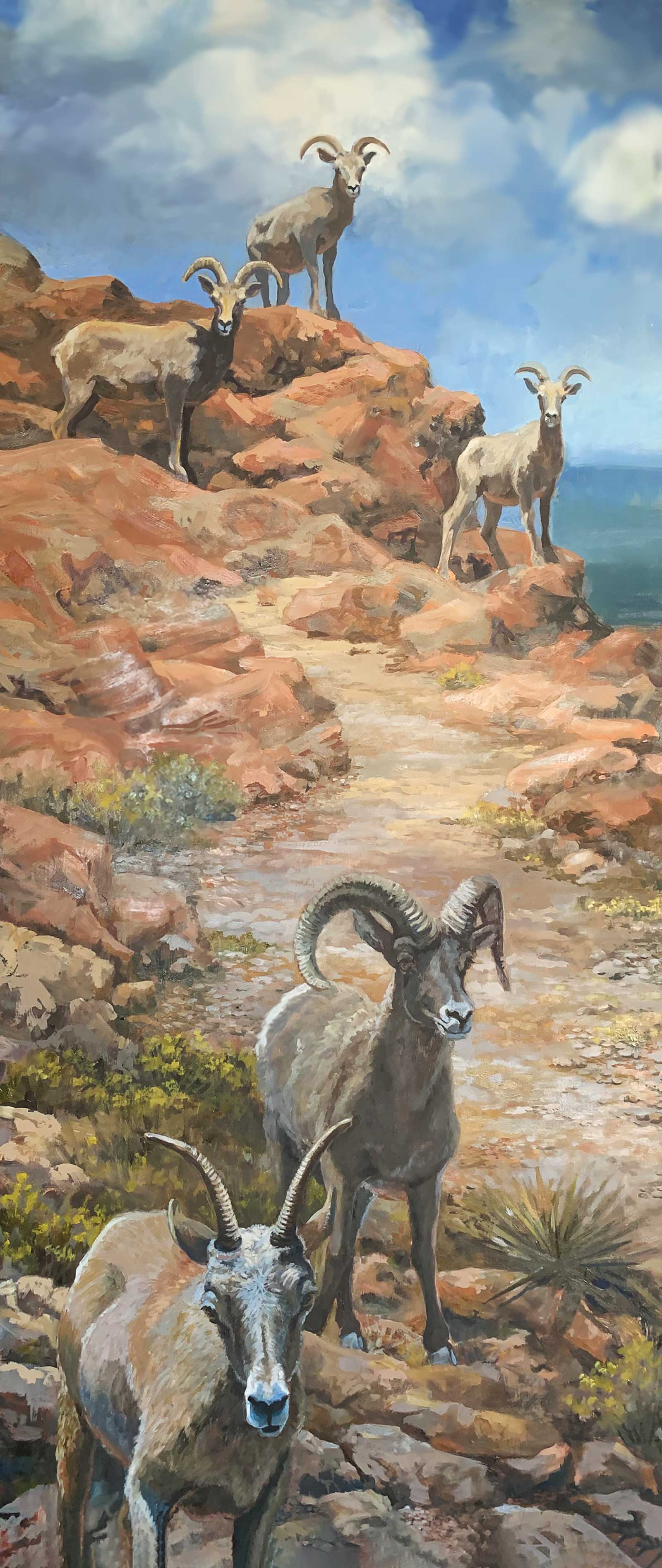 Mary Ann Cherry, Desert Bighorns, oil, 32 x 14"
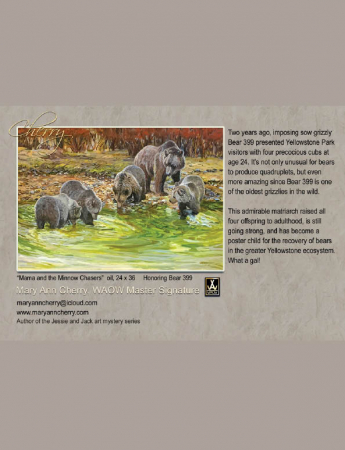
Mary Ann Cherry was raised in rural Montana near the Yellowstone River and was taught as a child to appreciate wildlife and to value nature. “There is nothing more satisfying than capturing the personality, soul and attitude of a bird or an animal with brush or pencil,” she remarks. “I enjoy it even more than painting a human as they have no guile and hide nothing. When I paint, I usually place the animal in its natural habitat and use bits of scenery to create an eye-path or composition, or even to give a sense of the season.”
When collecting Cherry says, “Many people feel that the best painting for their home and the easiest artwork to live with long-term, is a beautiful landscape or still-life. However, I encourage them to add the occasional wildlife painting to their collection. An artist’s imaginative rendition of their favorite animal brings a bit of nature indoors—the next best thing to seeing it in the wild.”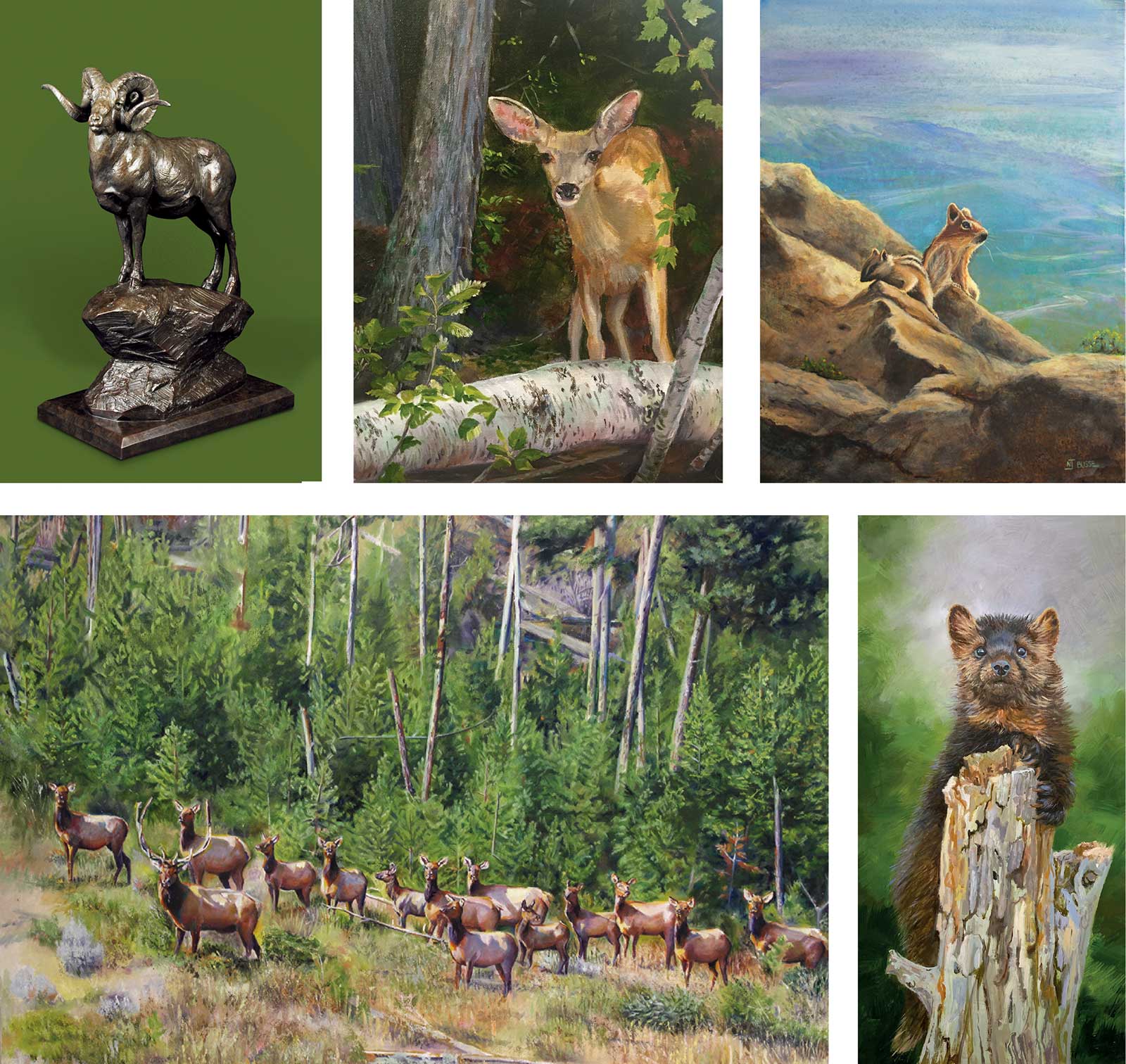 Top: Claggett/Rey Gallery, The Chadwick Ram, 15 x 10 x 6", by Tim Shinabarger; Dan Knepper, Curiosity, oil on canvas, 16 x 12"; Nancee Jean Busse, Master of all He Surveys, acrylic, 24 x 18". Bottom: Dan Knepper, Extended Family, oil on canvas, 30 x 40"; Mary Ann Cherry, Here’s Lookin’ at Ya, oil, 24 x 12"
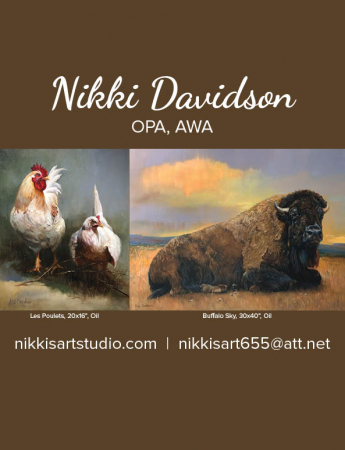
Nikki Davidson spends a lot of time observing nature by frequenting zoos and taxidermy shops or drawing and painting from her own animals as they spend their days on her farm. “Painting wildlife feeds my artistic soul,” Davidson says. “The curve of a horn, the softness of fur or how light dances across muscle and bone excites me.” Pictured in this section are examples of Davidson’s skillful technique in oil paintings like Les Poulets, featuring two chickens in grand detail, along with Buffalo Sky, of a buffalo displayed front and center, set against a beautifully lit sky.
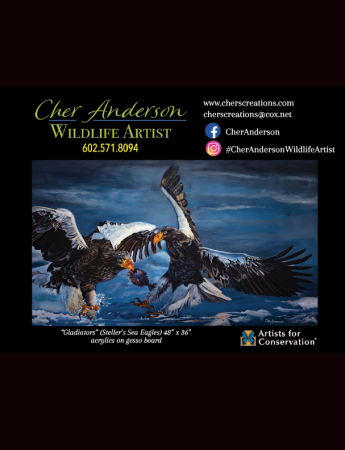
Cher Anderson began her art career in early 1980s working in pastels, pencils and watercolors. She began the transformation of her art to her current style and technique approximately 13 years ago when she realized her work needed to be more meaningful. “With a passion for animals, birds and wildlife photography, I travelled around the world to see and photograph my future subjects in their natural environment,” she says. “My [work] has evolved into photorealistic representations of my subjects in acrylics and watercolors, and I continue to learn and improve by studying the amazing artists that are currently working in this media.” Anderson donates a portion of her sales to conservation organizations and is a patron of Artists for Conservation.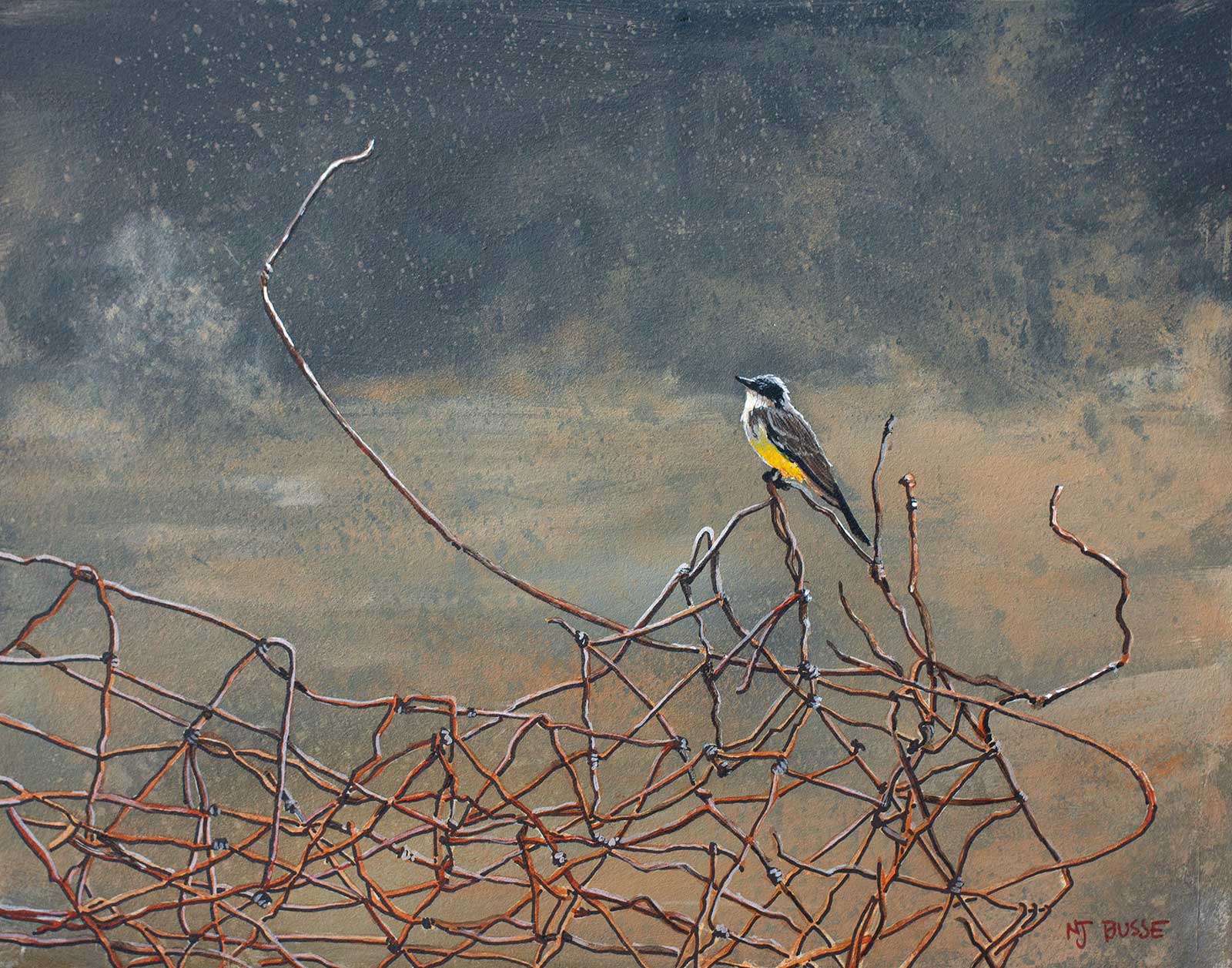 Nancee Jean Busse, Bird on a Wire, acrylic, 9 x 12"
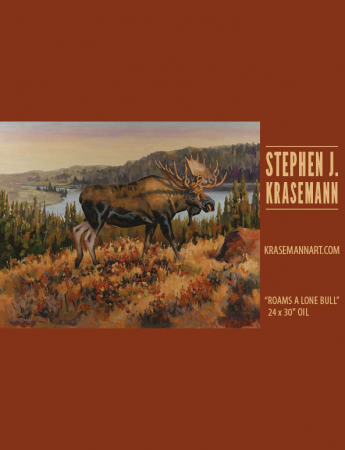
The need for creative expression has always been on Stephen J. Krasemann’s life agenda. “It fills a need to give something good back to the world rather than always taking,” he says. “I always thought the process of putting paint to board is magical and this thought permeates my painting.” This magic is clearly seen in Krasemann’s wildlife scenes like Evening Light Grizzlies, displayed at the upcoming Small Works Show at Legacy Gallery, and in This Side of Autumn, offered at the Jackson Hole Art Auction.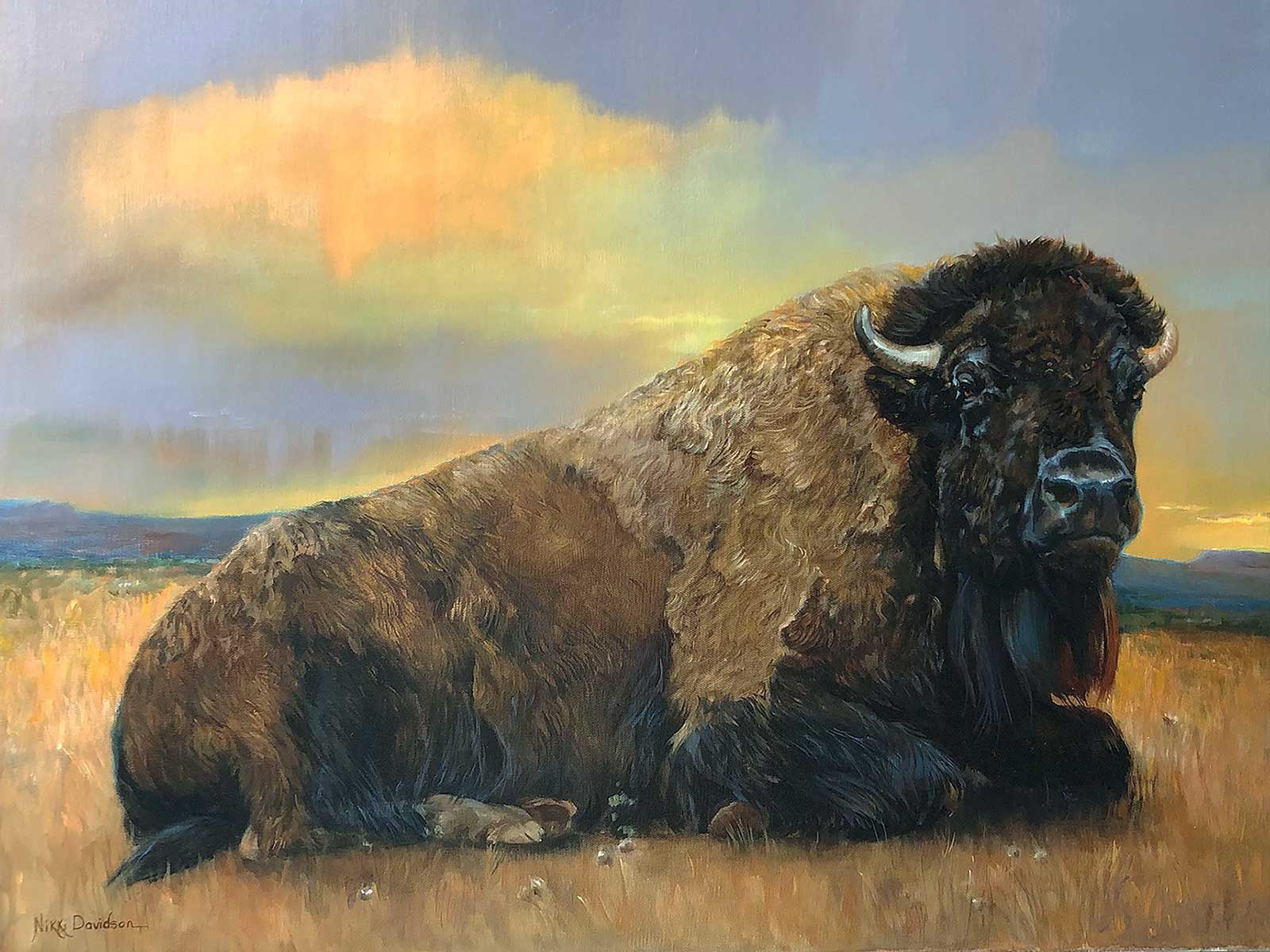 Nikki Davidson, Buffalo Sky, oil, 30 x 40”
“I imagine being part of a community that began with cave painting and continues today—where the paints and brushes have remained the same over the centuries. It’s such a privilege to see the work through the eyes of an artist…It does my heart good to know that all the hours I spend on a painting will likely endure some place or another once it departs my studio.” —
Featured Artists & Galleries
Booth Western Art Museum
501 N. Museum Drive, Cartersville, GA 30120
(770) 387-1300, www.boothmuseum.org
Cher Anderson
(602) 571-8094, cherscreations@cox.net
www.cherandersonwildlifeartist.com
Cindy Sorley-Keichinger
(780) 847-2294, goldfarm@telusplanet.net
www.goldenkstudio.com
Claggett/Rey Gallery
216 Main Street suite C-100, Edwards, CO 81632
(970) 476-9350, www.claggettrey.com
Coeur d’Alene Galleries
213 E. Sherman Avenue, Coeur d’Alene, ID 83814
(208) 667-7732, www.cdagalleries.com
Dan Knepper
(937) 489-1078, danknepperart@yahoo.com
www.danknepperart.com
Don Woodard
Broomfield, CO, (720) 217-2029
don@donwoodard.com, www.donwoodard.com
Elizabeth Mordensky
(406) 219-8307, art@mordenskyfineart.com
www.mordenskyfineart.com
Gallery Wild
80 W. Broadway Avenue, Jackson, WY 83001
(307) 203-2322, info@gallerywild.com
www.gallerywild.com
Hecho Gallery
129 W. Palace Avenue, Santa Fe, NM 87501
(505) 455-6882, www.hecho.gallery
Lisa Gleim
(770) 919-7719, lisa@lisagleimfineart.com
www.lisagleimfineart.com
Mary Ann Cherry
www.maryanncherry.com
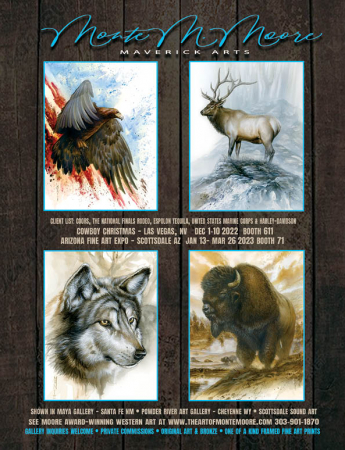
Monte M. Moore
Littleton, CO, (303) 901-1870
montemmoore@gmail.com
www.theartofmontemoore.com
Nancee Jean Busse
www.nanceejean.com
National Museum of Wildlife Art
2820 Rungius Road, Jackson, WY 83001
(307) 733-5771, www.wildlifeart.org
Nikita Coulombe
Dallas, TX, nikita.coulombe@gmail.com
www.nikitacoulombe.com
Nikki Davidson
(770) 387-4330, nikkisart655@att.net
www.nikkisartstudio.com
Patsy Lindamood
(352) 339-2353, lindamood@lindamoodart.com
www.lindamoodart.com
Southeastern Wildlife Exposition
P.O. Box 20635, Charleston, SC 29413
(843) 723-1748, www.sewe.com
Stephen J. Krasemann
www.krasemannart.com
Victor Blakey
Dallas, TX, (214) 587-6103
www.victorblakeyfineart.com
Powered by Froala Editor