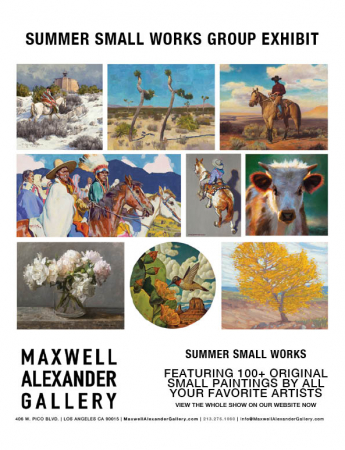
“A small-work show is a great opportunity for a collector to take a chance on an artist they might not necessarily consider for a larger-scale piece,” Maxwell Alexander Gallery owner Beau Alexander says. “When people buy a smaller painting, it gives them the chance to live with that artist, learn more about them, and they might be surprised at how much they enjoy that artist.”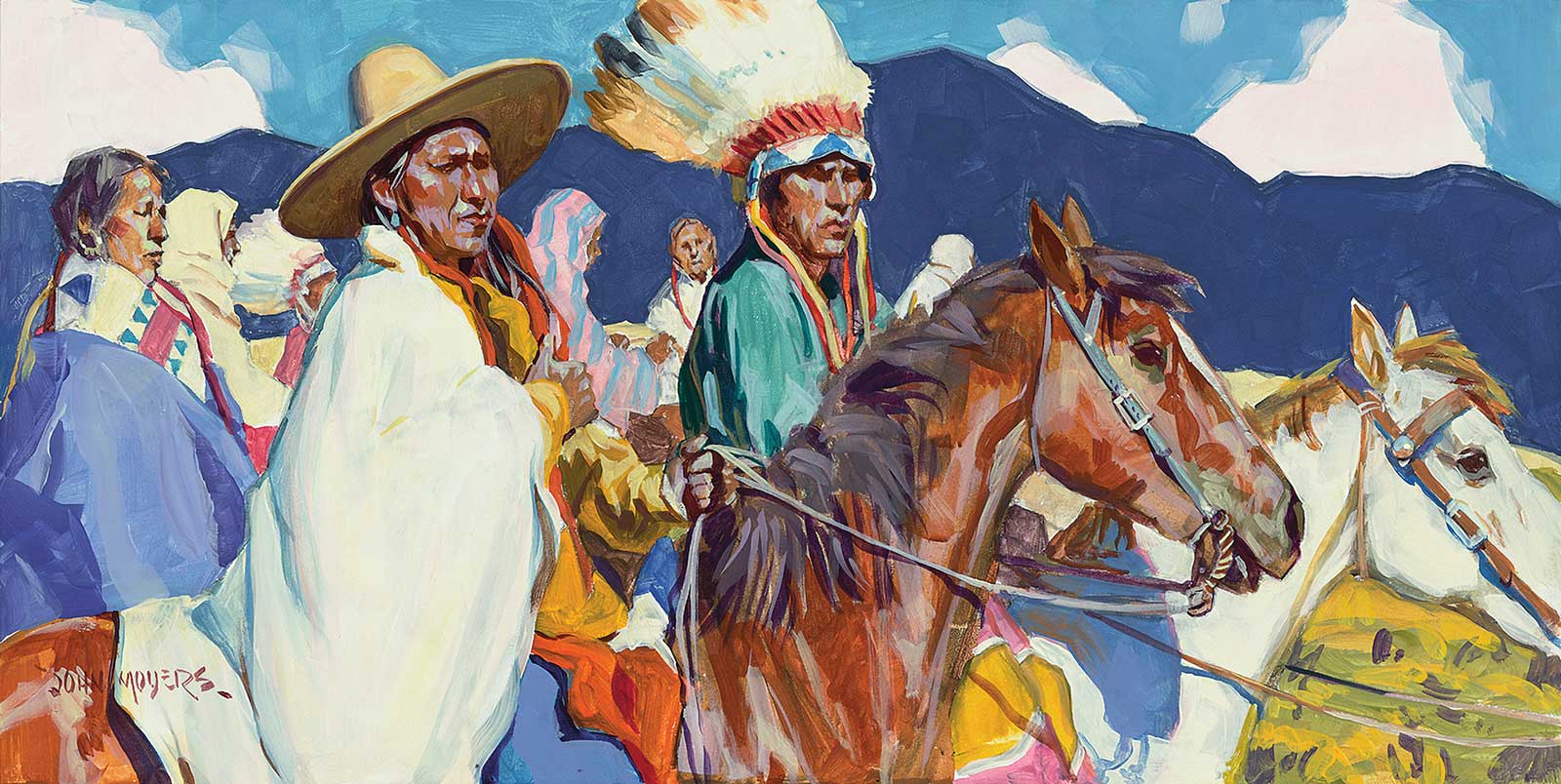 John Moyers, Balance and Harmony, acrylic, 12 x 24”
As a tool for collectors, beginners can use small works as an opportunity to acquire original paintings from major name artists for a fraction of the cost those artists’ larger pieces demand. With a roster of the most celebrated painters working in Western art-many offering pieces in this show-a favored artist previously seen only in museums or magazines suddenly comes into reach.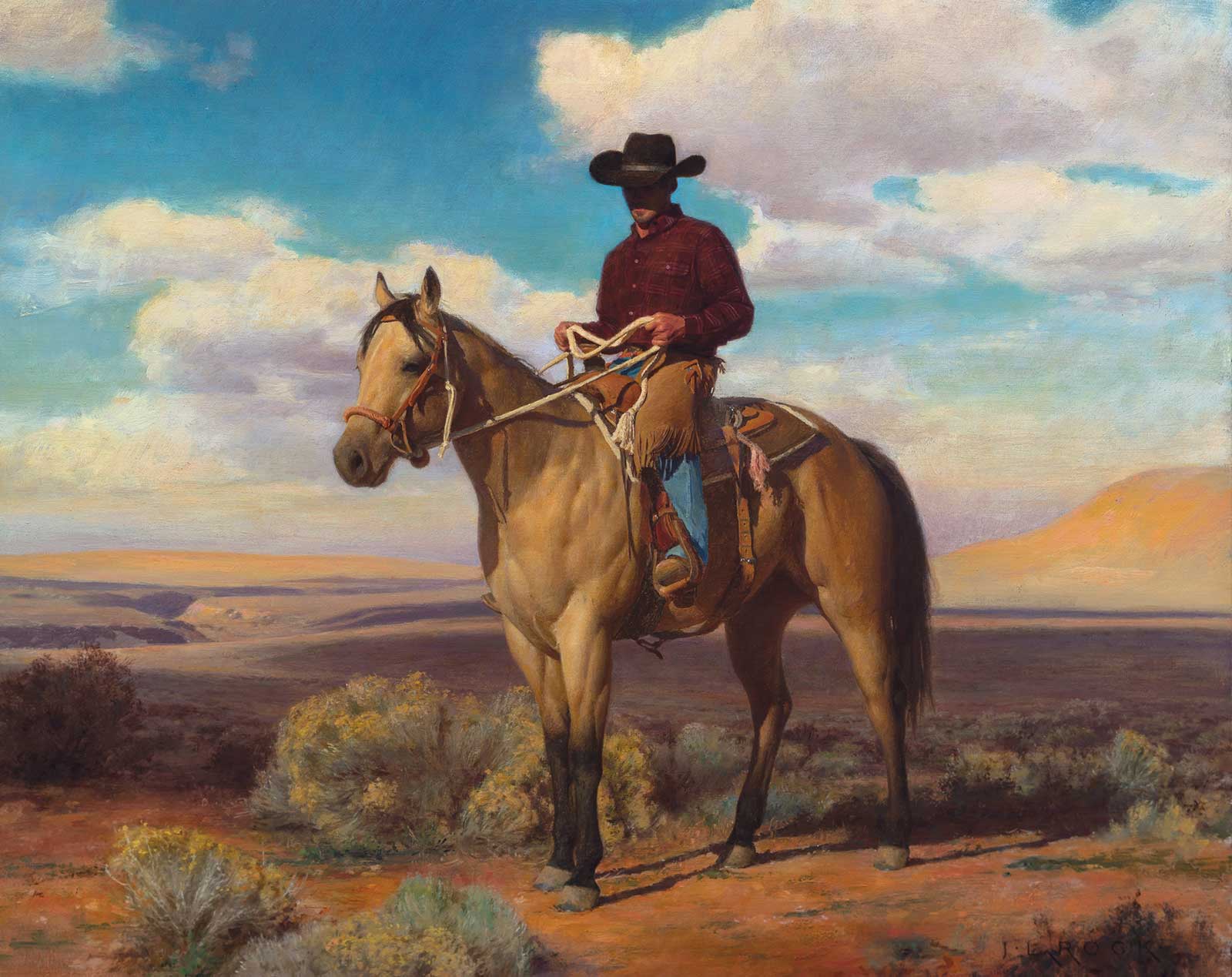 Joshua LaRock, Chasing Shadows, oil, 16 x 20”
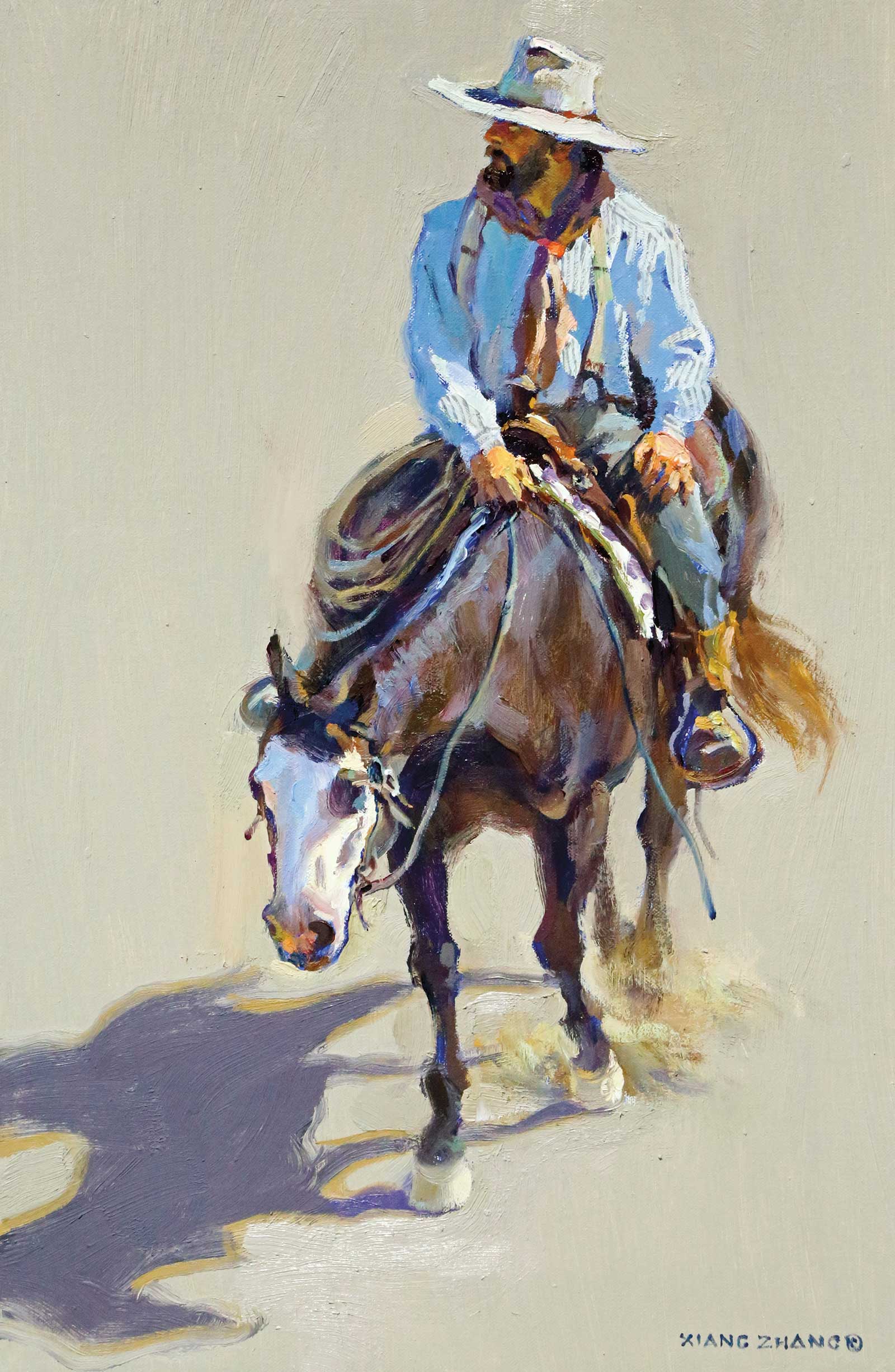 Xiang Zhang, After a Long Day, oil on linen, 18 x 12”
“(Newcomers) can get one of these top-level artists for $5,000 to $10,000. There’s only one or two times a year when you have that chance to get one or two paintings from prominent artists that are willing to paint small,” Alexander says. “It’s really an opportunity for new collectors to start collecting original art and start their collecting journey.”
For established collectors, the trim pieces fill nooks and crannies—the awkward hallway spot and remaining open wall spaces too snug for larger paintings.
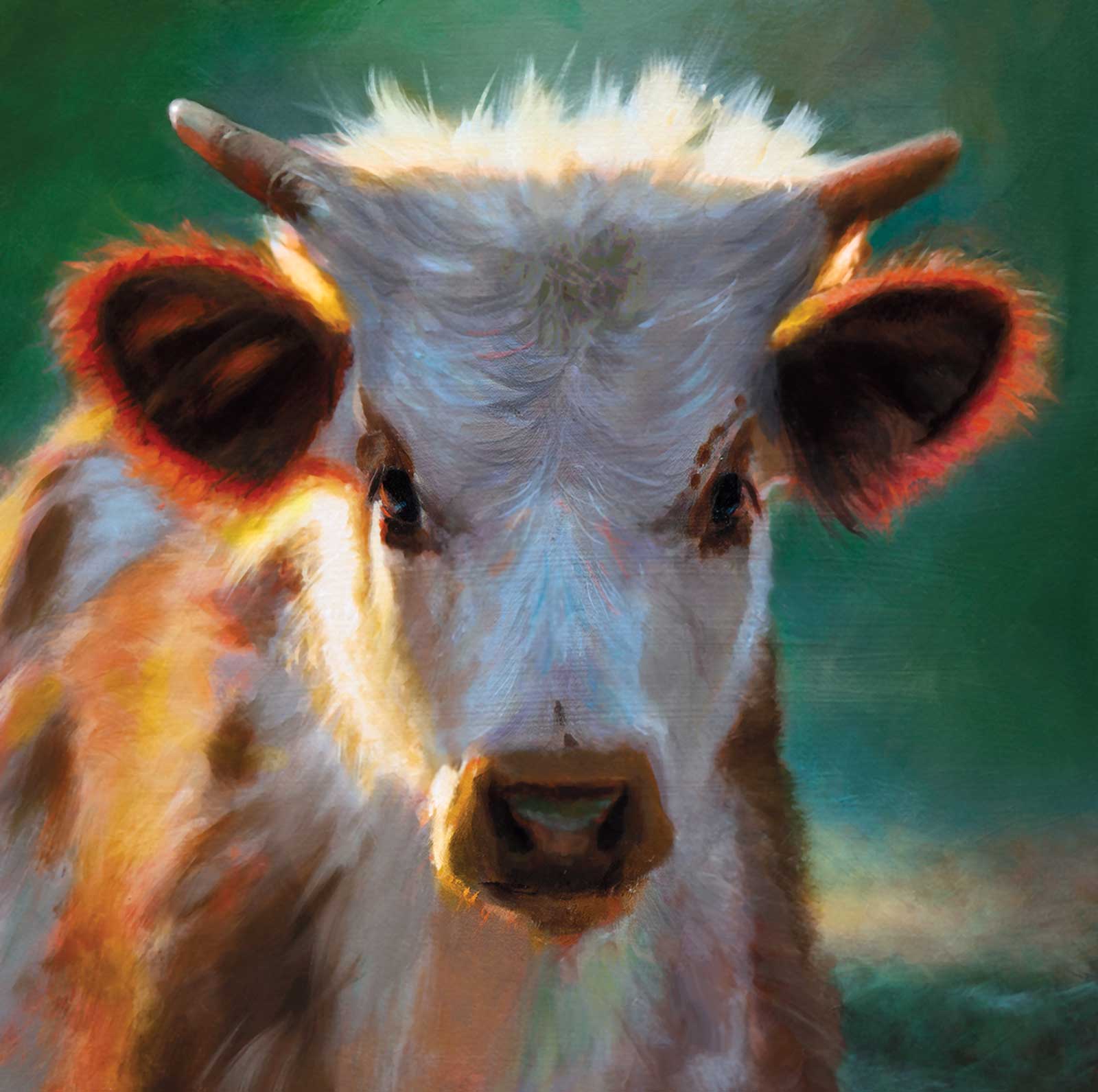 Teresa Elliott, Winter Longhorn Calf, oil, 12 x 12”
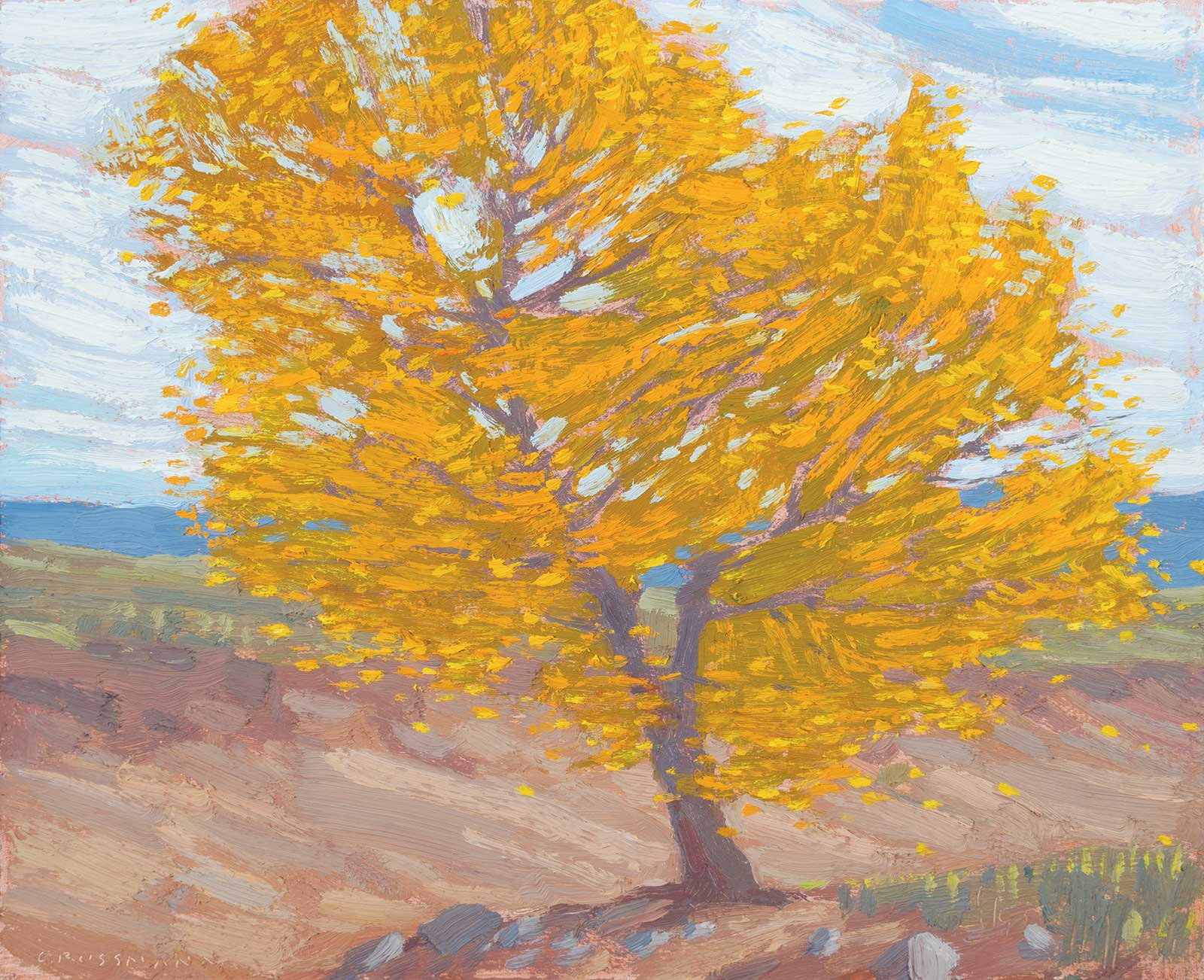 David Grossmann, Autumn Cottonwood in the Arroyo, oil on panel, 8 x 10”
Small artworks also serve as a tool for the artists.
“Some artists really like to slow down and paint small; it gives them a chance to work on mastering their compositions because if it works at a small scale, it’s going to work in a large scale,” Alexander says. “It’s really a good exercise in slowing down and reanalyzing their technique.”
Lest anyone think otherwise, smaller paintings don’t mean easier or less skill required. Oftentimes, the opposite is true.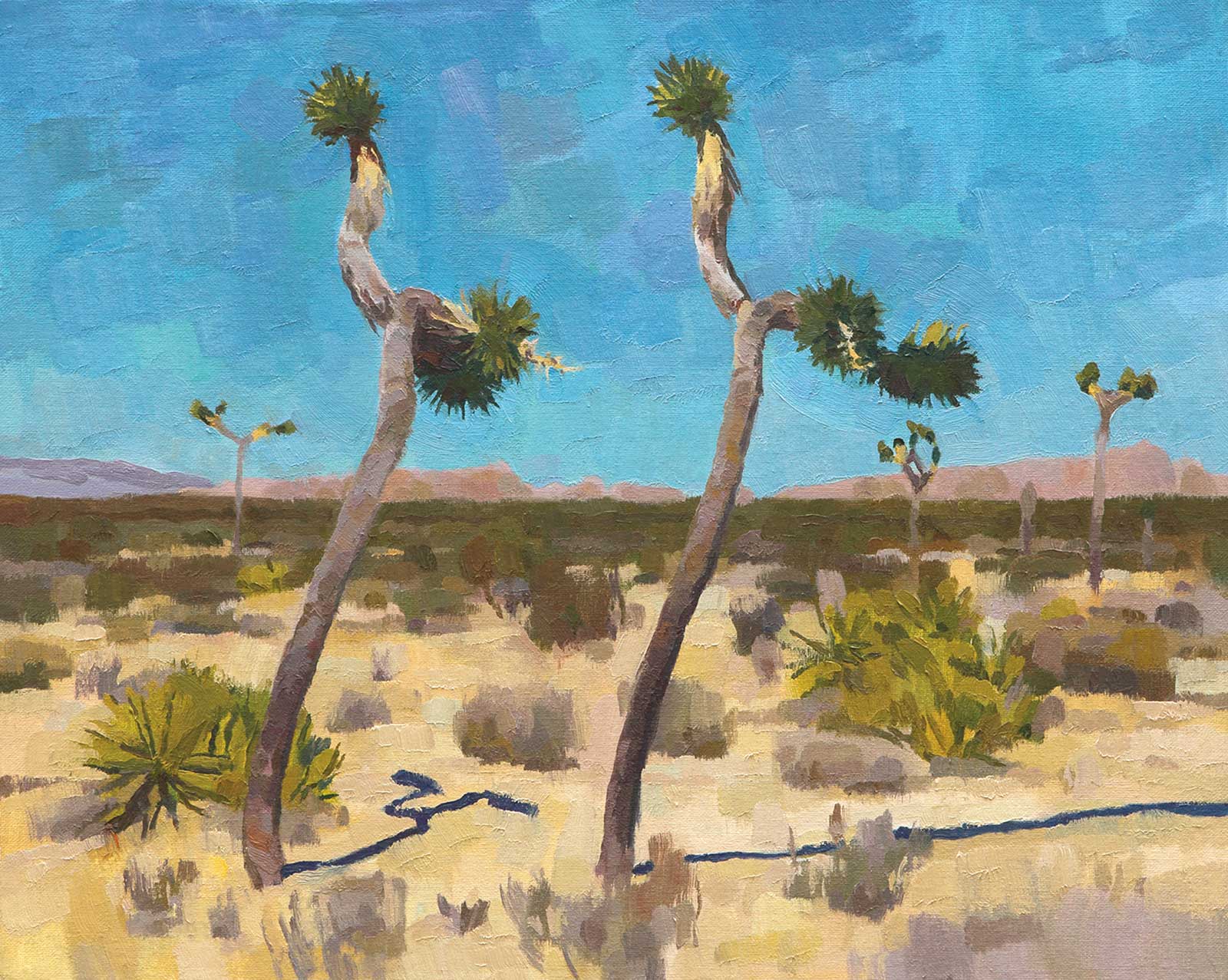 Eric Merrell, One Desert Yucca, Twice, oil, 16 x 20”
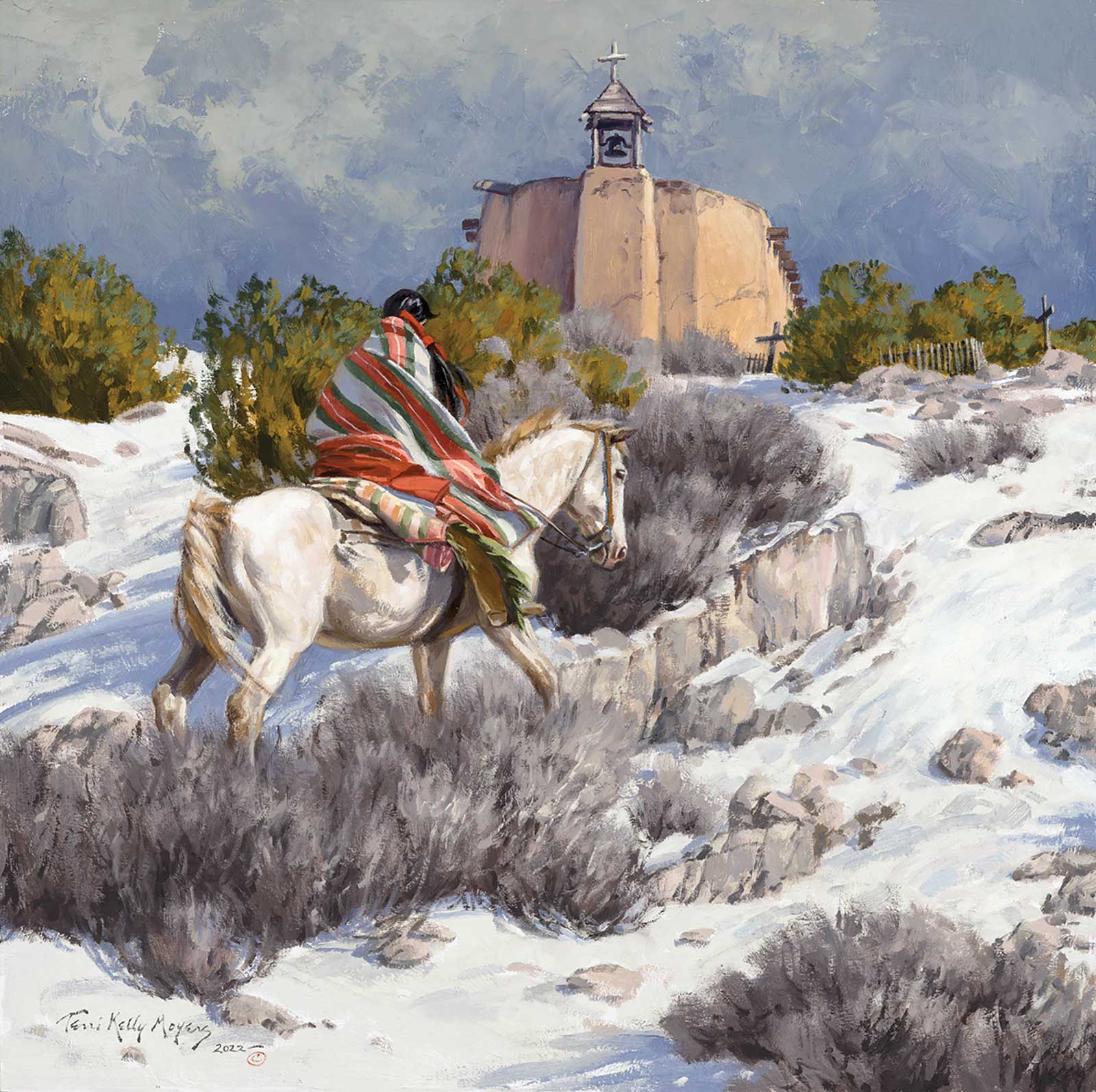 Terri Kelly Moyers, A Place of Refuge, oil, 20 x 20”
“They’re working on a more minute scale, so everything is smaller—the brushes get smaller, the features get smaller—and sometimes, a small painting can take longer than the finished large piece because there‘s so many small strokes, getting in there really tightly, but mainly because [artists are] working out all the problems when they’re working on that small scale,” Alexander explains.
Sorting out those problems and compositions on a smaller scale allows painters to recognize the hang-ups, adjust and resolve. 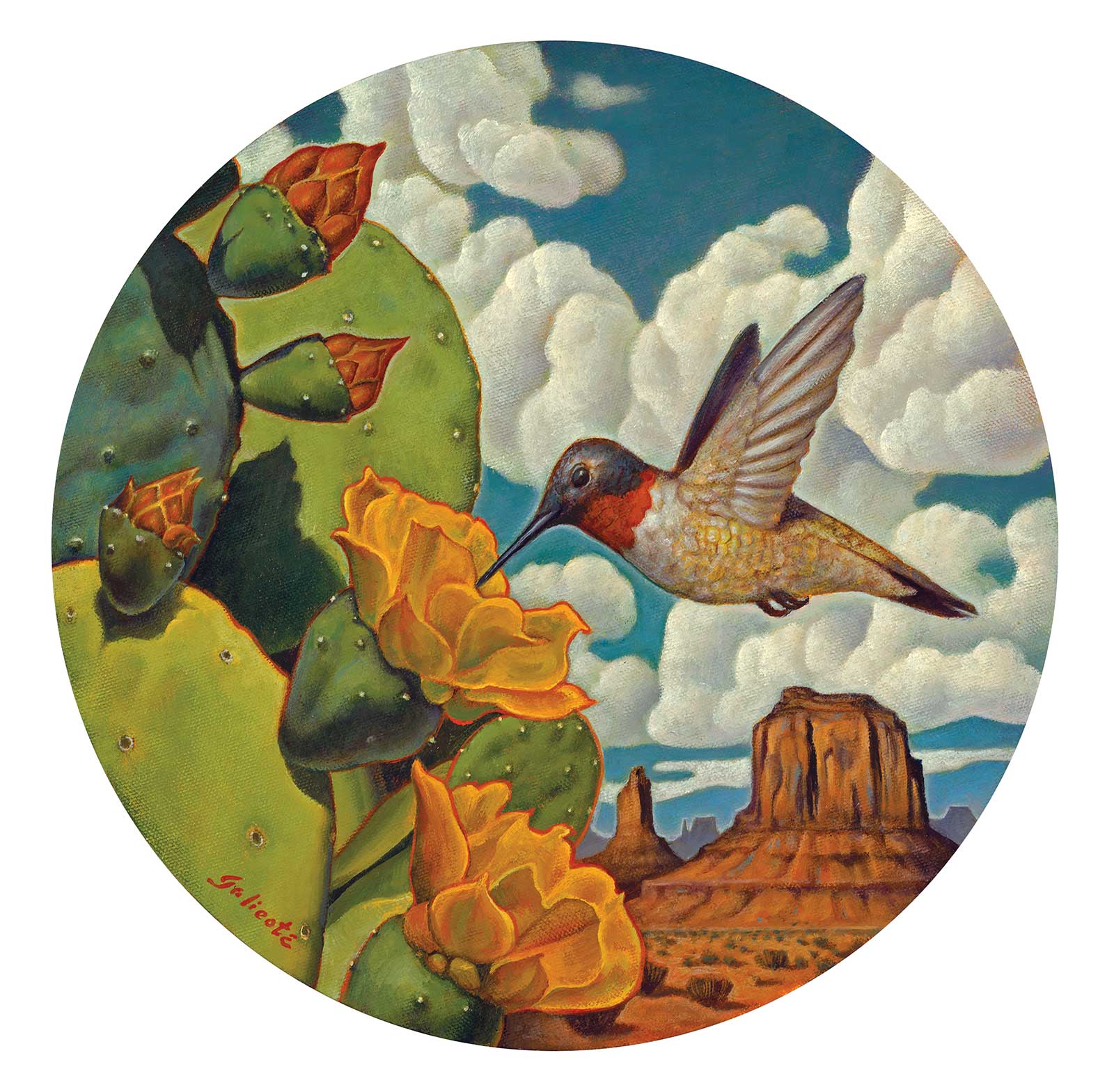 Danny Galieote, Desert Morning, oil, 12”
It turns out, in art, size doesn’t matter.
“Smaller paintings are some of the best paintings,” Alexander says. “They have a certain charm to them that can sometimes get lost when [the image is] translated to the larger piece.” —
Powered by Froala Editor