Like many people before him, Winold Reiss was lured to the West by the books, and illustrations therein, of James Fenimore Cooper, author of quintessential classics such as The Last of the Mohicans and The Deerslayer. In 1913, after leaving his German home and sailing to the United States, Reiss was somewhat shocked not to see the American West splayed out in front of him beyond the dock where he landed. Broke from the voyage, Reiss would spend seven years in New York City before making that fateful journey west. When he arrived in 1920, it didn’t take much to get him hooked. He would return to Montana annually for nearly three decades after.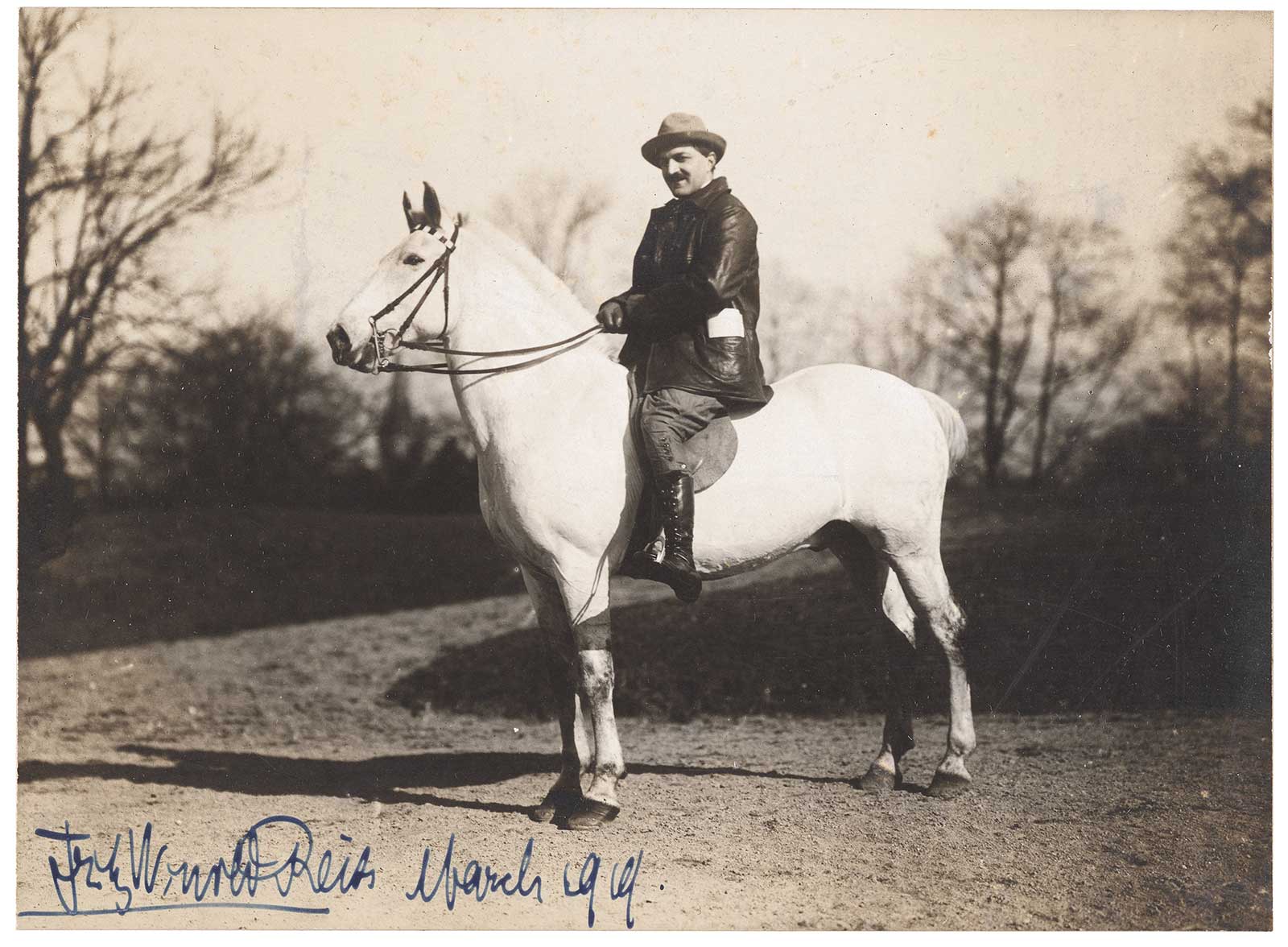 Winold Reiss in 1919. Gelatin silver print, 6 x 8 1/8”. National Portrait Gallery, Smithsonian Institution. Gift of Howard Greenberg, S/NPG.91.50.
One of the places Reiss ended up was in Browning, Montana, where he painted the Blackfoot people in a vast series of evocative portraits. An impressive selection of those images is now view at the C.M. Russell Museum in Great Falls, Montana. The exhibition, F. Winold Reiss: Portraits of the Blackfeet of Glacier Park, draws from the museum’s permanent collection, including pieces that were donated to the collection from the artist’s grandson.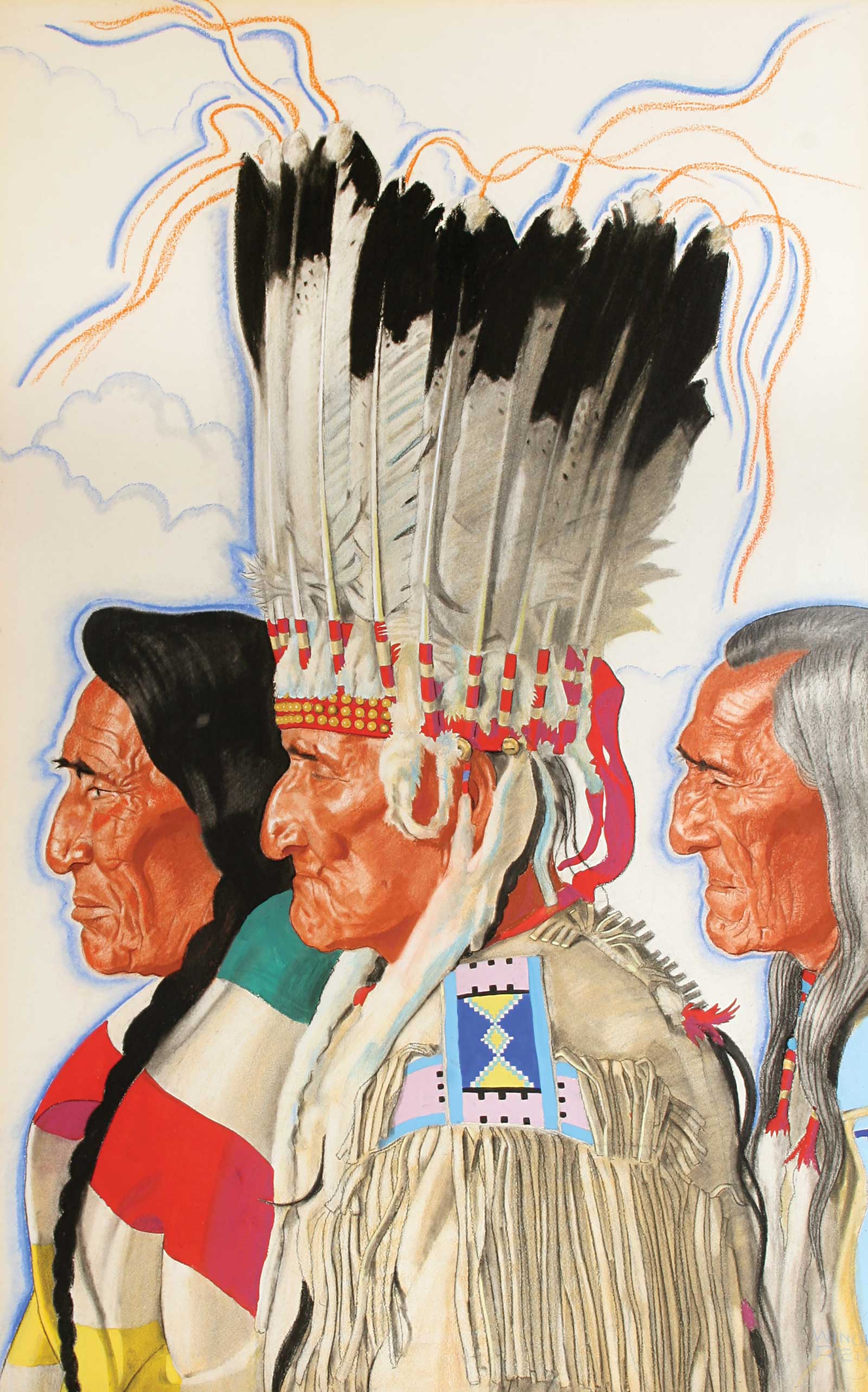 Eagle Child, Mountain Chief and Bear Medicine, pastel and gouache on board. Gift of Peter and Christina Reiss, 986-7-13.
“It’s great to [get] these pieces out so they can be seen. We have 24 portraits in the exhibition, along with several others in different exhibitions, so it’s a really great selection that is now on view,” says Sarah Adcock, the museum’s associate curator. “It’s especially fun for us because many of the descendants of Reiss’ subjects still live in the area, so they can come in to see their relatives in these magnificent works.”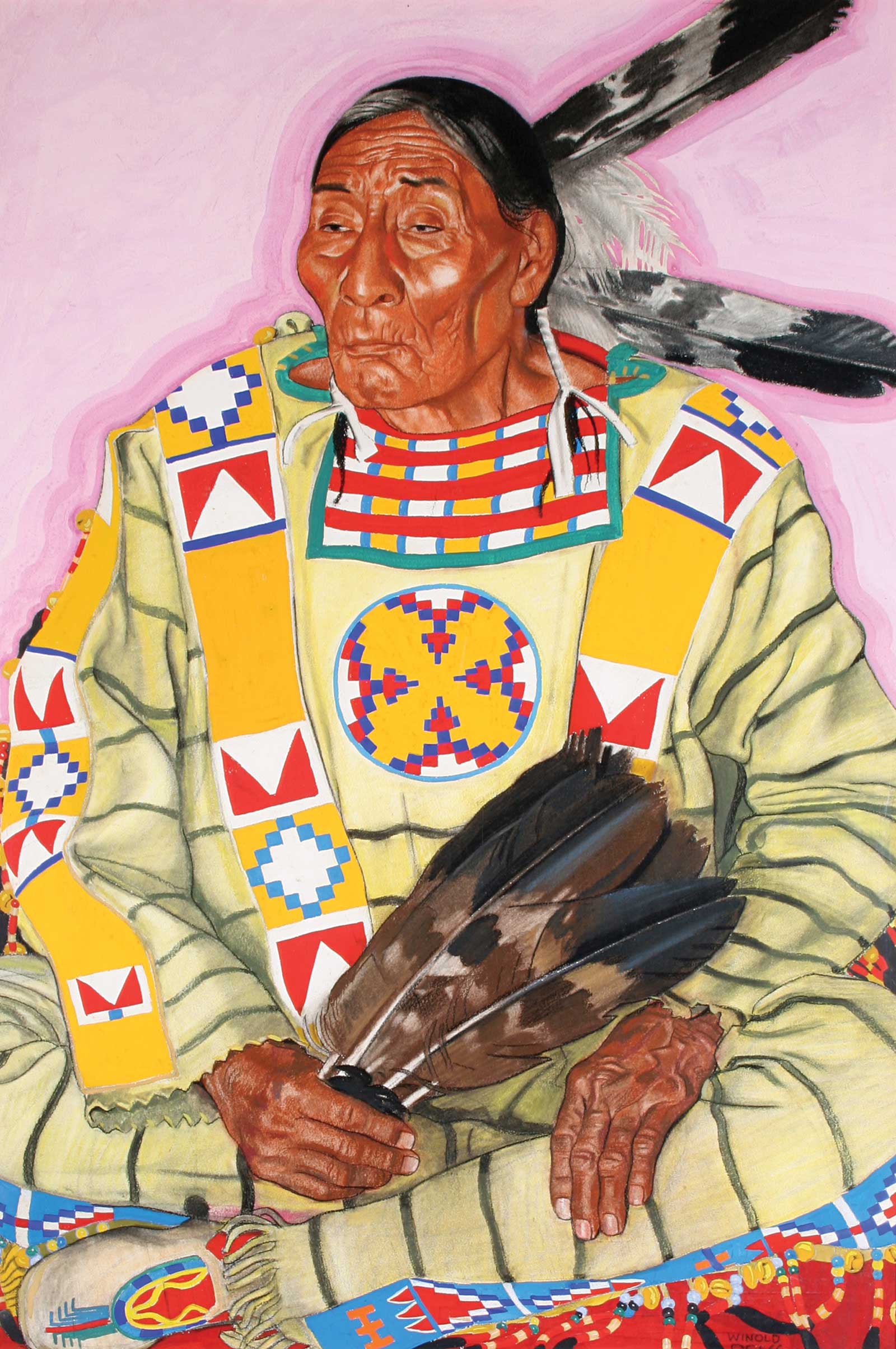 Running Crane; Sekomomakan (Blackfeet or South Piegan), pastel and gouache on board. Gift of Peter and Christina Reiss, 986-7-10.
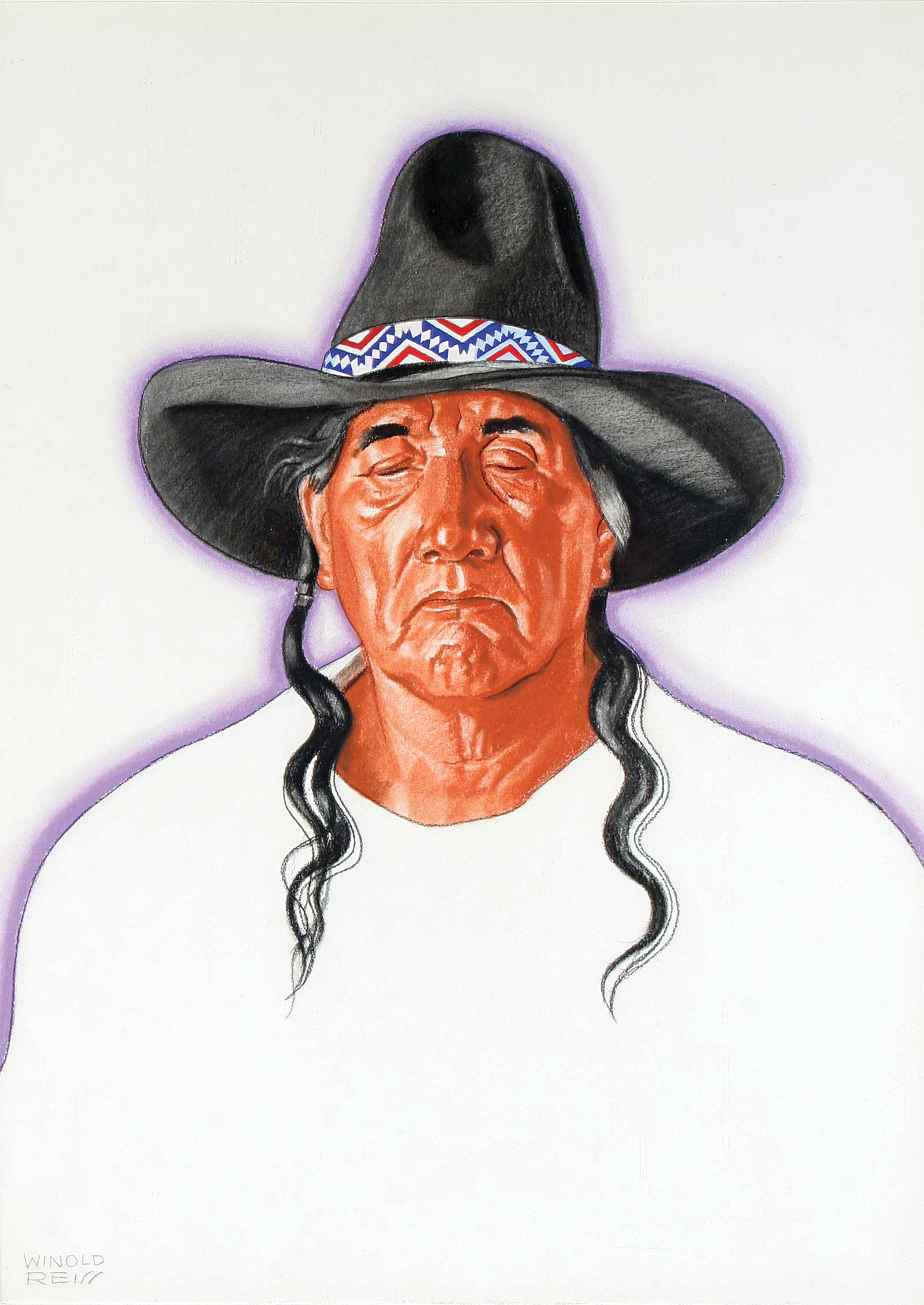 Paiute Indian in Black Hat; Brave (Piegan), pastel and gouache on board. Gift of Peter and Christina Reiss, 986-7-04.Adcock says that visitors are responding well to the exhibition, particularly because Reiss was a prominent force in the Art Deco movement and “that design quality is very popular today,” Adcock says. “Some of the works are full of paint and color, but then some are very modern and really use a lot of negative space to highlight the face. Those are some of the works that viewers are really responding to.”
The images can be characterized by the intensely sincere expressions on the subjects’ faces. Although Reiss paints these figures in some of their traditional regalia—feathered headdresses, quilled and beaded shirts, elk-tooth dresses—he offers little commentary in their faces other than calm patience. In many cases the hands are more expressive than the faces—Reiss was enthralled by Blackfoot sign language traditions, which is painted in many works of the period. At the time, the Blackfoot were concentrated into an area outside of Glacier National Park and were regarded as “mascots” to the park. But Reiss didn’t see them as mascots, nor did he paint them as such for himself or his biggest employer, the Great Northern Railway, which was running his images in marketing campaigns for the region.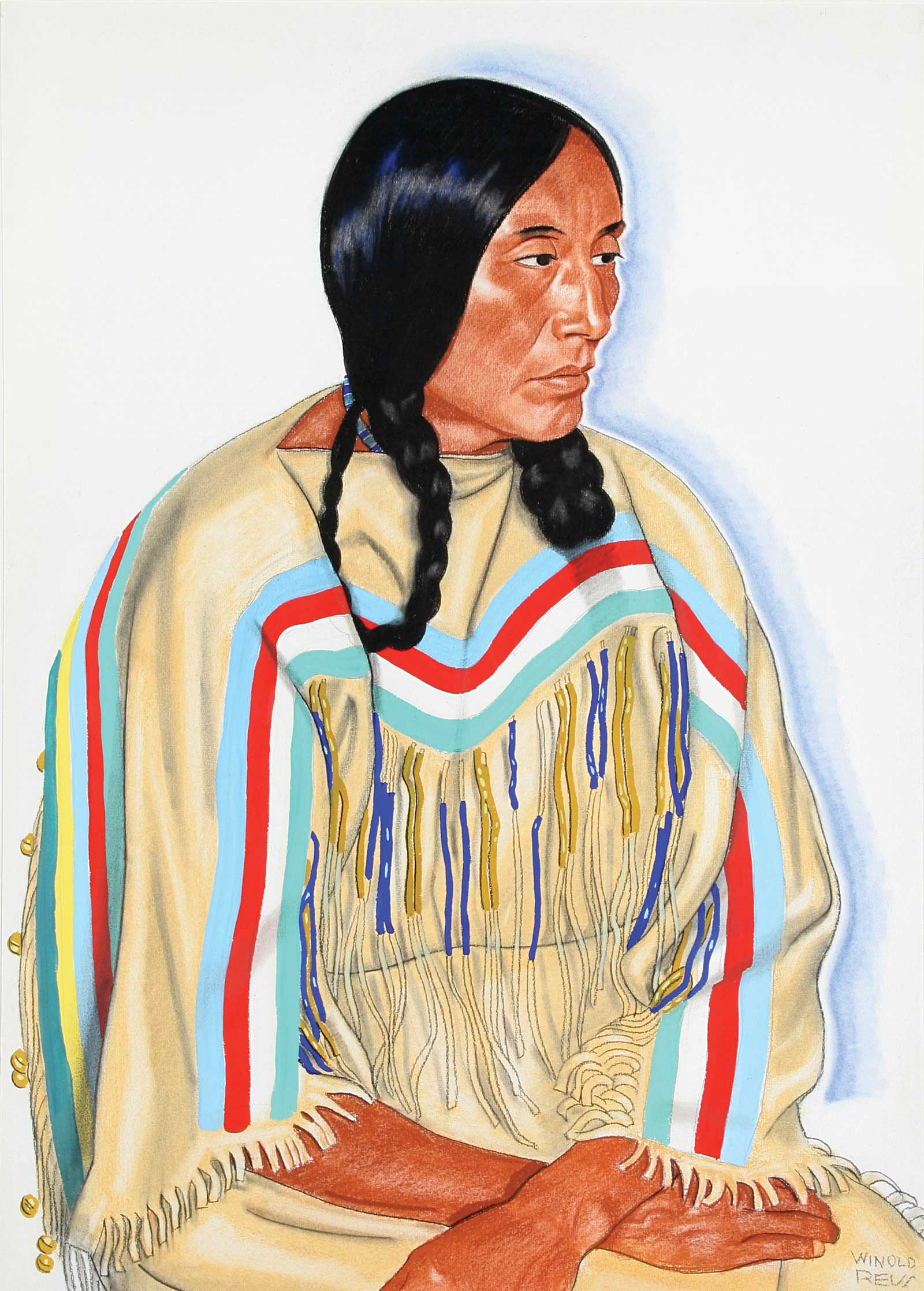 Sacred Child Woman, pastel and gouache on board. Gift of Peter and Christina Reiss, 986-7-07
“Since the Great Northern Railway was Reiss’ principal client for Indian portraits, the artist was enlisted to contribute to the commodification of his subjects into a corporate image. But that is only half the story,” writes Jochen Wierich in an essay within The Multicultural Modernism of Winold Reiss, 1886-1953. “Reiss’ great achievement is that each portrait is a sign of respect for the individual not the generic Indian mascot…Reiss’ intention was not to turn Indians into corporate mascots but to assert their identity as autonomous and self-reliant people who also happened to be Americans.”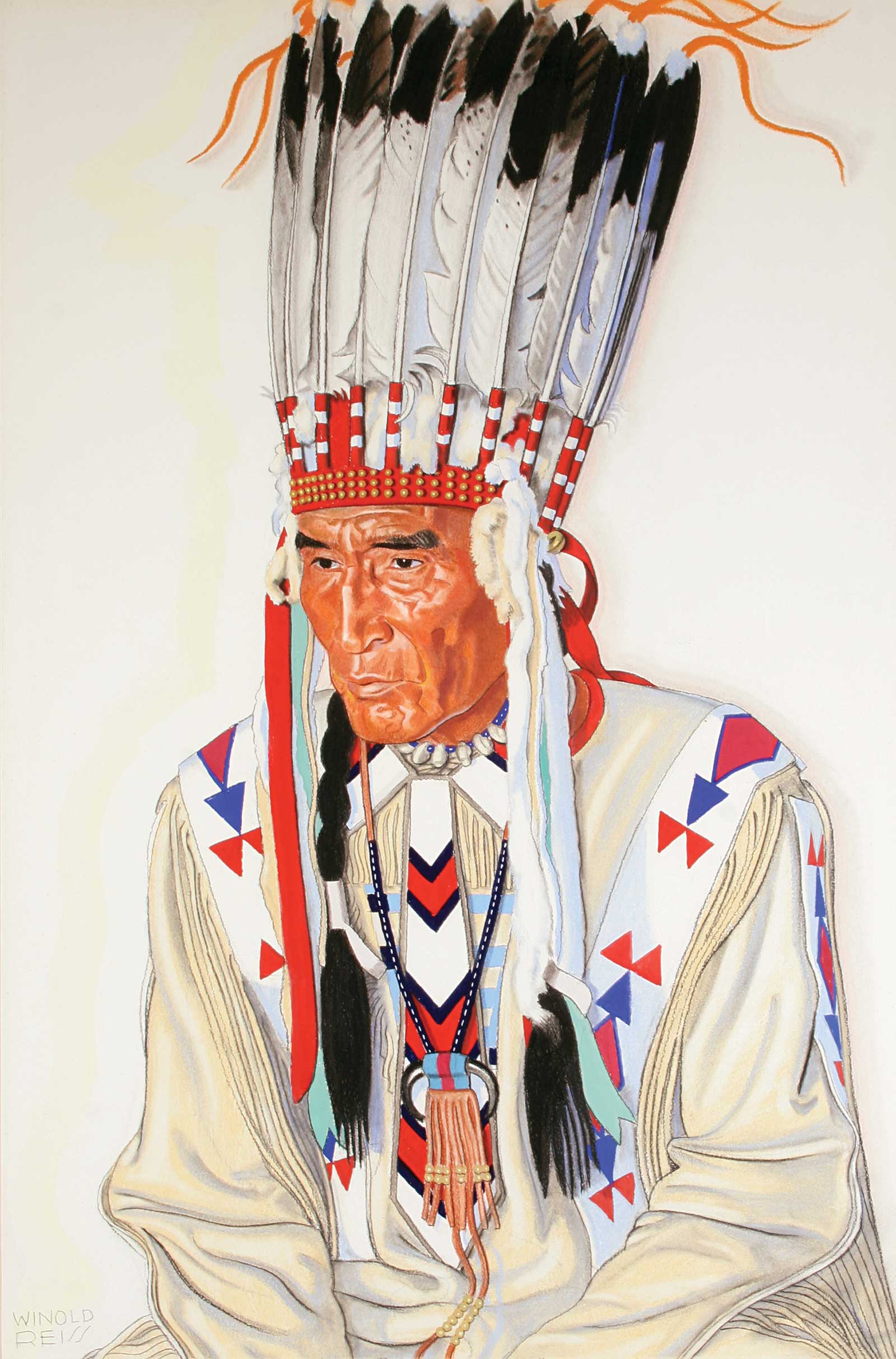 Bull Boy (Blackfeet), 1943, pastel and gouache on board. Gift of Peter and Christina Reiss, 986-7-19.
Later in the Wierich essay, the author makes a compelling argument that what Reiss was doing was less art and more ethnographic study. And the artist was also undertaking something very rare for the time period: he stepped over and largely ignored the “vanishing race” trope of Native American culture disappearing into the dust of history. Instead, Reiss would frequently, especially in later works, paint Native American subjects in various stages of evolution as they adapted into a changing world.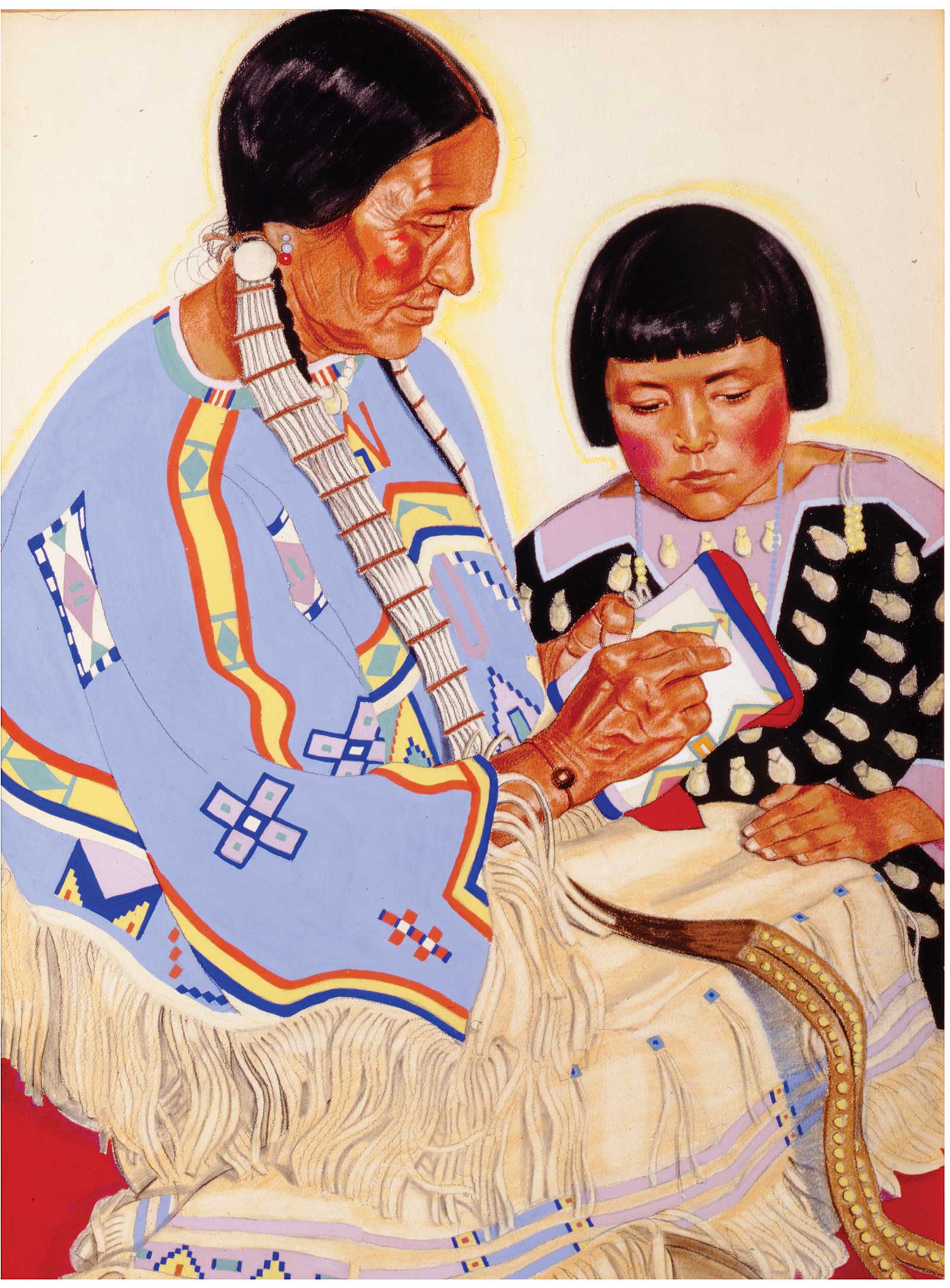 Under Owl Woman (Julia Wades in the Water) With Child, 1935, mixed media on board. Gift of W. Tjark Reiss.
“Reiss‘ images of Blackfeet signal a time when Native Americans were torn between cultural assimilation and tradition, political dependence and autonomy; tribes were losing their young men and women to boarding schools, where Native languages and religious beliefs were suppressed,” Wierich writes. “The portraits by Reiss were a form of cultural memory that connected both past and present. His images lack the narrative embellishment that one finds in the life and works of [Frederic] Remington and [Charles M.] Russell. Reiss did not rely on self-authentication to bolster the credibility of his work which is free of the theatrics found in the older Western art but also in contemporaneous works by [Walter] Ufer and the photographs by [Edward S.] Curtis. Reiss created a body of work that eludes any simple label whether it is documentary, Western art or modernism. What he teaches us is that art of the American West is not antithetical to modern art and vice versa. For any historian of Western American art, he is a puzzling figure who is more in common with ethnographer artists such as [George] Catlin or [Karl] Bodmer and with the modern discipline of anthropology than with the art of Remington, Russell or the artists of the Taos Society [of Artists]. Reiss’ position in art history might be as elusive or as clear as the sign language portrayed, always walking the line between Old and New West.”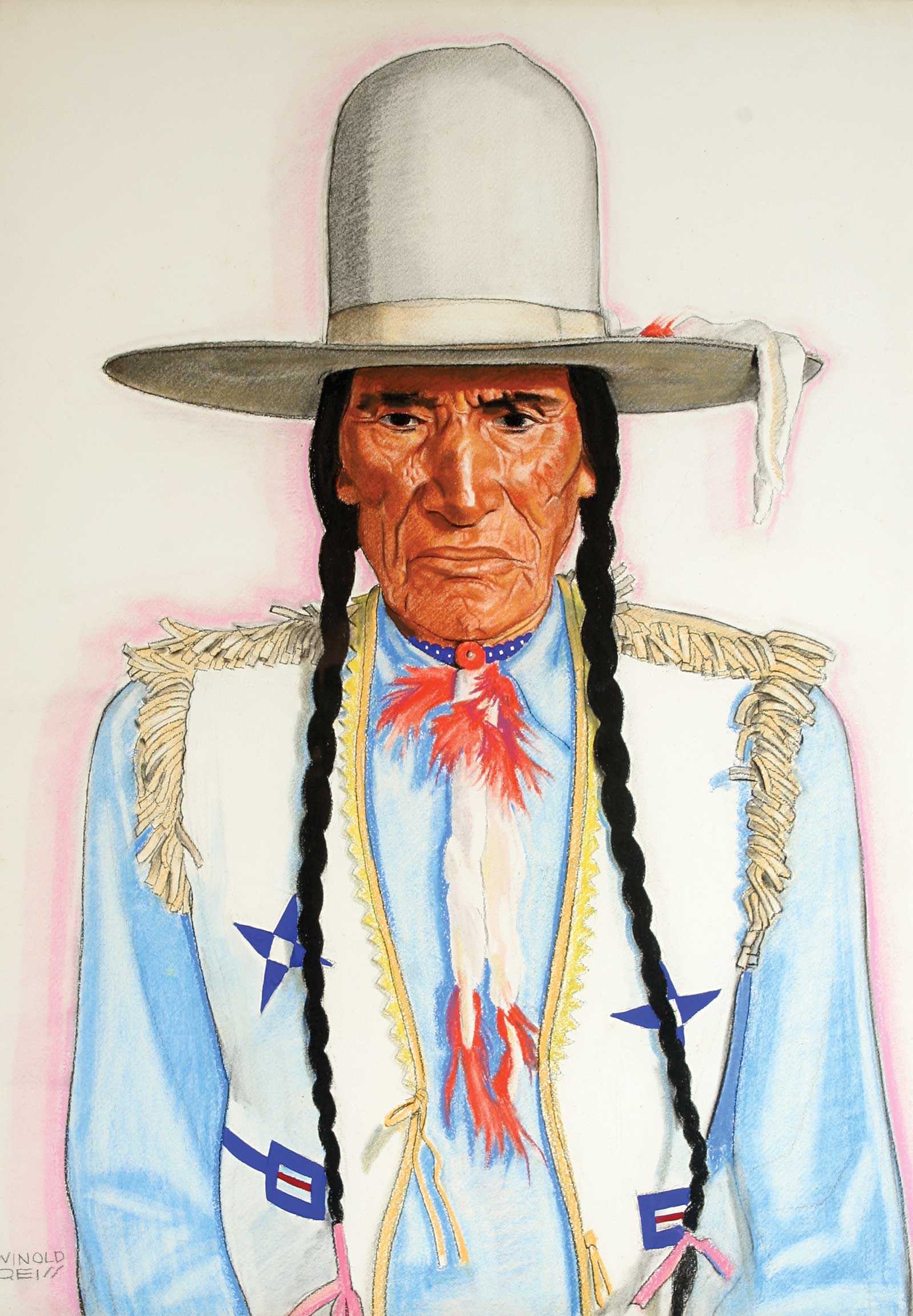 Bear Medicine, Kiayesam (Blackfeet), pastel and gouache on board. Gift of Peter and Christina Reiss, 986-7-06.
All of this can be seen in the Reiss works at the C.M. Russell Museum, including in major pieces like Eagle Child, Mountain Chief and Bear Medicine, showing three portraits in profile amid a simple orange and blue background drawn loosely in pastels. In works such as Chief Bird Swims Under, Crow Feathers and Bear Medicine, Kiayesam (Blackfeet), it’s obvious Reiss wanted to paint contemporary subjects in modern clothing and attire. His subjects were not tokens of the past, but living, breathing people whose lives were moving forward into the 20th century whether Reiss, Remington or Russell were there to paint them or not. —
F. Winold Reiss: Portraits of the Blackfeet of Glacier Park
Through September 2022
C.M. Russell Museum
400 13th Street N., Great Falls, MT 59401
(406) 727-8787, www.cmrussell.org
Powered by Froala Editor