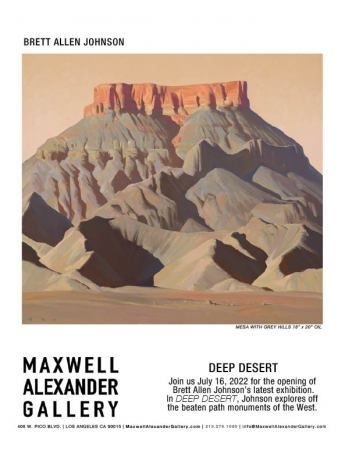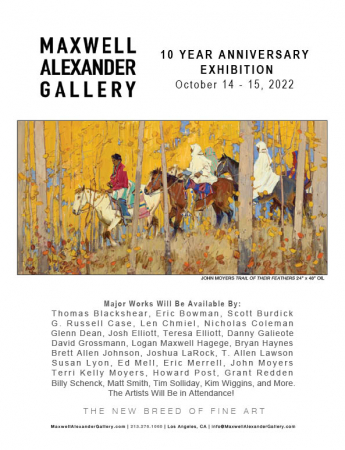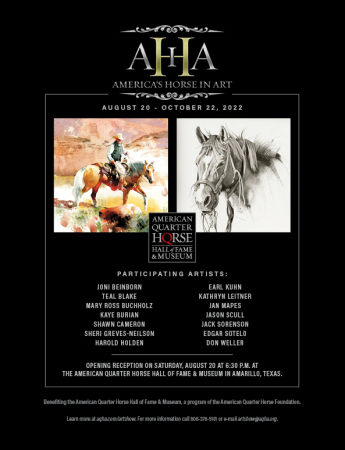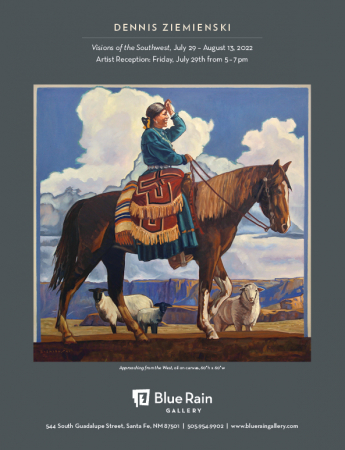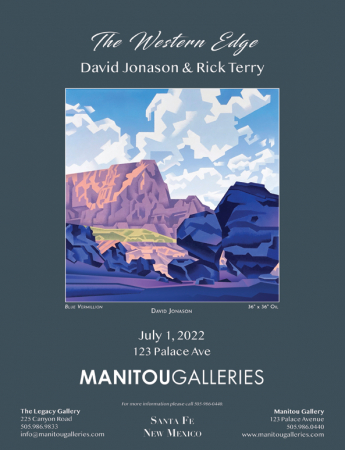

Viewers of The Western Edge show, opening July 1 at Manitou Galleries, will see many similarities between the works of show artist’s David Jonason and Rick Terry. While they work in different mediums—Terry a sculptor and Jonason a painter—“both artists have a geometric quality about their work,” says Manitou Galleries. “Bringing them together highlights a more contemporary perspective of the American West.” 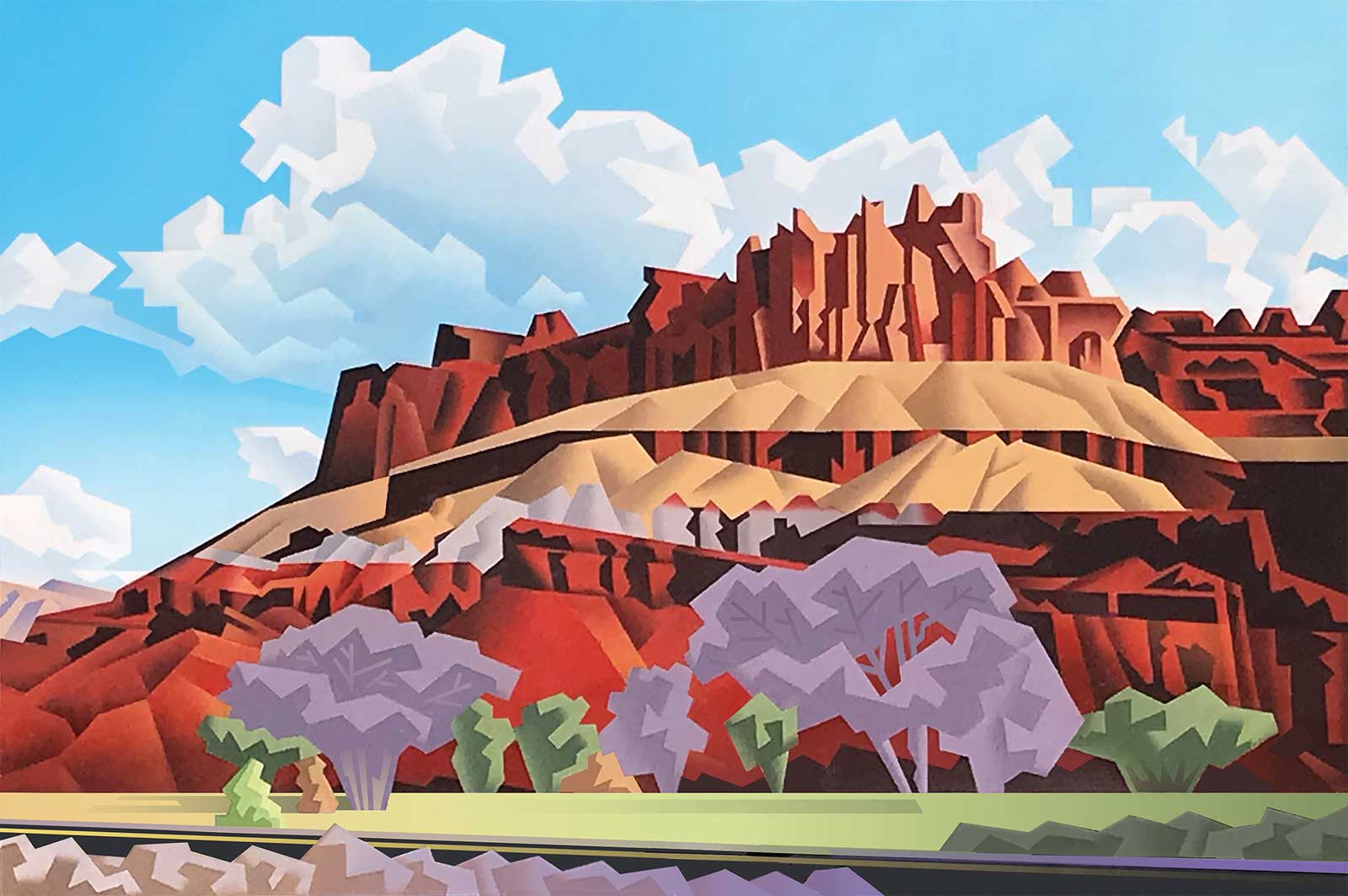 David Jonason, View from the Visitors Center, oil on canvas, 24 x 36”
Both artists also happen to be modernists who focus on traditional imagery and subject matter of the West. Terry, now based in Montana, lived many years in the Southwest. His piece Sun and Mesa combines three elements of the Southwest that have left an impression on him: “The sun, the land and the Native people,” he notes. Terry will have approximately 14 bronze sculptures for the show, ranging in size from 6 inches to 6 feet.
“When I first started sculpting,” Terry continues, “the challenge to replicate nature held my interest. Somewhere along the way, imagination and exploration opened a more satisfying way of expressing my work. Some of the pieces have been experiments using straight lines and geometric shapes to manipulate light and shadow.”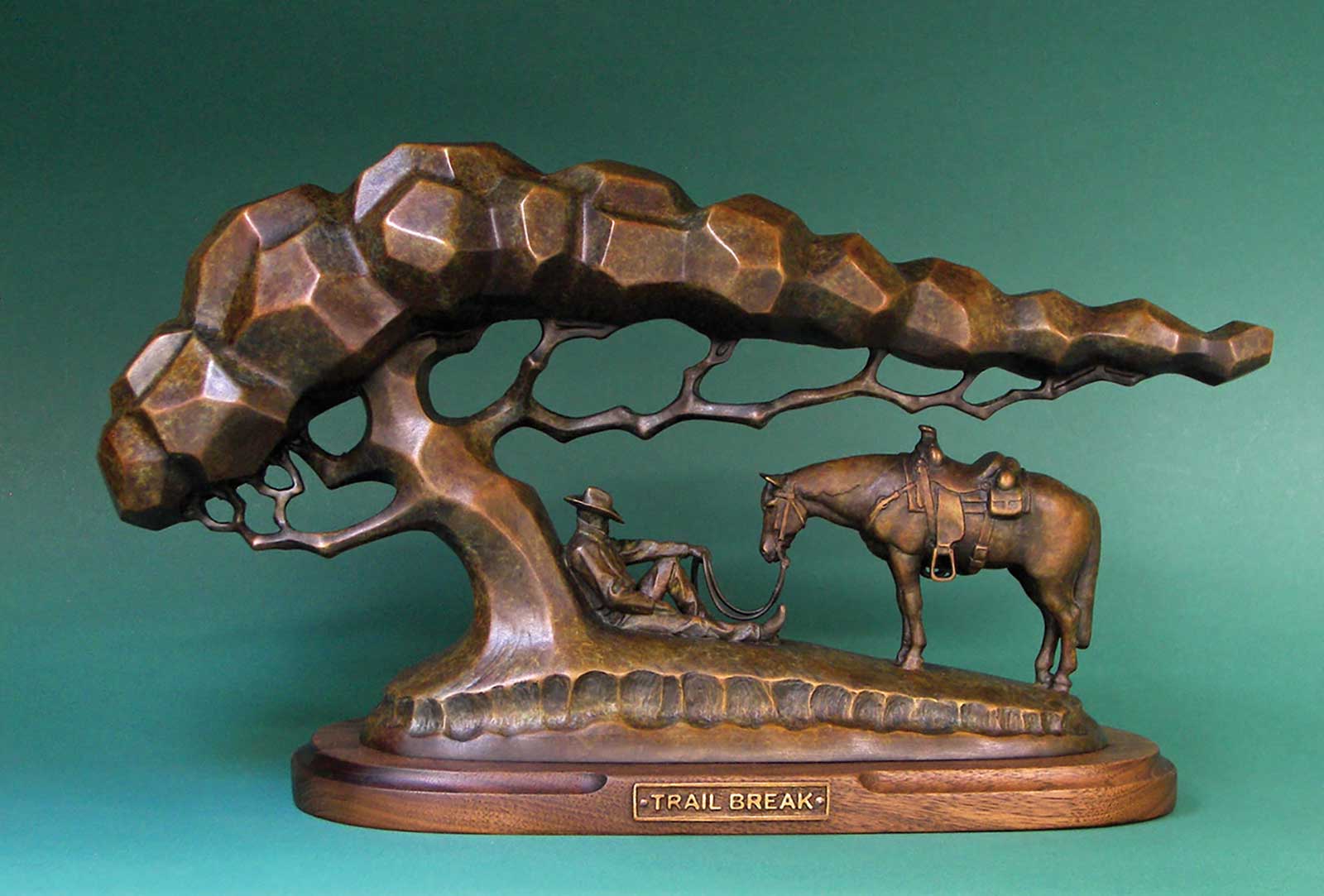 Rick Terry, Trail Break, maquette bronze, ed. of 35, 15½ x 8¼ x 2½”
An example of this can be seen in the maquette Trail Break, featuring a figure with a horse perched under a tree. “[This piece] is another of the geometric explorations, originally titled Waiting for Daylight,” says Terry. “It came from the occasional experience of getting up very early to gather cows and then having to wait until it became light enough to find them. It was a bit confusing, so I changed the title to Trail Break, which describes what one needs after a long day.”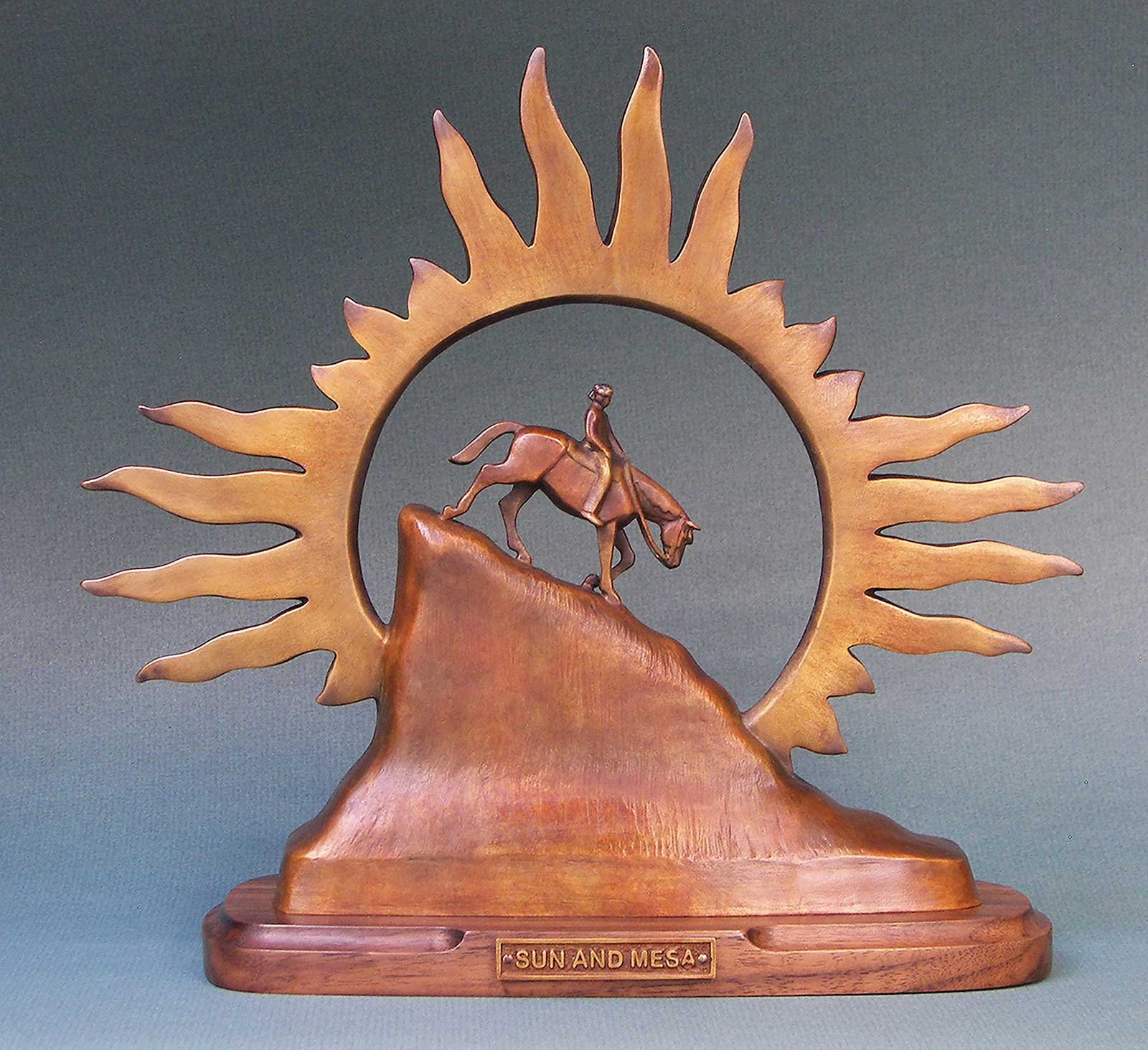 Rick Terry, Sun and Mesa, bronze, ed. of 35, 12 x 10¾ x 4”
Jonason is also heavily influenced by the Southwest in his work but happens to live in the small coastal town of Mendocino in Northern California. “Why would a Southwest landscape painter live in a place like Mendocino?” Jonason asks. “Because it’s a place my wife loves dearly. I relocate at my own peril. Every year I make several trips to Arizona and New Mexico with camera and sketch pads to collect reference for future paintings. I’ll camp for a few days at a place like Vermilion Cliffs, where I’ll build campfires, drink beer, photograph and do lots of walking.”
The artist continues, “The things that inspire me now are the same things that have always inspired me; the beauty of the desert, cubism, textile patterns, Art Deco, travel posters and modern architecture. Like any artist, I’m trying to strip away the unessential, simplify the forms and refine the composition.”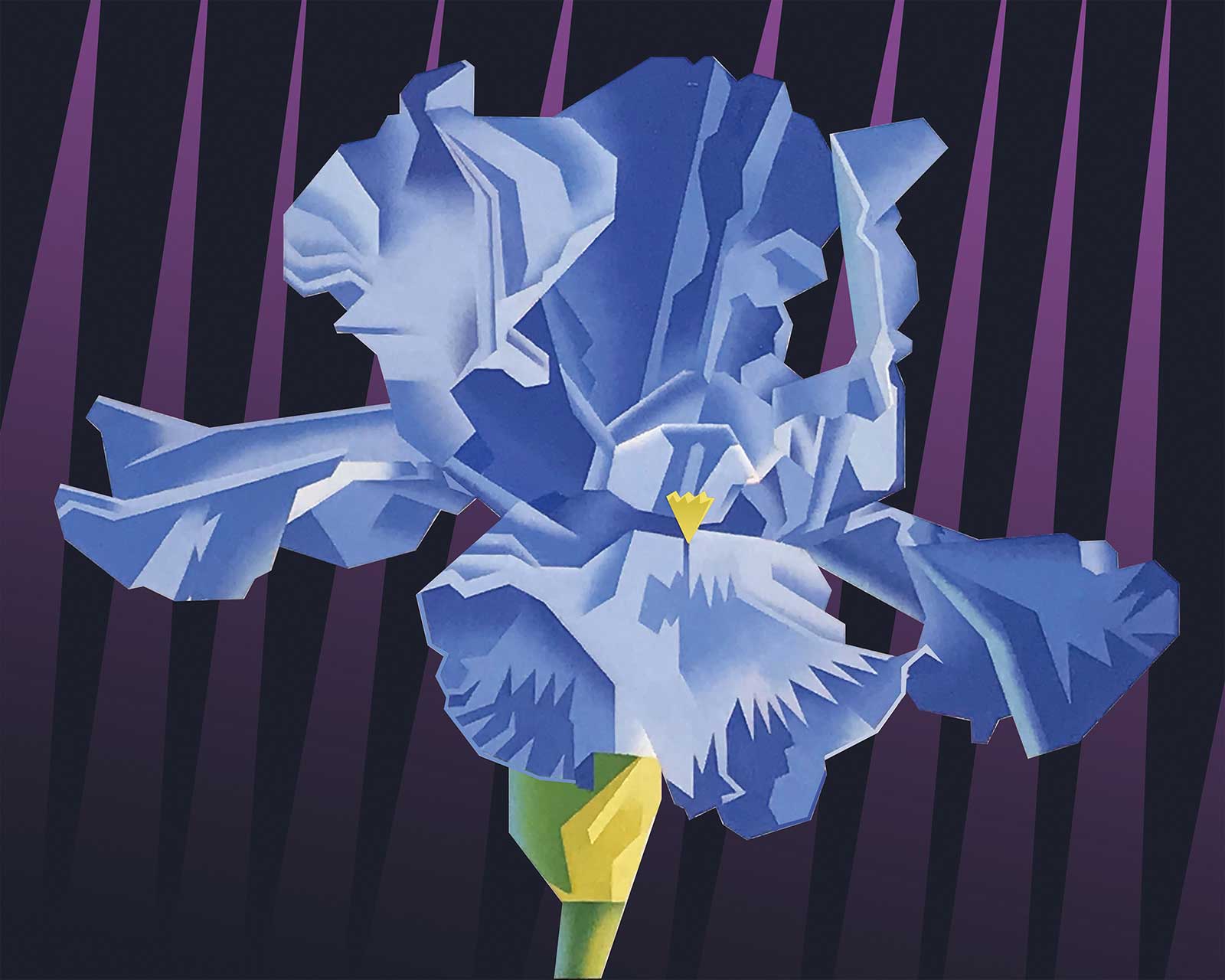 David Jonason, Blue Iris, oil on canvas, 24 x 30”In Jonason’s oil painting Blue Iris, one can see the success of his inspiration. “I love any opportunity to paint flowers,” he says. Flower painting to me has always seemed like the natural extension of landscape painting. There are the hills, valleys, mountains and riverbeds once you delve into the interior of a flower.” Jonason will have around 20 paintings for the show, including landscape beauties like View from the Visitors Center, a scene from the Capitol Reef National Park visitor’s center.
Manitou Galleries has expertly paired these two artists together, giving the public a fresh take on Western art. Everyone is invited to take part in this distinctive, thrilling show experience through July 30. —
Powered by Froala Editor