This year marks the 150th anniversary of the country’s first national park, Yellowstone, in 1872. Today there are more than 400 national sites administered by the National Park Service of which 63 are official national parks. The remainder are national historic sites, national monuments, national seashores and the like. Artists have been inspired by national parks over the past 150 years. In fact, it was paintings by Thomas Moran (1837-1926) and photographs by William Henry Jackson (1843-1942) that were instrumental in moving Congress to pass the Yellowstone National Park Act, which was signed by President Ulysses S. Grant.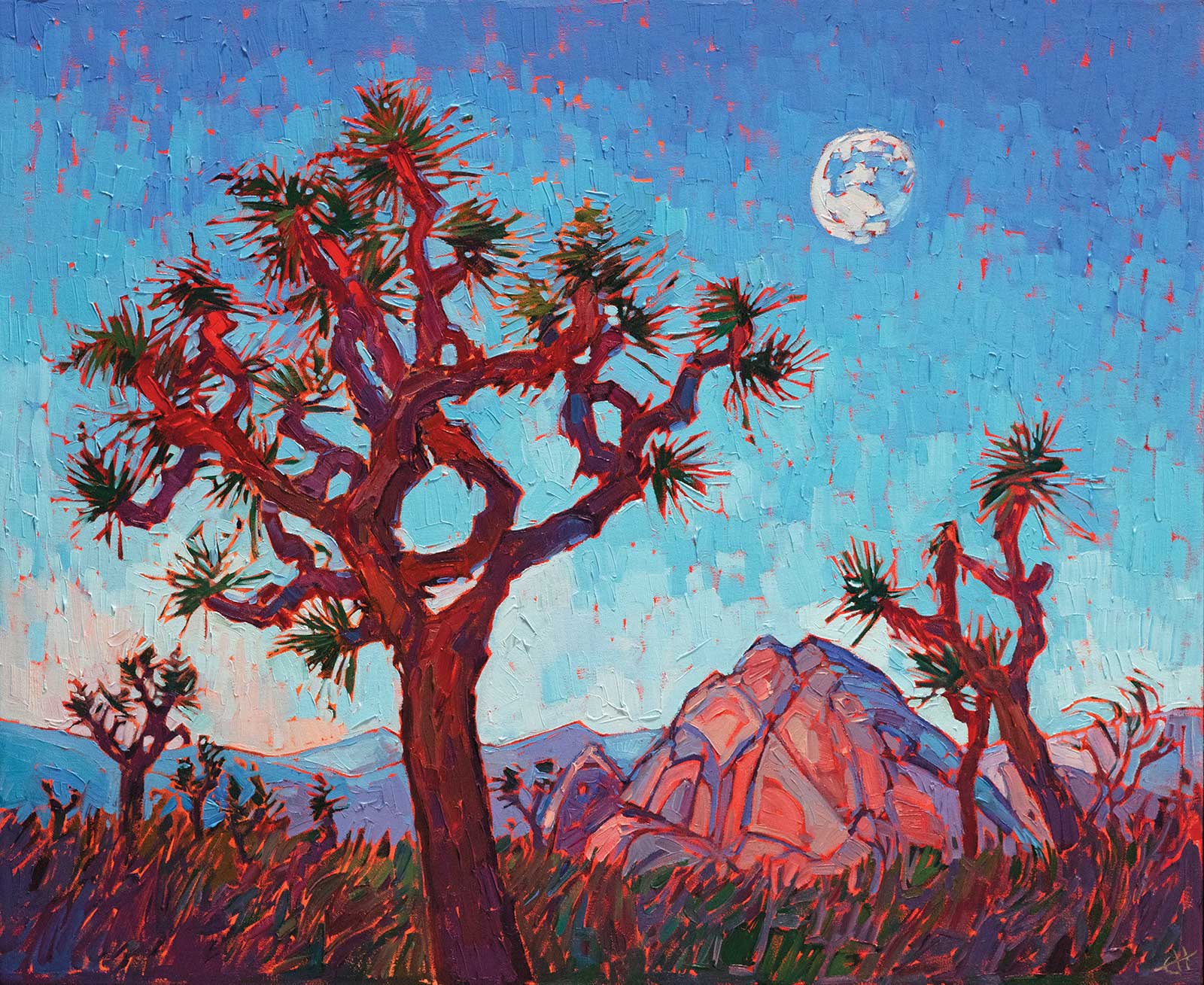 The Erin Hanson Gallery, Joshua Moon II, oil on canvas, 28 x 34", by Erin Hanson.The National Park Service was founded in 1916 to oversee the growing number of parks and sites. The St. George Museum of Art in St. George, Utah, celebrated the centennial of the NPS with a series of exhibitions titled National Parks: Uniting America: 100 Years on Common Ground.
Erin Hanson’s Painted Parks was part of the series. At the time, Hanson wrote, “This collection of oil paintings is drawn exclusively from rock climbing, hiking and backpacking trips I have done throughout the Western states…No matter how many times I have been to a park, when I wake up in the campground or in a bivy sack in a backcountry camping spot, I feel a complete sense of joy and overwhelming awe of my surroundings. I get back from each trip with thousands of photos that I use to try to recapture these moments of peace and beauty on the canvas.”
Joshua Moon II, 2020, is an example of her “open impressionism” technique, each brushstroke carefully placed—not unlike the carefully selected hand and footholds of rock climbing. She paints alla prima, placing wet paint on wet paint. She explains, “I look at a landscape almost like a multi-faceted jewel that I’m trying to capture…The brushstrokes exist where they are placed, almost like placing little mosaic tiles on the canvas.” The texture and movement of her brush strokes suggest the movement of the wind through the branches of the trees and the grasses.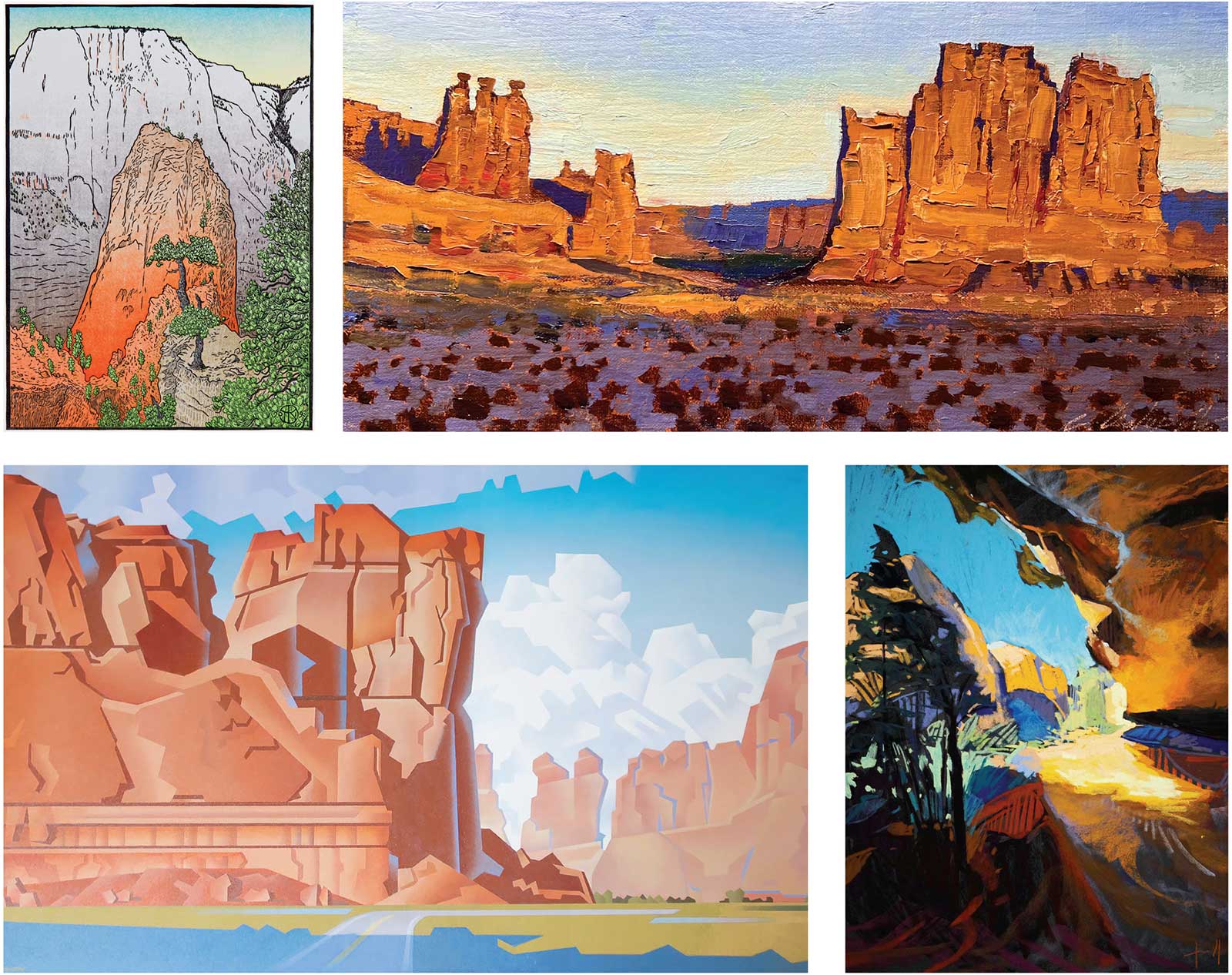 Top row, from left: Tom Killion, Angels Landing, N.P., woodcut, ed. of 175, 13 x 9”; Chris Kolupski, Morning Gossip, oil on linen panel, 10 x 20”. Bottom row, from left: Manitou Galleries, Arches Roadway, oil, 30 x 48”, by David Jonason; Tara Will, Gold on the Ceiling, soft pastel, 25 x 19”
She says, “Art is a very powerful venue to change the future. Painters can mock up a future for us and say ‘Here’s a picture! Here’s the way I see the future.’ Even if it is something as simple as preserving our national parks.”
Tom Killion grew up in Mill Valley, California, at the foot of Mt. Tamalpais. He began drawing as a young boy and found inspiration in the natural world. He was also attracted to the Japanese aesthetic he saw in prints and art objects from Japan in the homes of Mill Valley. He also saw a book of Hokusai’s Thirty-Six Views of Mount Fuji many of which reminded him of Mt. Tam. He resolved, then, to make drawings of Mt. Tam that would look like Mount Fuji. Hokusai (1760-1849) transformed the art of ukiyo-ë painting and printmaking from one primarily of portraiture to one now known for its representations of landscape and nature. His style and composition strongly influenced the French impressionists. Edgar Degas (1834-1917) wrote, “Hokusai is not just one artist among others in the Floating World. He is an island, a continent, a whole world in himself.”Killion humorously refers to his technique as “faux ukiyo-ë” acknowledging his debt to Japanese artists as well as to contemporary printmaking. He started out using a V-gouge and sharp knife to make his prints from sheets of linoleum. Today, he carves into all-shina plywood, Amsterdam linoleum, cherry and other block materials using a variety of Japanese hand tools, and prints on a German hand-cranked proofing press.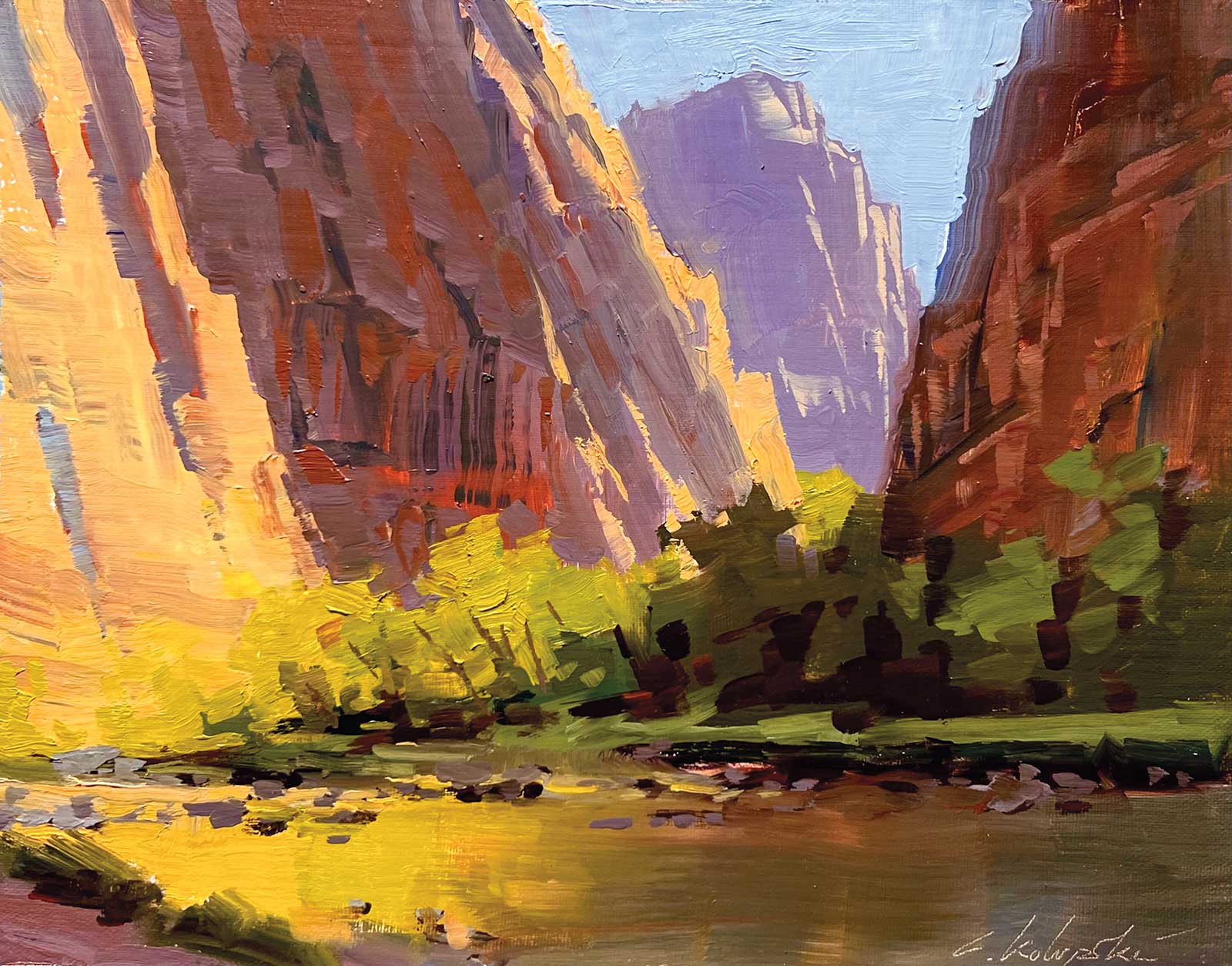 Chris Kolupski, Into Open Light, oil on linen panel, 11 x 14"
Angels Landing, Zion N.P., 2019, was produced from his field sketches he made in 2018 as artist in residence at the park. It is a multiblock reduction cut with 10 color layers. He transcribed his scribbled notes to share with me the inspiration for the print: “After climbing Angels Landing I went back out the West Rim trail to the white sandstone ridge and then left the trail and followed the white ridge as it curved southwards around a gully that dropped into a deep ravine that separated the white ridge from the red rock where the Angels Landing approach trail switchbacked down to the valley floor. I stopped to eat a PBJ sando, then explored out along the edge of the ravine to where I found the perfect view of Angels Landing Rock with the White Throne behind it across the valley and beautiful twisted umbrella pines in the foreground. (This ended up being the sketch I used for the print of Angels Landing). I can see swarms of people already headed up to the top, like dark ants against the red and pale gray rock.”
He later explained, “The Angels Landing scene with its stark red cliffs and lovely singular pines, and small figures on distant cliff edge trails seemed just right for this project with its thin key block lines...and multiple closely fitted color blocks.”The layering of compositional elements from the tree intruding in the lower right to the looming mesa of Great White Throne in the distance, give the print the illusion of depth.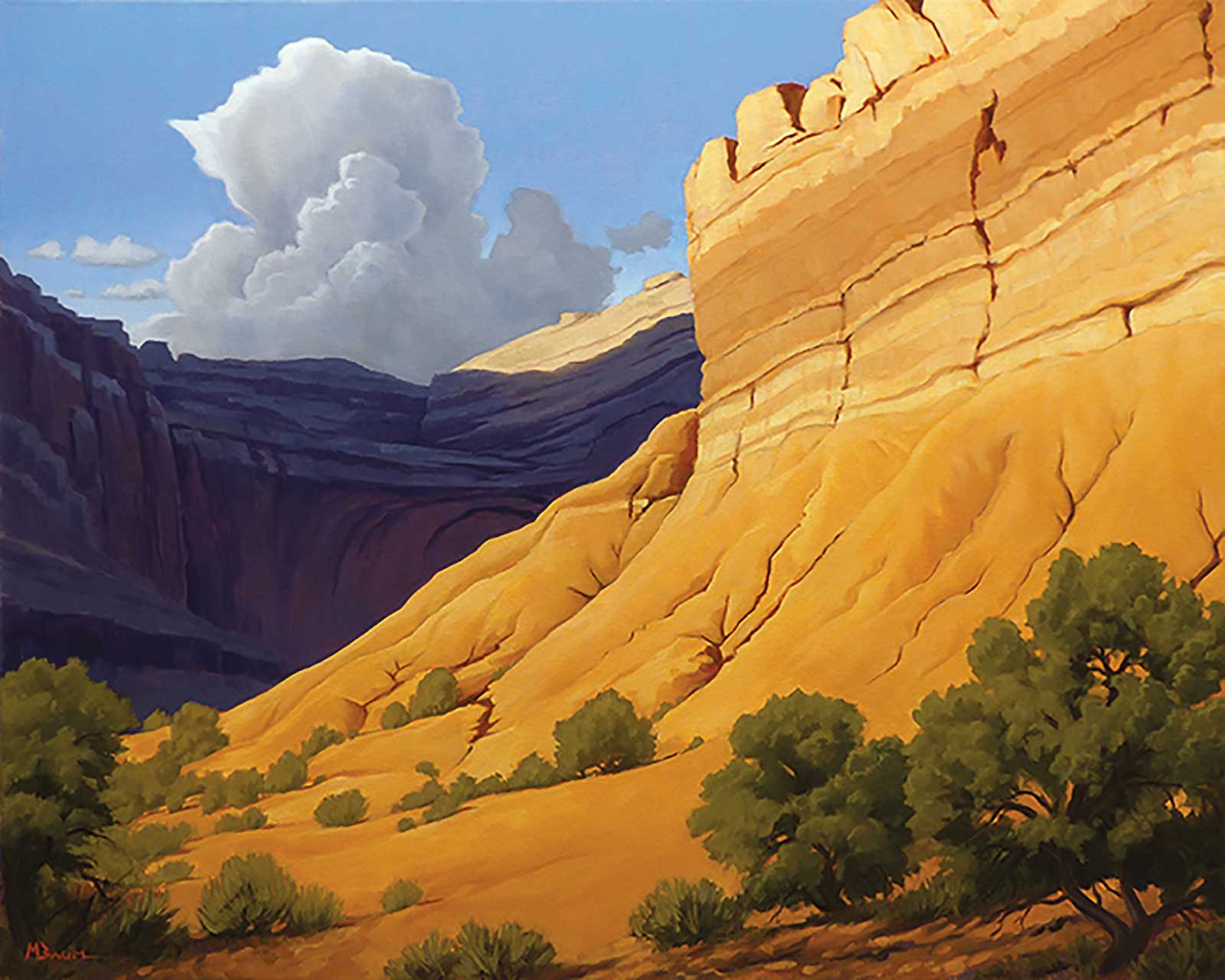 Manitou Galleries, A Journey Through Time, oil, 24 x 30", by Michael Baum.
Just as the national parks continue to awe and inspire, so does art. Continue through the pages of this special section to experience more stunning scenes of national parks and read of the endless inspiration they provide to artists.
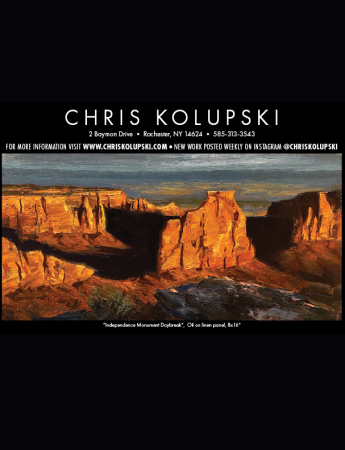
Artist Chris Kolupski’s love of the outdoors, from the Fingerlakes gorges of New York, to the red rock of Colorado and Utah, shines through in his landscapes. His outdoor painting adventures deliberately ride the edge between realism and impressionism. “There is nothing like painting roaring waterfalls or sun baked badlands—nothing like the swoosh of a hawk slicing through a canyon updraft as I try to capture fleeting effects of light,” he says. Kolupski regularly embarks upon painting tours that span the great American West, taking his virtual students along with him as he paints and teaches from remote locations.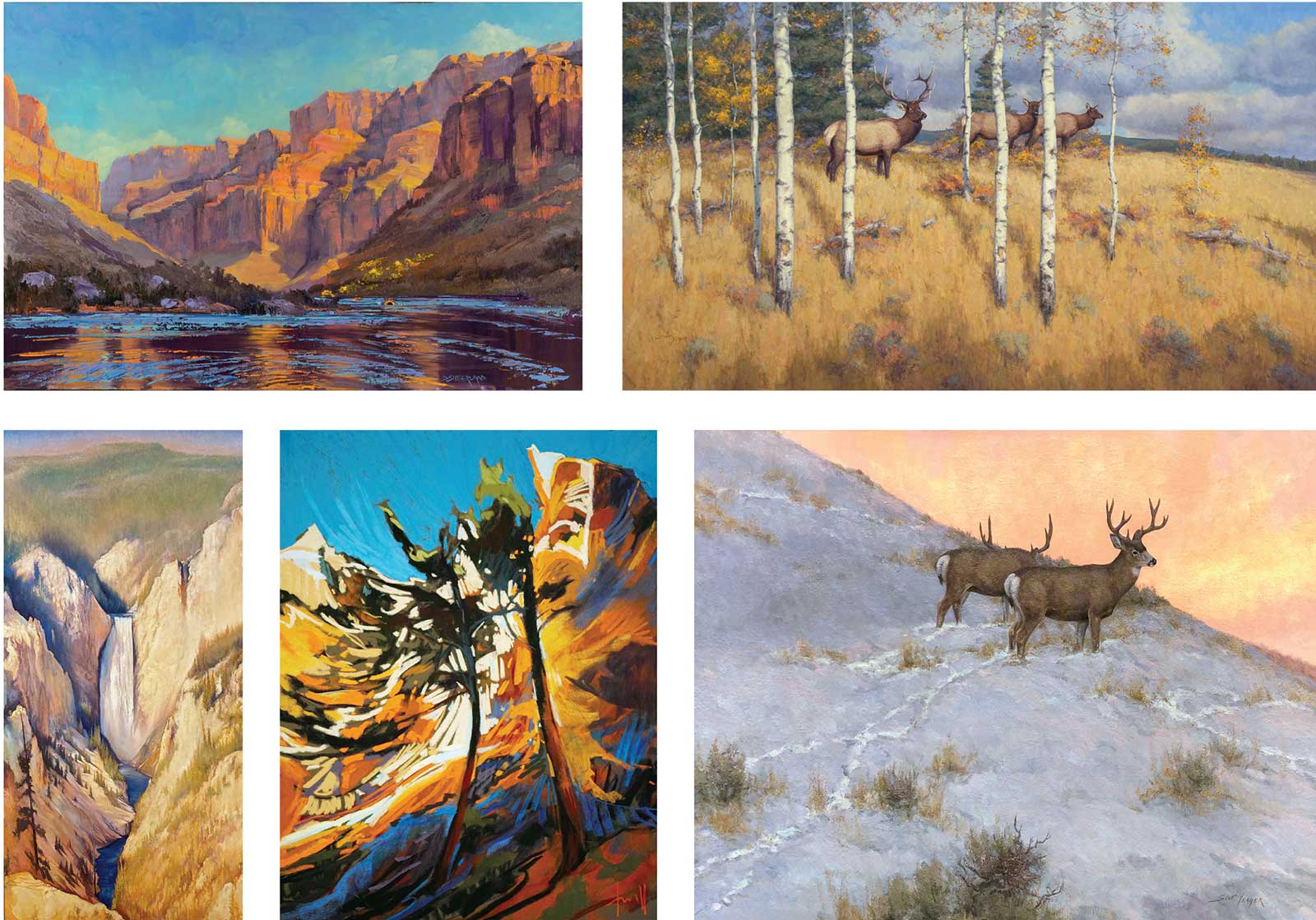 Top row, from left: Dawn Sutherland, River Rondo, oil, 20 x 30”; Scott Yeager, Autumn Elk, oil on panel, 48 x 84”. Bottom row, from left: Manitou Galleries, Impressions of Yellowstone, oil, 40 x 20”, by Curtis Wade; Tara Will, Bryce, soft pastel, 25 x 19”; Scott Yeager, Two Bucks, oil on canvas, 24 x 30”
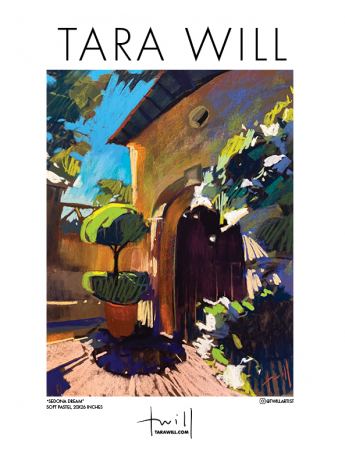
The aim of painter Tara Will is to express the “gist” of the subject. “To see the idea behind a piece, the human hand, and not so much all those finishing frills that make it romantic and pristine,” she says. She loves simplicity and a sense of looseness and energy of work that allows the viewer to be able to participate in the viewing experience, bringing their own experiences to the table. “Trying to capture the essence of a subject is the most exciting part,” says Will. “That can especially be said of traveling to national parks and painting en plein air.”
For collectors looking to imbue their homes with the grandeur of the national parks, look no further than Manitou Galleries in Santa Fe, New Mexico, home to dozens of top artists capturing the beauty of the nation’s wild lands. Among these are Curtis Wade, Michael Baum and David Jonason. Wade reflects on his oil Impressions of Yellowstone: “Thomas Moran has been a huge influence of mine. His paintings were part of the reason Yellowstone was established as our first national park. These iconic places are larger than ourselves and as a landscape painter, I strive to capture those reverent feelings they inspire.”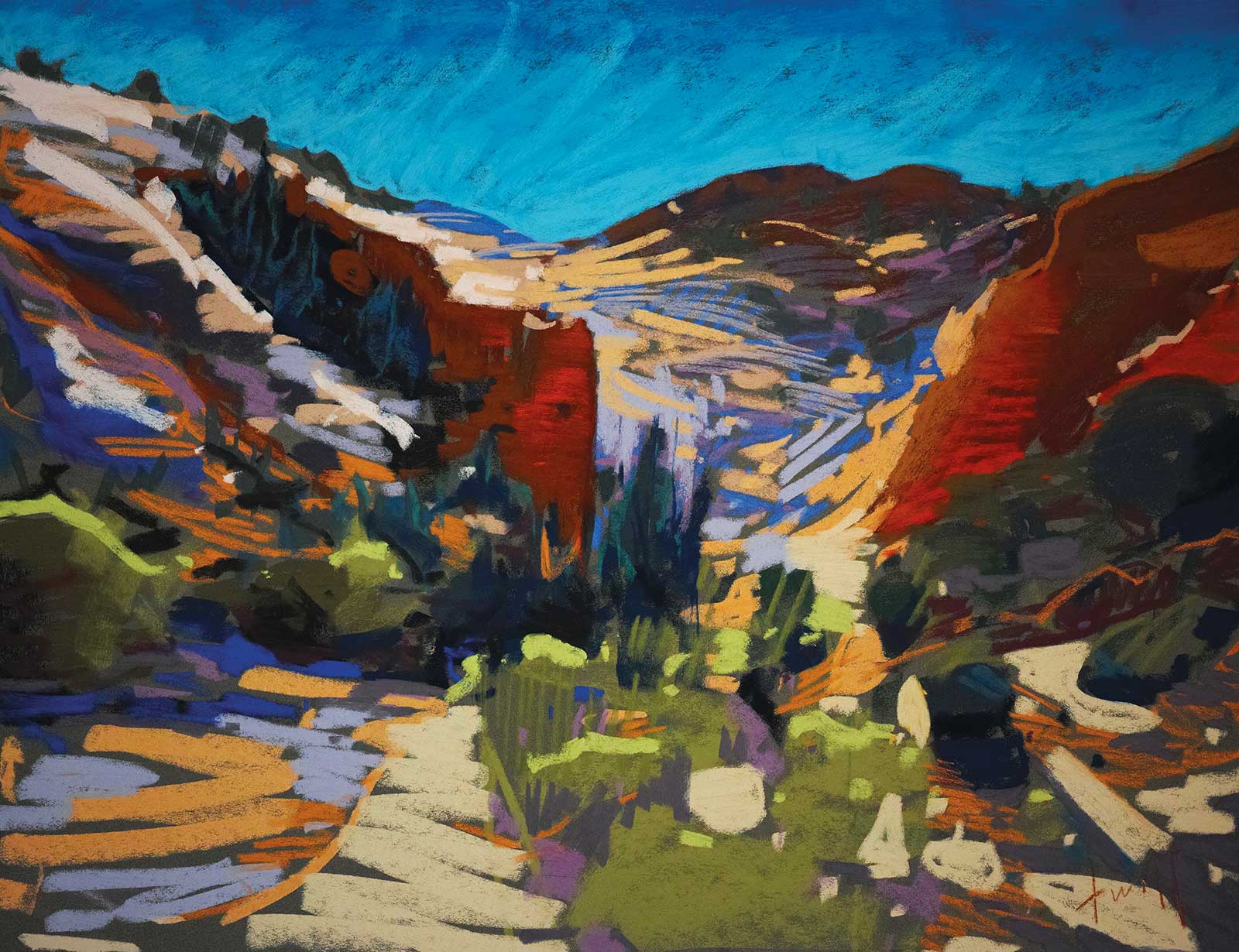 Tara Will, Remembering the Canyon, soft pastel, 19 x 25"
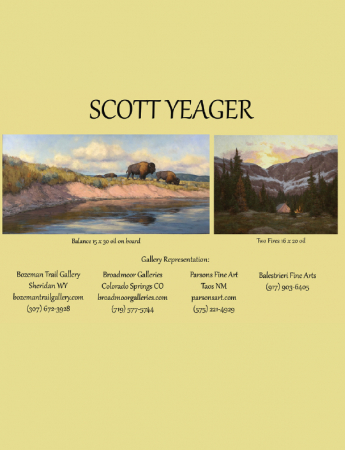
“My work is inspired by the visual feast I encounter every time I am outdoors,” says Scott Yeager. When it comes to painting the outdoors, the constantly changing seasons and shifting light at various times of day provide endless inspiration and the building blocks for making art. “The paintings that result are just a visual diary of my life, born from the places I travel and the wildlife and people I encounter there,” he says. While most of his paintings depict locations in the West, Yeager has traveled everywhere from the Arctic to the tropics, enjoying the unique challenges of each new place.
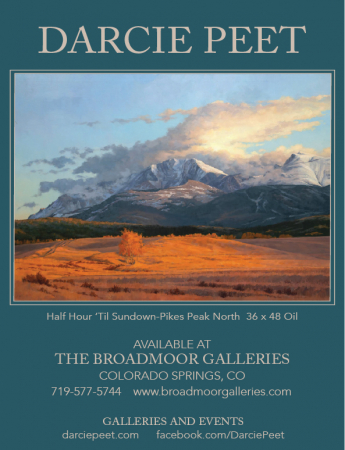
Darcie Peet’s Sky Islands and Wildflowers captures the afternoon light of a gorgeous lake scene at Glacier National Park. “From the top of Hidden Lake Pass, Glacier National Park, the lake below seemed far closer than it really is, as the hike to the shore is unexpectedly long…[We] descended the long trail for a little stone skipping across the lake then began our return, climbing switchback after switchback,” Peet says of the story behind the piece. “Pausing to look back on our journey that day, far below, we could see the wandering-shaped lake...Light across the water changed from deep, shadowed aqua to reflecting the late, afternoon light that had turned scattered clouds warm white and peach. The surface of the water varied from absolute stillness to soft shimmer and textured, wind movement. Finally nearing the top, vivid slashes of sun illuminated lemon-yellow masses of avalanche or Glacier Lilies across the high, alpine meadow…With such an array of light, mood, shape and texture in this bold setting, I knew this hike needed to become a painting.” The painting is available at A. Banks Gallery in Missoula, Montana.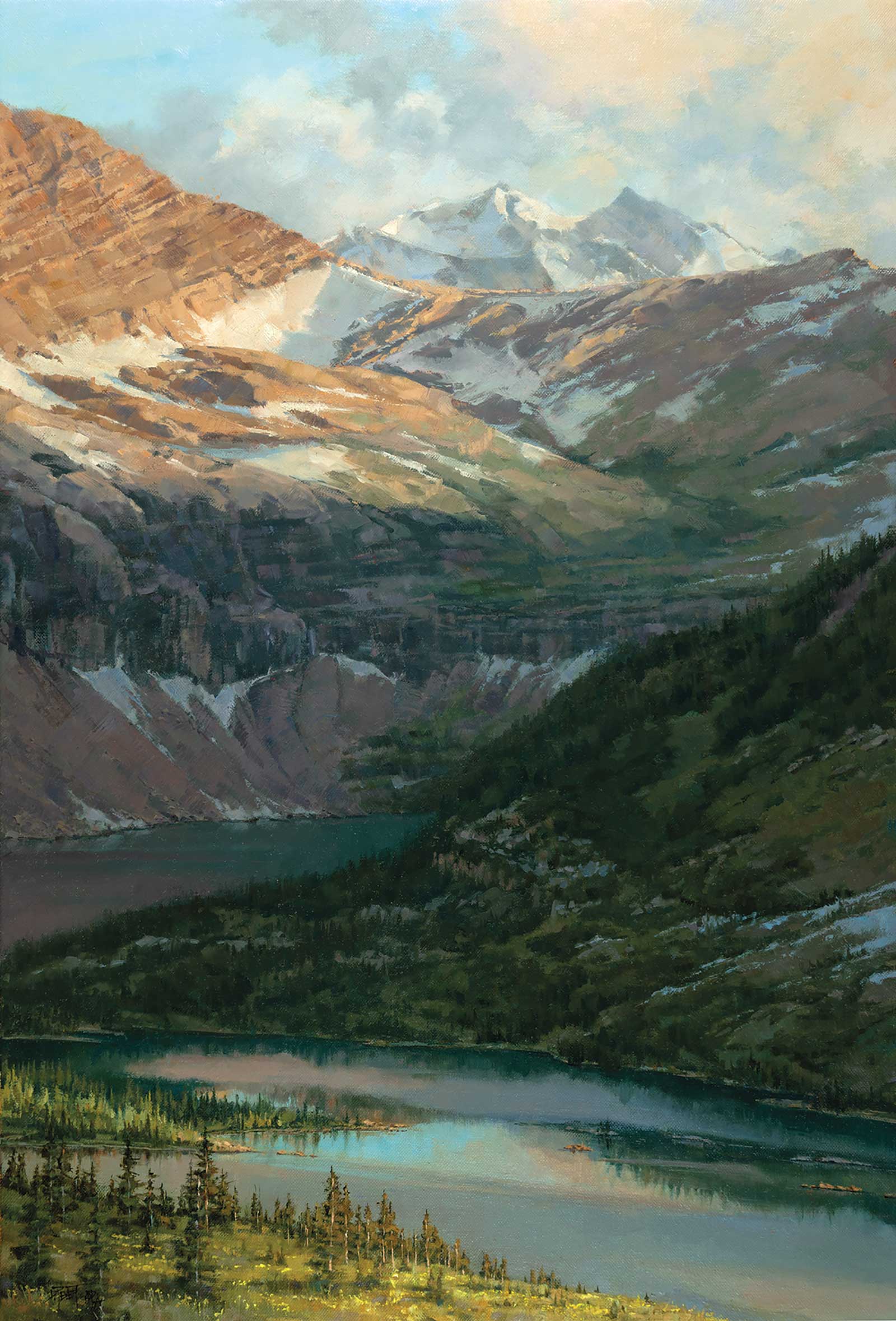 Darcie Peet, Sky Islands and Wildflowers, oil, 30 x 20"
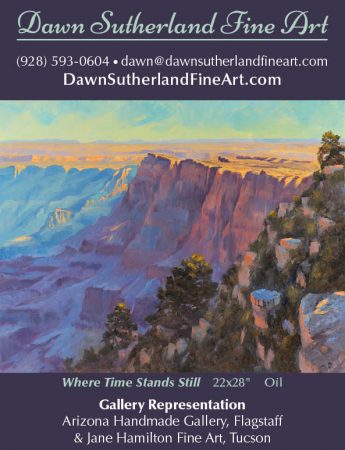
Flagstaff, Arizona-based artist Dawn Sutherland paints the spellbinding deserts and canyons of the Southwest. The Grand Canyon in particular, she says, “is the most inspiring place on earth to paint, and floating through the interior offers one magnificent scene after the next. Towering walls of stone rise opalescent into the blue morning sky while sunlit side canyons unfold with each meander of the river. There are always more surprises and subtleties to be painted and I hope to be challenged by them for a lifetime.” Sutherland’s painting River Rondo will be part of the Grand Canyon Celebration of Art beginning this September as her studio piece. “If you find a painting causes you to draw in a breath,” she says, “it is meant to be yours and it will give you pleasure for a lifetime.” —
Featured Artists & Galleries
Chris Kolupski
2 Baymon Drive, Rochester, NY 14624
(585) 313-3543, www.chriskolupski.com
Darcie Peet
www.darciepeet.com
Dawn Sutherland
Flagstaff, AZ, (928) 593-0604
www.dawnsutherlandfineart.com
Manitou Galleries
123 W. Palace Avenue, Santa Fe, NM 87501
(505) 986-0440, www.manitougalleries.com
Scott Yeager
scott@scottyeager.net, www.scottyeager.net
Tara Will
www.tarawill.com
The Erin Hanson Gallery
1805 NE Colvin Court, McMinnville, OR 97128
(503) 334-3670, www.erinhanson.com
Tom Killion
www.tomkillion.com
Powered by Froala Editor