The ways one could get killed in Yellowstone are quite exotic: gored by a bison, eaten by wolves, boiled alive in a mineral bath, shot into the sky by a geyser, falling off treacherous cliffs and crushed by a boulder. Thus, when John Colter laid eyes on the danger in the park, it was soon dubbed Colter’s Hell. (Even more surprising is these are still ways to meet your end in the present-day park.)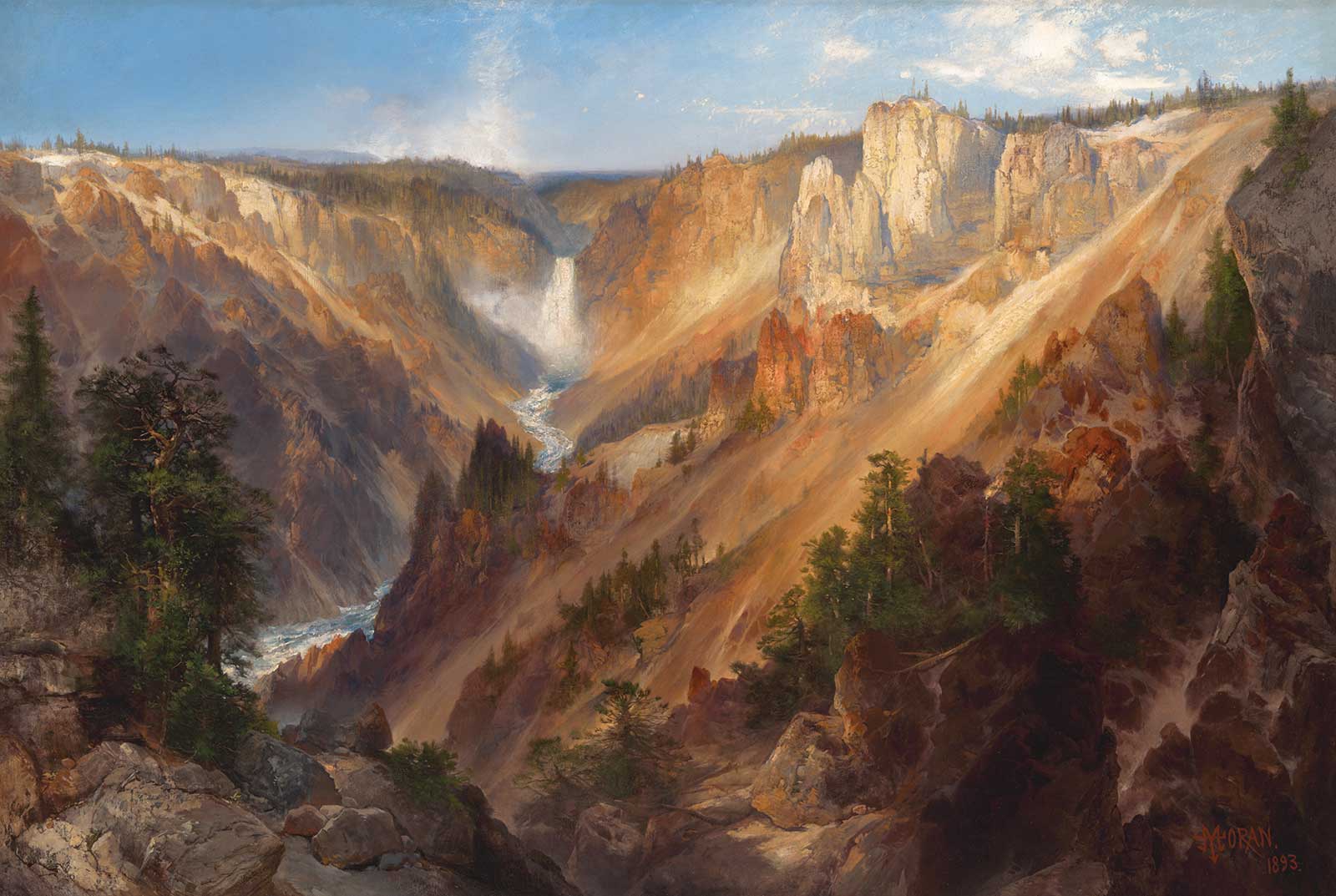 Thomas Moran (1837-1926), Lower Falls, Yellowstone Park; Grand Canyon of the Yellowstone, 1893, oil on canvas, 44 x 54”. Gift of the Thomas Gilcrease Foundation, 1955 Gilcrease Museum, Tulsa, Oklahoma, 01.2344.And yet, as dangerous as it all was (and is), the views were (and are) spectacular. The beauty of Yellowstone is now being celebrated in the exhibition Colter’s Hell: Yellowstone National Park at 150 now open at the National Cowboy & Western Heritage Museum in Oklahoma City.
“Yellowstone is one of the most spectacular places on the planet, not to mention the American West,” says curator Michael Grauer. “One of the reasons it’s so great is the variety of the surprises there in the park. There [are] geysers, beautiful mountains, flowing rivers, wildlife in abundance…it is really a Garden of Eden, so to speak, with beauty all around.”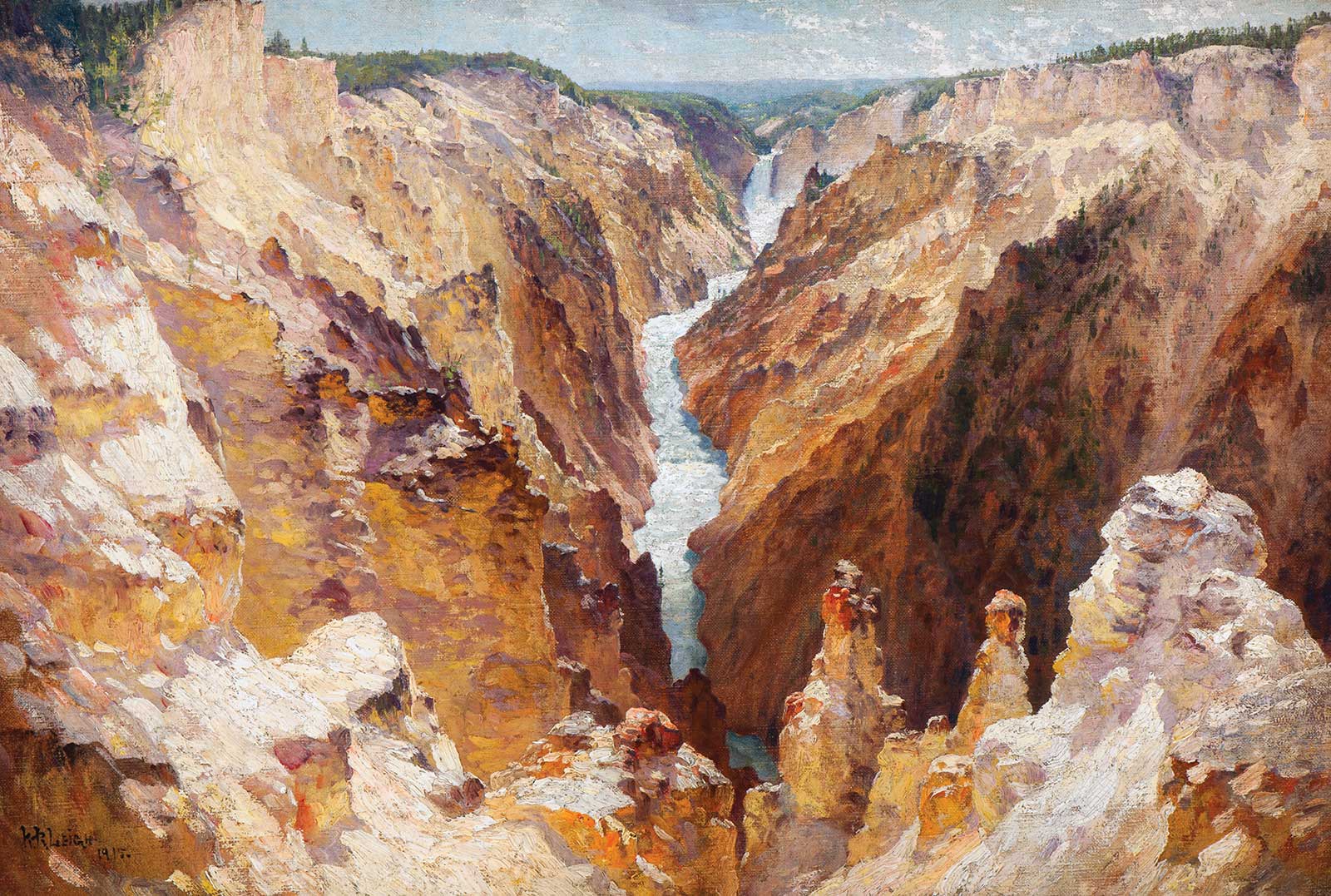 William R. Leigh (1866-1955), Canyon of the Yellowstone, 1915.Oil on canvas. Courtesy the Gilcrease Museum, Tulsa, Oklahoma.
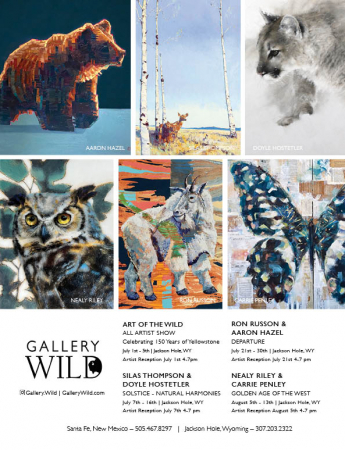
The museum will celebrate the artists who created in the park, including some of the most famous of the Yellowstone artists such as Thomas Moran, Thomas Hill and photographer William Henry Jackson. It was Jackson’s photos and Moran’s paintings that drew early interest in the park that helped create the park designation that has protected it for 150 years. The museum has several Jackson images, and one of Moran’s most famous paintings of the park, Lower Falls, Yellowstone Park; Grand Canyon of the Yellowstone, an oil on canvas from 1893 that is on loan from the Gilcrease Museum. 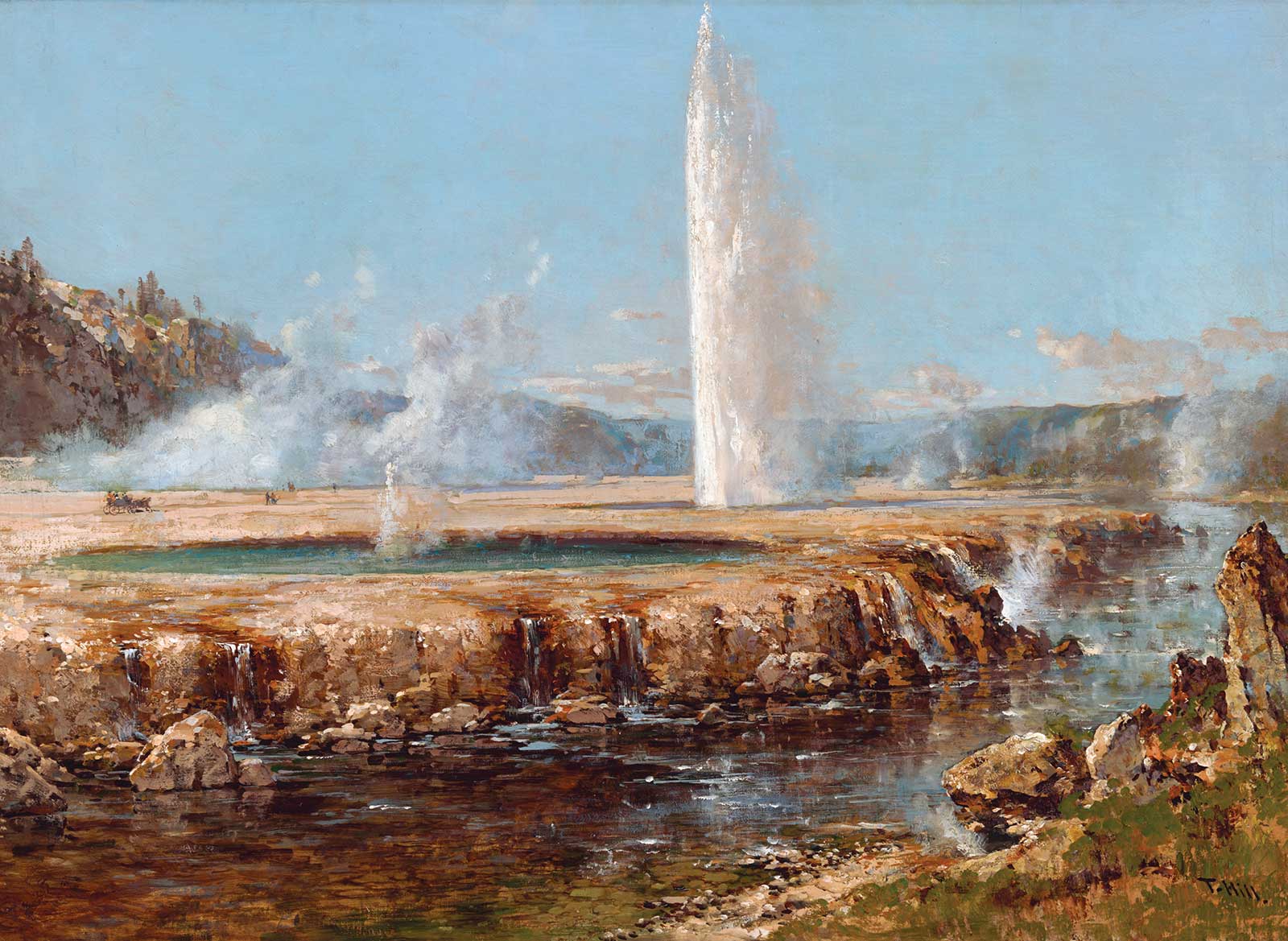 Thomas Hill (1829 England-USA 1908), Geyser in the Yellowstone, circa 1884. Oil on canvas. Courtesy the Gilcrease Museum, Tulsa, Oklahoma.
Not only are these classic Yellowstone artists represented, but so are some artists who are not usually associated with the park, including William R. Leigh, Joe De Yong and even painter Frank Reaugh, who rarely left Texas but was lured out by Yellowstone’s vast beauty. 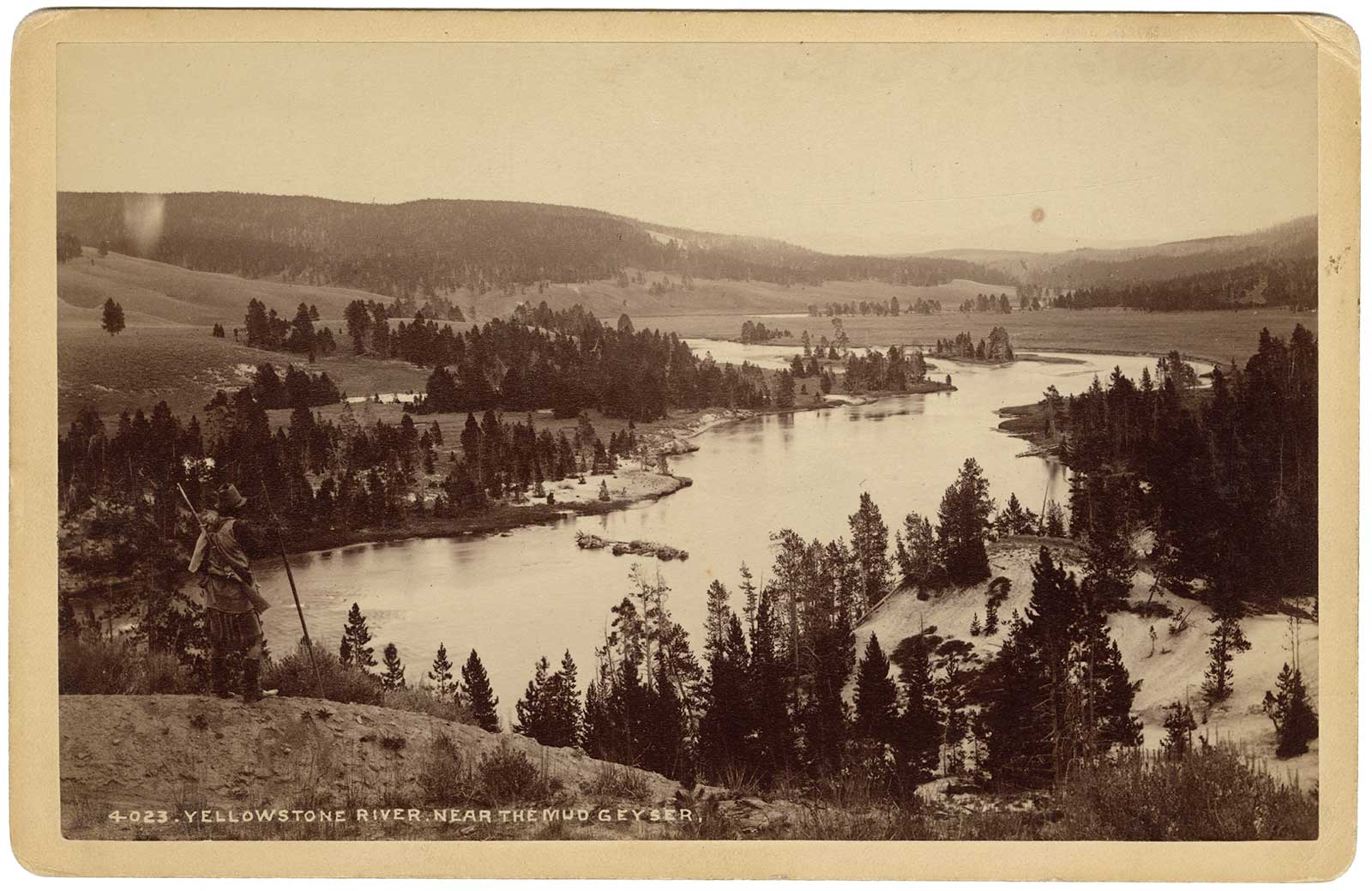 William Henry Jackson (1843-1942), Yellowstone River, Near the Mud Geyser, ca. 1890, digital reproduction of cabinet card. Dickinson Research Center, Photographic Study Collection, 2005.018.
Grauer says many of the locations used by artists are accessible to park visitors, who can then stand in the same spot as Moran and others to see what the artists were seeing as far back as 150 years ago. “Last time I was in the park, I went to Moran Point to look at Lower Falls. My wife hadn’t seen it, and I hadn’t seen it since 1985. Standing there you feel the hand of God as you look out over that landscape,” Grauer adds. “Places like Yellowstone are vital to the cultural fabric of our country. I believe there are very few places in the country that everyone must see, but Yellowstone is one of them.” —
Colter’s Hell: Yellowstone National Park at 150
Through October 20, 2022
National Cowboy & Western Heritage Museum, 1700 NE 63rd Street, Oklahoma City, OK 73111
(405) 478-2250, www.nationalcowboymuseum.org
Powered by Froala Editor