The National Museum of Wildlife Art is inspiring and educating the public once again in a new, awe-inspiring exhibition titled Above the Clouds: Art of the Alpine, currently on view. Organized in the museum’s Wapiti Gallery, known for its educational exhibitions, Above the Clouds speaks to the “cold, wind-blown Alpine biome…a harrowing home to a stunning diversity,” according to the museum. 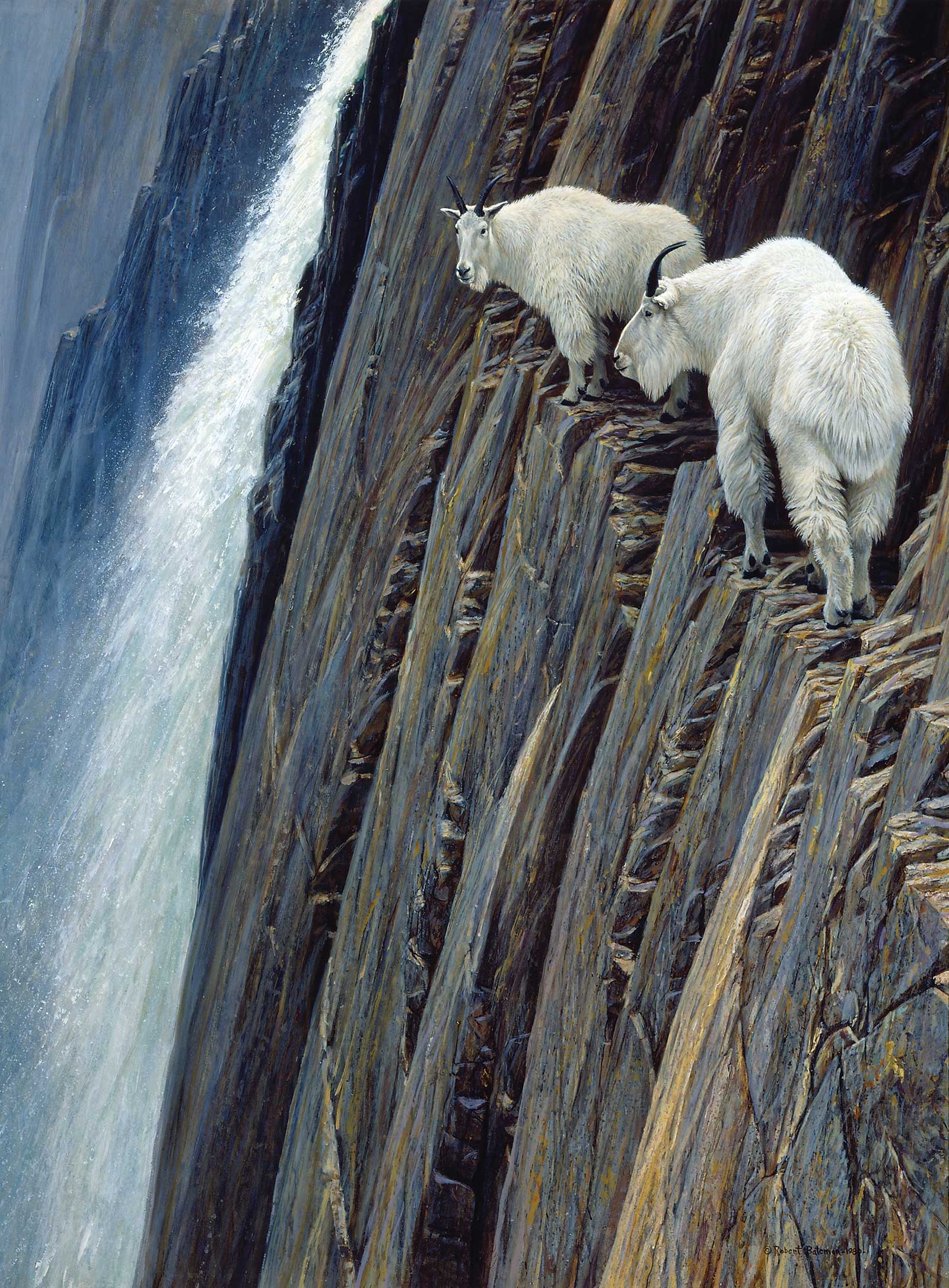 Robert Bateman, Sheer Drop, 1980, oil on board, 48 x 36.” JKM Collection®, National Museum of Wildlife Art. © Robert Bateman. An image of the painting is seen in the video to be played during the exhibition.
With the museum located among the rich landscape that is the Grand Teton National Park and Yellowstone National Park, visitors have the unique opportunity to actually “see the animals in their natural environment and habitat and then come to the museum and see artist interpretations,” says Jane Lavino, Sugden Family Curator of Education for the NMWA.
The exhibition capitalizes on this idea found in the museum’s educational video series from what they call their “Bisoncast,” a playful renaming of “Podcast.” Lavino explains that these are “short, 15-minute-long videos that look at something specific from their permanent collection and then look at it outside the museum.” One of the videos from the series, also titled Above the Clouds, is played during the exhibition. The museum has juried in 36 astounding works of art that show animals that live in the alpine region or above the timberline—especially bighorn sheep and mountain goats, “and then we have the video [showing] footage of climbing in the Tetons, both animal and humans,” says Lavino. “It also calls into question the unique adaptions of the many species in this region.”
Artwork in the exhibition will also include imagery of flora and fauna of the alpine. “We have a nice variety of mammals, some birds, wildflowers and some lichens (a fungi-like organism common above timberline regions),” says Lavino. “It’s a nice variety that for educational purposes, will make it interesting to be able to talk about the alpine ecosystem.”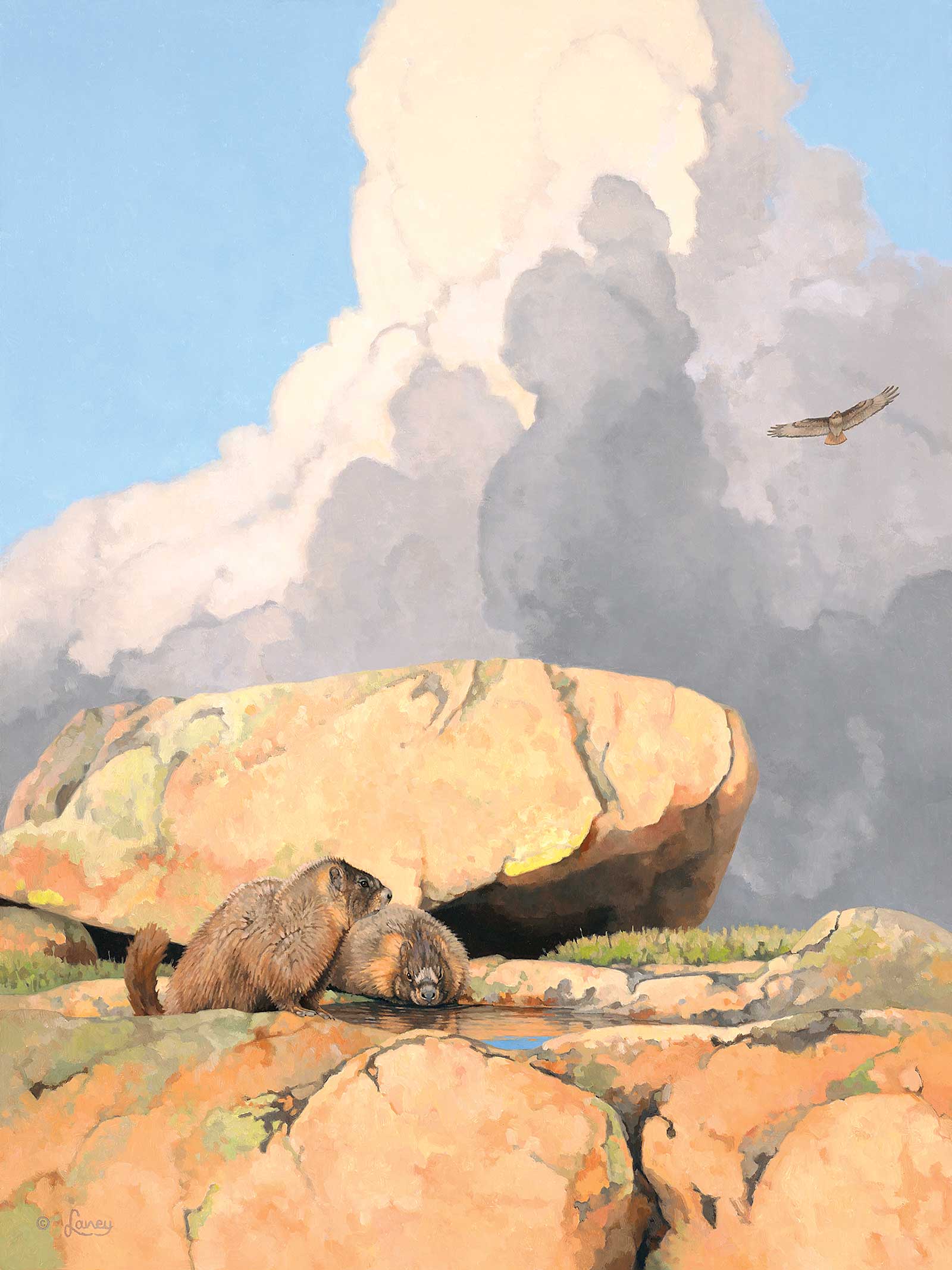 Laney, Alpine Rainwater, oil on gesso board, 24 x 18”
Exhibition artist Susan Marsh, for instance, will showcase her fascinating lichen watercolor O Pioneers!. “Lichen fascinates me,” says Marsh, “for its symbiotic combination of an algae or cyanobacterium and a fungus…Lichens are pioneers of life in the harsh environment of the alpine zone, releasing chemicals that break down rock and thus create the precursors of soil. In the alpine, the work done by lichens assures the later growth of mosses, ferns and higher plants and the survival of animals that feed on them.”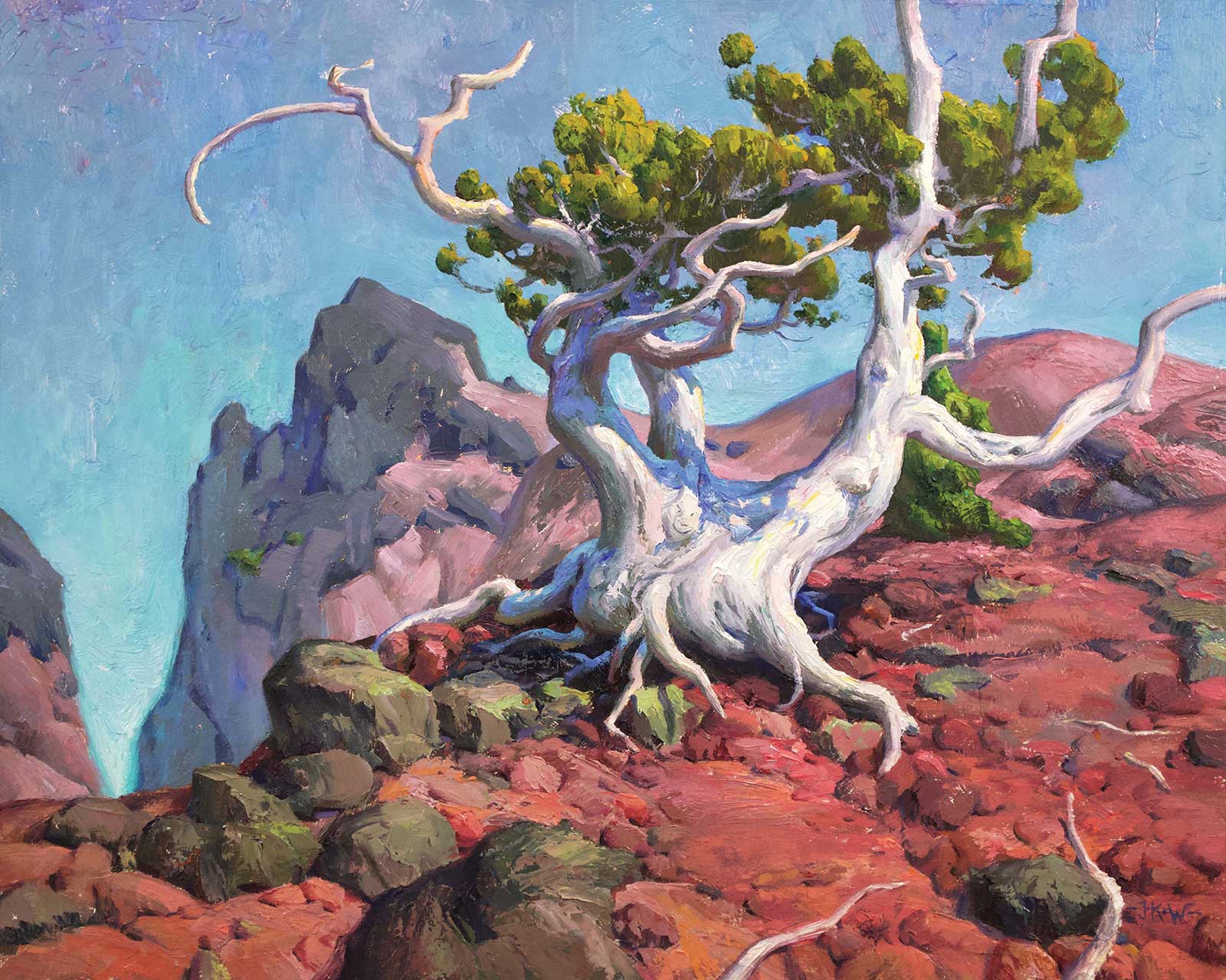 Jordan K. Walker, Volcanic Krumholtz, oil on hardboard, 16 x 20”
Other significant works on view include Jordan K. Walker’s Volcanic Krumholtz, a cliff scene with a twisted tree as the main subject. “These trees are able to grow so high, they really highlight how harsh that environment is in the alpine,” Lavino notes. “These trees are stunted and twisted by the wind and grow down deep into the rock. It’s a great piece for talking about the beauty and the harshness of the environment, and anything that grows or lives up that high has to have unique adaptations.”
Alpine Rainwater by Laney features a gorgeous sky view with marmots drinking from a pool of rainwater. “They are such interesting animals and specific to animals that live above the timberline,” says Lavino. “The artist lives in Wyoming and knows these animals well. She only paints what she’s seen with her own eyes. While the exhibition will show a variety of animals, I like seeing the smaller ones—it’s less typical to see art that features smaller animals like the marmot.”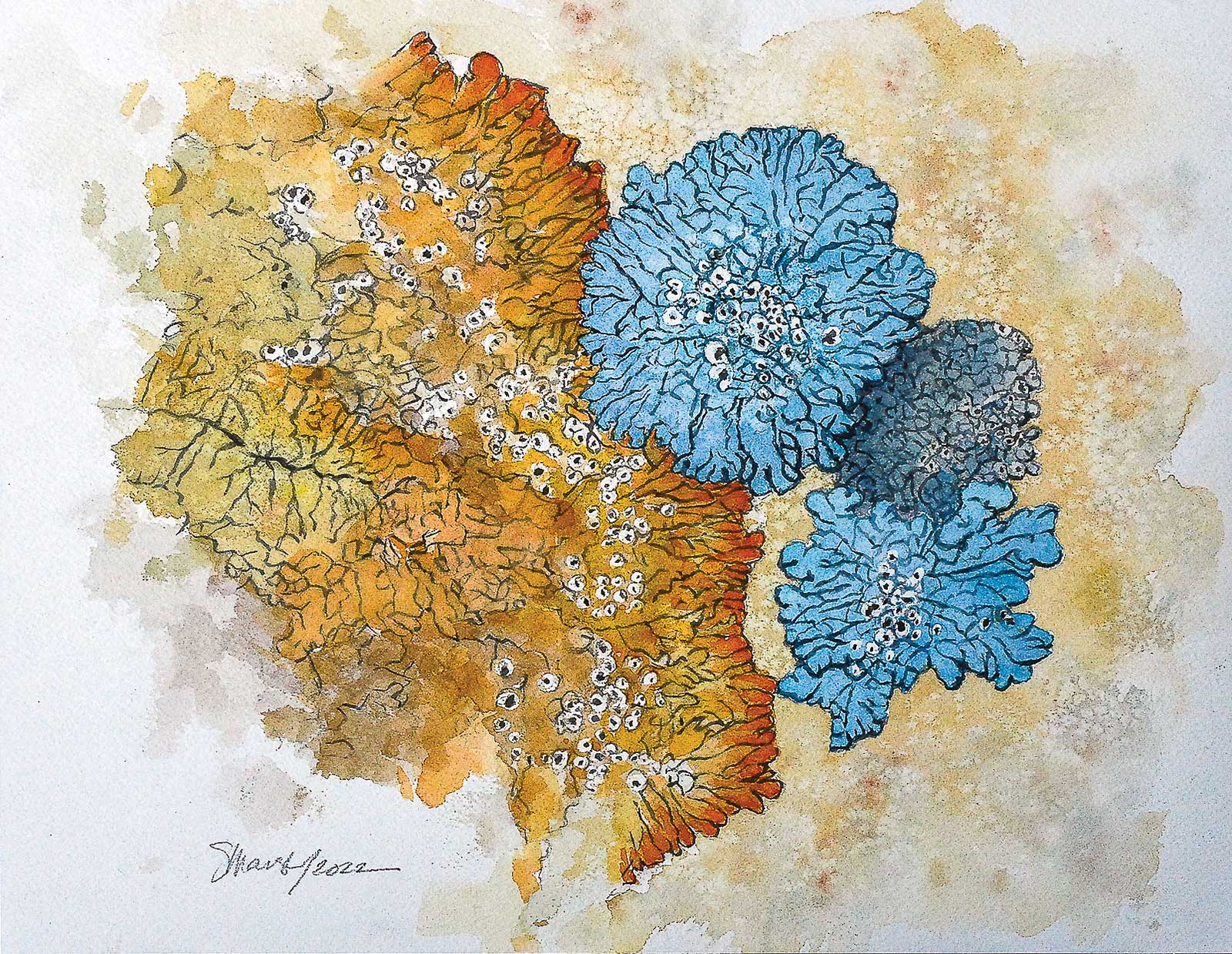 Susan Marsh, O Pioneers!, watercolor on rag paper, 11 x 14”The exhibition, which closes November 13, will have a few pieces from the NMWA’s permanent collection also on display and will be featured in the educational video. Another unique, immersive show component is what the museum is calling their “Community Cliff,” or rather a “relief” that was constructed to look like a mountain cliff. Museum visitors are encouraged to create paper alpine flowers to then place on the cliff, furthering the educational engagement. —
Above the Clouds: Art of the Alpine
Through November 13, 2022
National Museum of Wildlife Art, 2820 Rungius Road, Jackson Hole, WY 83001, (307) 733-5771,
www.wildlifeart.org
Powered by Froala Editor