The New Mexico Museum of Art draws primarily from its own rich collections for the exhibition Western Eyes: 20th Century Art Here and Now, which opened in March and runs through January 8, 2023.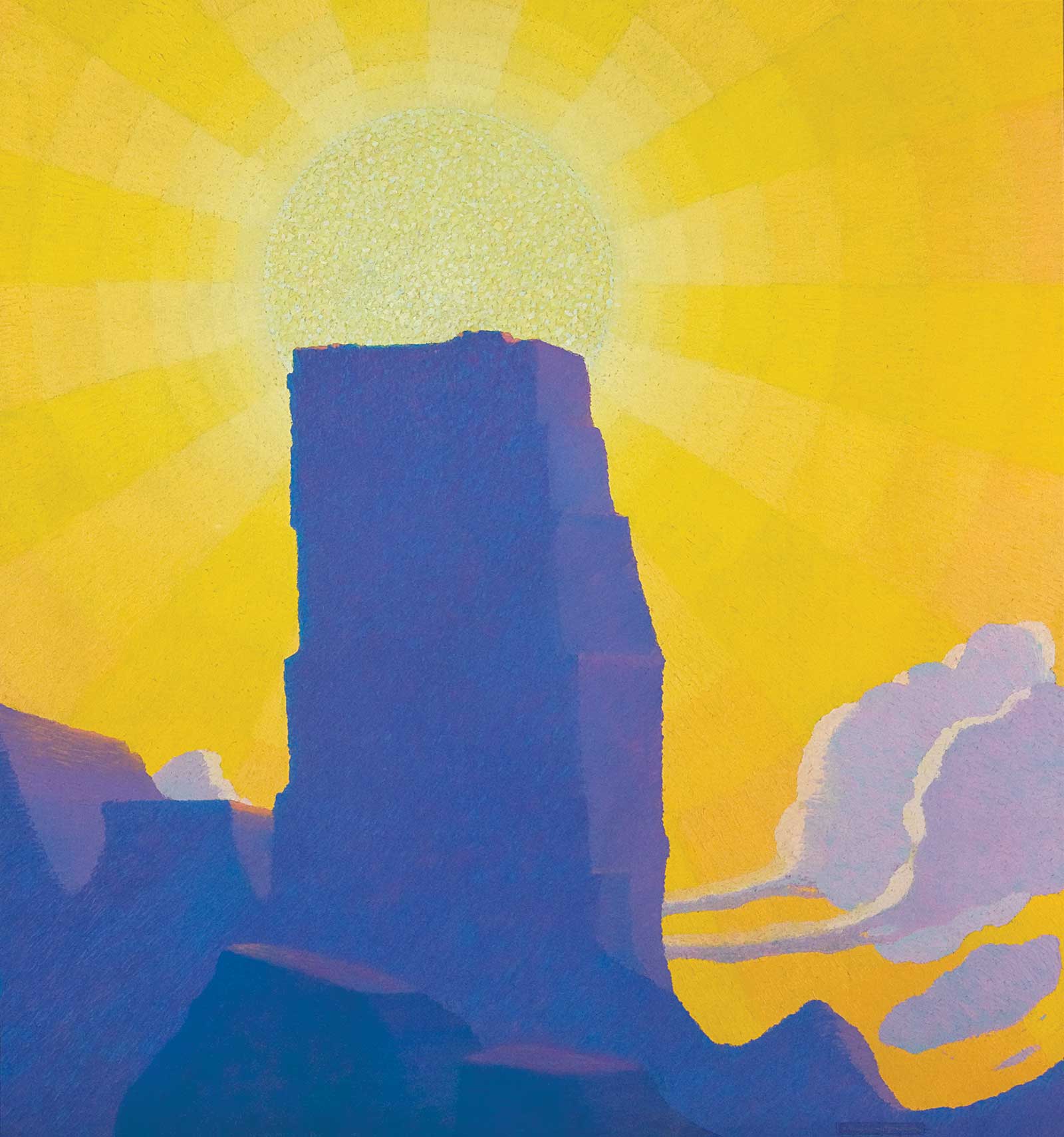 Raymond Jonson (1891-1982), Light, 1917, oil on canvas, 44½ x 41¼”. Collection of the New Mexico Museum of Art. Gift of John Curtis Underwood, 1925 (292.23P). Photo by Blair Clark.New Mexico already had its Spanish Colonial and Pueblo artistic traditions when American modernists such as Robert Henri and Georgia O’Keeffe arrived. The museum notes, “The cultural and artistic exchange that ensued produced New Mexico’s distinctive and powerful artistic identity.”
Raymond Jonson (1891-1982) had visited Santa Fe on a sketching trip and returned permanently in 1925, determined to make his paintings “an expression of sensation, rather than as a reflection of environmental appearances.” He was first influenced by the modern art he saw in the Armory Show when it made its Chicago appearance in 1913. Later, the philosophy and paintings of Wassily Kandinsky and the teachings of the Theosophists had a great impact on him. His 1917 painting Light incorporates the landscape and suggests his later evolution. In 1938, he and a group of other artists formed the Transcendental Painting Group “to carry painting beyond the appearance of the physical world, through new concepts of space, color, light, and design.”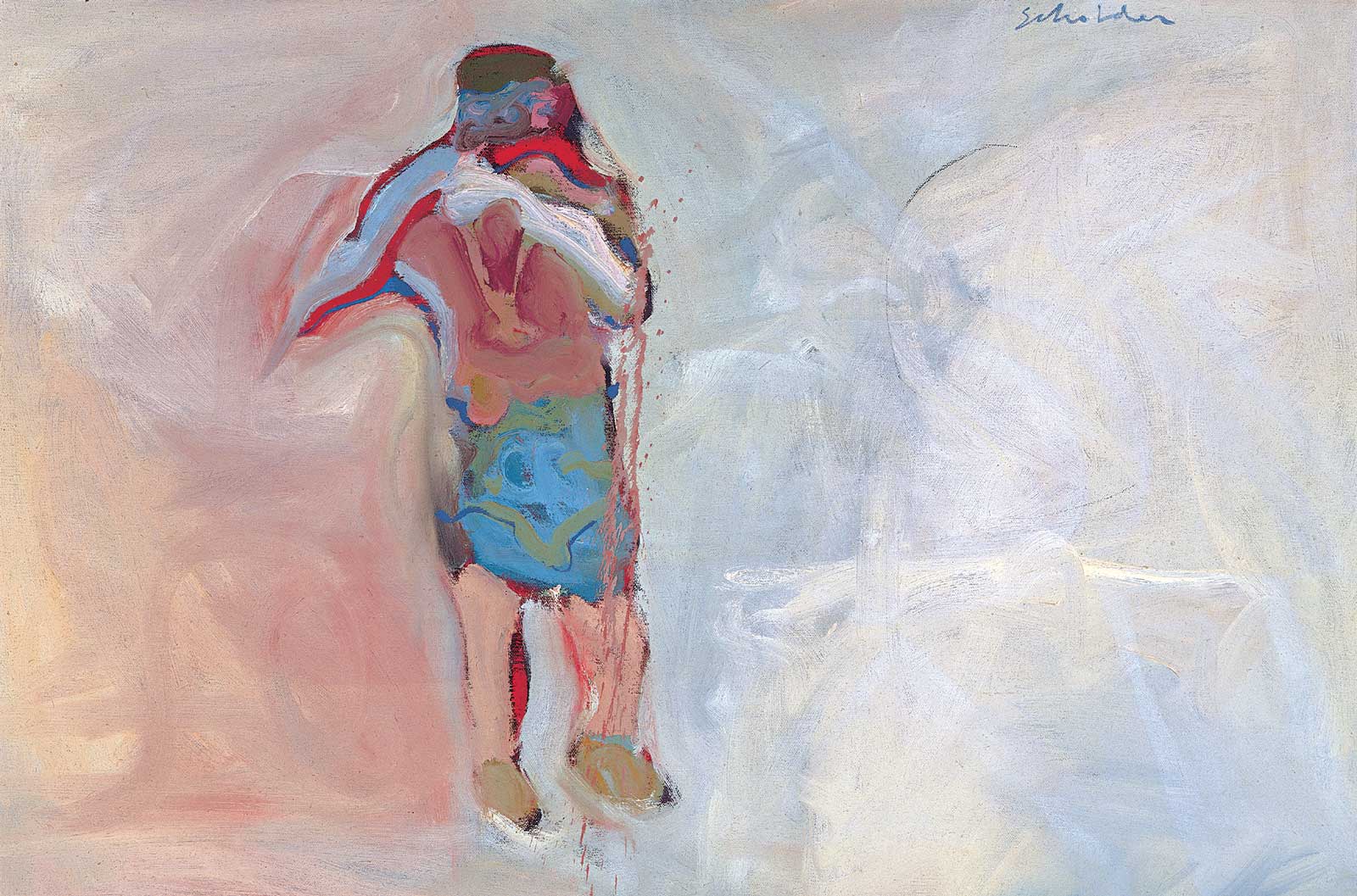 Fritz Scholder (1937-2005), Snake Dancer, 1967, oil on board, 20 x 30”. Collection of the New Mexico Museum of Art. Gift of Mr. John B.L. Goodwin, 1969 (2410.23P) © Fritz Scholder Estate. Photo by Blair Clark.
Victor Higgins (1884-1949) was a member of the Taos Society of Artists, most of whom kept to traditional painting techniques in depicting the people and landscapes of the Southwest. He came to Taos in 1914 on a commission to paint the landscape and chose to stay. “A field or a mountain is always changing,” he observed. “They change size and color with every passing cloud and with the passing of every hour and season.” Whereas most of his fellow society members had been illustrators, Higgins was a painter’s painter, perhaps freer to experiment with form and color. The Beadworker exhibits the influences of the modernists he saw in the Armory Show.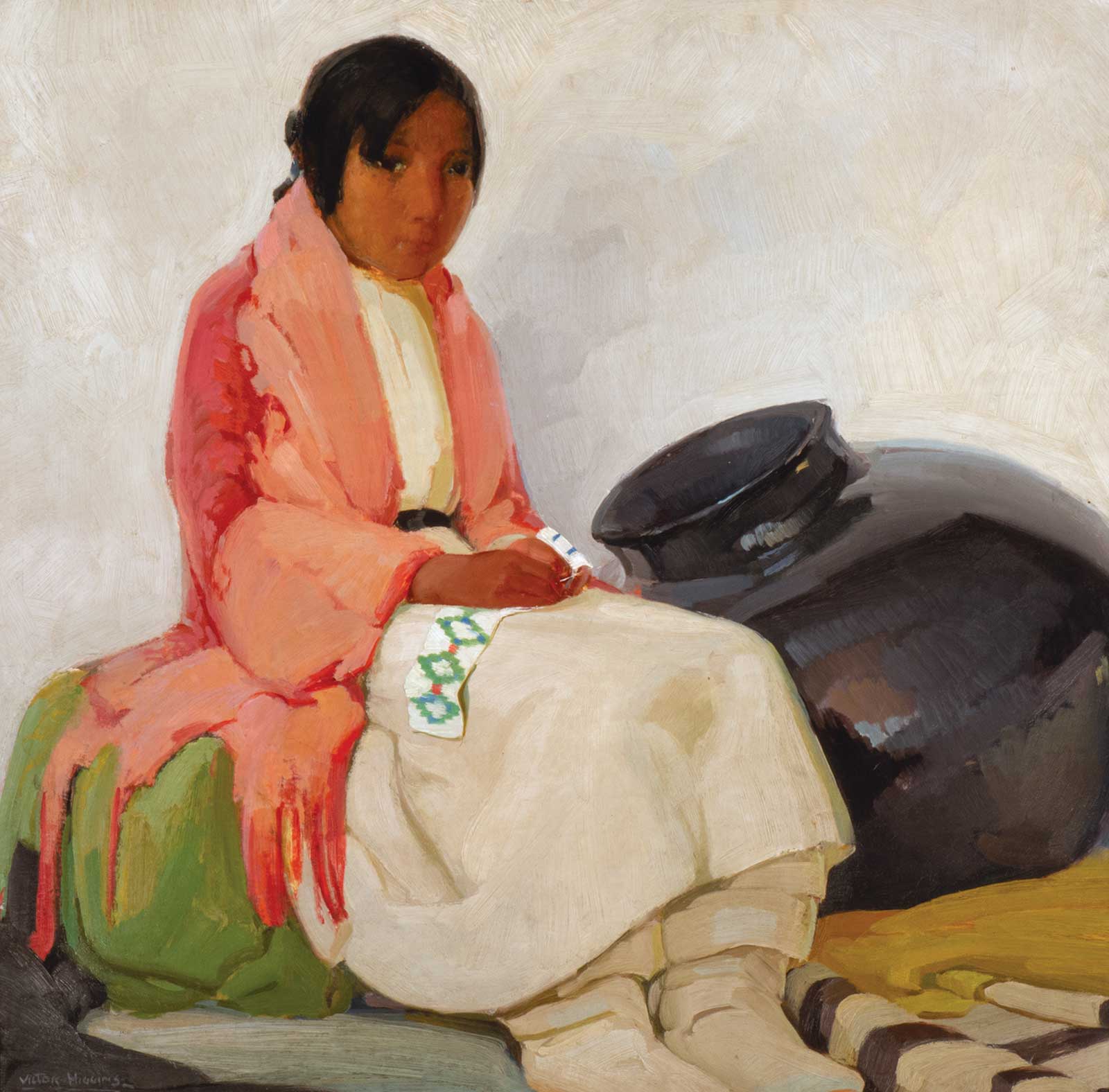 Victor Higgins (1884-1949), The Beadworker, oil on board, 29¼ x 29”. Collection of the New Mexico Museum of Art. Bequest of Joan Higgins Reed, 1983 (1983.12.2). Photo by Cameron Gay.Fritz Scholder (1937-2005) was one-quarter Luiseño and was conflicted about his Native heritage. He often claimed he was not Indian, having been “raised white.” He insisted on being called an “artist” and said “I’ve never called myself an Indian artist. Everyone else has.” He eventually adjusted his outlook and began to paint Indians with no romance, smashing stereotypes along the way. He said,“I have painted the Indian real, not red!”
Snake Dancer is an example of his provocative figuration and bold color. He wrote, “I consider myself a colorist. One color by itself isn’t that interesting—it’s the second color and a third color, and a dialogue starts and pretty soon you’re swept up in it. You really don’t know what’s going to happen next.” —
Western Eyes: 20th Century Art Here and Now
Through January 8, 2023
New Mexico Museum of Art, 107 W. Palace, Santa Fe, NM 87501
(505) 476-5072
www.nmartmuseum.org
Powered by Froala Editor