The tourists tend to stop at the James Earle Fraser sculpture and linger a bit. Some pose for photos. Others snap selfies. Fraser’s immense 18-foot, 7,500-pound plaster version of The End of the Trail, which had to be craned into the building nearly 50 years ago, is one of those showstoppers that makes visitors to the National Cowboy & Western Heritage Museum stop in their tracks. 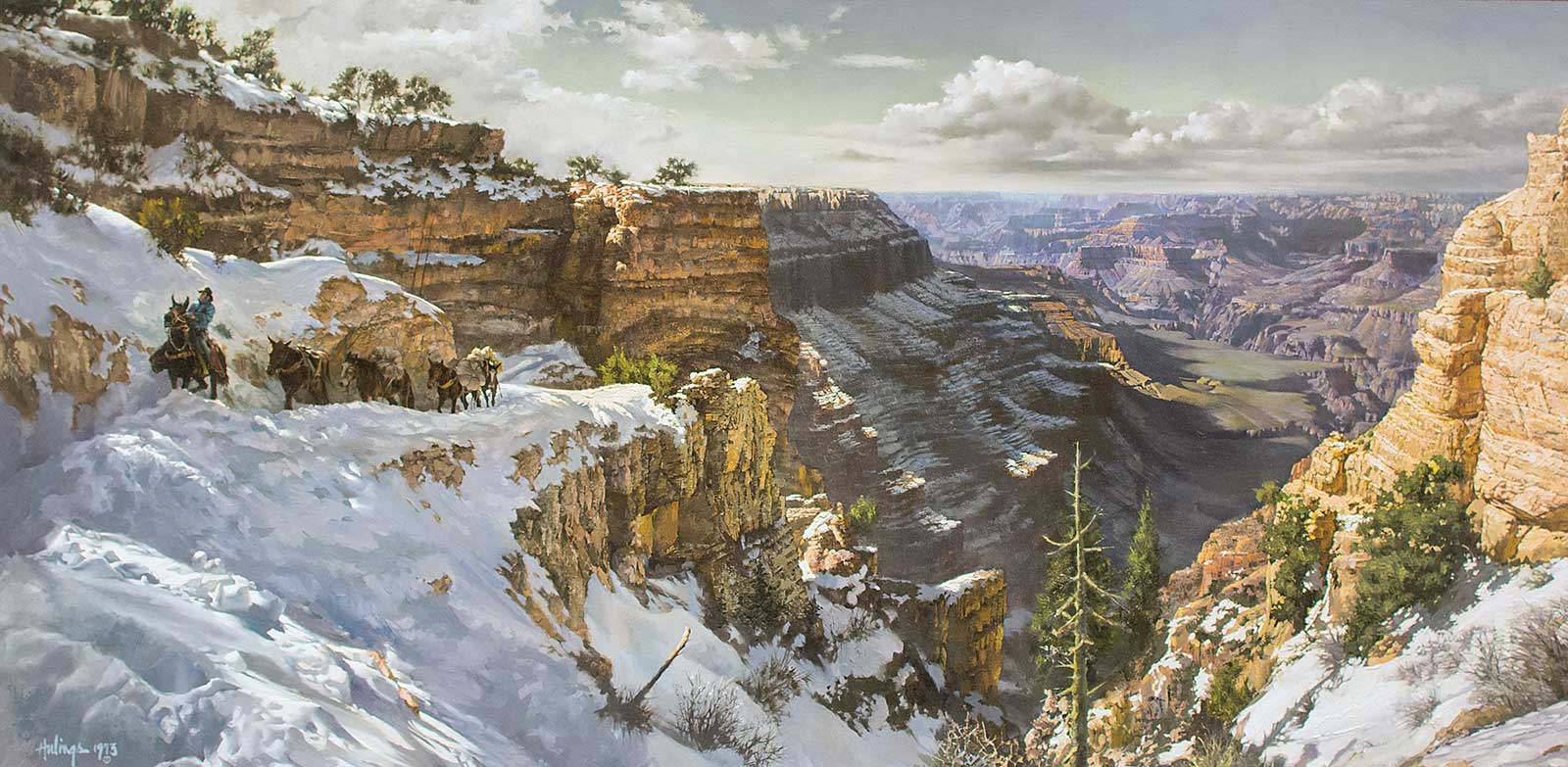 Clark Hulings (1922-2011), Grand Canyon, Kaibab Trail, 1973, oil on board. Prix de West Collection, National Cowboy & Western Heritage Museum. 1973.08.The natural path through the museum is to then take a right, down the great hall and into the main galleries, where visitors will see works by Charles M. Russell, Frederic Remington, N.C. Wyeth, William R. Leigh, Albert Bierstadt, Alfred Jacob Miller, E. Martin Hennings, Walter Ufer and many others.
But glance left from The End of the Trail. Down the hall is another Fraser, this one of a seated Abraham Lincoln who seems deep in thought. Lincoln guards what is arguably the best sections in the museum, the small gallery that houses the Prix de West Museum Purchase Award winners.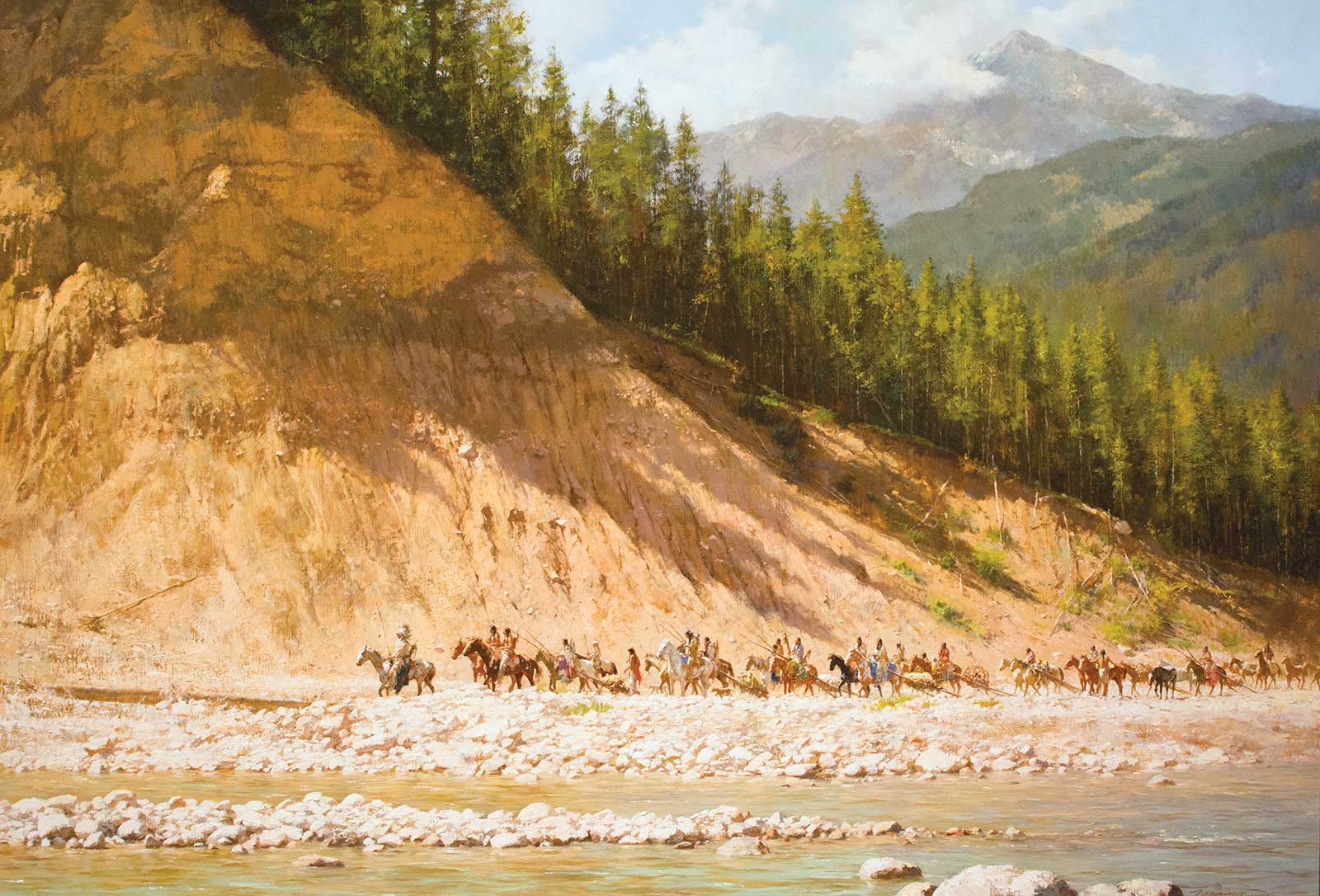 Howard Terpning, Moving Day on the Flathead, 1981, oil on canvas. Prix de West Collection, National Cowboy & Western Heritage Museum. 1981.34.
After this year’s Prix de West, the museum purchase collection will have the distinct honor of holding 50 years’ worth of purchase winners. Not only are these works by some of the best artists who have put their boot in the West, these are some of the best works by those artists. And the list of winners is a rogues’ gallery of greatness, a who’s who of Western art: Howard Terpning, Clark Hulings, Tom Lovell, John Clymer, James Reynolds, Bob Kuhn, Tucker Smith, William Acheff and so many more. 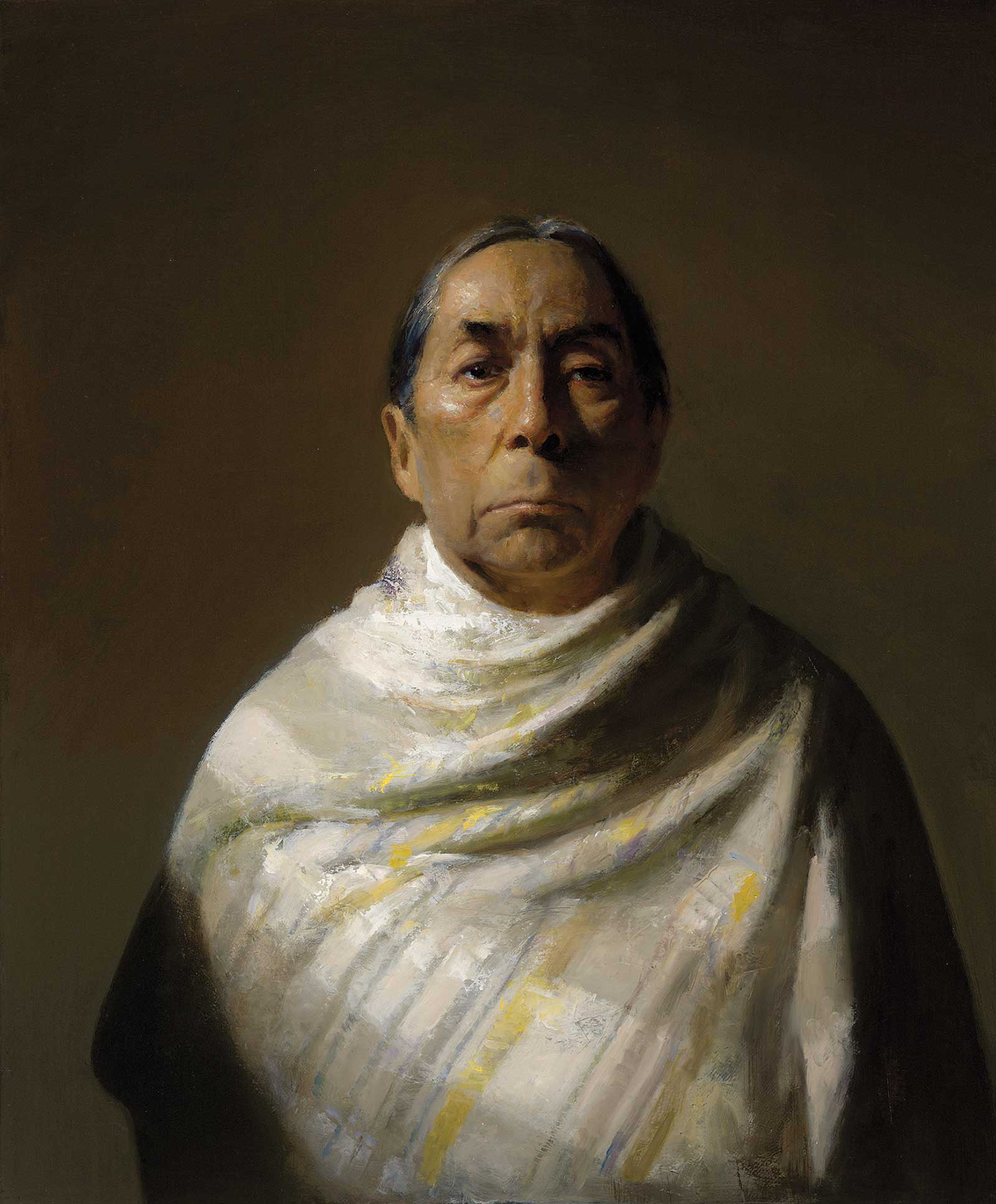 David A. Leffel, Jonathan Warm Day Coming, 2016, oil on canvas. Prix de West Collection, National Cowboy & Western Heritage Museum. 2016.06.
“The collection speaks to the presence of the Prix de West, a show that was designed to show the best of the best,” says Susan Patterson, the curator of special exhibits at the National Cowboy & Western Heritage Museum in Oklahoma City. “Our intention is to present the highest quality of art and artists depicting the American West. These award winners represent that year after year.”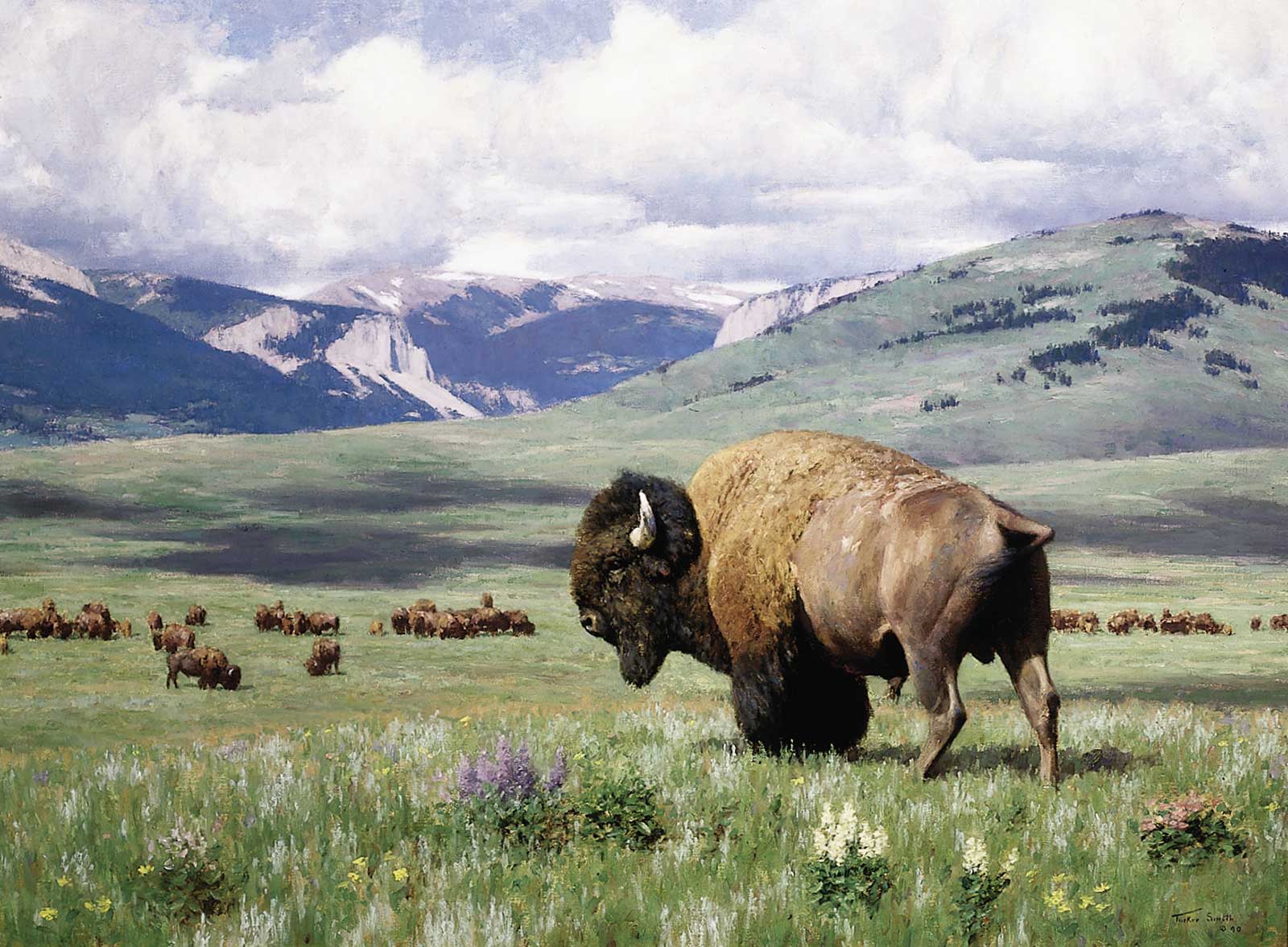 Tucker Smith, The Return of Summer, 1990, oil. Prix de West Collection, National Cowboy & Western Heritage Museum. 1990.29.
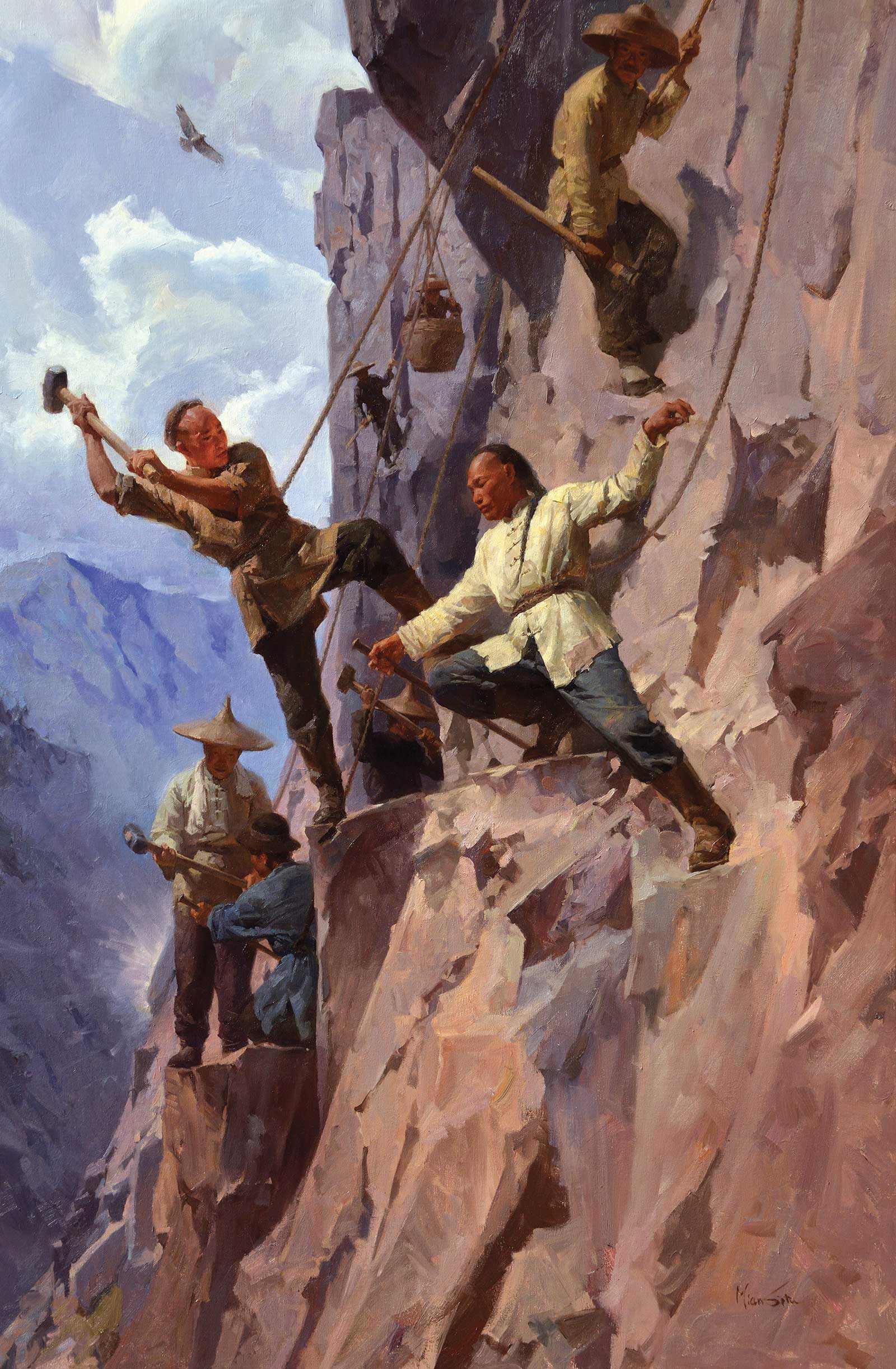 Mian Situ, Blasting a Route Through the Sierra Nevada Mountains, 1865, Central Pacific Railroad, 2018, oil on canvas. Prix de West Collection, National Cowboy & Western Heritage Museum. 2018.08.The award, which is given every year, has a unique set of prizes. First, the winning artwork is purchased from the artist, which takes some pressure off them during the sales portion of the show. Second, the work enters the permanent collection, where it is guaranteed to be seen by museum visitors. This is the part that the artists will admit thrills them. “Art,” they will say, “has the ability to last longer than any artists’ life.” Some of them also geek out a little—“It’s going to hang with a Terpning!”—which is completely understandable. Finally, in recent years the museum has asked the previous year’s museum purchase winner to speak at the Prix de West. This year Greg Beecham will talk about his work Gone Fishin’, which won in 2021.
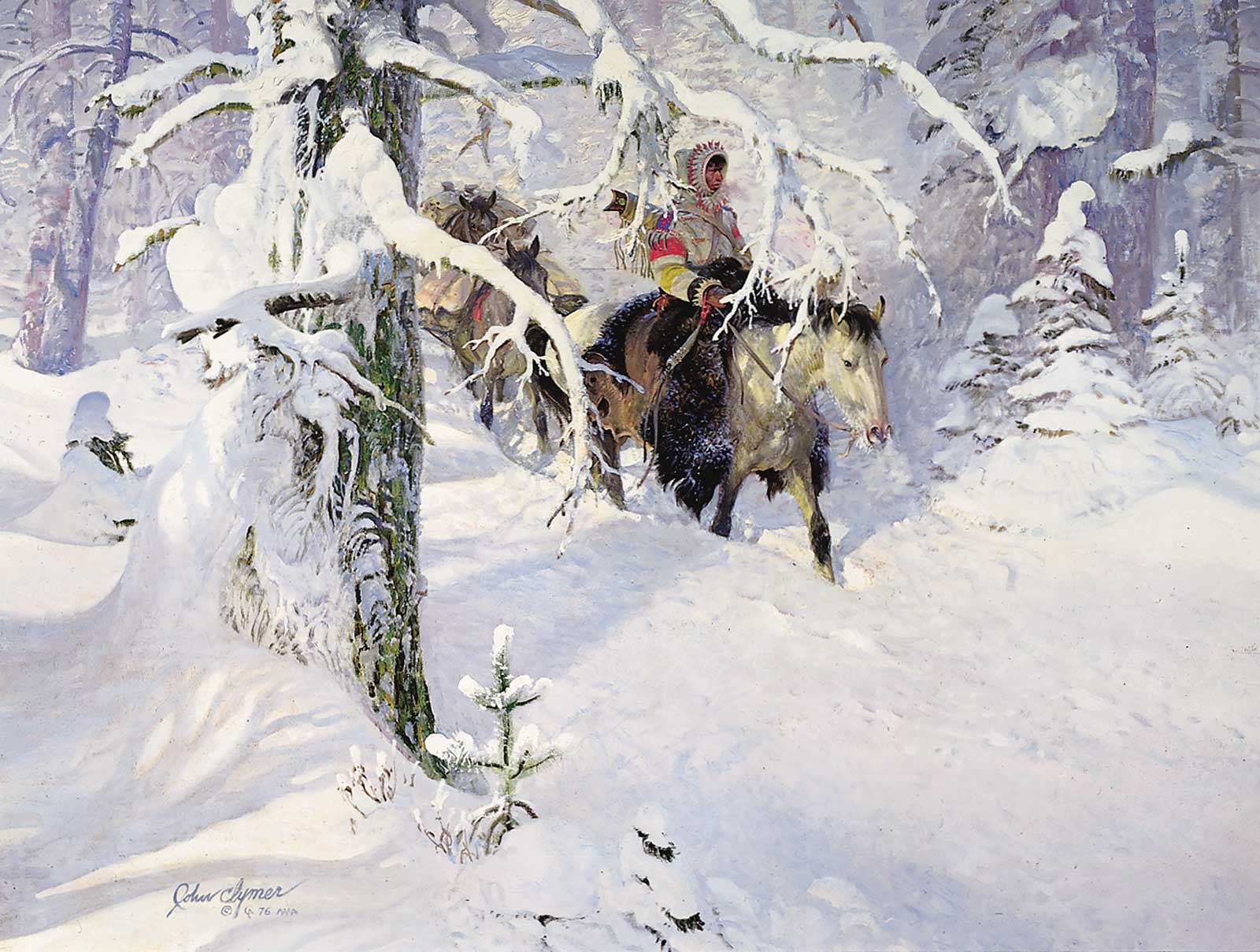 John Clymer (1907-1989), Out of the Silence, 1976, oil on canvas. Prix de West Collection, National Cowboy & Western Heritage Museum. 1976.25.The award itself is chosen by the Prix de West committee, an 11-member group that might struggle to make a unified pick for lunch, but somehow picks one lone piece every year to represent all of Western art. Dan Corazzi, the chair of the Prix de West and one of those 11 voices, says the process is involved and can be tedious, but that the group miraculously comes together on this big choice. “We probably spend eight hours making the pick during the on-site process, but we also view the artwork for many hours long before we’re ever in the room with it,” he says. “We select all of the awards for the show, but this award always takes the longest. It’s hard because there are always two or three pieces in any given year that are finalists. But we have to pick just one. It is quite challenging.”
 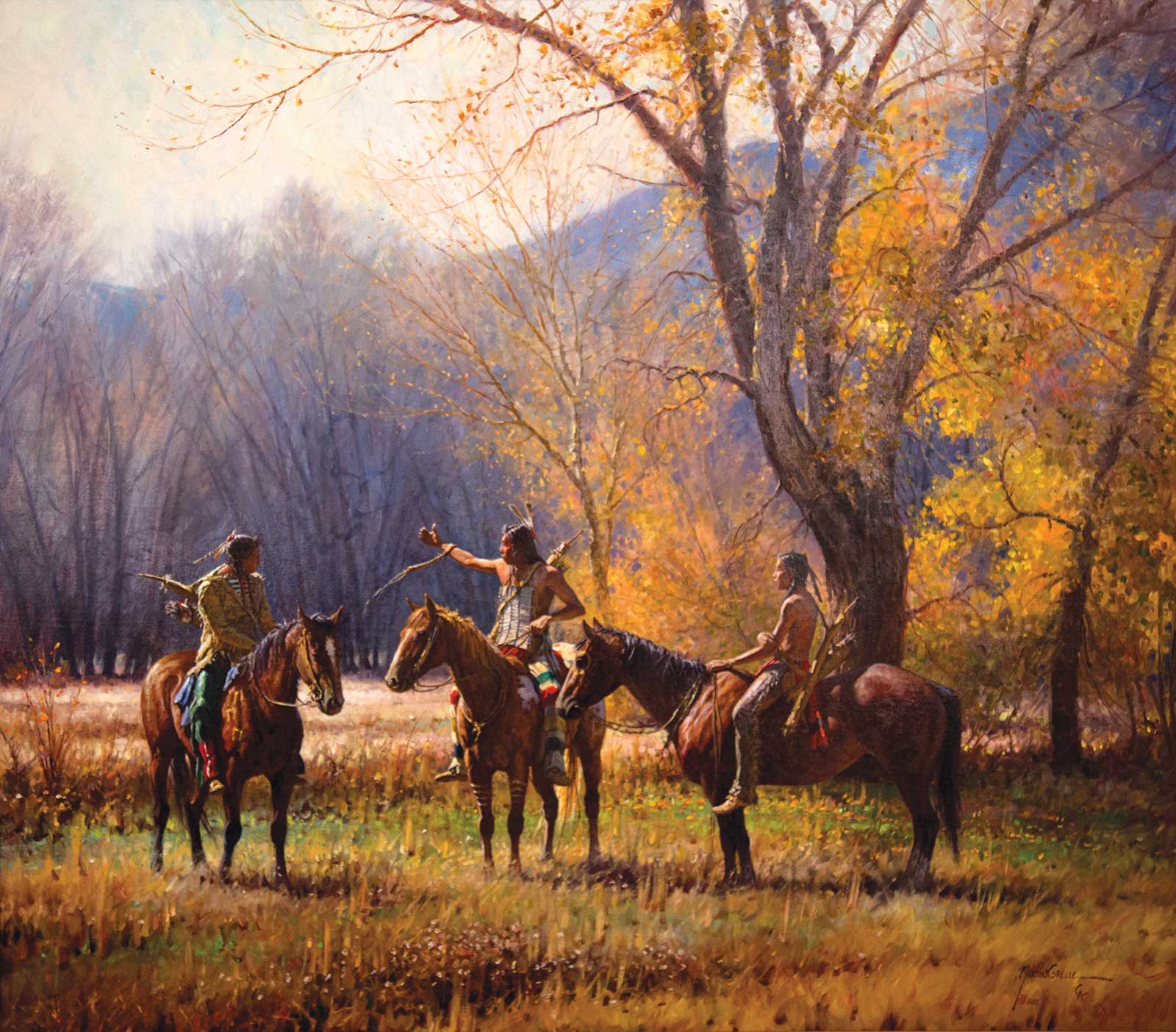 Martin Grelle, Teller of Tales, 2002, oil. Prix de West Collection, National Cowboy & Western Heritage Museum. 2002.131.He continues: “It’s challenging because the piece we pick will represent the museum, the show and the essence of the American West. And the truth of the matter is that every piece in the show is an example of that essence we’re looking for. They are all exemplary, which is why the choice can be so tremendously difficult.”
The first year of the Prix de West—in 1973, back when the museum was presenting the show under the National Academy of Western Art (NAWA)—saw the first purchase award go to Clark Hulings for one of his most spectacular paintings, a snow-filled panoramic image of Arizona’s most famous landmark, Grand Canyon, Kaibab Trail. Hulings was a worthy choice for the inaugural award, but his win must have made him chuckle: he famously never saw himself as a Western artist, but rather a painter who lived in and occasionally painted the West. 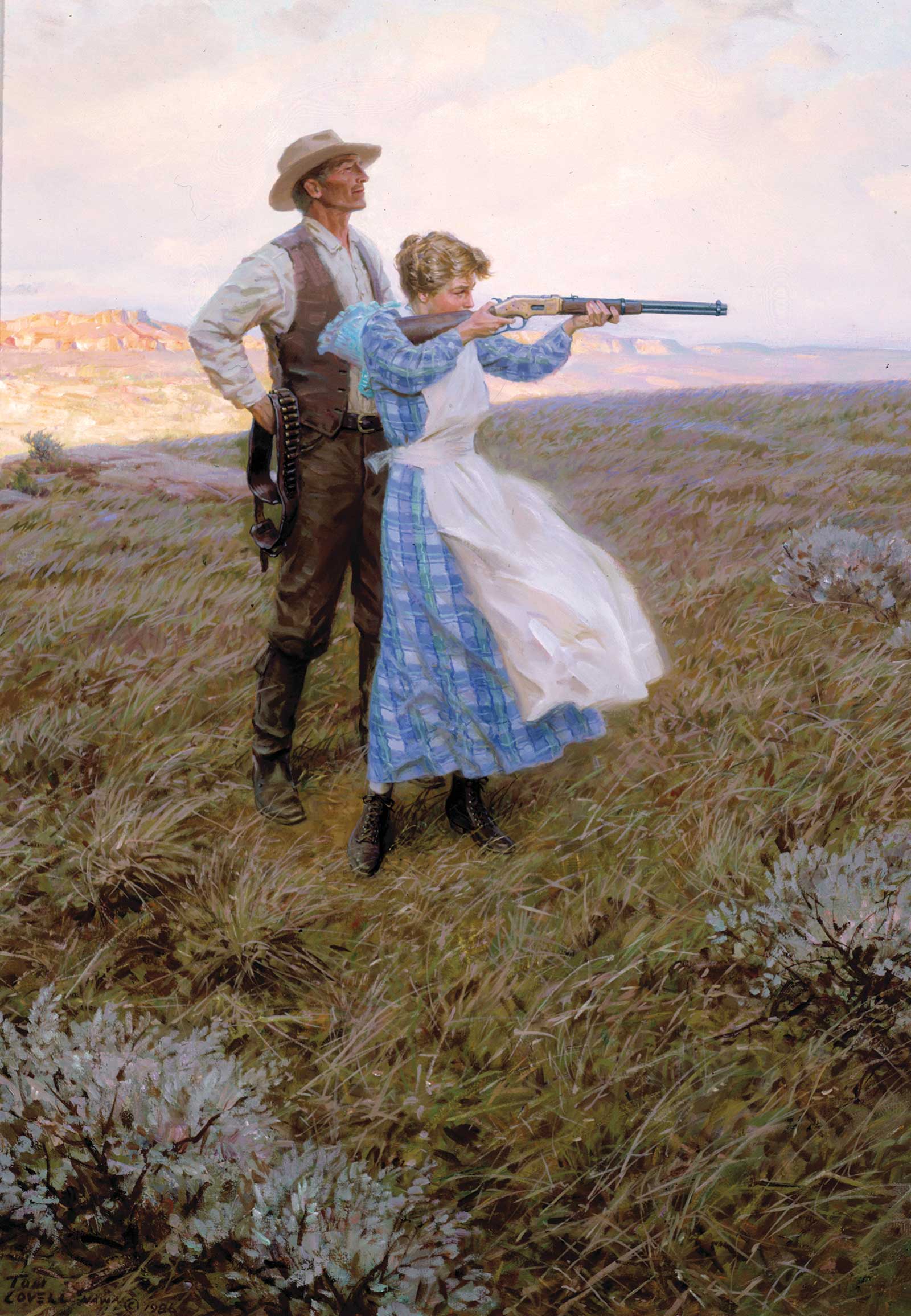 Tom Lovell (1909-1997), Target Practice, 1986, oil. Prix de West Collection, National Cowboy & Western Heritage Museum. 1986.08.
By year two, Tom Lovell, the famous artist turned illustrator, would win his first of two museum purchase awards: The Wolfmen, showing two Native American riders covering their tracks with tree branches, in 1974, and then, in 1986, Target Practice, a fan favorite showing a husband teaching his wife how to operate a lever-action rifle on a wind-swept prairie. In 1975, another artist would get his first of two awards when George Carlson won for his bronze Courtship Flight. The artist would win again 36 years later in another medium, the only Prix de West artist to do that, when his oil painting Umatilla Rock was chosen in 2011. 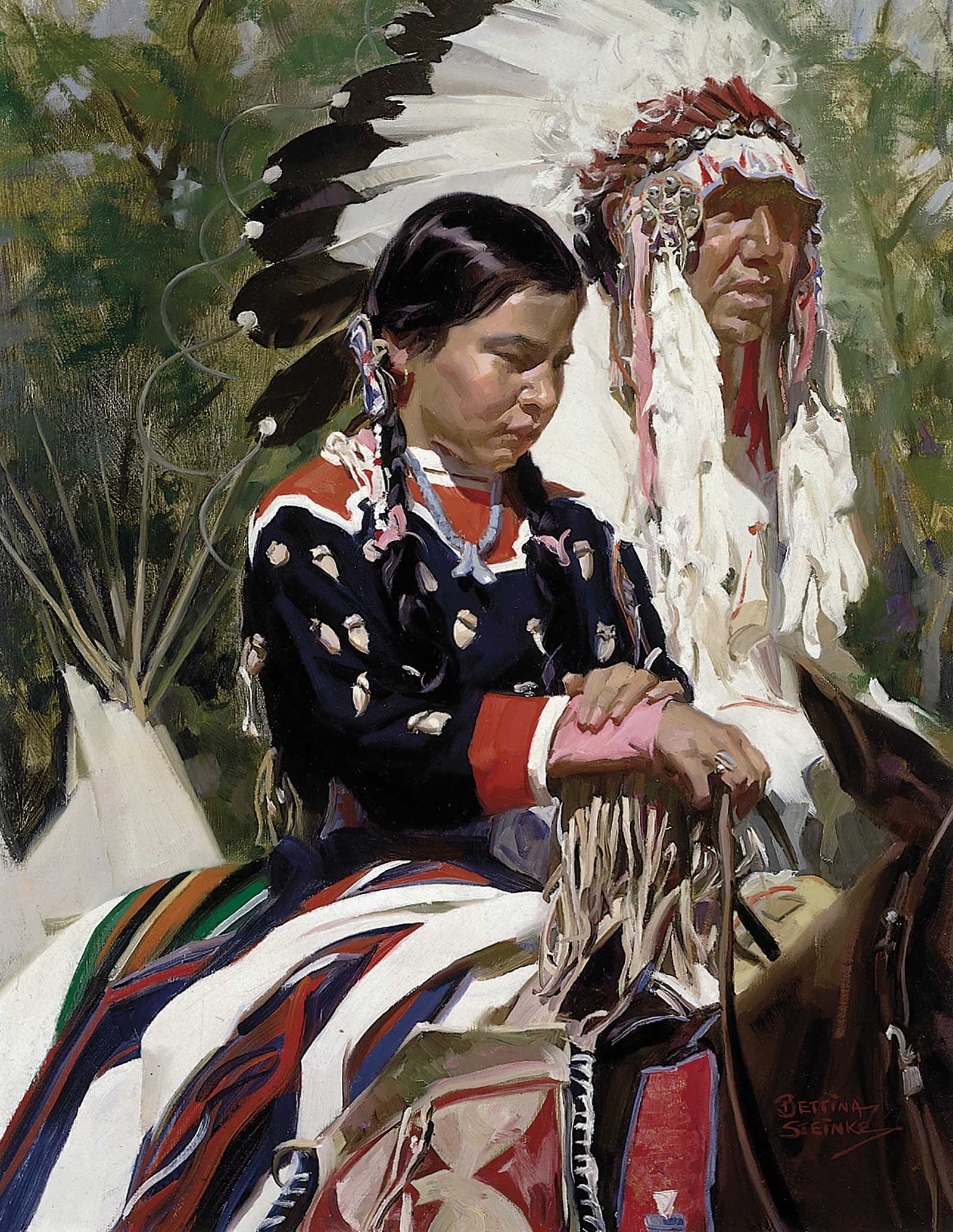 Bettina Steinke (1913-1999), Father and Daughter at the Crow Fair, 1978, oil on canvas. Prix de West Collection, National Cowboy & Western Heritage Museum. 1978.21.Bettina Steinke would become the first of only two women to win the award when she claimed the prize in 1978 for her work Father and Daughter at the Crow Fair. Terri Kelly Moyers would win in 2012, 34 years later, with her magnificent work La Luz de Fe, depicting a woman lighting a candle in a church-like setting. Native American artists are also represented in the collection with sculptures by Allan Houser from 1993 and Oreland Joe from 2006.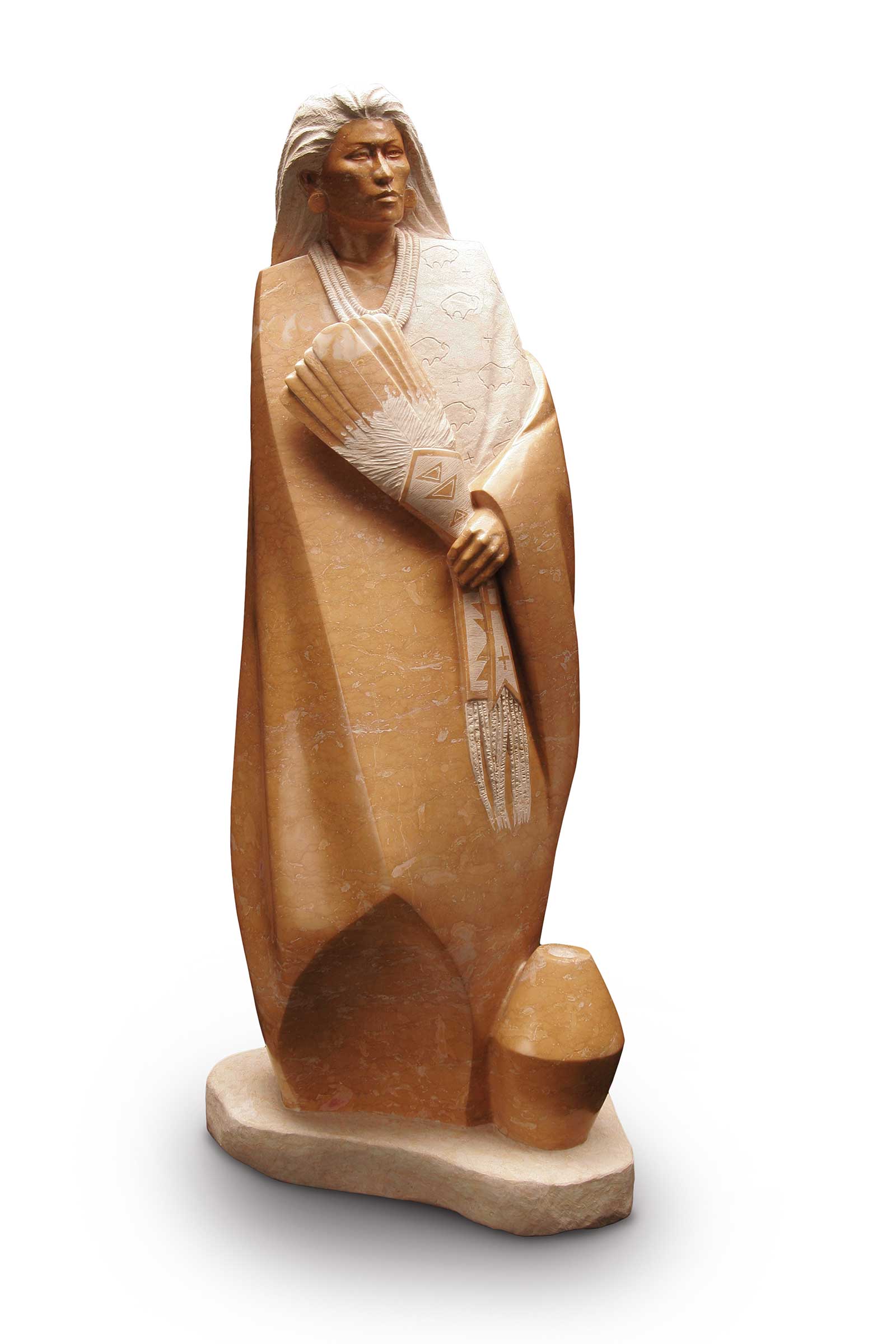
Oreland Joe, Buffalo Sunrise, 2006, Portuguese marble. Prix de West Collection, National Cowboy & Western Heritage Museum. 2006.28.
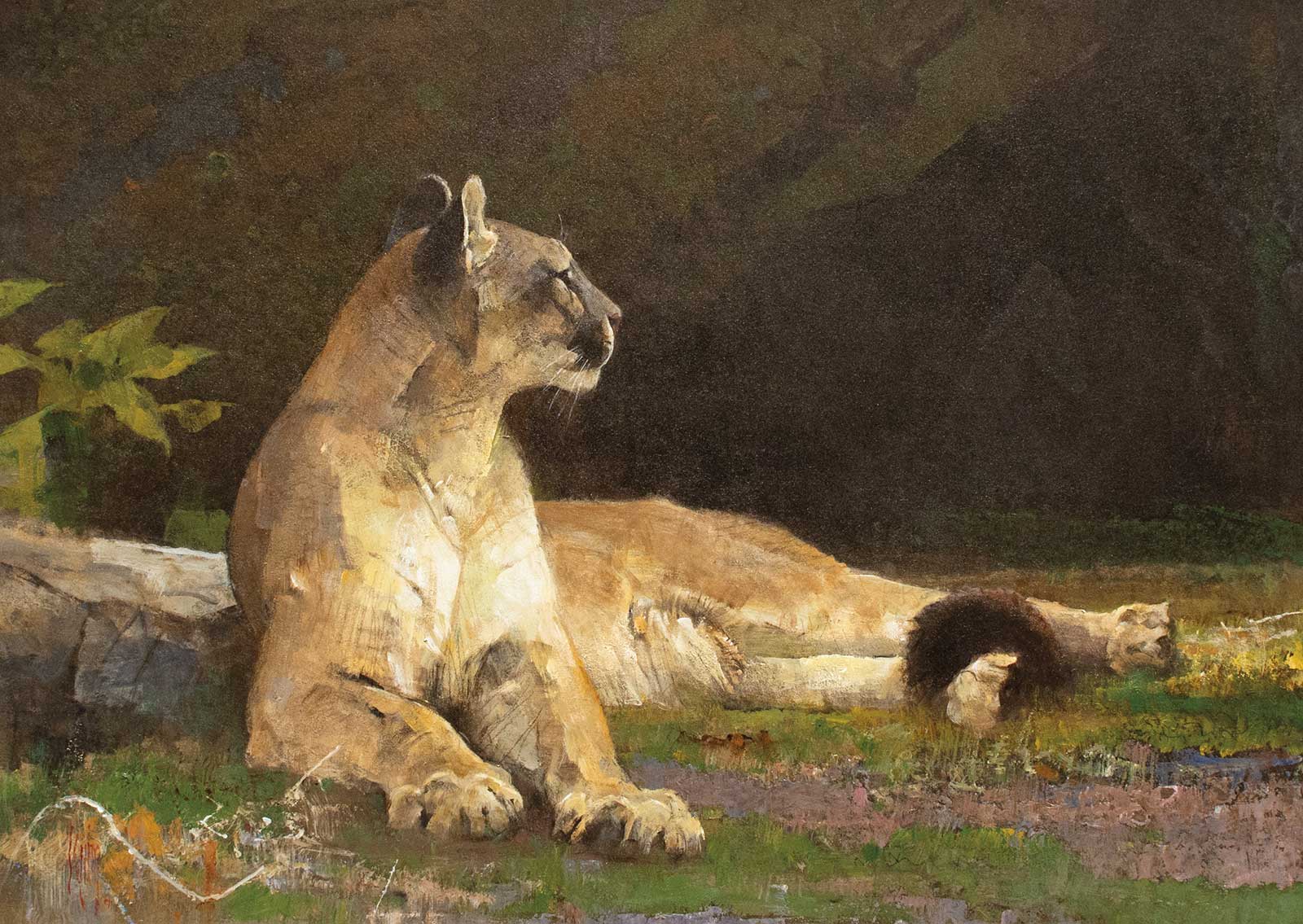 Bob Kuhn (1920-2007), The Lair of the Cat, 1991, acrylic on canvas. Prix de West Collection, National Cowboy & Western Heritage Museum. 1991.23.Other important years include 1981, when Howard Terpning’s exceptional work Moving Day on the Flathead would take the top award, and 1985, when Gerald Balciar’s pair of marble otters would become the first stone carving in the Prix de West collection. Eleven years later, Balciar would donate the monument Canyon Princess to the museum in appreciation for the critical win early in his career. Canyon Princess, joining Mr. Lincoln and The End of the Trail, is now part of a trinity of major sculptural work in the great hall at the museum.
While the purchase award was meant to honor a particular work during that year’s Prix de West, the award also shines a spotlight on an artist for many years to come, even after their passing. Morris Rippel (1979), Hollis Williford (1980 and 1988) and Lowell Ellsworth Smith (1983) all had outstanding wins, and each of those works helps shine a light on their careers.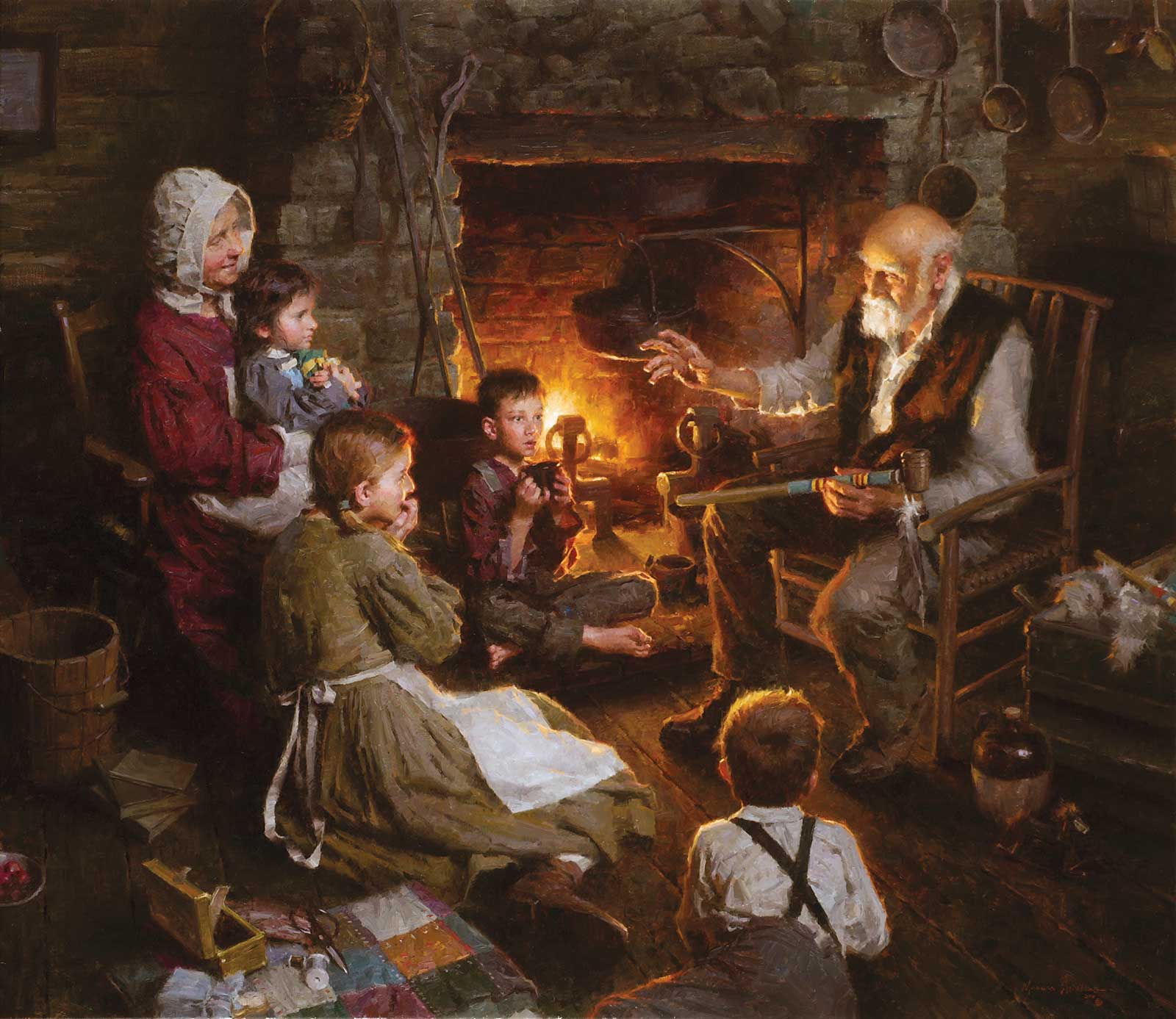 Morgan Weistling, Indian Stories, 2008, oil on canvas. Prix de West Collection, National Cowboy & Western Heritage Museum. 2008.1.The winning artworks also range wildly in subject, from William Acheff’s still life paintings (1989 and 2004) and Morgan Weistling’s rustic family scenes (2001 and 2008) to Christopher Blossom’s ocean-bound work (2010) and David A. Leffel’s classical portrait (2016). “I always appreciate how the works speak to the different viewpoints of the West. Our mission is to preserve and interpret and these works speak to that mission. One great example is Mian Situ’s piece from 2018,” says Patterson, referring to Blasting a Route Through the Sierra Nevada Mountains, 1865, Central Pacific Railroad, which shows Chinese immigrants dangling from ropes on a cliff as they carve a path for a rail line. “He tells a story that not a lot of people are familiar with, one that tells a version of the West from a different culture and different perspective. Those kinds of works are really critical to that mission.”
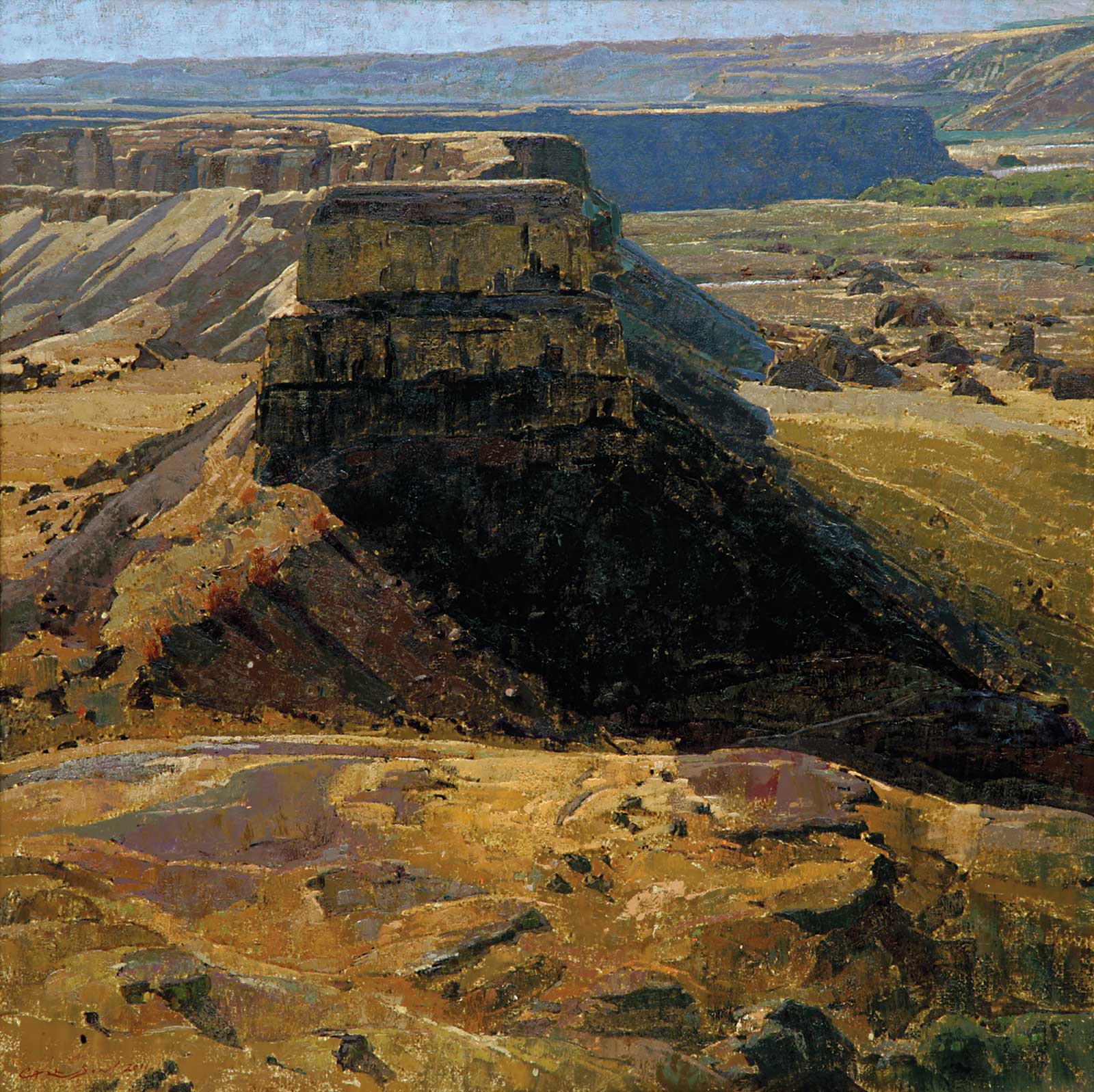 George Carlson, Umatilla Rock, 2011, oil. Prix de West Collection, National Cowboy & Western Heritage Museum. 2011.08.Patterson admits it’s hard making curatorial cuts to the collection since not all 49 works can be shown at once in the current gallery. So the museum rotates artworks in and out so different works can be seen. When asked about her favorite Prix de West winner, she did what many curators, and politicians, have mastered: she made a subtle pivot and then dodged the question. Corazzi had the same moves when he was asked, but he also admitted that it’s hard to choose a favorite when they’re all so stunning.
“I love walking through the gallery and listening to guests standing in front of the artwork and trying to interpret it for themselves. I see it with adults, children…everyone,” he says. “It’s always fascinating to hear how people take in the artwork and enjoy it.”
Guests will have the opportunity to examine the 50th Prix de West purchase winner on June 18 when the museum announces the 2022 winner. —
Powered by Froala Editor