More than three decades ago, leather artist James Jackson encountered Japanese leather artist Taka Otsuka. Although an ocean separated them and their work, they struck up a friendship that grew closer when Otsuka visited Wyoming, Jackson’s home, or when Jackson would visit Japan.
“Way back then I was going to Japan because the tool companies would have me go out to give seminars to talk about leather carving. At that time, a few guys like Otsuka were really interested. But each time I went out, there were more and more people. It really turned into an interesting thing,” Jackson says. “The Japanese leather industry started catching on, and what was so interesting about it was they were doing that really high-end, Sheridan-style carving that had played such a big role in Western leather work.”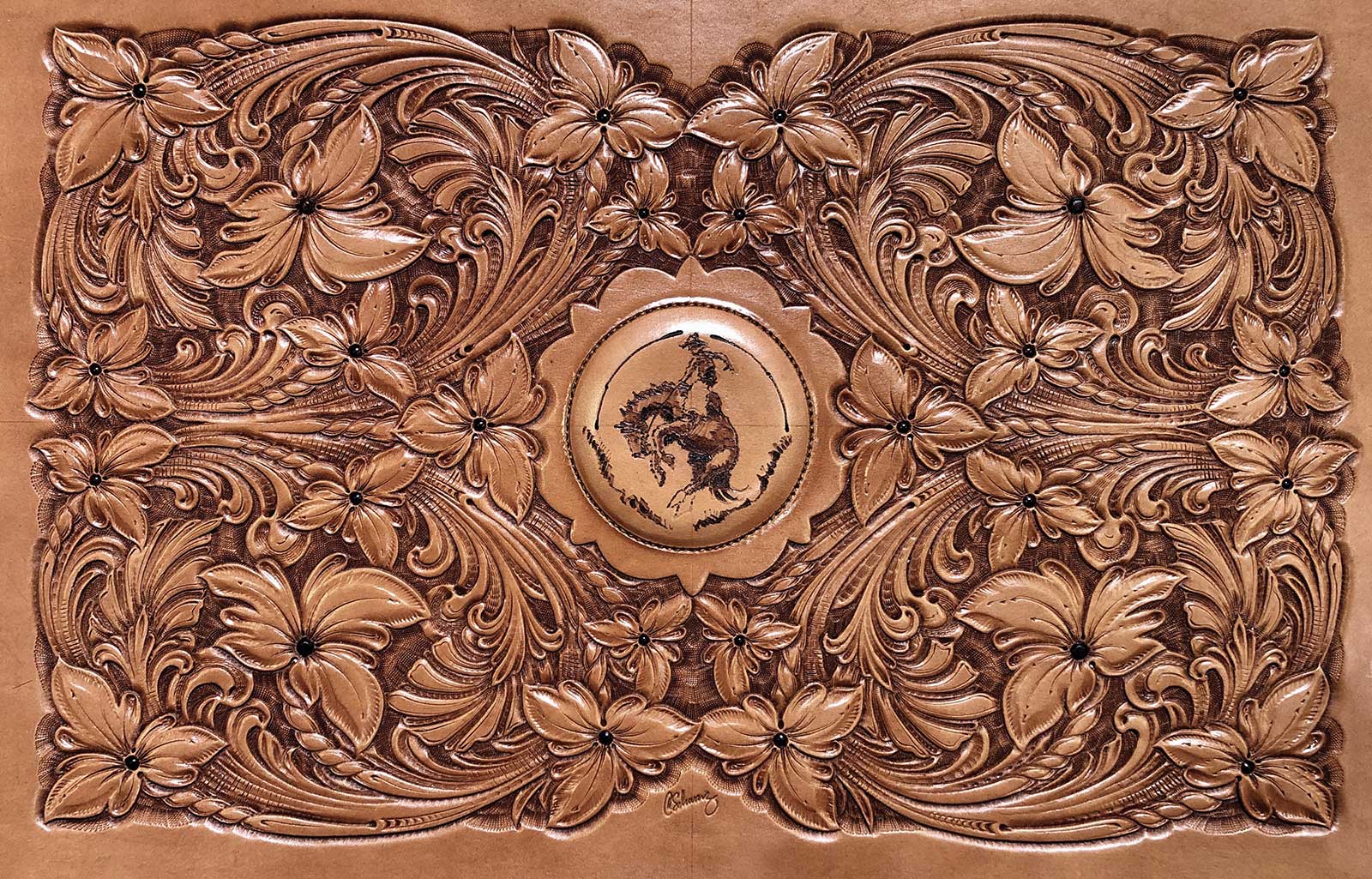 Cary Schwarz, Leather Panel, hand carved leather, 10 x 16”Not only did Western-style leather work stick in Japan—it thrived. “The last time I was there I took the bullet train from Nikko in the north to Hiroshima in the south, and also saw shops all over Tokyo. In every city I would see women carrying Western-style carved leather items. In some of them I would see my patterns on their purses,” Jackson says. “I felt like there was a great cultural exchange happening.”
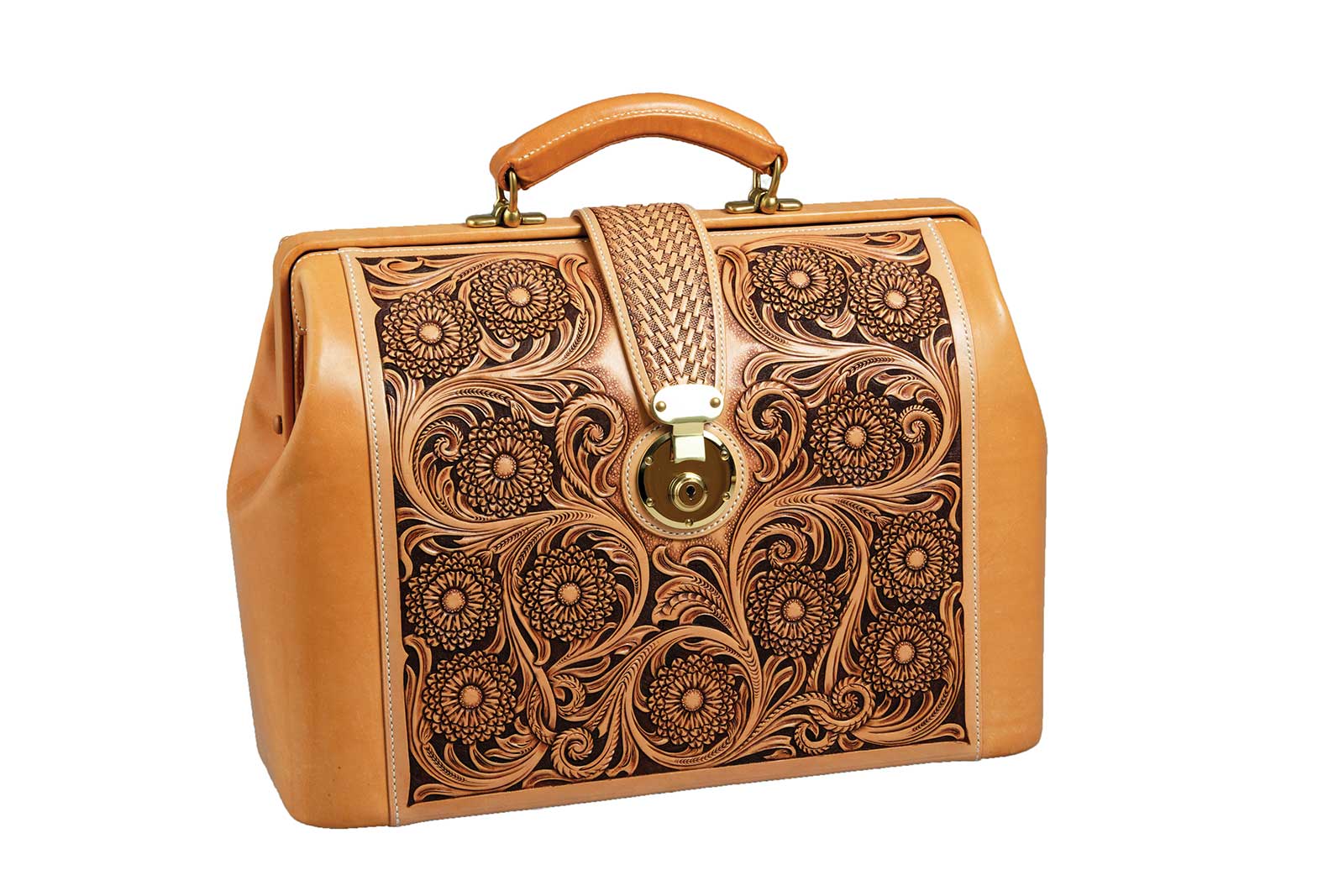 Mayumi Konno, Briefcase, cowhide, pig skin, 16½ x 13½ x 6¼”
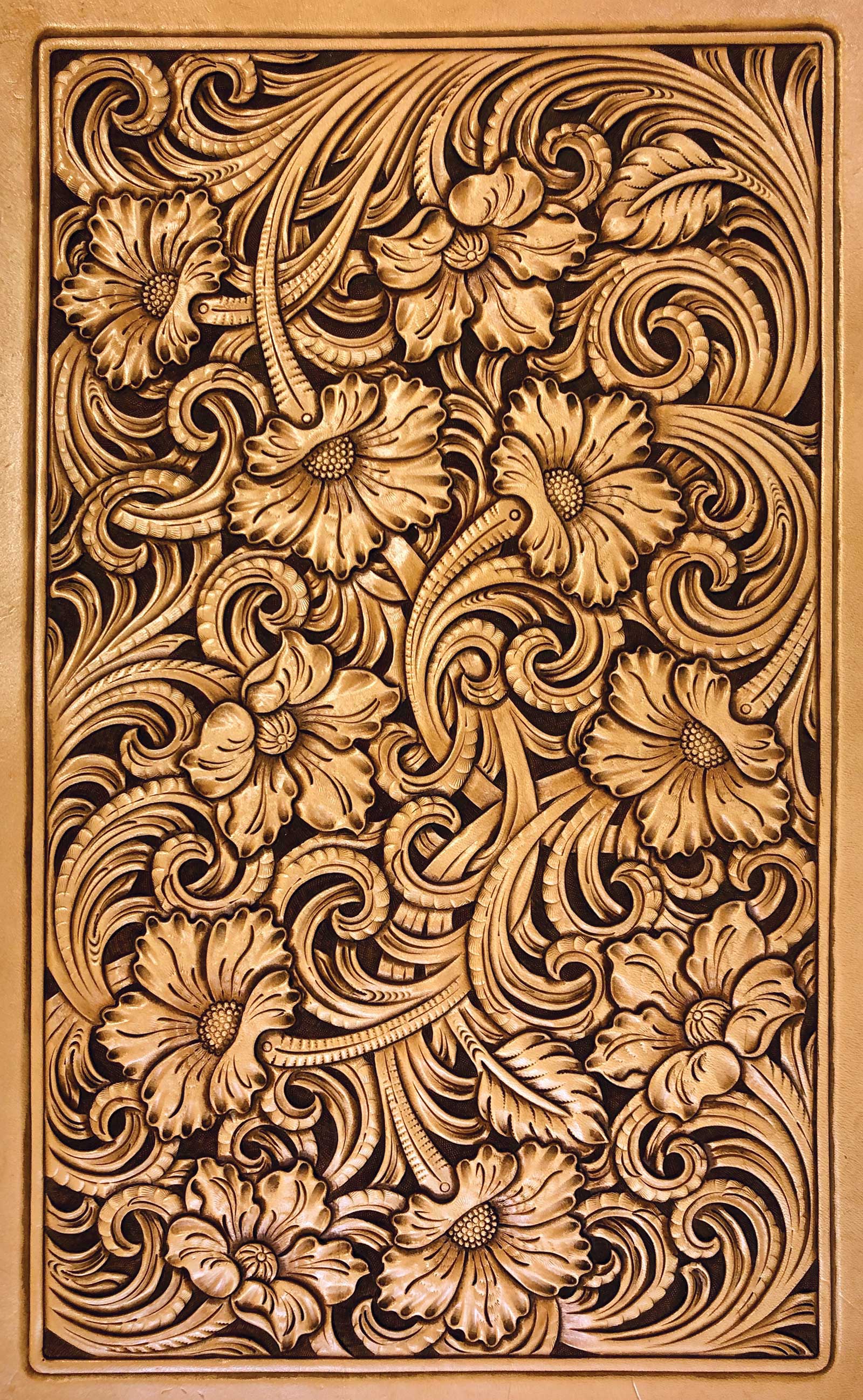 Naomi Saito, Leather Panel, hand carved leather, 10 x 16”
Jackson is the resident leather master at the Brinton Museum in Big Horn, Wyoming, and he has assembled a striking and unique show that will bring together North American leather artists and Japanese leather artists. Opening May 12, Master Leather Carving from North American and Japan: Design and Cultural Influences will not only feature a cultural exchange from the West to the East, but also the other way around. “The work isn’t just exceptional in Japan, it can also be as sophisticated, or more, to what you might find in the United States,” Jackson adds. 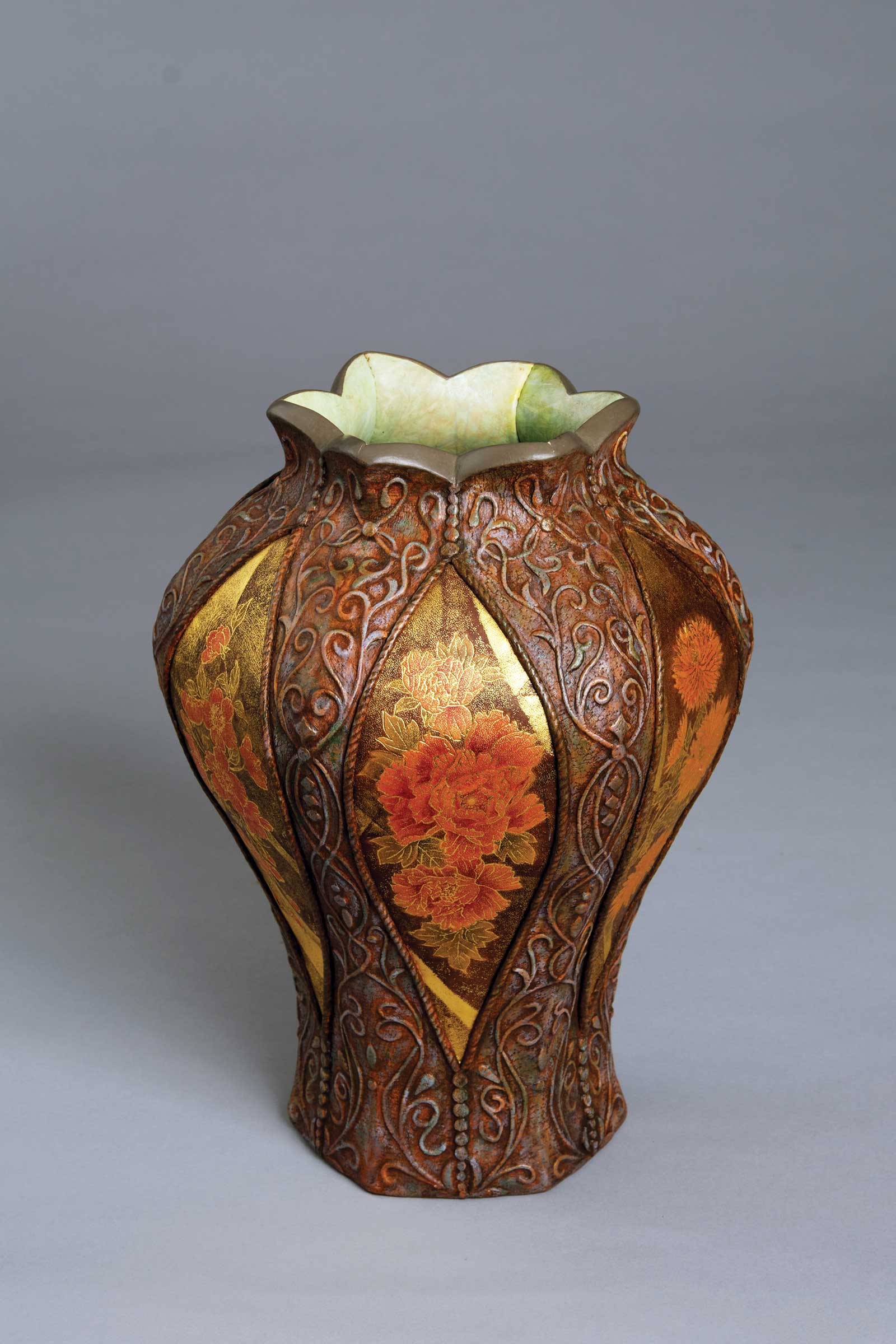 Michiko Matsuda, Leather Vase, cow hide, pig skin, 12 x 9 x 9”
Artists represented in the show include many of the top North American artists working in leather today, including Chuck Stormes, Wayne Hape, Gordon Andrus, Bill King, Keith Seidel, Rick Bean, Bob Park, Cary Schwarz and Barry King. They will be joined by Japanese artists Otsuka, Seiichi Koyashiki, Akiko Okada, Michiko Matsuda, Koichiro Oyama, Atsushi Kubota, Takahiro Kubo, Kazuki Fujita, Ryuichi Kimura, Naomi Saito, Mayumi Konno, Takeshi Yonezawa, Takeshi Katsumura, Chi Honghao and Lefty Mikuni.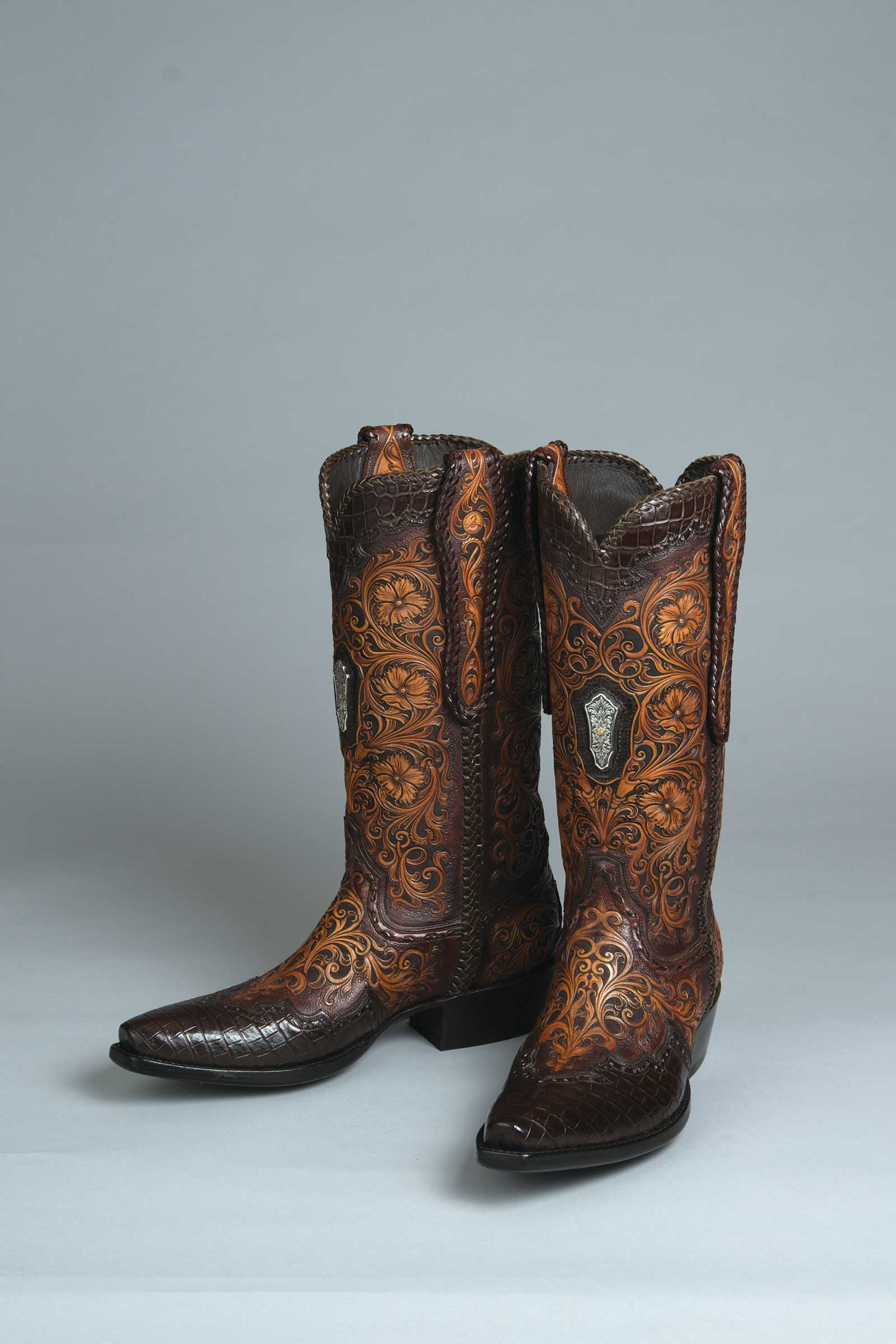 Takahiro Kubo, Cowboy Boots, cowhide, crocodile (toe tip), sterling silver, 15 x 12 x 11”
Each participating artist was asked to submit two works, and then also carve a leather panel to highlight their unique style of work. While the North American artists created more cowboy-centric works, including saddles, the Japanese artists frequently created handbags and purses, but also boots and even leather vases.
For Jackson, the most exhilarating part about the show, and this decades-long cultural exchange, has been the genuine appeal of the West. “These Japanese artists have truly immersed themselves in Western history. It’s not just a surface thing,” he says. “It’s become a deep appreciation. —
Master Leather Carving from North American and Japan: Design and Cultural Influences
Through September 5, 2022
The Brinton Museum, 239 Brinton Road, Big Horn, WY 82833
(307) 672-3173, www.thebrintonmuseum.org
Powered by Froala Editor