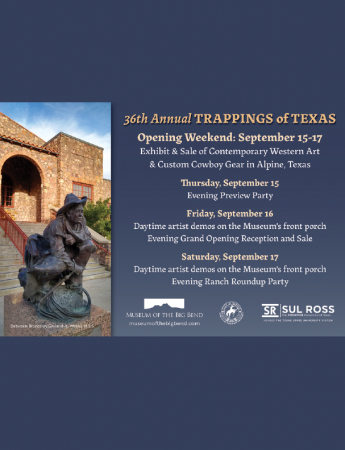
A new exhibition at the Museum of the Big Bend, featuring the work of esteemed Western painter Fred Darge (1900-1978), was first inspired by a book project started in 2017. During the beginning stages of research, husband and wife team Bonnie and Robert McKee III realized that there was minimal information available about the artist’s life. After consulting many art dealers and historians, the result is a deeply comprehensive book containing 24 chapters of incredible Darge imagery and writing that coincides with an exhibition of approximately 40 oil paintings of the same title—Fred Darge Paints the Big Bend and Beyond.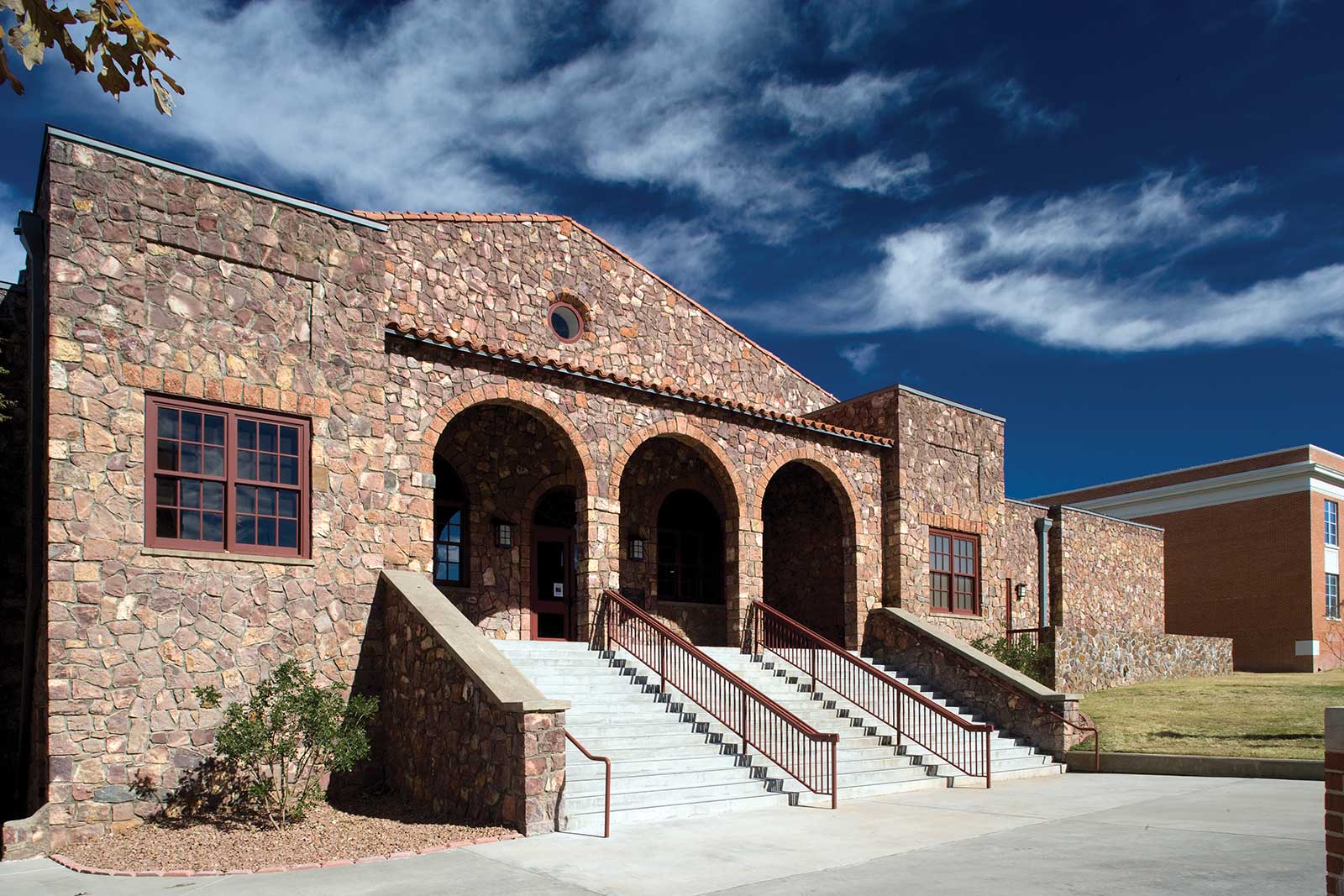 Exterior view of the Museum of the Big Bend.The McKee’s are also collectors of Darge’s work, which has grown from their initial purchase of two pieces in 2000, to their current ownership of 10. Robert notes that he’s “never seen such large collections of one artist’s work among many different collectors.” Needless to say, Robert, also the curator for the exhibition, had no problem finding pieces to contribute.
“We just really liked the work,” says McKee. “The other reason that inspired us to write [about Darge] and dig deeper is that the more we learned about him, the more interesting a person he became. His mission in life in his art career was to show people what ranch life was on a day-to-day basis. He knew that he was capturing a time in history that was going to change and disappear. He stuck with his mission his whole life.” 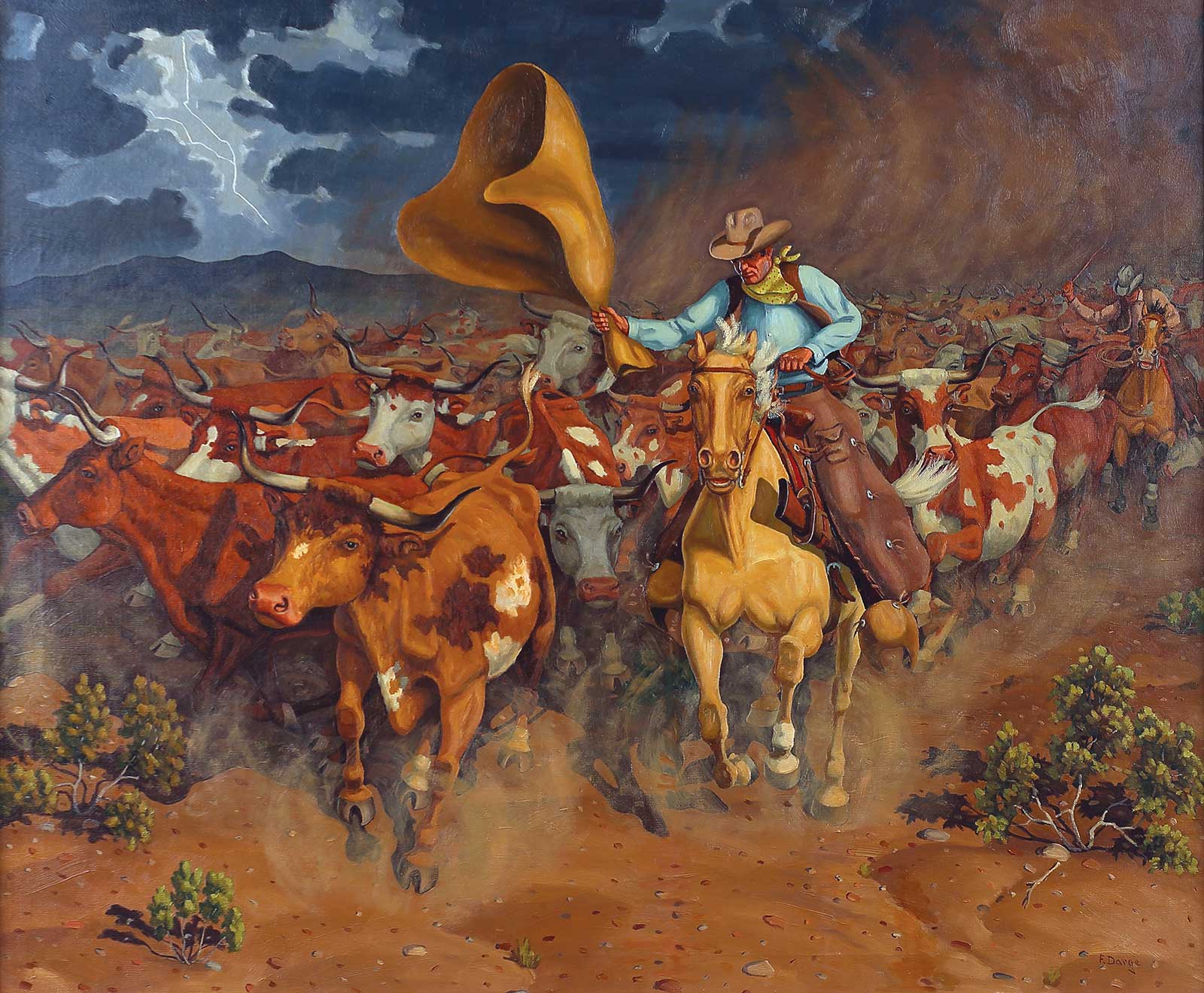 The Stampede, ca. 1930s, oil on canvas, 30 x 36”. Susan and Jim Lockhart Collection.The exhibition highlights a specific moment in Darge’s journey, from about 1936 to 1942. “This was the start of his career,” says McKee, “and when he did his best paintings.” Darge, born and raised in Germany, first landed in the United States by way of joining the German Merchant Marines. After graduating from the Chicago Art Institute, he seems to have been called to Texas, and was eventually invited by Mr. and Mrs. Waddy T. Burnham Jr. to paint and experience life on their Big Bend ranch. From this point on, Darge would spend his summers immersed in the landscape of the Big Bend and on ranches in the region to sketch, and would return to his studio in the fall and winter months to complete the paintings.
 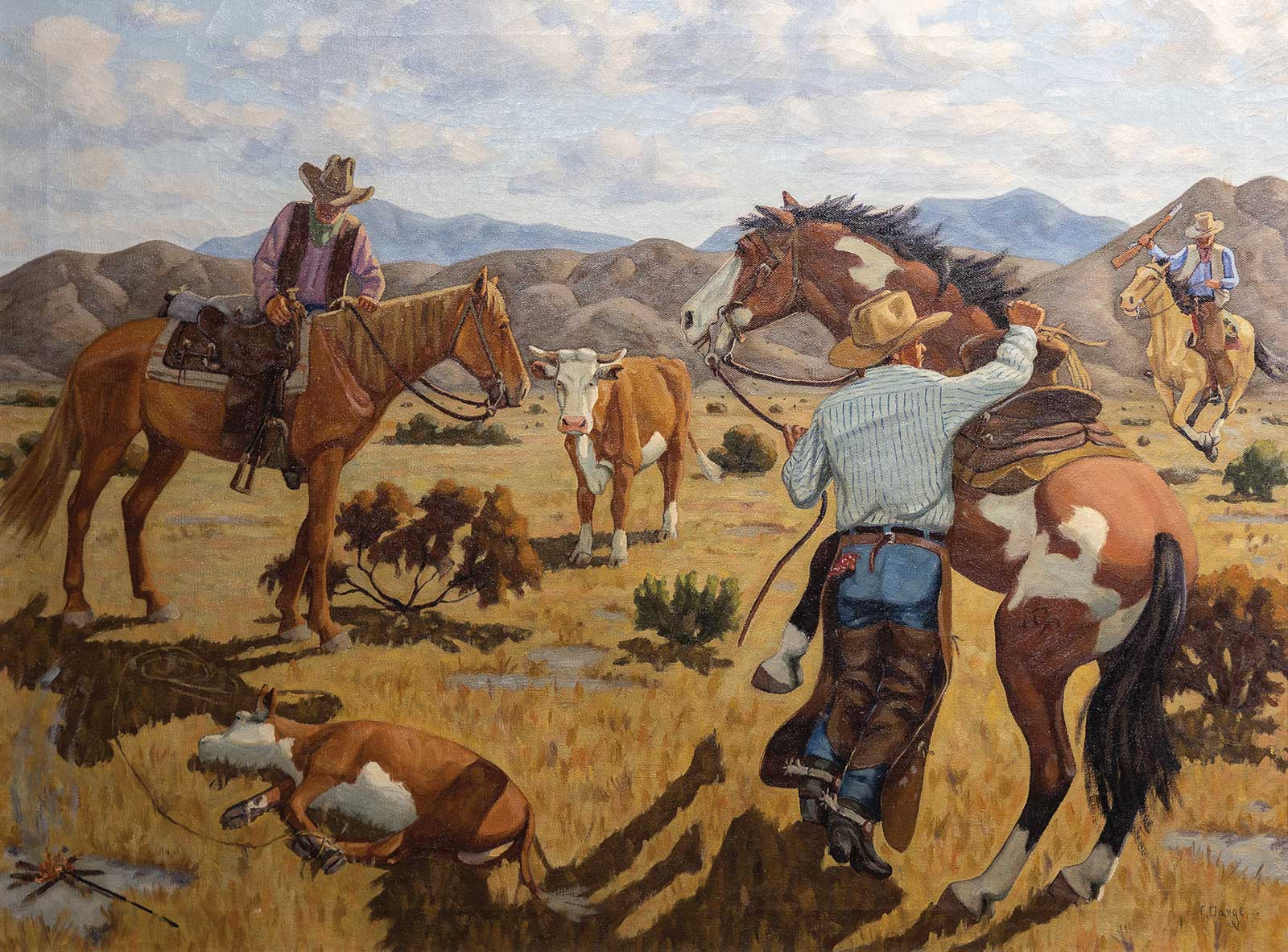 The Rustlers, ca. late 1930s, oil on canvas, 24 x 32”In Rustlers, a favorite of McKee’s, the viewer can see the prominent Chisos Mountains of the Big Bend in the background. “I think this is really interesting because it’s so action packed,” says McKee. “There’s lots of moving parts. This is also a good example of a particular era raising cattle in the 1930s, and when there were still rustlers.”
Another significant piece in the exhibition will be Cowboy and Pack Horse. “You get a little bit of everything in this,” McKee says. “You see [Lechuguilla plants] in the foreground (they are only prominent in the Chihuahuan Desert where Big Bend is located), a rider and pack horse are in the middle and the Chisos Mountains in the background.”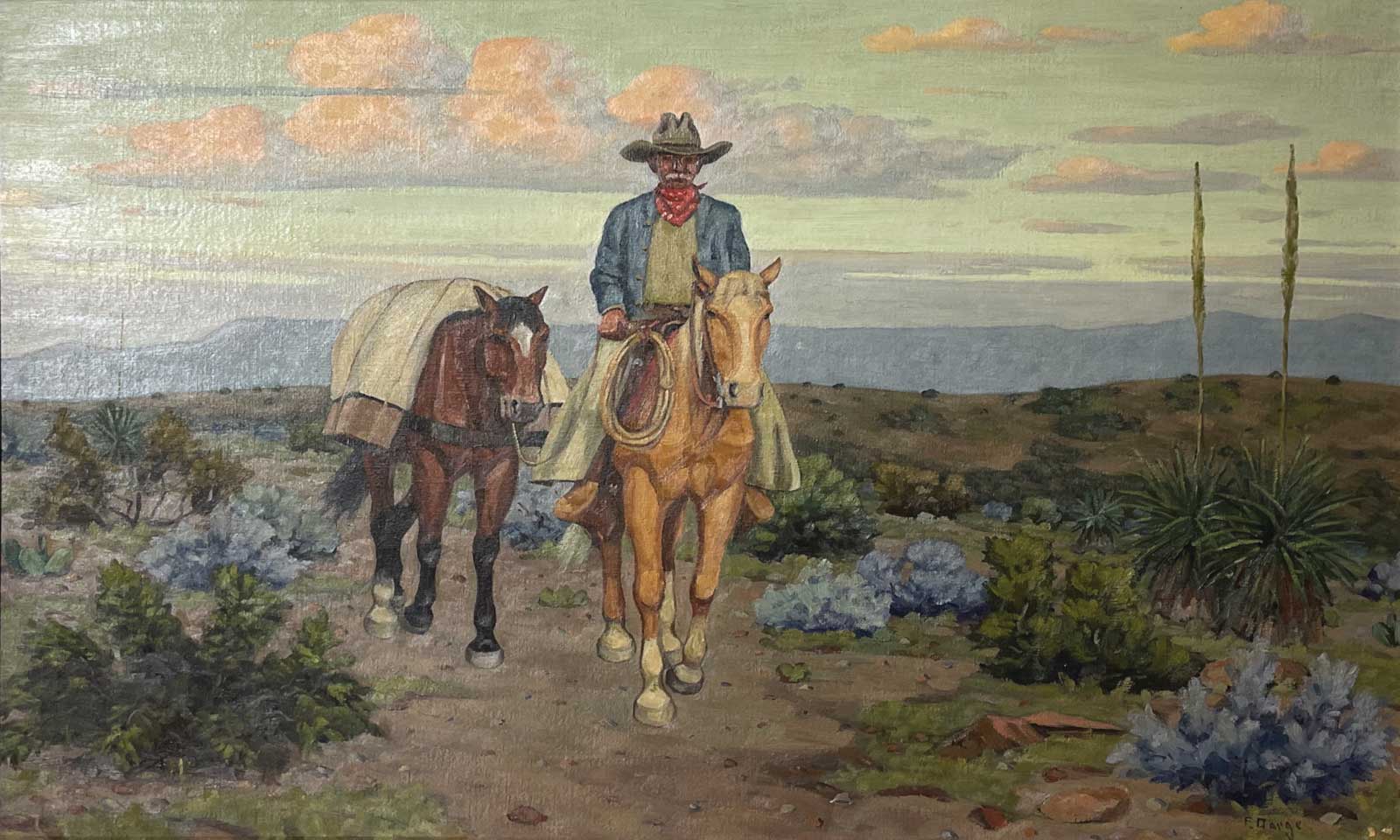 Cowboy and Pack Horse, ca. late 1930s, 18 x 24”. Collection of the Bryan Museum, Galveston, Texas.While the exhibit is meant to highlight this one particular stretch of Darge’s career, McKee notes that they will also show works “beyond” this time period as well. This will include prominent pieces from the artist’s time in places like New Mexico, Arizona and California, where he continued to portray the Western and ranch lifestyle.
The exhibition opened April 22 and will remain on display through June 4. The book is currently free to the public and can be found online at www.freddarge.com.
Fred Darge: Big Bend and Beyond
Through June 4, 2022
Museum of the Big Bend, 400 N. Harrison Street, C-101, Alpine, TX 79832
(432) 837-8730, www.museumofthebigbend.com
Powered by Froala Editor