Barbara Latham (1896-1989) studied at Pratt Institute in New York and later with the modernist painter Andrew Dasburg (1887-1979). She arrived in Taos, New Mexico, for the first time in 1925 to gather material for her work with a greeting card company. While there, she met her future husband, Howard Cook (1901-1980), a painter and printmaker who was working on illustrations for Willa Cather’s Death Comes for the Archbishop. While attending the Art Students League in New York, he had also studied with Dasburg. The couple settled in Taos in 1933.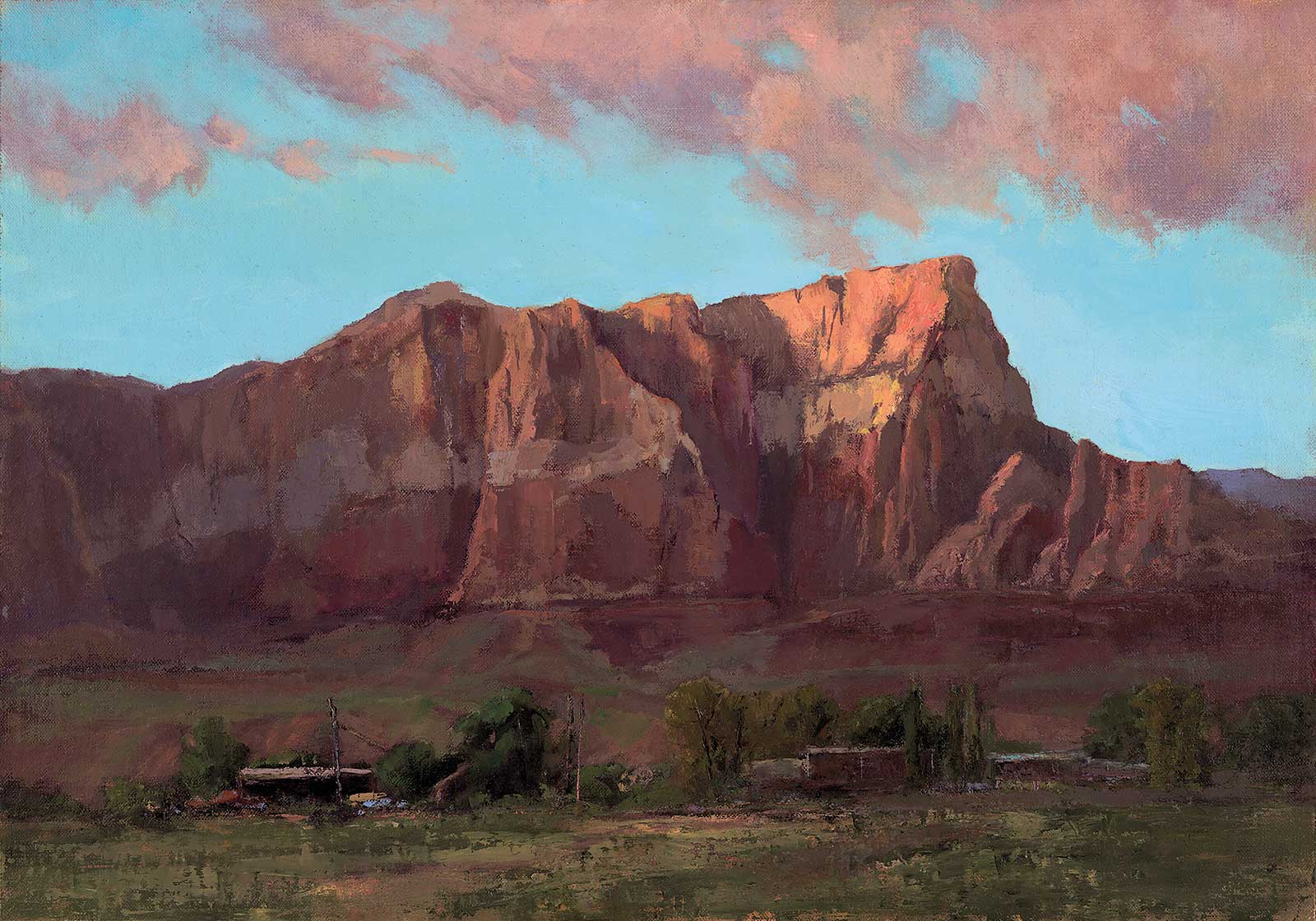 Masterpiece Gallery, The Homestead, oil, 14 x 20”, by Jan De Lipsey.
Dasburg wrote, “In my use of color I aim to reinforce the sensation of light and dark, to develop the rhythm to and from the eye by placing on the canvas the colors which, by their depressive or stimulating qualities, approach or recede in the rhythmic scheme of the picture.”
Latham produced paintings and prints of the Taos landscape and its people. Her bright, colorful paintings recall Dasburg’s comments on color. In Taos Plaza, she depicts the Pueblo, Hispanic and Anglo residents of the region in brightly colored clothing in hues that recede softly into the atmospheric rendering of Taos Mountain in the distance. 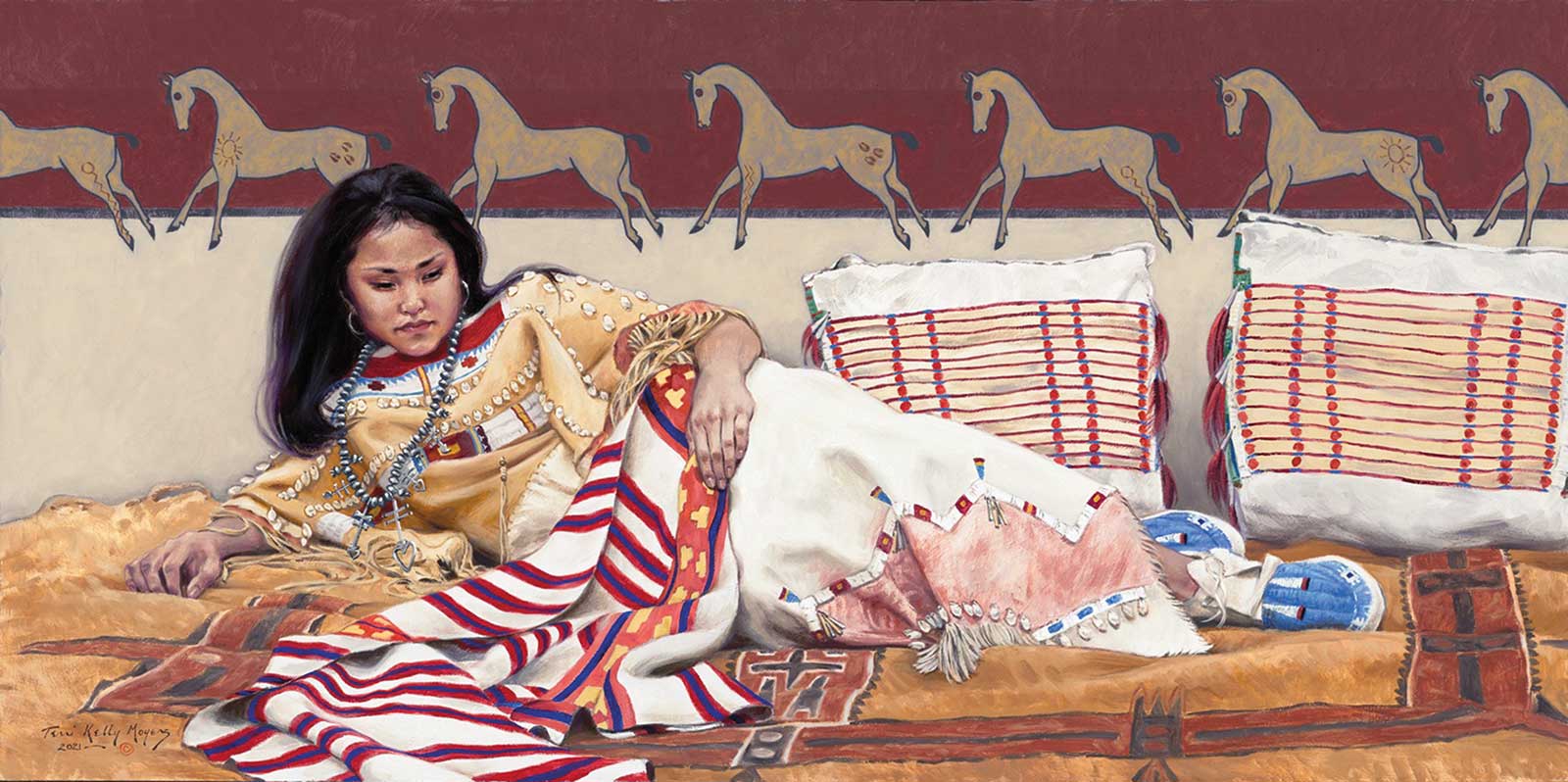 Legacy Gallery, A Family’s Wealth, oil, 24 x 48", by Terri Kelly Moyers
Barby Schacher is a self-taught pastel artist living in Idaho. Her portrait of two horses, Just Exhausted, was a prize winner in last year’s Women Artists of the West 51st National Exhibition. She often paints the occasion of one horse greeting another by nuzzling heads. She observes, “Horses who are strangers to each other will usually go through a sort of ‘getting acquainted’ ritual that begins with this type of greeting. Sometimes it goes well and other times it may end in hooves flying, kicking and biting. It just depends on whether they sense good vibes or danger, a challenge or a threat at the time.”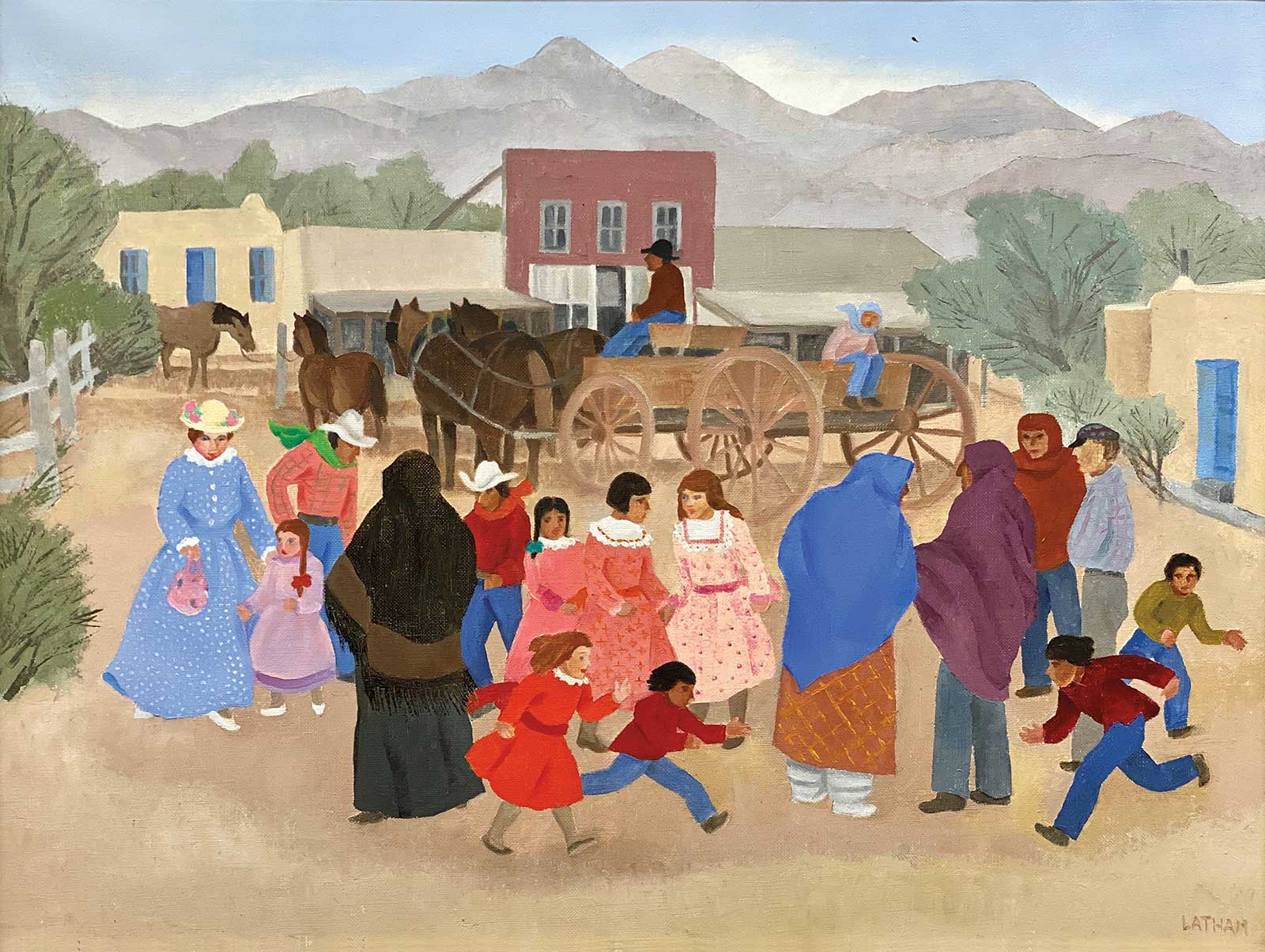 Nedra Matteucci Galleries, Taos Plaza, oil on canvas, 18 x 24", by Barbara Latham (1896-1989)
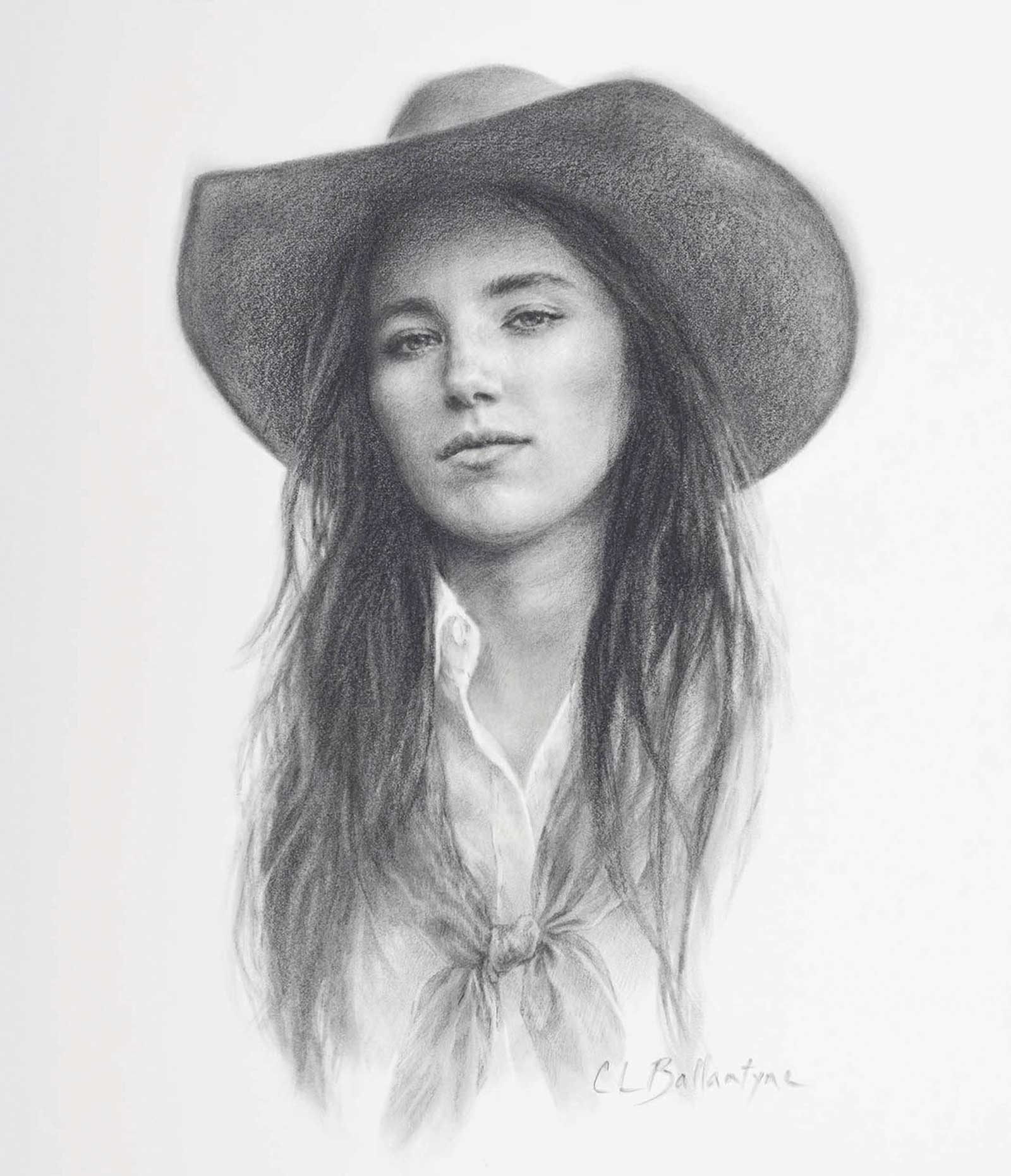 Legacy Gallery, Cowgirl Study, graphite, 12½ x 10¾", by Carrie Ballantyne
In Just Exhausted she has created an abstract composition with the gray horse nuzzling the initially indecipherable brown horse on the left. The arch of head and neck on the right creates a view along the length of the horse creating a heightened illusion of depth.
Another prize winner in the Women Artists of the West 51st National Exhibition is Jan De Lipsey’s The Homestead. She explains, “I never took an art class or picked up a paintbrush until well into my fifth decade of life. As a psychologist who specializes in social science research and the law, my career has been exciting, challenging and stressful.” Painting has brought calm and new vision. “But it wasn’t until I started painting that I really saw the beauty around me,” she says. “Tree trunks are not brown; grass emerges in every color of the rainbow and the firmament glow expands beyond description. How could I have missed so much for so long?”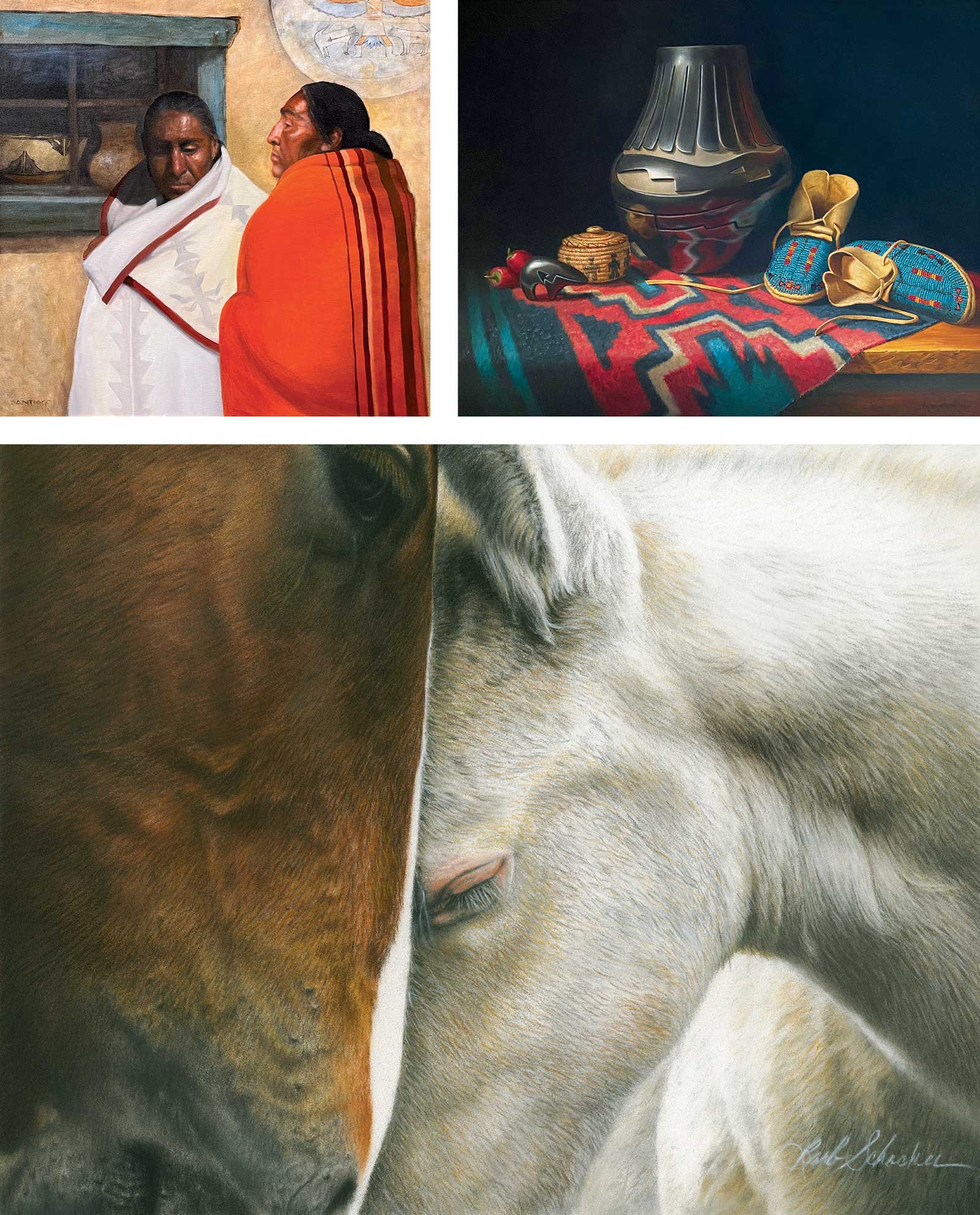 Top: Legacy Gallery, Afternoon Advice, oil, 30 x 30”, by Roseta Santiago; Mountain Trails Gallery, Quiet Harmony, oil, 24 x 30”, by Sue Krzyston. Bottom: Barb’s Western Art, Just Exhausted, pastel, 11 x 14”, by Barby Schacher.
The homestead nestles at the base of a huge rock formation that displays millions of years of history. The homesteads’ history is more precarious at it slowly begins its return to the earth, overwhelmed by the forces of nature that are also working on the mountain. De Lipsey paints the homestead as an incident in the relationship of man and the rest of nature.
In the remaining part of this section, you’ll hear stories and insights from some of the best female artists of today working in the Western genre.
The American West is an extremely tough environment, from the wild animals to the prolific landscapes. As women spread out West, it was abundantly clear that the traditional ways of womanhood would not compete with their new environment. “Women quickly adapted to their new lifestyle with strength, motivation, power and grace,” explains Legacy Gallery, located in Scottsdale, Arizona. “The West created a new type of woman—strong, independent, tough and successful. Female Western artists are the perfect example of this. They have overcome obstacles, mastered their trade, and are powerful, beautiful examples of what the West has to offer. Their artwork speaks to all of these traits. They create visions of beauty and wonder, just like the first settlers got to see upon their arrival. The Western spirit is strong, but is even stronger in the women of the West.”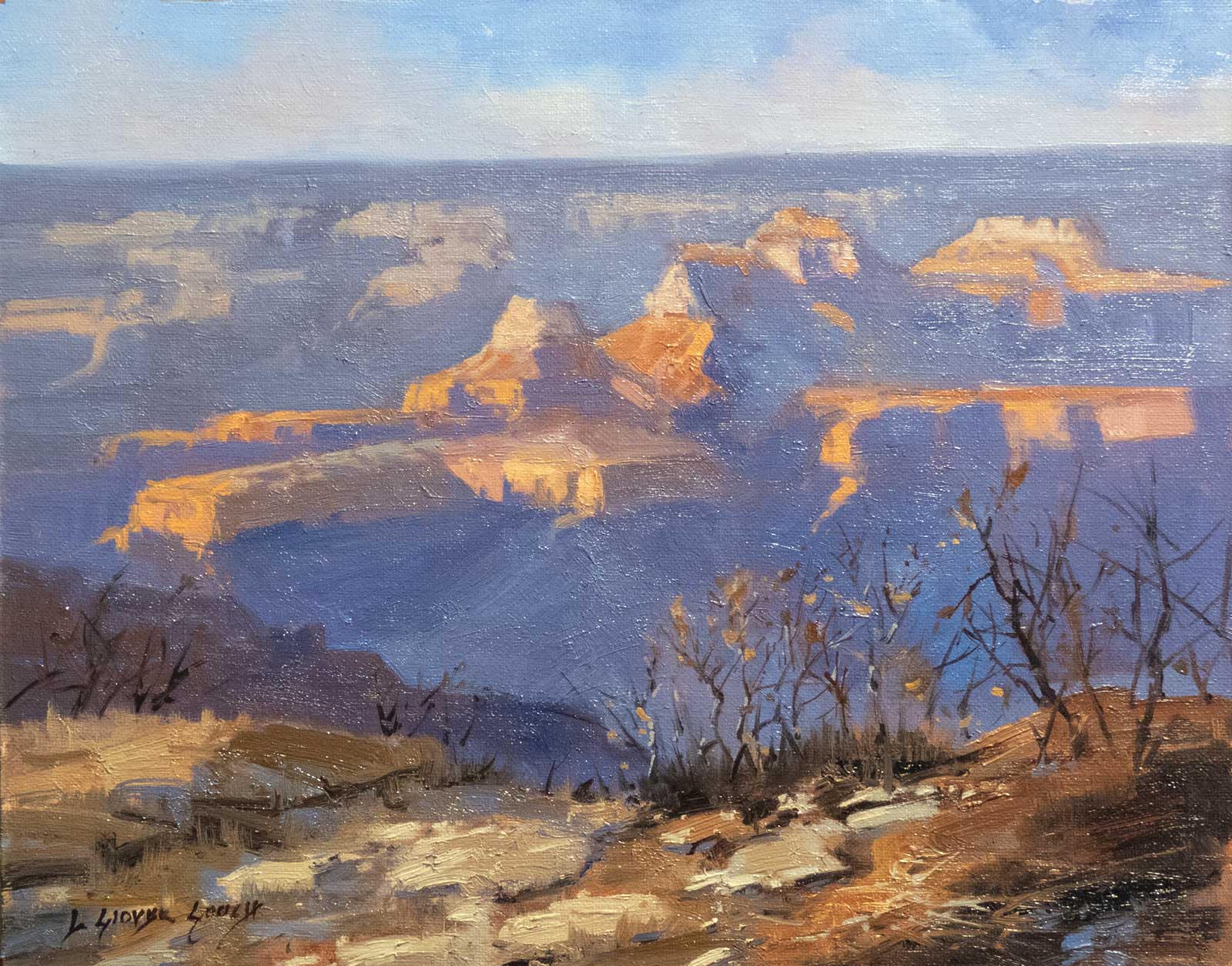 Mountain Trails Gallery, Stepping Stones to Paradise, oil, 8 x 10", by Linda Glover Gooch
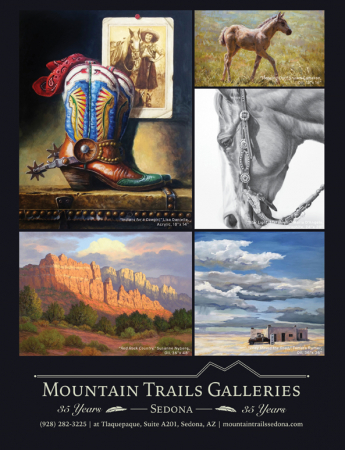
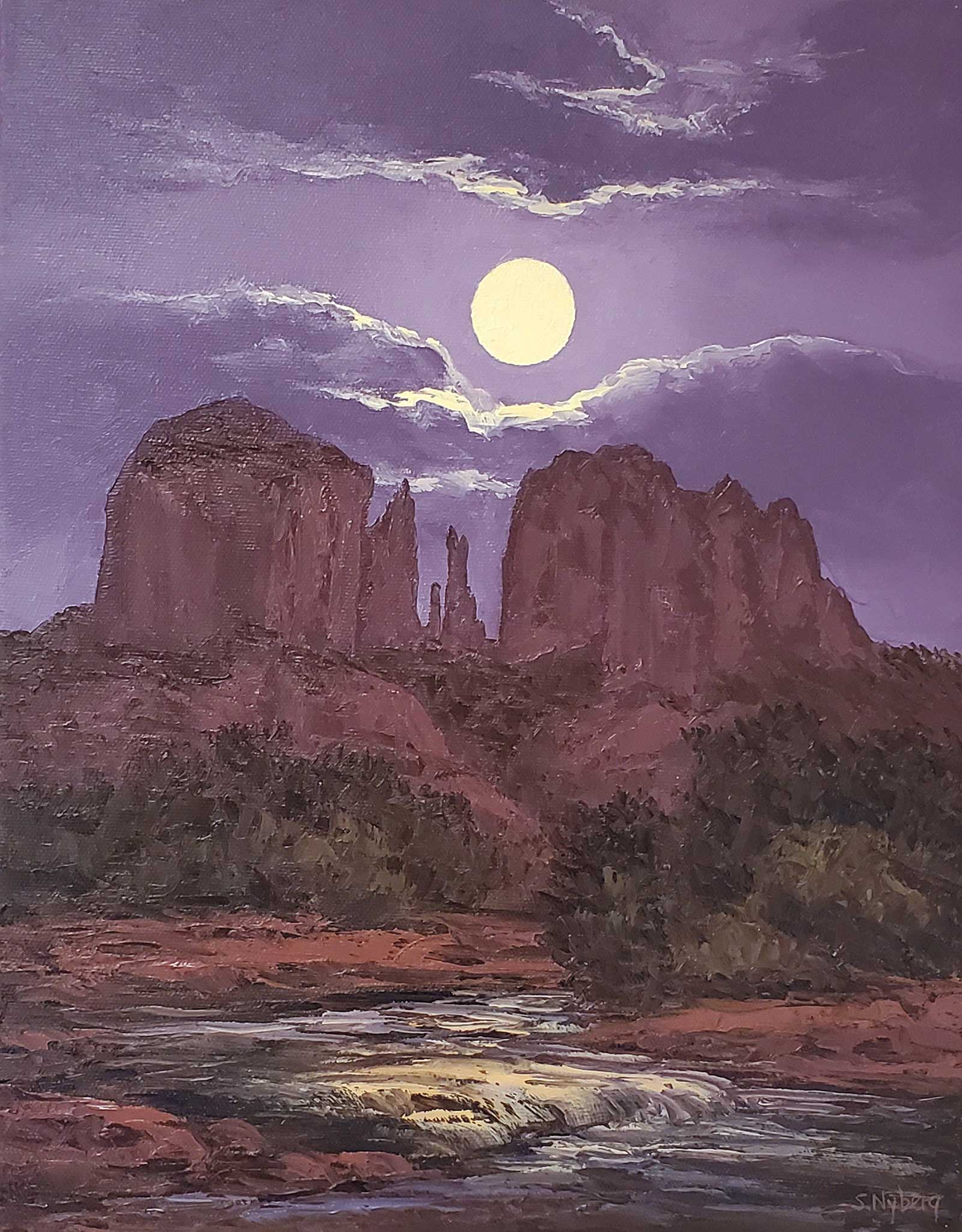 Mountain Trails Gallery, Moonlit, oil, 14 x 11", by Susanne NybergMountain Trails Gallery of Sedona, Arizona, is delighted to welcome several new female artists into their gallery who bring a compelling sense of life and rich storytelling to the American West. This esteemed group of painters includes Shawn Cameron, Sue Krzyston, Susanne Nyberg and Tamara Rymer who all add a depth of inspired experiences, masterful techniques, as well as their own personal outlooks, all of which make Mountain Trails a destination for collectors of Western art. “The love for the West was instilled at a very young age in the lives of most of our artists, and these women all express their enduring passion for what they do and how they do it,” says gallery director Julie R. Williams. “From colorful and heartfelt ranch life, to still life compositions of perfection, to almost three-dimensional surface textures of light and shadow and a painted journey of storytelling, these new artists add compelling choices. We are honored to add this dynamic group to our award-winning traditional and contemporary painters, sculptors and mixed media artists who all make our gallery shine with beauty and spirit.”
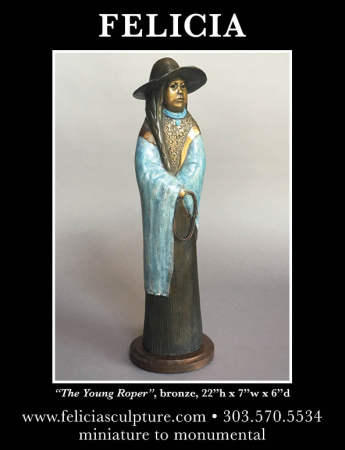
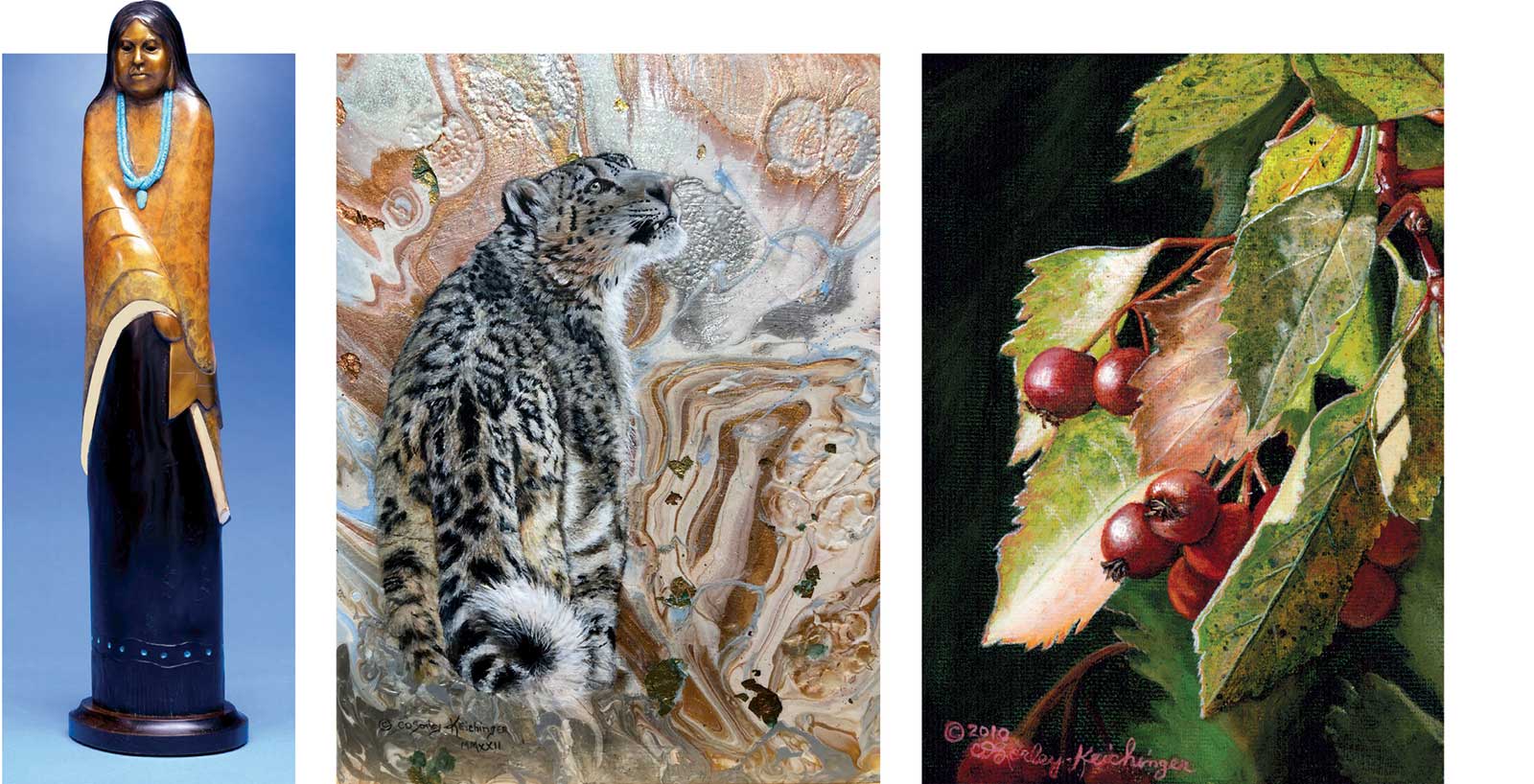 From left: Felicia, My Tablita, bronze, 24 x 5½ x 4½”; Cindy Sorley-Keichinger, Daydream, acrylic, 12 x 9”; Cindy Sorley-Keichinger, Fall Hawthorn, acrylic, 7 x 5”Bronze sculpture artist Felicia, creates contemporary figurative pieces that reflect the Native American people. She explains, “I portray the Native American people because they are the original inhabitants of our continent; they should not be forgotten.” Her work ranges from miniature to monumental, and carries a vision of simplicity and elegance. She incorporates her own distinct, recognizable style—the dazzle of turquoise, painted beads, touches of high polish and innovative patinas. She has won numerous awards and has been accepted into different art organizations, such as the National Sculpture Society, American Women Artists, American Plains Artists and the American Women of the West.
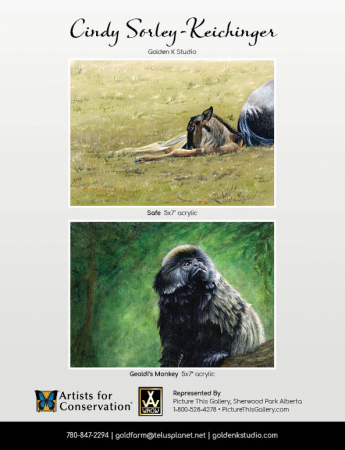
Canadian artist Cindy Sorley-Keichinger is primarily self-taught. Her work reflects her love of nature and wildlife. “In these trying times, it is nice to enjoy the peace of nature and scenes of animals,” she says. “A study has found that paintings of nature and wildlife have a calming effect on people, and some workplaces have brought in nature walks for their staff to relax with.” Sorley-Keichinger tries to bring this serenity into her work.
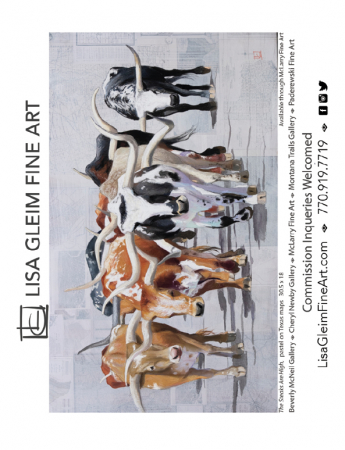
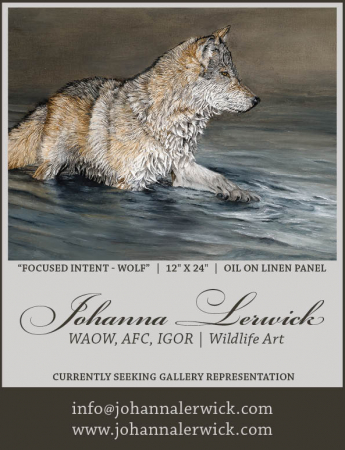
She is a member of several artist organizations including Artists for Conservation, Society of Animal Artists and Women Artists of the West, to name a few. She is also proud to have designed a coin for the Royal Canadian Mint. She will be part of Masterpieces in Miniature at Picture This Gallery in Sherwood Park, Alberta, for the month of May 2022, in the largest miniature show in Canada. 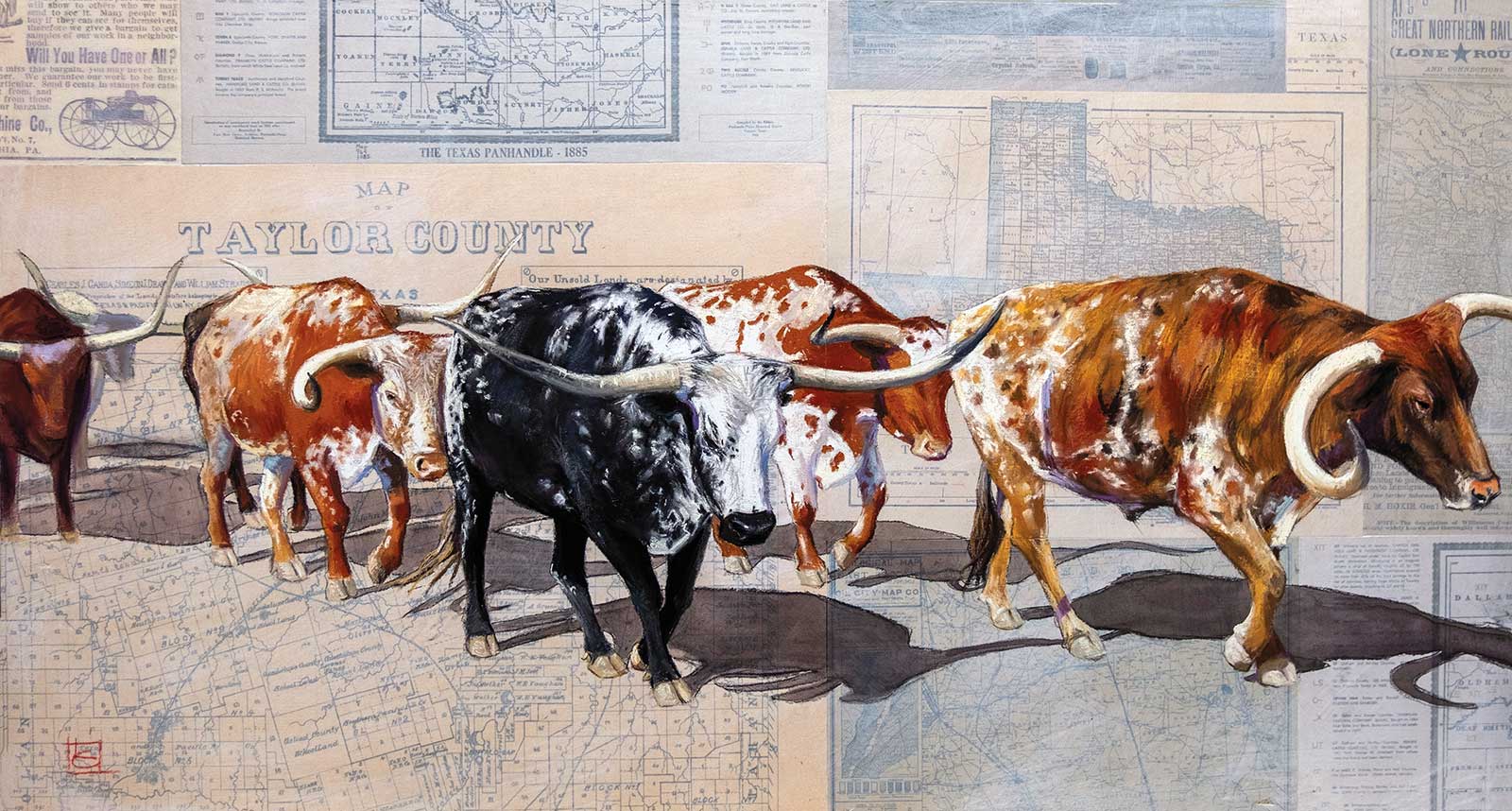 Lisa Gleim, Steering Committee, pastel on Texas maps, 16 x 30"Animals, both domesticated and wild are also a big part of Johanna Lerwick’s life. “I was raised on a farm and grew up with a deep love, full of wonderment surrounding wildlife,” she explains. “I am a self-taught artist who began painting wildlife in 1994 at the encouragement of my mother. At first, I found it a daunting challenge to be able to reflect in my paintings the expression in the animal’s eyes, their moods and thoughts. After years of studying painting techniques, such as how to render fur and feathers, I feel I have accomplished my goal of being a wildlife artist that utilizes the realism style of painting.”
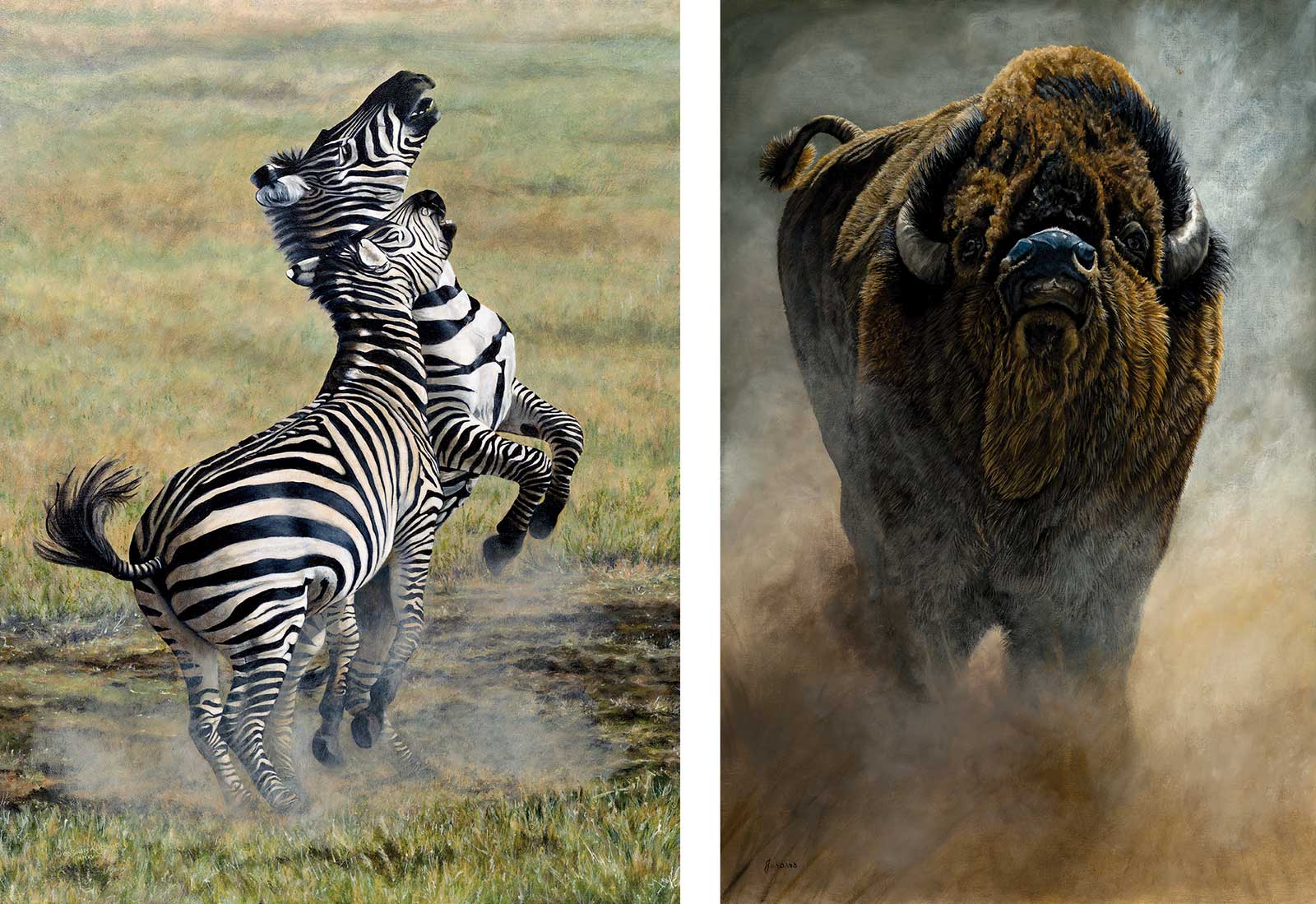 From left: Cindy Sorley-Keichinger, Contested, acrylic, 24 x 18”; Johanna Lerwick, Formidable-Bison in Rut, oil on linen panel, 36 x 24”
“A few years ago,” says artist Lisa Gleim, “I began a body of work using vintage maps and collectible memorabilia as a subtle substrate for wildlife drawn in a realism style, using layers of colorful pastels. Occasionally I’ll add delicate flecks of gold leaf or perhaps a lustrous pearl, as in One Must Be a Fox to Recognize a Trap, being auctioned at The Russell Event benefitting the C.M. Russell Museum in Great Falls, Montana.
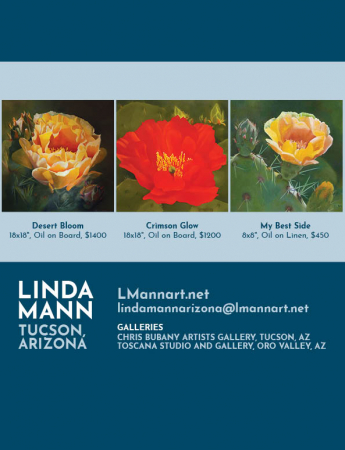
Gleim’s pairing of untamed, often predatory creatures with the surrounding landscape is described by many as adding considerable dimension about each animal’s environment and heritage. “My wish is to hold one’s eye long enough to form a narrative beyond the framed moment so each might better imagine my subjects living in, exploring and interacting in their environments,” she says. “For me, my work is an unbelievable source of pleasure as I capture the ever-changing light, colors, atmosphere and activity of the West’s outdoor terrain and inhabitants.”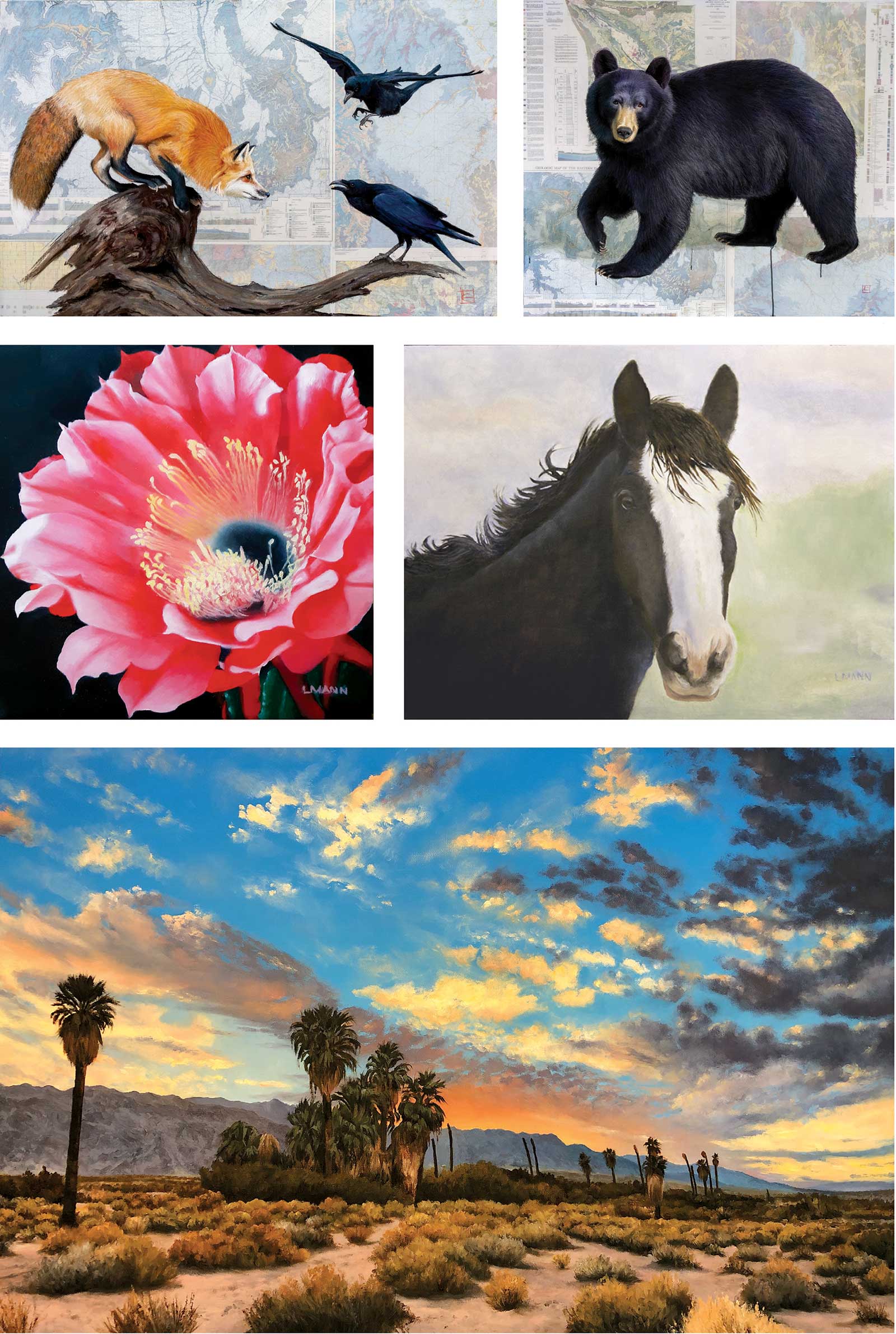 Top: Lisa Gleim, One Must Be a Fox to Recognize a Trap, pastel on geographical maps with pearl, 21 x 33”; Lisa Gleim, Black Bear, pastel on geographical maps, 32 x 38” Middle: Linda Mann, Whisper Pink, oil on board, 10 x 10”; Linda Mann, Fair of Face, oil on board, 11 x 14” Bottom: Naomi Brown, Oasis of Mara Morning Light, oil and acrylic on gallery wrapped canvas, 24 x 36”
For artist Linda Mann, it’s all about her home in the Sonoran Desert of southern Arizona. The unique cacti, different animals, along with the ranchers, cowboys and Native people provide endless artistic inspiration. “The vibrant colors and shapes of cactus blooms always inspire my creativity,” she says. “Most cactus only bloom once a year and the blossoms fade and drop after one day. Each spring I watch for flowering cactus and rush to capture their impermanent beauty.” Her oil painting, Whisper Pink, pictured here, illustrates her affinity for and skill in depicting these floral beauties. Collectors can view her work at Chris Bubany Artists Gallery in Tucson, Arizona, and Toscana Studio and Gallery in Oro Valley, Arizona.
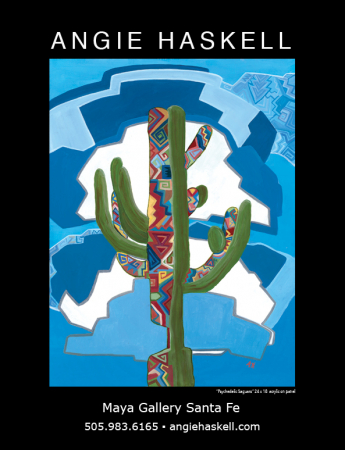
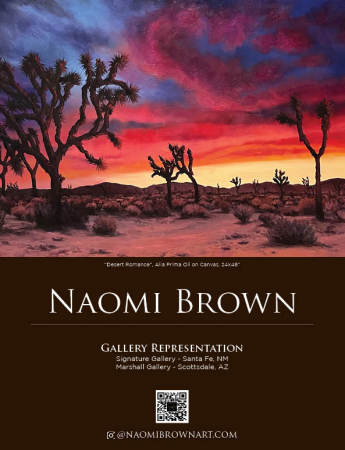
Naomi Brown is also deeply inspired by her southwestern surroundings in Arizona. “Parts of it still feel like the Wild West,” she says. “I am fortunate to be able to live on three acres with nothing but open land and beautiful sunsets. I enjoy exploring the desert right in my back yard. Almost every day I see a roadrunner, cactus wren or a cute Gamble’s quail family running by.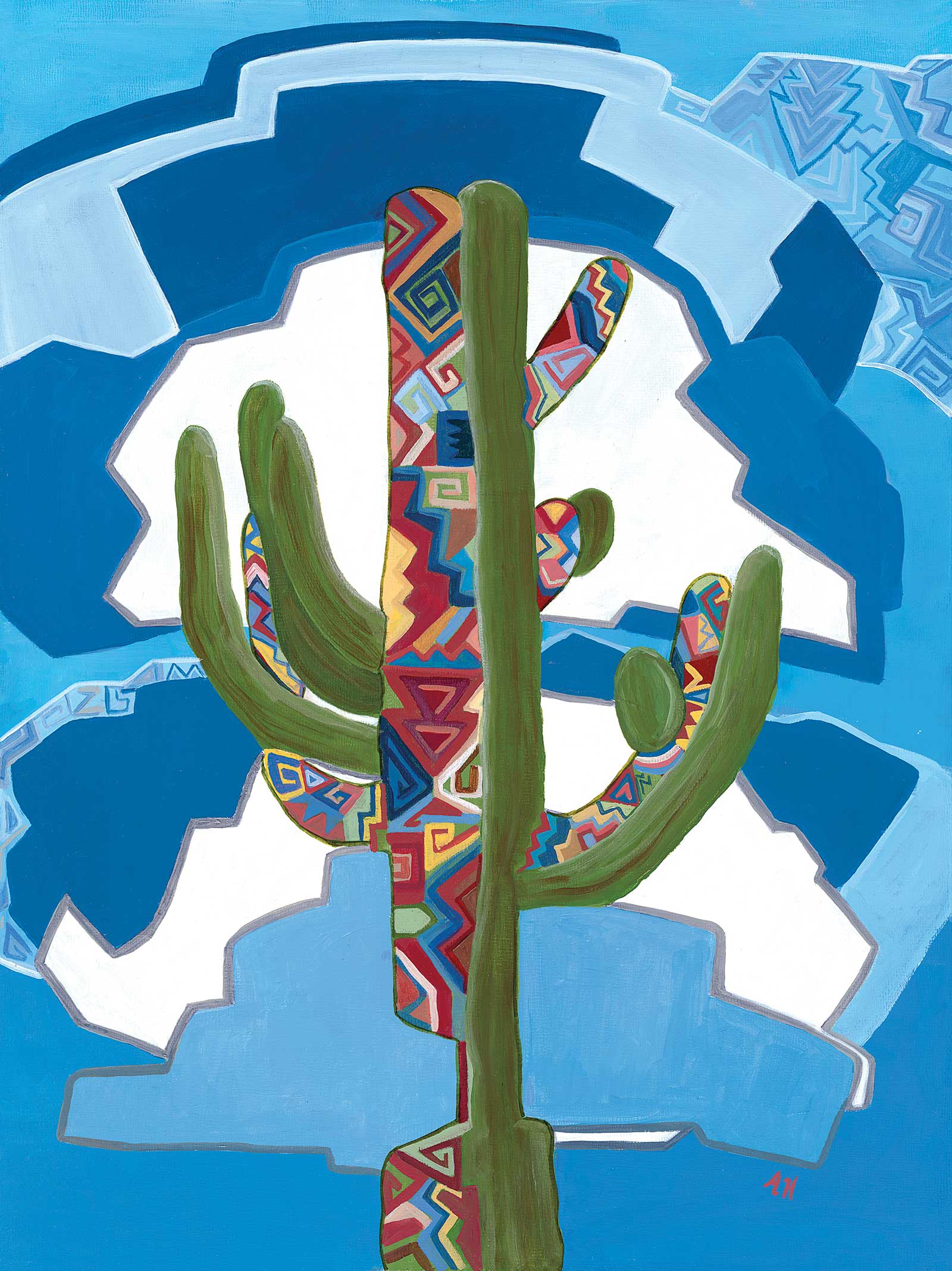 Angela Haskell, Psychedelic Saguaro, acrylic on panel, 24 x 18”
I love simple desert living. It helps me to slow down and enjoy the view and listen to the desert around me.” Brown also expresses her excitement in creating new work that will incorporate even more imagery of the iconic “Wild West.”
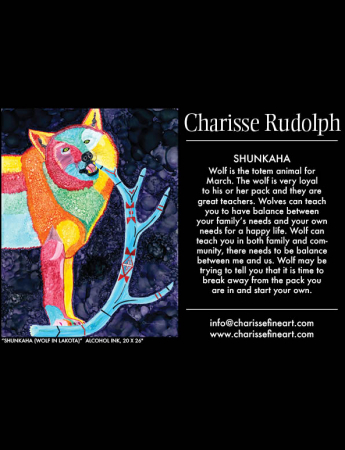
Charisse Rudolph decided to become a professional artist in in 2019. In 2018, she had discovered alcohol ink and was fascinated by the intense colors and textures she could create. Alcohol ink pushed Rudolph to use her active imagination. With the help of a good friend who was the executive director of a contemporary art gallery in Santa Fe, she learned more about what made art contemporary. This was the answer to Rudolph’s quest in using color in a non-traditional way. 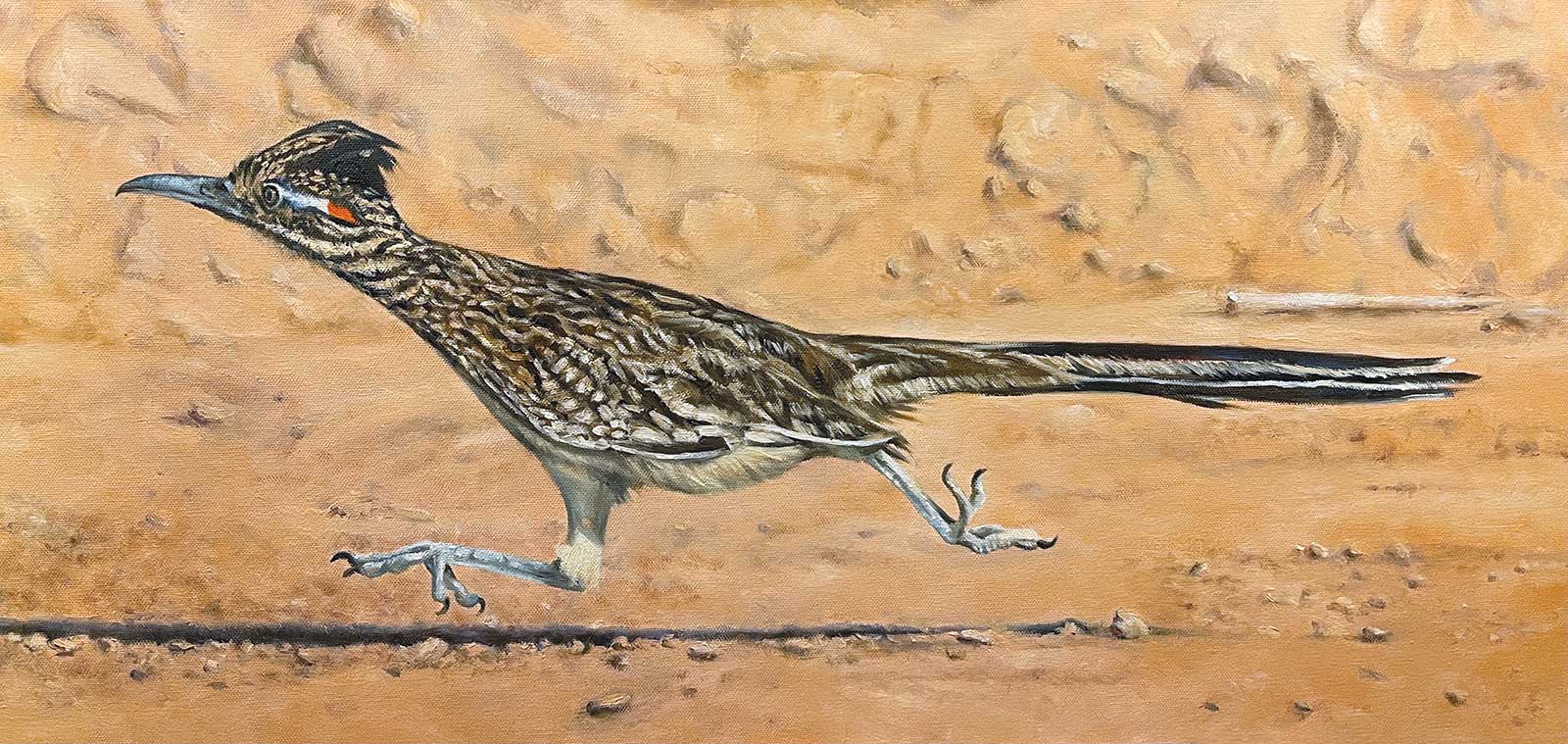 Naomi Brown, Desert Road Runner, oil on gallery wrapped canvas, 15 x 30"
Although the pandemic put a hold on her ambitions for gallery representation, Rudolph displayed her paintings in 2021 at the LA Art Show and she will show her work at Art Santa Fe later this year, where she will be at booth 320 from July 15 to 17. Her current goal is to find art galleries that share a passion for her paintings.
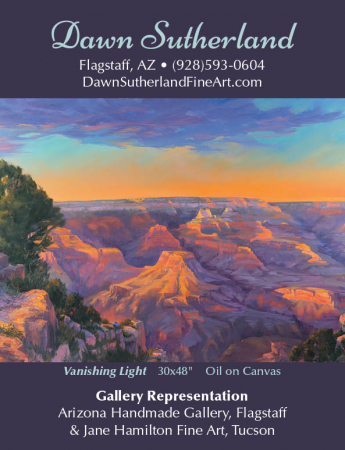
“As a woman, we have all at some point in our lives been told we’re too emotional,” says Angela Haskell, “but as a female artist, I consider that a huge advantage, as I can easily tap into my feelings when starting a new work.” Before she begins a painting, she considers a number of things: the natural abstraction of the subject matter, the ethnographic aspects she can reveal, and how both of these qualities can stir the heart of the viewer. “I think that’s why people resonate with my work so much,” she says.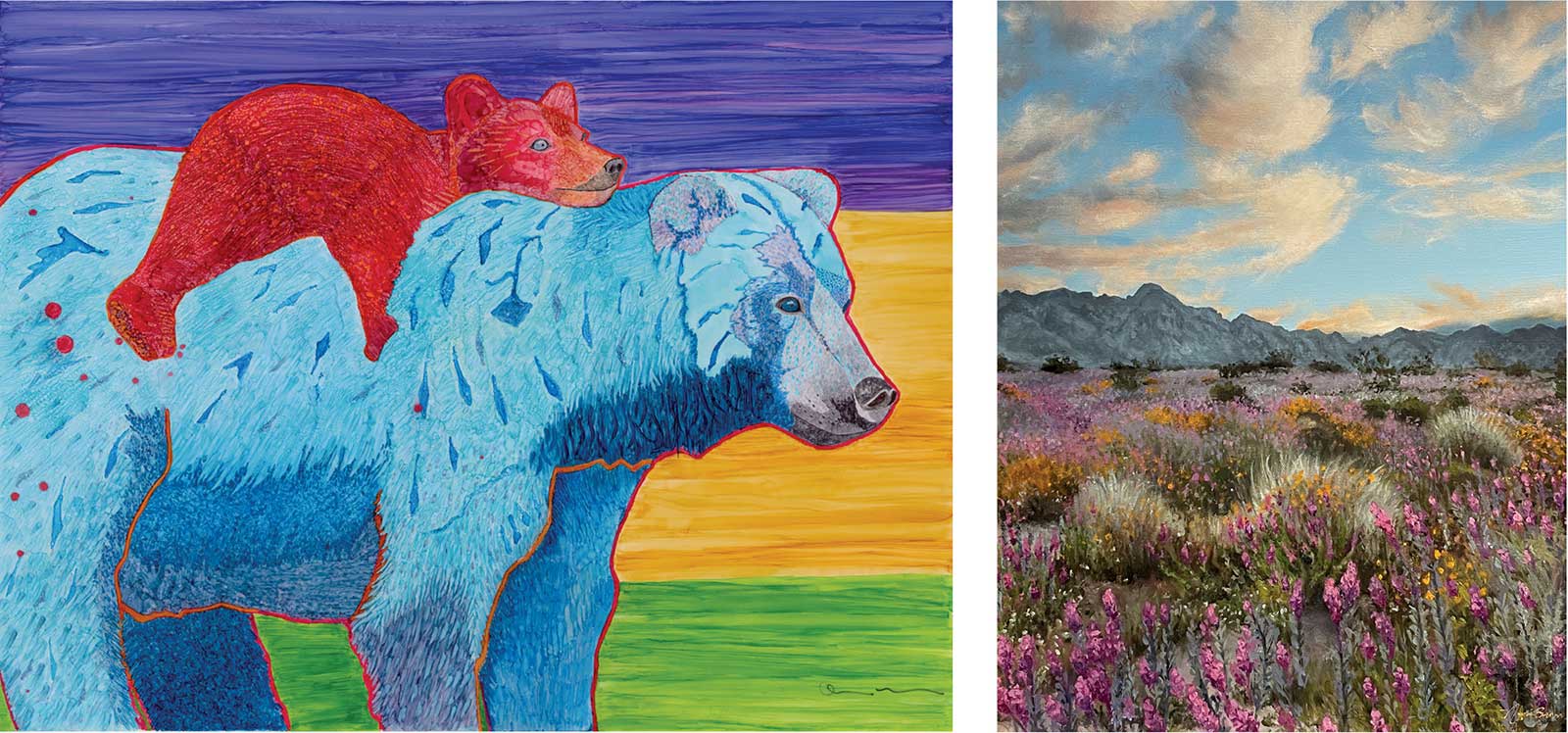 From left: Charisse Rudolph, Life’s a Journey, alcohol ink, 20 x 26”; Naomi Brown, Desert Wildflower Delight, oil and acrylic on gallery wrapped canvas, 20 x 16”For Dawn Sutherland, the Grand Canyon is the most inspiring place on earth to paint. Its interior offers one magnificent scene after the next. “Towering walls of stone rise opalescent into the blue morning sky while sunlit side canyons unfold with each meander of the river,” she explains. “There are always more surprises and subtleties to be painted and I hope to be challenged by them for a lifetime. If you find a painting causes you to draw in a breath, it is meant to be yours and it will give you pleasure for a lifetime.”
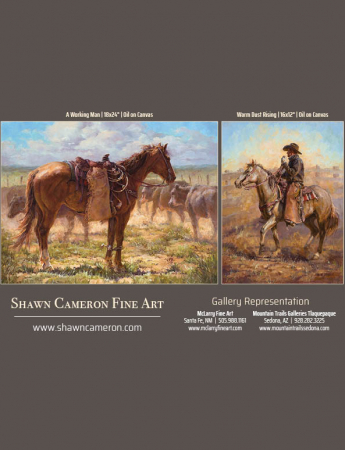
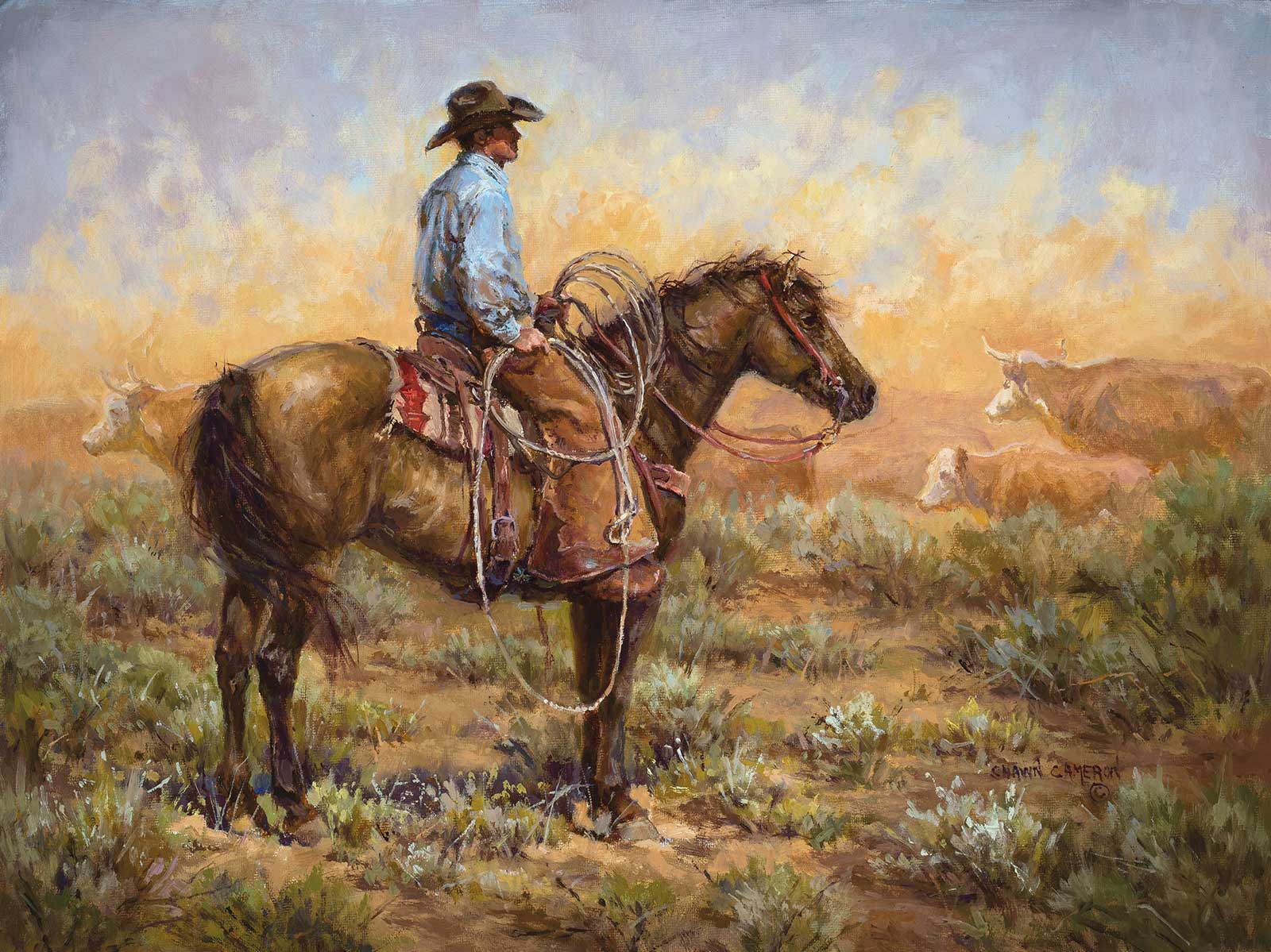 Shawn Cameron, Ready and Waiting, oil on canvas, 12 x 16"Shawn Cameron captures moments in the lives of those who live and work on ranches today. “My subjects are real and their stories are true,” she says. “The work is not a romantic version of the West but a window into a life I revere that contains both beauty and challenges. Cameron’s piece, Her World, pictured in these pages, is an intimate view of a ranch-raised young lady who’s fully competent and at ease working cattle horseback. “It’s the world she’s always known,” she remarks. “Ready and Waiting is a scene of my son-in-law poised at a crucial point during roundup as the herd moves past him to their destination. He, his horse and rope are ready for the unexpected since cattle are often tempted to turn back as they approach the corrals.”
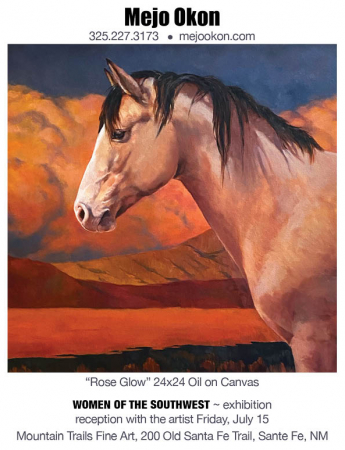
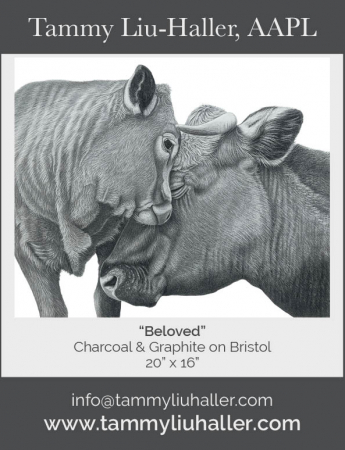
Tammy Liu-Haller’s style as a whole is intended to put a contemporary spin on the traditional subject of wildlife. “I love to present my subjects in a fresh manner,” she says. “By leaving the background stark white, it lends itself to an almost graphic feel, bringing the viewer’s eyes to rest solely on the subject and hopefully bringing to light the beauty that each one holds.” An example of this, her piece Beloved, is pictured here. “[This painting] captures a sweet moment of affection between a calf and its mom,” she explains. “This painting has become a favorite of mine because it shows the immense detail in which I like to work, while also conveying an emotional connection between the two animals.”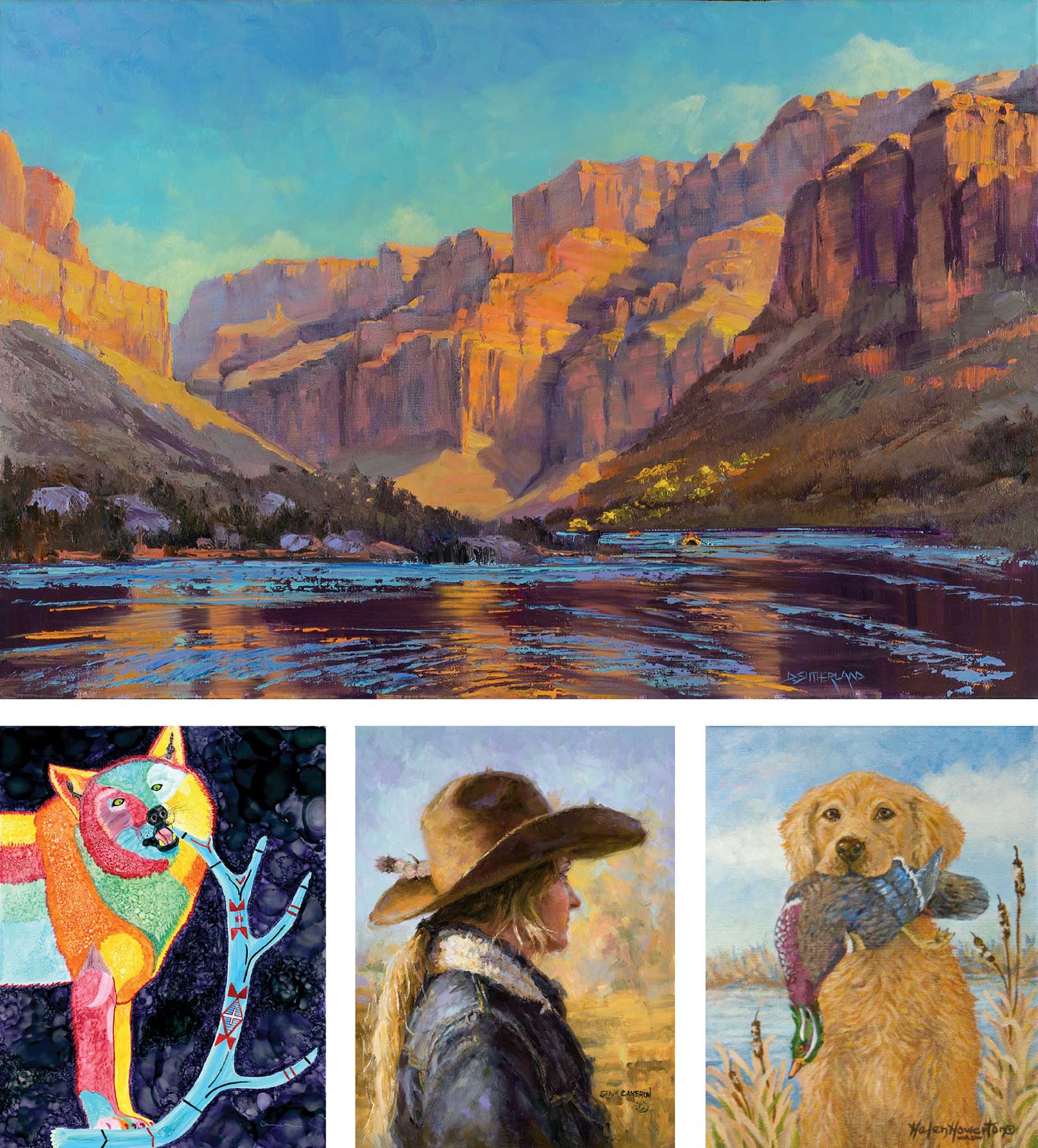 Top: Dawn Sutherland, River Rondo, oil, 20 x 30” Bottom, left to right: Charisse Rudolph, Shunkaha, alcohol ink, 20 x 26”; Shawn Cameron, Her World, oil on canvas, 12 x 9”; Helen F. Howerton, Golden Retrieve, acrylic on canvas, 10 x 8”Mejo Okon recently won top honors at the 17th annual Cowgirl Up! 2022 Invitational at the Desert Caballeros Western Museum in Wickenburg, Arizona. “I fell in love with the West as a child watching Western movies and television,” she says. “I am still enchanted by it. I hope my work emotionally connects with viewers and brings them a bit closer to this rich and uniquely American culture.” Now living in New Mexico, Okon is currently creating new works to be exhibited in the upcoming show Women of the American West. The show will open July 15 at the Mountain Trails Fine Art Gallery in Santa Fe.
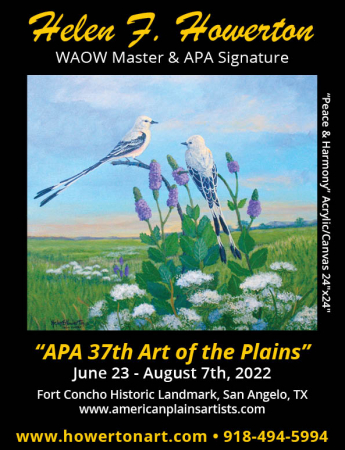
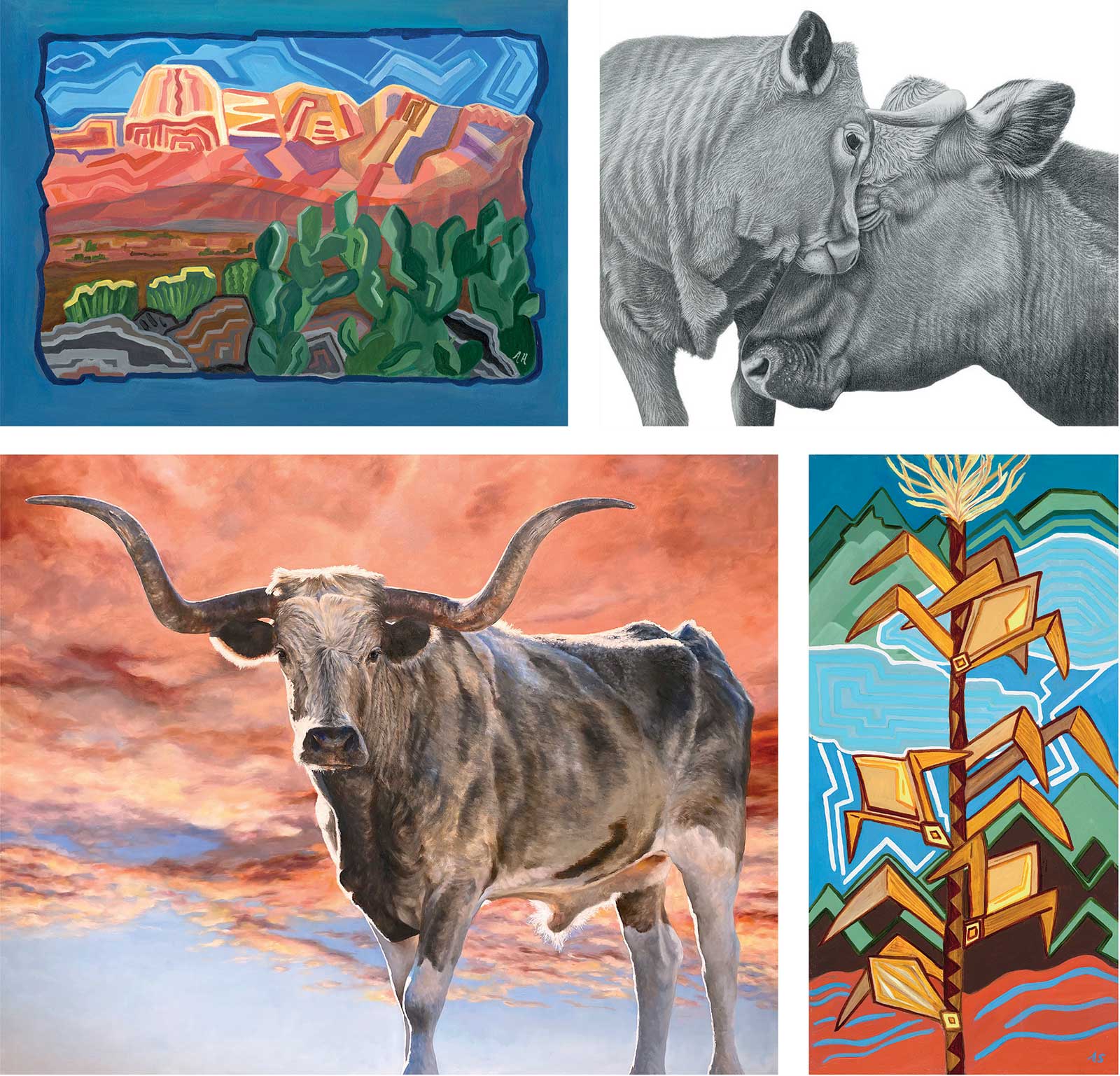 Top: Angela Haskell, Western Kaleidoscope, acrylic on canvas, 18 x 24”; Tammy Liu-Haller, Beloved, graphite and charcoal on Bristol, 16 x 20” Bottom: Mejo Okon, Roam, oil, 48 x 60”; Angela Haskell, Maize, acrylic on panel, 24 x 12” “My choice of creative expression includes the use of fine art principles of composition and color,” says artist Helen F. Howerton. She is inspired to capture subjects like wildlife, birds and domestic animals, as seen in her piece Golden Retrieve. “Our lives would be extremely dull without their power, color and song,” she continues. “Observing animals in their natural habitat, sketching them and photographing them are an integral part of the inspirational process. Working with collectors and corporations who prefer to commission a painting or bronze sculpture is part of my work. Art has always been my chosen path [for a lifetime career].” —
Featured Artists & Galleries
Angela Haskell
www.angiehaskell.com
Barb’s Western Art
609 E. Pine Avenue, #452, Kooskia, ID 83539
(509) 671-2606, barb@barbswesternart.com
www.barbschacherfineart.com
Charisse Rudolph
info@charissefineart.com, www.charissefineart.com
Cindy Sorley-Keichinger
(780) 847-2294, goldfarm@telusplanet.net
www.goldenkstudio.com
Dawn Sutherland
Flagstaff, AZ, (928) 593-0604
www.dawnsutherlandfineart.com
Felicia
(303) 570-5534
www.feliciasculpture.com
Helen F. Howerton
Tulsa, OK, (918) 494-5994
www.howertonart.com
Johanna Lerwick
info@johannalerwick.com
www.johannalerwick.com
Legacy Gallery
7178 Main Street, Scottsdale, AZ 85251
(480) 945-1113, www.legacygallery.com
Linda Mann
Tucson, AZ
lindamannarizona@lmannart.net
www.lmannart.net
Lisa Gleim
(770) 919-7719, lisa@lisagleimfineart.com
www.lisagleimfineart.com
Masterpiece Gallery
102 E. Water Street, Santa Fe, NM 87501
(505) 982-6701, www.masterpiecegallerysf.com
Mejo Okon
(325) 227-3173, mejokon@hotmail.com
www.mejookon.com
Mountain Trails Gallery
336 SR 179, Suite A201, Sedona, Arizona 86336
(928) 282-3225, fineart@mountaintrailssedona.com
www.mountaintrailssedona.com
Naomi Brown
www.naomibrownart.com
Nedra Matteucci Galleries
1075 Paseo De Peralta, Santa Fe, NM 87501
(505) 982-4631, www.matteucci.com
Shawn Cameron
www.shawncameron.com
Tammy Liu-Haller
Greenville, NY, info@tammyliuhaller.com
www.tammyliuhaller.com
Powered by Froala Editor