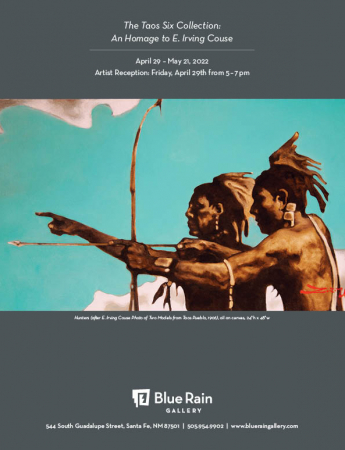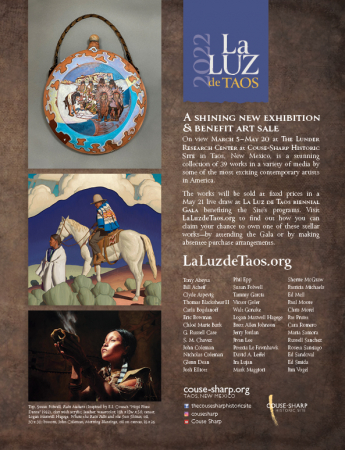
Over 1,000 years ago artists began working at Taos Pueblo in New Mexico. In the 16th century the Spanish brought their artistic traditions to the region. At the turn of the 20th century artists from the east sought the light and culture of Taos and began a long tradition of Taos as an art mecca.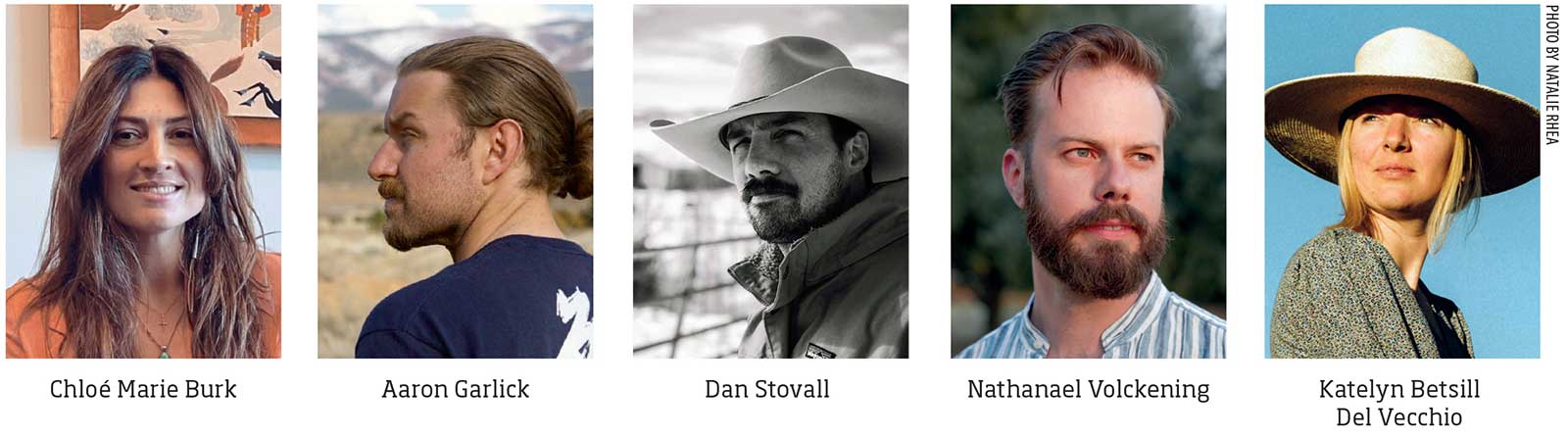
Parsons Gallery of the West celebrates contemporary artists under 40 in its exhibition Young West opening May 13. Gallery owner Ashley Rolshoven has chosen the artists “to represent the next generation of American Western art painters for our gallery.”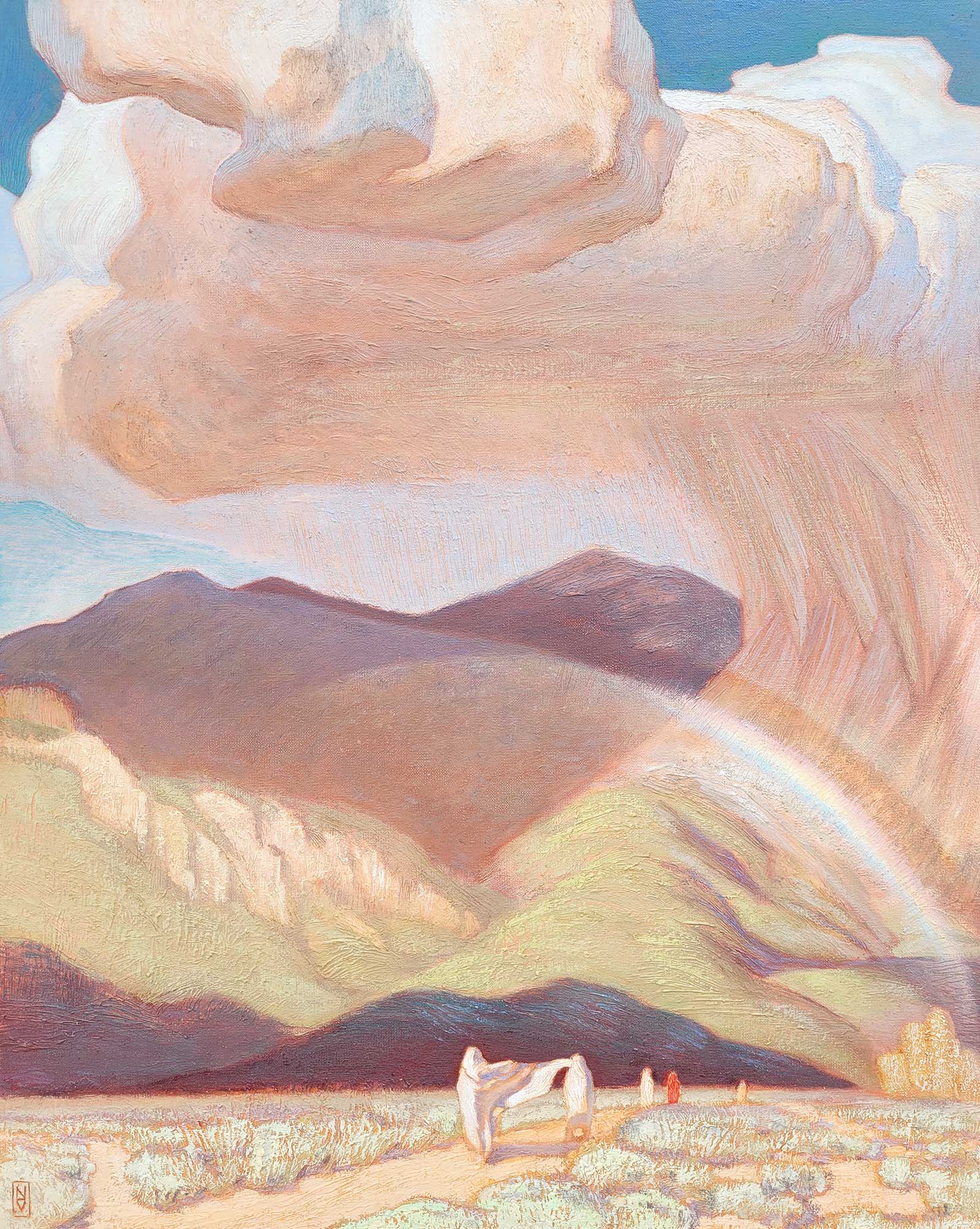 Nathanael Volckening, Woven Rain, oil on linen, 30 x 24”
Chloé Marie Burk fell in love with Taos because it reminded her of her home in the mountains of France. Her father was a farrier and a jockey, so horses have been and are a large part of her life. She and her husband now live in Montana. She has painted folk art since she was a child, and after studying fashion in London and Paris she worked for Christian Dior alongside John Galliano. All her interests come together in her painting Strength for Heritage with its complex patterns on the blankets and the intricate beadwork of the women’s boots and moccasins. Her figures are silhouetted against the background in the manner of the Taos Society of Artists painter William Herbert “Buck” Dunton whose work she admires.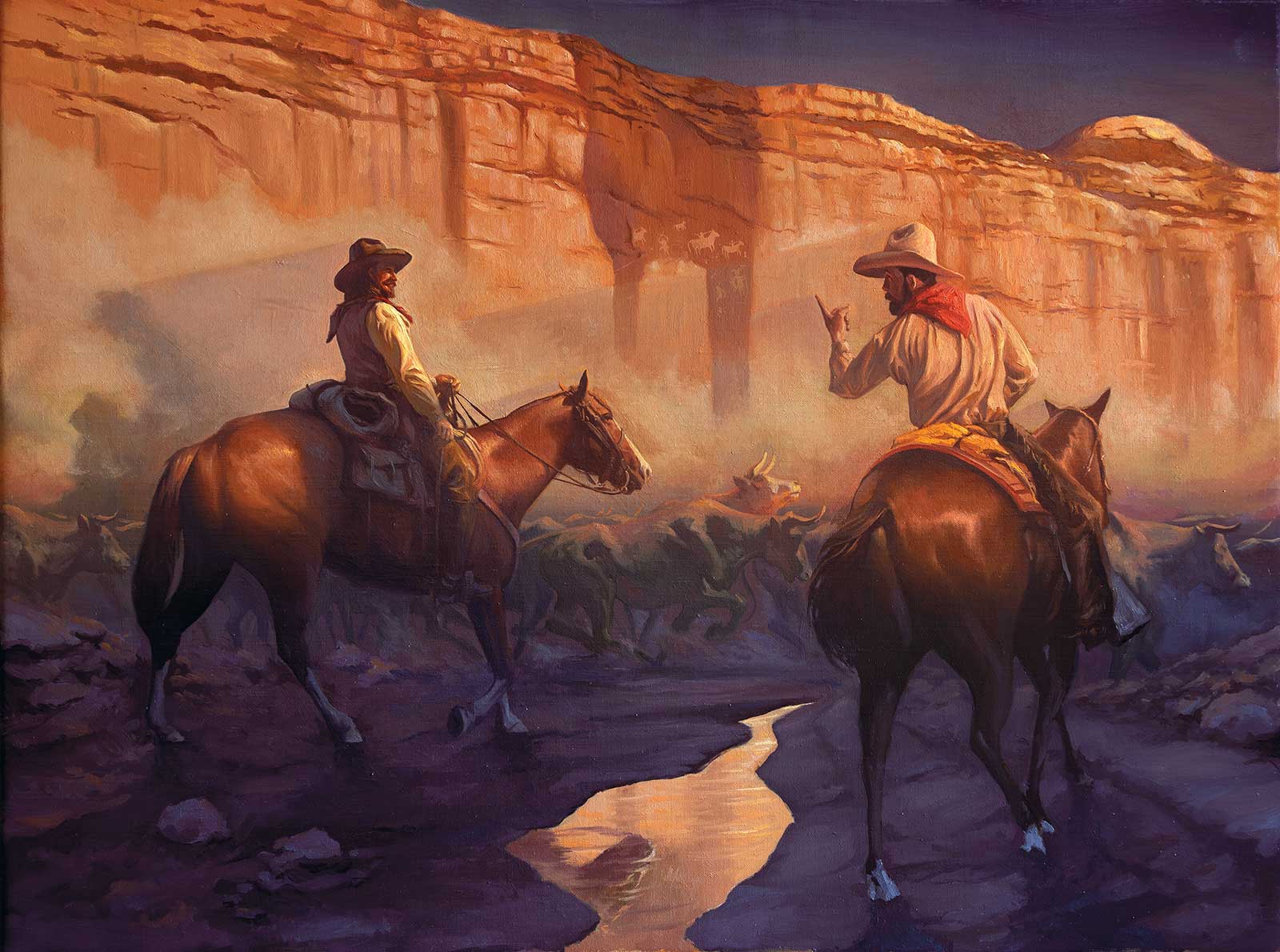 Dan Stovall, History Lesson, oil, 18 x 24”
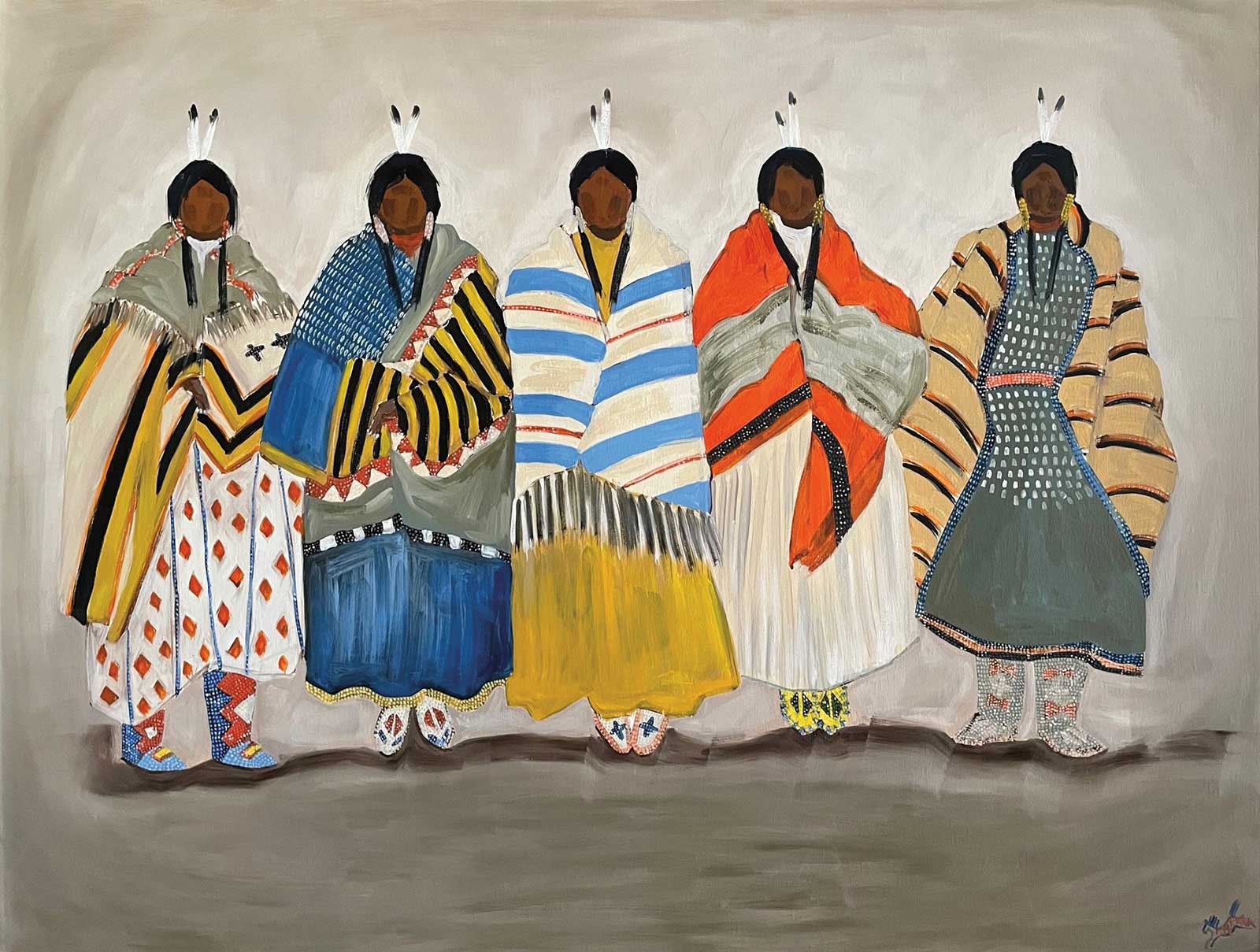 Chloé Marie Burk, Strength for Heritage, oil on canvas, 30 x 40”Katelyn Betsill Del Vecchio portrays a contemporary Western woman in her painting Pearl inspired by a film still. Living in West Texas, she is self-taught and primarily enjoys painting “the remoteness of the desert, a place that has no expectation yet holds so much beauty and life, completely perfect in its solitude. My landscapes reflect my own observations and experiences but focus the attention on nature and space in its unaltered state.”
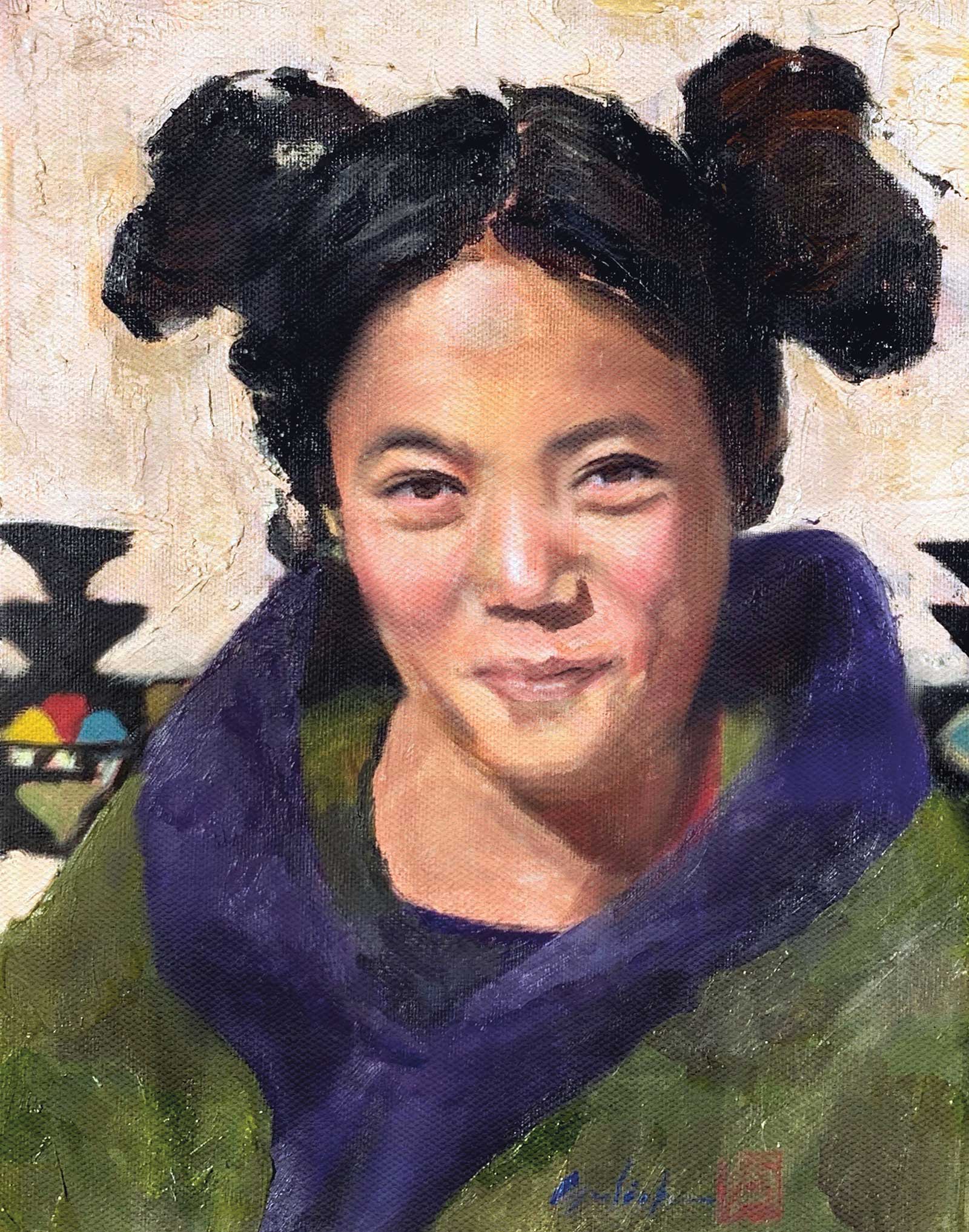 Aaron Garlick, Joy, the Green and Purple Manta, oil on canvas, 9 x 12”
Nathanael Volckening was raised in Taos and now lives in Colorado. His painting, Woven Rain, depicts the extraordinary, surreal effects of the weather on the mountainous Taos landscape. Volckening says, “Using traditional materials and methods, my oil paintings celebrate the interplay of light, form, and shadow. My current work depicts sublime landscapes imbued with figural qualities, creating a humanistic drama worthy of our care and attention. With this work, I hope to reinvigorate our appreciation and sense of interconnectedness with the land.”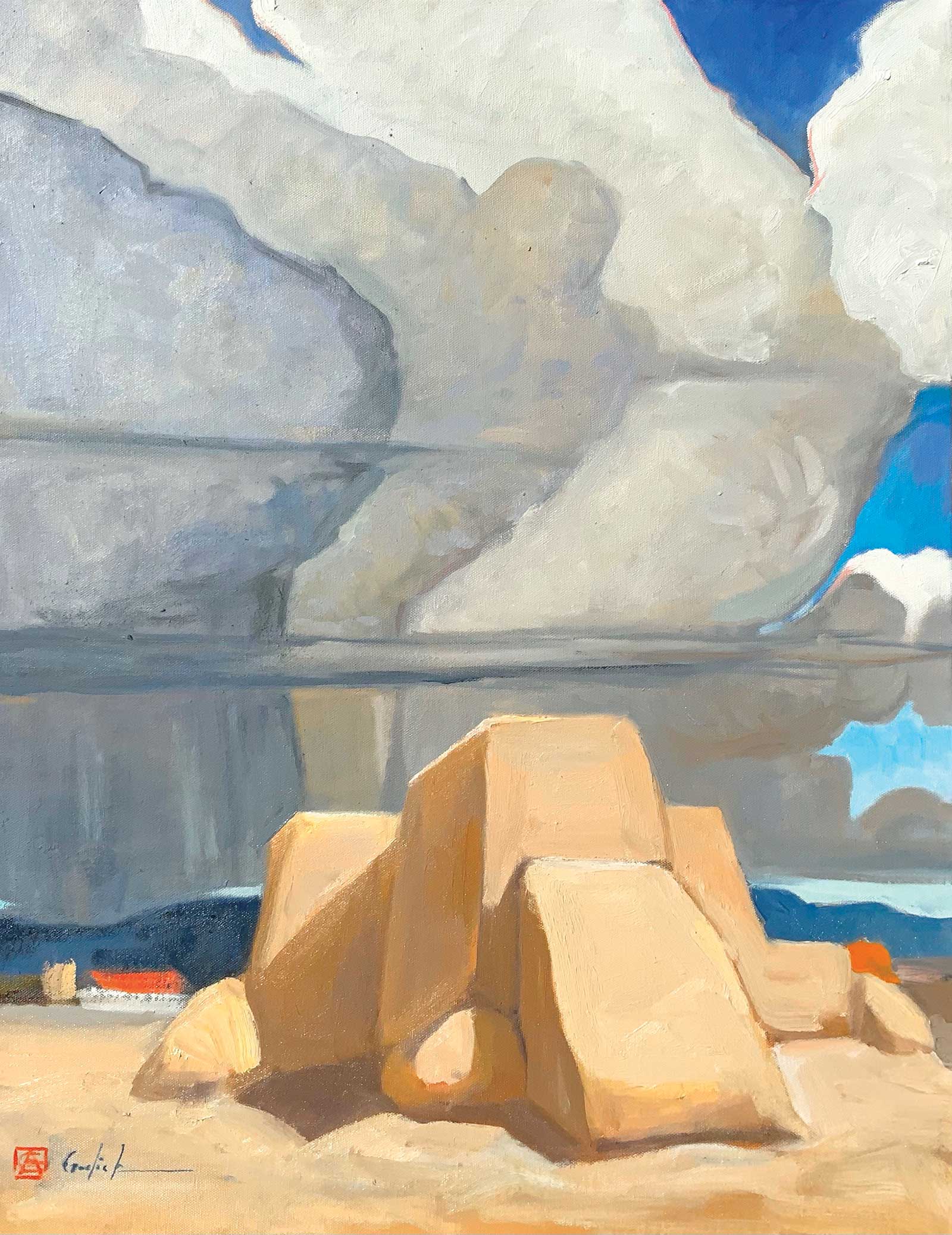 Aaron Garlick, Walking Rain, Ranchos, oil, 22 x 28”As an outdoorsman, Dan Stovall is aware of the variety and effects of light in the landscape, which often adds drama to his scenes of horses and riders. In History Lesson, the late afternoon sun illuminates the cliffs as the lower half of the scene moves into shadow. The light is dramatically reflected in the jagged bit of stream that also reflects the horse of one of the riders. The rider on the left hasn’t quite got on to what his partner is pointing out—Native rock art high on the face of the cliff.
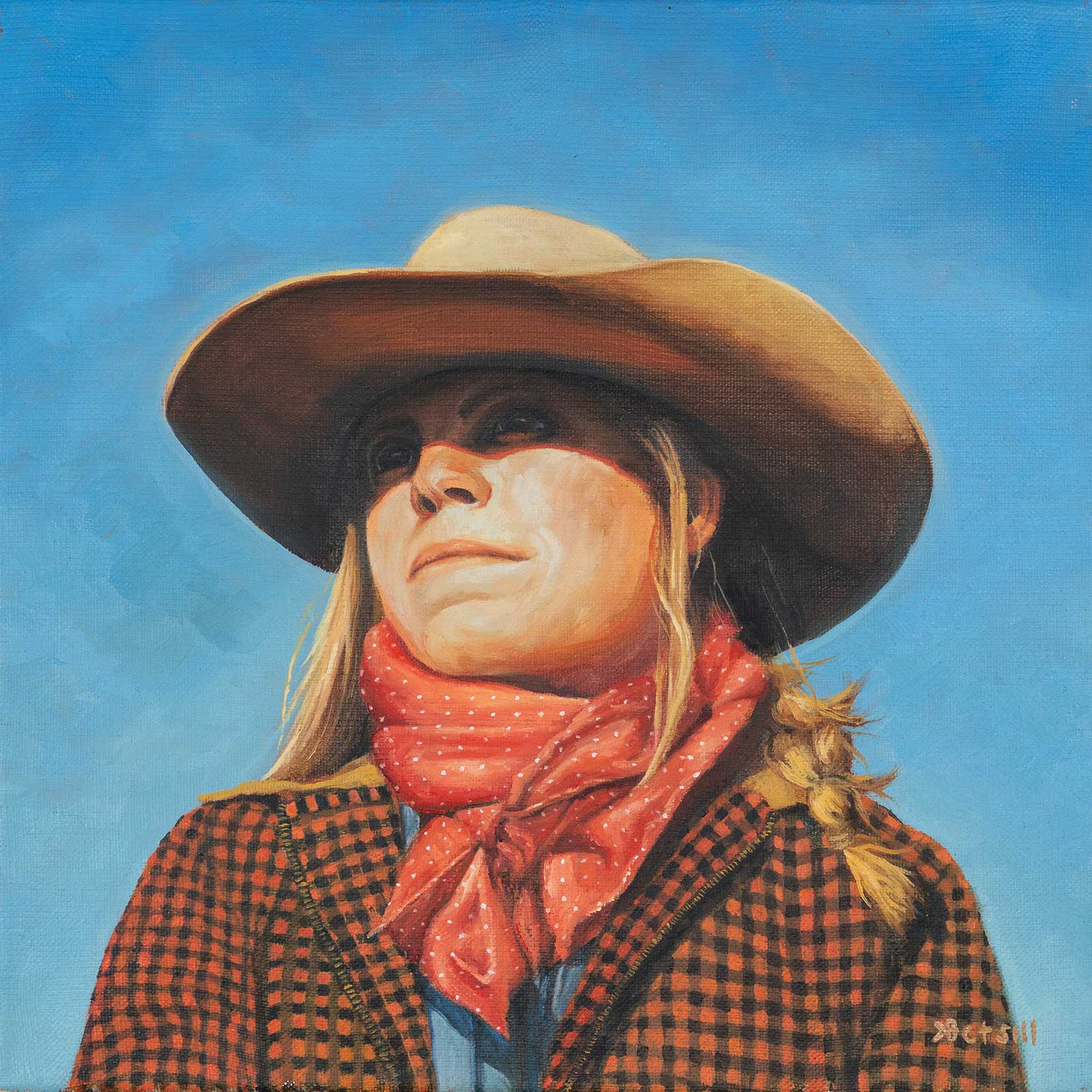 Katelyn Betsill Del Vecchio, Pearl, oil on linen, 12 x 12”Aaron Garlick is a Taoseño, coming from a tradition of artists and influenced by the greats of the past and the present in Taos. The vast vistas of the area allow one to see the beginning and end of rainstorms and their edges. The Pueblo people refer to the phenomenon as “walking rain.” In Garlick’s Walking Rain, the rain falls heavily on the left as the clouds break and reveal the blue sky on the right. In the center are the soft, geometric forms of the iconic San Francisco de Asís in Ranchos de Taos. Garlick has echoed the geometry of the church in his treatment of the clouds and rain in the manner of the northern New Mexico modernists of the early 20th century. He says, “My approach varies, from abstract to more realistic. In the end, my superficial hope is that the work is enjoyable to look at. However, my deeper goal is to have my work shed light on those beautiful qualities resting just beneath the surface of it all.” —
Powered by Froala Editor