He was a founding member and the first president of the famed Taos Society of Artists, and undeniably, one of the biggest names in historic Southwestern art. Eanger Irving Couse’s depictions of New Mexico, the lives of Native Americans and the culture of the Southwest left behind a legacy that would influence the work of future artists more than a century later. That influence continues today, exemplified through an upcoming exhibition at Blue Rain Gallery in Santa Fe, New Mexico.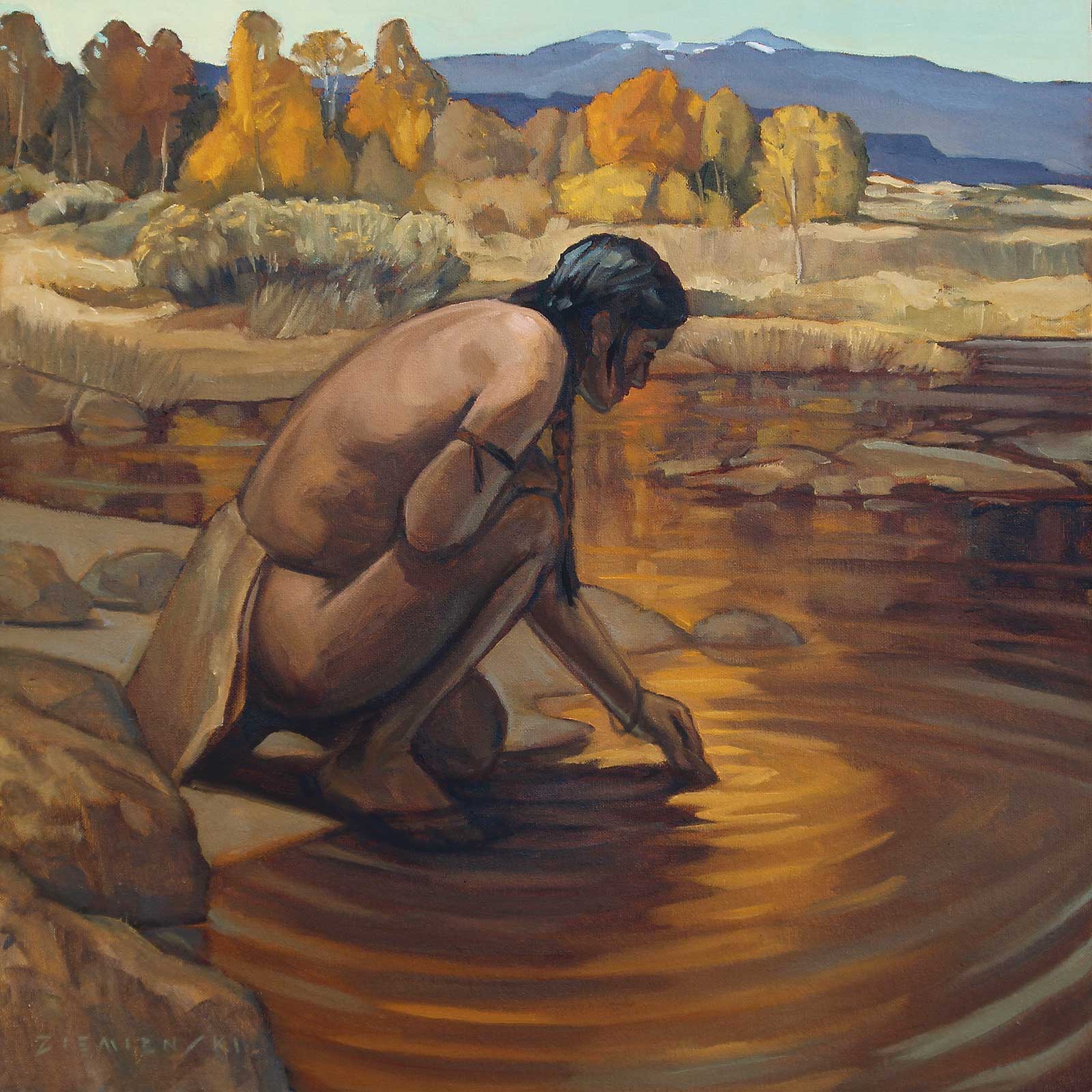 Dennis Ziemienski, The Golden Pool, oil on mounted canvas, 20 x 20”
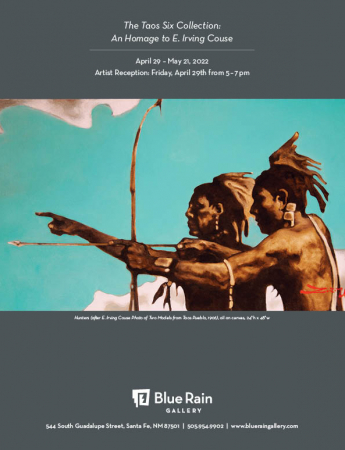
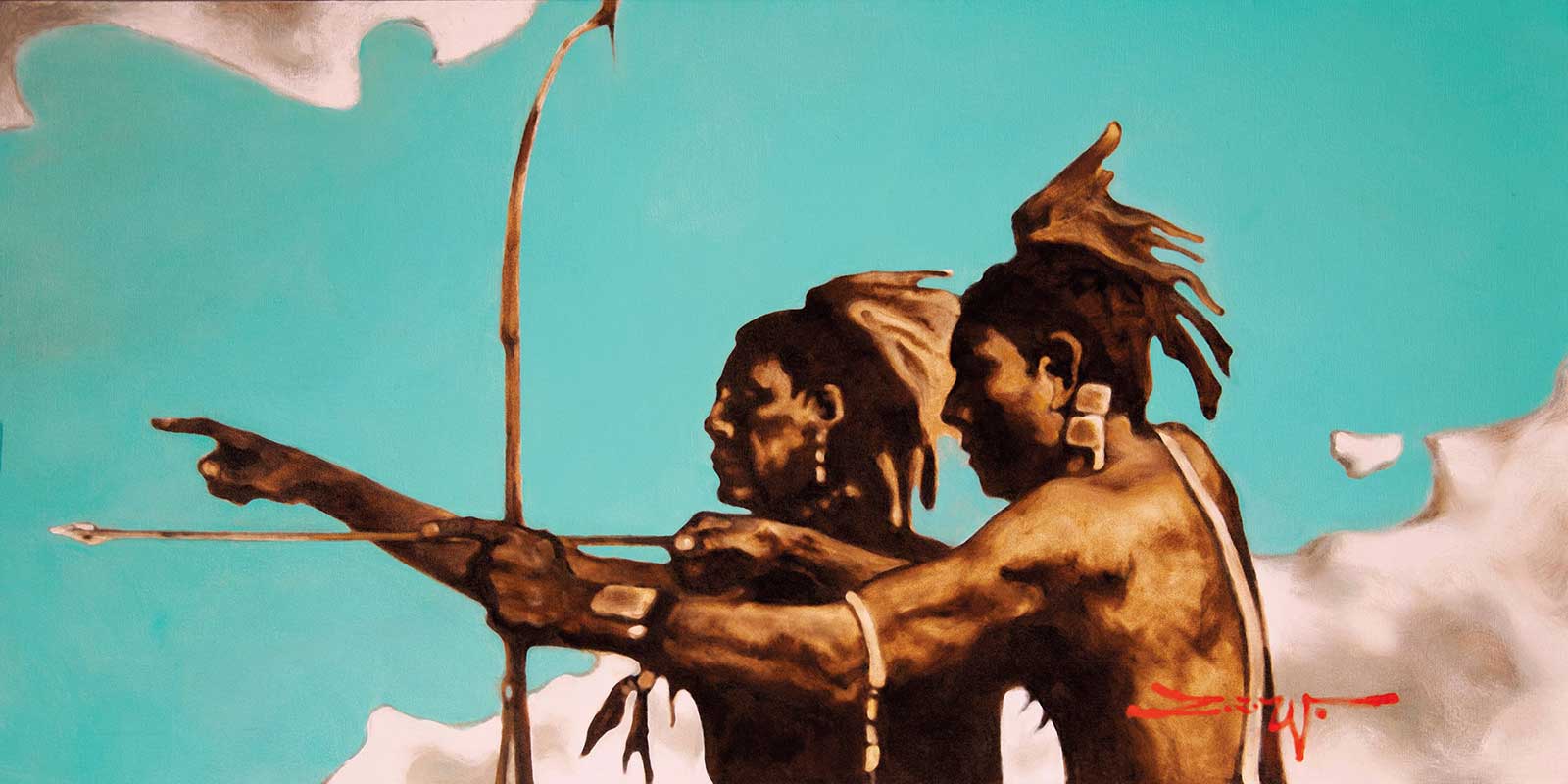
Taos Six Collection: An Homage to E. Irving Couse is the third in a series of six themed exhibitions hosted by Blue Rain Gallery that focus on pioneering members of the Taos Society of Artists. Last spring was An Homage to Joseph Henry Sharp, and the spring before that, An Homage to Oscar E. Berninghaus. Contemporary artists featured in this current exhibition, running April 29 to May 21, include Dennis Ziemienski, Matthew Sievers, Erin Currier, Nathan Bennett, Andrea Peterson, Kathryn Stedham and Rimi Yang, among others. Each artist has chosen an original Couse painting that resonates with them in some way. Paying tribute to these works, they’ve reimagined and adapted them in their own vision, taking fantastic pieces of historic art and breathing new life into them.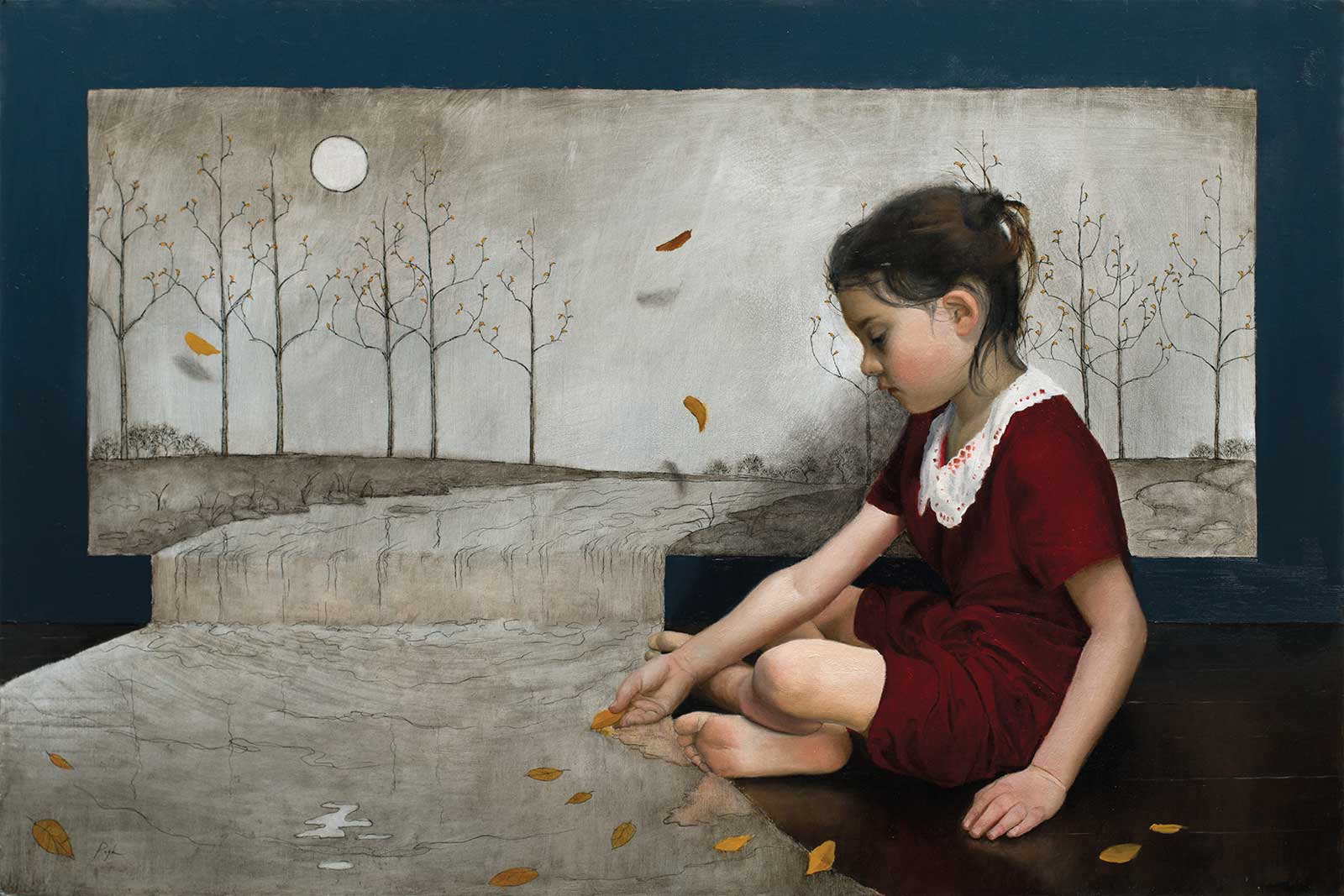 Mark Pugh, Autumn Moon, Floating Leaves, oil and ink on linen mounted panel, 20 x 30”
Couse’s 1927 oil painting, Autumn Moon, lets viewers in on an intimate, quiet scene of a Native American man kneeling for water in a small stream under the soft blue glow of night. “I was immediately attracted to the dreamlike composition of this piece. The subject matter and illustrative style of the landscape felt very in line with the type of paintings I do, and it instantly sparked ideas in my mind,” says artist Mark Pugh. His adaptation is an oil and ink on linen of a young girl in a ruby-red dress sitting along the edge of a stream. That dress stands out in stark contrast to the otherwise muted color palette as she places fallen autumn leaves onto the surface of the water. “I started by taking a couple of the elements from Couse’s piece that I wanted to work into my own painting, namely the figure sitting at the bank of a stream and the autumn night landscape. Once I had established those main components, I felt free to depart from Couse’s painting to explore my own composition and theme,” says Pugh. “Most of my paintings involve children interplaying with an illustration-like background, so I took some images of my youngest daughter, Sophie, and let myself imagine a scene from the reference photo I selected. In my piece, the stream in the autumn scene is spilling out of the illustration and onto the floor next to the girl. Leaves seem to come to life and fall from above her and onto the ground, where she places them into the stream and watches as they become illustrated once again.”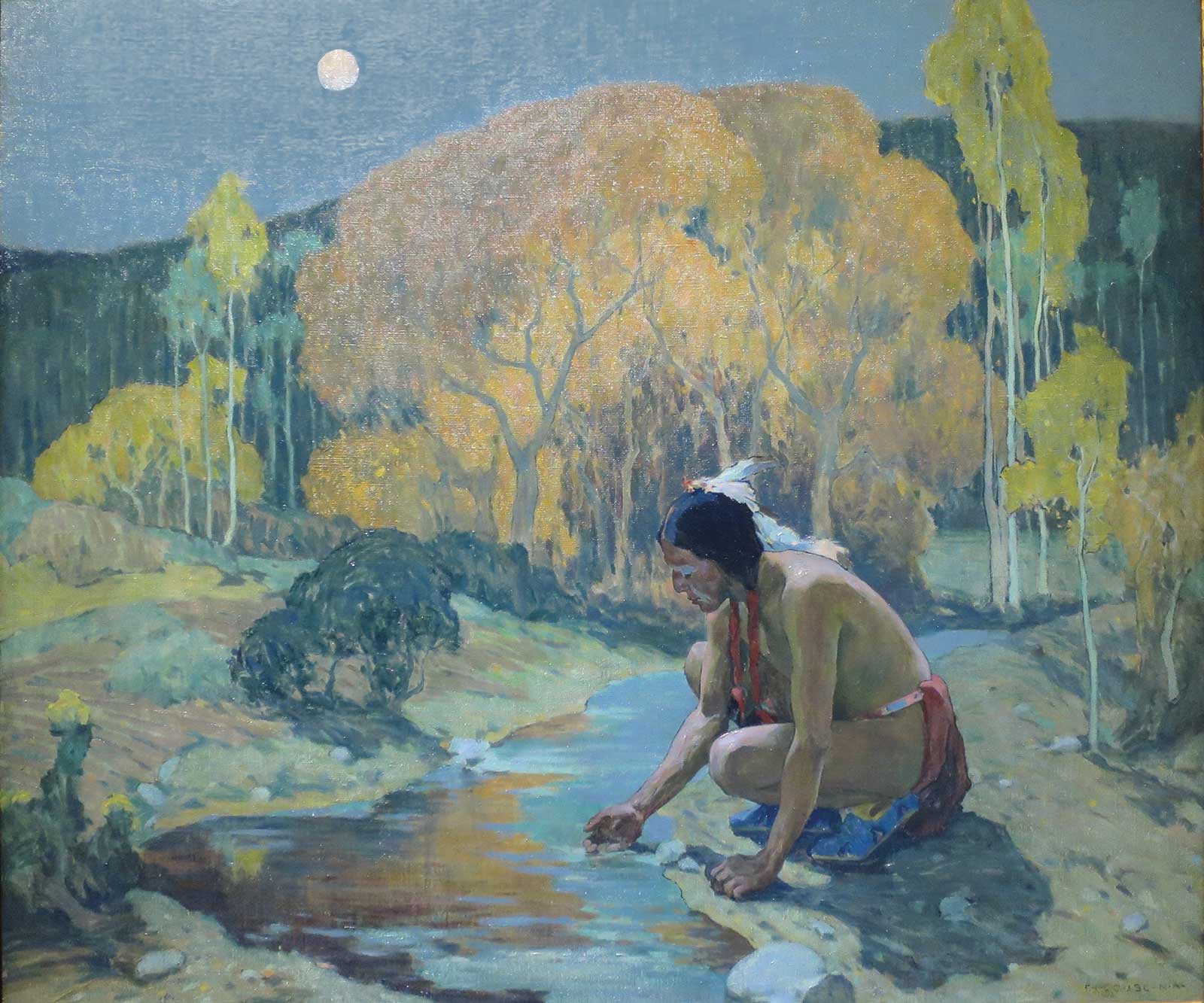 Eanger Irving Couse (1866-1936), Autumn Moon, 1927, oil on canvas, 30 x 36”
After significant research into Couse’s life and works, Stedham chose the painting Moki Snake Dance—A Prayer for Rain, created in 1904. “This earlier piece stood out to me for several reasons,” she says. “I liked that this painting depicts an elaborate prayer for rain. I wanted to paint something challenging as this gallery show gives me an occasion to stretch myself creatively—and admittedly, I have always been drawn to paintings depicting snakes.” The Moki Snake Dance is an elaborate ritual in which the participants hold poisonous snakes in their mouths while dancing in pairs. Stedham opted to create a piece that more closely represents the imagery of Couse’s original composition. “As I painted, I was very mindful that the central figures are in the act of fervent prayer, and I wanted to do my best to honor them…I imagine the Hopi still dancing and praying for us all as the Snake Dance continues in August of every year, as it has for hundreds of years.”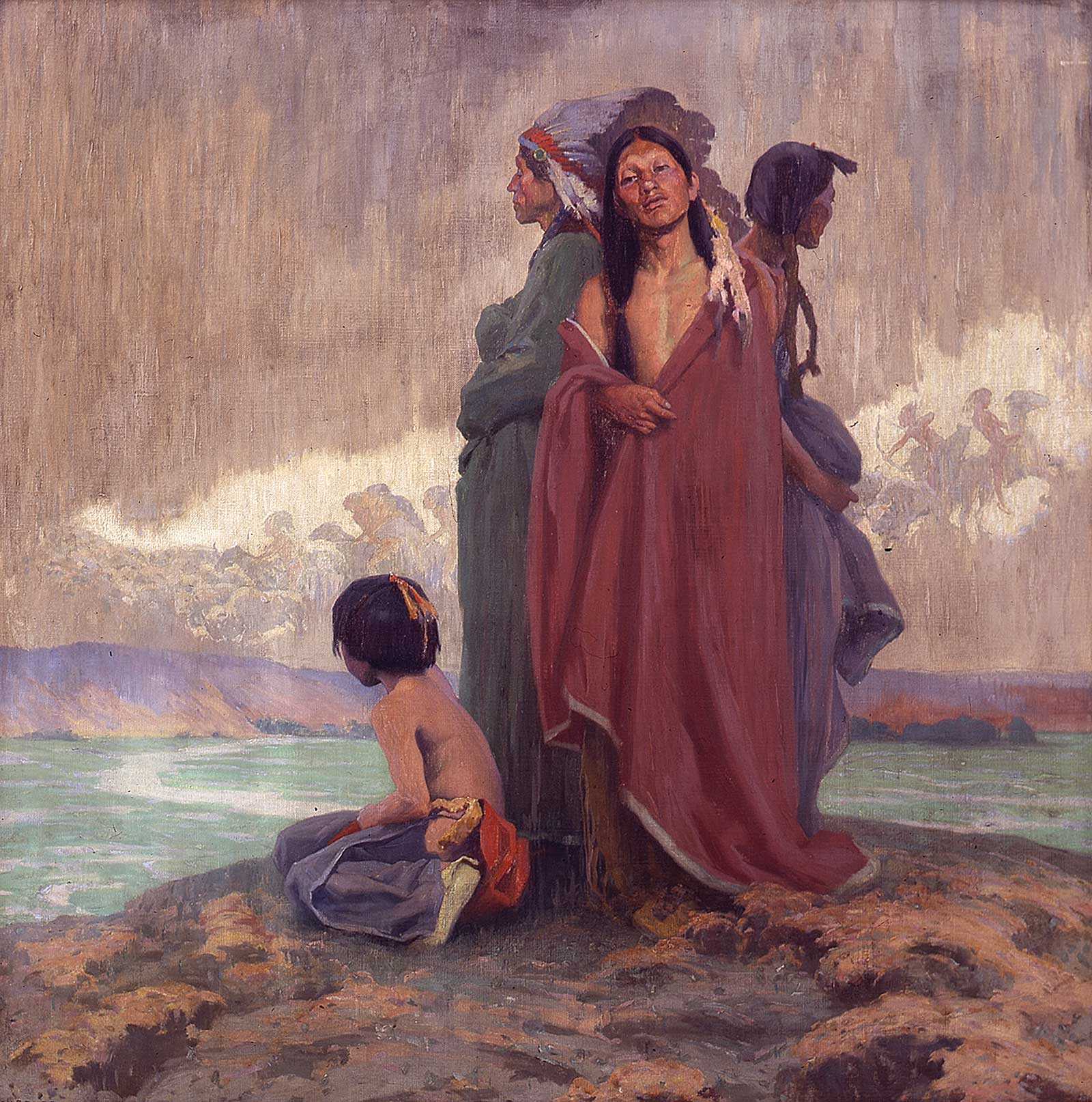 Eanger Irving Couse (1866-1936), A Vision of the Past, 1913, oil on canvas, 70¼ x 70¼". The Butler Institute of American Art, Youngstown, Ohio. 919-O-501.
 Kathryn Stedham, A Prayer for Rain—Moki Snake Dance, oil on Belgian linen 24 x 36”
Stedham continues, “Part of the challenge for me in reimagining Couse’s painting was to find a new angle…Since I did not have access to his original painting, I had to rely on small photos which were sometimes hard to decipher. This worked in my favor as I had to create from my mind’s eye. And the way that I was able to [imagine] the scene was from the point of view of actually being there.” She explains that she reduced the foreground so the central figures would be on the same plane as the viewer, and incorporated a broader range of colors, as Couse’s original piece consists primarily of reds, yellows and browns. “One thing I learned about Couse’s painting was that there seemed to be a pattern of snake-like shapes weaving throughout his piece…I decided to accentuate this snake pattern in the dark band of the dancers’ skirts…My reinterpretation is a largely modernist, interpretive painting of the same scene, with the background and figures loose and gestural, allowing the viewer’s eye to fill in any details.”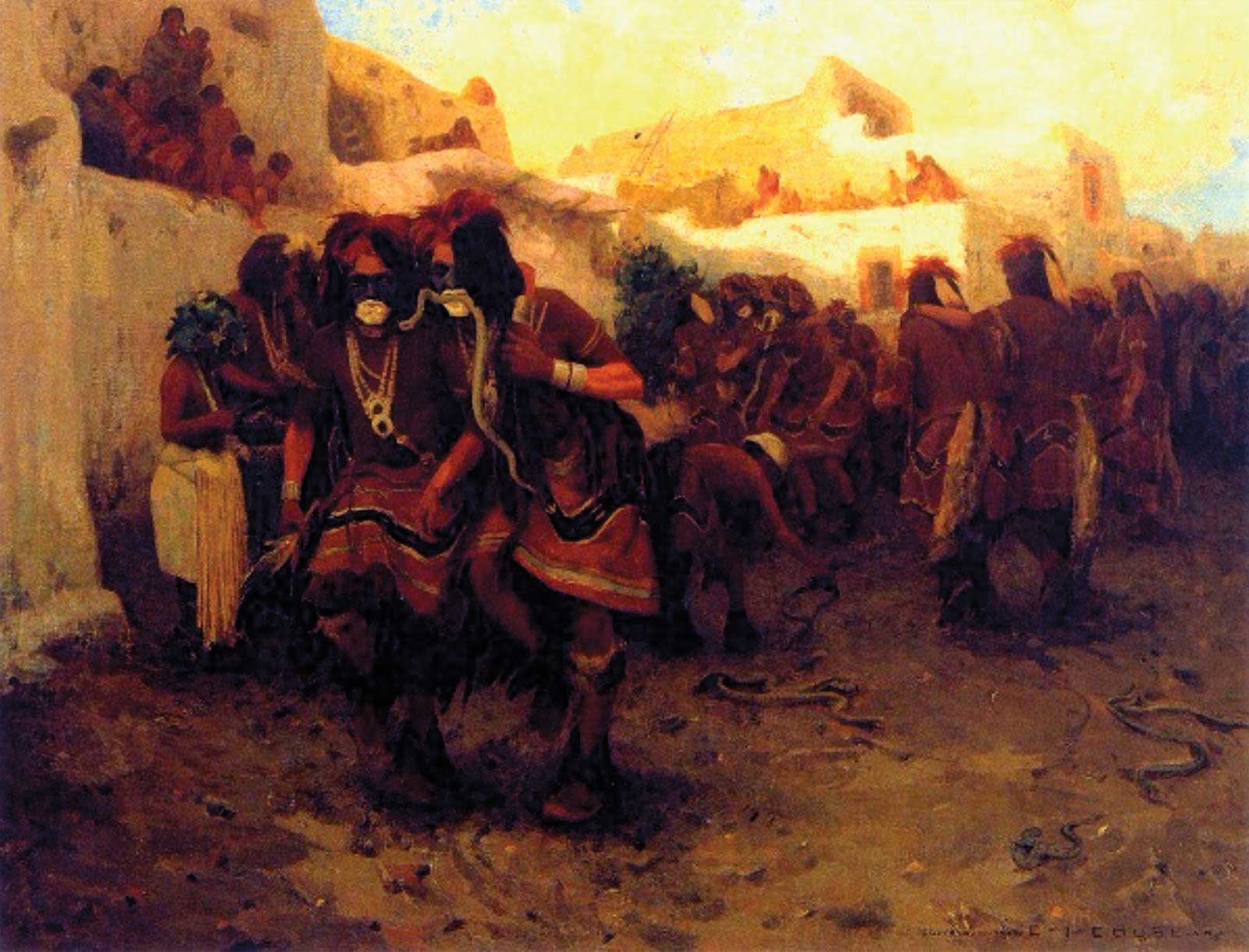 Eanger Irving Couse (1866-1936), Moki Snake Dance—A Prayer for Rain, 1904, oil on canvas, 36 x 48”
In The Golden Pool, by Ziemienski, a Native American man sends ripples out in growing circular patterns through a pool of gold. He opted to draw from Couse’s frequent subject of Native American figures in crouching positions, whether sitting near a campfire, poised to hunt in the woods or crouched down near water, as in Couse’s Moonlight Spring and Indian by a Spring. “The color and mood of my painting is determined by crepuscular lighting which Couse also features. The changing light from daytime to nighttime seems to be magical,” says Ziemienski. “I did not choose to reinterpret any one particular painting but to give my piece an overall Couse feel.”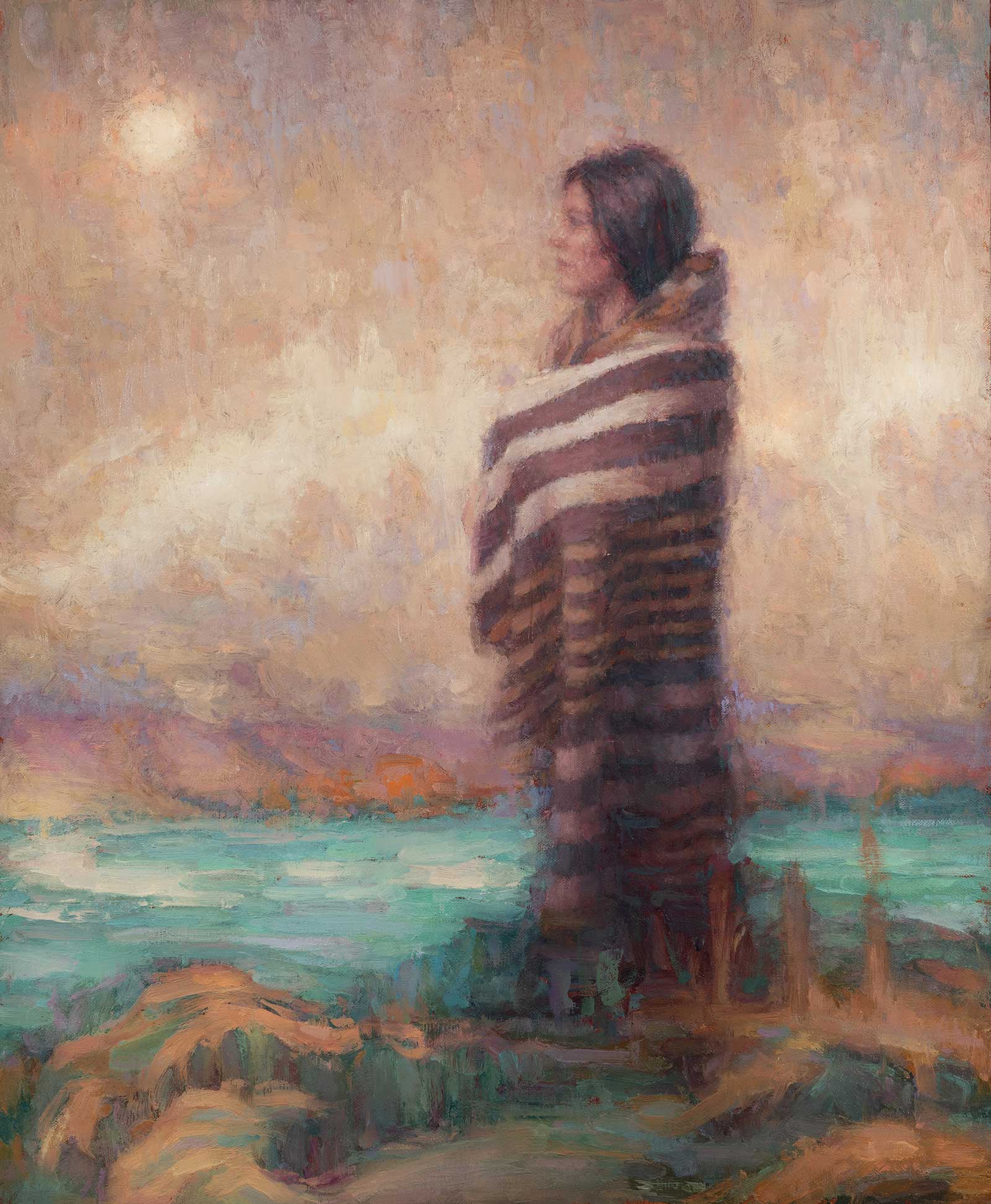 Sean Diediker, Looking Back, oil on linen, 21½ x 18”Artist Sean Diediker borrowed inspiration from the 1913 painting A Vision of the Past, of three standing figures and a child seated beside them. “I love how he incorporates multiple figures, but to me, they visually read as one,” says Diediker, “and like most of Couse’s subjects, all reverently reflecting both inward and outward.
I chose to articulate a similar concept, but with a singular figure, hoping to convey those solitary and often sacred moments we all have. Moments that evoke reflection and truly belong to the individual within their own environment.”
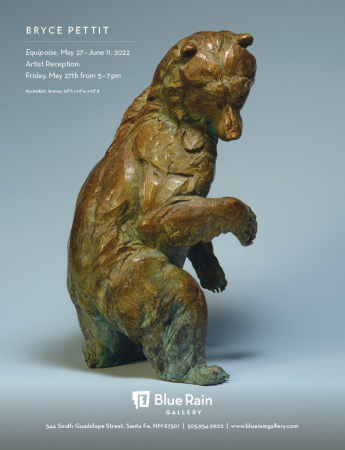
An artist reception for Taos Six Collection: An Homage to E. Irving Couse will be held on Friday, April 29, from 5 to 7 p.m. —
Taos Six Collection: An Homage to E. Irving Couse
April 29-May 21, 2022
Blue Rain Gallery, 544 South Guadalupe Street, Santa Fe, New Mexico 87501
(505) 954-9902, www.blueraingallery.com
Powered by Froala Editor