The earliest evidence of the predecessors of the modern horse in North America indicates they were here in the Eocene era, 56 to 39.9 million years ago. It’s believed that they went extinct between 10 and 12,000 years ago due to a global cooling event. Some of the North American horses moved across the Bering land bridge into Siberia and then west across Asia and Europe. They were first domesticated about 6,000 years ago in what is now Ukraine. Christopher Columbus brought horses to the Virgin Islands in 1493 and Hernán Cortés brought them to the American continent in 1519. They either escaped from their owners or were pilfered and eventually made it to the Great Plains of the United States. 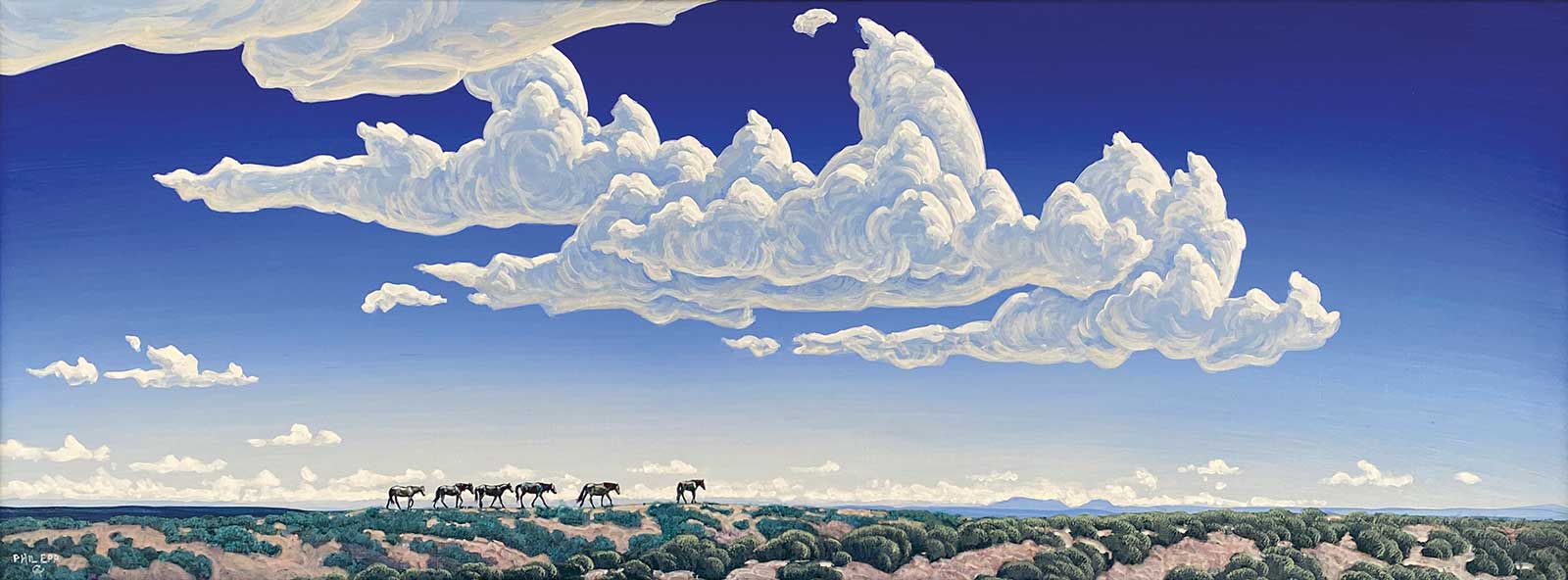 Modern West Fine Art, Along the Ridge, oil on panel, 14¼ x 39¼", by Phil Epp.
Today there are debates about whether or not wild horses are truly a wild native species or feral—having escaped from domestication. There are about 86,000 free-roaming horses in the United States, managed by the Bureau of Land Management.
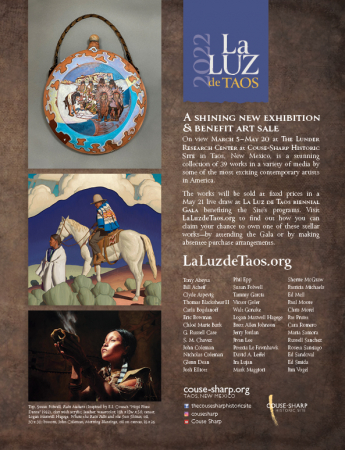
Phil Epp goes out from his Kansas home looking for interesting groups of horses, observing their compositional relationships and for the way they intermingle, “who’s in the lead, who’s buddying up.” He often places them in silhouette within a vast landscape and voluminous clouds that emerge from the sky and give depth to the composition.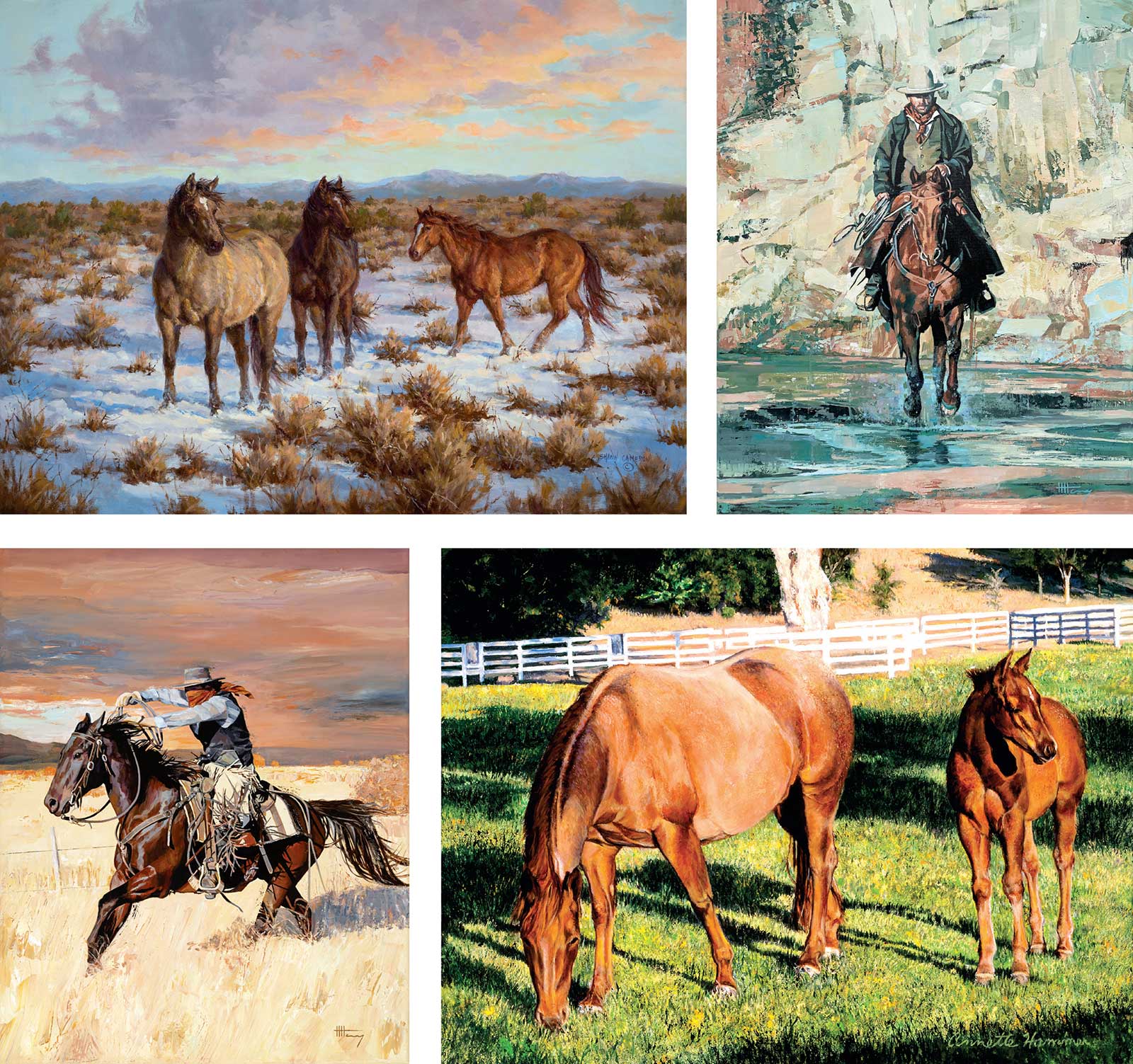 Top row: Trailside Galleries, Welcoming Rays, oil on canvas board, 18 x 24”, by Shawn Cameron; Harper Henry, At River’s Bend, oil, 20 x 24”. Bottom row: Harper Henry, Storm at Sunset, oil, 20 x 16”; Tehachapi Arts Commission, Mellow Day, oil on panel, 9 x 12”, by Annette Hammer.
In Along the Ridge, the horizon is placed low in the composition, giving room for “Phil Epp clouds” to consume the majority of the panel. The rhythmically spaced horses punctuate the horizon.
Shawn Cameron’s ancestors drove cattle along the Oregon Trail and began a six generation tradition of ranching. Her paintings concentrate on the ranch life and the people who make the ranches work as well as depictions of the animals themselves.
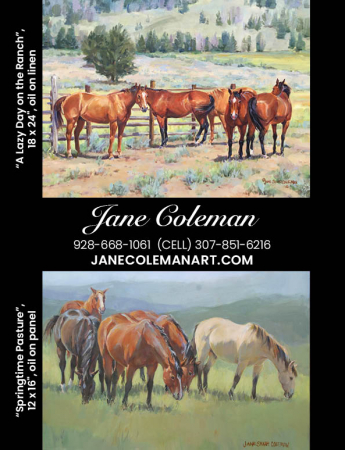
In Welcoming Rays she depicts the response to the warmth of the emerging sun in the cold landscape experienced by animals, humans and all vegetation. Living in the high desert of New Mexico, I’m always surprised when I step outside into the frigid landscape, how the sun immediately warms the side of my body facing it while the other stays cold. Cameron’s horses face the sun. The warm colors of their bodies against the cold blues of the landscape make the contrast of temperature visible.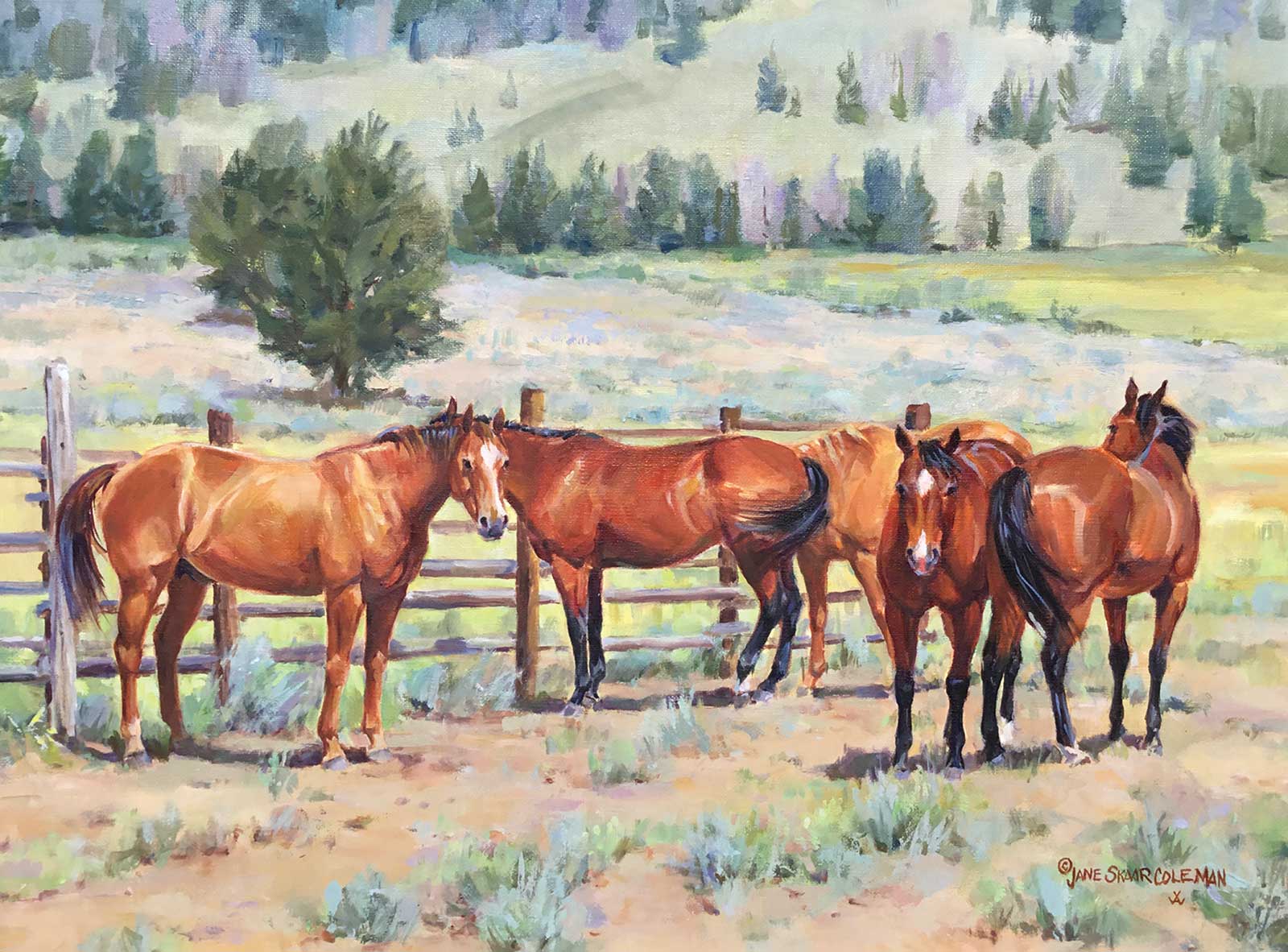 Jane Skaar Coleman, A Lazy Day on the Ranch, oil on linen, 18 x 24”
 Tehachapi Arts Commission, The Quest, oil on panel, 18 x 12”, by Frank Ordaz.
She began drawing horses as a young girl, and as her artistic skill and her experience of ranch life grew, her emotional attachment to the people and animals she painted grew as well. The authenticity of her depictions is palpable.
Within the following pages, collectors and equine enthusiasts can peruse more artwork that celebrates the beauty and strength of horses, as well as our unique connections with them.
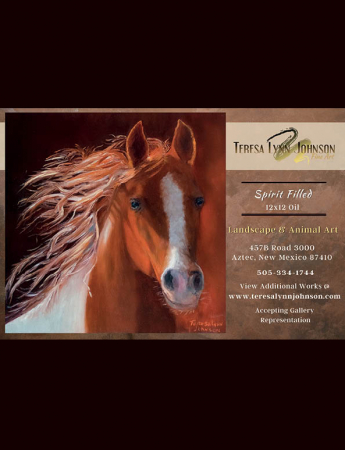
“Horses have a beauty that touches the soul,” says artist Teresa Lynn Johnson. “I enjoy depicting horses in a state of freedom, either wild or roaming in a pasture.” The inspiration behind Spirit Filled was the beauty of this horse ready to run with the wind flowing through his mane. The artist explains that she was intrigued by the dramatic lighting, which helped convey the sense of high spirits and freedom the horse seemed to exude.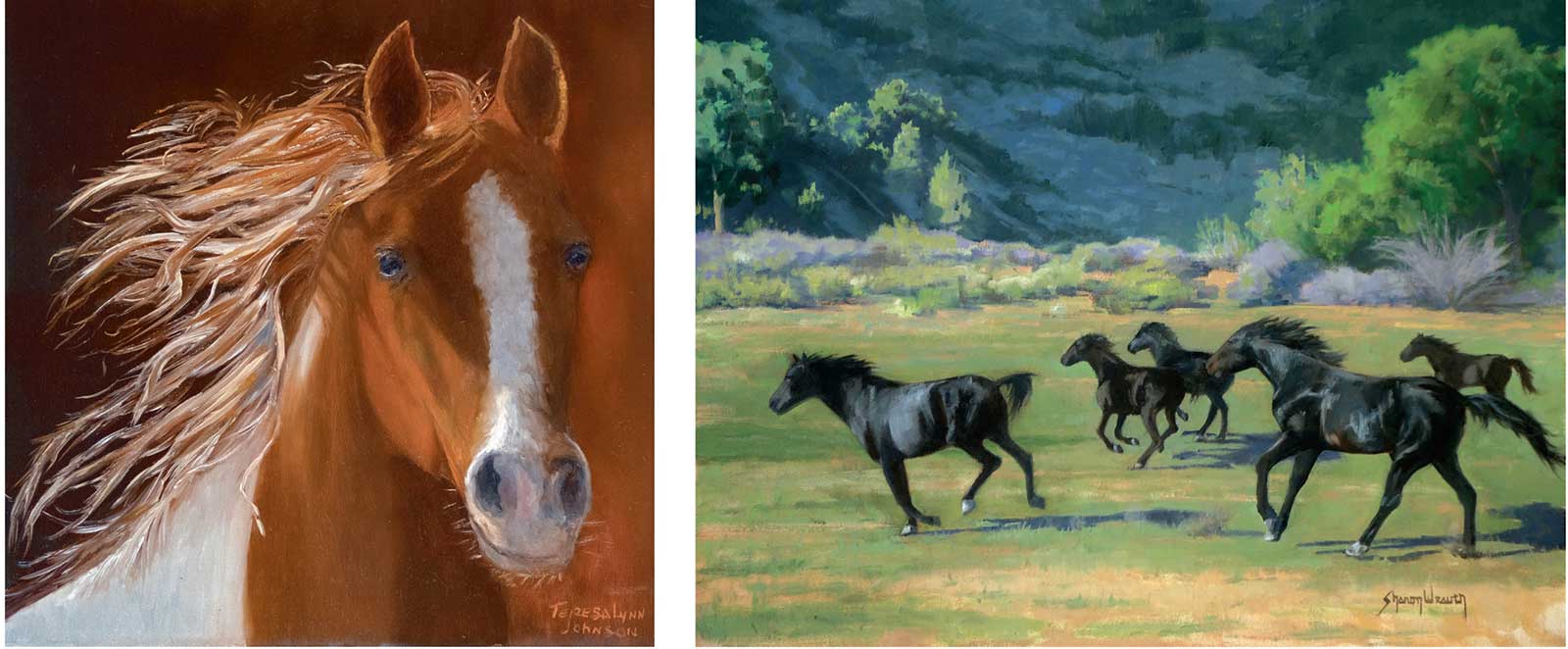 Teresa Lynn Johnson, Spirit Filled, oil, 12 x 12”; Tehachapi Arts Commission, Hot Pursuit, oil on linen, 18 x 24”, by Sharon Weaver.
Another piece, Cool Water, was inspired by a peaceful summer day in the mountains of Colorado, watching the horses come and spend some leisurely time drinking the cool water from the mountain pond. “When searching for art that includes horses, really focus on the specifics of what you feel about horses and find art that conveys that inner connection,” says Johnson. “When the connection is made you will always enjoy your work of art.”
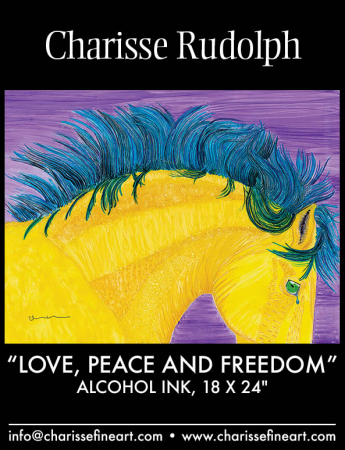
Charisse Rudolph is a storyteller in the paintings she shares. Having horses in her life since she was as tall as a horse’s leg, she has grown to understand their nature intimately. “Without horses,” says Rudolph, “humanity would not have traveled far.” Through her art, she shares her keen insight into what these beasts perceive about life and honors the horse for all that they have contributed to human existence. “When on top of a horse’s back, the motion of their walk soothes us like a child being rocked in their mother’s arms. Horses are healing,” she says. For this reason, Rudoph founded Healing Horses & Armed Forces.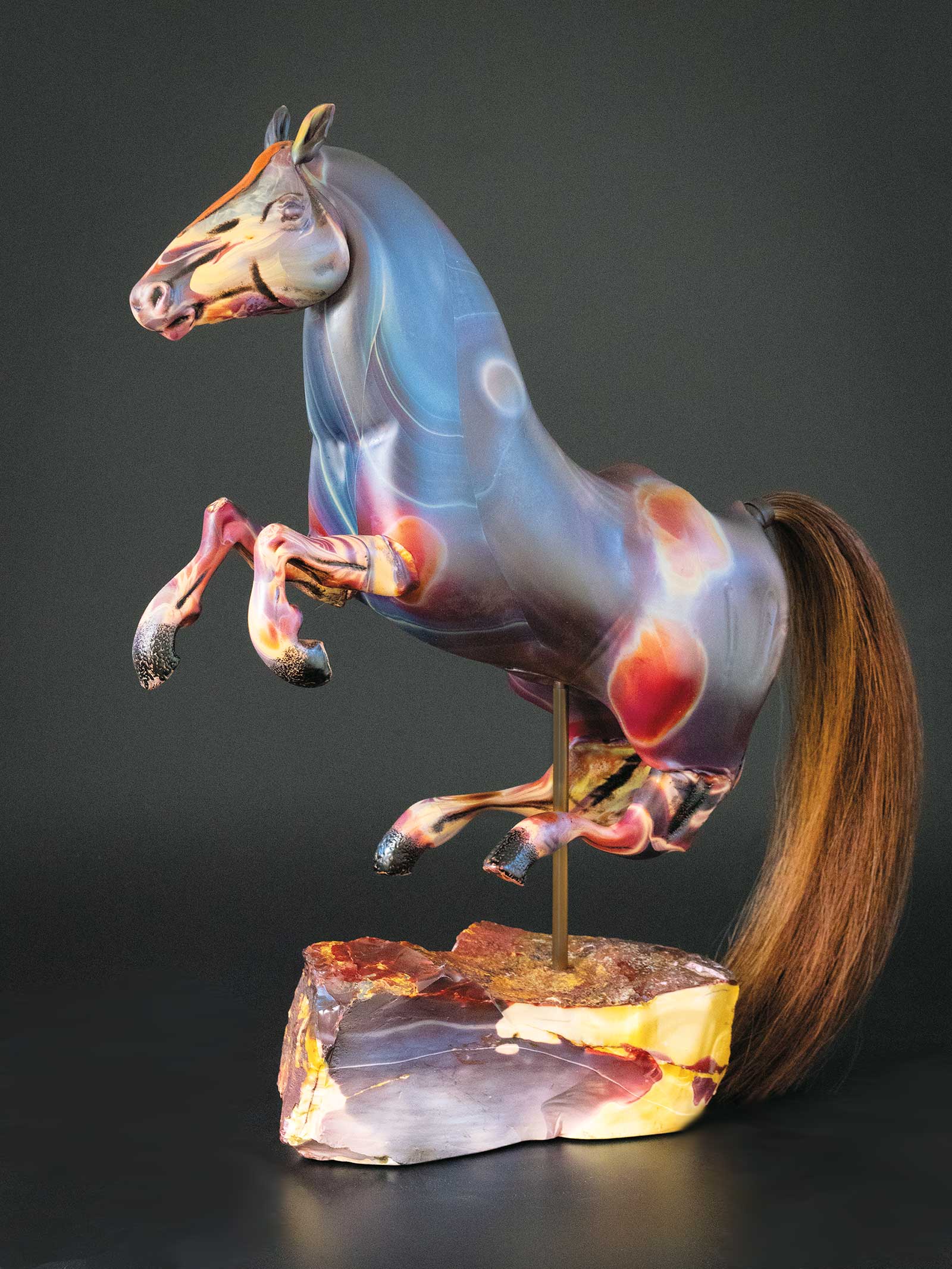 Blue Rain Gallery, Chalcedony Horse, blown and hand-sculpted glass, horse hair, mookaite rock and leather, 24 x 20 x 9”, by Shelley Muzylowski Allen.
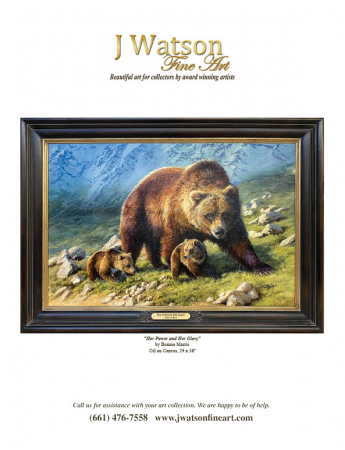
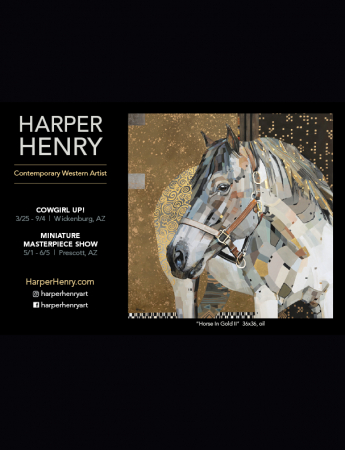
Harper Henry’s work is a unique fusion of two contradictory art styles: abstract and realism. She finds interest and unexpected harmonies in the creation of both in the same space. With each new piece, she tries to push artistic boundaries, often employing bold brushwork and geometric mark making to evoke a sense of movement. She finds inspiration from spending time at horse ranches as well as hiking in the Sonoran Desert searching and photographing the wild horses of the Lower Salt River. With horses, her focus is to bring them to life on the canvas, capturing their spirit and essence. After looking at one of Henry’s horse paintings, many people have commented, “I feel like I can hear the horse galloping.”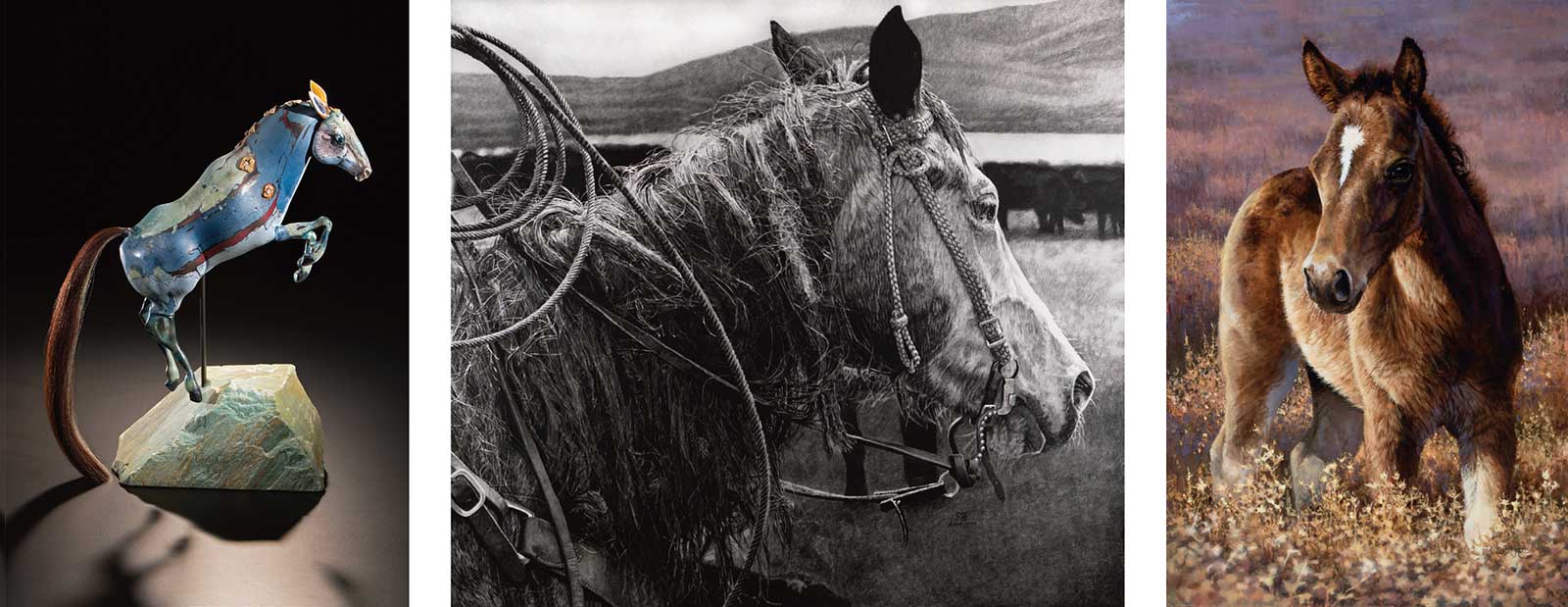 From left: Blue Rain Gallery, Grey Into Blue, blown, hand-sculpted and engraved glass, horsehair, glacier green quartzite, 29 x 21 x 7”, by Shelley Muzylowski Allen; Rachel Brownlee, Things Unseen, charcoal, 28 x 25”; J Watson Fine Art, Plains Baby, oil on canvas, 36 x 24”, by Bonnie Marris.
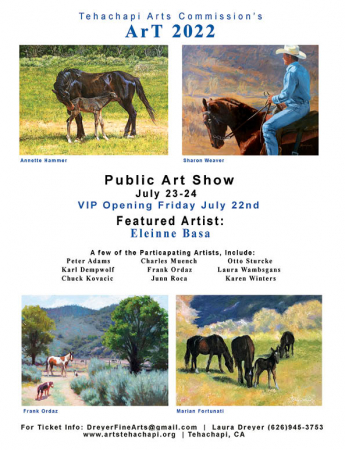
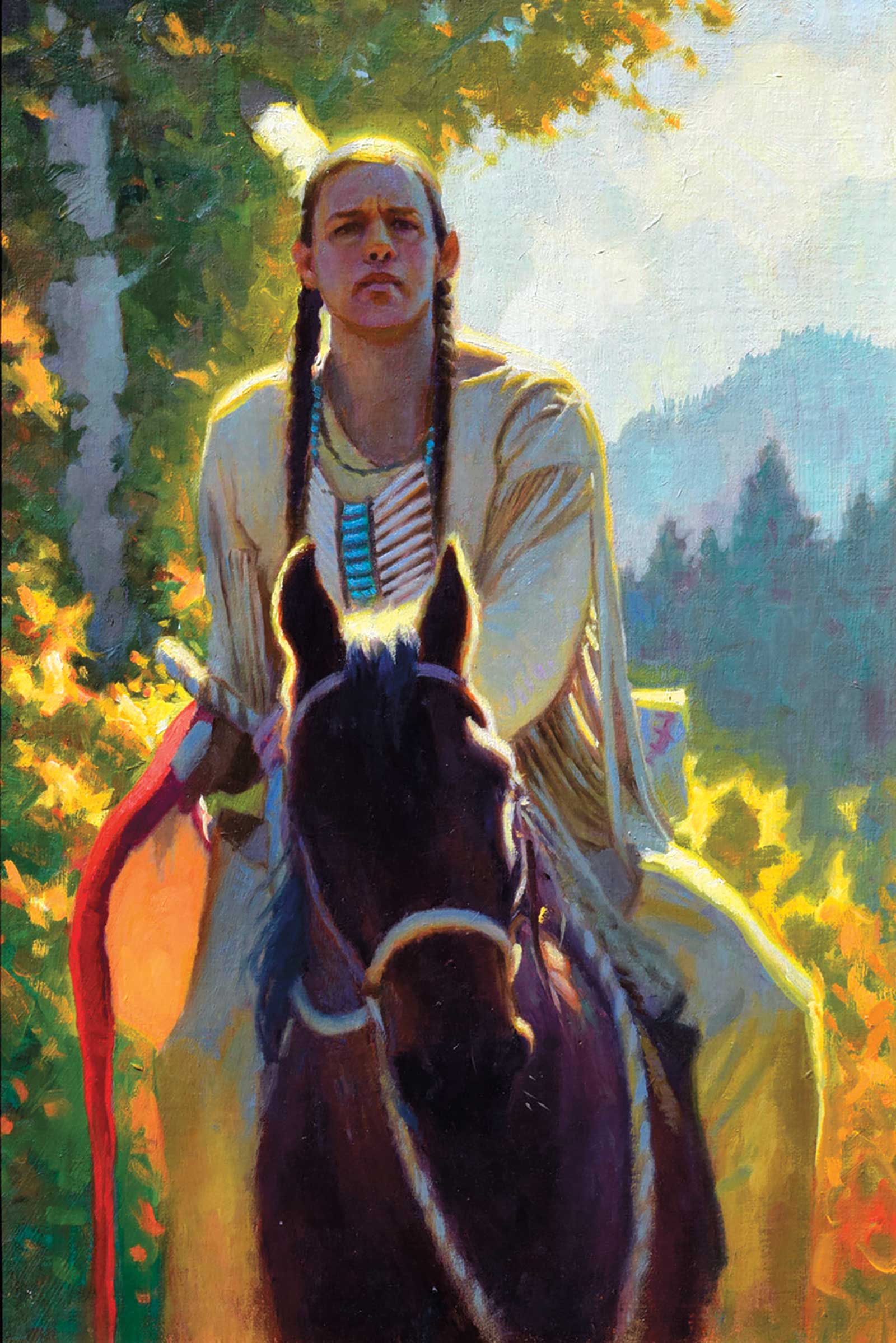
The Tehachapi Arts Commission, which organizes the Art 2022-Paint-Out and Juried Art Show, features the artwork of such artists as Frank Ordaz, Annette Hammer and Sharon Weaver. Each of these artists have a passion for the art of the horse. In Ordaz’s The Quest, a Native American man sits on horseback under the golden light of the sun. Hammer’s oil Mellow Day features two horses grazing in a meadow, the Running Springs Ranch in the Santa Ynez Valley being a continuous source of inspiration for the artist. Combining an impressionist color palette with exceptional drawing skills, Weaver creates memorable images that tell the story of the West. In her painting Hot Pursuit, a herd of mares dash across a field, running from a stallion.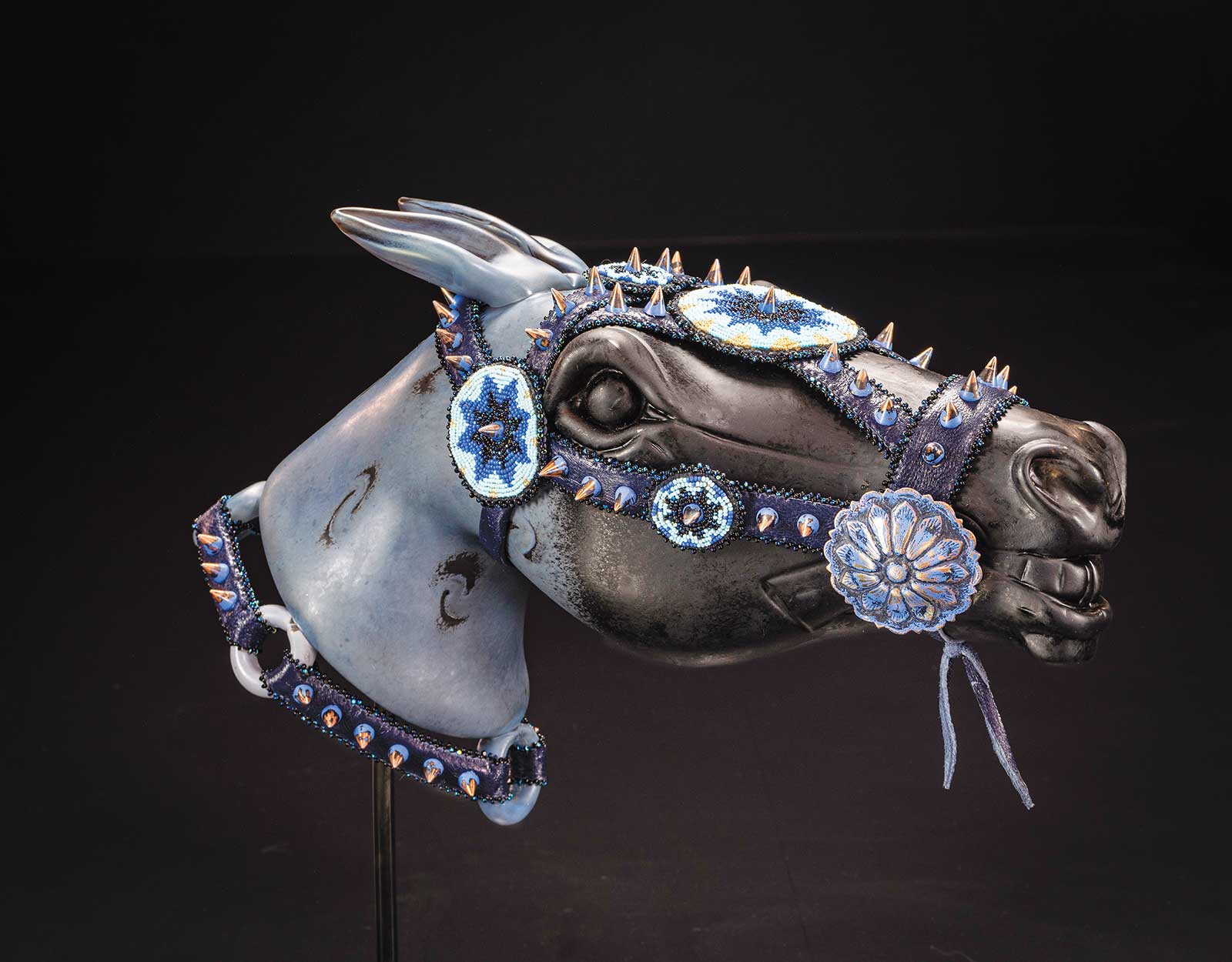 Blue Rain Gallery, Shadow Blue, blown and hand-sculpted glass, steel, silver and vintage seed beads, 13 x 14 x 5”, by Shelley Muzylowski Allen in collaboration with Angela Swedberg
“I love to paint horses and had my first horse at age ten,” says artist Jane Skaar Coleman. Owning and showing horses for many years provided the artist a thorough knowledge of their anatomy, and working with horses in various equine events or when they are running freely in the pasture gives her an understanding of how they move. “My horse paintings are basically Western realism, and I paint horses in various situations and how I like to see them,” she says. 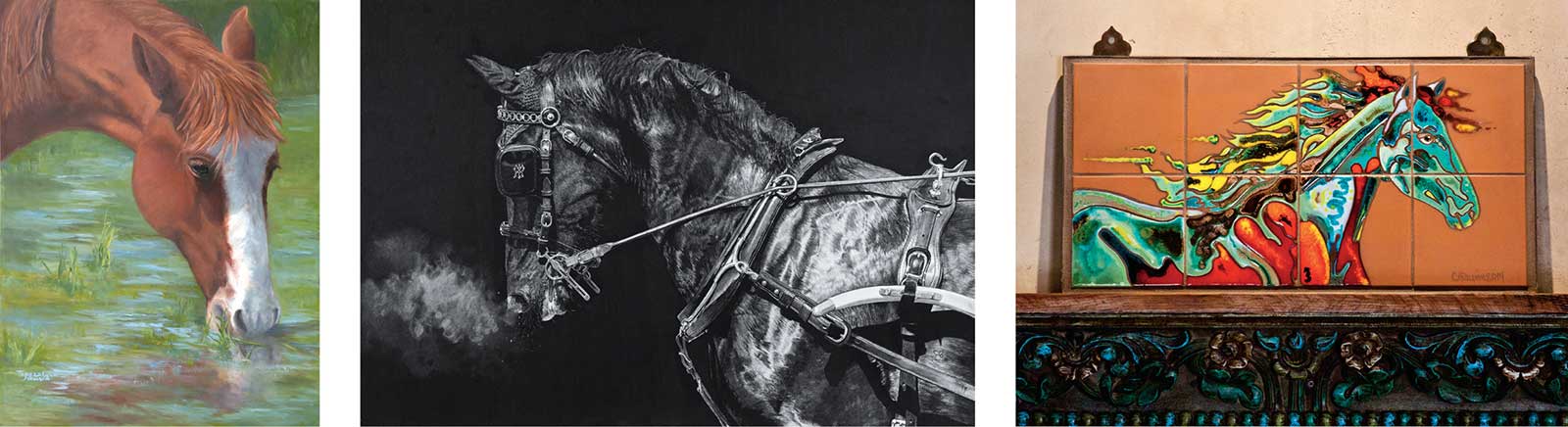 From left: Teresa Lynn Johnson, Cool Water, oil, 20 x 16”; Rachel Brownlee, Mere Breath, charcoal, 24 x 34”; Carly Quinn, Firehorse #1, hand-glazed tile mural, 12 x 24”
Shelley Muzylowski Allen, represented by Blue Rain Gallery in Santa Fe, New Mexico, is passionate about working with glass and incorporating mixed media to create texture and tension. She has always been drawn to horses due to the power, intelligence and beauty of the animal. Through her unique blown and off-hand hot-sculpting practice, she is able to portray these equine creatures with a great sense of freedom and expression. Formally trained as a painter, her glass sculpture has an expressive palette that will often include pattern and engraving. In her sculpture piece titled Shadow Blue, Allen collaborates with Plateau beadwork artist Angela Swedberg to create a dynamic mixed media headstall to compliment the blown glass horse head. 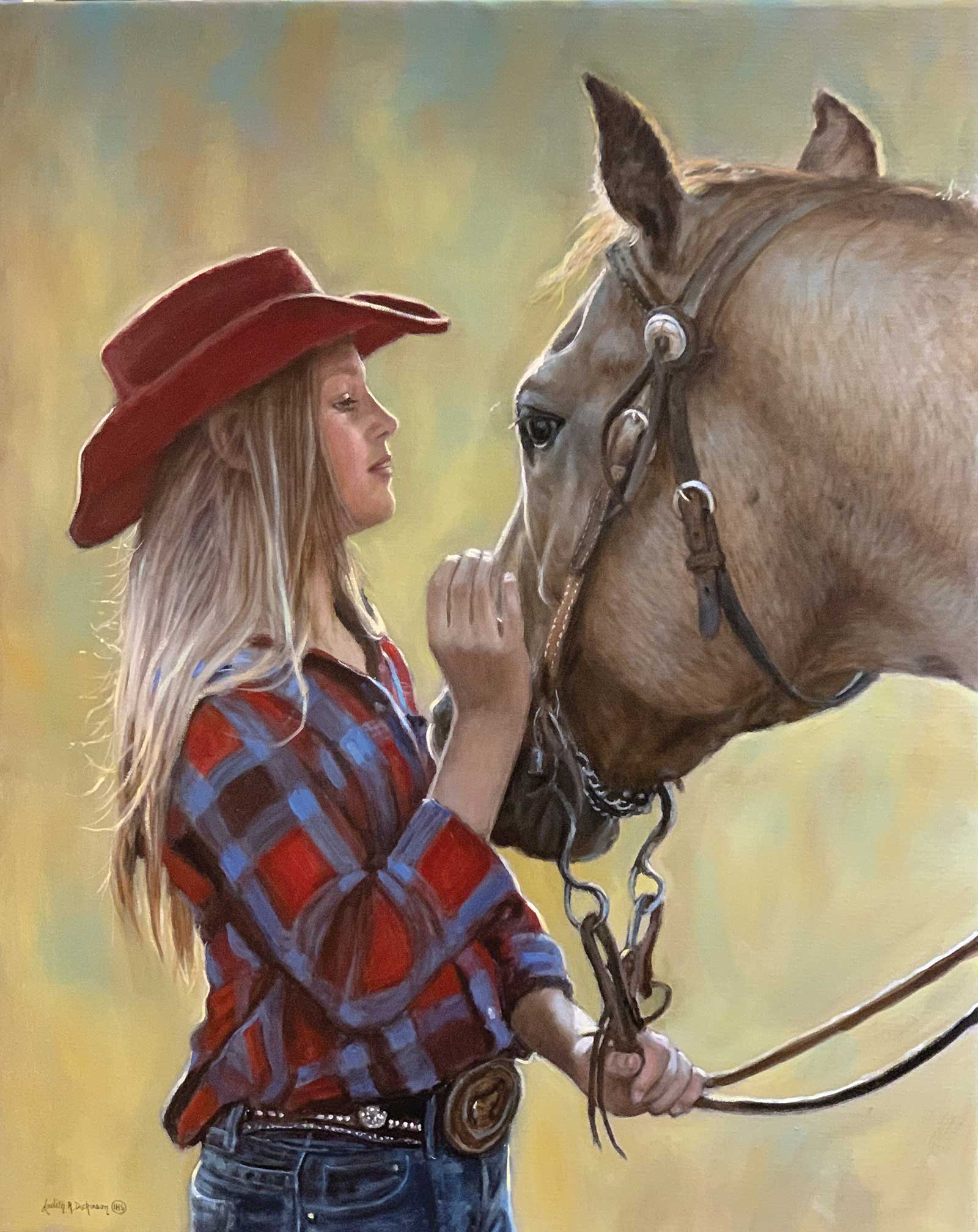 J Watson Fine Art, Adoration, oil on canvas, 30 x 24”, by Judee Dickinson.
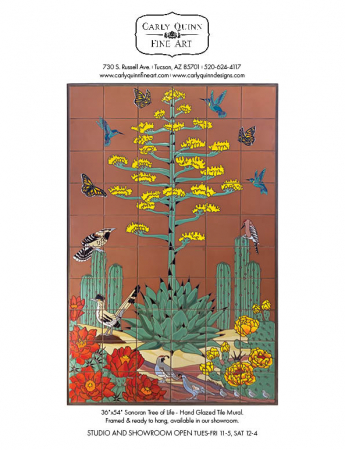
The equine art of Carly Quinn, of Carly Quinn Designs, are one-of-a-kind works created on ceramic tiles. She utilizes a special glaze blending and kiln firing technique to achieve a watercolor effect on her pieces. All pieces are fired at more than 2,000 degrees and framed in hand-welded metal frames to create lasting works of art. Great for indoor and outdoor use. Smaller individual tiles are cork backed and can be hung or used as trivets. Her studio and gallery in Tucson, Arizona, are open to the public, especially art collectors.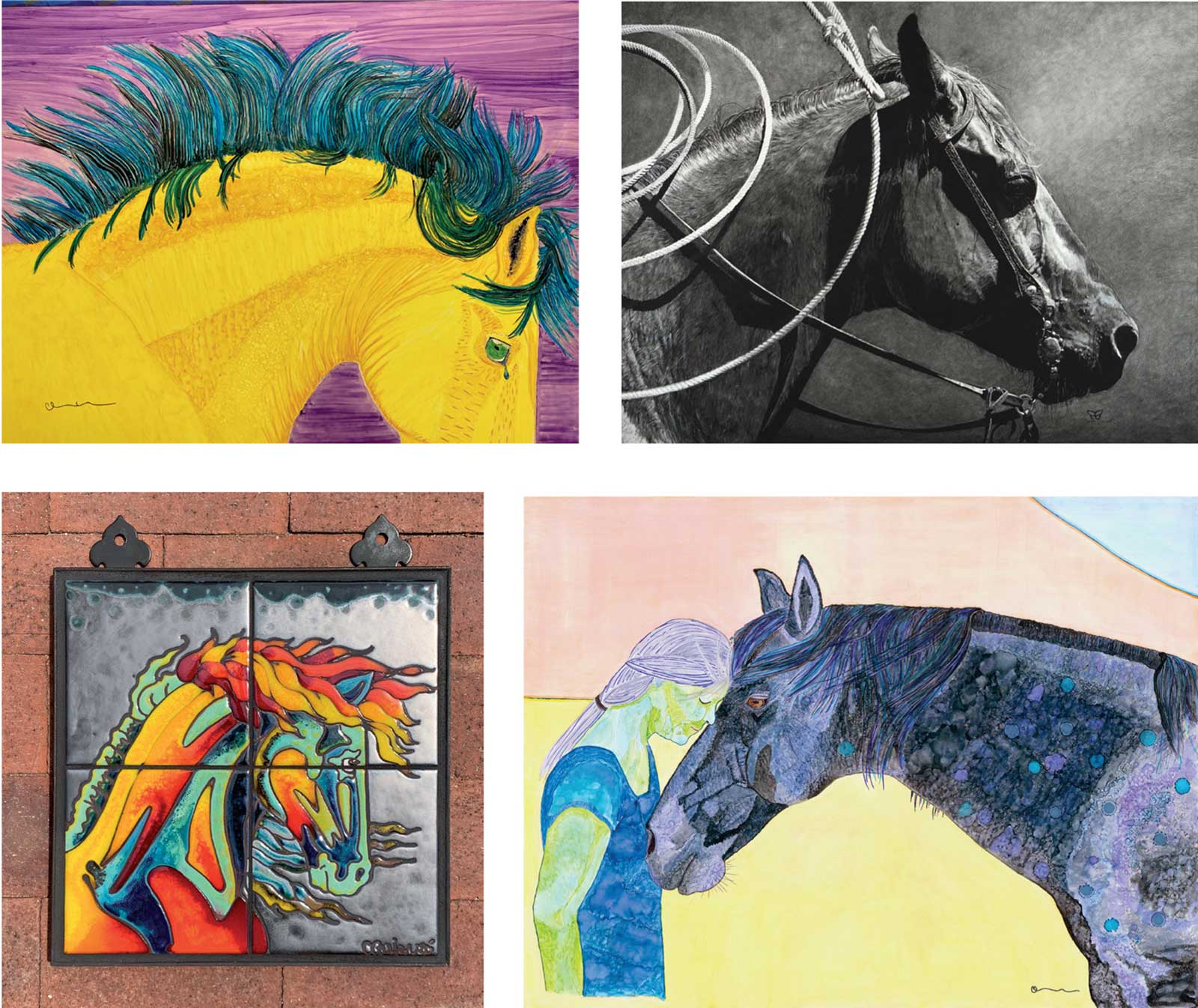 Top row: Charisse Rudolph, Love, Peace & Freedom, alcohol ink, 20 x 24”; Rachel Brownlee, By the Sweat of Your Brow, charcoal, 22 x 28”. Bottom row: Carly Quinn, Firehorse, silver hand-glazed tile mural, 12 x 12”; Charisse Rudolph, Ageless, alcohol ink, 30 x 40”
J Watson Fine Art in Valencia, California, represents some of the best artists of the day working in a range of subject matter, including Western and wildlife art. Among these are Bonnie Marris and Judee Dickinson, who each have a love for horses, other animals and the ways of the West. Also represented at the gallery is Susan von Borstel, whose painting Flight features a horse surrounded by butterflies, wind billowing in its mane. “I have been wanting to paint horse energy, not just a portrait.I made up the horse running with the mane blowing and the background stormy,” says the artist. “During Covid, I found I was interested in a bit of whimsy. Looking at the horse head, I wanted more meaning and painted monarch butterflies flying as they could energize a horse and give the painting a story.”
She continues, “Horses were my first love [and] I’ve been painting them since I was a small child. I’ve owned many horses...After creating several hundred portraits, I branched out and decided I prefer to paint their presence and energy, not breed standards. It’s been incredibly fun...I’m lucky enough to have international collectors.”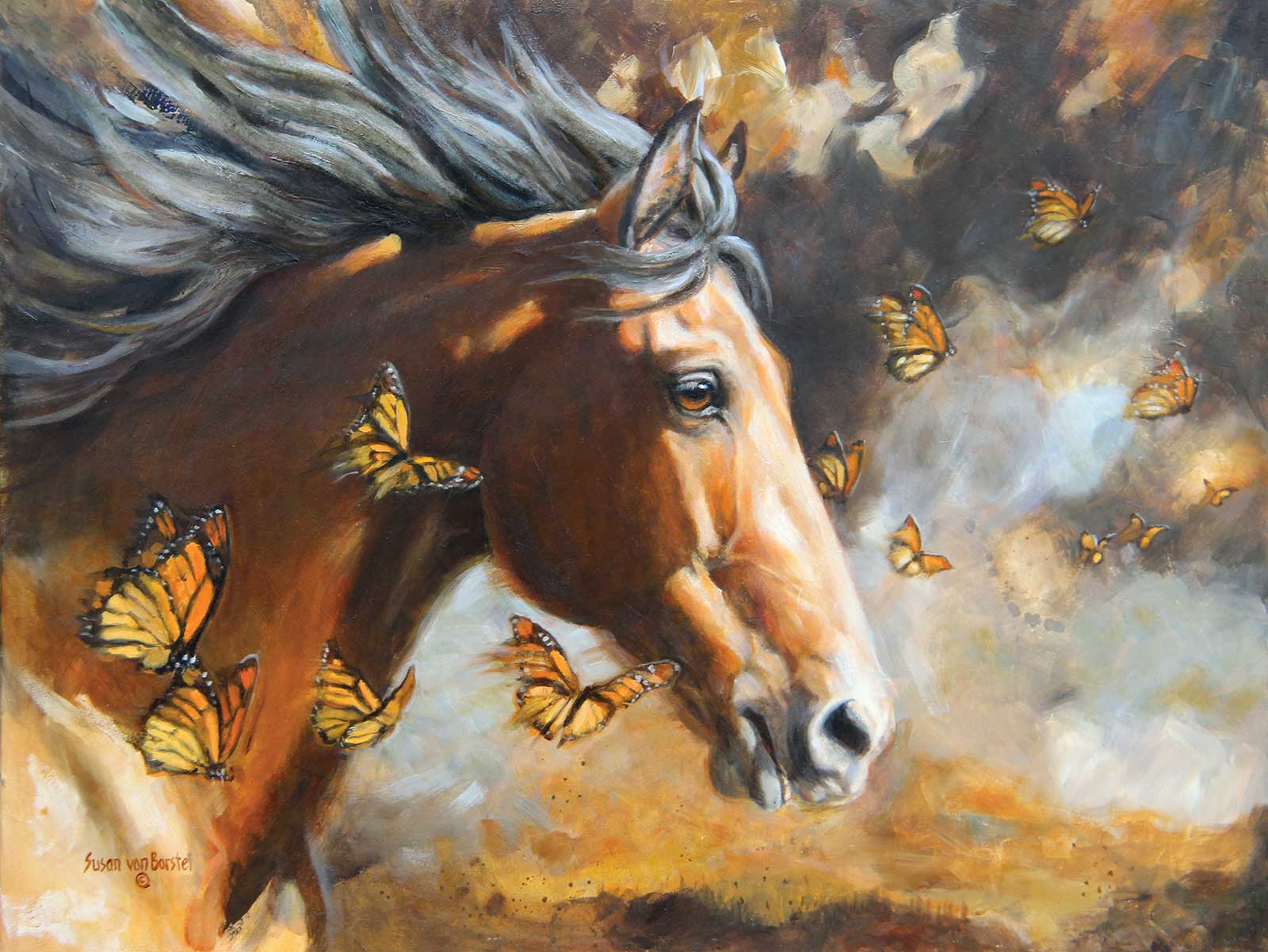 J Watson Fine Art, Flight, oil on panel, 19 x 24”, by Susan von Borstel.
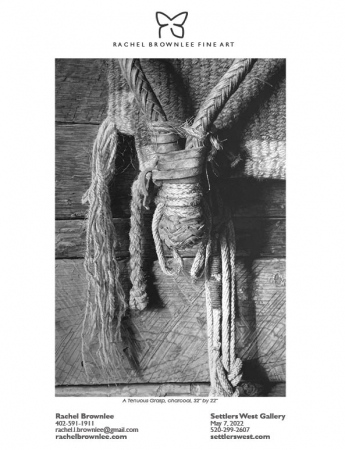
“I am a detail oriented, black and white, software programming kind of person. Those traits do not often create an artist, but for me, it did,” says charcoal artist Rachel Brownlee. Her striking depictions of horses capture the beasts’ dramatic forms in stark contrasts of black and white. “My work seeks to pay homage to the people and animals of the American West today and to depict their lives honestly. It captures a respect for their whole life working outside and being tired and dirty and hot and cold. The iron of cow horses’ hooves and the gold of their hearts made the West what it is.” —
Featured Artists & Galleries
Blue Rain Gallery
544 S. Guadalupe Street, Santa Fe, NM 87501
(505) 954-9902, denise@blueraingallery.com
www.blueraingallery.com
Carly Quinn Designs
730 S. Russell Avenue, Tucson, AZ 85701
(520) 624-4117, www.carlyquinndesigns.com
Charisse Rudolph
info@charissefineart
www.charissefineart.com
Harper Henry
www.harperhenry.com
Jane Skaar Coleman
(928) 668-1061, (307) 851-6216
www.janecolemanart.com
J Watson Fine Art
(661) 476-7558, info@jwatsonfineart.com
www.jwatsonfineart.com
Modern West Fine Art
412 S. 700 West, Salt Lake City, UT 84104
(801) 355-3383, www.modernwestfineart.com
Rachel Brownlee
(402) 591-1911, www.rachelbrownlee.com
Teresa Lynn Johnson
457B Road 3000, Aztec, NM 87410
(505) 334-1744, www.teresalynnjohnson.com
Tehachapi Arts Commission
www.artstehachapi.org
Trailside Galleries
Jackson, WY, (307) 733-3186, Scottsdale, AZ
(480) 945-7751, www.trailsidegalleries.com
Powered by Froala Editor