When Michael Duchemin, president and CEO of the Briscoe Western Art Museum, started doing some initial research in the lead-up to a new exhibition on the Cowboy Artists of America, he found himself asking an important question: Does the CA have the legs to continue for another generation?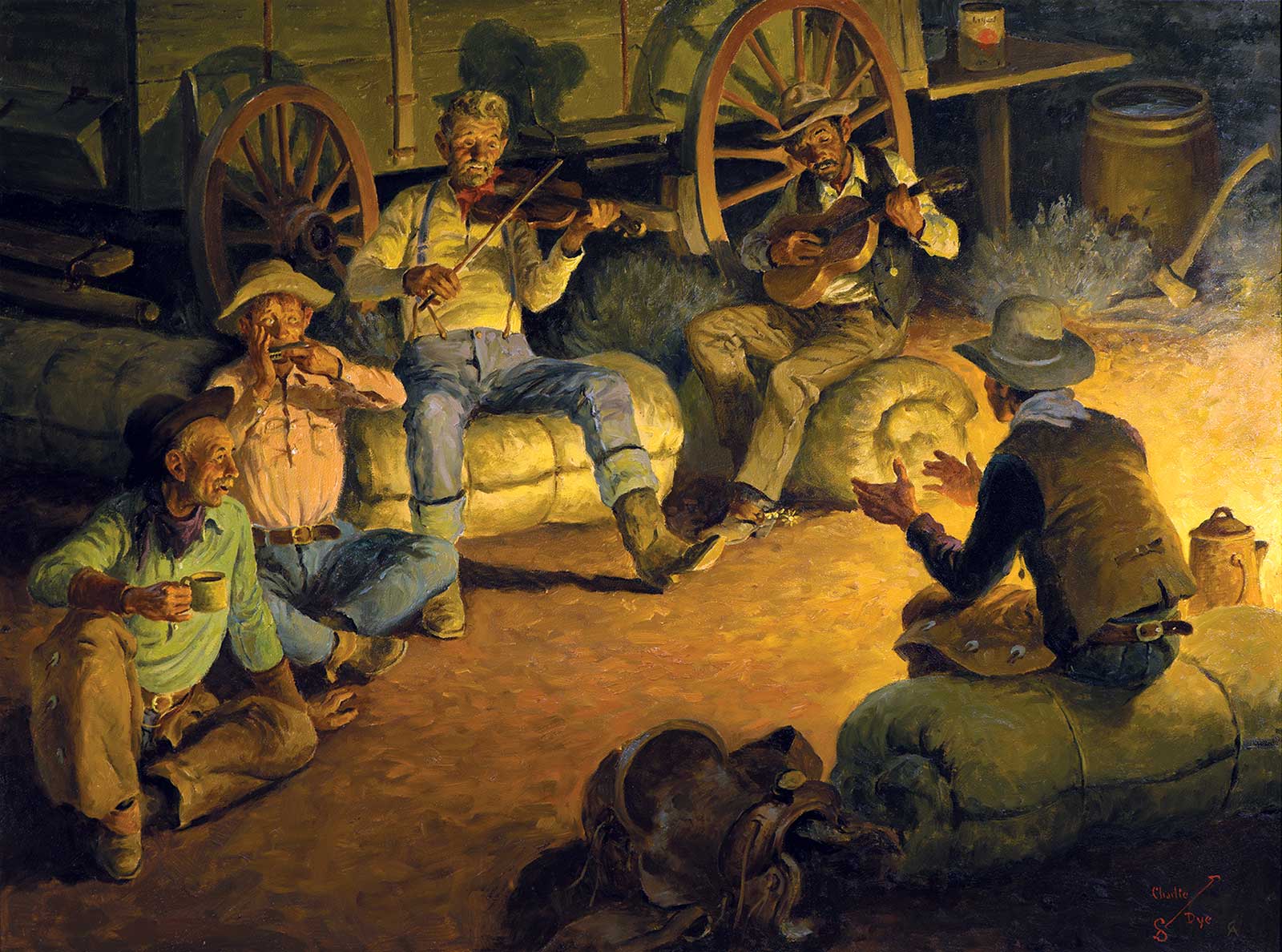 Charlie Dye (1906-1972), Rawhide Rhapsody, 1969, oil on canvas, 24 x 32”. Courtesy of the Eddie Basha Collection.
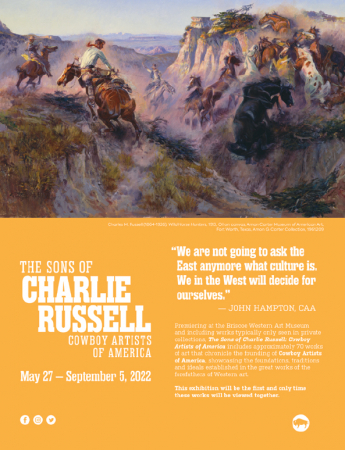
That question and its answer are at the core of the new exhibition, The Sons of Charlie Russell: The Cowboy Artists of America, which opens May 27 at the museum in San Antonio, Texas.
The roots of the show reside in Duchemin’s own involvement in the Briscoe’s Night of Artists event, which brings together Western artists of all stripes, from traditional cowboy and cattle painters to more contemporary genre-bending artists who explore the West through cubism, impressionism, regionalism and several other -isms, as well as more graphical styles of art that have become more popular in recent decades. 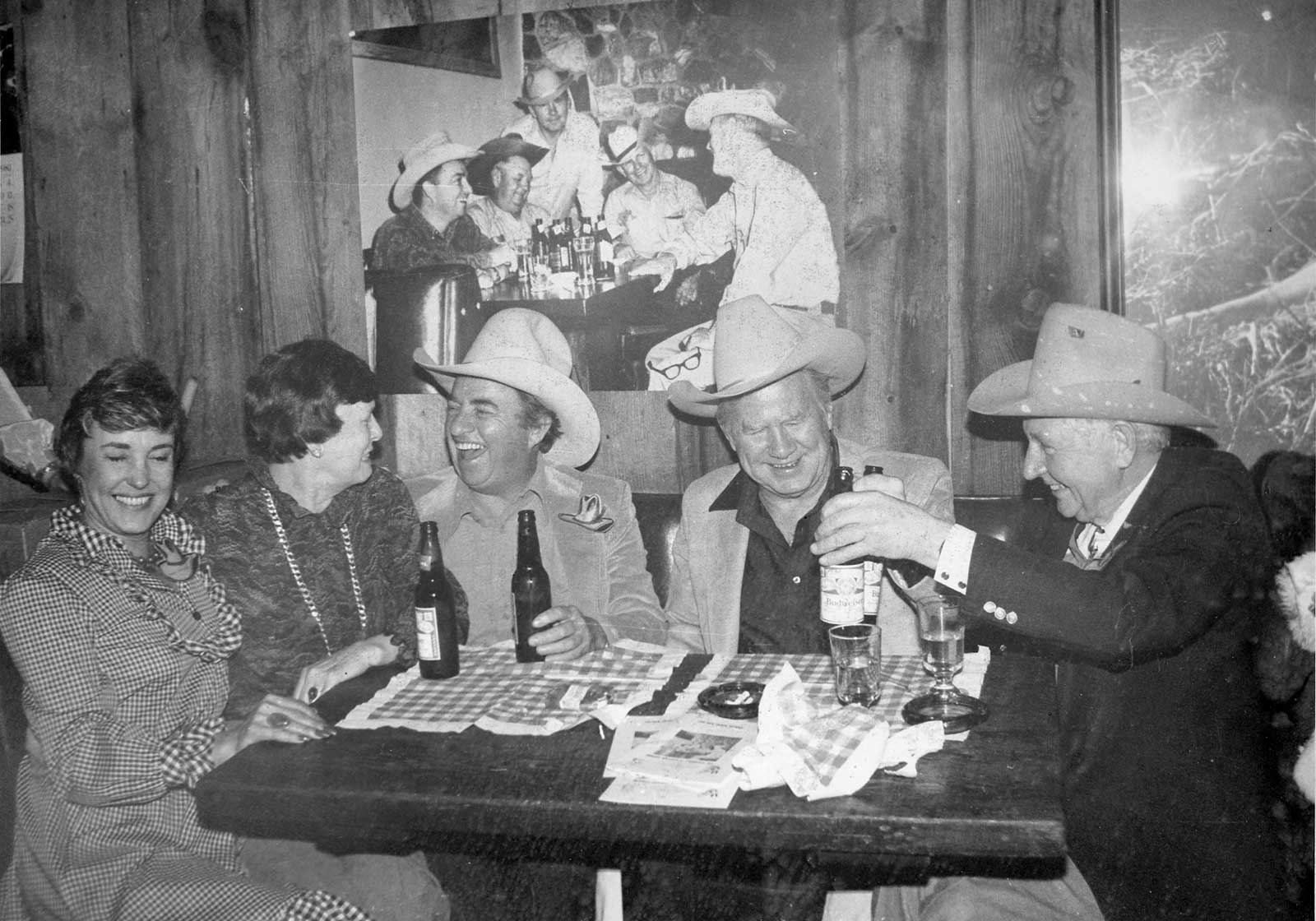 A 1965 Cowboy Artists of America event with Bud Helbig, right, Johnny Hampton and Joe Beeler. Image courtesy of Sedona Heritage Museum, Sedona, AZ.
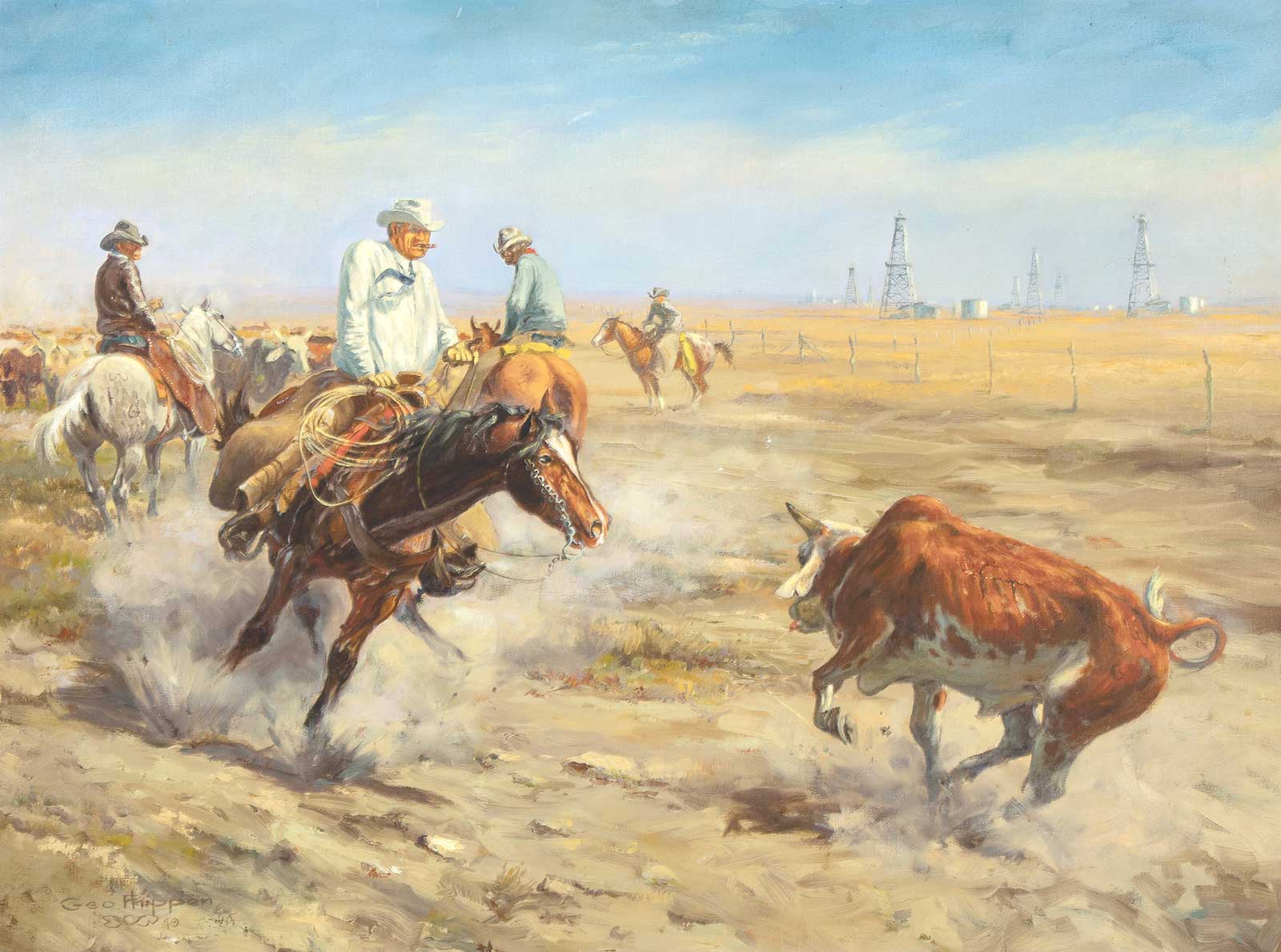 George Phippen (1915-1966), Texas Cattleman - Oil Man, 1949, oil on canvas, 30 x 40”. Courtesy of the Jack and Valerie Guenther Foundation.
“Back when I was producing the show in 2017, I was watching as the contemporary artists were submitting their work. It was clear there was two very distinct styles of art, and I remember the biggest contrast was in the work of Martin Grelle and Billy Schenck,” Duchemin says, calling out to Grelle, a more traditional painter who is in the CA, and Schenck, the occasionally irreverent Pop Art painter who is not in the group. “…I wanted to know where the CA fit into this new group of artists.”
Duchemin says he was also interested in seeing what the CA stood for and where it was going. After all, the Cowboy Artists of America, in many respects, was a response to the artwork of the 1960s, including abstract expressionism, color field, drip paintings, surrealism and other modern art movements that were sweeping aside realism. Several of the founders, and many CA members since, have noted that when they were getting their art educations, realism was practically abandoned by teachers that had succumbed to pure abstraction. The group’s straightforward stories and depictions of the West were a direct response to that. So it would make sense then that a new generation of CA artists, no longer under constant threat by Jackson Pollock and Mark Rothko, might be responding to different elements in their worldview. 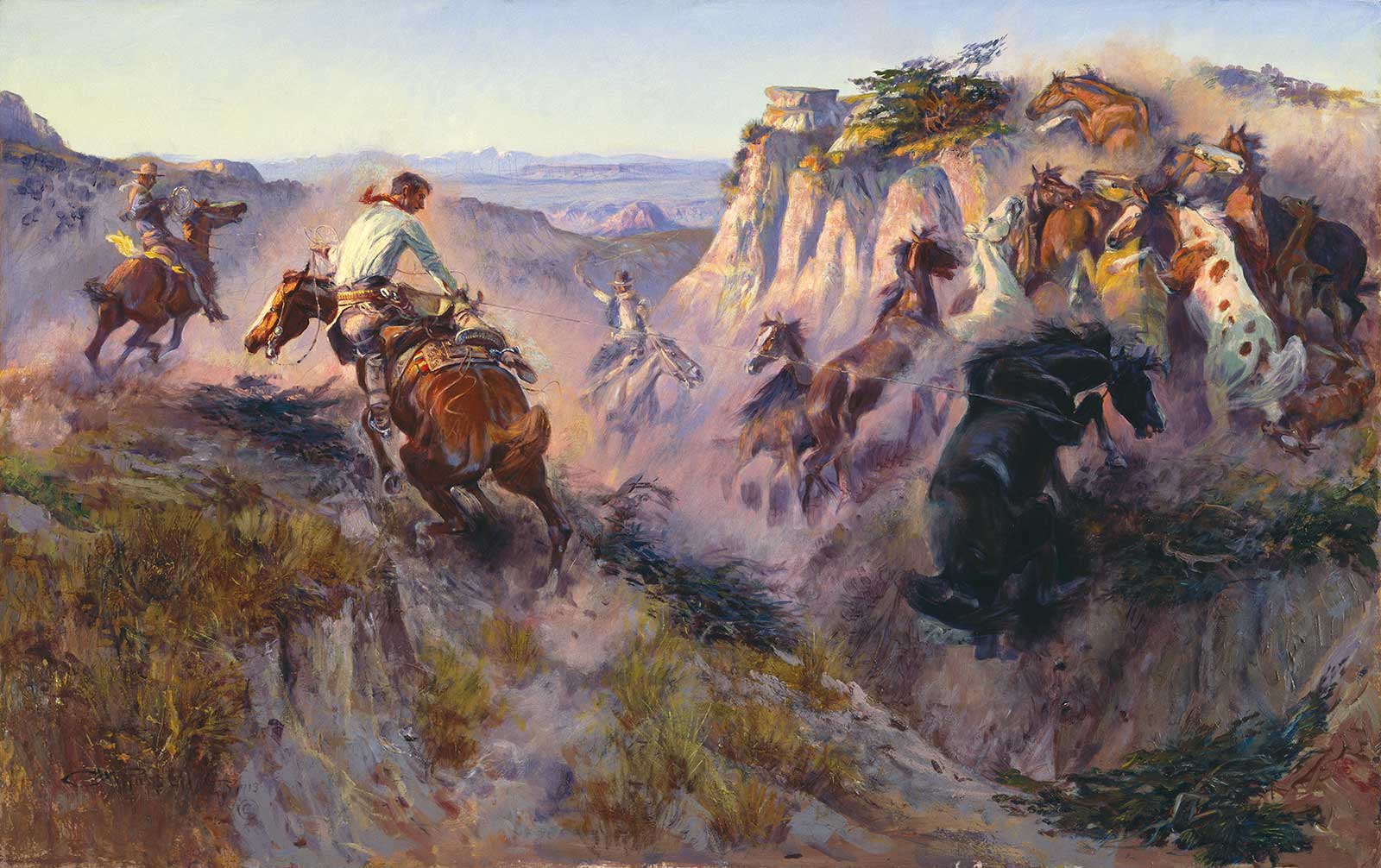 Charles M. Russell (1864-1926), Wild Horse Hunters, 1913, oil on canvas, 30 x 46⁷⁄₈”. Amon Carter Museum of American Art, Fort Worth, Texas, Amon G. Carter Collection, 1961.209.
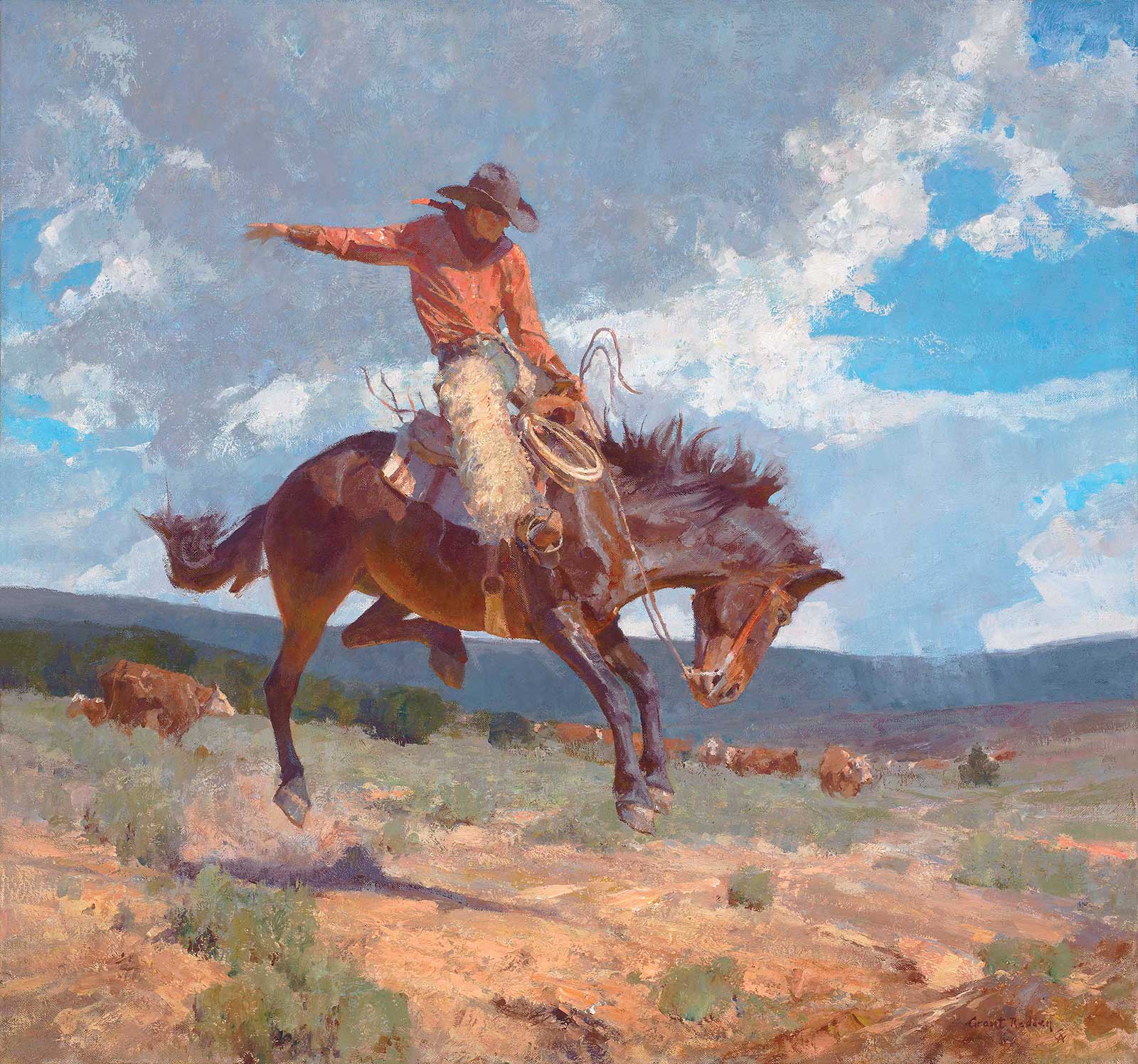 Grant Redden, Chance of Rain, oil, 29 x 31”
Both Duchemin and curator Emily Wilson see glimmers of the CA’s future in the work of Phil Epp, whose contemporary visions of the West—electric colors, dynamic compositions, fresh perspectives—have brought new, and occasionally younger, collectors to the organization and its members. They also point to the work of Mikel Donahue, who routinely turns to present-day imagery to tell new stories about the West. “With artists like Phil and Mikel, we’re not jut seeing images of the Old West, but also ways in which the West has changed since then, and how those changes have affected this place they love,” Wilson says. “I do think it’s important to paint the history scenes, and the CA does have members that do that, but I think this work that incorporates these changes are very important.”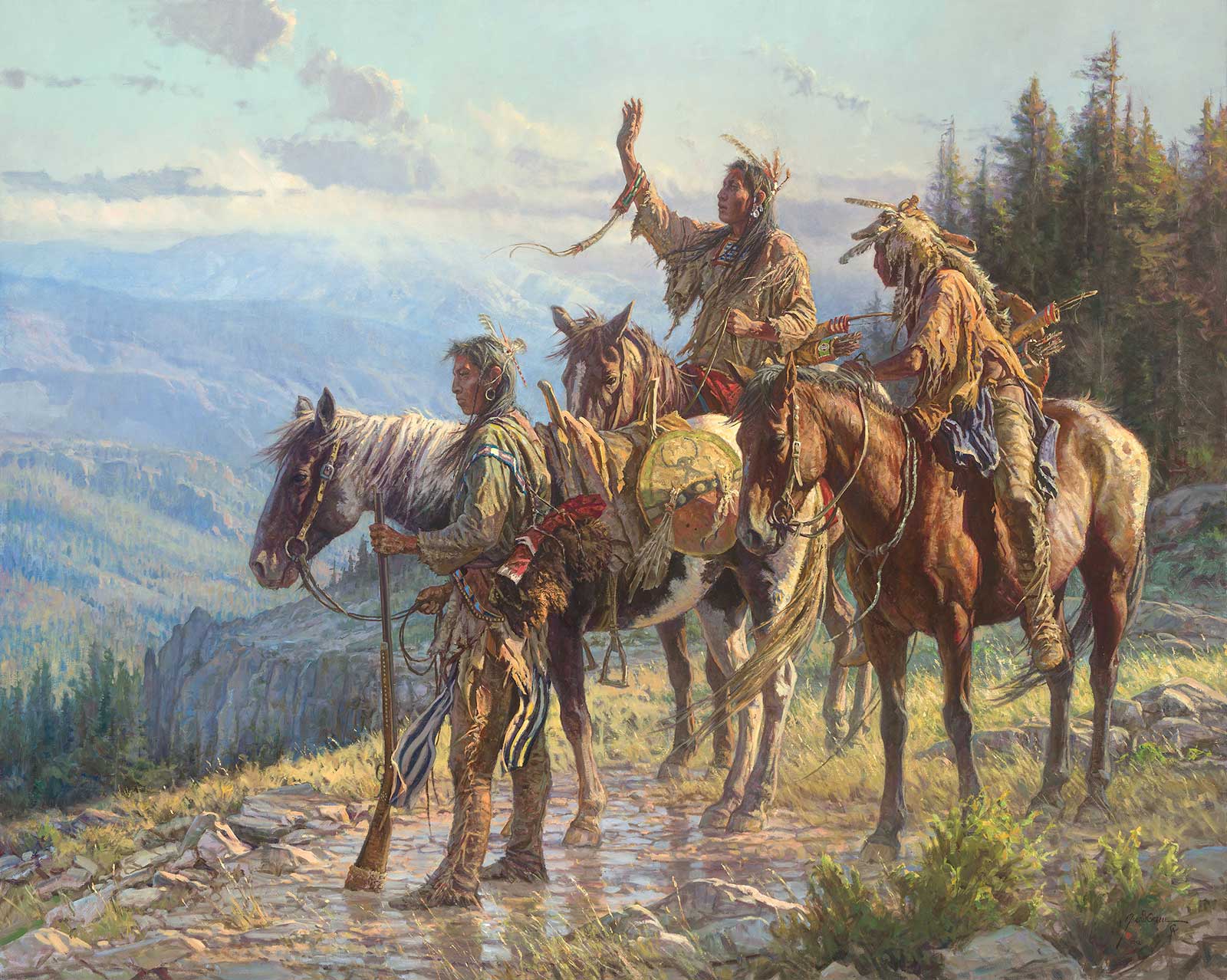 Martin Grelle, Reverence, oil on canvas. Image courtesy of the artist.
Duchemin goes a step further and points out the work of Charles M. Russell, one of the spiritual founders of the CA who routinely painted scenes of Lewis & Clark on the Missouri River, a historical event that occurred before Russell’s lifetime, but he also painted scenes that would have been contemporary to his day. Additionally, Russell painted Native American women and intimate interior scenes, images that no one else of his time were painting. The point being: Russell was often painting the modern world around him and taking risks, and those qualities should, and often are, guiding the CA into a new generation of Western art. “I love this idea of tradition and what it means to maintain a tradition. There is no tradition unless it evolves. Art can’t be static,” Duchemin says. “Art has to evolve and adapt for it to survive.”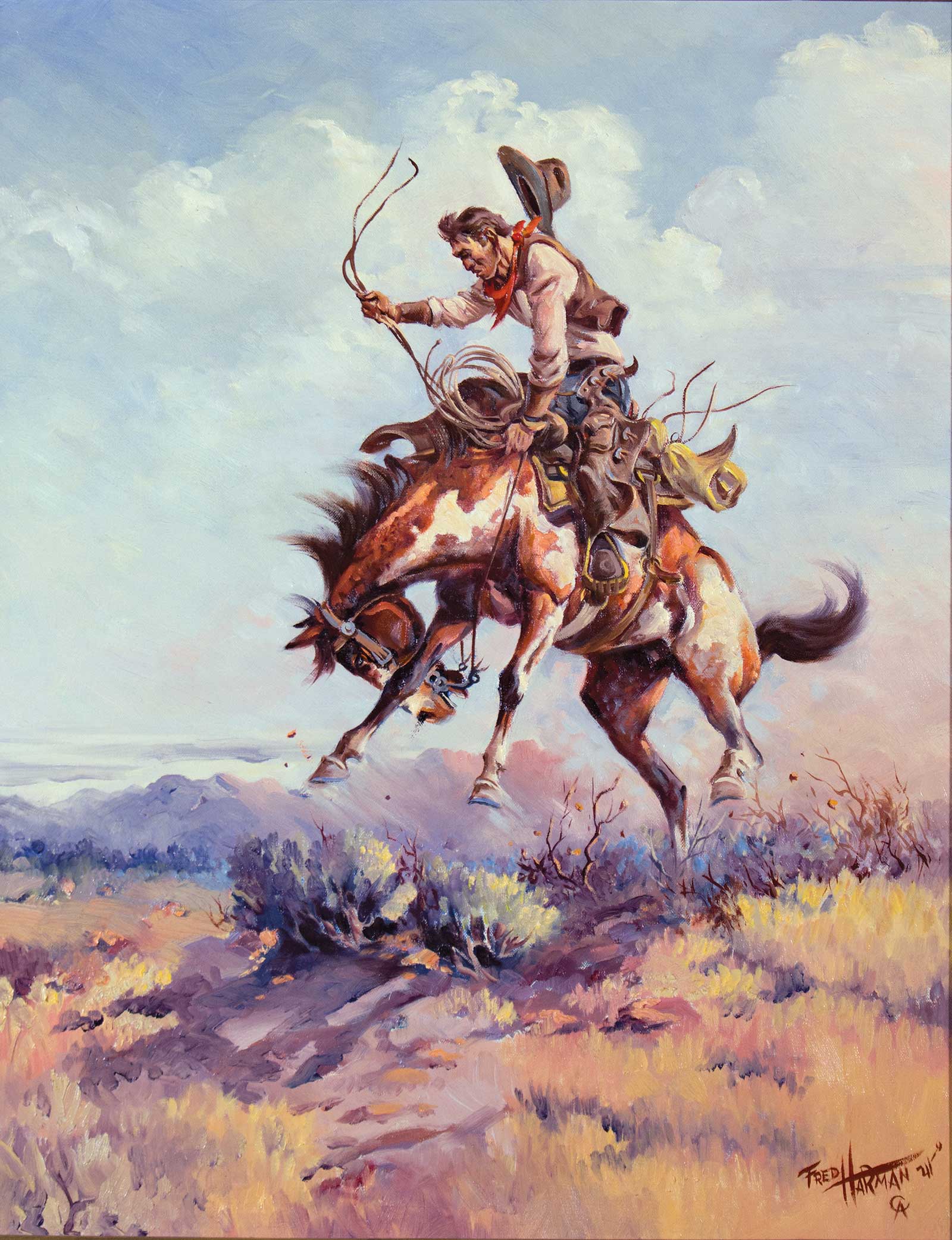 Fred Harman (1902-1982), Riding High. ca. 1970, oil on canvas. Courtesy of the National Cowboy & Western Heritage Museum, gift of the Fred Harman Art Museum, 2020.20.2.
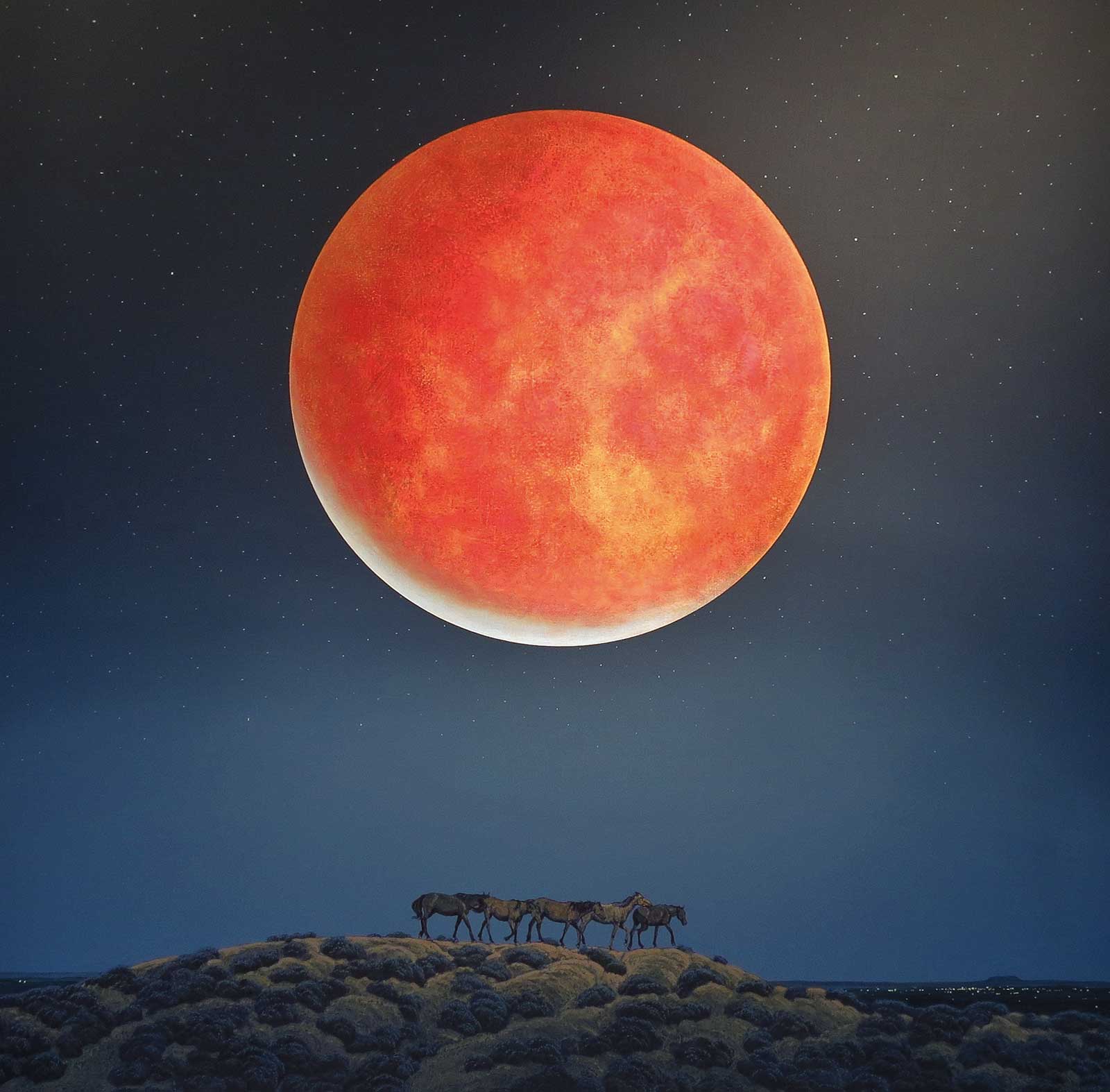 Phil Epp, Red Moon, 2018, acrylic on board, 40 x 40”. Courtesy of Craig Macnab.
It’s this important historical context, and where it might lead CA moving forward, that is at the heart of the Sons of Charlie Russell exhibition, a title borrowed B. Byron Price’s 2015 book of the same name. The show will have more than 60 art objects, including at least one work from every current member, including the group’s two newest members, Brandon Bailey and Jack Sorenson. In addition, the show will feature several objects and half a dozen photographers, including a 1965 image showing CA founders sitting at a bar underneath a poster of the very first CA picture in 1964. In both images, founder and longtime CA advocate Joe Beeler is beaming with a mile-wide smile.
Other artists in the exhibition include Wayne Baize, Bruce Greene, Chad Poppleton, Dustin Payne, C. Michael Dudash, Tyler Crow, Bill Nebeker, Grant Redden, Jason Scull, Teal Blake, Clark Kelley Price, Tom Browning, Oreland Joe, Jim Norton and others. 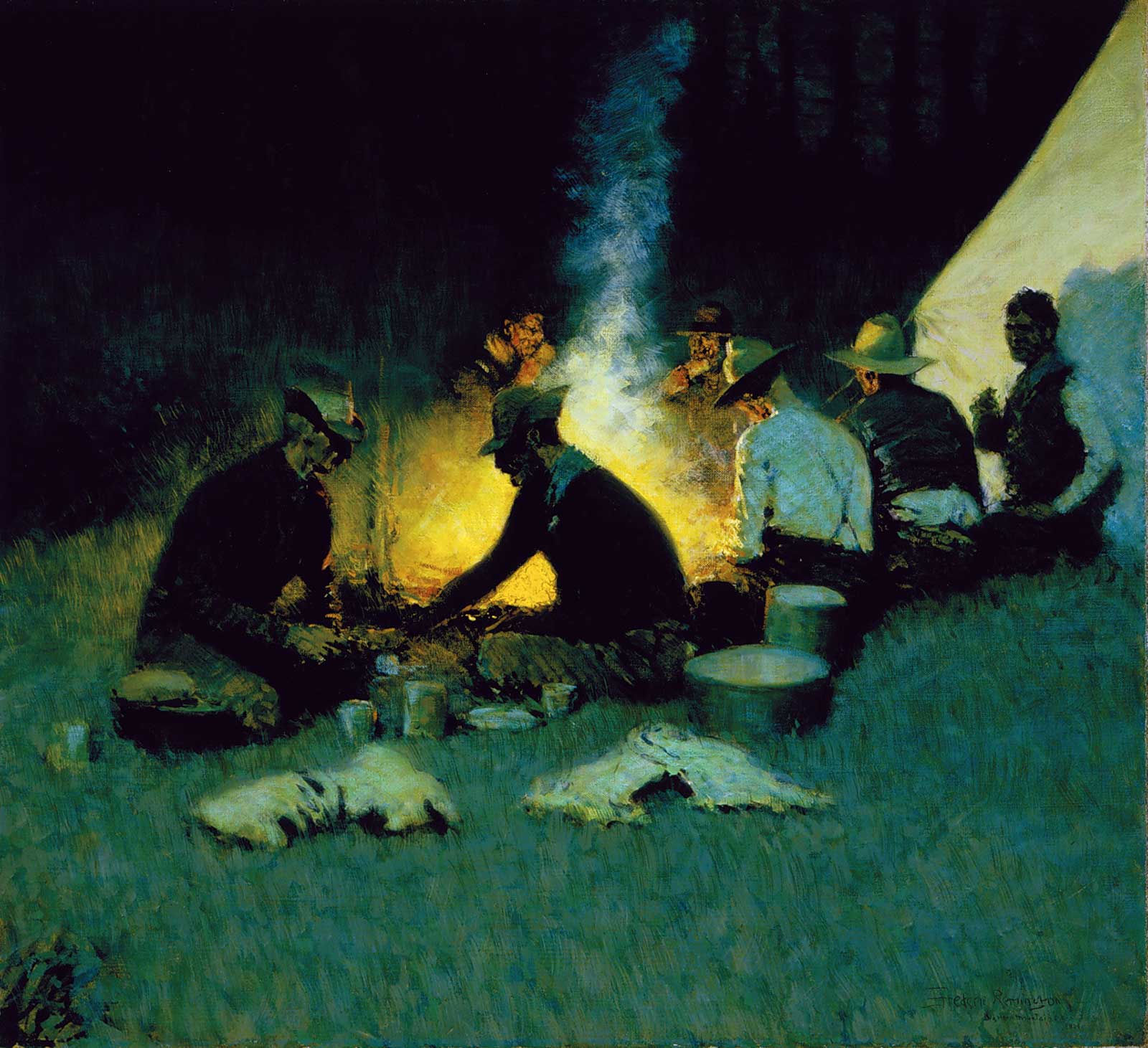 Frederic Remington (1861-1909), Hunter’s Supper, 1909, oil on canvas, 27 x 30”. Courtesy of the National Cowboy & Western Heritage Museum, 1971.15.1
In addition to artwork by members of the group, the museum will be showing works by artists that directly inspired the group. Those works include major pieces from the five big pre-CA artists: Russell, Frederic Remington, Edward Borein, William R. Leigh and Frank Tenney Johnson. These works will help establish the foundation that the group would be built on. While history and historical context will be at the core of the exhibition, Duchemin sees Sons of Charlie Russell as “not a history exhibit, but an art exhibit.” And that will be reflected in the quality of the work and the connections it makes to the art that came before it. —
The Sons of Charlie Russell: The Cowboy Artists of America
May 27-September 5, 2022
Briscoe Western Art Museum, 210 W. Market Street, San Antonio, TX 78205
(210) 299-4499, www.briscoemuseum.org
Powered by Froala Editor