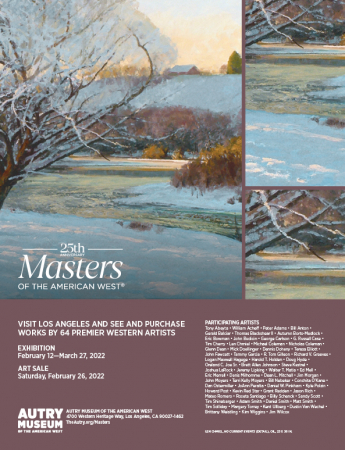
Every year there are roughly a dozen major Western museum exhibitions and sales from coast to coast, and every year that circuit of shows is kicked off in February at the Autry Museum of the American West. It’s fitting that the museum is located in Los Angeles—there aren’t any places further West one can go to see Western art of the highest caliber.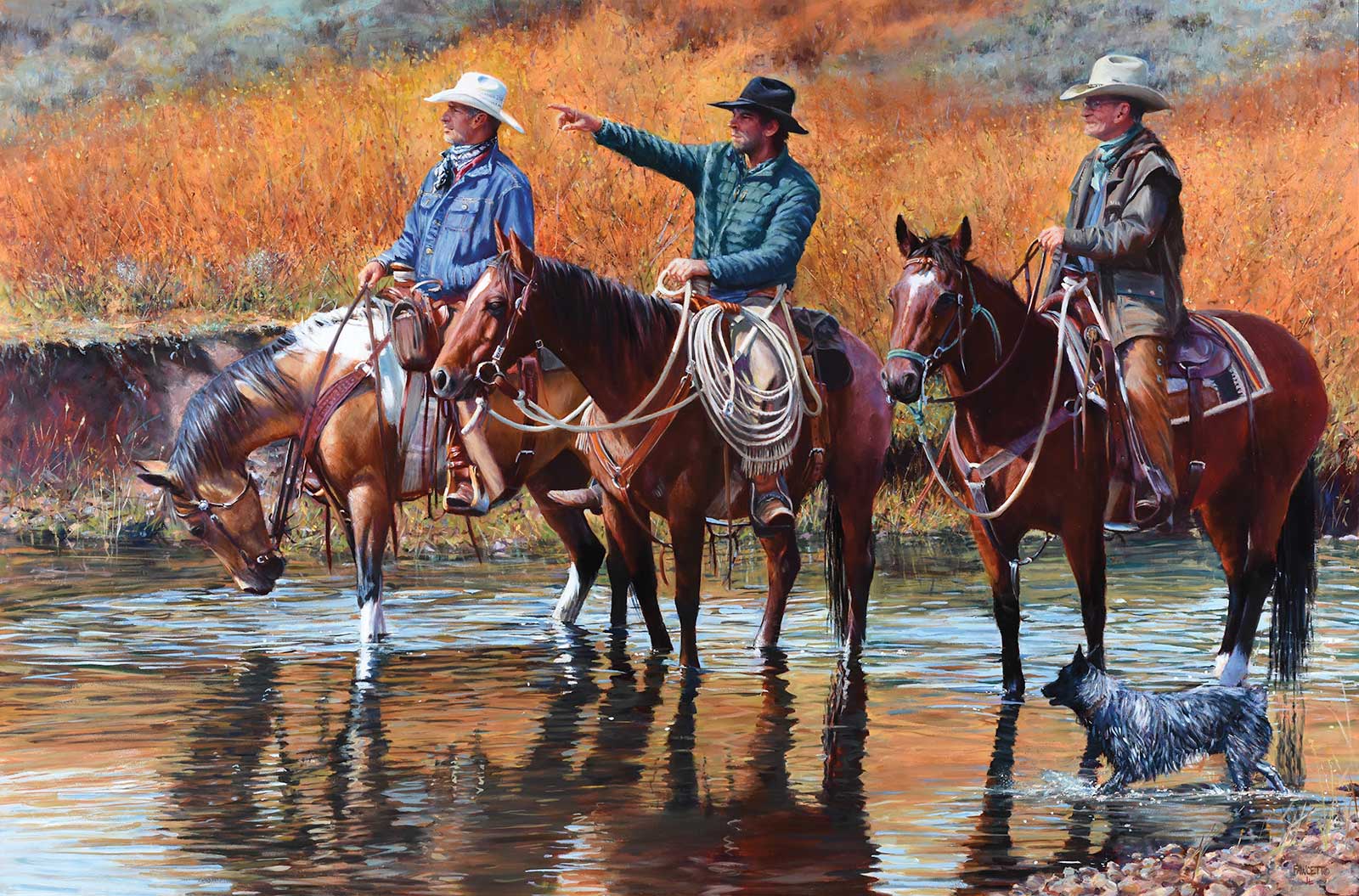 John Fawcett, Spottin’ Strays, oil, 24 x 36”
The Autry’s annual exhibition and sale, the Masters of the American West, returns February 12 with the work of nearly 70 major artists, including many of the top artists working today. The exhibition opens February 12, but the fireworks will take place February 26 when artists and collectors descend on Los Angeles to participate in the sale portion of the show. In addition to main show, returning this year is another miniature sale, with works being priced anywhere from $800 to $8,000. All of the works will be offered via fixed-price, by-draw sales that makes for a fun, albeit tense, evening as collectors migrate from box to box to see where their names have been drawn. 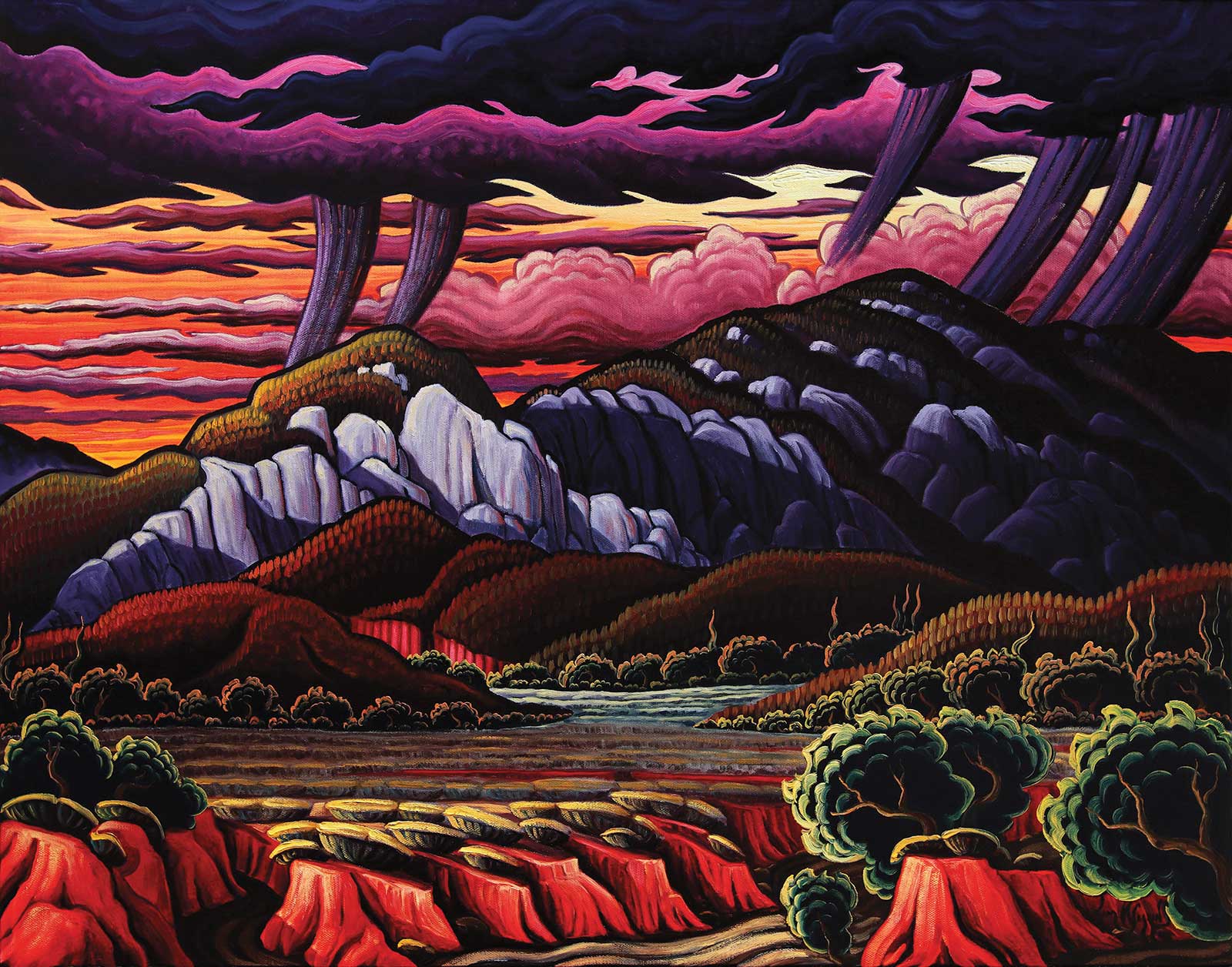 Kim Wiggins, Taos Drama, oil, 22 x 28”
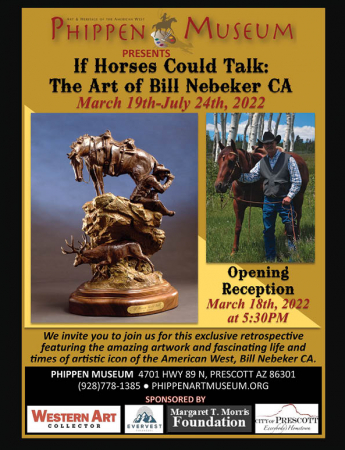
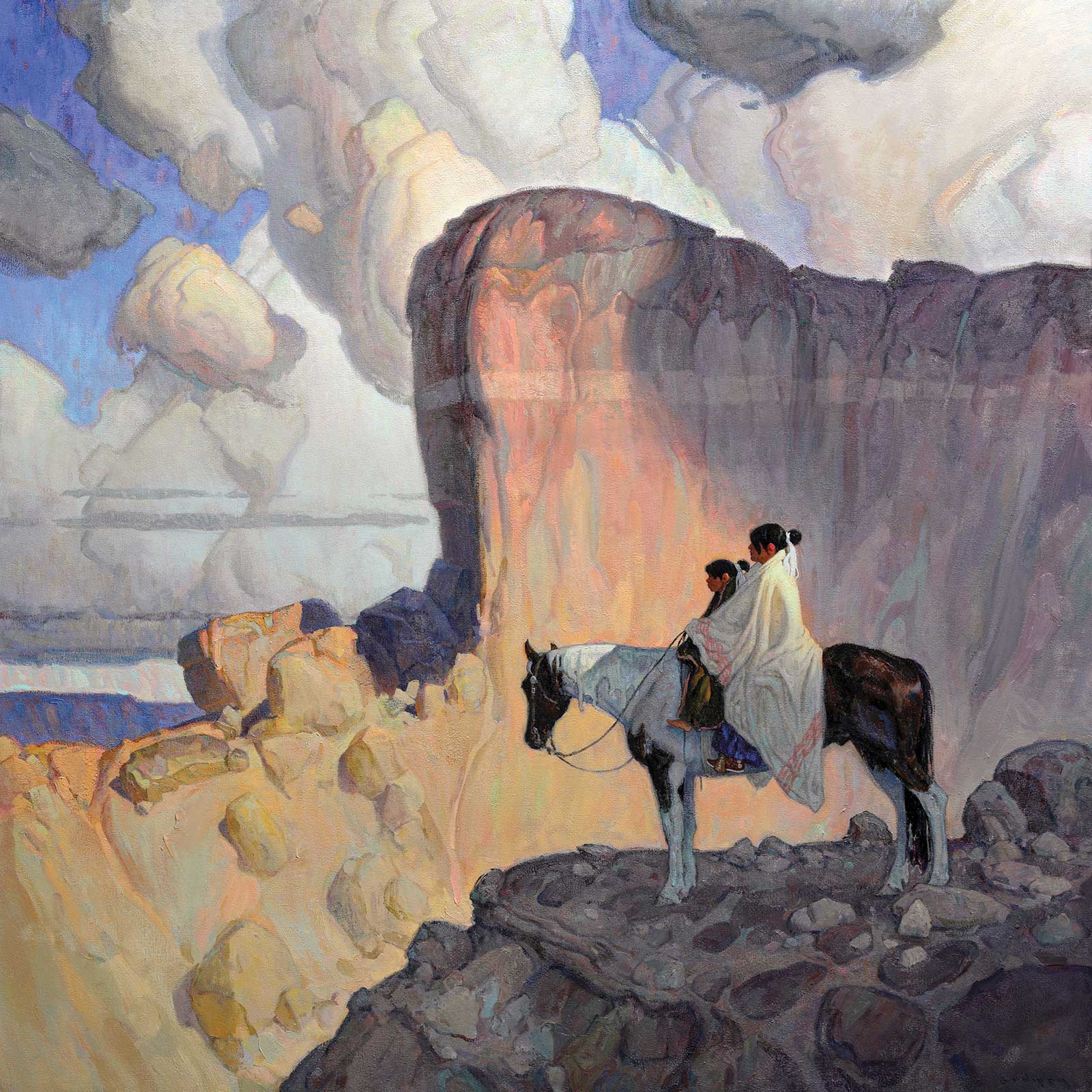 Eric Bowman, This Land is Your Land, oil, 40 x 40”Artists in this year’s show include a who’s who of Western art: Tony Abeyta, William Acheff, Bill Anton, Thomas Blackshear II, George Carlson, G. Russell Case, Len Chmiel, Michael Colemanm, Nicholas Coleman, Glenn Dean, R. Tom Gilleon, Logan Maxwell Hagege, Oreland Joe, Brett Allen Johnson, Jeremy Lipking, Ed Mell, Dean Mitchell, James Morgan, John Moyers, Terri Kelly Moyers, Bill Nebeker, JoAnn Peralta, Kyle Polzin, Howard Post, Grant Redden, Jason Rich, Billy Schenck, Tim Solliday, Dustin Van Wechel, Jim Wilcox and many others.
Teresa Elliott will be showing her bovine painting Golden Calf with a luscious curtain of light that falls delicately against the side of her subject. “The desert offers a special kind of light, especially before nightfall. It’s a dash for the deepest color, where shadows frame the shapes of my subject in raking light before it vanishes,” she says of the work. “This calf is a good example. I paint them as I see them, exchanging a glance that inspires me to fill the canvas with color, light and the operatic atmosphere I strive for.”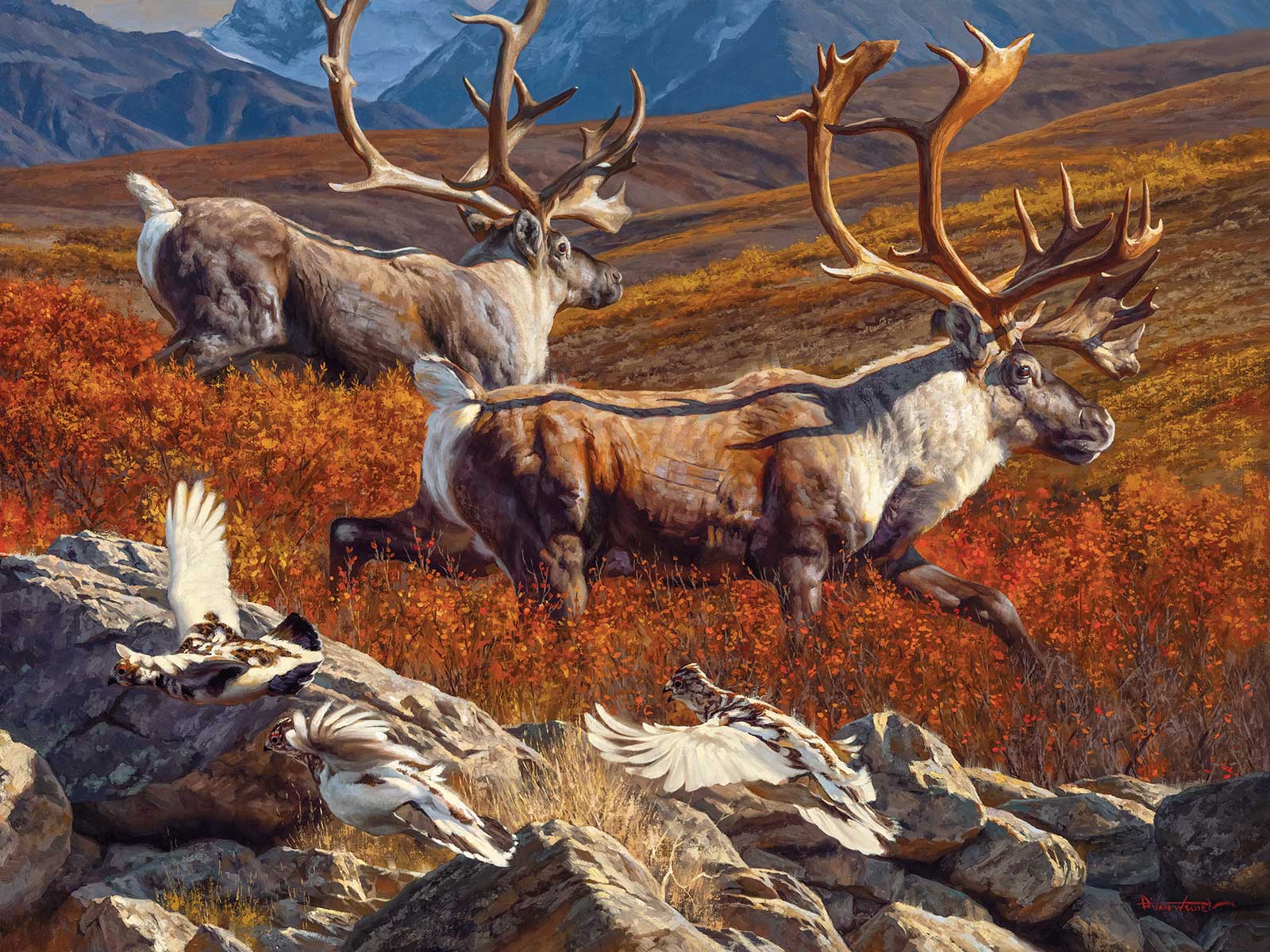 Dustin Van Wechel, CariBOO!, oil on linen, 36 x 48”
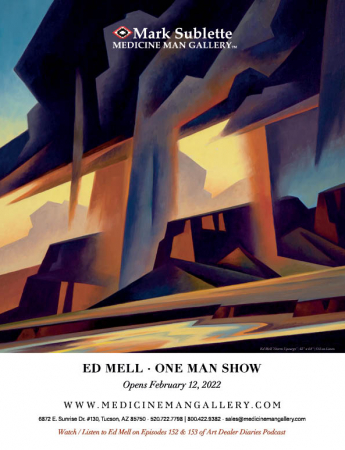
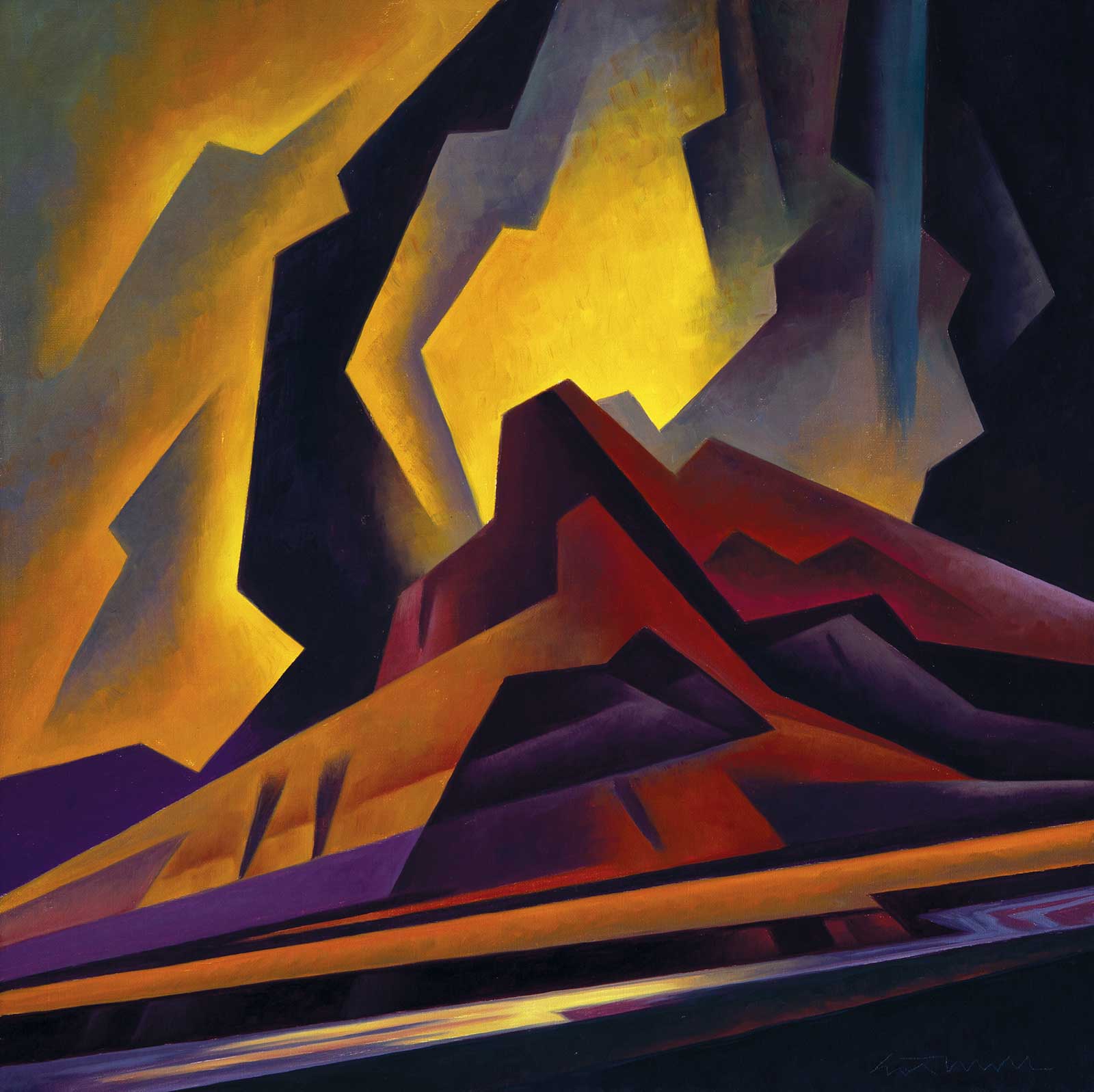 Ed Mell, Tierra Rojo, oil on linen, 20 x 20”
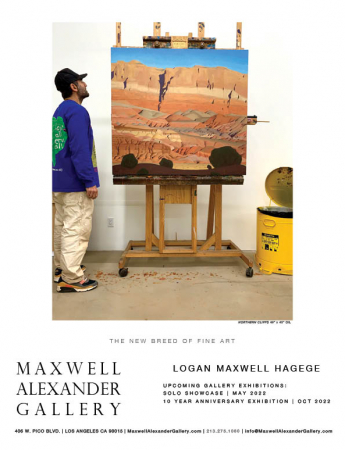
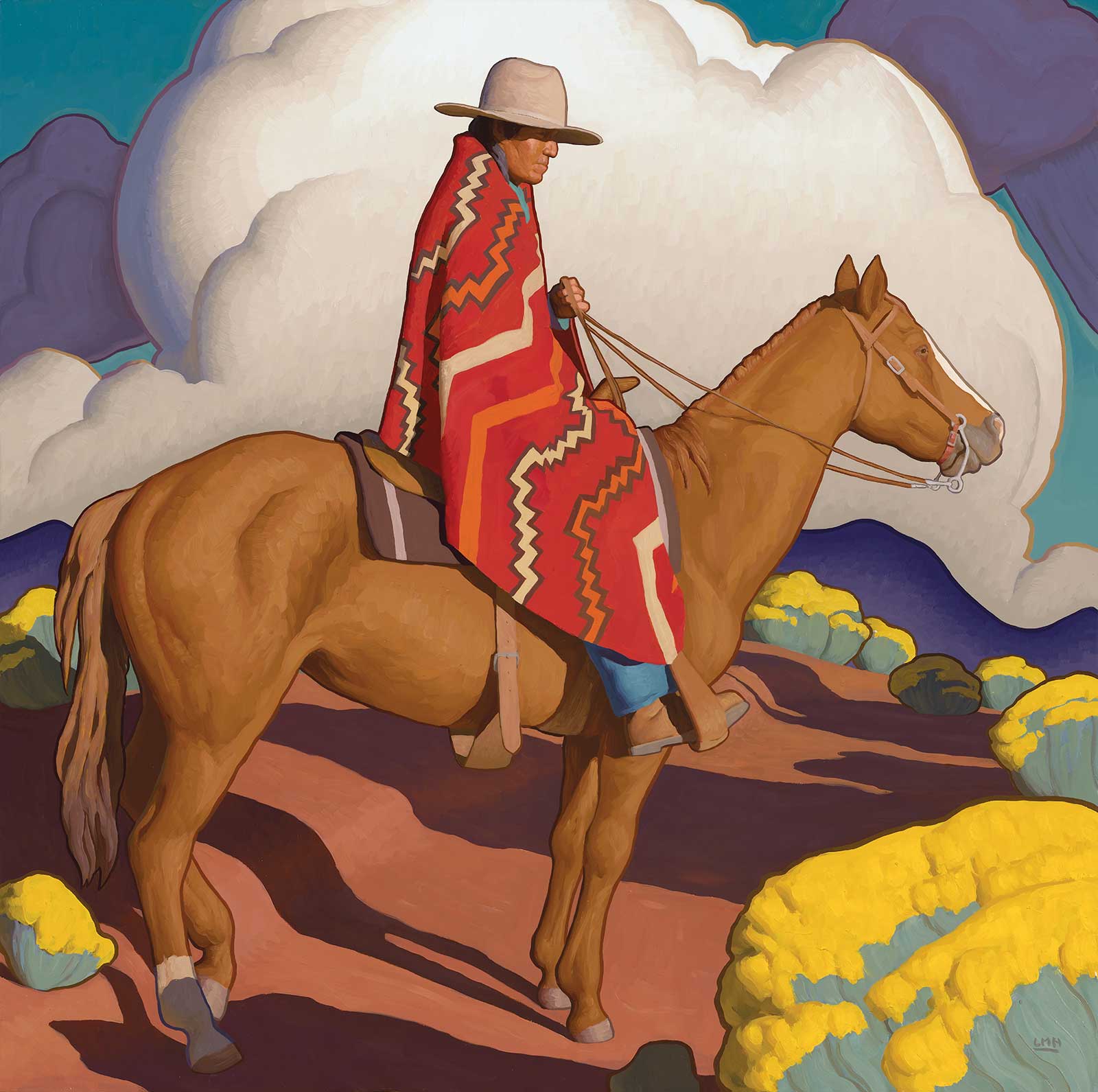 Logan Maxwell Hagege, Comb Ridge Bloom, oil, 30 x 30”
Eric Bowman is returning to the Masters with an array of spectacular new work, one of which is This Land is Your Land, showing two Native American women on horseback as they stand before a huge rock face that frames them against the land and sky. “This painting is about heritage…about ‘owning’ your nativity and claiming the land and the sky as an inheritance that passes from one generation to the next,” he says. “As the young daughter surveys the world she was born into, her mother infuses her imagination with tales of ancestors who populated this harsh and desolate, yet beautiful and mysterious environment for centuries before her. And while she explains that no one person can actually possess the land and sky for their own, her daughter understands they are a temporal, shared experience for each generation to inherit and admire; past, present and future—it is truly a place of Your Land and My Land.”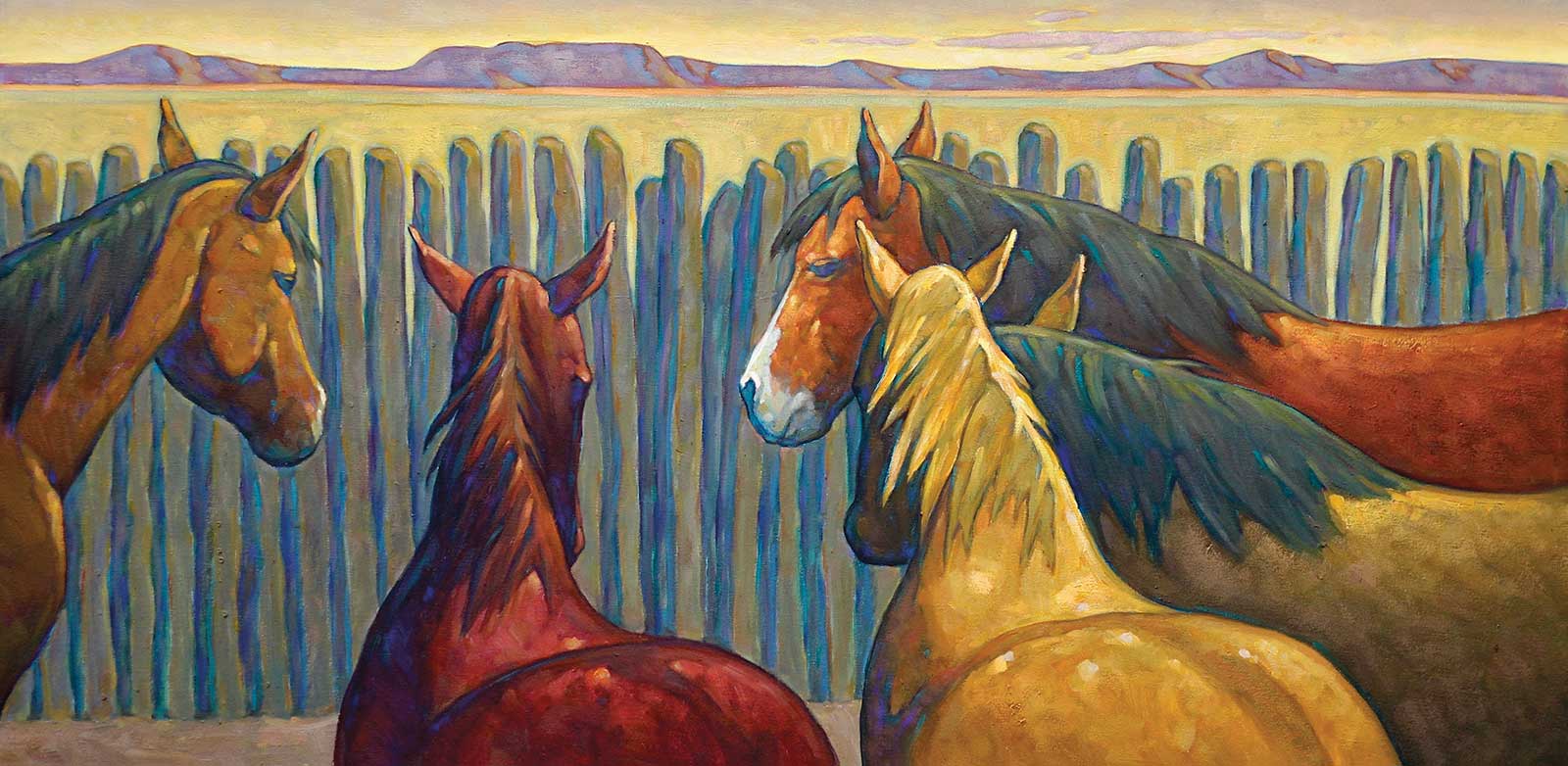
Howard Post, Five of the Best, oil, 24 x 48”
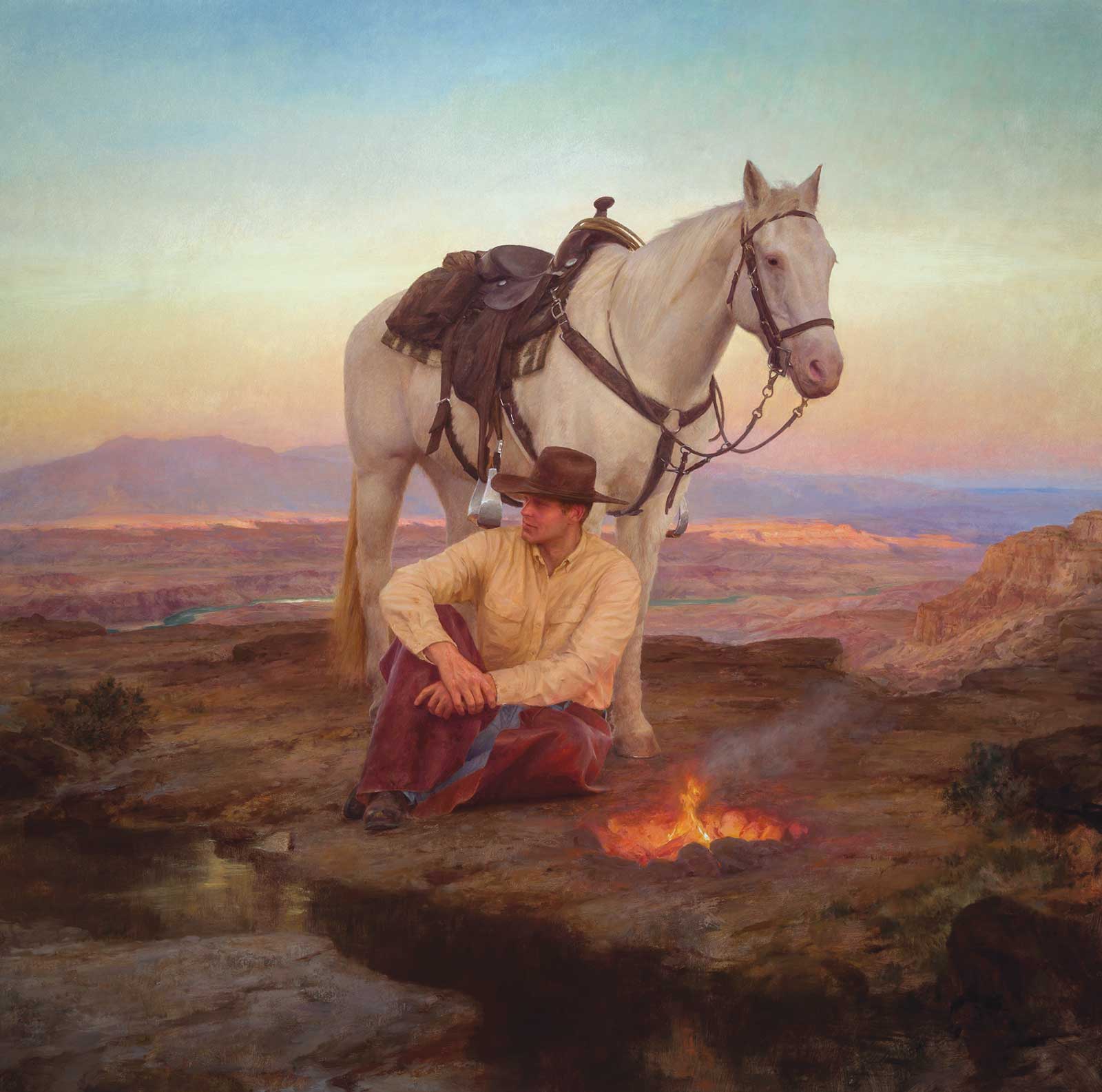 Joshua LaRock, Western Idyll, oil, 40 x 40”
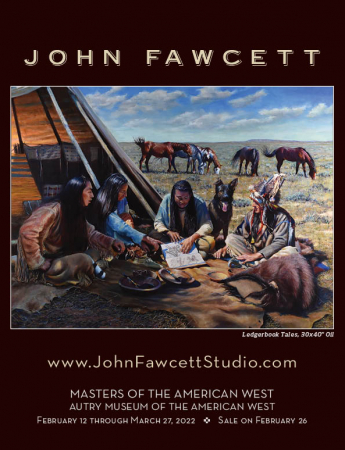
One of the more prominent cowboy painters at the show is John Fawcett, whose works in oil and watercolor have thrilled collectors for many years. One of the works he’s submitting is Spottin’ Strays, which shows three riders in a reflective stream as they look to the horizon in hopes of finding lost cattle. “There is nothing quite like the feeling of being on horseback with friends on a cool September morning in the Colorado high country. Here, three of my friends are riding their favorite horses in Red Creek behind our house in Clark, Colorado, along with Partner (the dog) looking for stray cows and calves,” Fawcett says of the work. “I so appreciate these quiet times riding in beautiful country…the work is ordinary, but the time is extraordinary!”
Kim Wiggins, who has often brought major new pieces to the Masters, will be showing Taos Drama, a modernist landscape with intense light in the sky and unique land forms. “The importance of Taos, New Mexico, and its influence on American art cannot be overstated. By the end of the 19th century, American artists were searching desperately for a place and subject matter that would set their work apart from the European school of art,” Wiggins says. “Two mecca’s emerged in the wake of this search in conjunction with the modernist movement in the United States. By 1920, New York City and Taos were firmly established as polar opposites in what the art world would soon consider pure ‘American art.’ New York epitomized the modern mechanized world through its massive skyscrapers, while Taos represented the untamed, multicultural West. Hidden from modern progress, in type, Taos became an American Garden of Eden.”
Not far from Taos is the Santa Clara Pueblo, home to many of the greatest living American potters working today. Two Santa Clara potters, and sisters, will be showing at this year’s Masters: Autumn Borts-Medlock and Tammy Garcia. 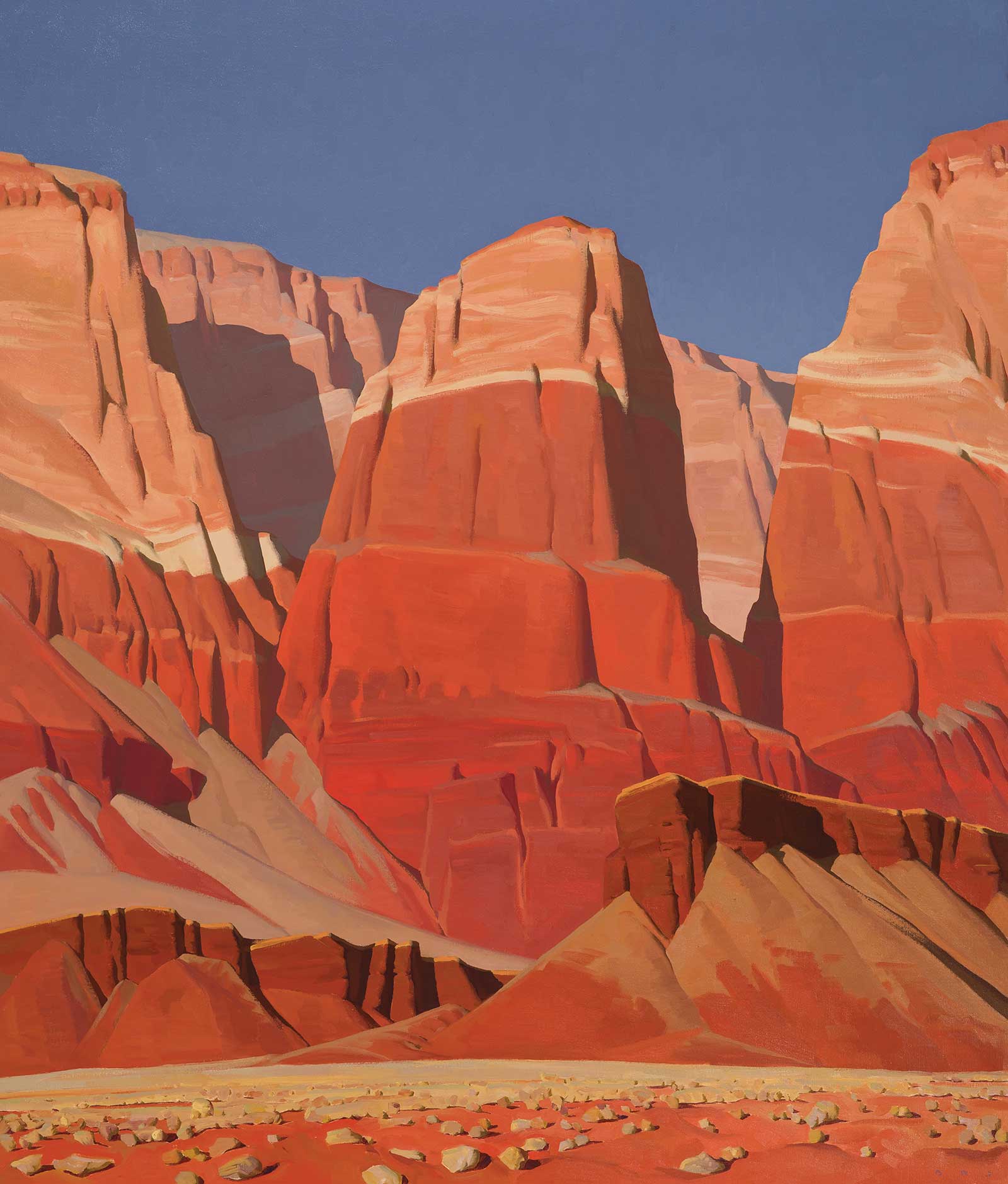 Brett Allen Johnson, Marble Towers, oil, 40 x 34”
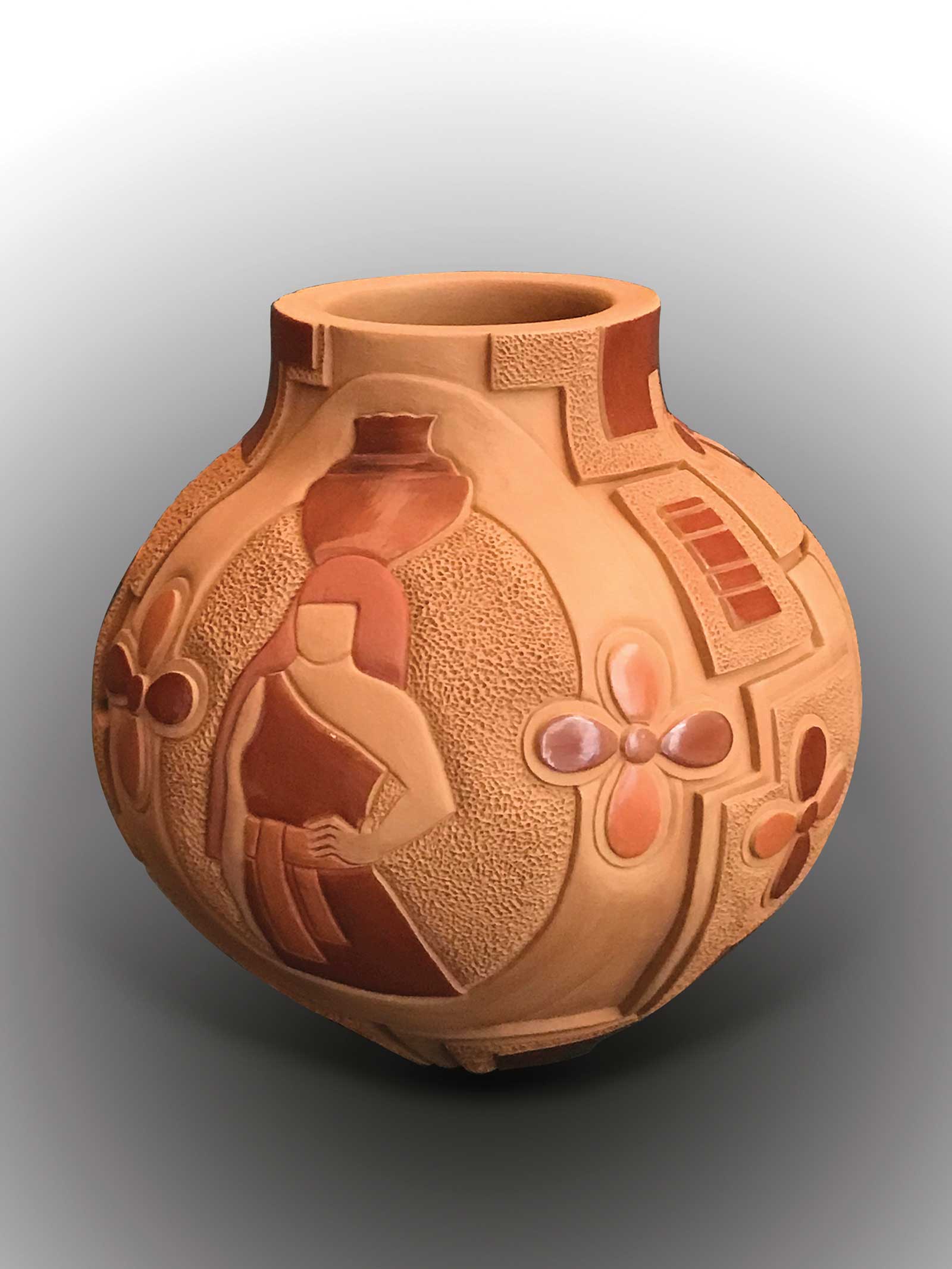 Tammy Garcia, Floral Frame, clay, 6½ x 6½”
Borts-Medlock will be presenting her clay work Black Swan, which has a matte-black polish on it with colorful accents located at several spots, including the swan’s eyes and a turquoise point on its back. “Black Swan is my first original swan effigy. Animals represent specific meanings to my culture. The swan symbolizes beauty, strength and wisdom—a black swan additionally represents heightened personal power,” she says. “I made my first swan as a commissioned clay recreation of a marble sculpture. The process was so interesting.I created Black Swan to explore the creative possibilities of this new form. This piece is almost abstract, its inky blackness offering only a sensuous silhouette. Adorned with coral eyes, a single carved water lily and an inlaid robin’s egg turquoise, this swan is undeniably a creature of life-giving water. Black Swan is my attempt to marry this new form with my artistic sense for balance and symbolism.”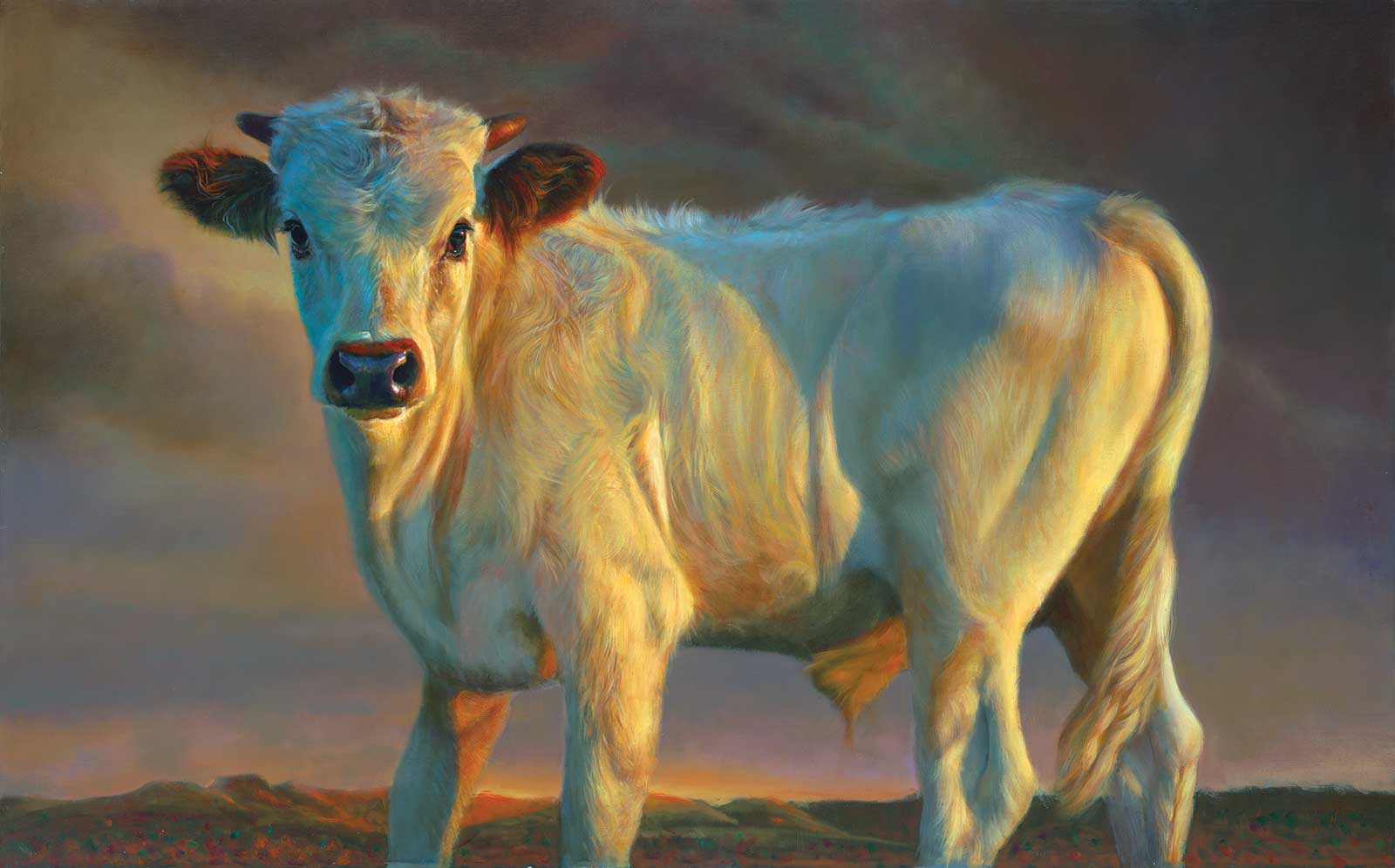 Teresa Elliott, Golden Calf, oil, 30 x 48”
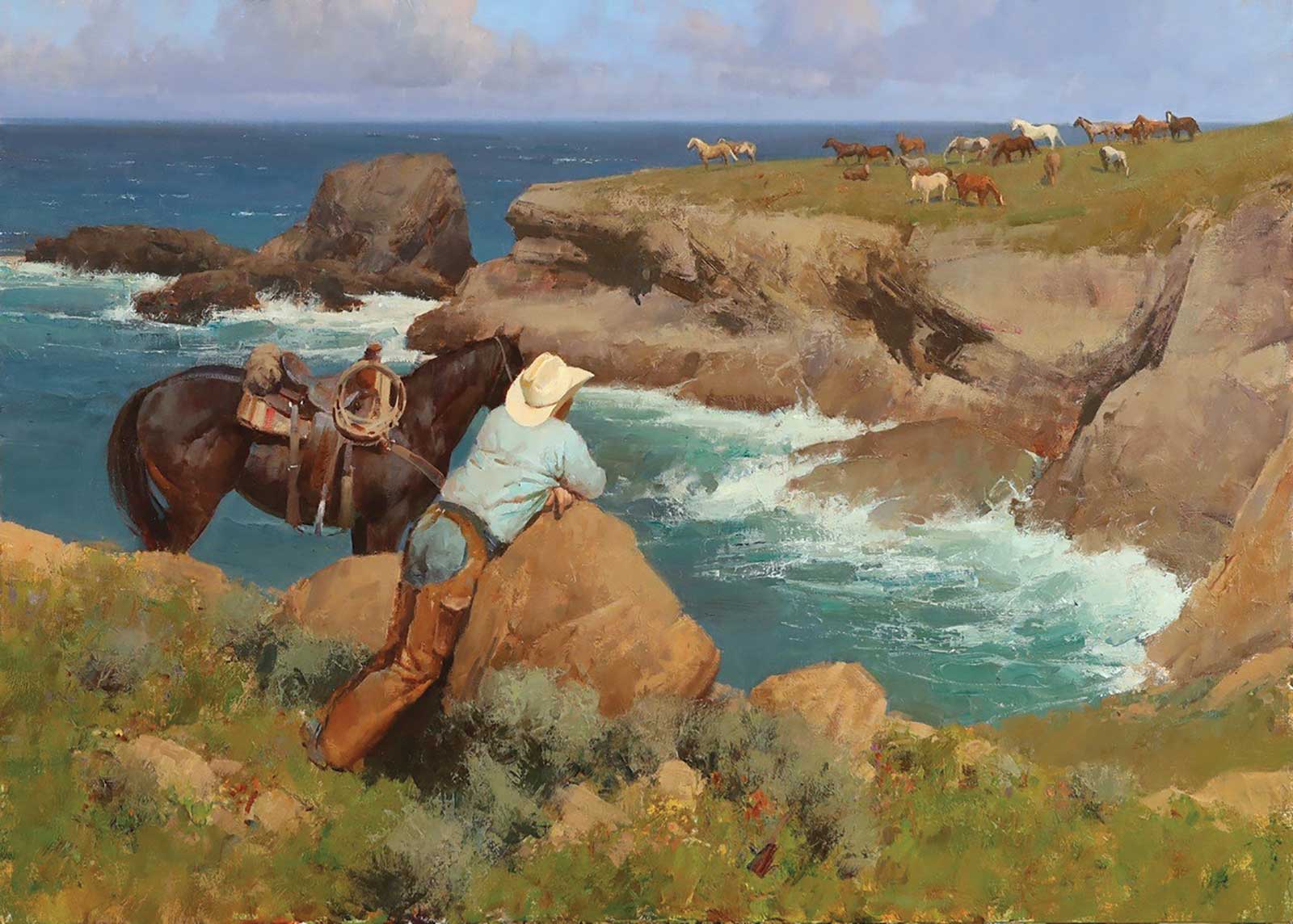 Bill Anton, Taking it All In, oil on linen, 36 x 50”
Garcia will be showing several more traditional vessel forms, but all done in her contemporary style. “I was a teenager whenI started working with clay. Learning that it was the placement of the coil that determines the shape of the vessel, I would make the water jar again and again in various sizes and shapes,” she says. “My grandmothers seemed fearless when it came to making pottery and it would be their confidence that inspired me to have courage to evolve and trust my instincts.I made this piece with them in mind. Carving at various levels and using texture to separate design, there is a Native woman carrying a water jar in the traditional manner with a floral frame surrounding her.”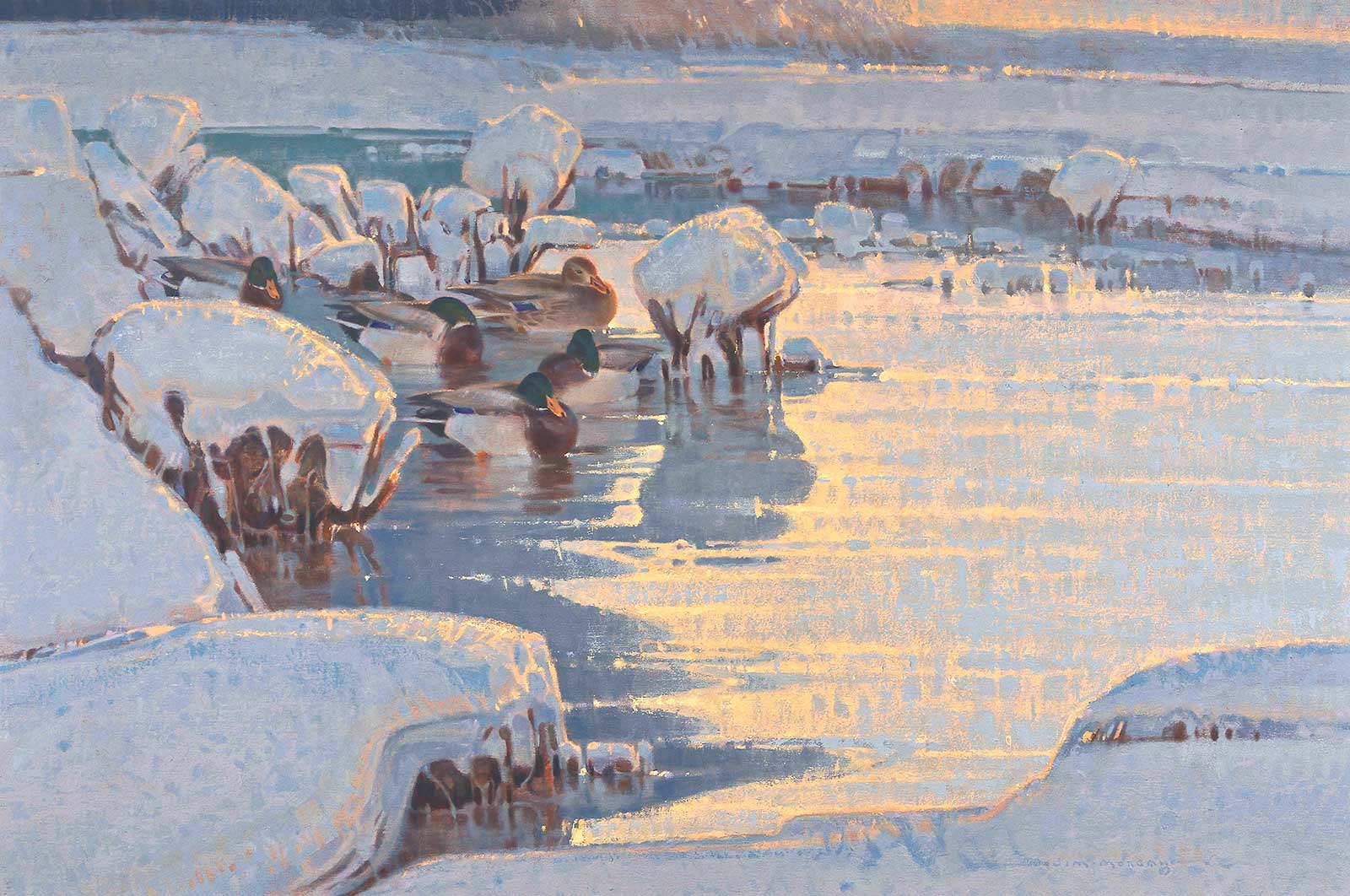 James Morgan, Beaver Pond in Winter, oil on linen, 24 x 36”
The sale will be held on February 26, but the entire exhibition will remain on view thought March 27, during which any unsold works will be available to purchase. —
Masters of the American West
February 12-March 27, 2022; art sale, Feb. 26
Autry Museum of the American West, 4700 Western Heritage Way, Los Angeles, CA 90027
(323) 667-2000, masters.theautry.org
Powered by Froala Editor