In his book The Life of Maynard Dixon, Donald J. Hagerty wrote, “By the middle 1920s, Dixon had developed a flatter surface treatment and bolder composition in his painting, which included ‘space division,’ an increased concern for compositional and schematic arrangements, with striking light and dark earth-tone patterns. A distinctive vocabulary, an underlying geometric feeling, even cubist-realism suggesting formal abstraction emerged in his painting. He recast nature, stripping away superstructure in his canvases, searching for an underlying aesthetic reality, the essential rhythms, and structure.”
Dixon (1875-1946) wrote, “Be sensitive in perception, circumspect in approach, clear in color, definite in form—and remember, it is not the last stroke but every stroke that counts.”
Dixon’s approach to painting the landscape and people of the West has influenced generations of artists. Even in simple pen-and-ink drawings like Looking for Tracks, in which the angular forms of hills, rocks and buttes are almost palpable.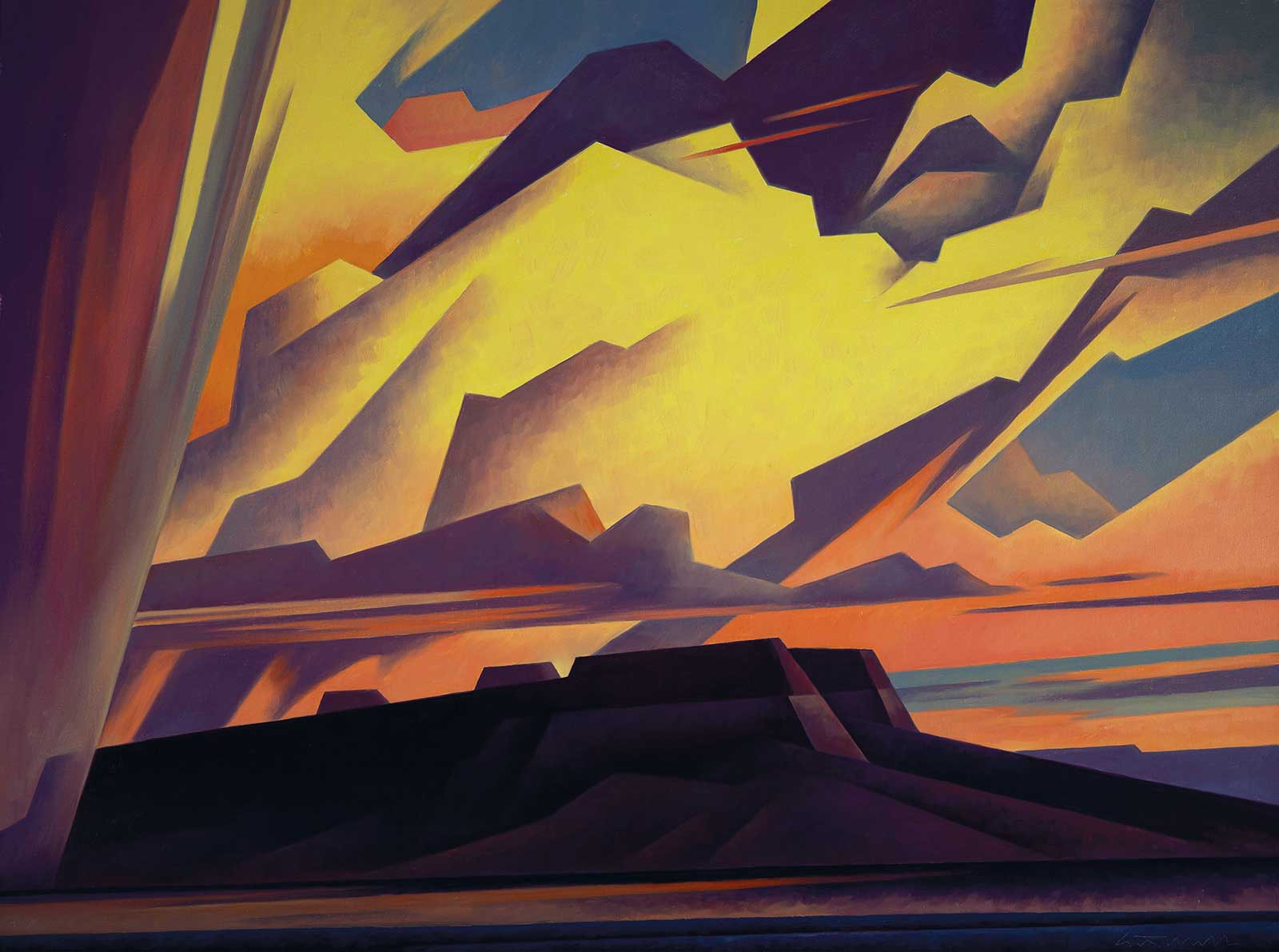 Ed Mell Gallery, Soft Summer Sundown, oil on linen, 30 x 40”, by Ed Mell.
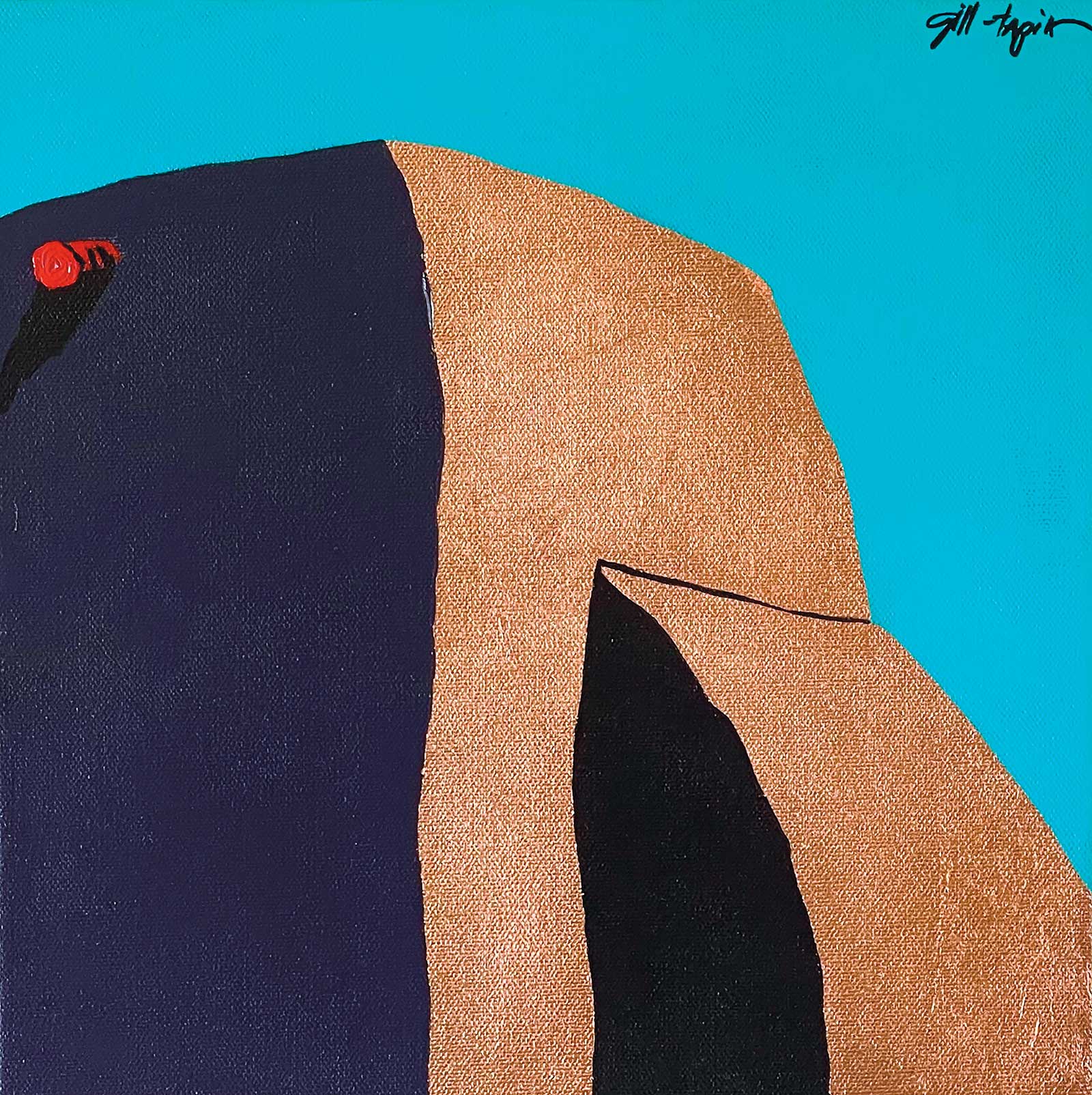 Manitou Galleries, Turquoise Taos, acrylic and copper leaf on canvas, 12 x 12”, by Alvin Gill-Tapia.
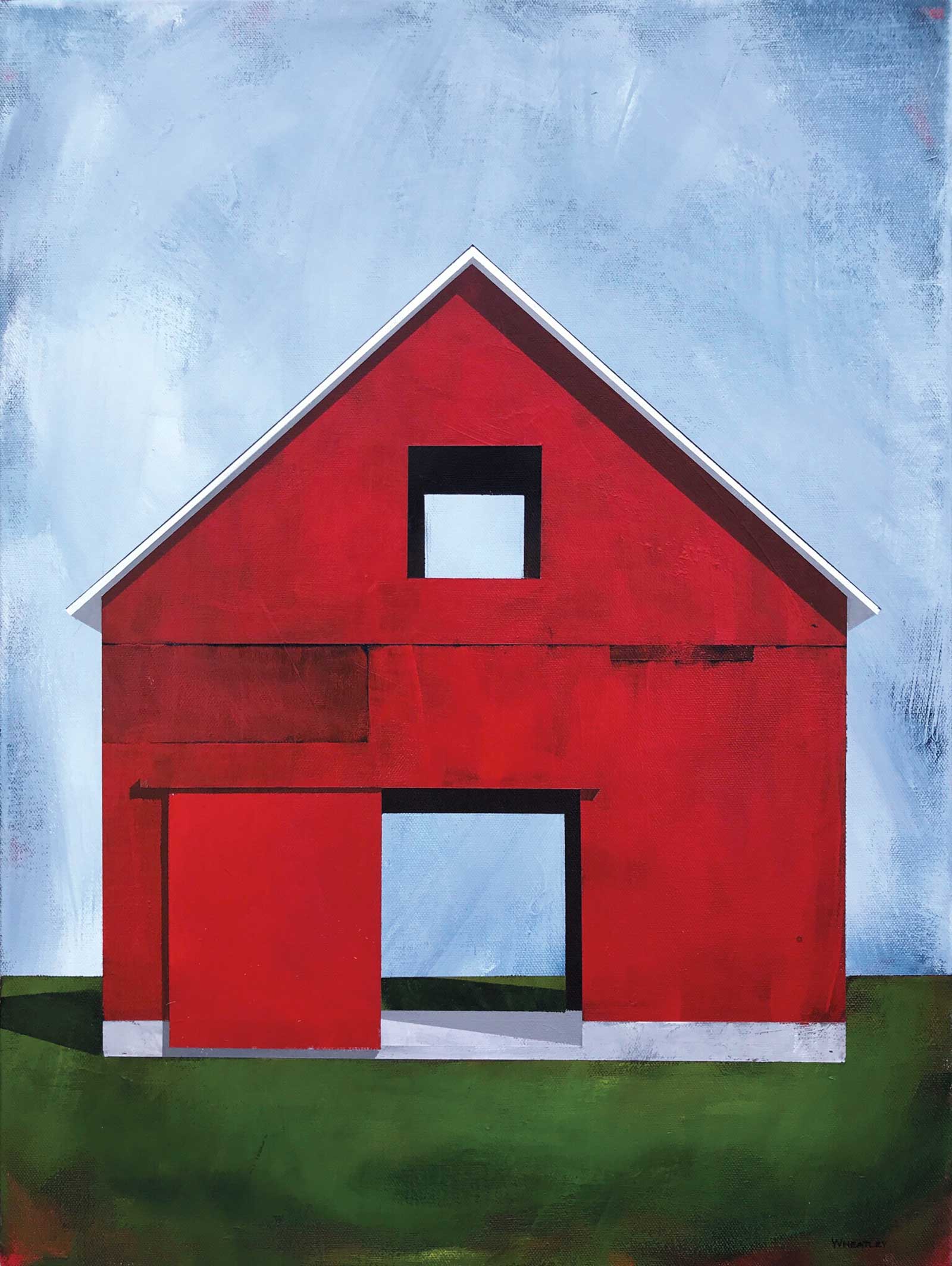 Abend Gallery, Summer Air, oil, 48 x 36”, by Justin Wheatley.
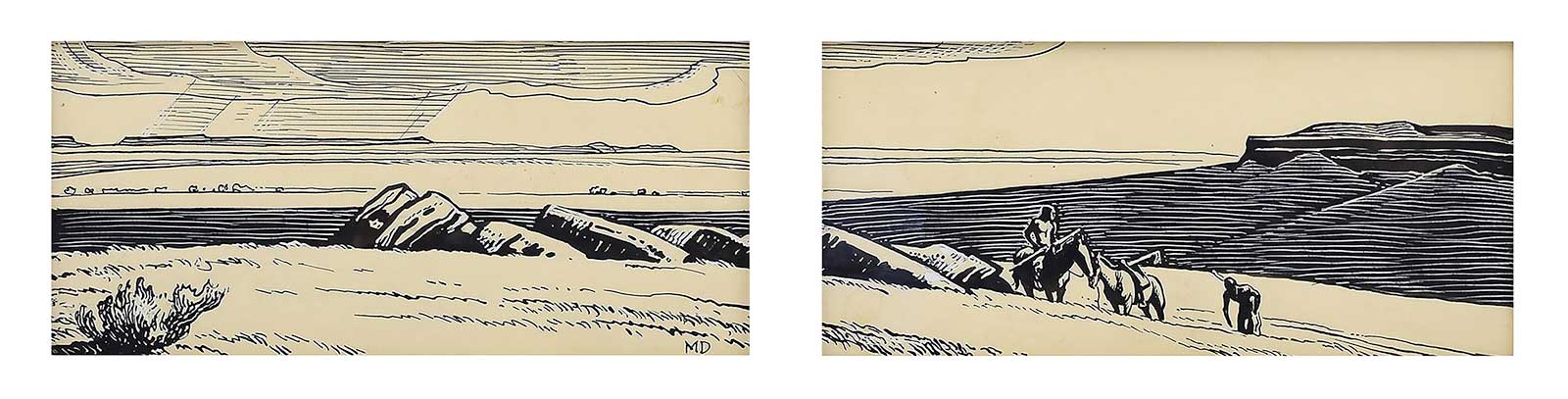 Mark Sublette Medicine Man Gallery, Looking for Tracks (Illustration for Francis Parkman’s The Oregon Trail: Sketches of Prairie and Rocky-Mountain Life), ink on paper, 4¼ x 8½” each, by Maynard Dixon (1875-1946).
Justin Wheatley, a native of Utah, often paints the angular structures that dot the Western landscape, indispensable to the development and continued growth of farming. In Summer Air, a barn’s doors are open to “air” it out, whereas it was built to be tight and secure, protecting hay, livestock and machinery. Despite its apparent solidity, its sharp angles will eventually begin to sag and its materials will return to the earth.
Alvin Gill-Tapia grew up in Northern New Mexico, traveled the world, and returned to paint its time-honored structures. Turquoise Taos depicts the historic San Francisco de Asís Mission Church in Taos in the contemporary materials of acrylic and copper leaf. The church’s soft lines become softer over time as fresh layers of adobe mud and straw are applied each year by members of the community to refresh its surface. Gill-Tapia comments, “These buildings, many of them Mission Churches, exert a tremendous influence and power over the communities which survive here. I try to reflect that power in the monumentality of my compositions, and the force and brilliance of my use of color.”
Ed Mell comments that Maynard Dixon “deals with the dynamic design of nature.” Mell has taken that concept and expanded it to create dynamic images that seem to embody the energy of nature itself. He paints in two distinct styles, one more realistic and one abstracted and angular as in his recent painting, Soft Summer Sundown. He admits his abstract works sometimes begin to “invent themselves” as he paints strongly linear, angular and colorful interpretations of the landscape.
The cultured and storied life of the West is marked by hundreds of years of history. But when artists living today take those stories, find inspiration in them and gain energy from them, something incredible can happen. The Western way of life can blossom into phenomenal works of contemporary art that both capture its traditional themes, as well as exude a sense of vibrant modernity in which boundaries are continuously pushed. 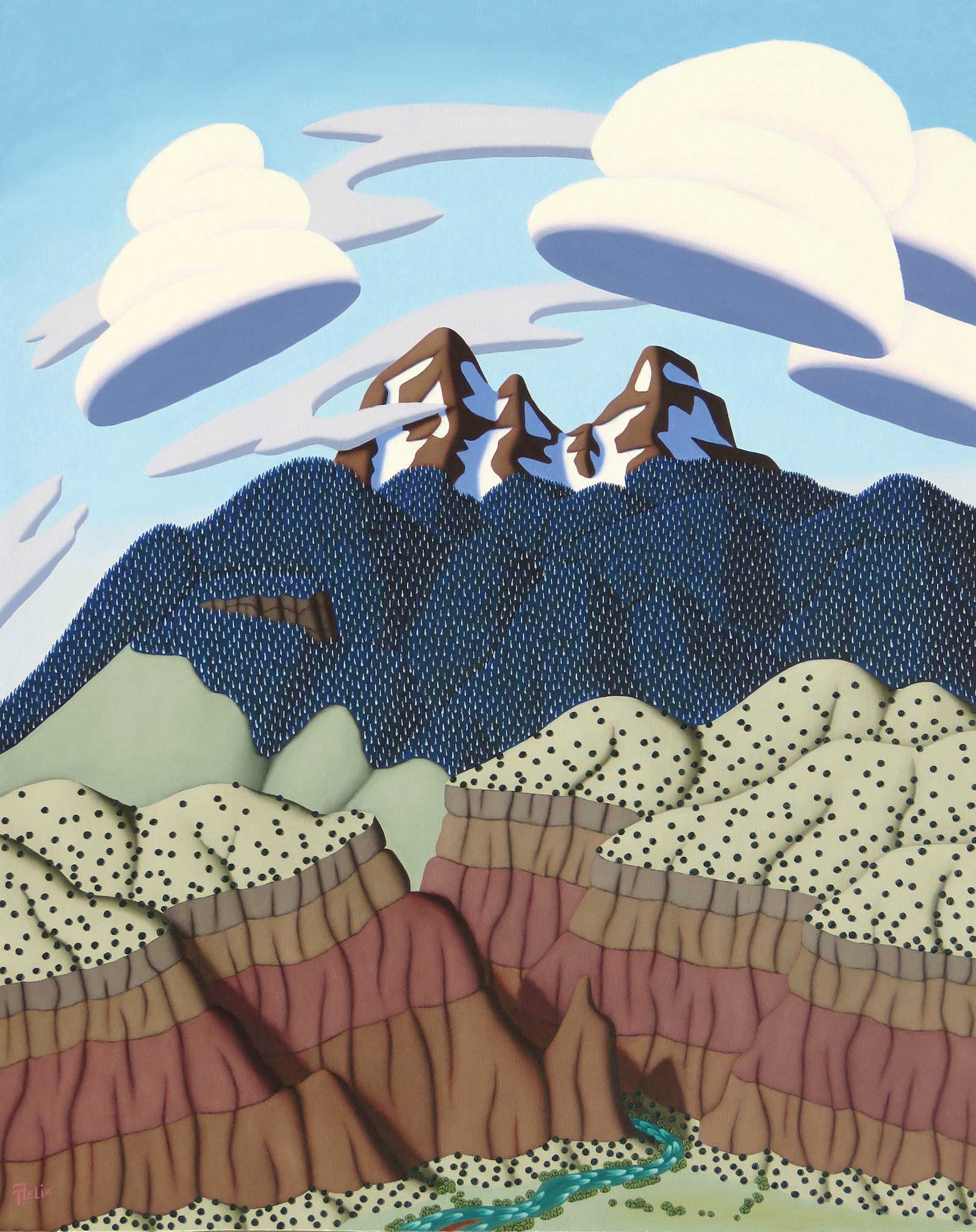 Manitou Galleries, Entrance to the Mountains, oil on panel, 30 x 24”, by Tracy Felix.
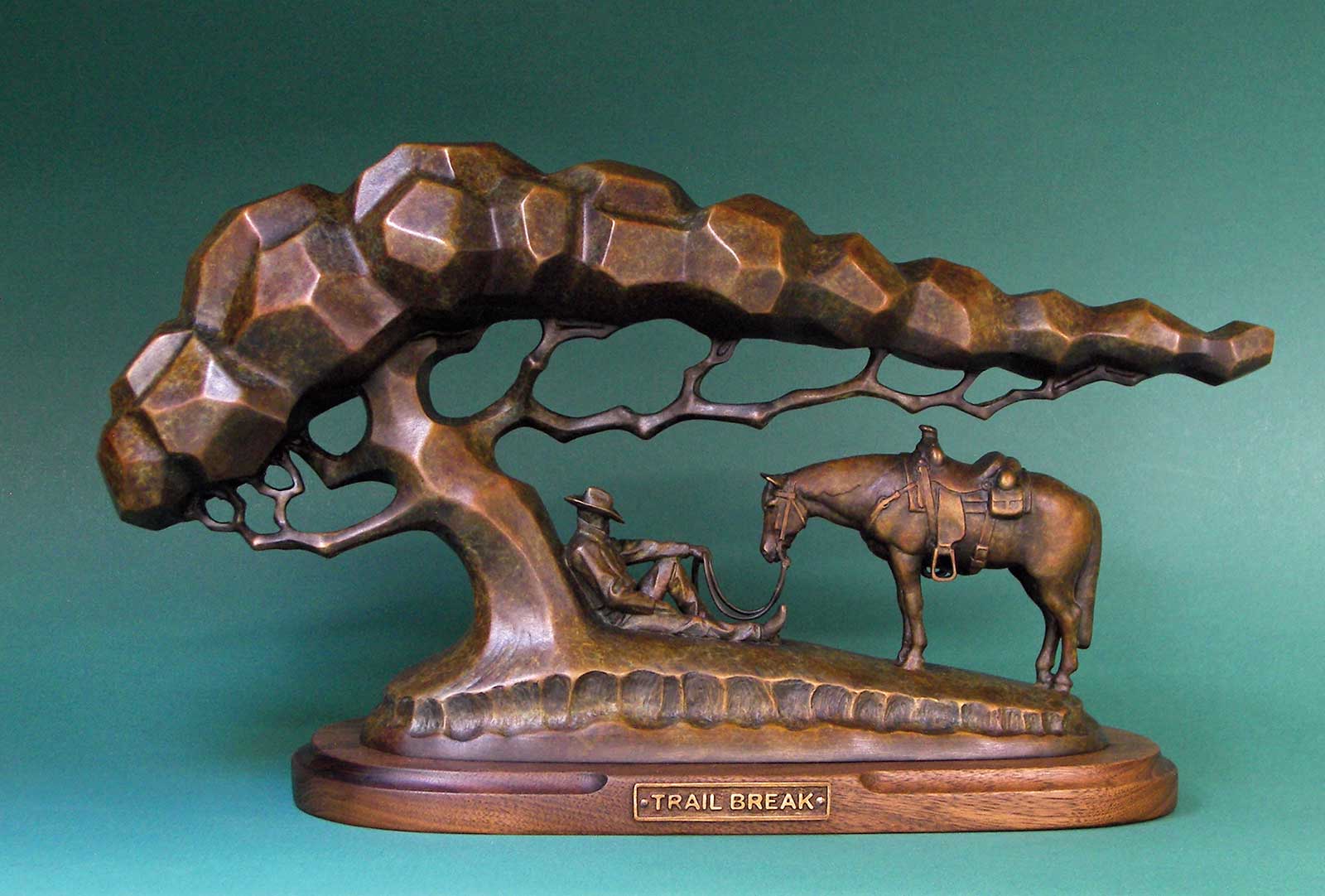 Manitou Galleries, Trail Break Maquette, bronze, ed. of 35, 15½ x 8¼”, by Rick Terry.
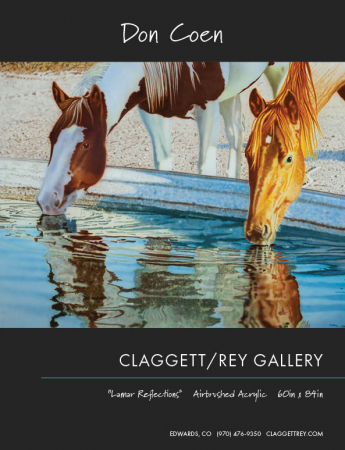
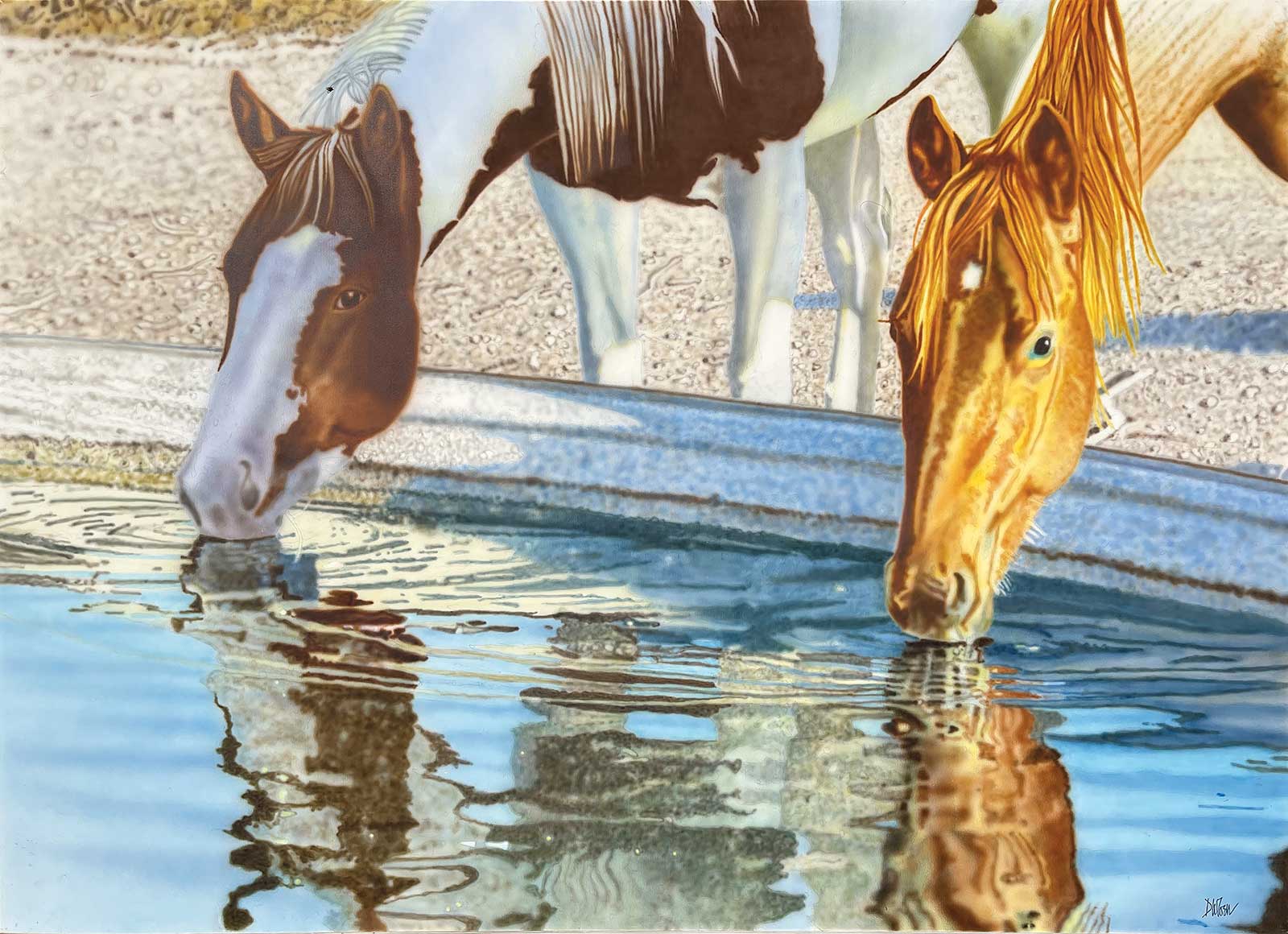 Claggett/Rey Gallery, Lamar Reflections, acrylic, 60 x 84”, by Don Coen.
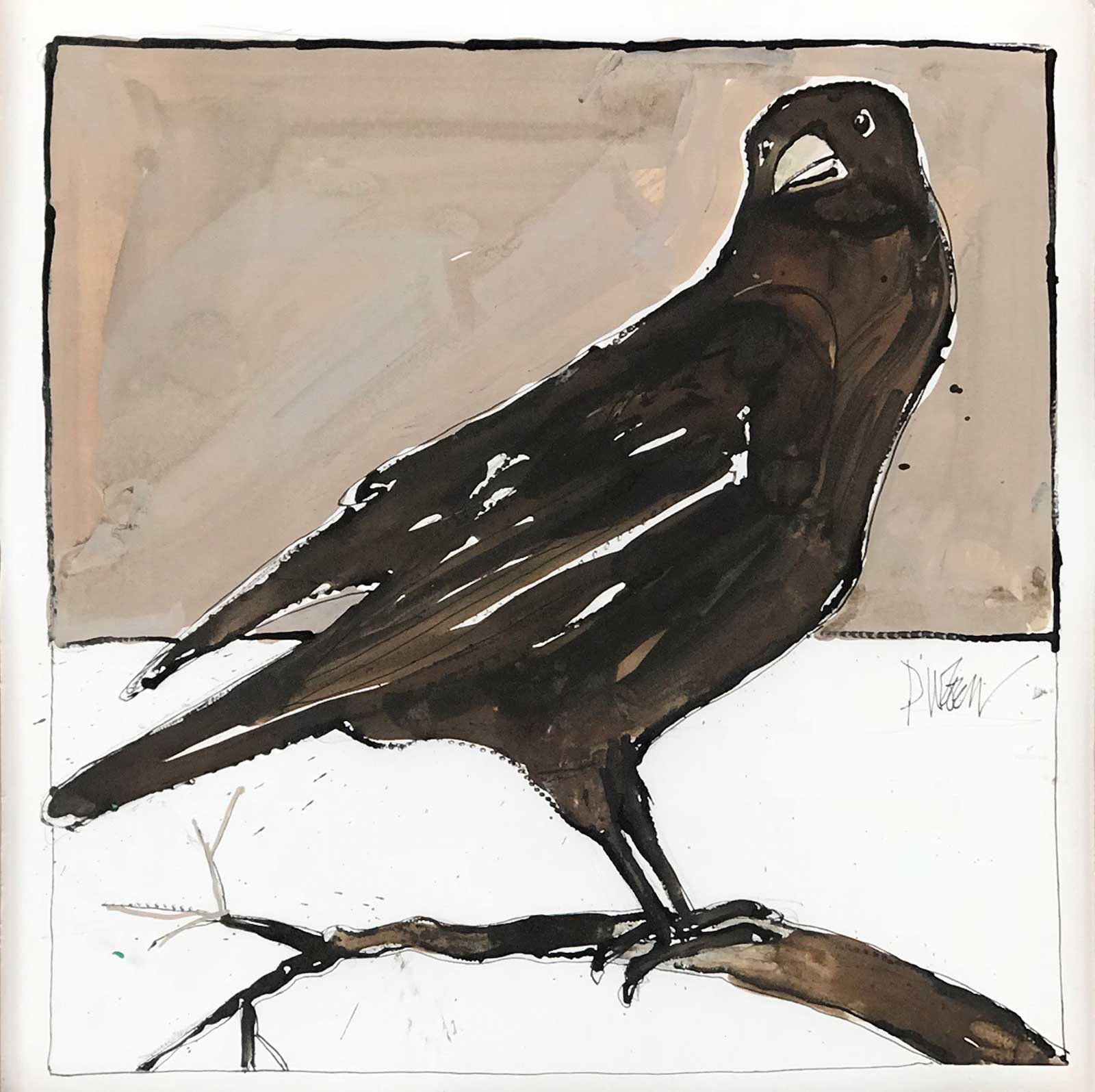 Claggett/Rey Gallery, Crow, dead stick ink drawing, 16 x 16”, by Don Coen.
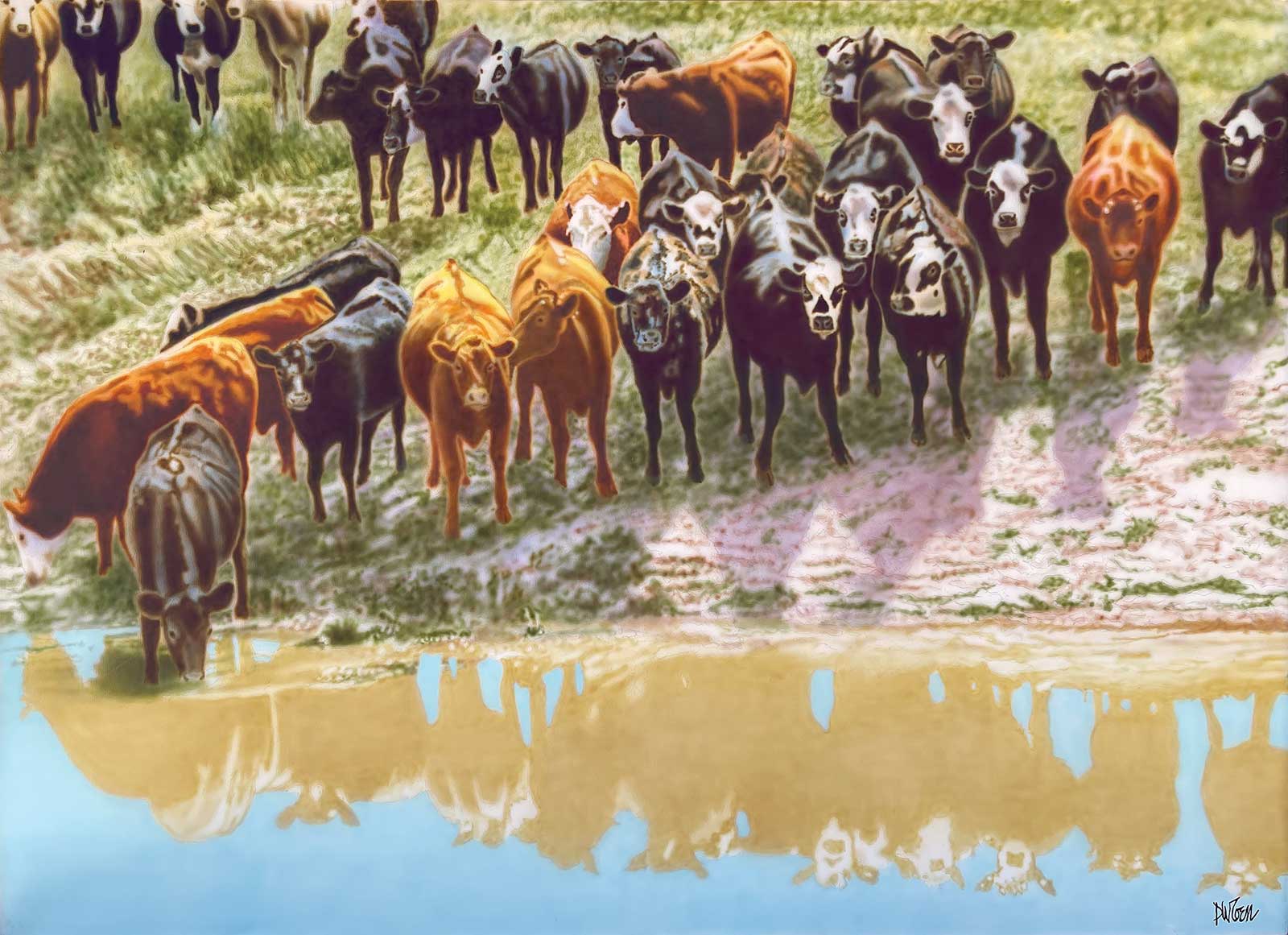 Claggett/Rey Gallery, Reflections East of Limon, acrylic, 60 x 84”, by Don Coen.
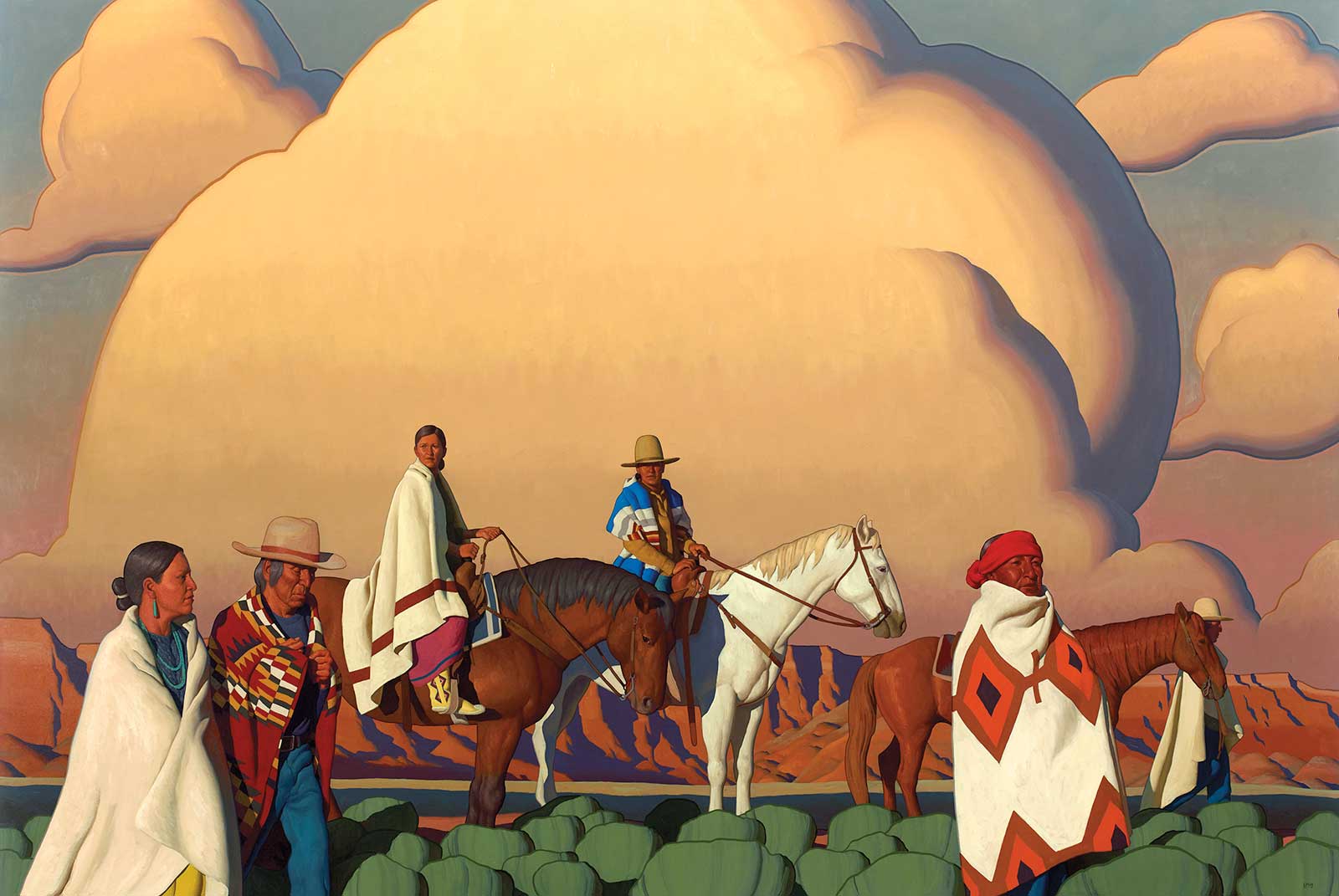 Maxwell Alexander Gallery, The Song at Sunset, oil, 96 x 144”, by Logan Maxwell Hagege.
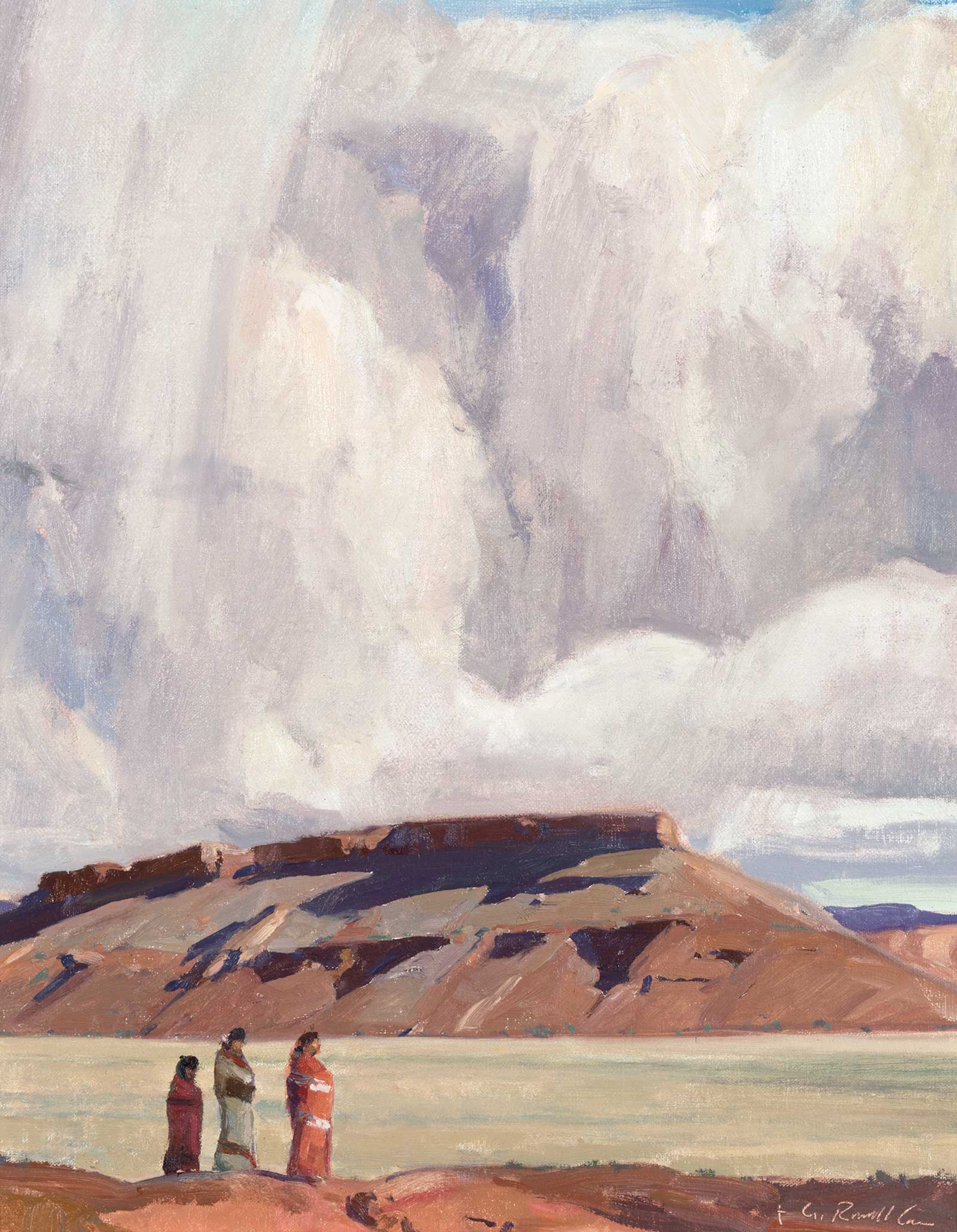 Maxwell Alexander Gallery, Calm Before the Storm, oil, 20 x 16”, by G. Russell Case.
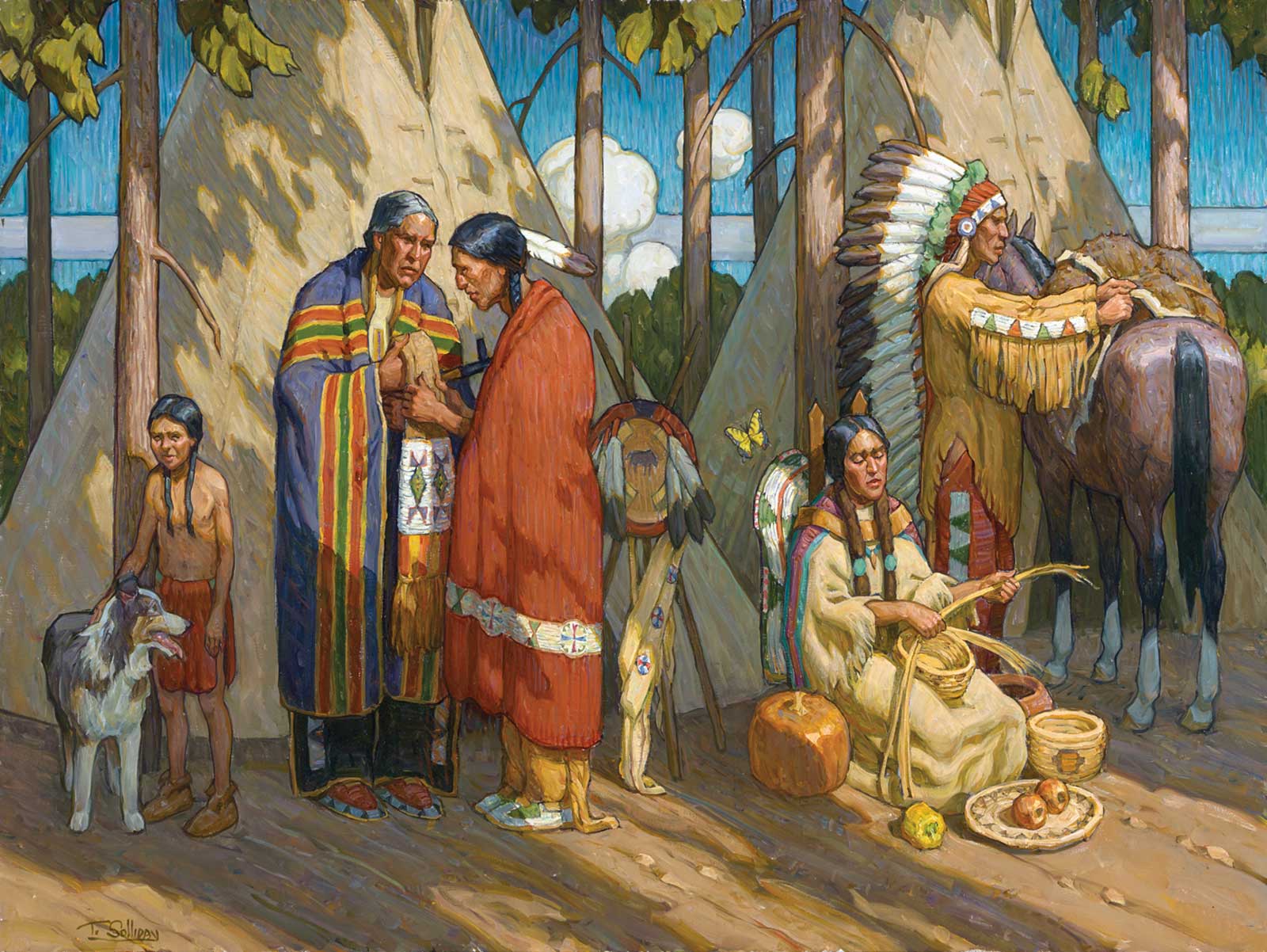 Maxwell Alexander Gallery, Village Past time, oil, 36 x 48”, by Tim Solliday.
Santa Fe, New Mexico, is a haven for Western and Native American art, with a vibrant, energetic cultural scene and seemingly endless opportunities to participate in arts events and gatherings. And Manitou Galleries is one of the many iconic galleries that calls Santa Fe home. “There has been a great deal of debate lately over the definition of contemporary Western art, and these two artists embody that discussion,” Manitou Galleries associate director Cyndi Hall says of Tracy Felix and Rick Terry. “Tracy Felix is a modernist, inspired by the unique geology of the West and also influenced by the American regionalism and Hudson River School painters. Whereas Rick Terry is a rancher who has lived the life of many of the subjects he has sculpted. Rick has completed sculptures from the city of Prescott, Arizona, to Disney. While both of these artists are stylistically very different, they are both celebrating the West, its environment, communities and lifestyles.”
Represented by Claggett/Rey Gallery in Edwards, Colorado, Don Coen’s creative truth and life path are still going strong in his eighth decade of life. He is as excited to be in the studio as ever, whether working on an epic 6-by 8-foot airbrush of cattle, an oil stick painting of saddled cow ponies or a dead stick ink drawing of a jackrabbit. His work reflects his heritage growing up in the eastern plains near Lamar, Colorado. “Coen is a contemporary master with a traditional heritage, which he honors so well whatever his medium, and we are blessed to be part of his world,” the gallery states.
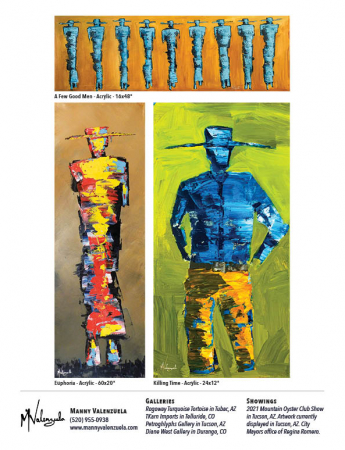
Painter, sculptor and contemporary artist Manny Valenzuela creates abstract fluid paintings of figures of the West, inspired by his Hispanic heritage. “I mainly work with the Gaucho figure because it represents my rich heritage,” he says. “The images appear simple yet contain a complexity that goes beyond what seems obvious. My goal is to expand the boundaries of Western art with a contemporary flair to create something beautiful and collectible.”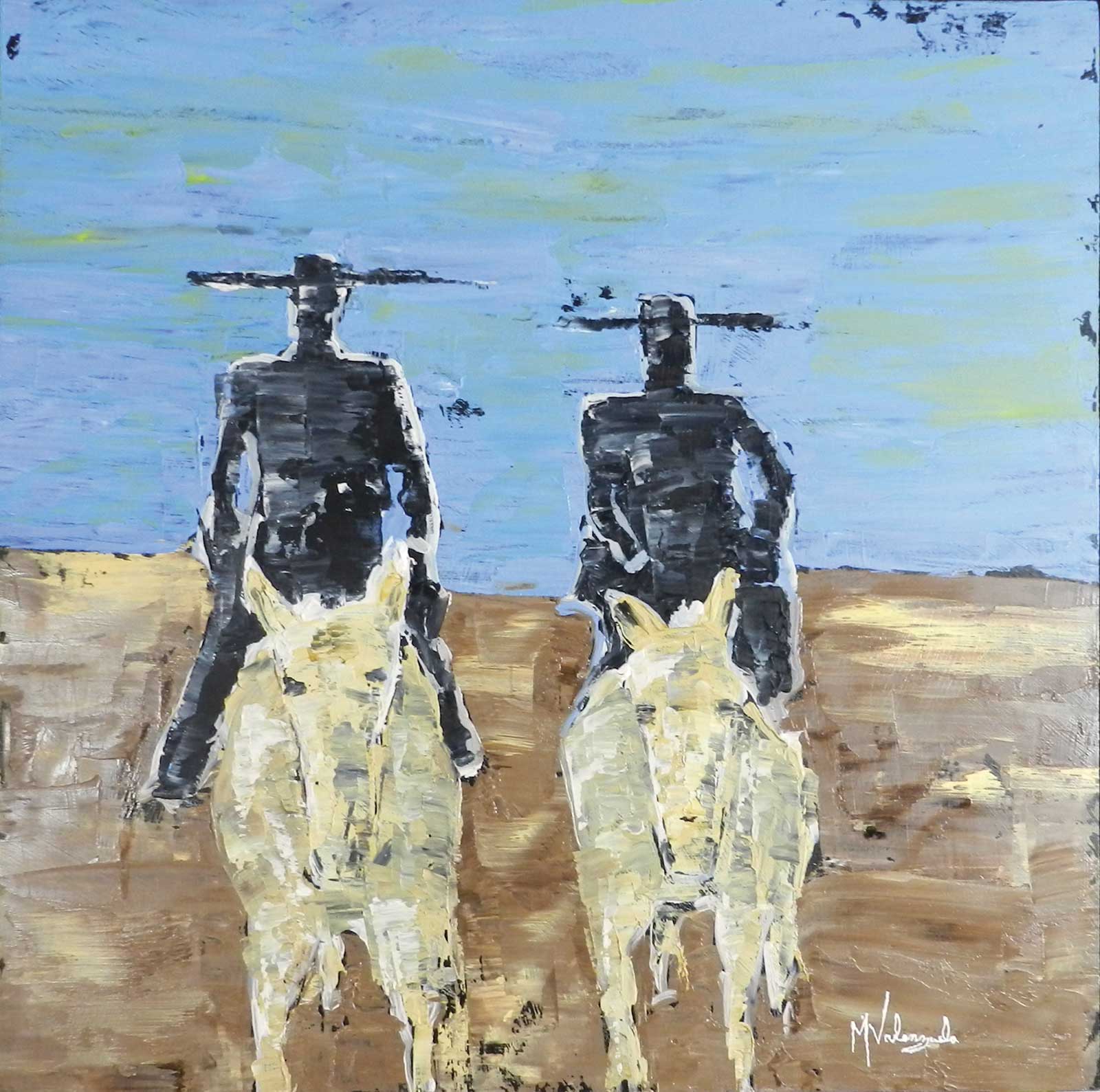 Manny Valenzuela, No More Rodeos, acrylic, 18 x 18”
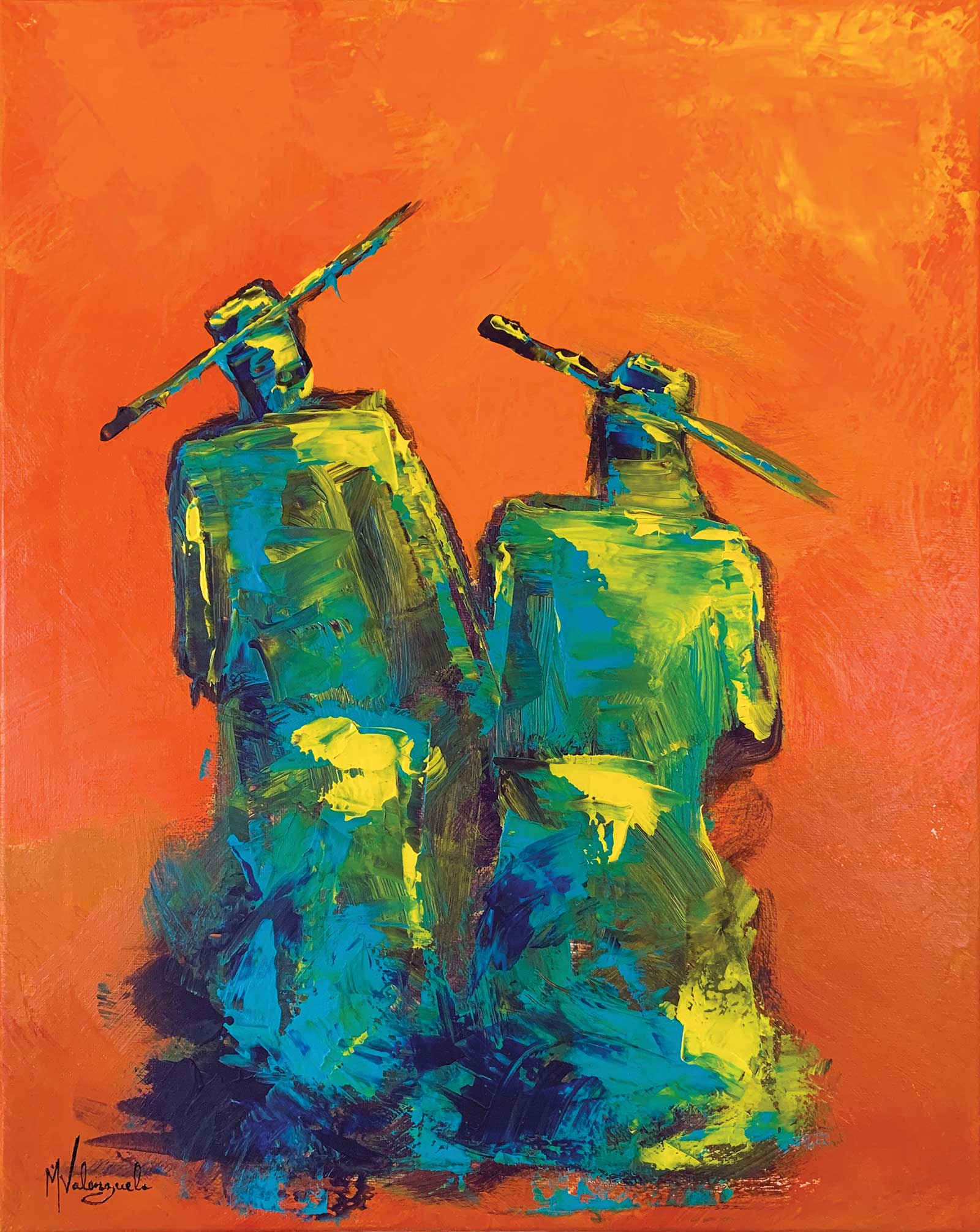 Manny Valenzuela, Love Remains, acrylic, 20 x 16”
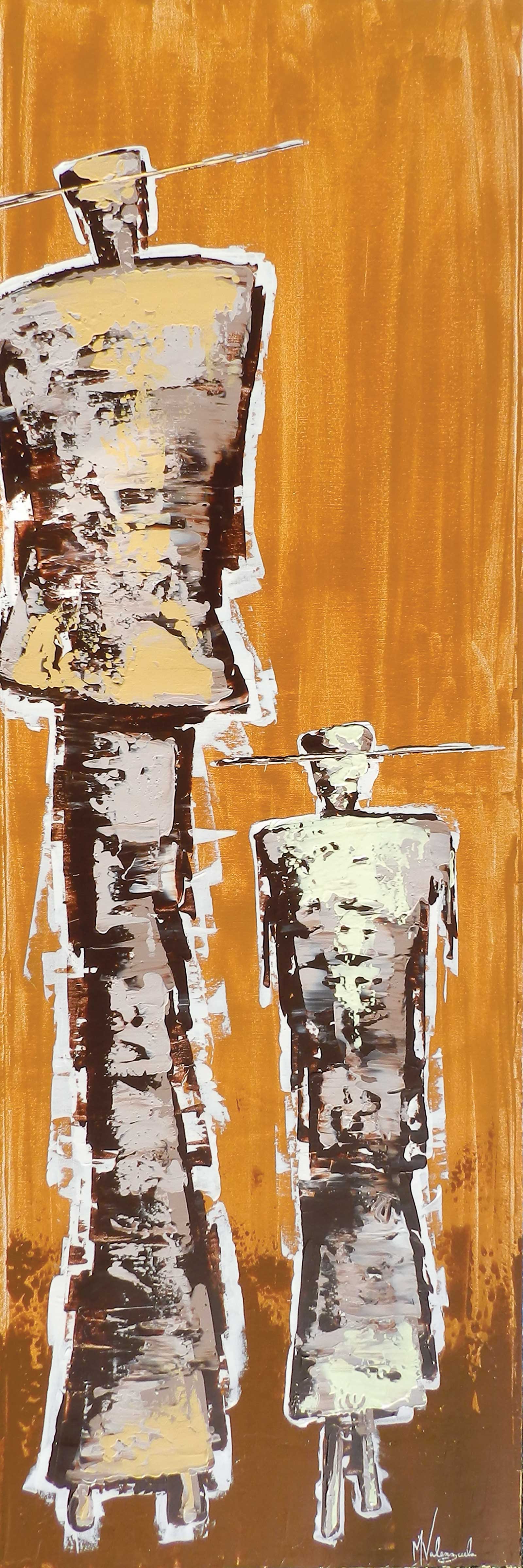 Manny Valenzuela, Remembering the Good Times, acrylic, 60 x 20”
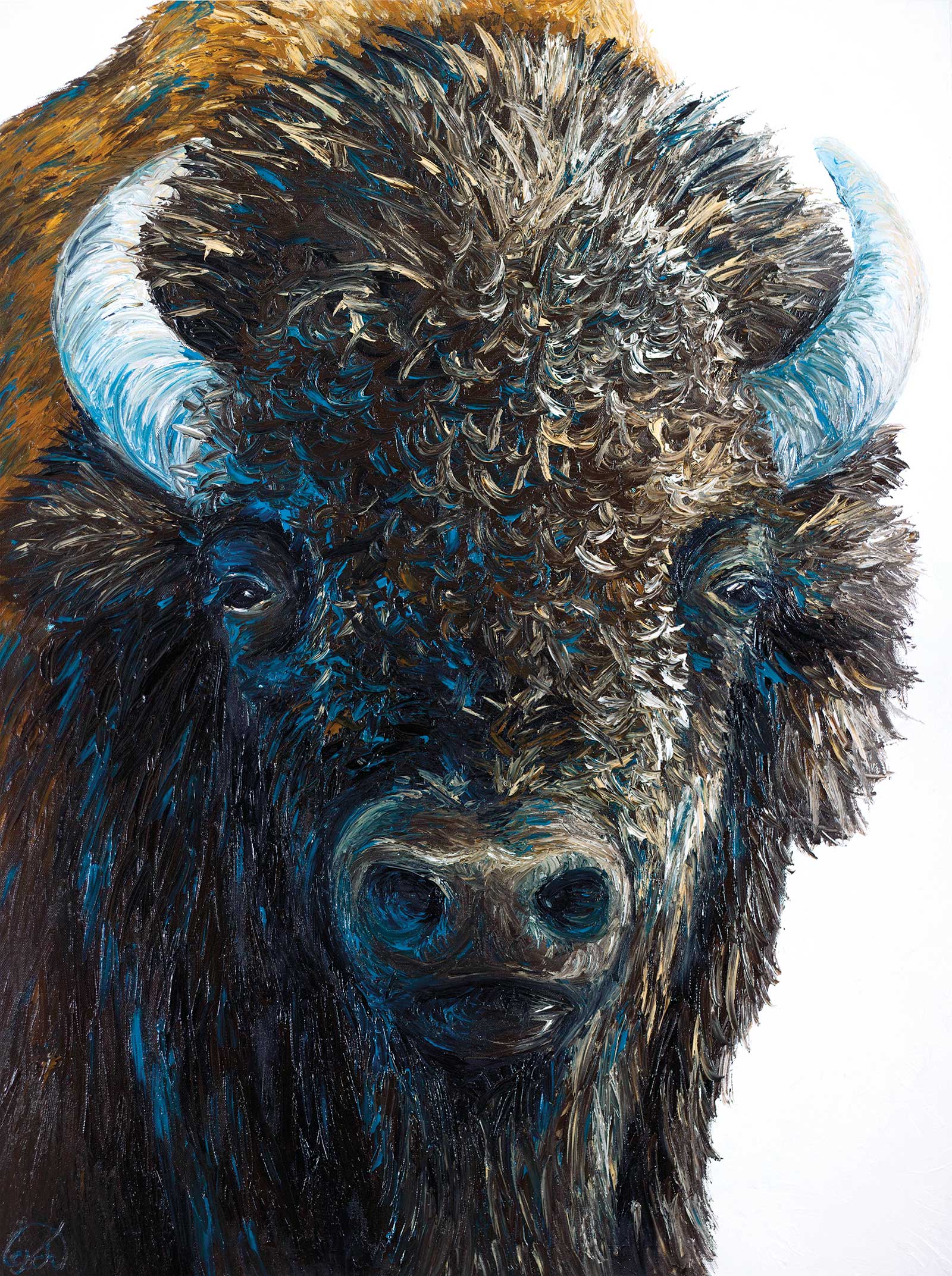 Elizabeth Mordensky, Portrait of a Buffalo, oil finger painting, 40 x 30”
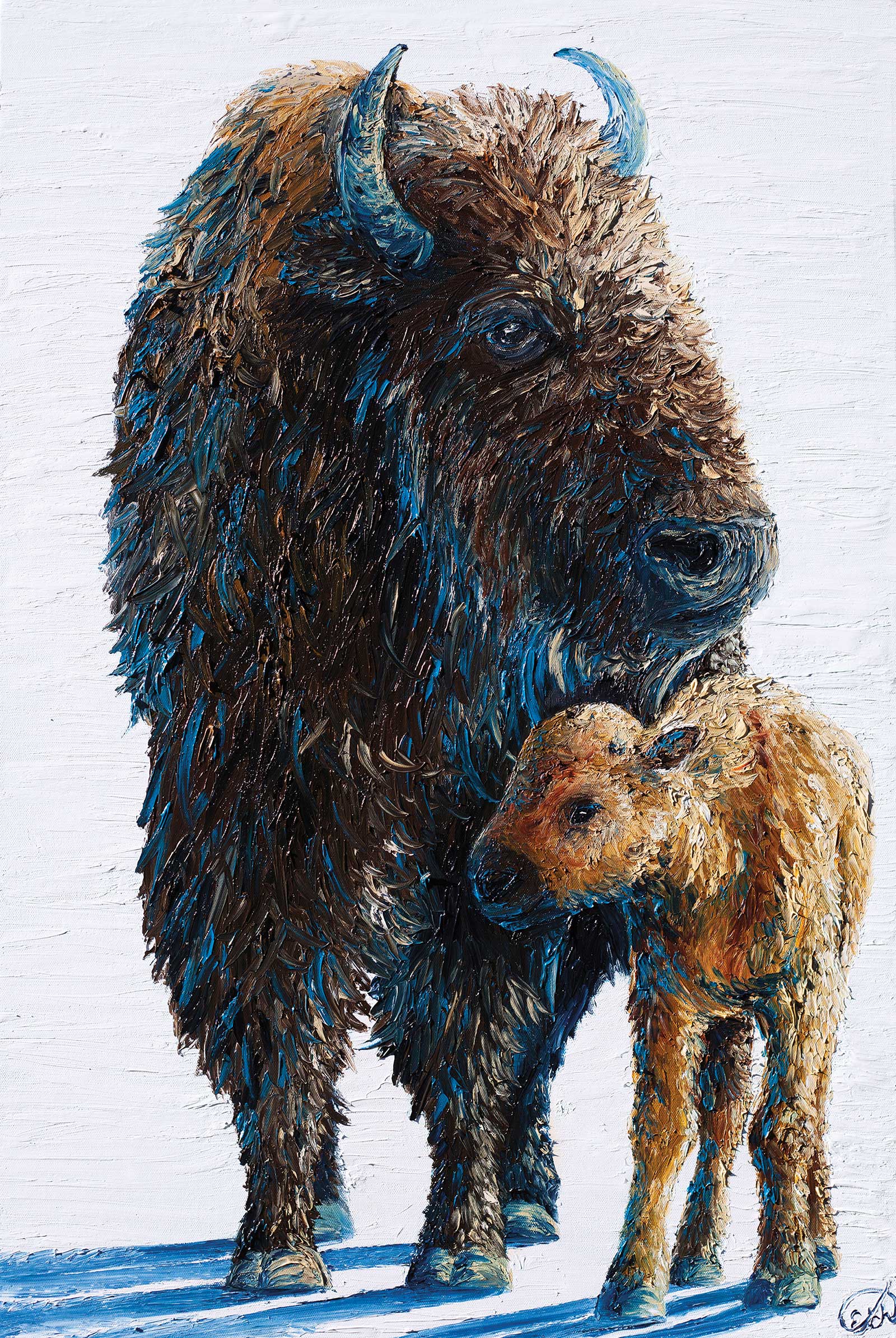 Elizabeth Mordensky, Safe, oil finger painting, 36 x 24”
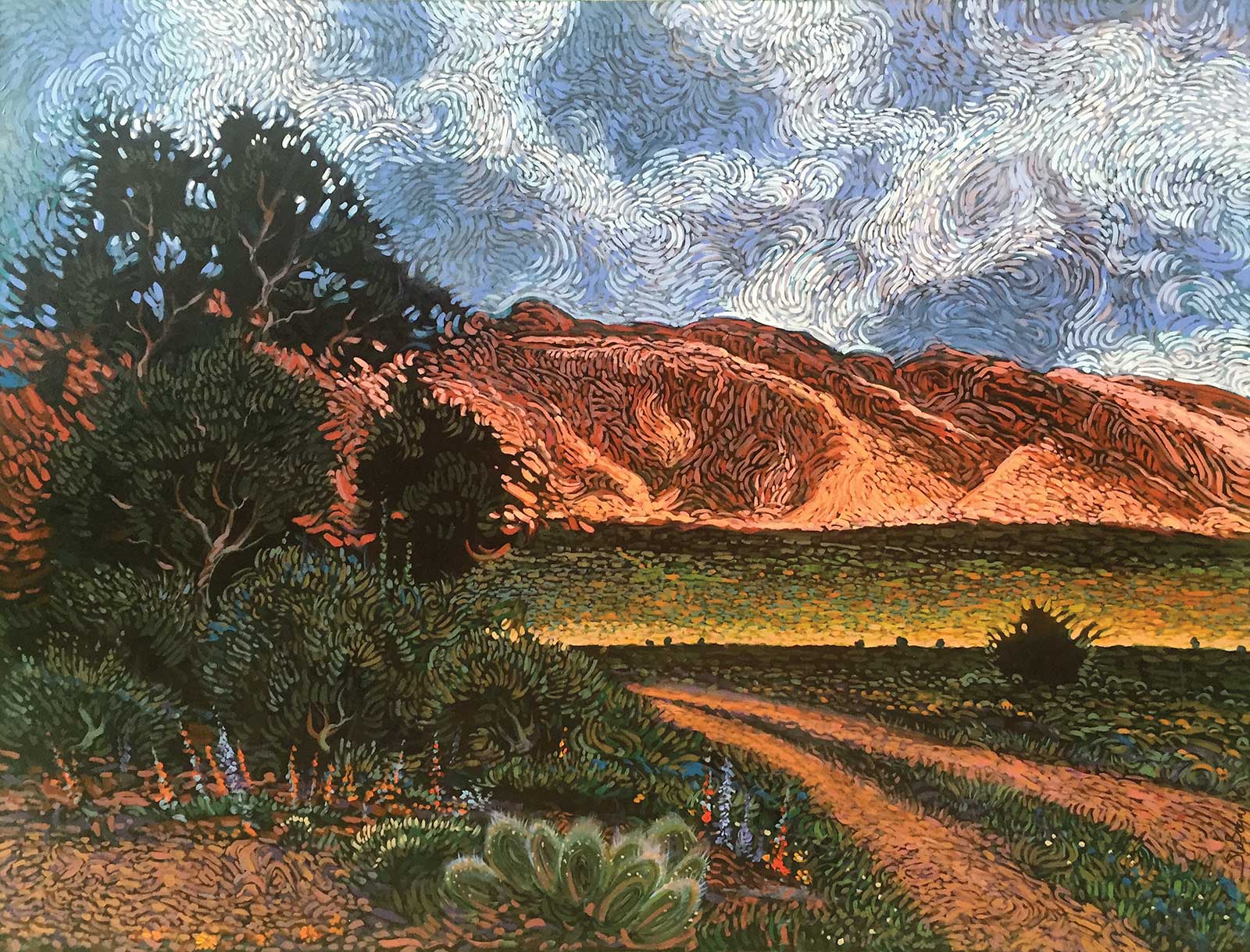 Modern West Fine Art, Road to Skeleton Mesa, acrylic on canvas, 36 x 48”, by Shonto Begay.
Dealing in subject matter like the American Southwest and landscapes, contemporary realism and historic art, Los Angeles-based Maxwell Alexander Gallery offers a menagerie of works by some of the very best artists of the day. Such powerhouses as Tim Solliday, G. Russell Case and Logan Maxwell Hagege round out the gallery’s offerings of phenomenal contemporary Western art. Other modern Western artists of note include Jeremy Lipking, Brett Allen Johnson, Kim Wiggins, Natalie Featherston and Teresa Elliott, to name a few.
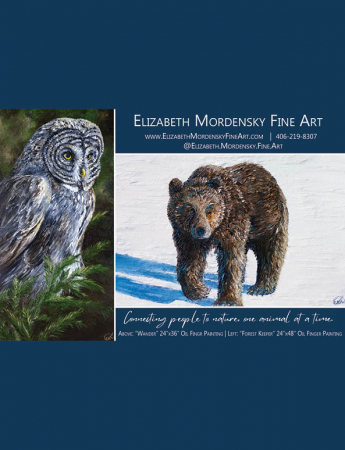
Wildlife artist Elizabeth Mordensky finds her inspiration from the original inhabitants of the wild West. The iconic American bison makes a regular appearance on Mordensky’s canvases, as she finds endless inspiration in their personality and history. “Whether it be a bison, fox or bear, each species has its own story; my goal is to capture their spirit and significance on the canvas,” she says. “Our understanding of and appreciation for the American West would not be what it is today without the wildlife who also call it home.” Mordensky’s modern finger paintings highlight her subjects and their character.
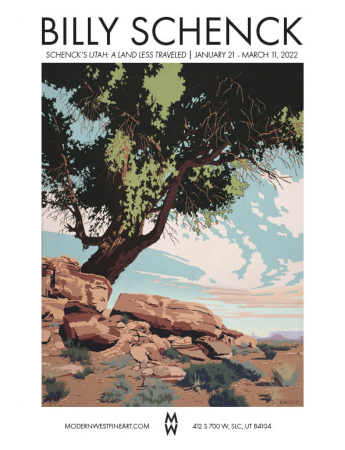
“Utah has a thriving market for contemporary art, fueled by a long heritage of working and emerging artists that have left their mark within the art world,” says Modern West Fine Art owner Diane Stewart. “This drives an interest within our community, creating new collectors that are passionate about engaging with the art, and existing collectors that are looking to push the boundaries of their own collections.” The gallery is debuting an exhibition of 19 new paintings by Billy Schenck in his first-ever landscape-only exhibition, Schenck’s Utah: A Land Less Traveled, running January 11 through March 11.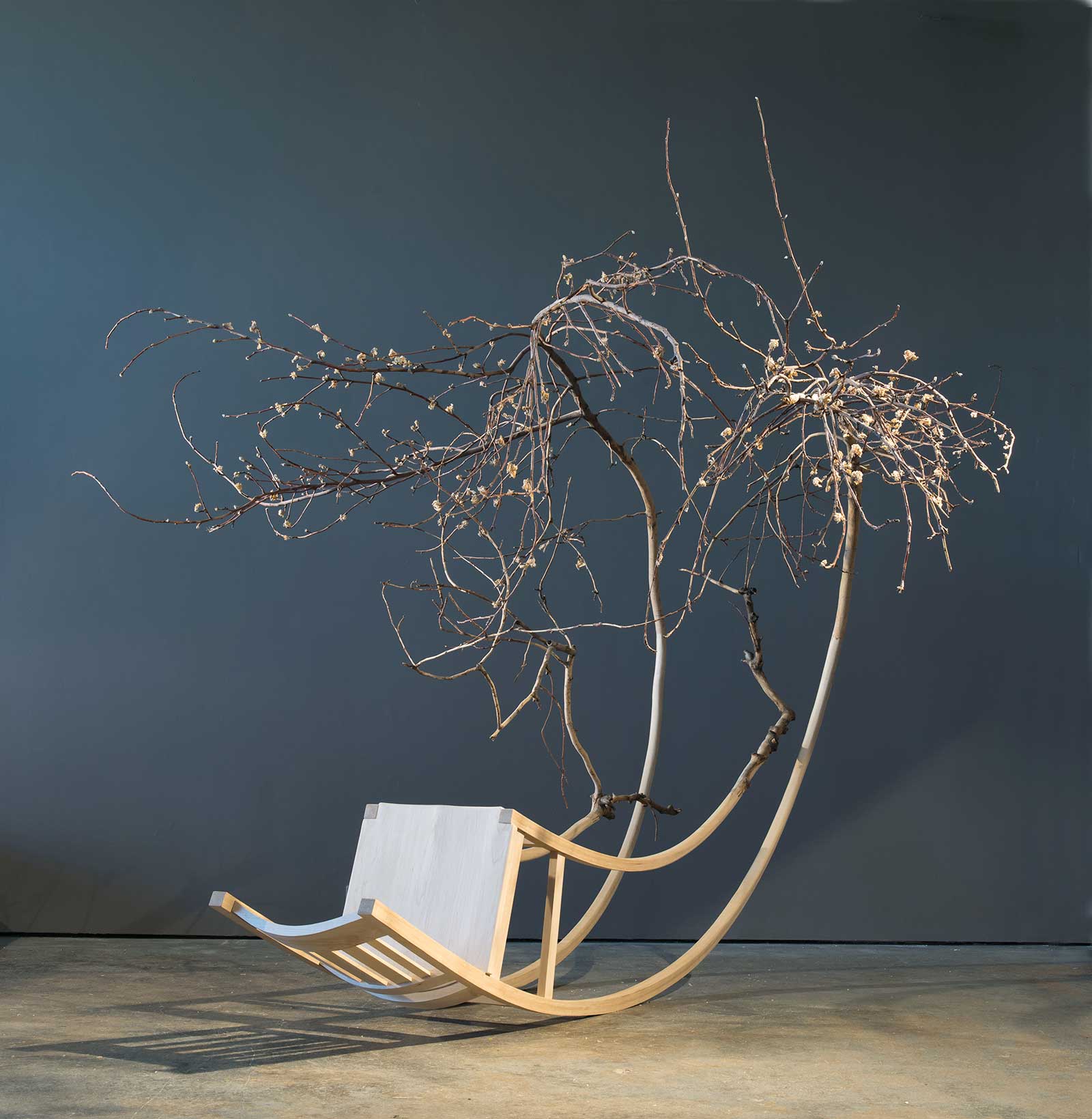 Modern West Fine Art, Crest, apple and maplewood, 83 x 138 x 92”, by Jim Jacobs.
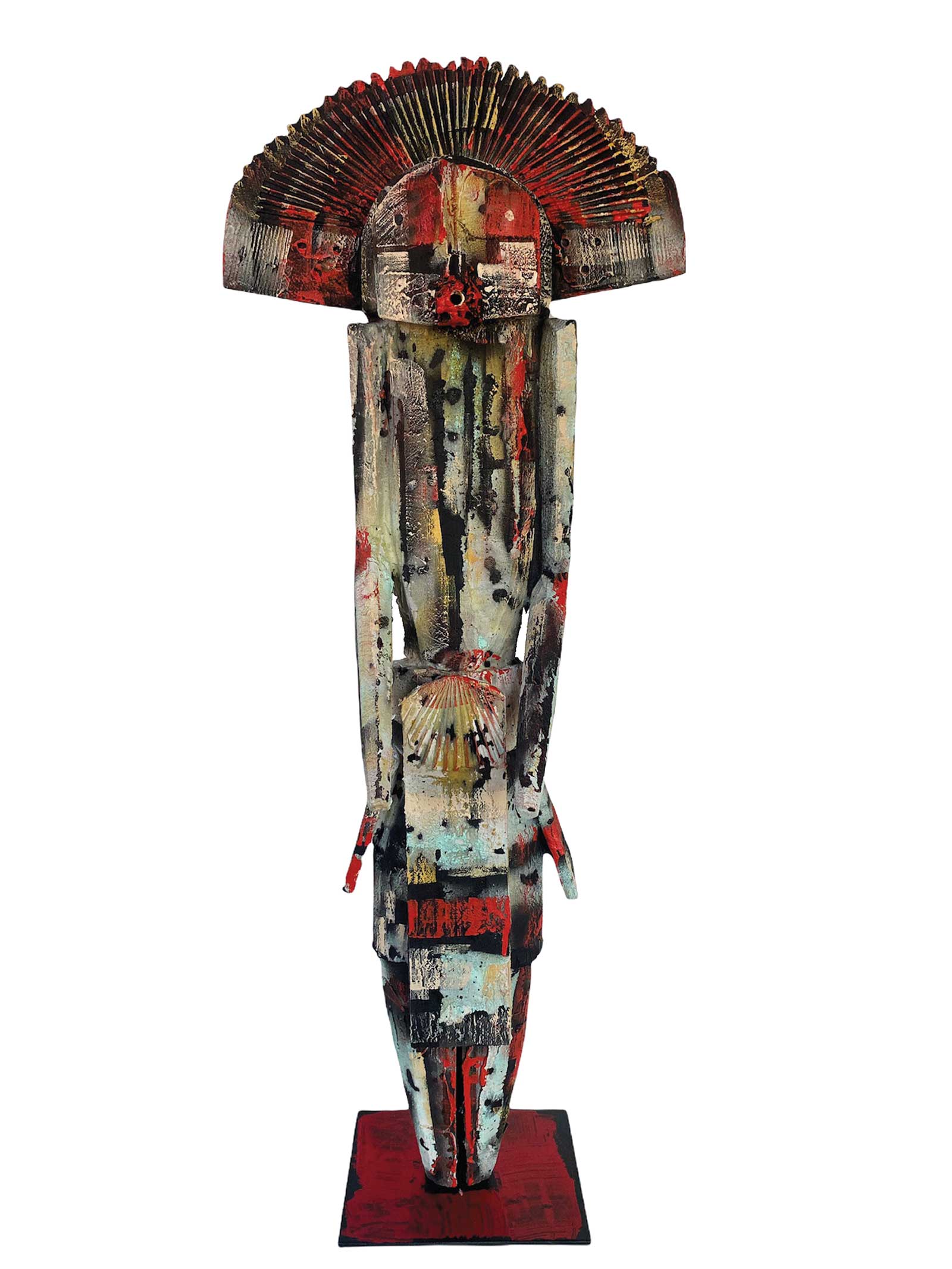 Modern West Fine Art, Untitled, mixed media, 36 x 14 x 9”, by Sheldon Harvey.
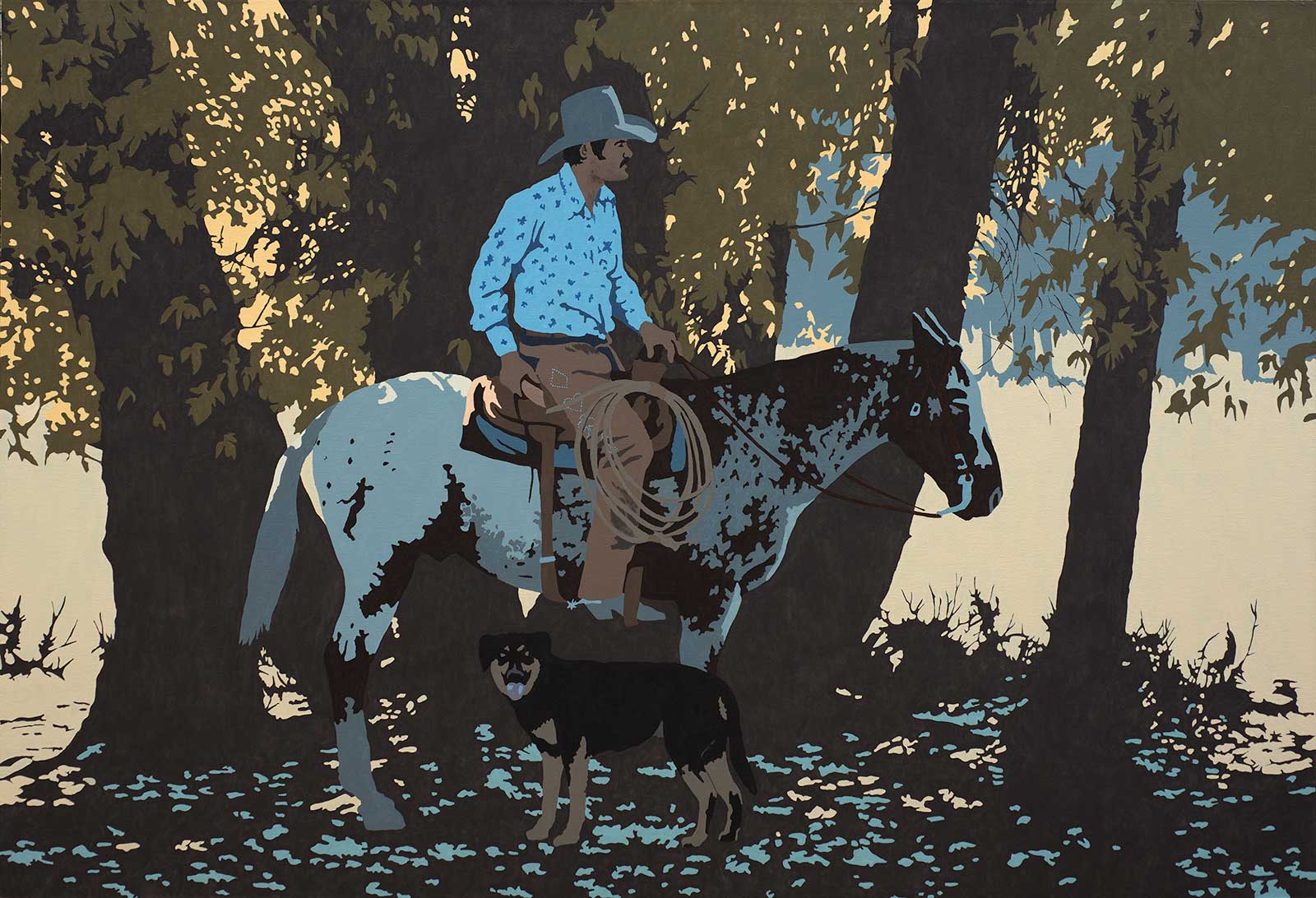 Southern Utah Museum of Art, Diamonds Forever, oil on canvas, 48 x 70”, by Billy Schenck.
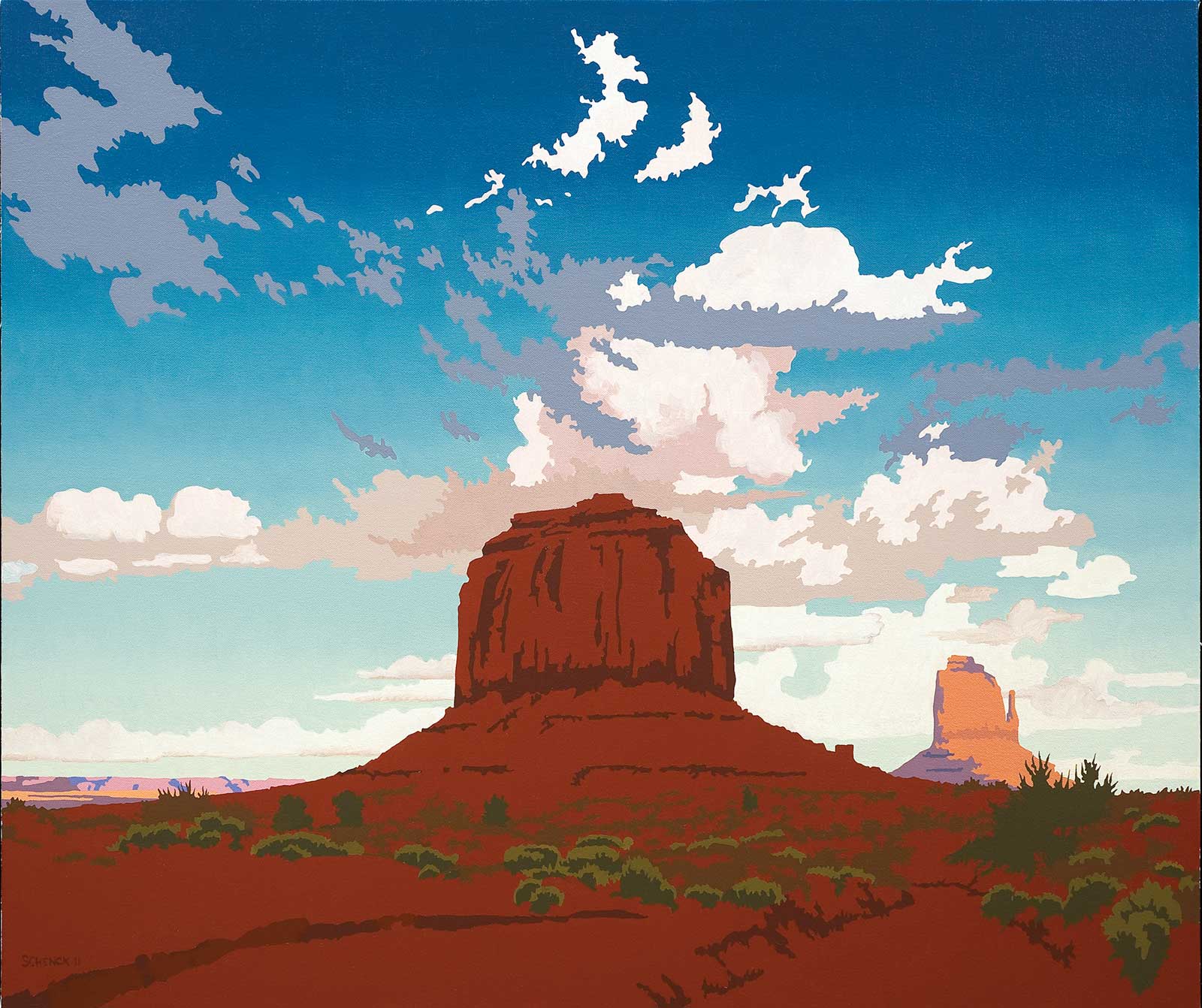 Southern Utah Museum of Art, Miles of Sand and Clouds, oil on canvas, 32 x 38”, by Billy Schenck.
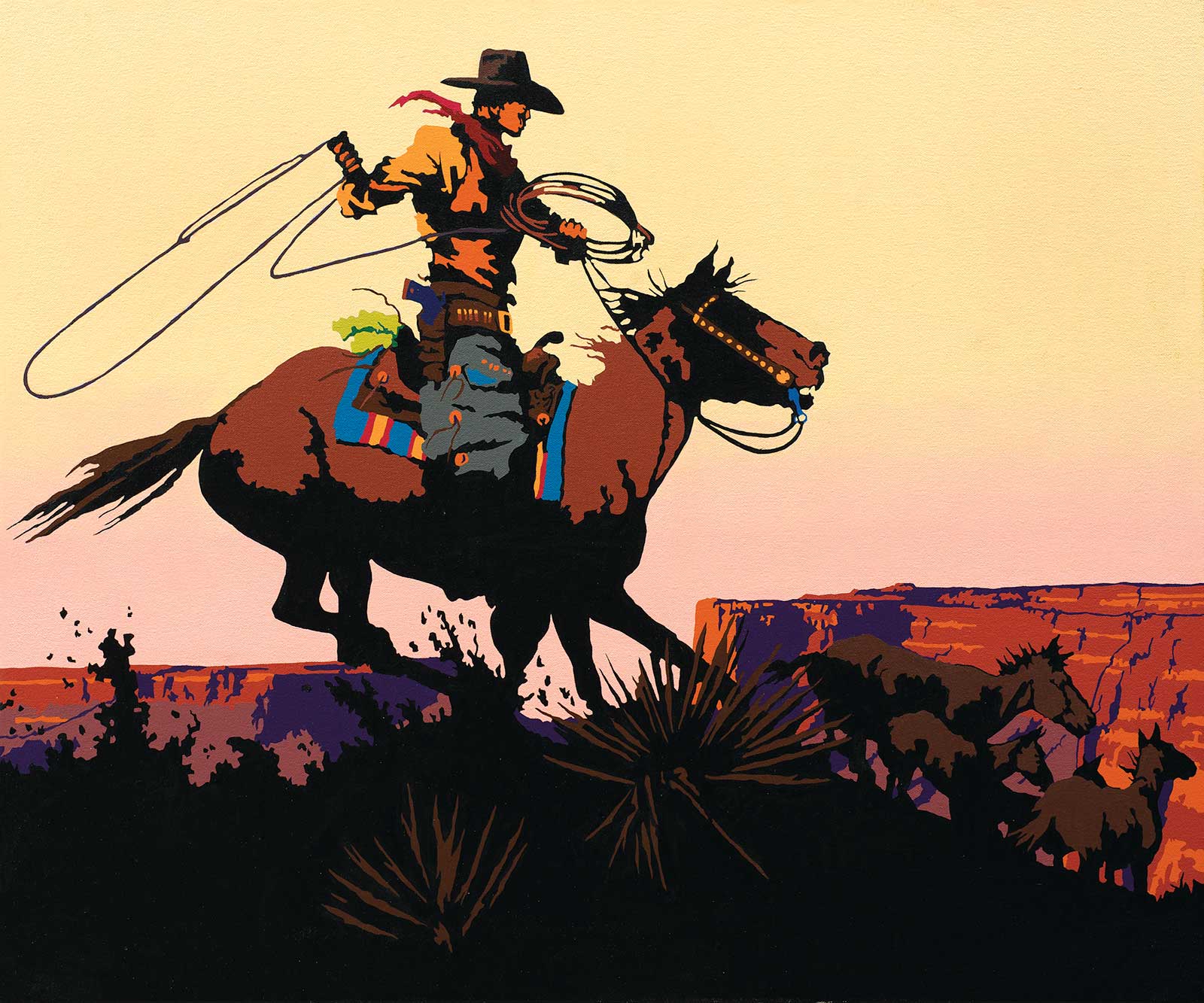 Southern Utah Museum of Art, Ride Off the Mesa, oil on canvas, 30 x 36”, by Billy Schenck.
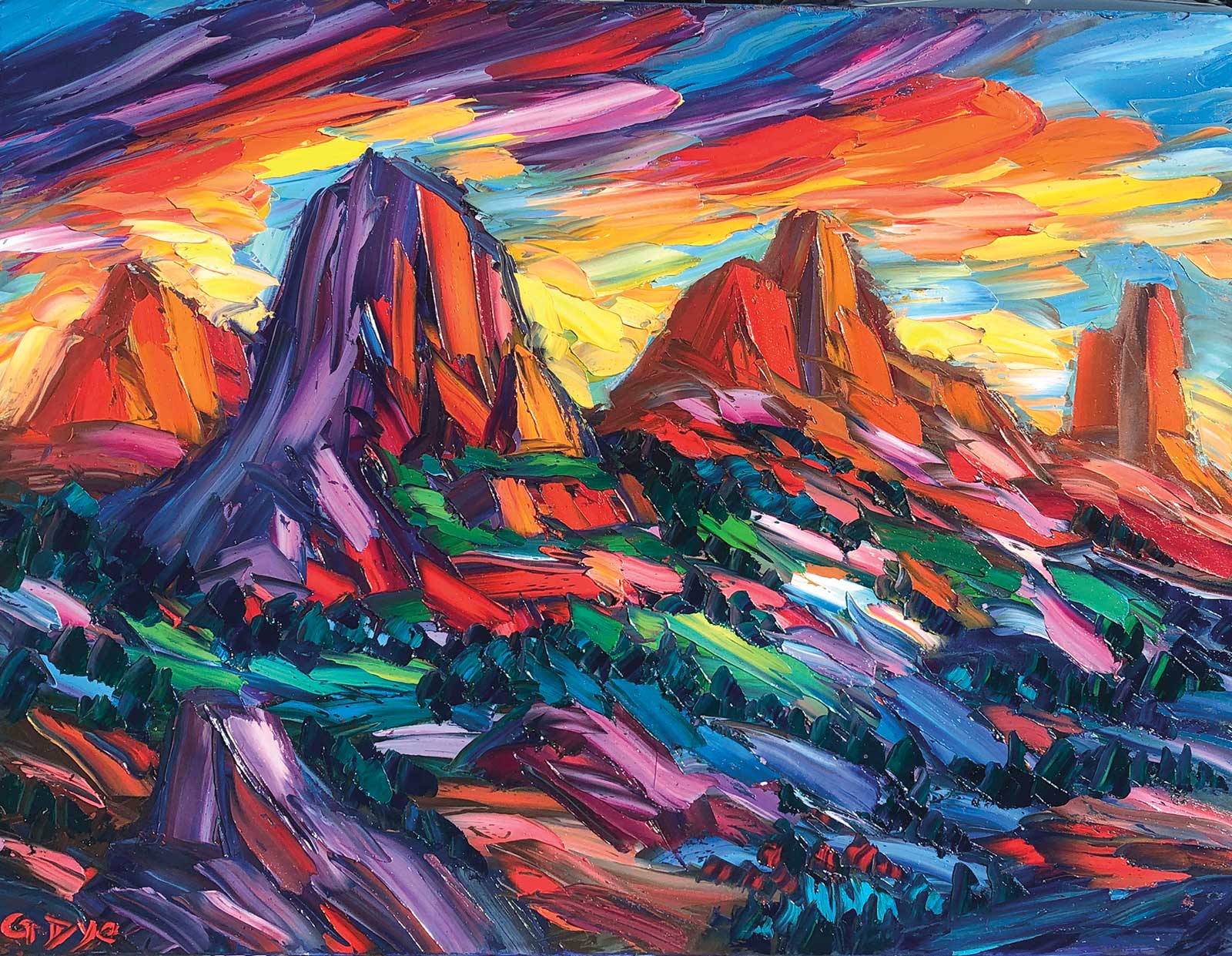 Greg Dye, New Day, oil, 36 x 48”
The work of Sheldon Harvey, represented by Modern West Fine Art, depicts First World Spirit Beings from Navajo creation myths and other ancient traditions. Each unique sculpture embodies a piece of Navajo folklore and Harvey’s creative spirit. Native American artist Shonto Begay’s rhythmic paintings are reflections of his heritage and memories as a Diné (Navajo) artist. He has written and spoken about how his small brush stroke technique is symbolic of the repetitions of traditional Navajo blessing prayers. His artworks are not just paintings of landscapes or people, they are reflections of Begay’s heritage, spirituality, memories, traumas and his healing process. Modern West is also thrilled to announce new representation with Jim Jacobs, who uses wood to translate concepts of living organisms, cell systems and environments, which become domestic material objects like chairs, tables and clothing hangers.
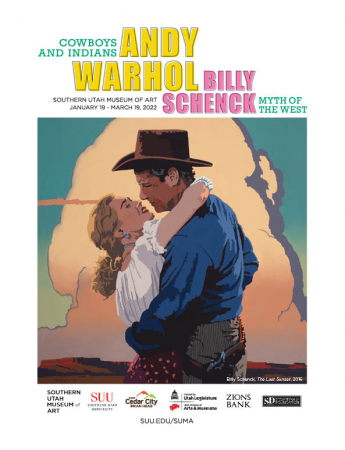
Southern Utah Museum of Art features the artwork of regional artists known for their landscapes, as well as emerging and distinguished artists from around the country in its permanent collection of nearly 2,000 objects. The museum also represents current and former faculty and students of the SUU Department of Art & Design. And Schenck is highlighted yet again during an exhibition at the Utah-based museum titled Billy Schenck: Myth of the West, running January 19 to March 19.
Gallery Wild, based in Jackson Hole, Wyoming, is owned and operated by local wildlife painter Carrie Wild and wildlife photographer Jason Williams. The gallery features an array of contemporary fine art inspired by wildlife, open spaces and conservation. Among the artists represented at the gallery are modern Western oil painter Amber Blazina, who specializes in impressionist and expressionist alla prima methods, and the vibrant compositions of Pennsylvania-based artist Patricia Griffin, whose “oil paintings of animals on linen, burn slowly as they stir the mind into daydreams of travel and encounters with exotic and indigenous beings.” 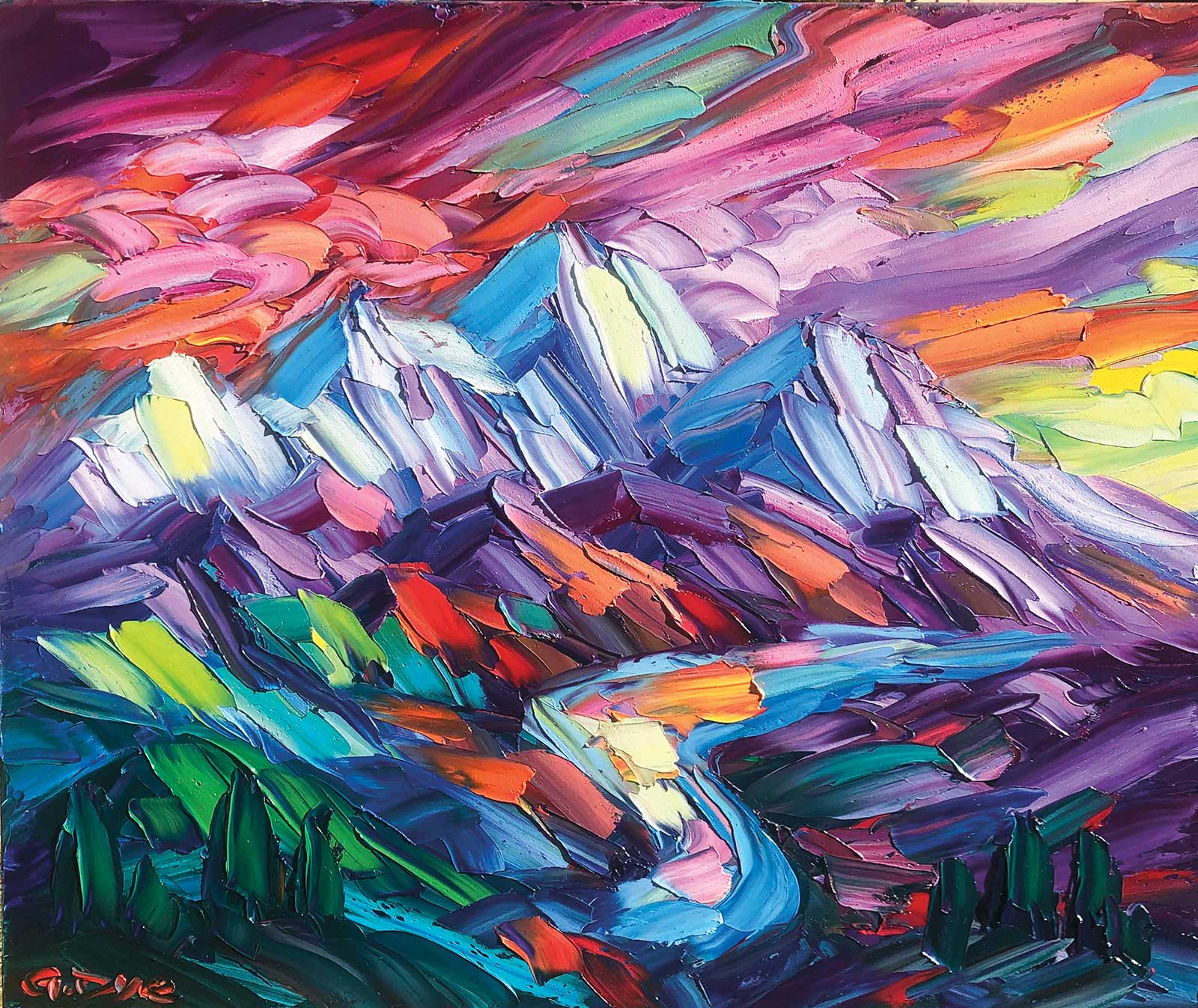 Greg Dye, Lazy Day, oil, 30 x 36”
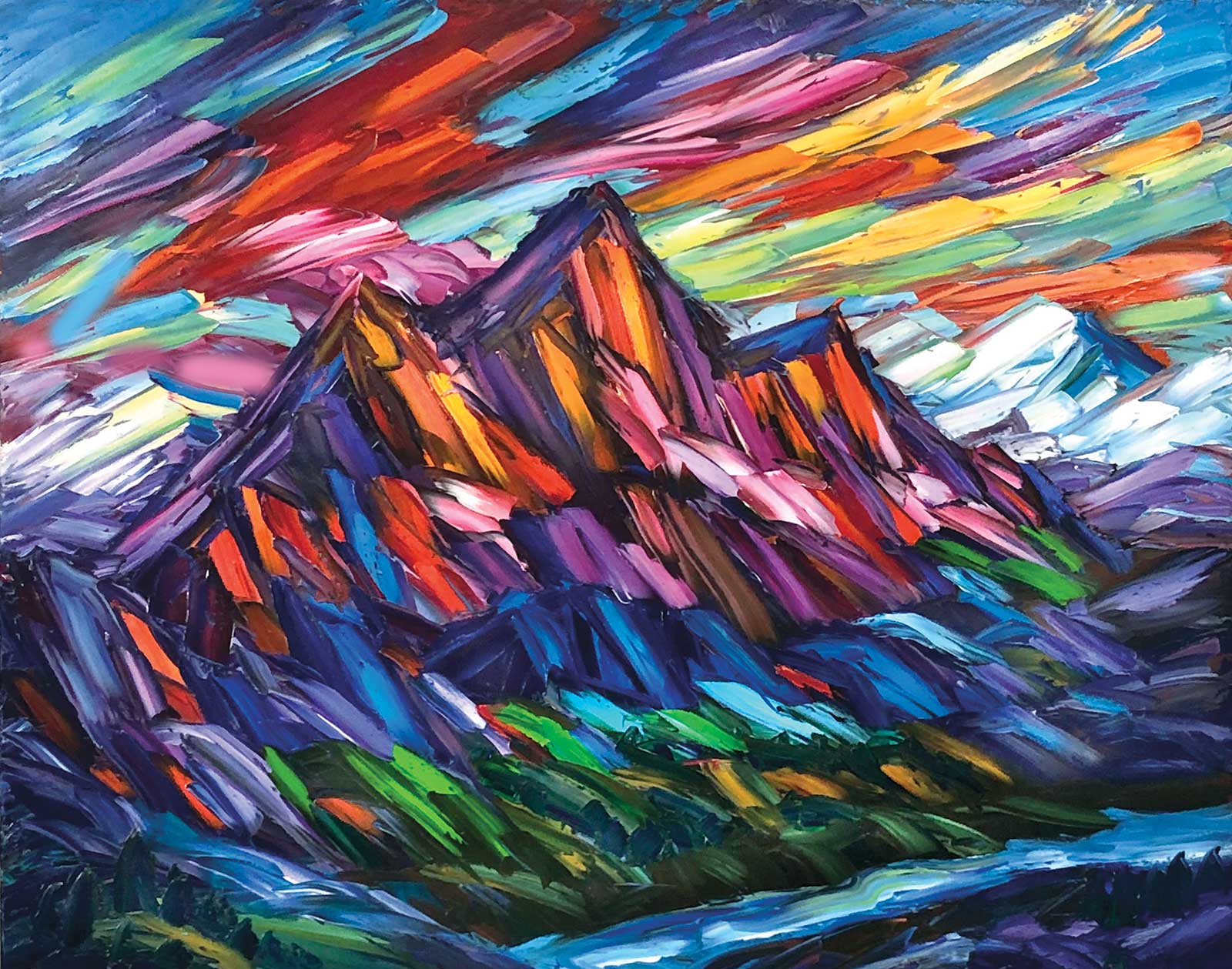 Greg Dye, Rocky Mountain Wonder, oil, 48 x 60”
 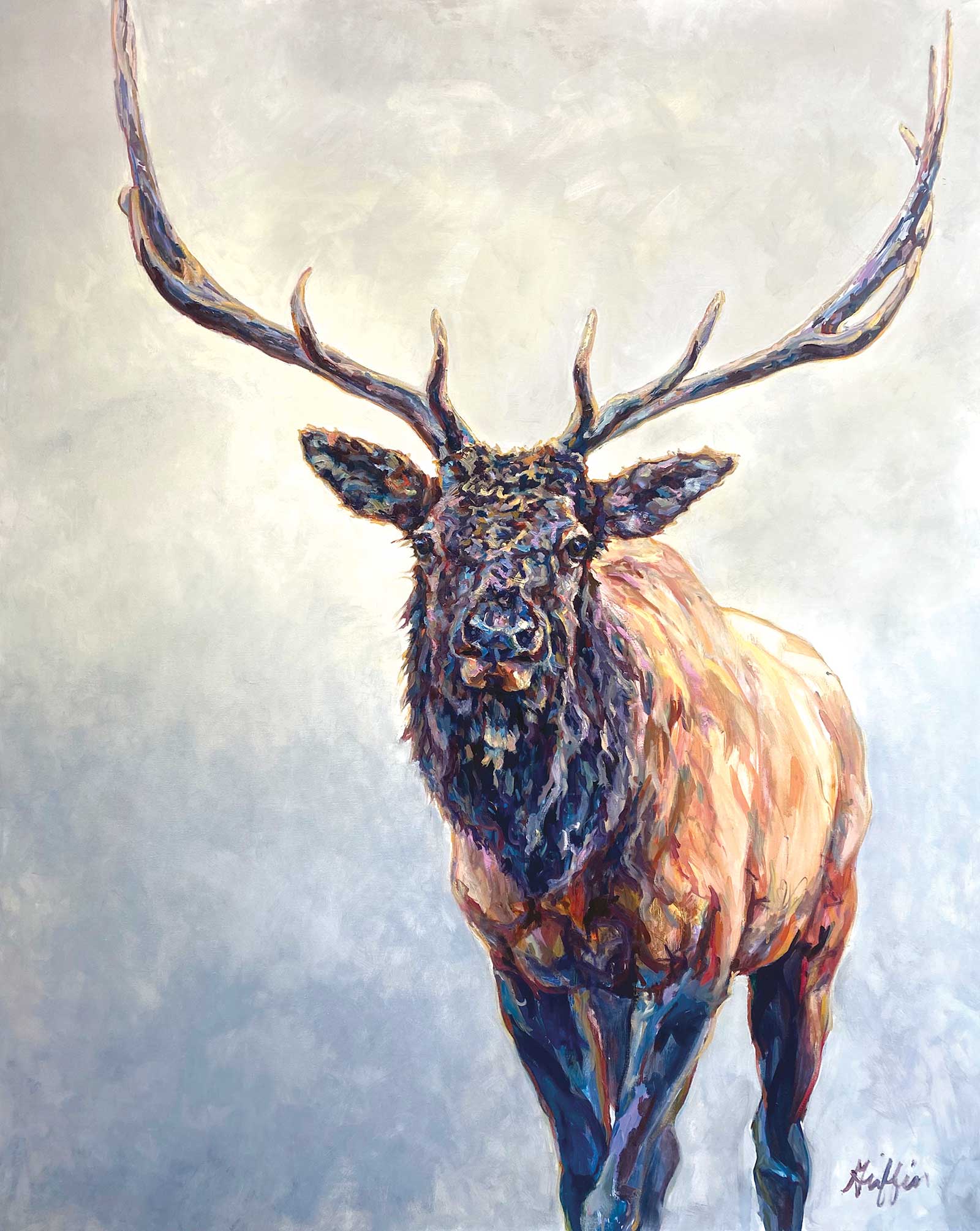 Gallery Wild, Marcel, oil on linen, 60 x 48”, by Patricia Griffin.
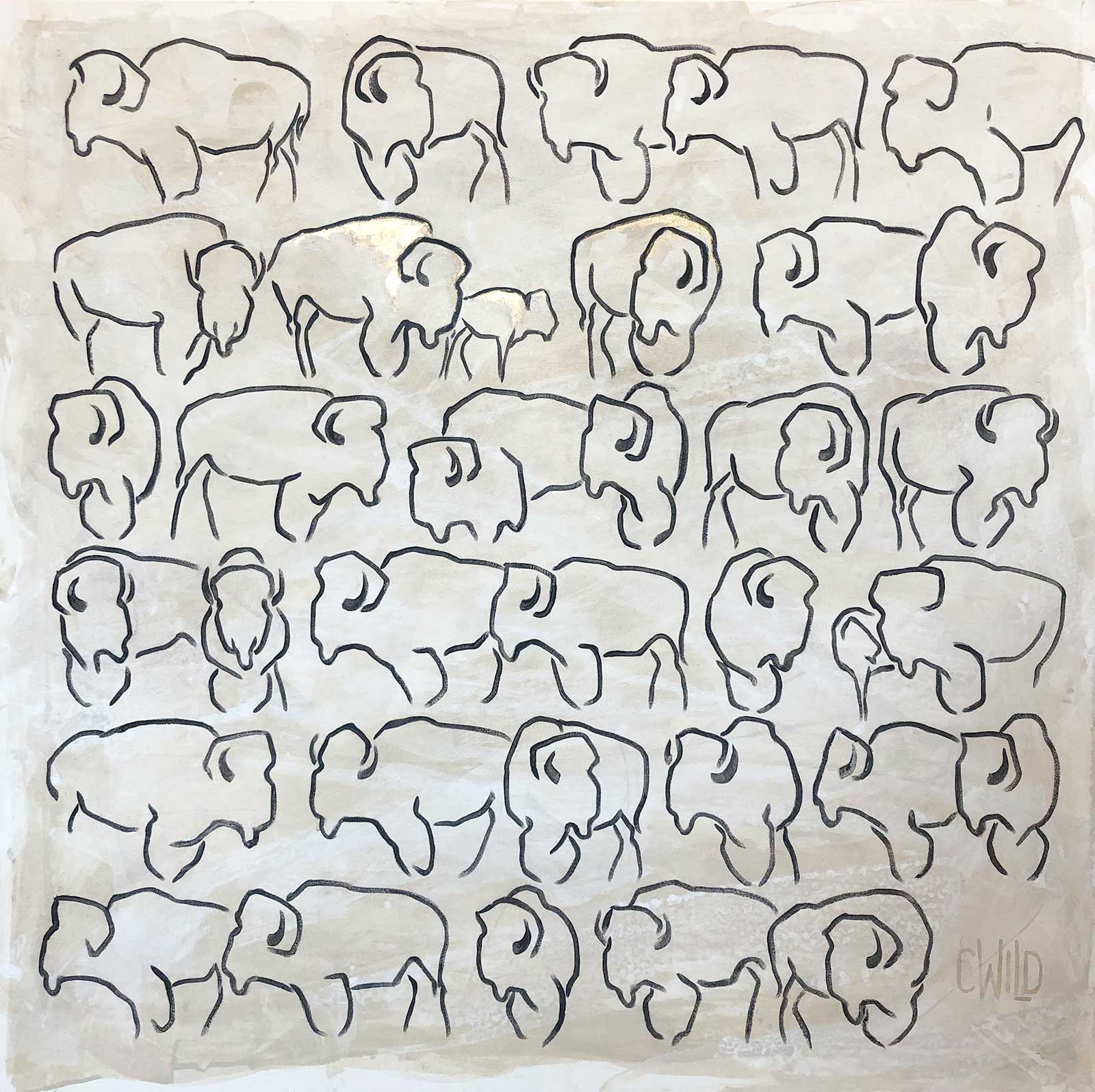 Gallery Wild, Rendezvous Thirty Five.0, acrylic and gold leaf on canvas, 36 x 36”, by Carrie Wild.
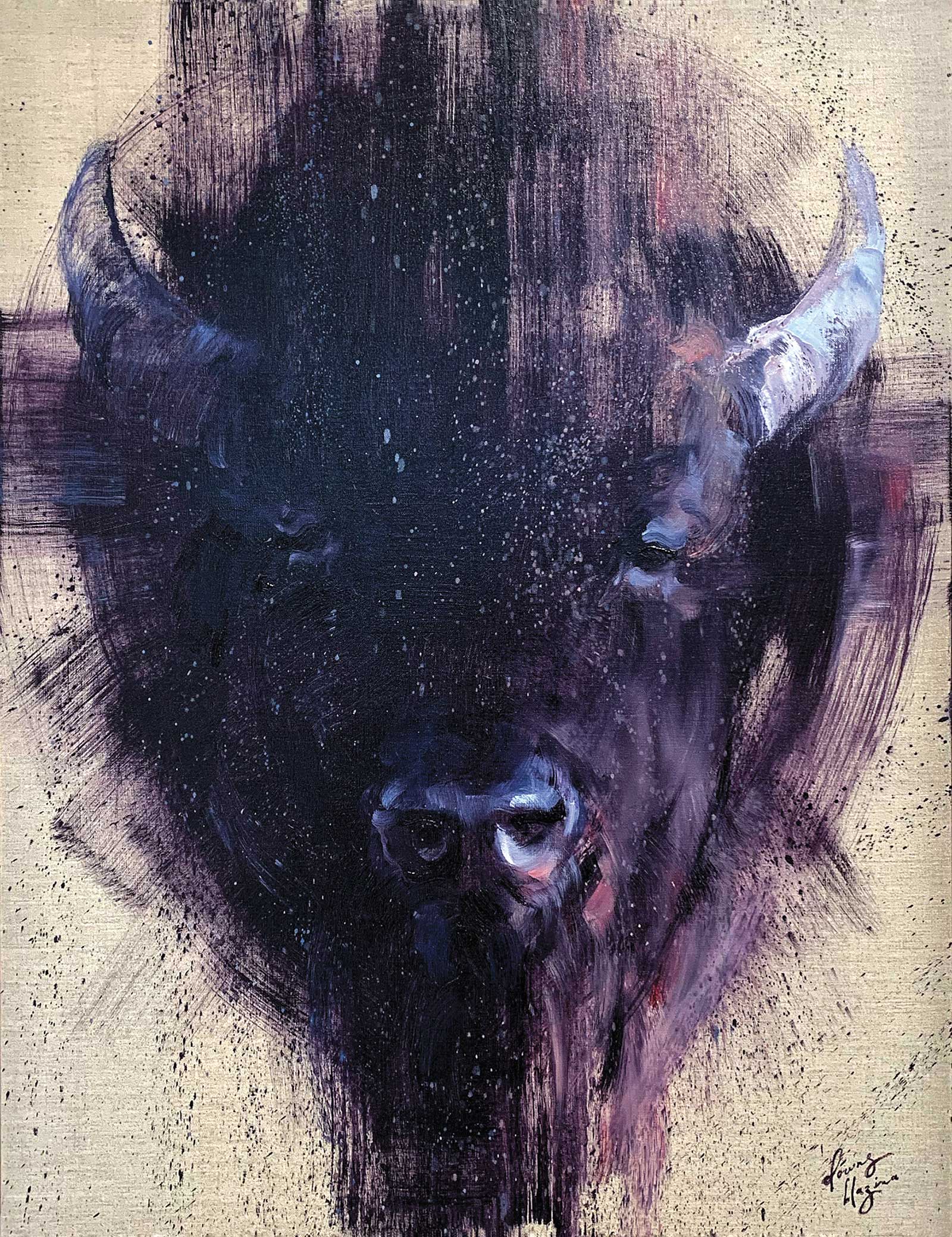 Gallery Wild, See, oil on linen, 40 x 30”, by Amber Blazina.
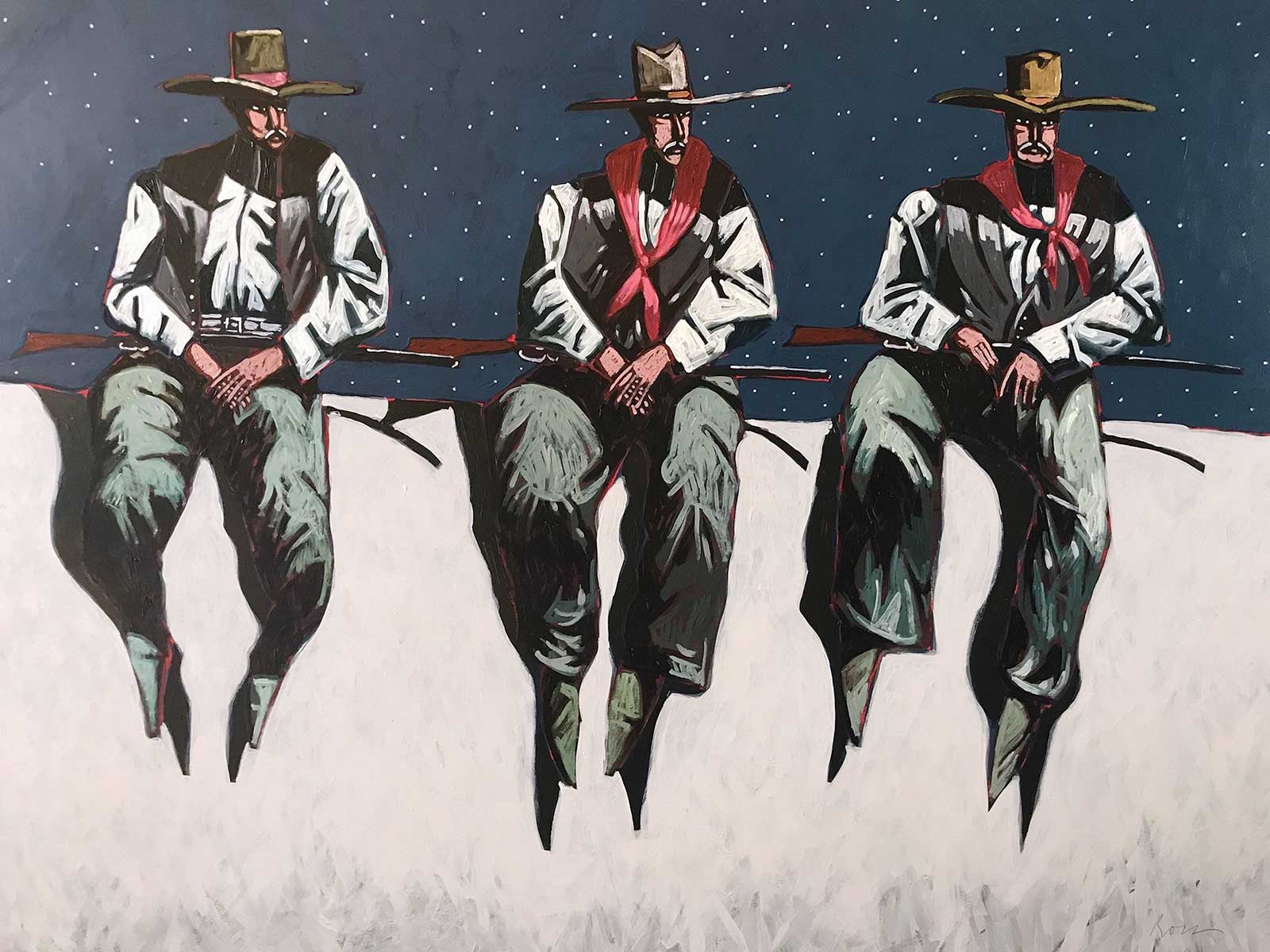 Sorrel Sky Gallery, Midnight Vigil, acrylic on paper, 25 x 34”, by Thom Ross.
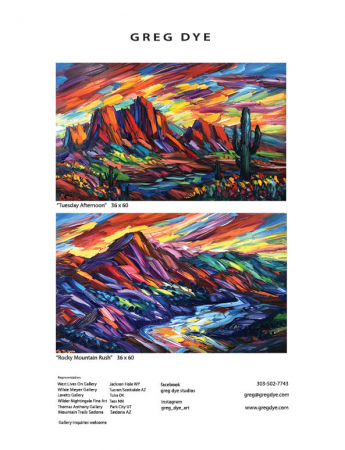
“All I need to do is look around me, the mountains and deserts in this area of the world are all the inspiration I need for a lifetime,” says artist Greg Dye. His paintings depict Western landscapes in brilliant shades of pinks, purples, blues, greens and golds. “My goal is to convey constant motion, spiritual energy and show absolute beauty in creating my own personal vision of Colorado and the Southwest.” His advice to collectors: “Always buy what you absolutely love. Don’t second guess yourself, when you see it you will know it.”
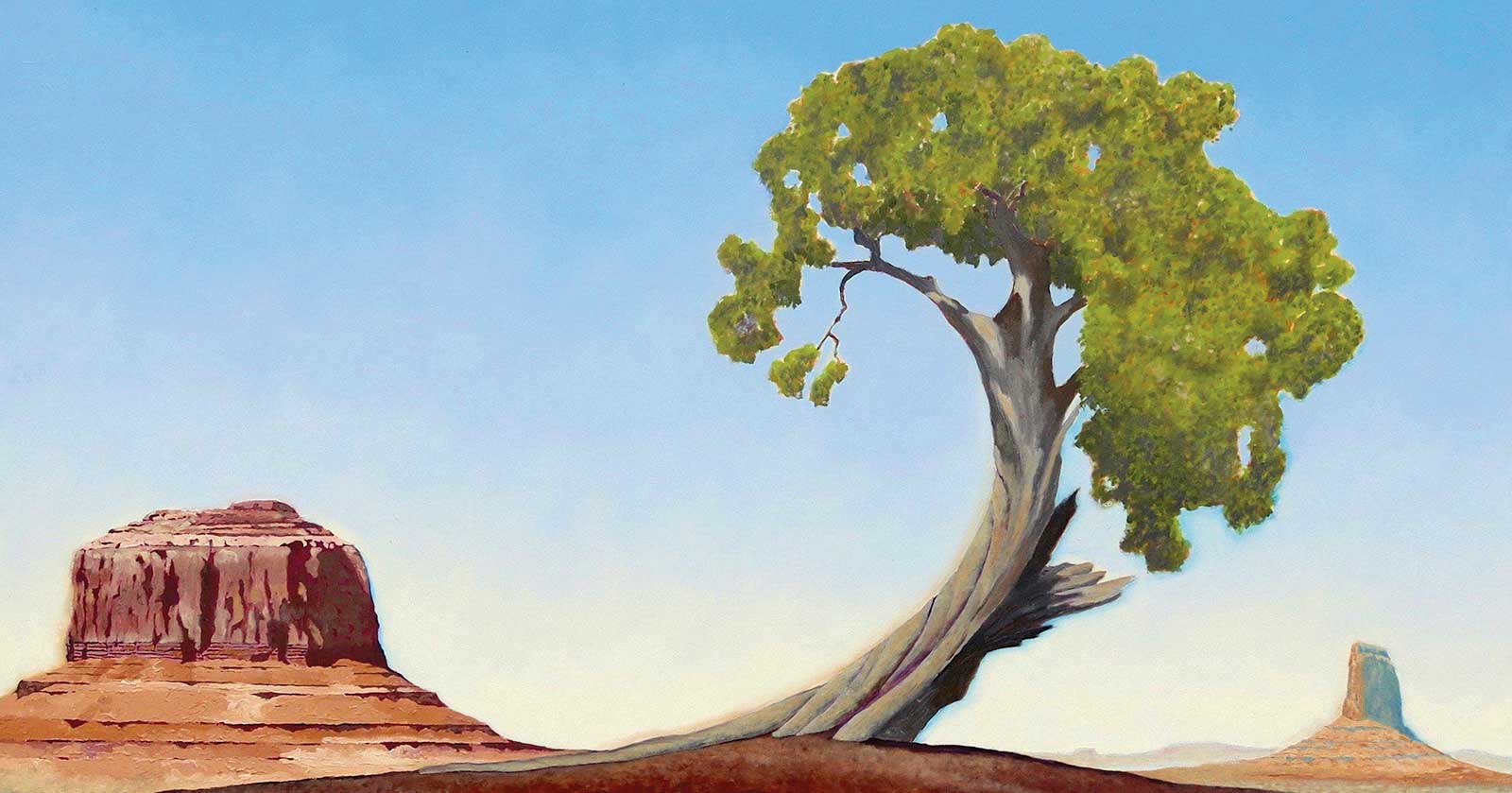 Sorrel Sky Gallery, Merrick Butte, acrylic on canvas 24 x 45”, by David Knowlton.
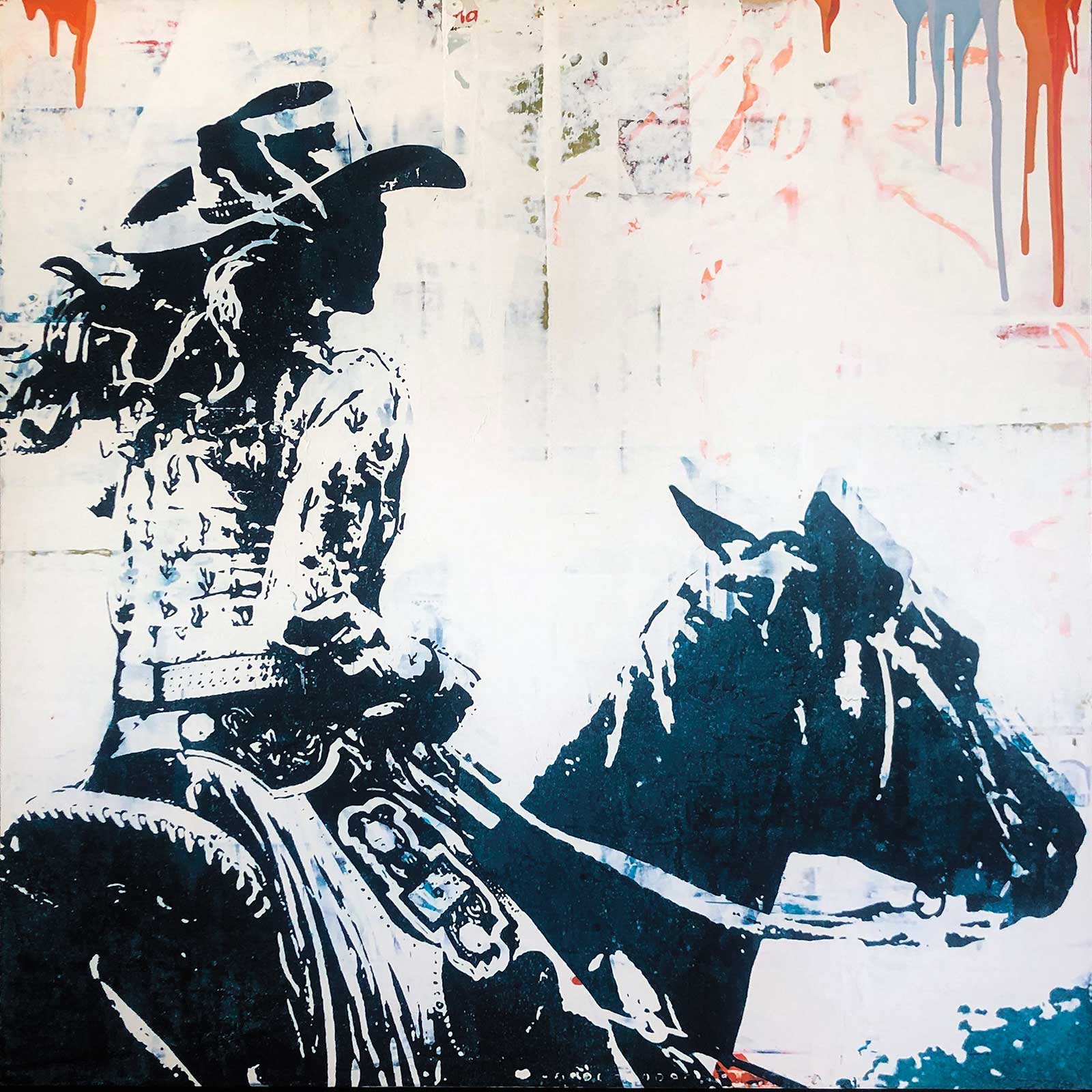 Sorrel Sky Gallery, Finding Her Way in the West: Summer, acrylic on panel, 24 x 24”, by Maura Allen.
Sorrel Sky Gallery showcases the artwork of such talented creators as Thom Ross, Maura Allen and David Knowlton. “Each of these artists...well represent the contemporary West with their unique visual themes and cultural references,” says gallery owner Shanan Campbell. “A lover of history, Thom’s focus is on ‘folk heroes’ such as Billy the Kid, Wyatt Earp and Jesse James, depicted with contrasting shapes and colors. Maura sees the West as a place of new beginnings, and her use of texture and patterns create a cinematic quality in her images of ranch life, cowboys and cowgirls. By paring down the landscape to its essentials, David places emphasis on the abstract elements of iconic structures, both natural and manmade, always with a unique perspective.”
Campbell adds, “For the collector, it’s important to find what you connect with. Perhaps it’s the historical angle, the composition or the location. When you find that connection, you’ve found the right contemporary West piece to add to your collection.”
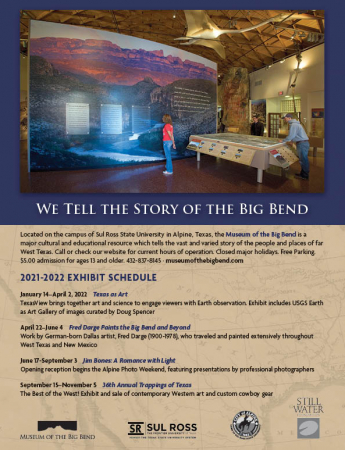
The Museum of the Big Bend has a small but growing collection of early Texas art. Beginning in 1932 a Summer Art Colony was established at Sul Ross State University by Texas artists Julius Woeltz and Xavier Gonzalez. These men were part of the regionalist movement and were influenced by the Mexican muralist Diego Rivera. Great Texas artists such as Harry Anthony DeYoung, Otis Dozier, Coreen Mary Spellman and William Lester all came to Alpine, Texas, to teach summer art classes until 1950. As we see in contemporary Western artists such as Phil Epp and Alice Leese, their work is informed by the works of the Depression-era artists. “It is always fascinating to see how current artists interpret and integrate past works into their own,” says museum director Mary Bones.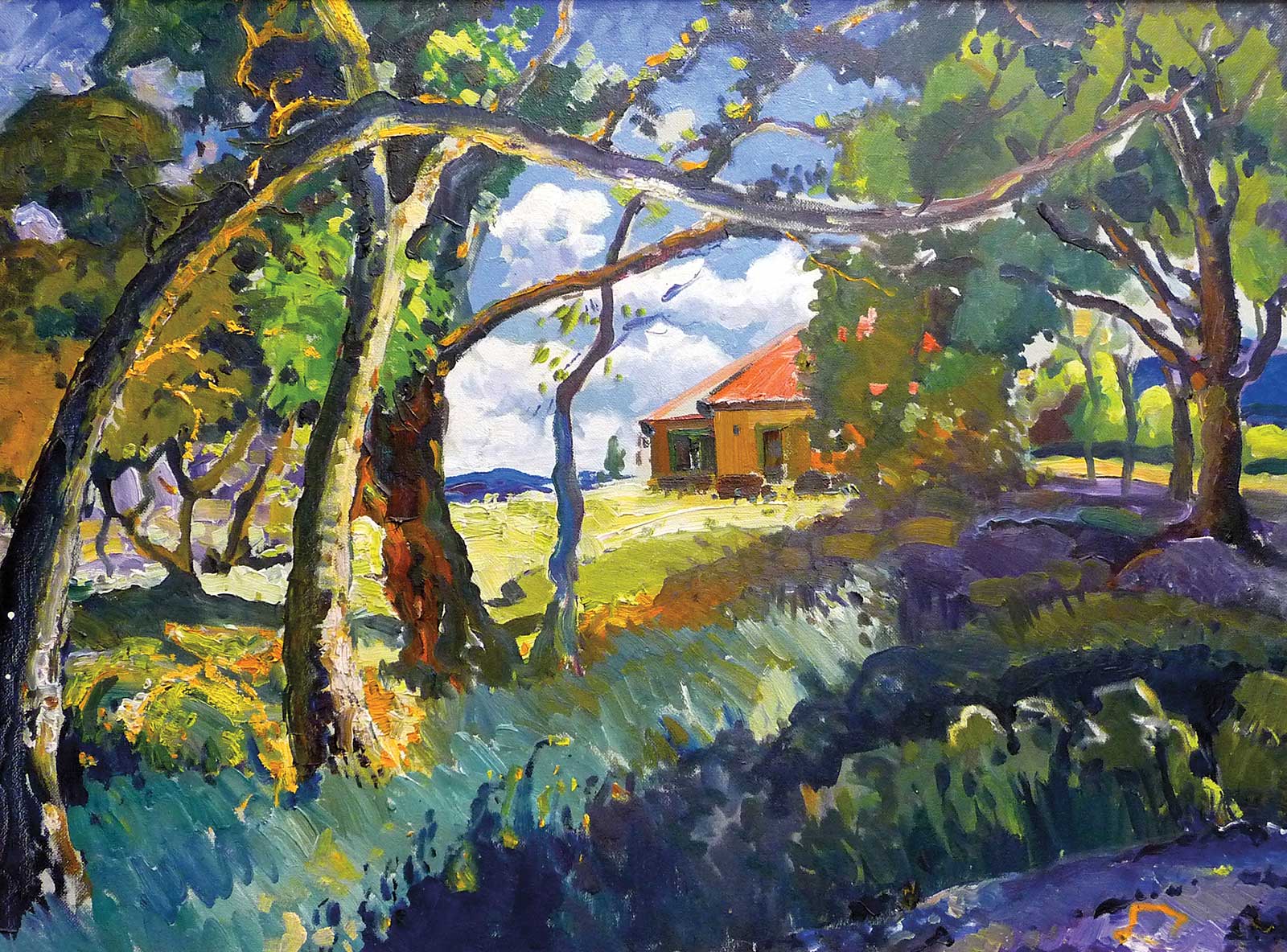 Museum of the Big Bend, Kokernot Lodge, oil, ca. 1930s, 36 x 48”, by Julius Woeltz (1911-1956).
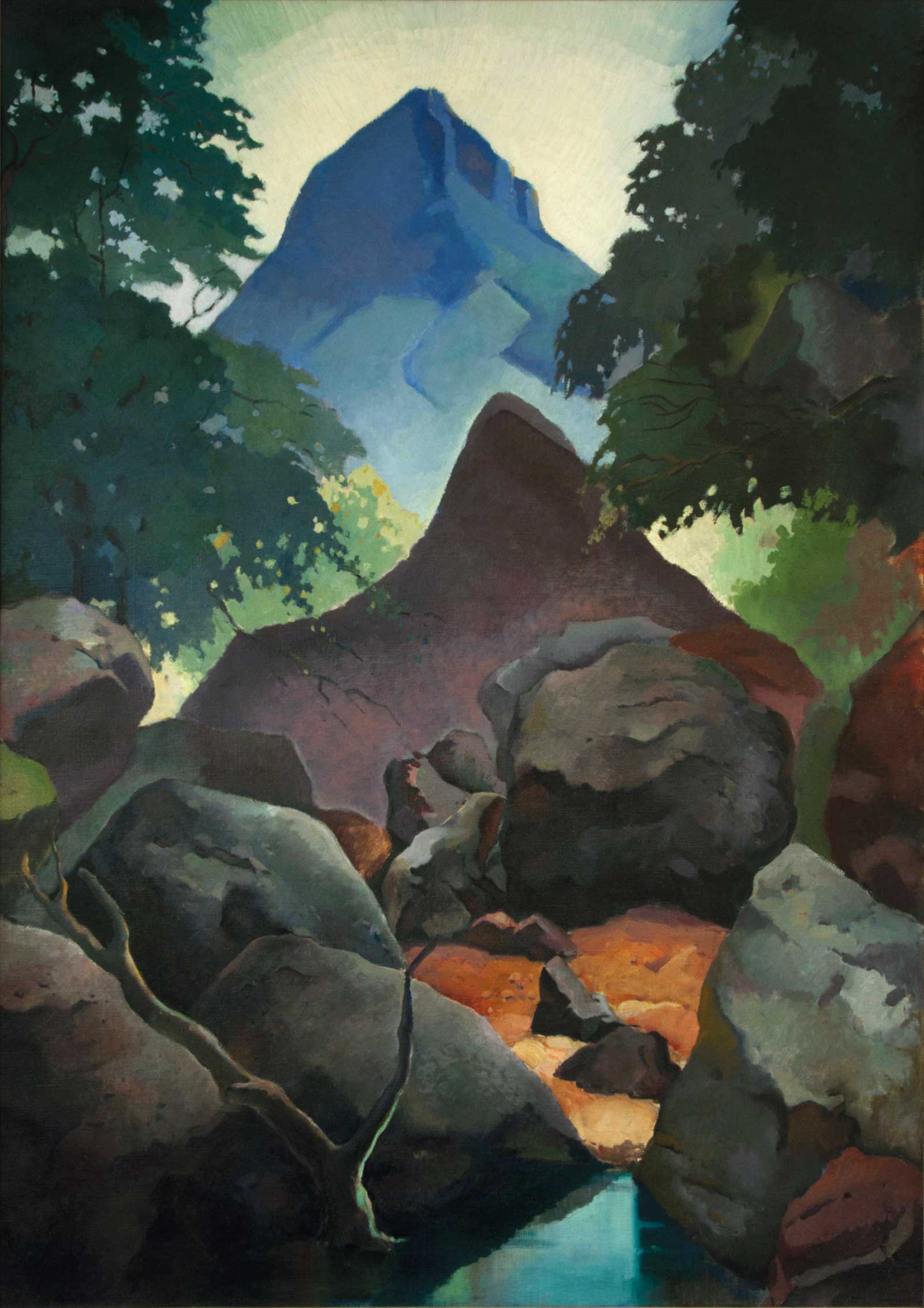 Museum of the Big Bend, Miter Peak, oil on canvas, ca.1930s, by Julius Woeltz (1911-1956).
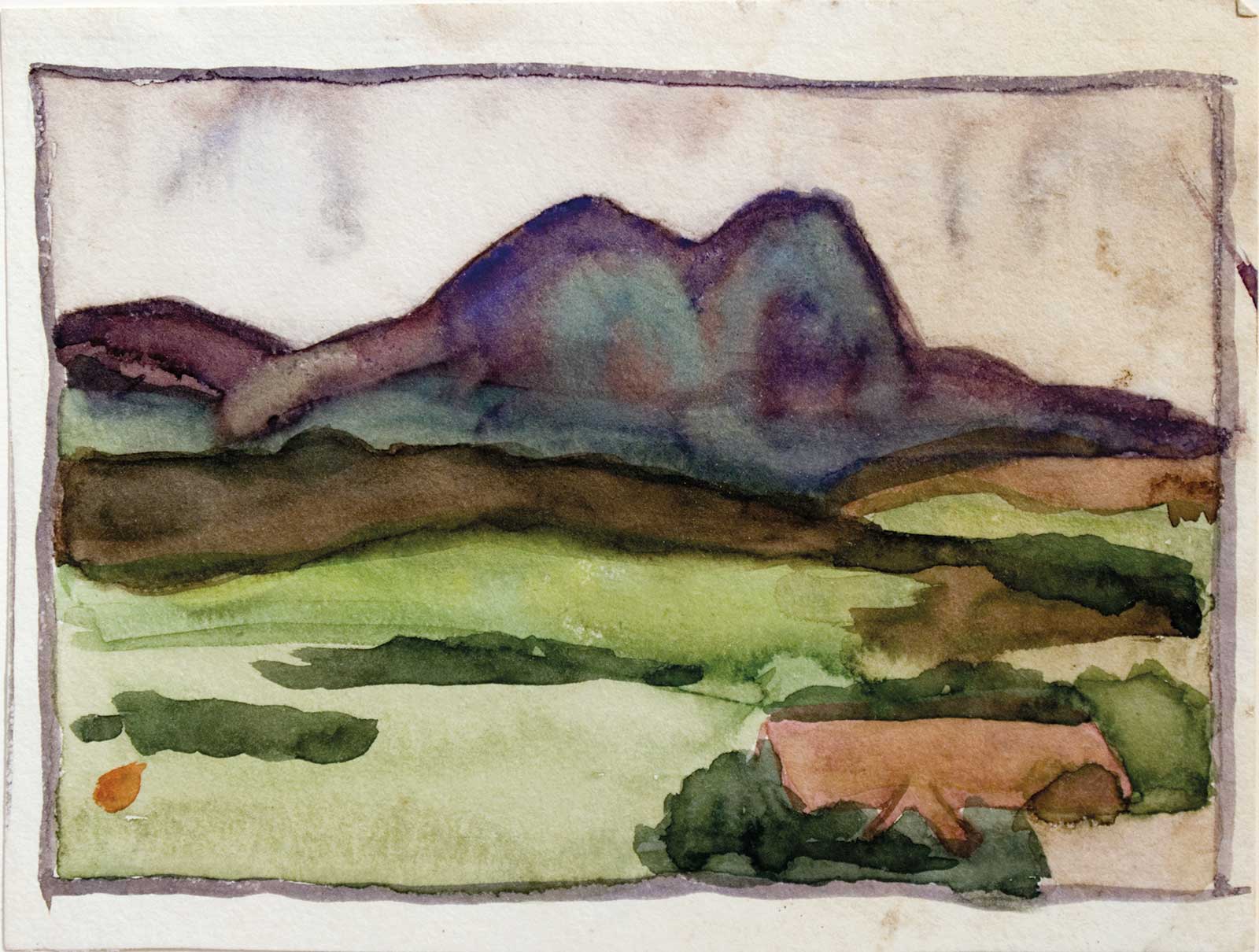 Museum of the Big Bend, Twin Sisters, watercolor, 12 x 14”, by Alice Reynolds.
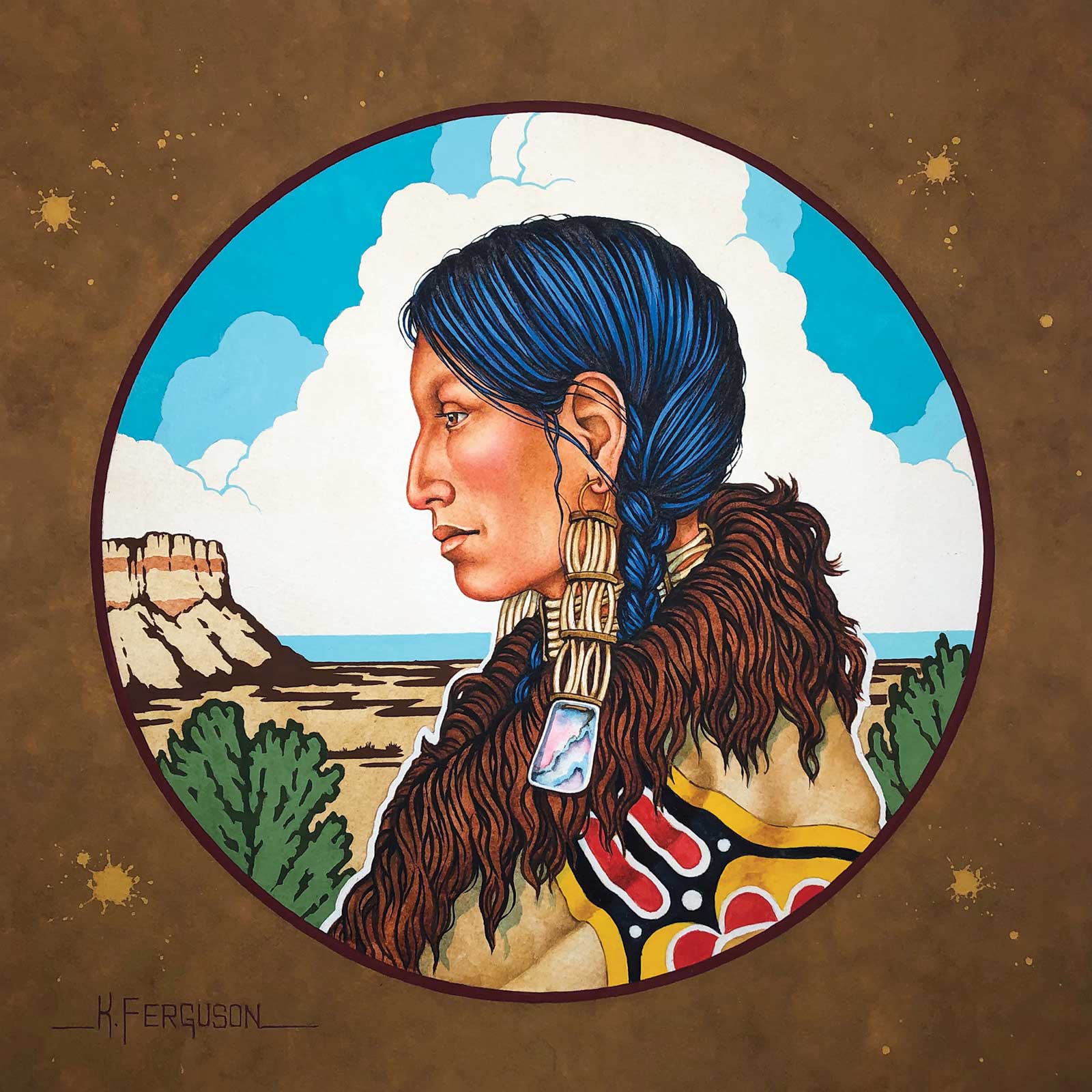 Kenneth Ferguson, A Woman of the Plains, watercolor and gouache, 14 x 14”
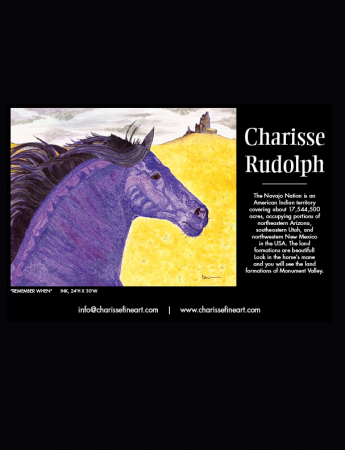
Charisse Rudolph of Charisse Fine Art is an emerging artist. Her paintings capture vivid color with a distinct Western feel. Colorful yet detailed, her award-winning and unique style bring forth a modern feel. Rudolph strives to capture the connection between her subjects. Her artwork recently appeared in the 2021 LA Art Show and will be featured at Art Santa Fe in July 2022.
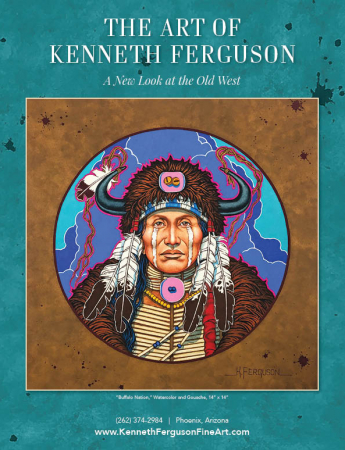
Much of the artwork of watercolor and gouache artist Kenneth Ferguson pertains to history and nature. “Often,” he says, “of the American West, and specifically, the people and animals that have made their home on the Great Plains. Through my paintings, I shake the dust off the past and present these traditional subject matters in a more vivid, contemporary way. My interest might be in the 19th century, but I paint it as a 21st-century artist.”
Ferguson continues, “Whether it’s an unexpected take on composition, employing an atypical medium or using humor to explore social and political issues, contemporary Western artists are creating really interesting, outside-the-box work. There’s so much out there for collectors of Western art to explore.
I think this is an exciting time for the genre.”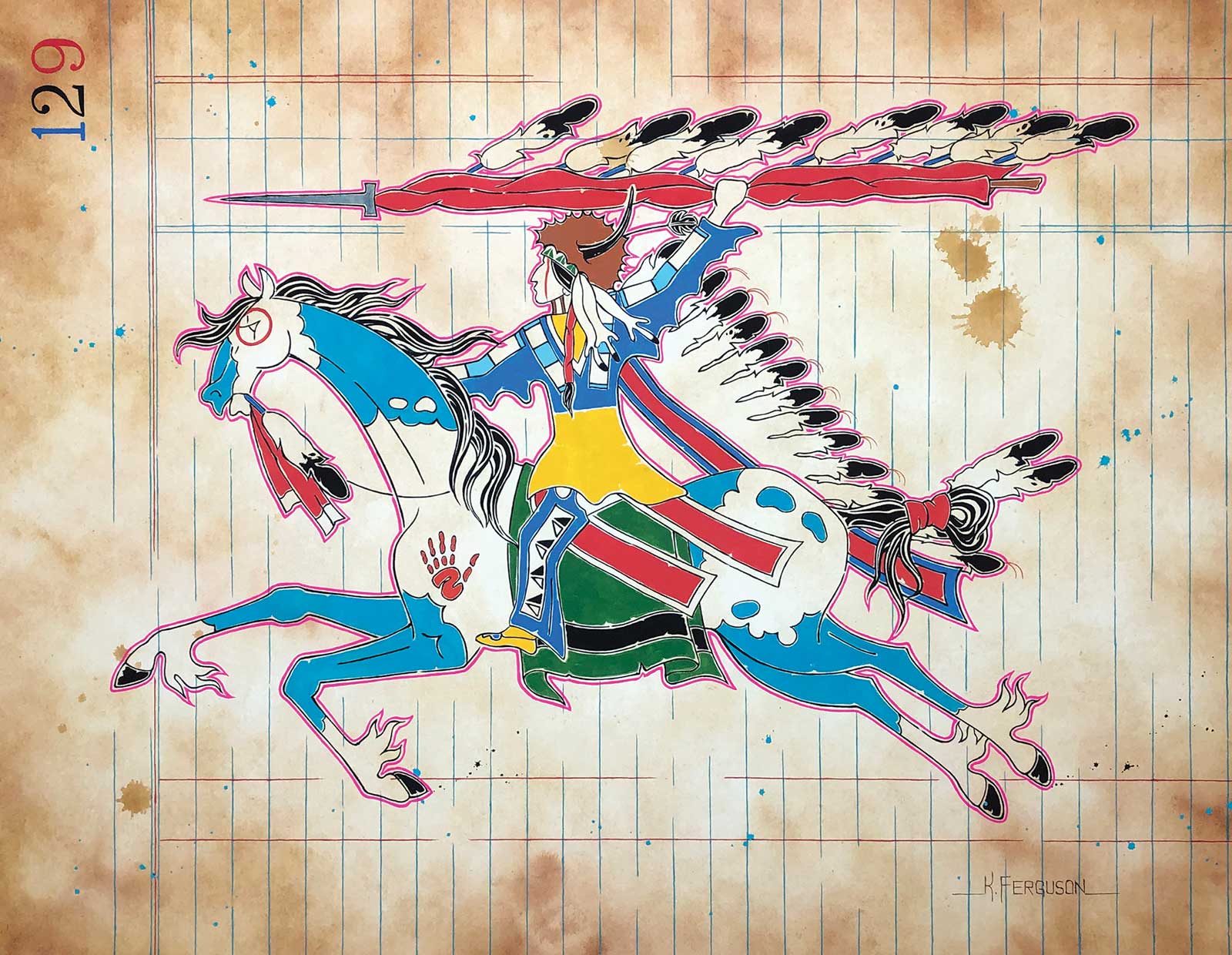 Kenneth Ferguson, War Paint, watercolor and gouache, 20 x 26”
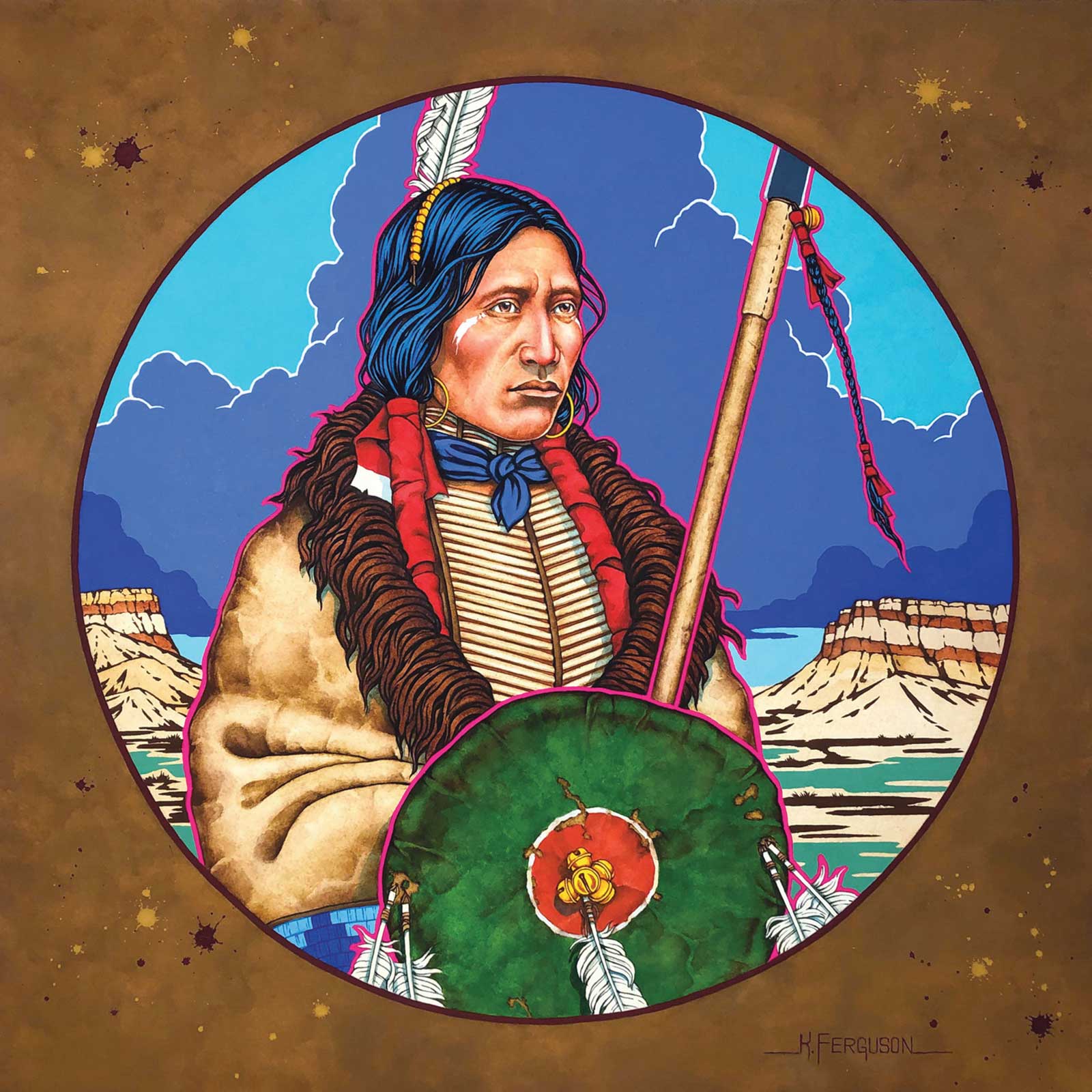 Kenneth Ferguson, Winds of Change, watercolor and gouache, 20 x 20”
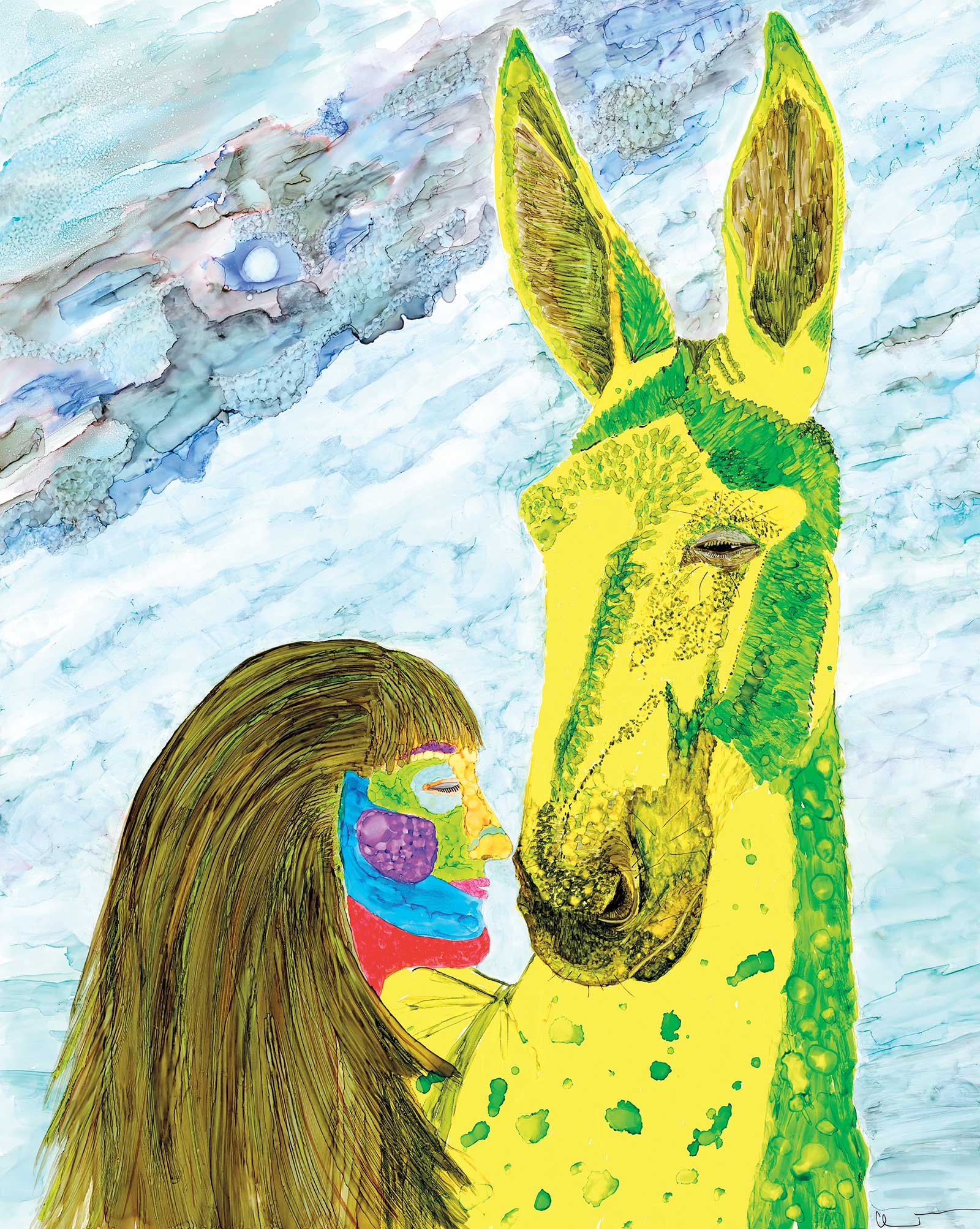 Charisse Rudolph, One Heart, ink, 30 x 24”
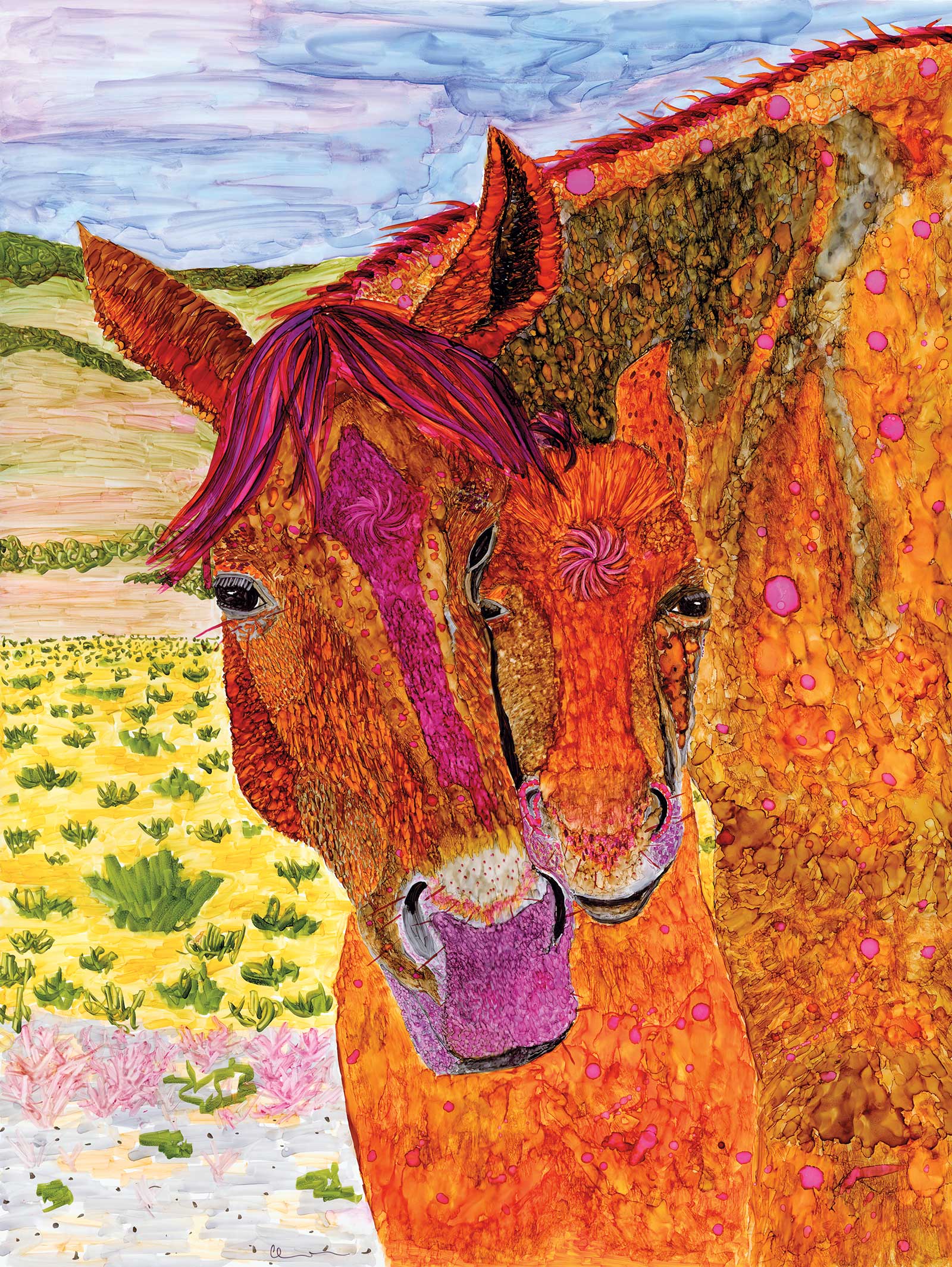 Charisse Rudolph, Unconditional, ink, 24 x 18”
Powered by Froala Editor