Philip C. Curtis (1907-2000) went to Phoenix in 1937 under the auspices of the Federal Art Project, a New Deal program. There, he established the Phoenix Federal Art Center, an early iteration of the Phoenix Art Museum.
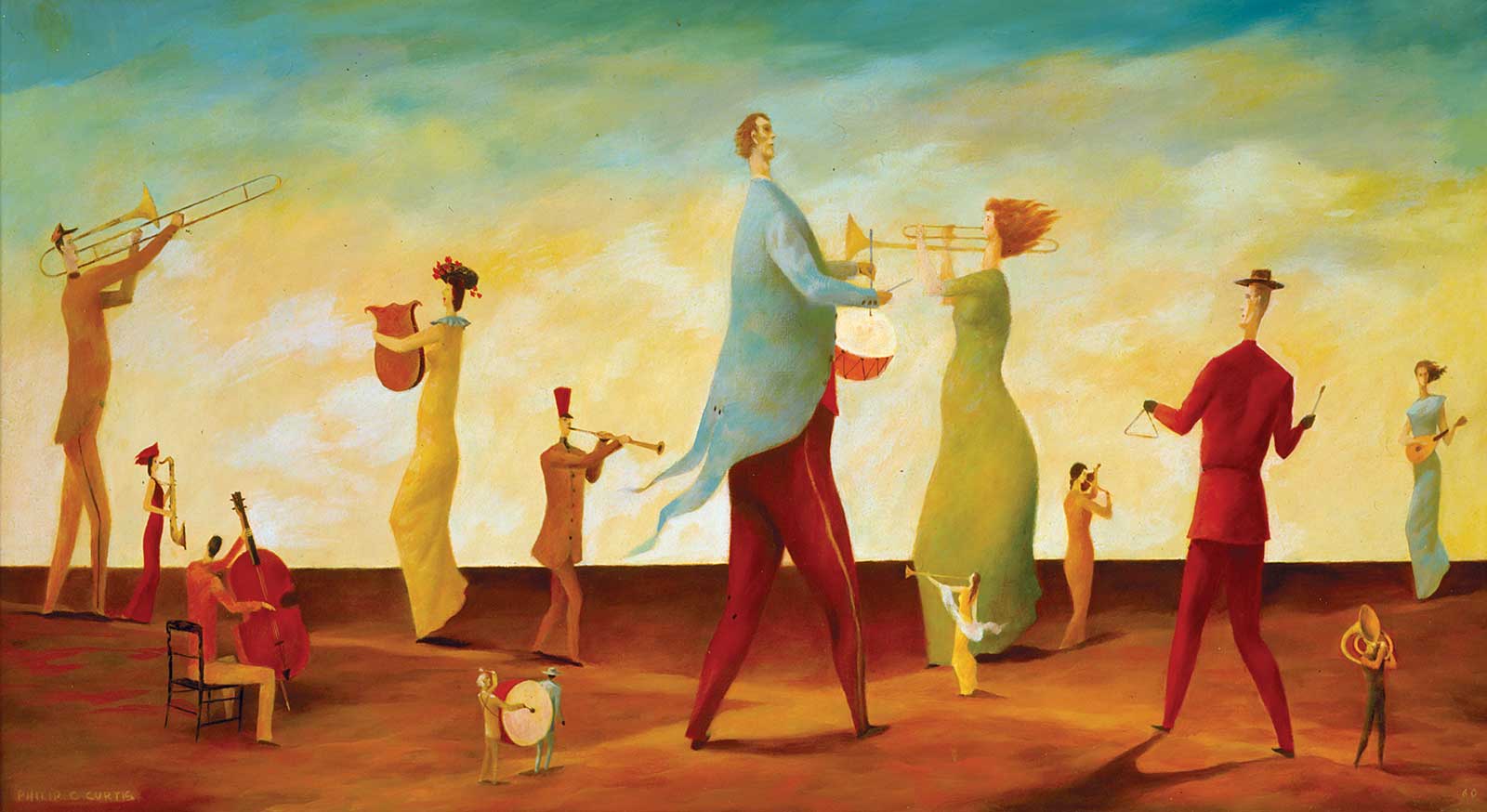 The Wanderers (Los vagabundos), 1960, oil on board. Collection of Phoenix Art Museum, gift of Virginia Ullman. Philip C. Curtis Restated Trust U/A/D April 7, 1994.
Today, the museum honors his contributions in the Ullman Center for the Art of Philip C. Curtis. The exhibition, Philip C. Curtis and the Landscapes of Arizona, running through 2022, is the first of many exhibitions that “will continuously showcase paintings by the beloved artist in conversation with other works from across the museum’s American art collection to foster greater understanding of and provide meaningful art-historical context to the museum’s Curtis collection.”
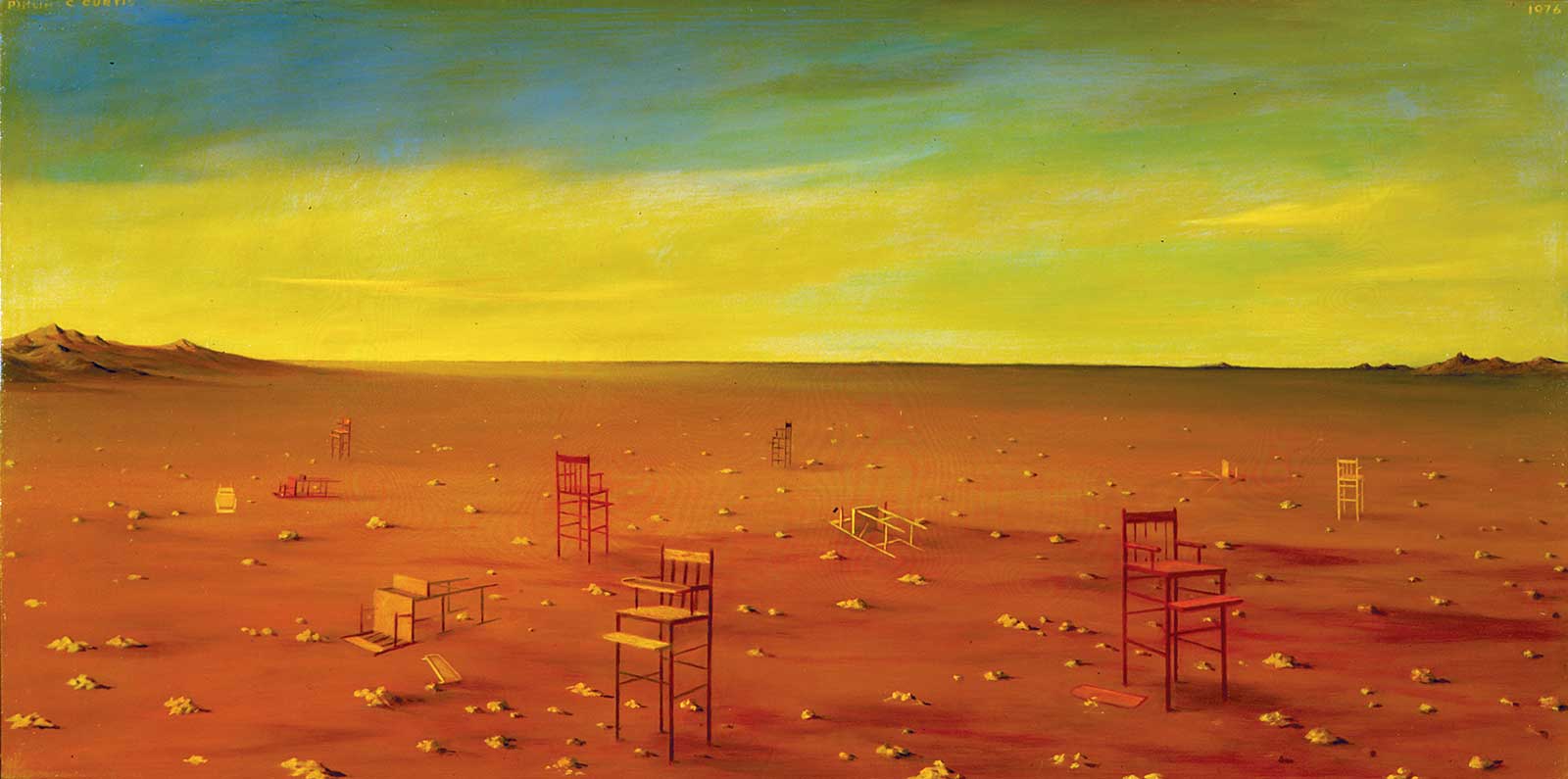 High Chairs (deserted landscape) [Sillas altas (paisaje desierto)], 1976, oil on board. Collection of Phoenix Art Museum, gift of the Philip C. Curtis Restated Trust U/A/D April 7, 1994.
Curtis had begun studying law but realized he really wanted to pursue art and enrolled at the School of Fine Arts at Yale University. His success with the WPA led him to other venues but, after service in World War II, he returned to Scottsdale to paint. In a 2000 interview he said, “Arizona was my savior. I liked the bare quality of the desert. I could choose my form of art, and it was appreciated. I was free to do anything I pleased. I didn’t have to be in the one-track situation.” He considered himself a surrealist but is often ranked among the country’s magic realists.
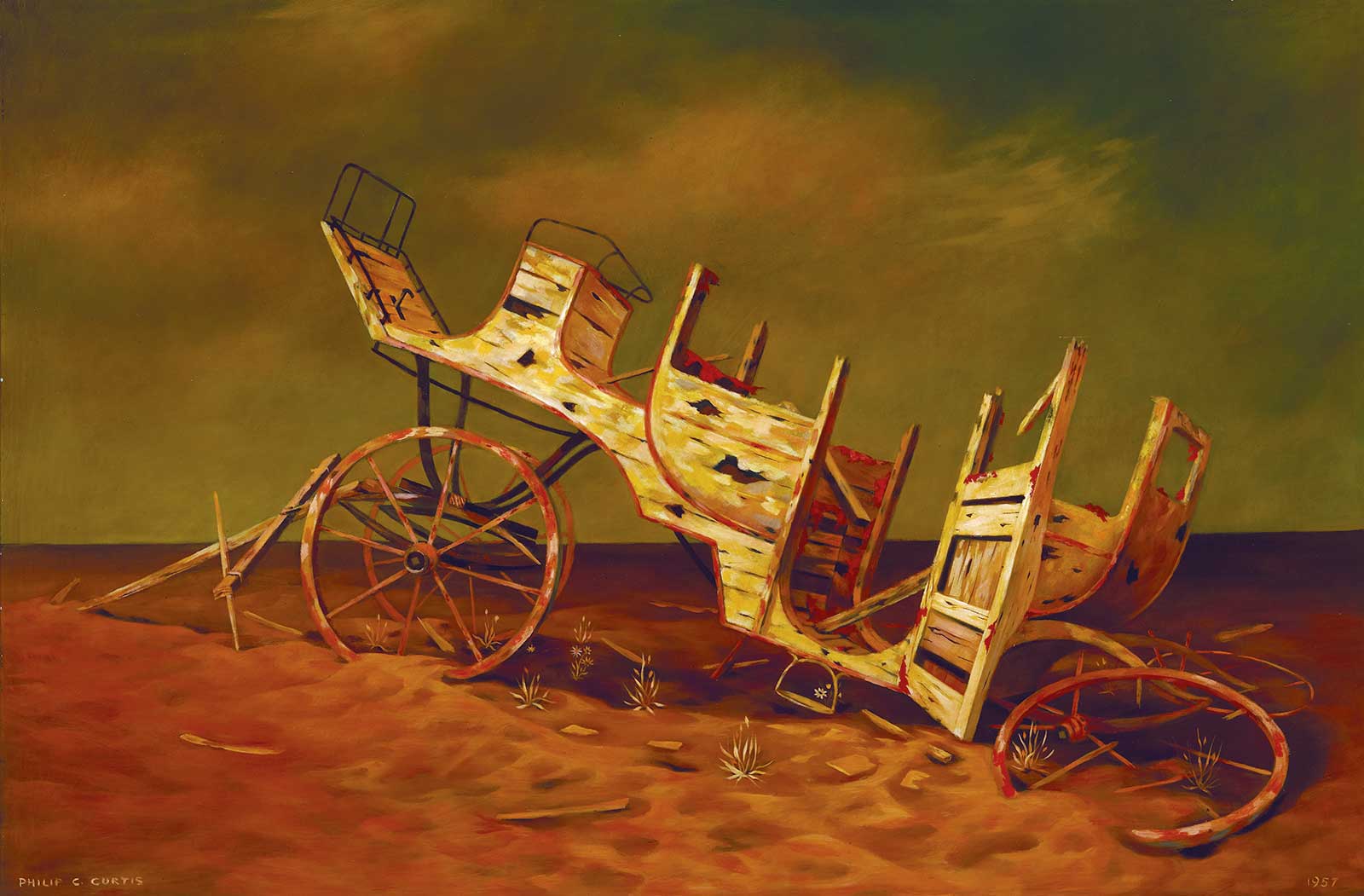 Stagecoach (Diligencia), 1957, oil on board. Collection of Phoenix Art Museum, gift of the Estate of Kathleen I. Leavitt. Philip C. Curtis Restated Trust U/A/D April 7, 1994.
The museum notes, “While his canvases do not portray any recognizable geological features, his work may be contextualized within the work of a broad spectrum of artists who came to the state. Curtis saw the desert through a lens of magic realism. This differed from Maxfield Parrish, Eugene Berman, and other artists who preferred more representational modes.”
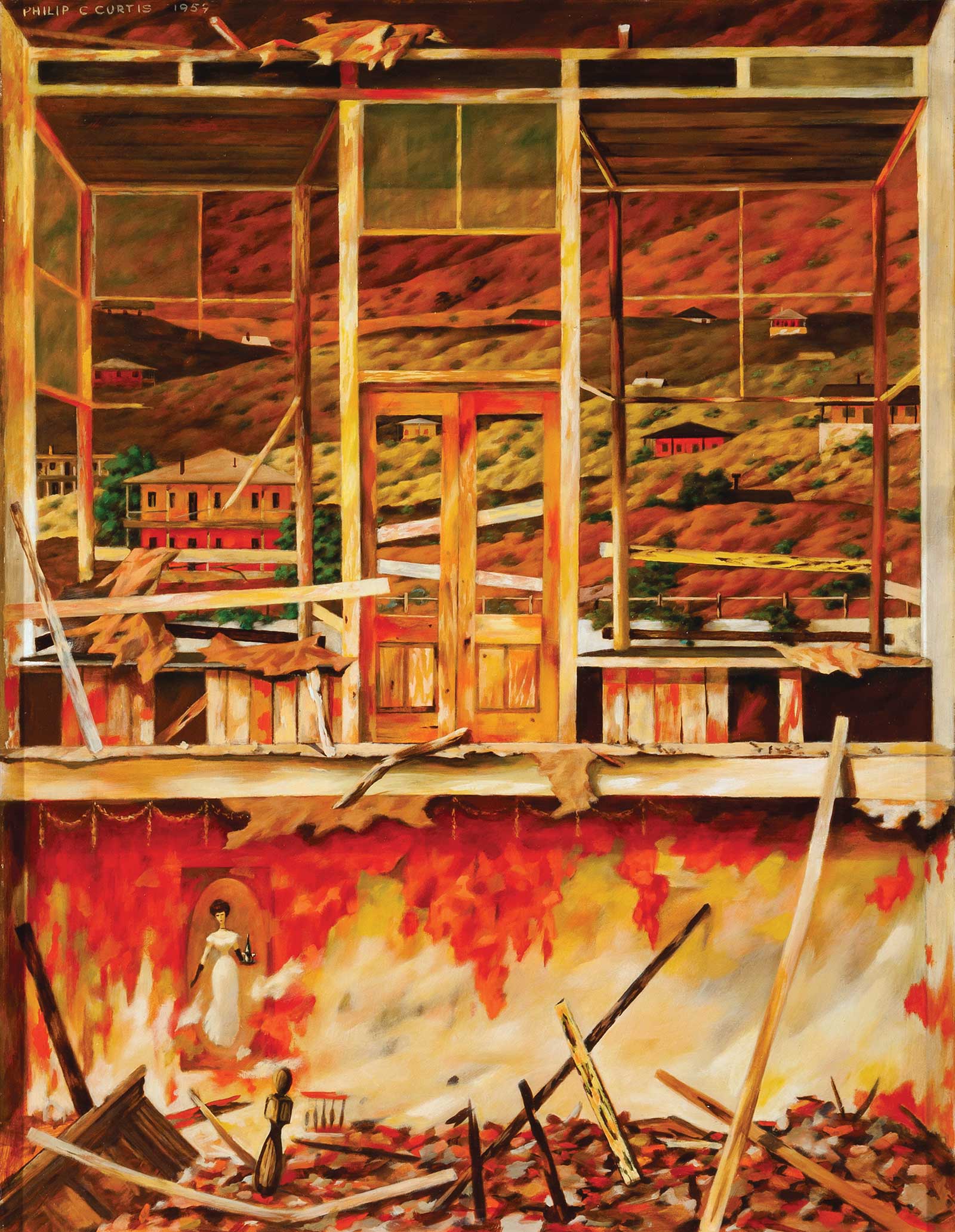 The Fall (La caída), 1959, oil on panel. Collection of Phoenix Art Museum, gift of Pinnacle West Capital Corporation. Philip C. Curtis Restated Trust U/A/D April 7, 1994.
His paintings are often whimsical as in The Wanderers, 1960, in which musicians wander through the desert playing their instruments, seemingly oblivious to one another. At other times, they are somber as in High Chairs (deserted landscape), 1976, in which abandoned high chairs litter the desert as if the children had grown up and moved on.
Philip C. Curtis and the Landscapes of Arizona
Through December 2022
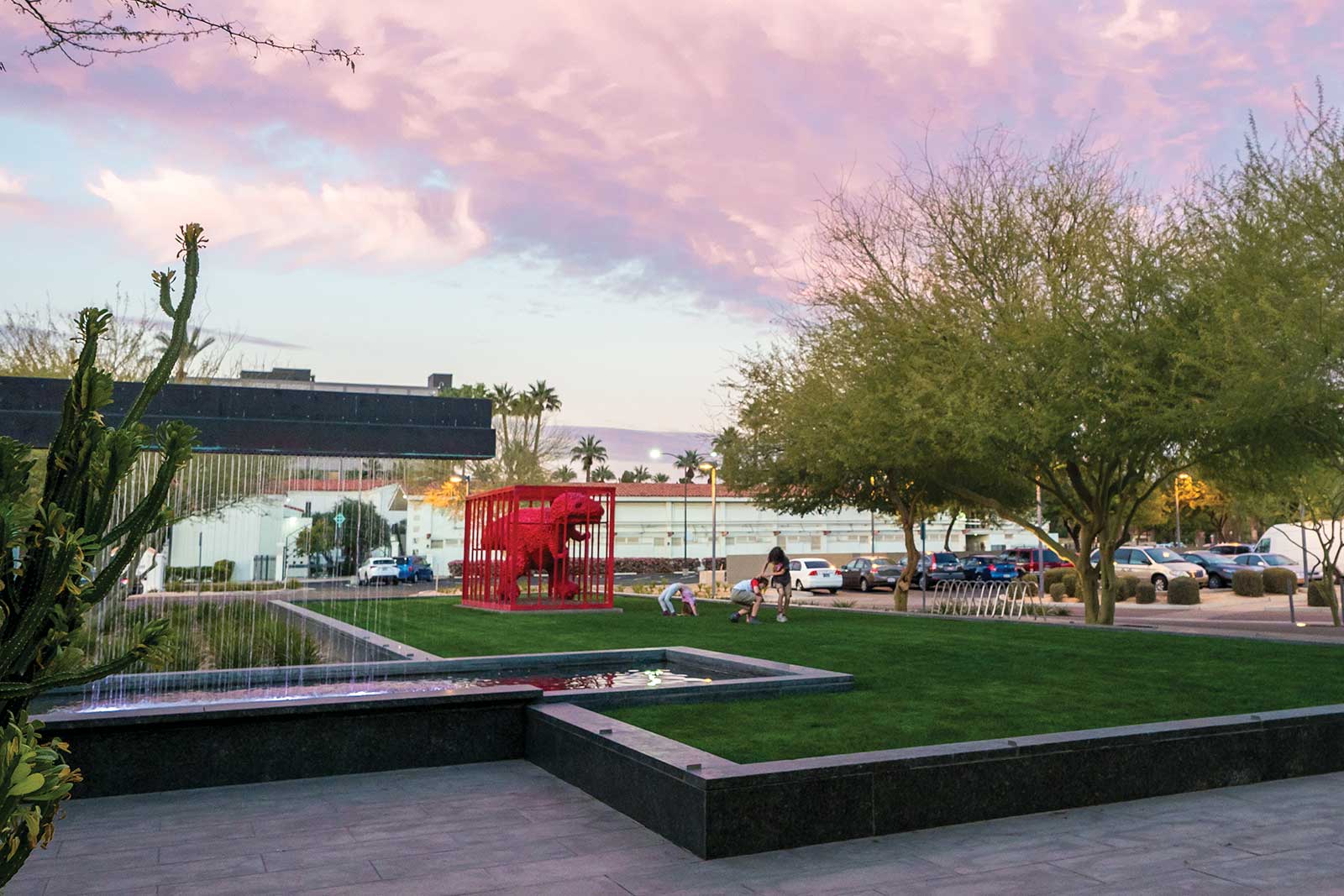
Phoenix Art Museum, 1625 N. Central Avenue, Phoenix, AZ 85004
(602) 257-1880, www.phxart.org
Powered by Froala Editor