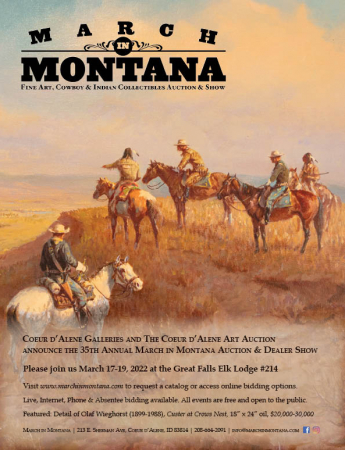
The Phippen Museum has had a large collection of Olaf Wieghorst’s work in their permanent collection since the mid-1990s, and the time has come to showcase the artist’s infatuation with horses and the Western lifestyle in the show Olaf Wieghorst’s American West. The many etchings, drawings and paintings in the Phippen’s archives will be displayed alongside some bonus pieces that have been generously loaned by collectors.
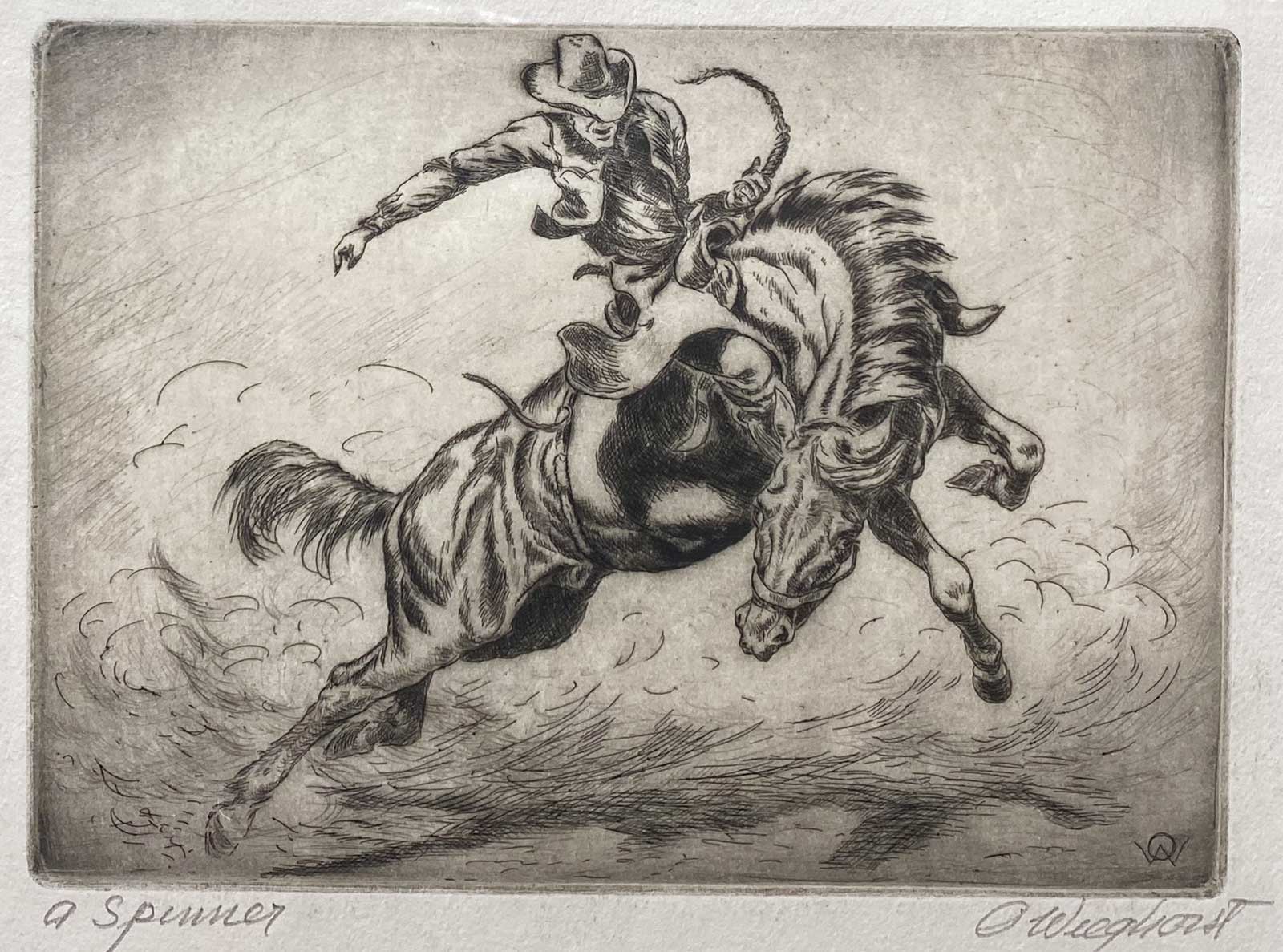 A Spinner, etching, 6½ x 8”
“We have a significant collection of Wieghorst’s work that we can’t always have out,” explains Jeannette Holverson, curator and collections manager for the Phippen. “Anytime we can put pieces from our permanent collection on display for the community is always a goal of ours.” The museum is using their rotating exhibition space, the James Gallery, to do just that; share a spectacular body of work with the community.
Wieghorst had quite the amazing background, especially when it comes to horses. He was born in Vigor, Denmark, where by the age of 9 he was performing as a stunt rider in the Danish circus. This is where his deep fondness for horses was fostered, and then flourished when he immigrated and joined the U.S. Calvary at the Mexico border in the early 1920s. He worked on ranches while traveling the area, and sketched and painted what he experienced.
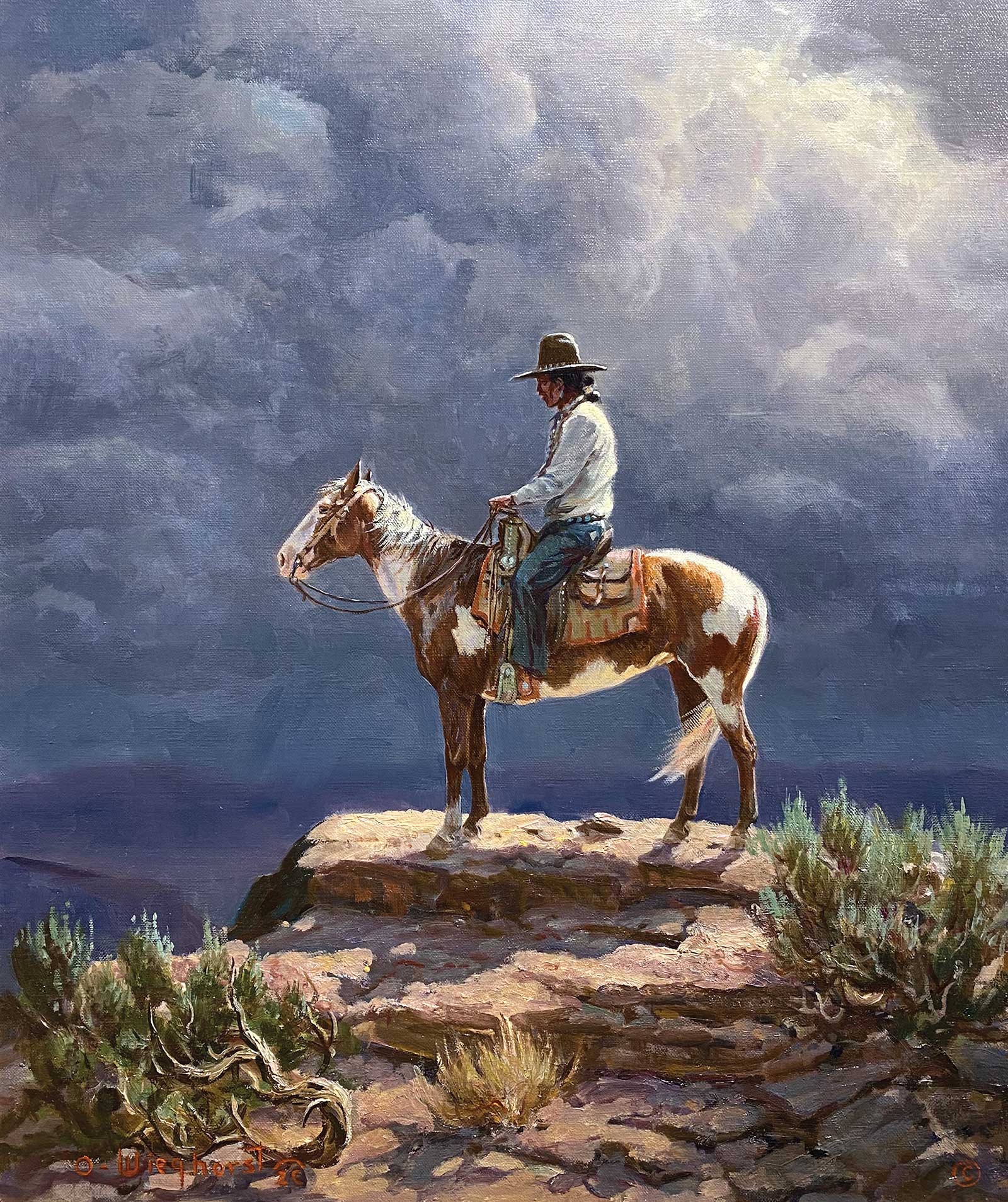 Solitude, oil, 24 x 20”
From the mid-1920s to 1944, Wieghorst lived and worked as a mounted police officer in New York City. “He continued to paint,” Holverson says, “always working on mastering the anatomy of the horse. In 1937, on a visit back to Denmark, he learned etching techniques from his father after showing interest in the complicated process. Most of Wieghorst’s etchings were created from 1937 to 1940. During that time, he developed his own technique of etching by creating a lead pencil drawing on paper that he would place on an inked plate.”
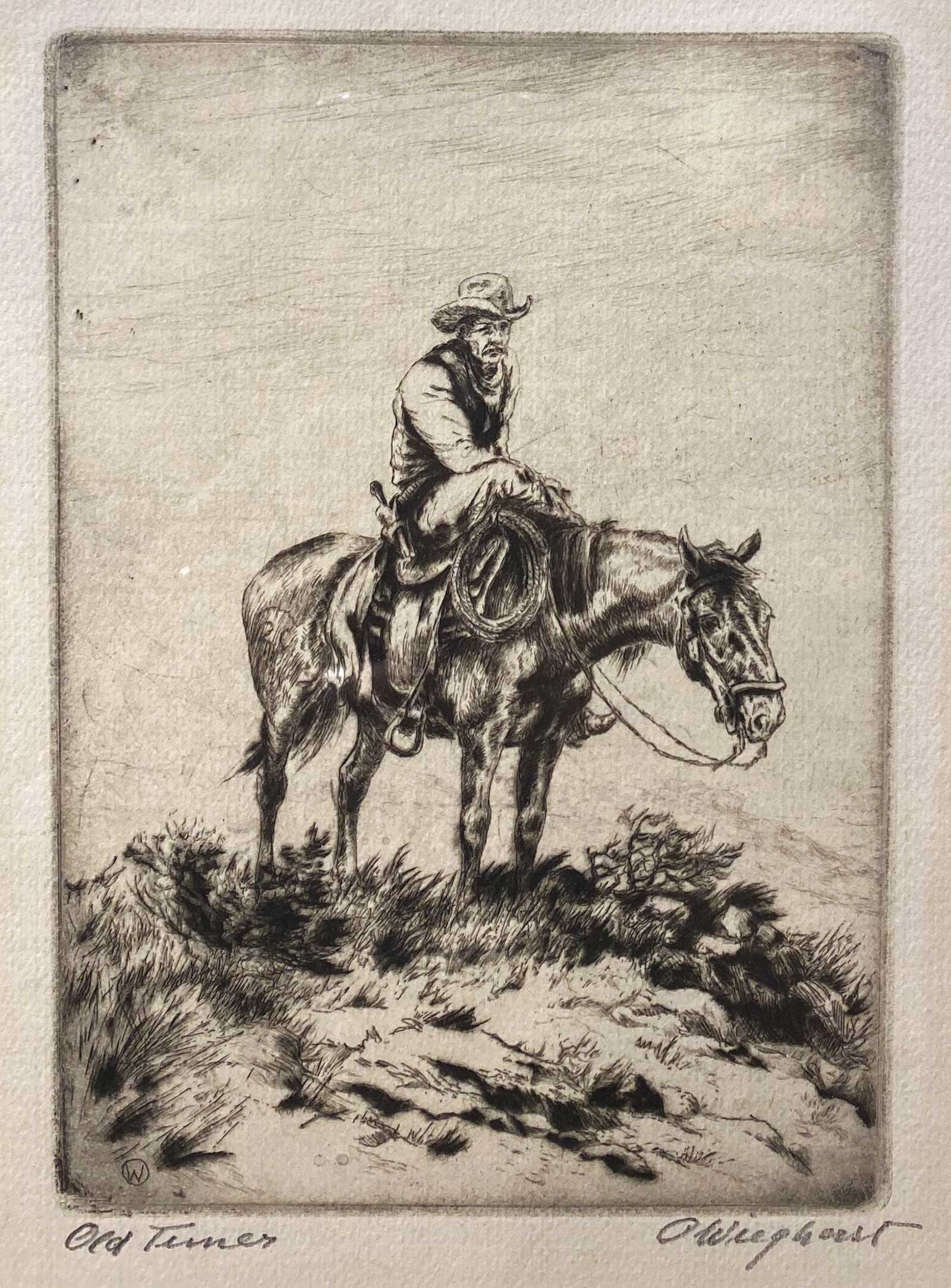 Old Timer, etching, 9 x 7”
Etchings of cowboys on horseback in pieces A Spinner and Old Timer, will be part of the exhibition. They illustrate Wieghorst’s proficiency with etching, along with his ability to expertly capture the horse and culture of the West.
Wieghorst eventually made his way to El Cajon, California, where he lived and worked on his own ranch and continued to paint horses. Holverson notes the artist saying, “I couldn’t have learned what I did from some teacher in art school. I learned about horses by sleeping, freezing, thirsting and starving with them. I learned by doing; I paint what I know.”
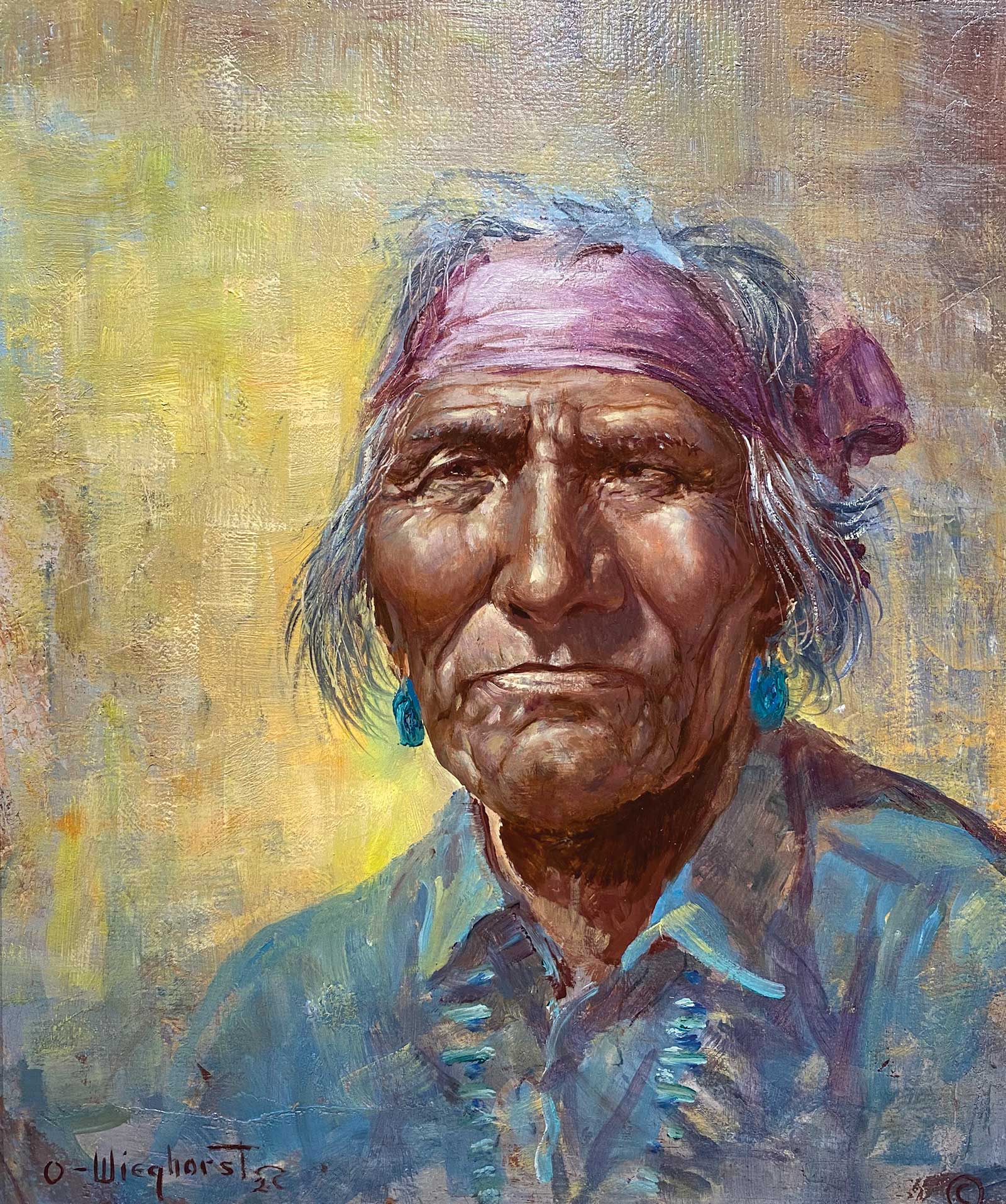 Old Navaho, oil, 14½ x 12”
Viewers can also expect to see paintings like Solitude, depicting a Navajo man on horseback set against large storm clouds, and Old Navaho (spelling taken from back of painting and title plate), a portrait of an elder Navajo man.
“Wieghorst is just a fascinating artist that had this larger-than-life background but was very humble and living this quiet life in the end,” says Holverson. We tried to encompass the progression of his life and work…He saw the beauty and the romance of the West and you can see that in his artwork.”
Viewers can experience the artist’s journey through January 23.
Olaf Wieghorst’s American West
Through January 23
Phippen Museum, 4701 Highway 89 North, Prescott, AZ 86301
(928) 778-1385, www.phippenartmuseum.org
Powered by Froala Editor