For the past few years, the Denver Art Museum had something big up its sleeves. Really big. The Colorado-based institution unveiled its expanded and reimagined campus to the public this past October, which included the brand new 50,000-square-foot Anna and John J. Sie Welcome Center and the renovated Lanny and Sharon Martin Building, named for Denver Art Museum Board Chairman Lanny Martin and his wife Sharon, who donated $25 million for the $150 million museum project. Formerly known as the North or Ponti Building, the eight-floor Martin Building underwent a full restoration and a massive expansion of its former gallery spaces as well as visitor access to Denver’s gorgeous mountain and city views. The project also came to fruition at a milestone for the Martin Building with the celebration of its 50th anniversary, originally designed in the early 1970s by famed Italian architect Gio Ponti.
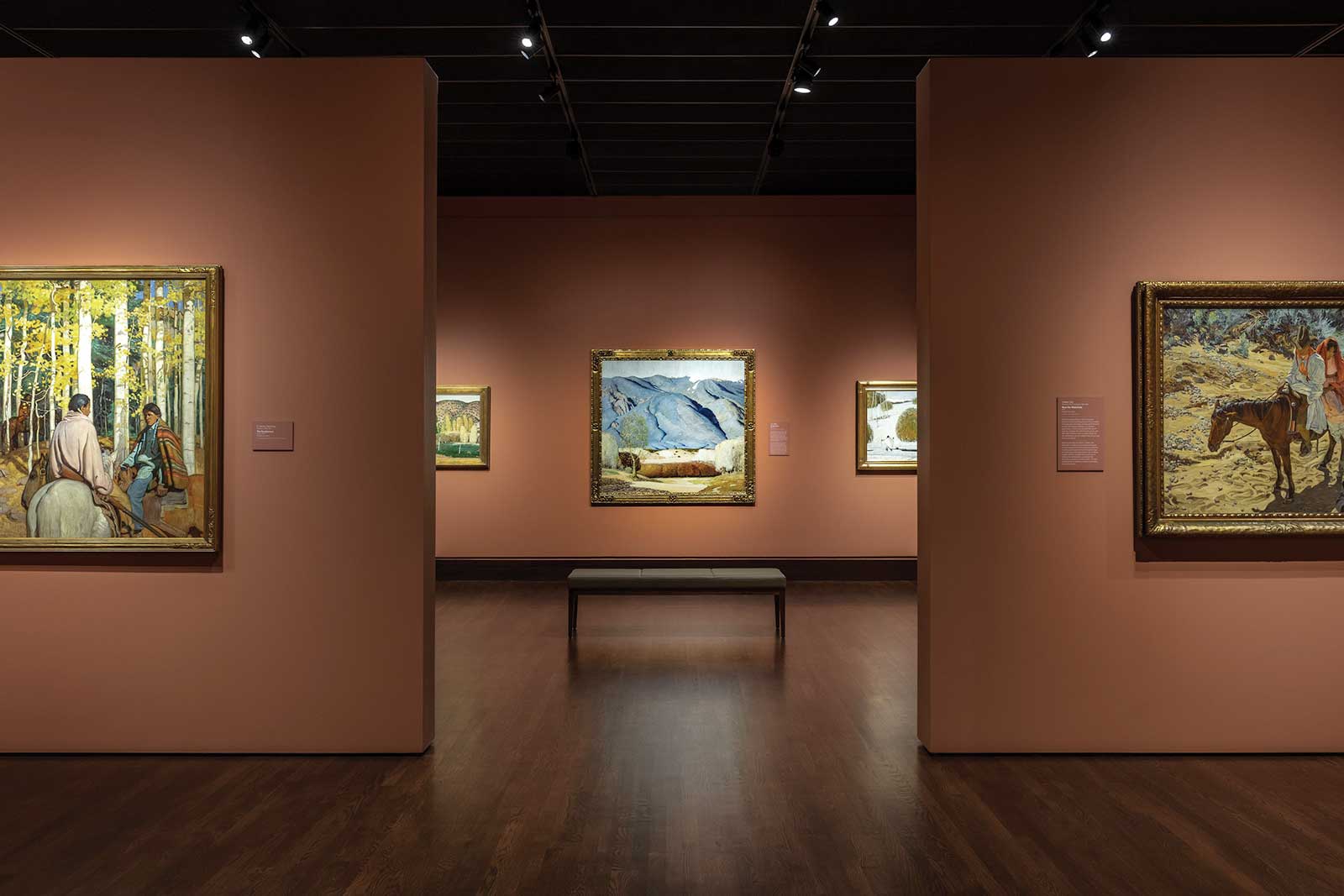 Martha & Cortlandt Dietler and Helen & Arthur E. Johnson Western American Art Galleries. Photo by James Florio Photography. Courtesy the Denver Art Museum.
In this full-fledged metamorphosis, the Martin Building can now better highlight the Denver Art Museum’s phenomenal collection of art and artifacts from around the world and throughout history. Each floor offers a unique, comprehensive collection of art, from the third floor’s Indigenous Arts of North America, to Latin American Art and Art of the Ancient Americas on level four, all the way up to the seventh floor, where visitors will find the 15,799-square-foot Petrie Institute of Western American Art. While DAM’s Western art collection had previously been split between two areas, the renovation reunites the extensive collection all on one floor.
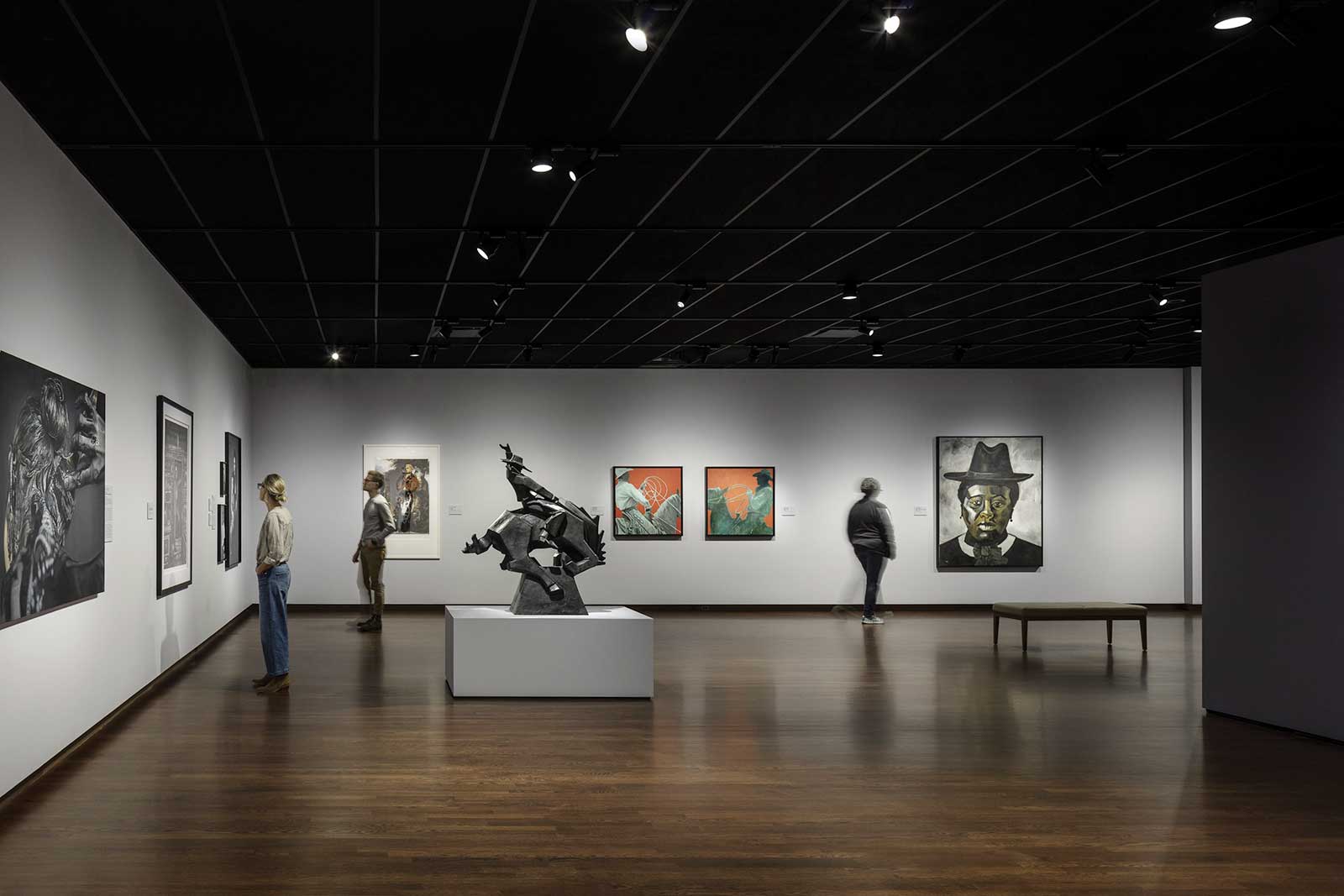 Martha & Cortlandt Dietler and Helen & Arthur E. Johnson Western American Art Galleries. Photo by James Florio Photography. Courtesy the Denver Art Museum.
“[Encompassing] the early 1800s up to the present, the collection can now be seen up into its entirety and can tell richer, more complex, holistic stories about the American West,” says JR (Jennifer R.) Henneman, associate curator of Western American art at the Petrie Institute.
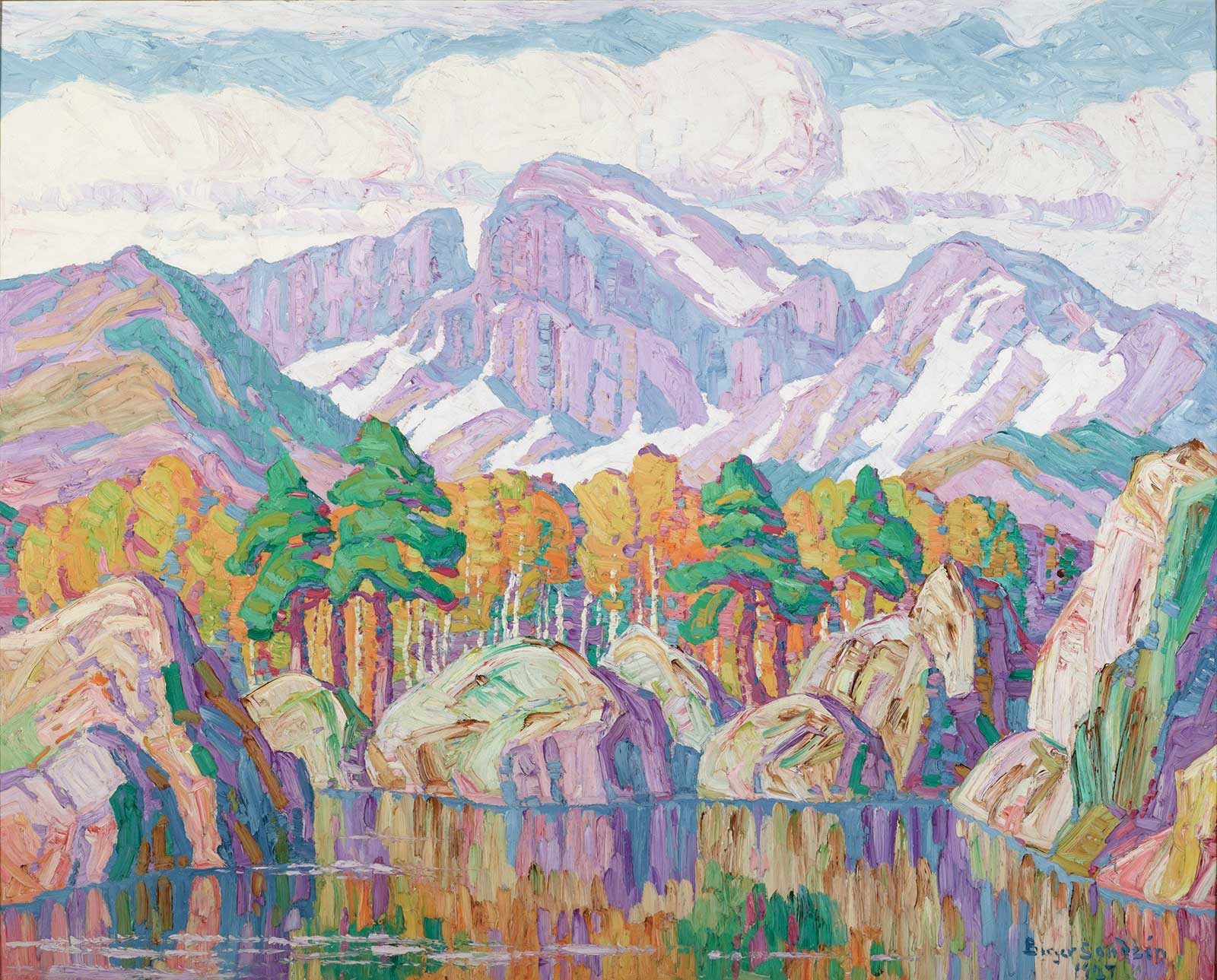 Birger Sandzén (1871-1954), A Mountain Symphony (Longs Peak, Rocky Mountain National Park, Colorado), 1927, oil on canvas. Denver Art Museum: Funds from the DAM Westerners, 2017.28. © Birger Sandzén Memorial Foundation.
The collection features a menagerie of extraordinary works, including Frederic Remington’s The Cheyenne, a dynamic bronze from 1901 depicting a Native American rider on horseback moving at full speed, as well as Marsden Hartley’s 1922 oil New Mexico Recollection #6, showcasing the artist’s modernist style. In A Mountain Symphony (Longs Peak, Rocky Mountain National Park, Colorado), Birger Sandzén depicts Rocky Mountain National Park in impressionistic swaths of rich, bold color. A warm glow is cast over Thomas Moran’s oil on canvas Indian Pueblo of Laguna, New Mexico, which the artist completed in 1905. There’s also Ethel Magafan’s circa 1961 Springtime in the Rockies, an abstract tempera on board, and Charles Deas’ 1844 oil Long Jakes, “The Rocky Mountain Man,” among many others. Arranged chrono-thematically, the gallery space allows visitors to move through the 18th century to modern day as they physically move throughout the floor.
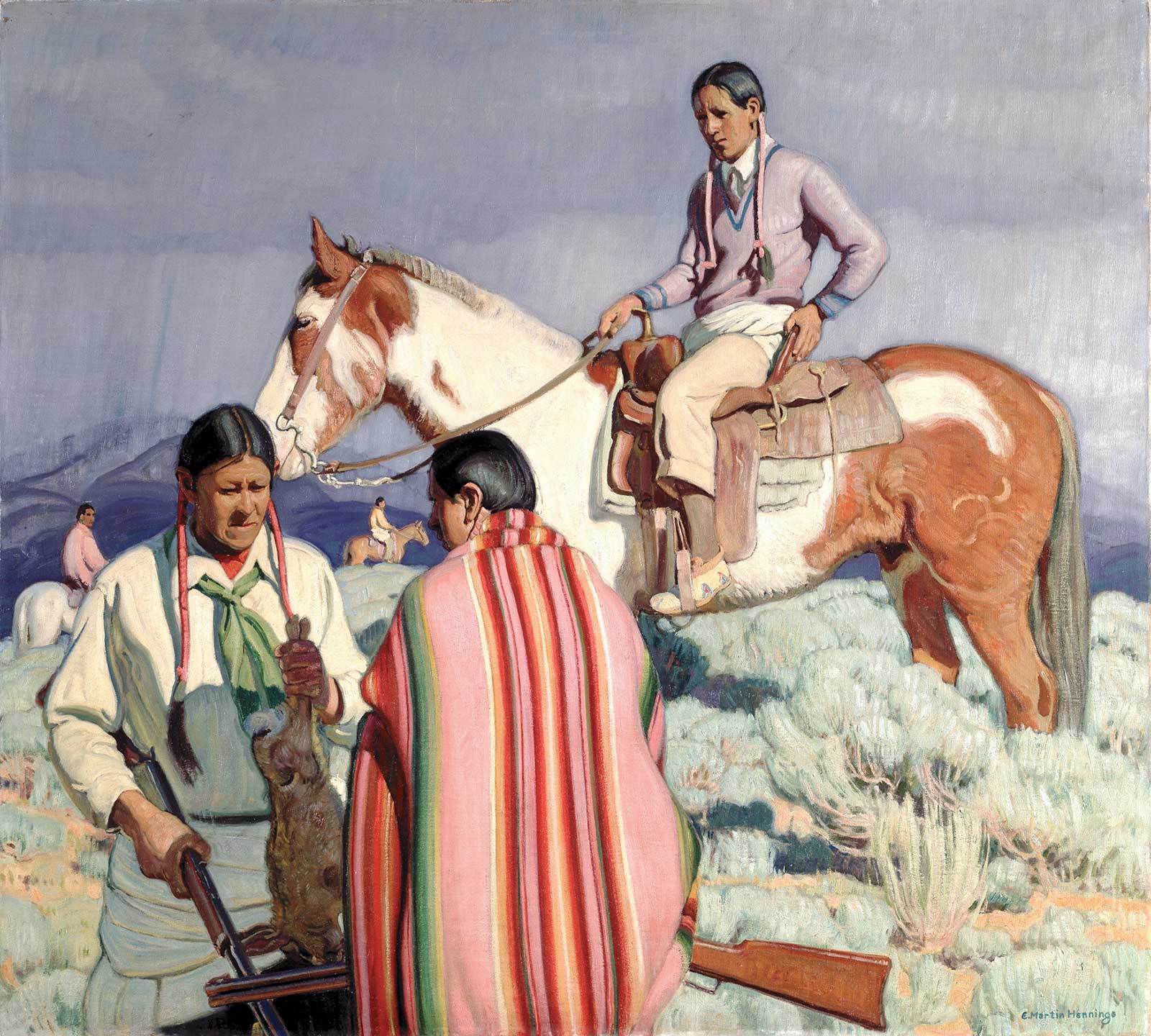 E. Martin Hennings (1886-1956), Rabbit Hunt, ca. 1925, oil on canvas. Denver Art Museum: William Sr. and Dorothy Harmsen Collection, 2001.449.
“We tell a [more complex narrative],” says Henneman, adding that they want visitors to be thinking about their place in the West and how they might define it for themselves. “Who is the West? What is the West? What or where is my place in the West? With these questions, we’re trying to get visitors to think broadly about how the West is a place and a home [for some]. And for others, it’s a place of adventure. It’s also an idea. It is a process, it is a legend, it is a mythology. It is a lived way of life. It is all of those things.”
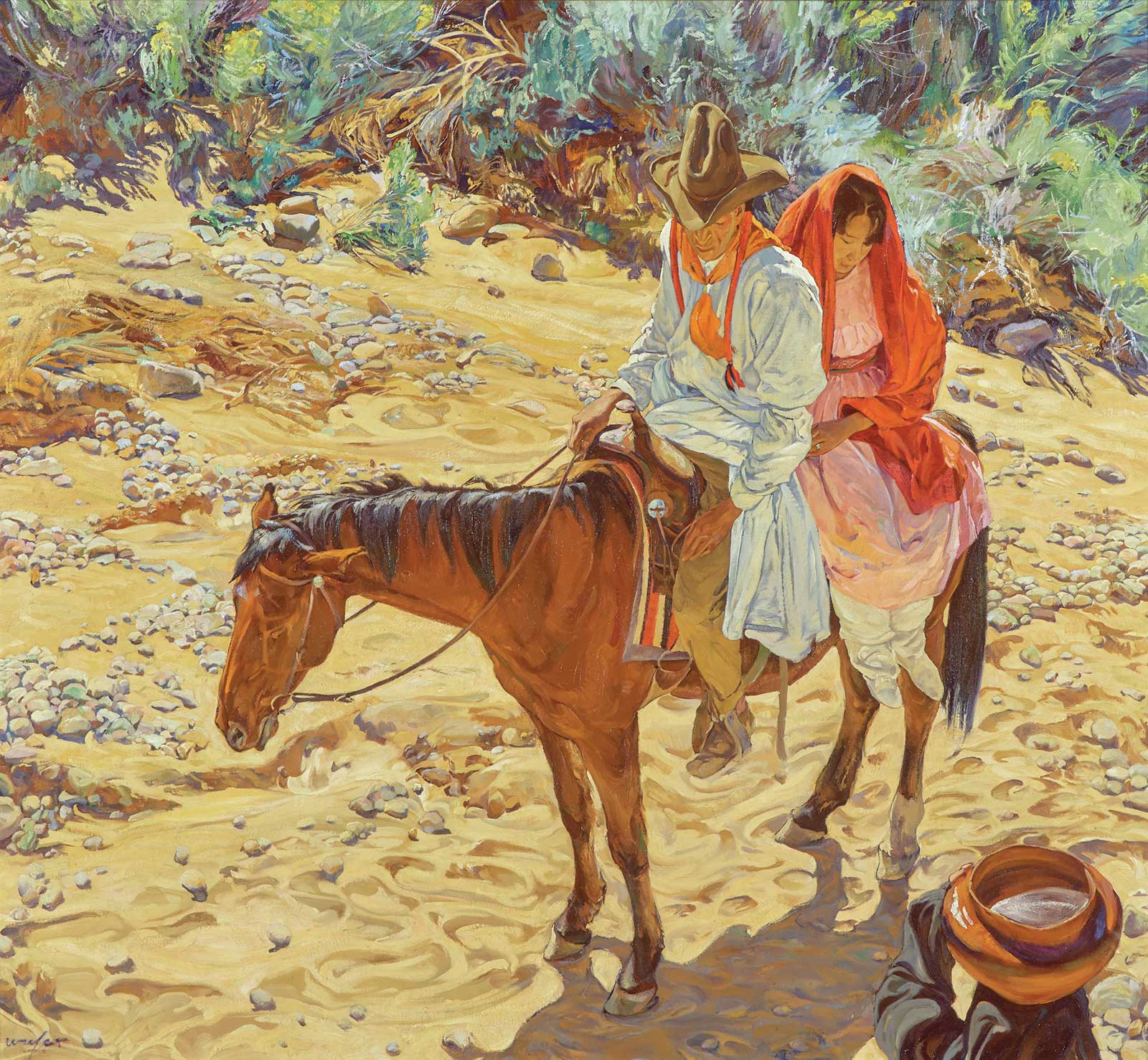 Walter Ufer (1876-1936), Near the Waterhole, 1921, oil on canvas. Denver Art Museum: The Roath Collection, 2021.90.
The Denver Art Museum’s collection, which Henneman describes as encyclopedic, was amassed through strategic acquisitions and significant gifts, allowing the Petrie Institute to paint a truly comprehensive picture of the West. Since its founding in 2001, the Petrie Institute has continuously driven forward the field of Western art and our understanding of Western history through scholarly research and programming, including 18 books, 24 exhibitions and 15 years of annual symposia.
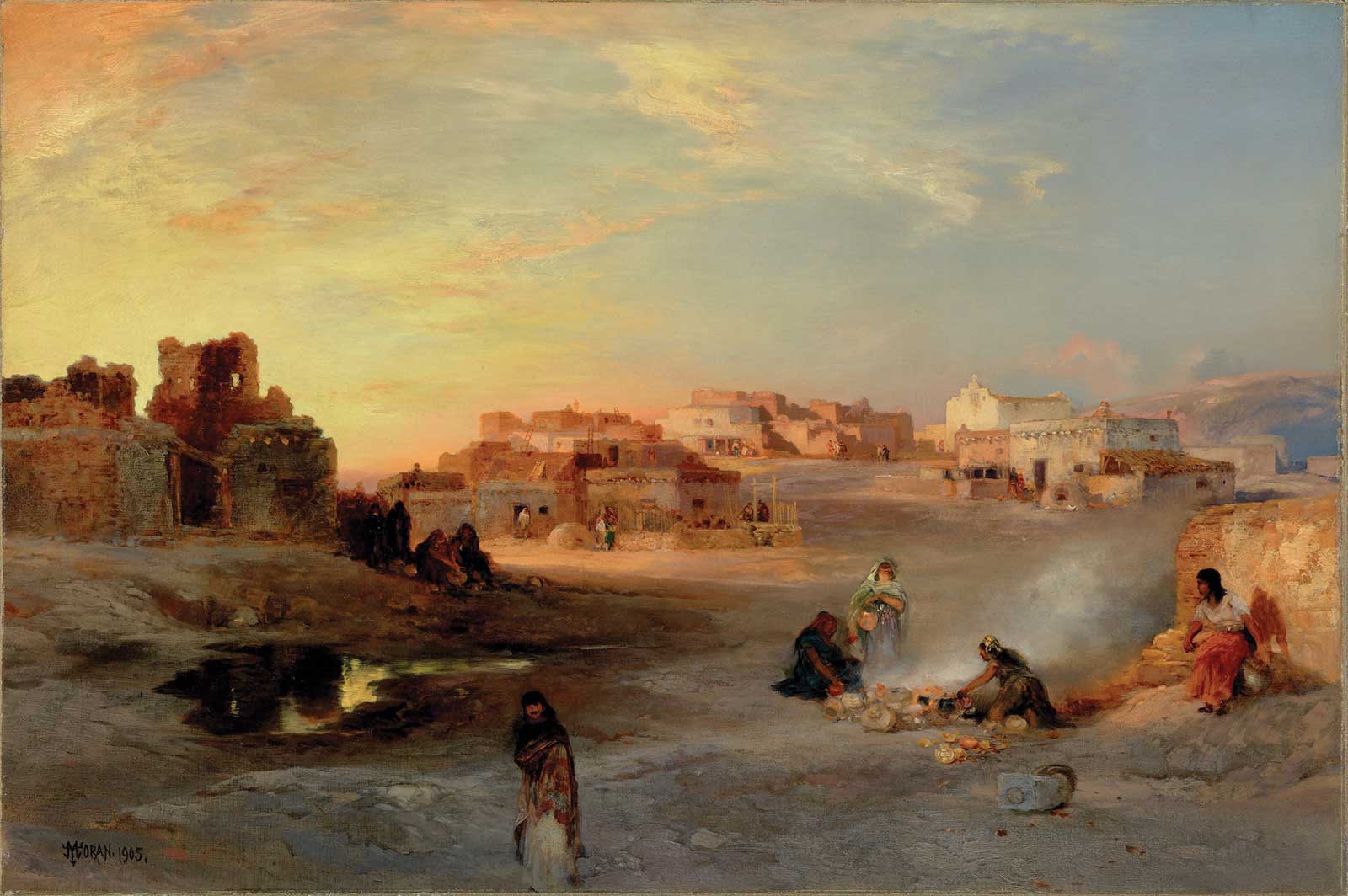 Thomas Moran (1837-1926), Indian Pueblo of Laguna, New Mexico, 1905, oil on canvas. Denver Art Museum: Purchased with funds from Henry Roath, 2020.195.
“The Western American art collection spans only the early 1800s to present day, but those of us who are Western art collectors, dealers and historians, we know Western history goes much, much deeper than the early 1800s. So there’s a challenge when you’re trying to present Western history through a Euro-American collection,” says Henneman. In response to this, she says they’ve thoughtfully borrowed objects from other collections at the DAM, including the Indigneous arts collection and Latin American art collection, with assistance from colleagues, an Indigenous Advisory Council and other important resources.
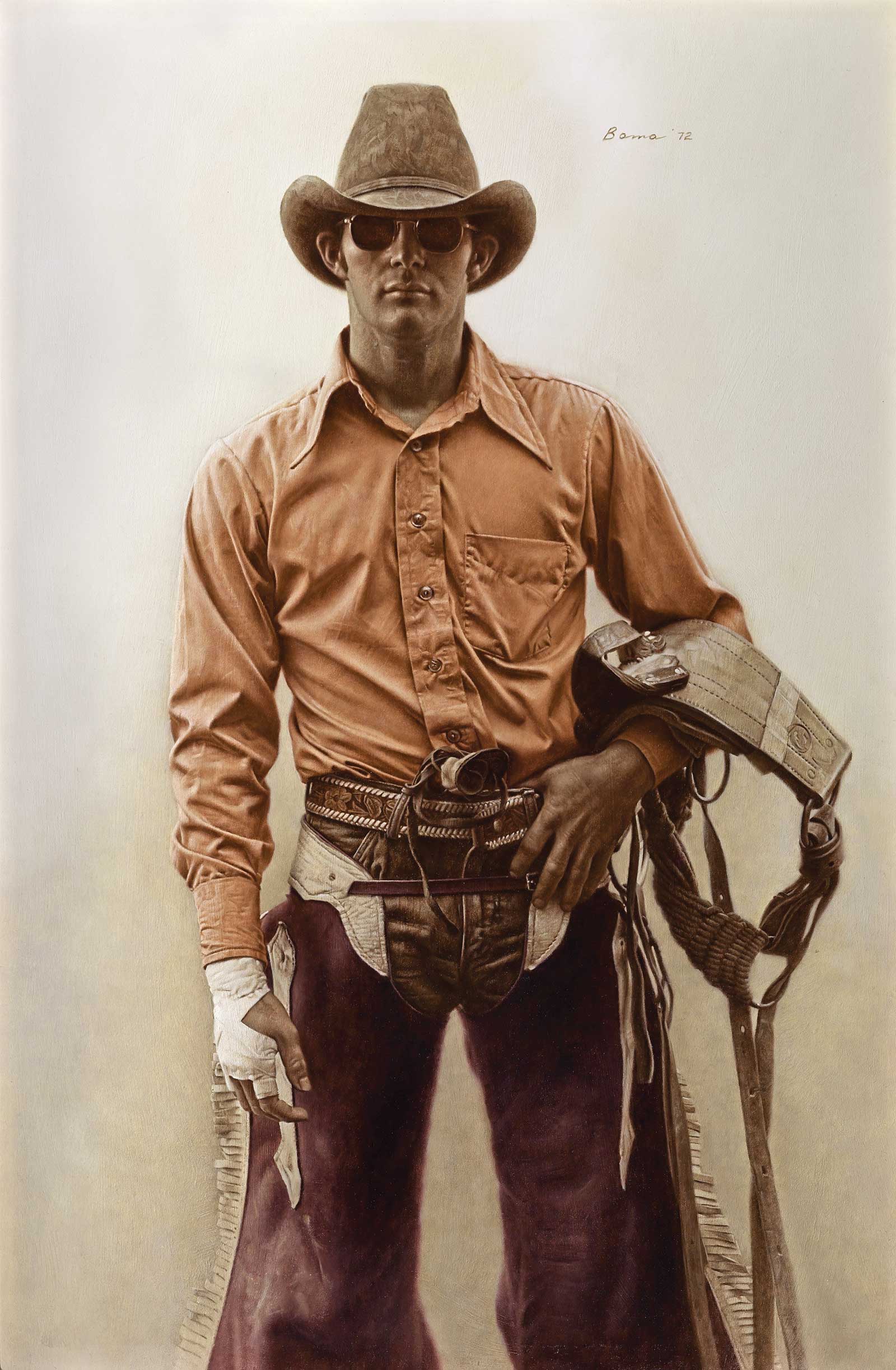 James Bama, Don Walker, 1972, oil on canvas. Denver Art Museum: The Roath Collection, 2013.136.
“What we’re able to do is draw upon [the knowledge of] colleagues and [objects from] other collections at Denver Art Museum to make those connections and help visitors see the world in the West and the West in the world,” she adds. Objects borrowed from the Indigneous Arts and Latin American art collections are paired with specific works in the Western collection to acknowledge the deeper history of the place we call the American West.
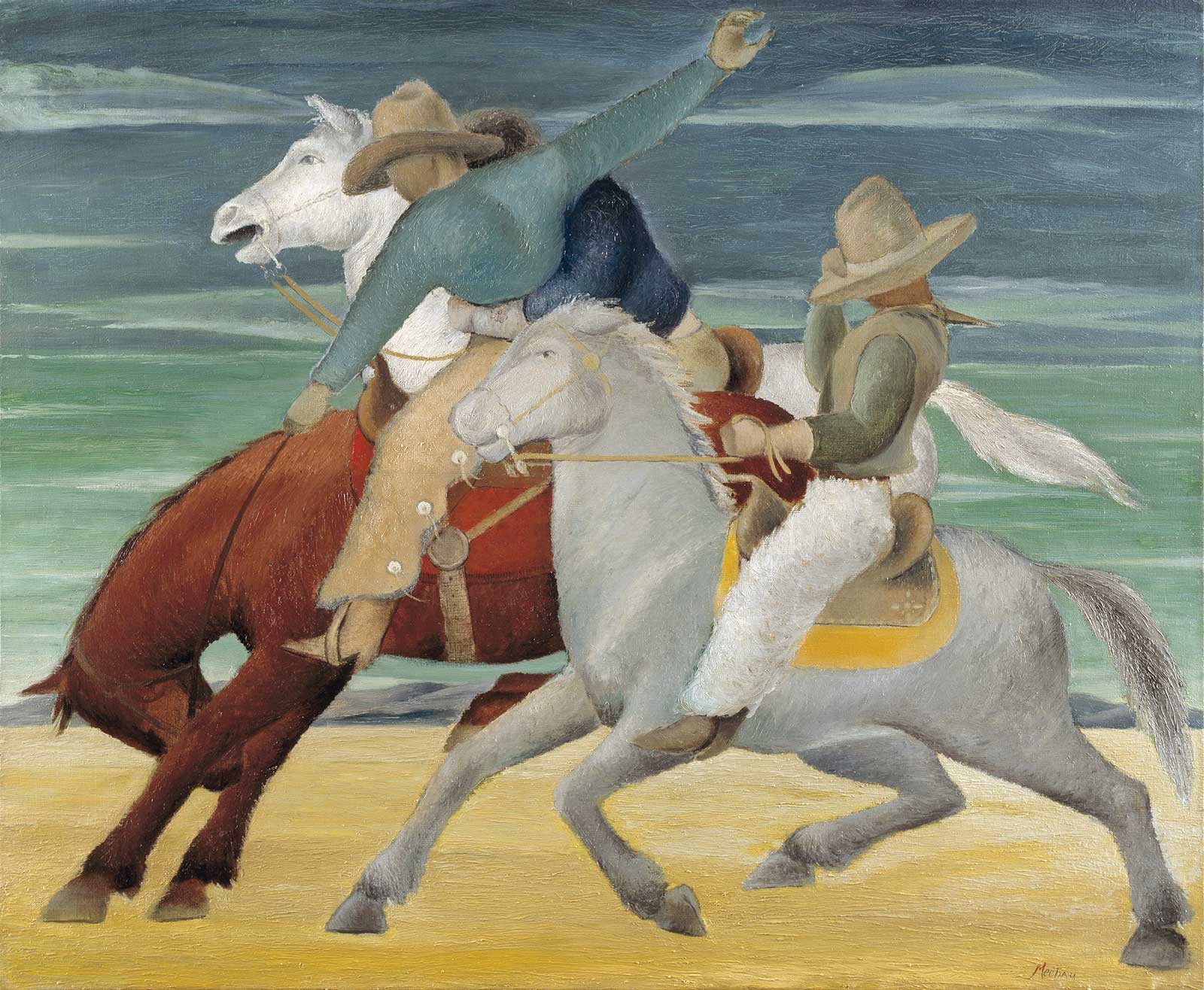 Frank Mechau (1904-1946), Rodeo-Pickup Man, ca. 1930, oil on canvas. Denver Art Museum: Gift of Anne Evans, 1935.9.
Moving into the mid-20th and 21st century are works from the museum’s modern and contemporary collection. “These are artists who might have grown up in the West, acknowledging that it can be both rural and urban,” says Henneman. “I know many of our visitors will be surprised by what they see on the floor. My team and I hope it will cause visitors to reflect on their perceptions of what the West is and can be.” This area of the gallery sheds light on how contemporary artists are grappling with identity, belonging, place, space and geography.
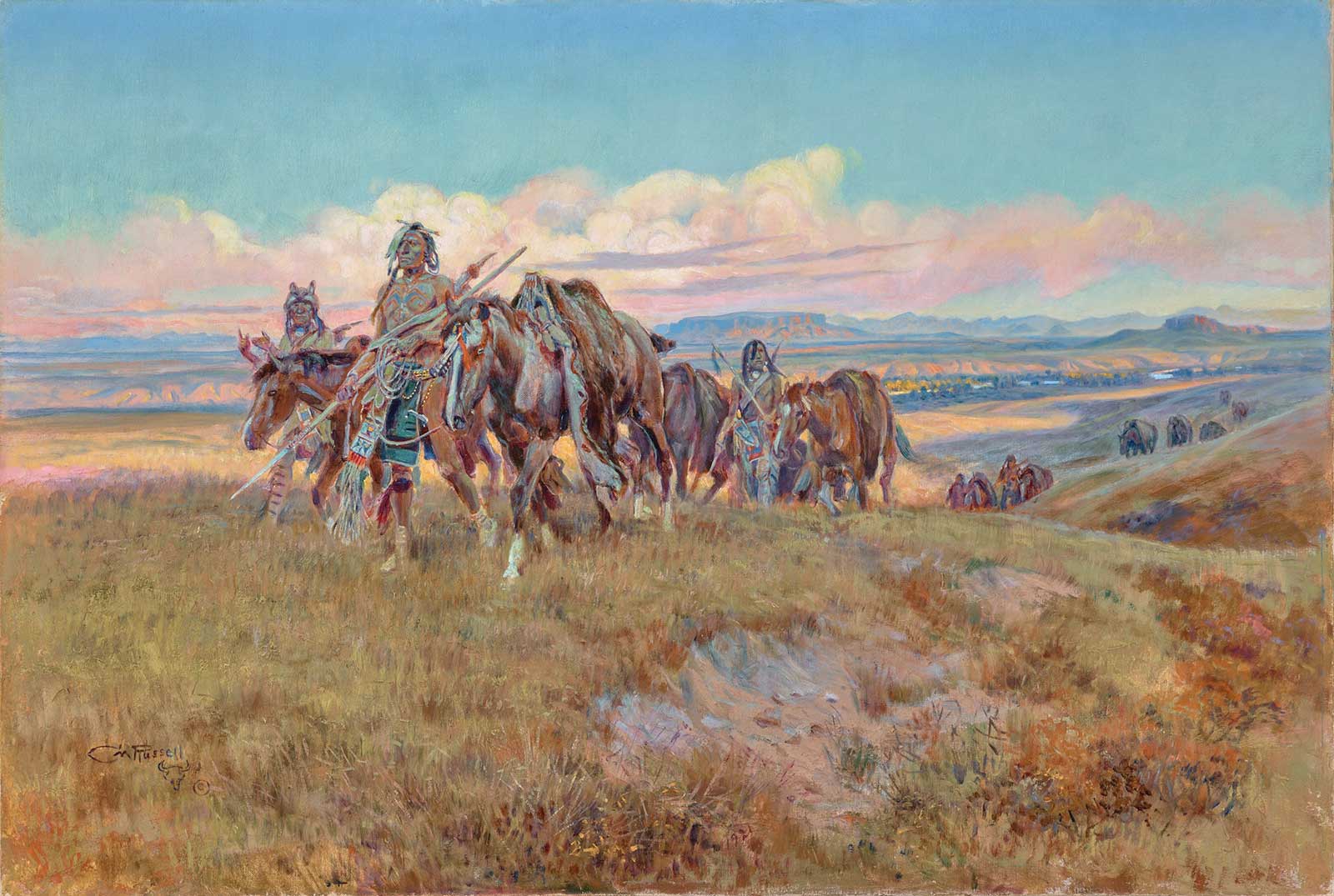 Charles M. Russell (1864-1926), In the Enemy’s Country, 1921, oil on canvas. Denver Art Museum: Gift of the Magness Family in memory of Betsy Magness, 1991.751.
“Our collections are living, breathing spaces, in which it is our responsibility to be responsive to history,” says Henneman. “[We want to] be responsive to our audiences and be responsible in telling those more diverse stories. Those more diverse stories, frankly in a more Western collection, aren’t necessarily seen in the art itself but are absolutely present in the art making.”
She continues, “The collections seen in the permanent galleries will undoubtedly change over time, but what visitors see now reflects the core of our philosophy about Western American art. It has a much wider embrace of objects, some of which may exist in other collections.”
The Petrie Institute also published in 2020 an updated collection catalog, The American West in Art: Selections from the Denver Art Museum, edited by Thomas Brent Smith and Henneman.
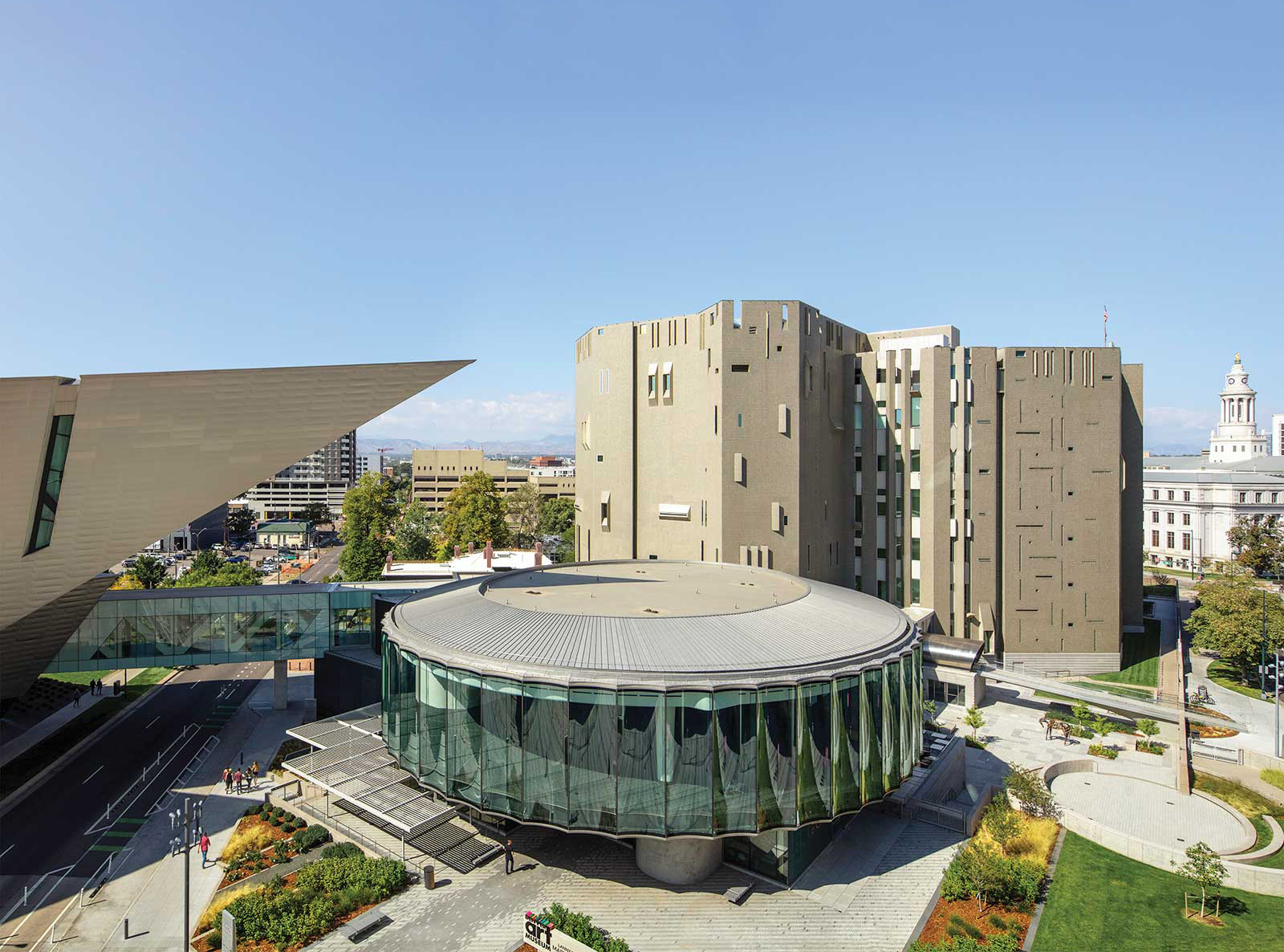 Denver Art Museum Campus. Photo by James Florio Photography. courtesy the Denver Art Museum.
The catalog celebrates the collection and its steady but profound progression over time. It recently received a Colorado book award in the pictorial category, Henneman adds, and coincides with the 20th anniversary of the visionary Petrie Institute.
Other collection galleries housed in the reconceptualized Martin Building include new architecture and design galleries and a reimagined Northwest Coast and Alaska Native gallery on level two; newly installed Asian art galleries on level five; and on the sixth floor, photography, European art Before 1800, and textile art and fashion galleries. The entire museum campus will feature bilingual art labels in English and Spanish.
Powered by Froala Editor