We have all heard it said many times that nothing ever stays the same. And the reality is that everything has its own “life cycle” which inevitably causes all things to change over time—including the climate, animal species, vegetation, fashion styles, businesses, etc.
Looking back 27 years, who could have ever imagined that an internet company by the name of Amazon, which was originally founded to sell just books, would almost single handedly have caused shopping malls to close, businesses to have to reinvent themselves in order to keep their doors open and for one of America’s most iconic business brands, Sears, to be on the verge of closing its doors forever, in spite of being in existence for more than 133 years. And after a quarter of a century, the strong life cycle and the forward reach of Amazon continues to impact our everyday way of life while expanding and extending itself well into the future.
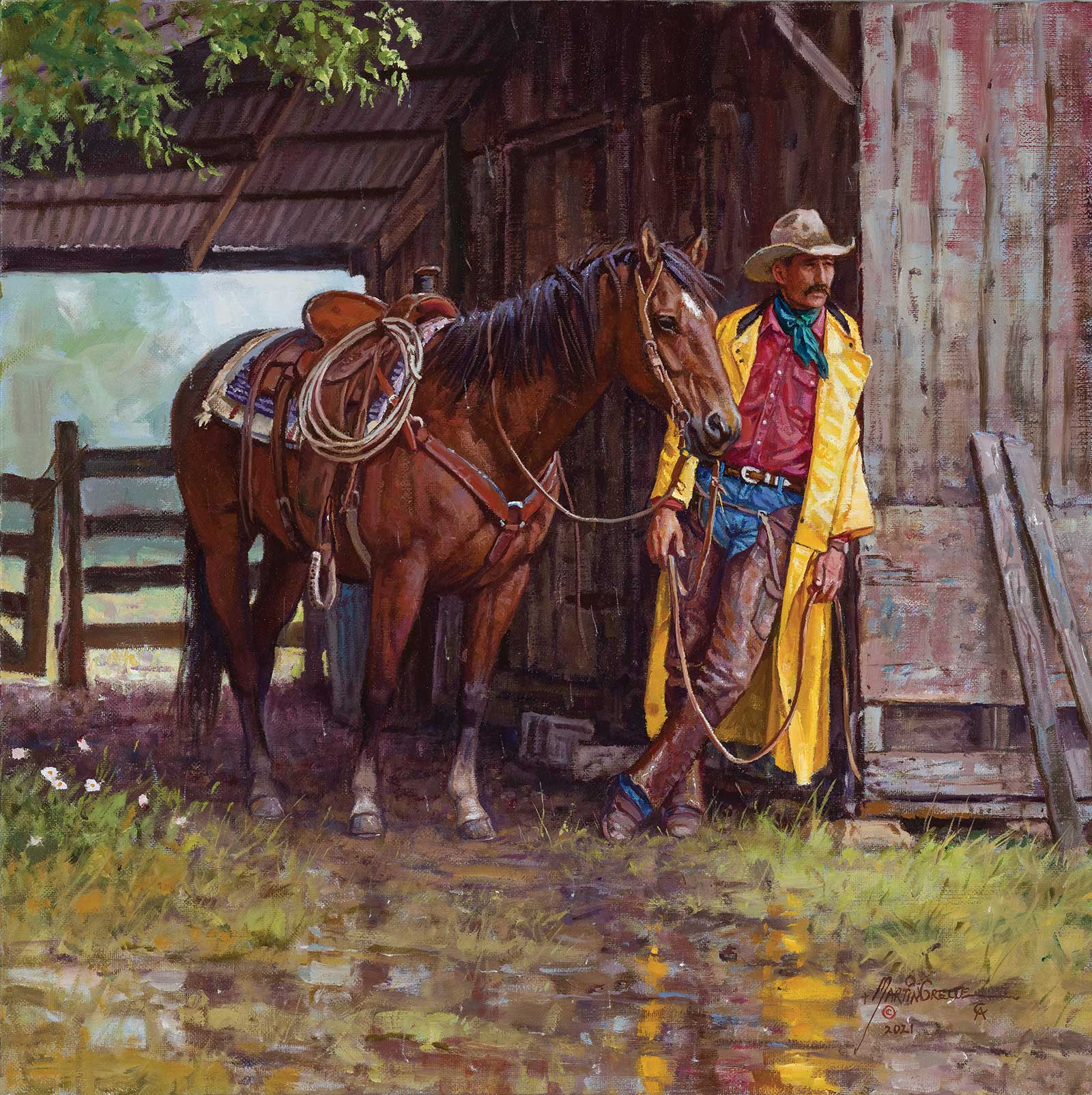 Martin Grelle, So Much for Forecasts, oil, 16 x 16”. From Grelle’s 2021 show at Legacy Gallery, which realized $1.7 million in sales.
Like all things in our world, the modern “Western art market”—which came to the forefront in the 1960s—also has a life cycle of its own that had remained exceptionally strong over a period of five decades. However, it began to be very closely watched, by most serious collectors, when the Western art market started to be impacted by the 2008 financial crisis and by the natural evolving of a dedicated collector base that grew up during the heyday of Western movies and television shows. And because of the changes that the Western art market has been experiencing since the 2008 financial crisis, some individuals had begun to wonder about the future of “Western art” as it had been known for the past five decades. Any concerns that may have existed began to somewhat dissipate when Brad Richardson, the owner of Legacy Gallery in Scottsdale, Arizona, decided that a new business model was needed for a changing Western art market. The new business model, that he came up with, was his “major” one-person shows with some of today’s top Western artists.
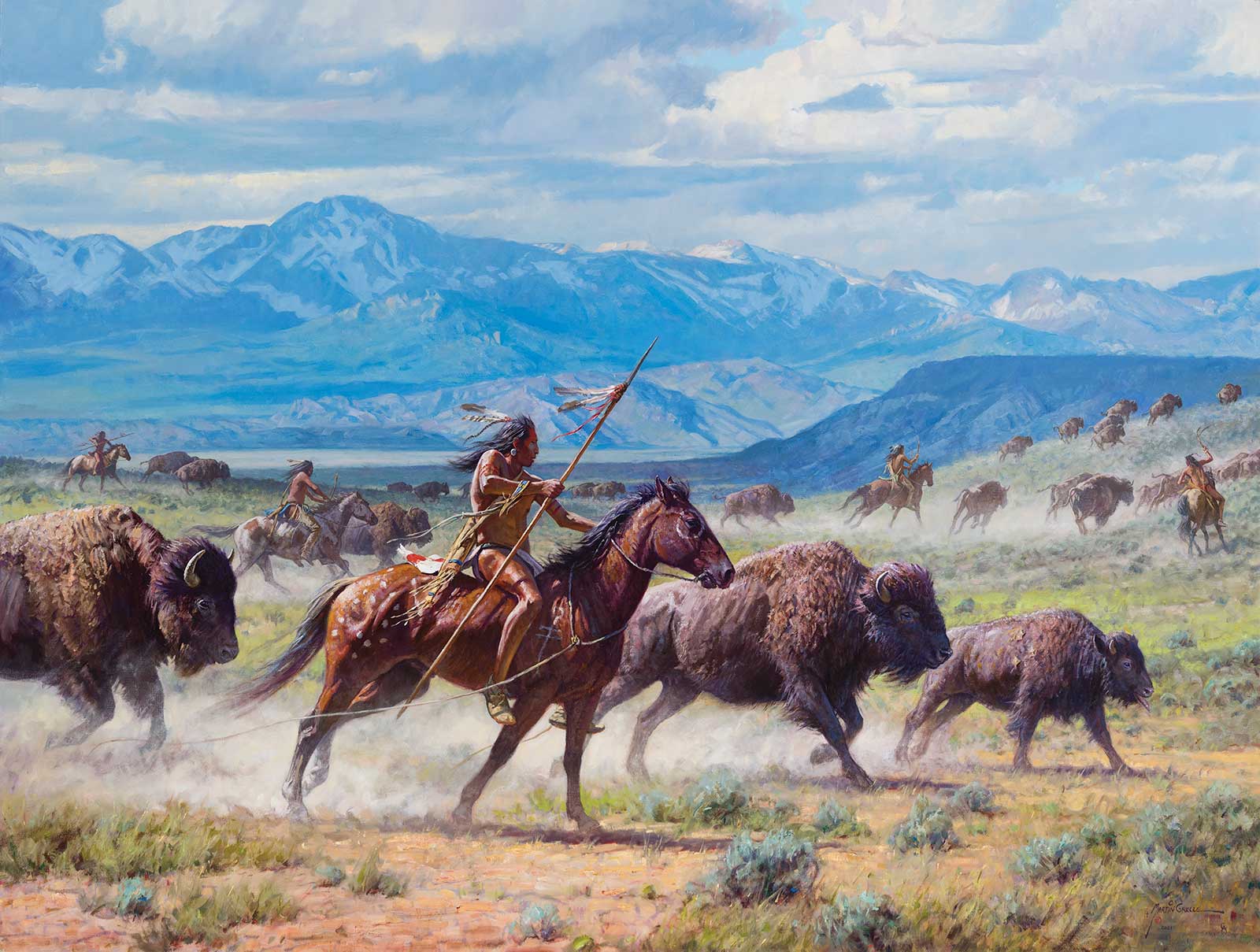 Martin Grelle, The Run, oil, 44 x 58”. Sold by auction for $310,000 at Grelle’s October 2021 show at Legacy Gallery.
Now, the reality is that one-man or one-person art shows have been around forever and they continue to take place in most galleries; however, Richardson’s model for the events was different. With his major one-man shows, he decided to select the top artists he represented and essentially take the artists “off the market” for one year.
After seeing the outcome of these very successful one-man shows, I think most observers would have to agree that the results of this new business model have been nothing short of remarkable for both the artists involved and for the larger Western art market in general.
Legacy Gallery’s first major one-man show was in 2013 with wildlife sculptor Tim Shinabarger. His show had 71 pieces and sales totaled $675,000. The next show was in 2016 with John Coleman, sculptor and painter, whose show was the first one to surpass $1 million dollars in sales with a total of $1.3 million. It was then followed by Martin Grelle’s record-breaking show in 2017 with sales of $1.7 million. And in March 2019, top cowboy artist Bill Anton had a show realize sales of $461,000.
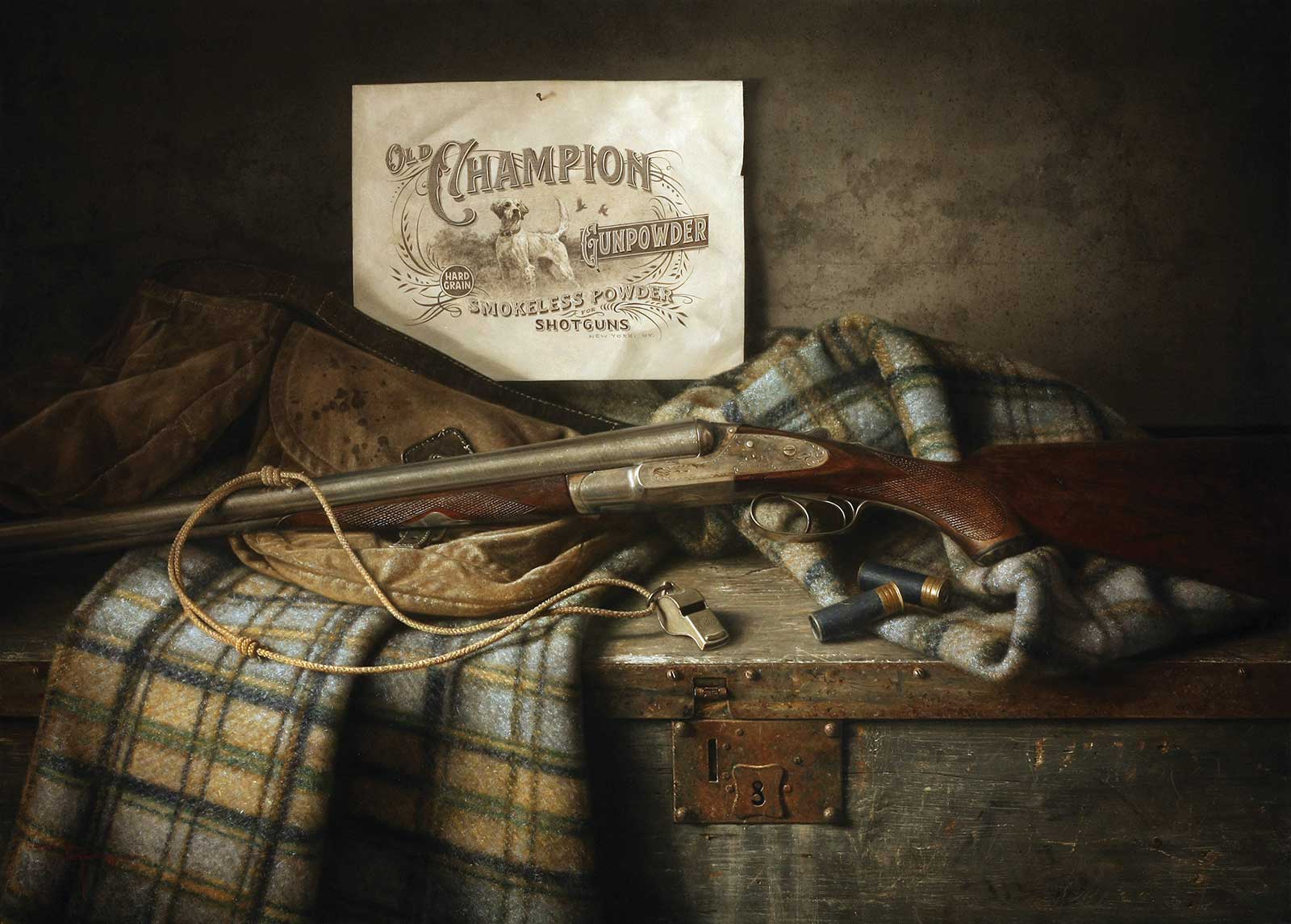 Kyle Polzin, Legends in the Field, oil, 24 x 33”. From Polzin’s November 2021 show at Legacy Gallery, which realized $550,000 in sales.
As well as all these major one-man shows have done, I am sure everyone understands that such strong sales don’t just happen by accident. First and foremost, you need to have artists whose quality works are highly sought after and in demand by today’s serious collectors. At the same time, you need strong market conditions and gallery owners who are creative, who think out of the box and who are willing to commit the necessary resources that are needed to give this type of show the chance of succeeding in what many might otherwise call an uncertain market.
With the success of the shows, we began to see that there still is a very strong interest and a desire by today’s collectors to own quality Western art. At the same time, the shows have also brought some much-needed excitement and life back into the market by engendering a high degree of renewed enthusiasm for quality Western art by some of today’s most successful Western artists.
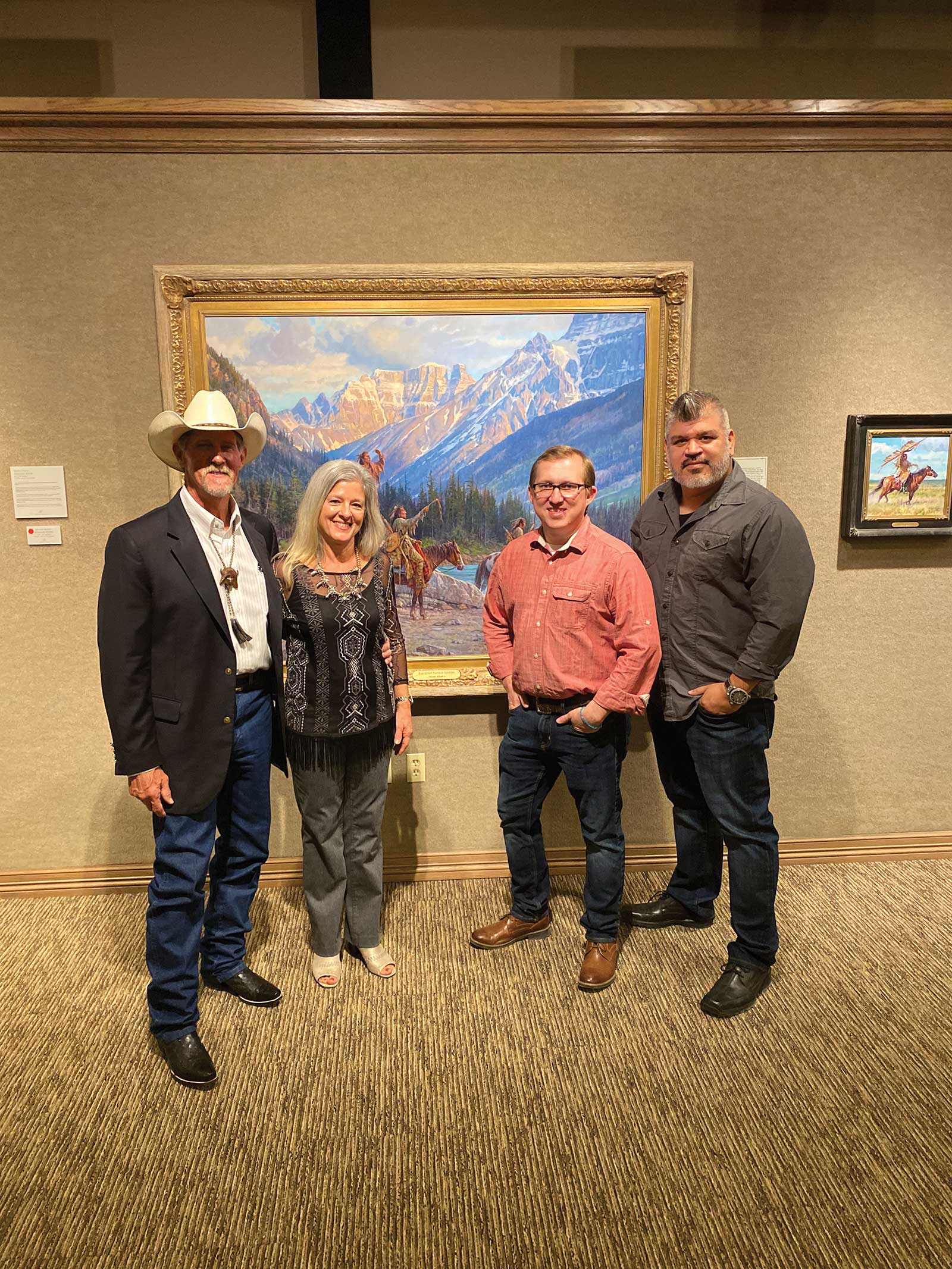 Martin and Joyce Grelle, left, with Western Art Collector executive editor Michael Clawson and publisher Adolfo Castillo at Grelle’s October 2021 show at Legacy Gallery.
Because of all the interest and positive comments that these shows have been generating since they began, I thought it would be informative to share a conversation that I recently had about the one-man shows with Richardson. Our talk centered around his original idea for the shows; the concerns that he initially had about this new, and some might say risky, venture; the ultimate success of the shows; and what he envisions for the future of both his major one-man shows and for the Western art market at large.
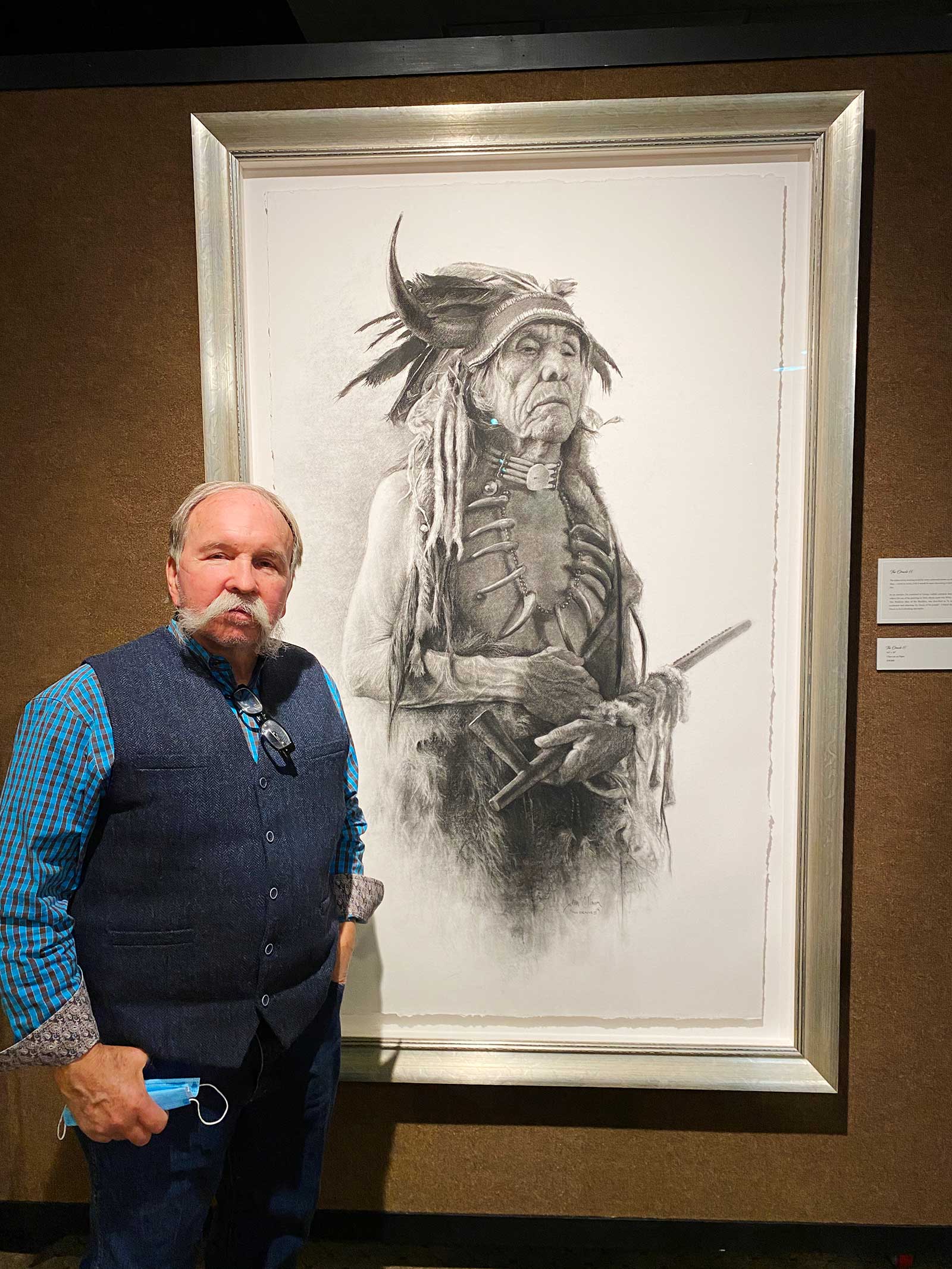 John Coleman with one of his large drawings at his solo show at Legacy Gallery in November 2020. The show brought in more than $2.3 million in sales.
During our conversation, I was especially interested in understanding what his assessment of the Western art market was just before he began the shows. Also, I wanted to better understand why he originally decided, in 2013, to take the chance of attempting something that many others in the gallery business would have thought, at that time, to be an uncertain business venture during a contracting Western art market.
Our brief conversation went like this:
Dan Corazzi: When did you initially get the idea for the major one-man shows and why did you think they might have a chance of succeeding?
Brad Richardson: The idea was primarily a result of a conversation that I had many years ago with sculptor Tim Shinabarger. During our conversation, Tim was telling me how difficult it is for artists to create their very best work because of all the show deadlines that they face each year. He emphasized the fact that it takes a considerable amount of “uninterrupted time” for an artist to be able to plan and execute good art. So, with that main thought in mind, we decided to put a major one-man show on the calendar that was two years out into the future. And Tim’s show, which was our first major one-man show, was exceedingly successful with 70 pieces of sculpture being sold that night. However, I must point out that there certainly is nothing new about one-man shows. All we did, with our shows, is that we tried to make them into major events by asking the artists for a large commitment of at least 20 new works and, in turn, we would put forth a major effort and commitment to promote their shows.
DC: What concerns, if any, did you have about this type of undertaking in a contracting Western art market?
BR: My only concern and the concern of the artists were quite similar. Simply stated: Would the market support such an event? We always believed that a major one-man show would create momentum and, to a certain degree, it does. But more importantly, it is essential that the artists have a strong and active collector base to make this type of show a success.
DC: What was the reaction of all the artists whom you chose for the initial round of your one-man shows?
BR: Each artist we approached with the idea initially had some degree of apprehension because this type of opportunity comes with a potential for some risk. But ultimately, the artists looked at it as a challenge and as something that they felt would be positive for their careers.
DC: What has surprised you the most about the shows and did you ever imagine that they would be as successful as they have been so far?
BR: First, we have been pleasantly surprised how well each of the shows have been attended. Additionally, we have been especially pleased with the overall high sell-through percentage and with the fact that most of the shows completely sold out for the artists. In the end, I must stress that all the credit for the success of these shows is due to the superior quality of art that each of our artists has produced—because we all know that even the best marketing in the world can’t turn bad art into good art.
DC: What do you see for the future of Western art and what, if any, changes do you plan going forward for the shows?
BR: Although the Western art market has contracted in certain areas, we nonetheless continue to be very optimistic about the future. The transition away from the former illustrators, whose representational work resulted in an exceptionally strong Western art market for so many years, is taking place. And now, a new group of artists is leading us into the future and we are beginning to see this group of new artists emerge and enjoy considerable success with their work.
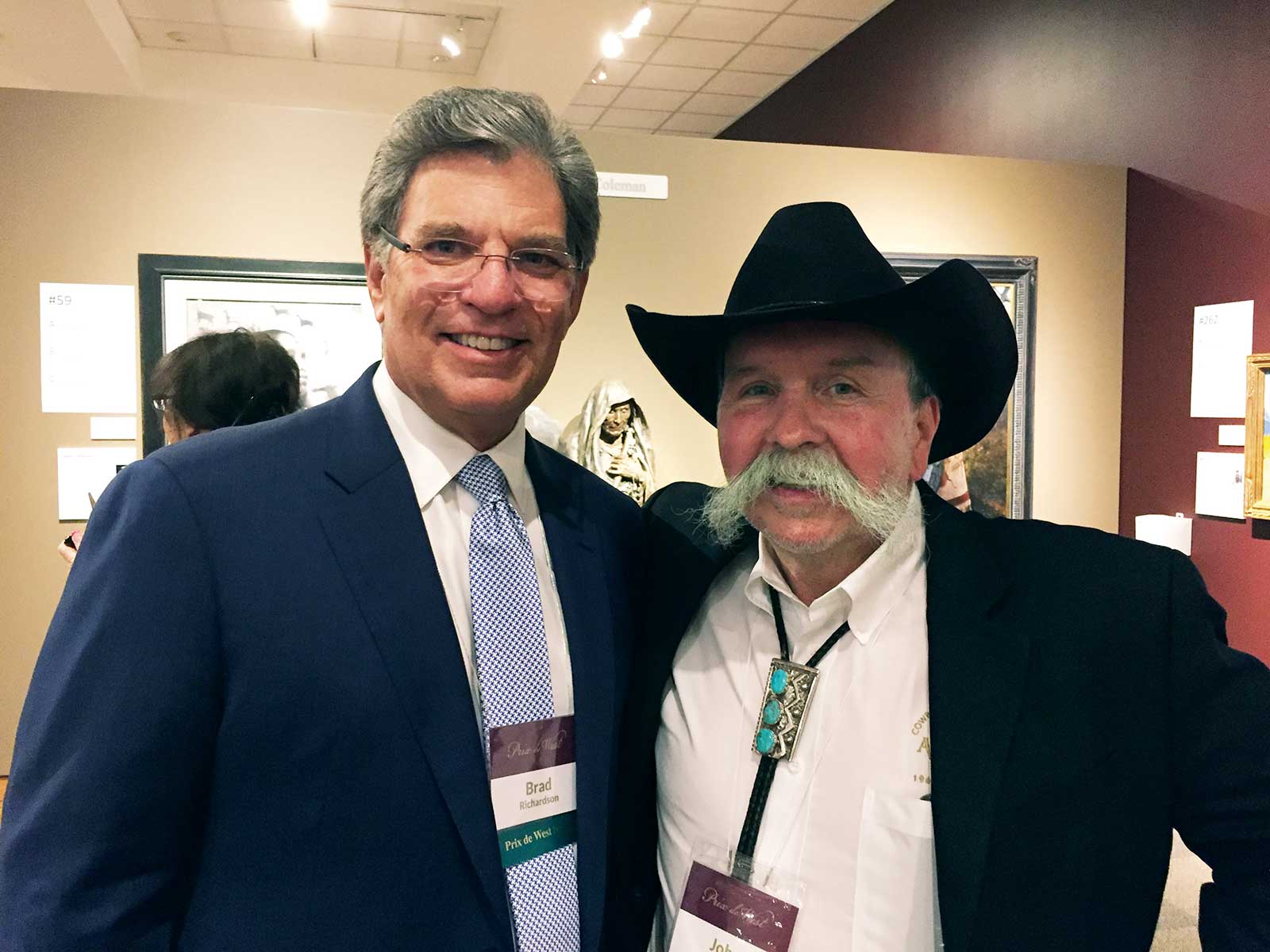 Legacy Gallery owner Brad Richardson, left, and John Coleman in 2019.
With the ongoing success of Legacy Gallery’s one-man shows, as well as with the continued and favorable results from the various museum shows, gallery shows, auctions (as evidenced by the fact that, in 2019 alone, well over 3,000 pieces of Western art were sold through the various auction houses) and with the emergence of a new generation of Western artists and collectors, it is evident that the “life cycle arc” of the Western art market is definitely trending much higher of late.
Looking back on recent years, there is no denying the fact that significant changes have certainly occurred with the overall Western art market since 2008. Certainly the Coleman show in 2016 and the Grelle show in 2017, were important milestones, but following them came the success of the Cowboy Artists of America’s November 2019 show in Fort Worth, Texas, that had a 70-percent-plus sell-though rate and over $940,000 in sales. That same month, Kyle Polzin presented a highly successful sellout at Legacy, with 17 paintings bringing in $842,000. Also that month was a Bonhams sale that presented 76 pieces from the Basha Collection that sold for $3.8 million. In March 2020, Legacy’s one-man show for C. Michael Dudash sold 19 of his 20 paintings for a total of $437,000. These results would certainly indicate that there still is a demand, by serious collectors, for high-end quality Western art.
That point was further reinforced by the positive results seen from the many shows/sales that had to be held virtually in 2020 because of the Covid pandemic, with one strong example being the Prix de West, which exceeded $1.6 million dollars in sales from its virtual sale in September 2020. Also, in October 2020, 73 pieces of Western art from a single private collection sold for more than $22 million dollars at a Christie’s auction in New York City. And the final major gallery sale of 2020 saw Coleman return to Legacy Gallery for a second one-man show. For this event, held November 14, 2020, Coleman exceeded his previous show record with $2.3 million dollars in sales.
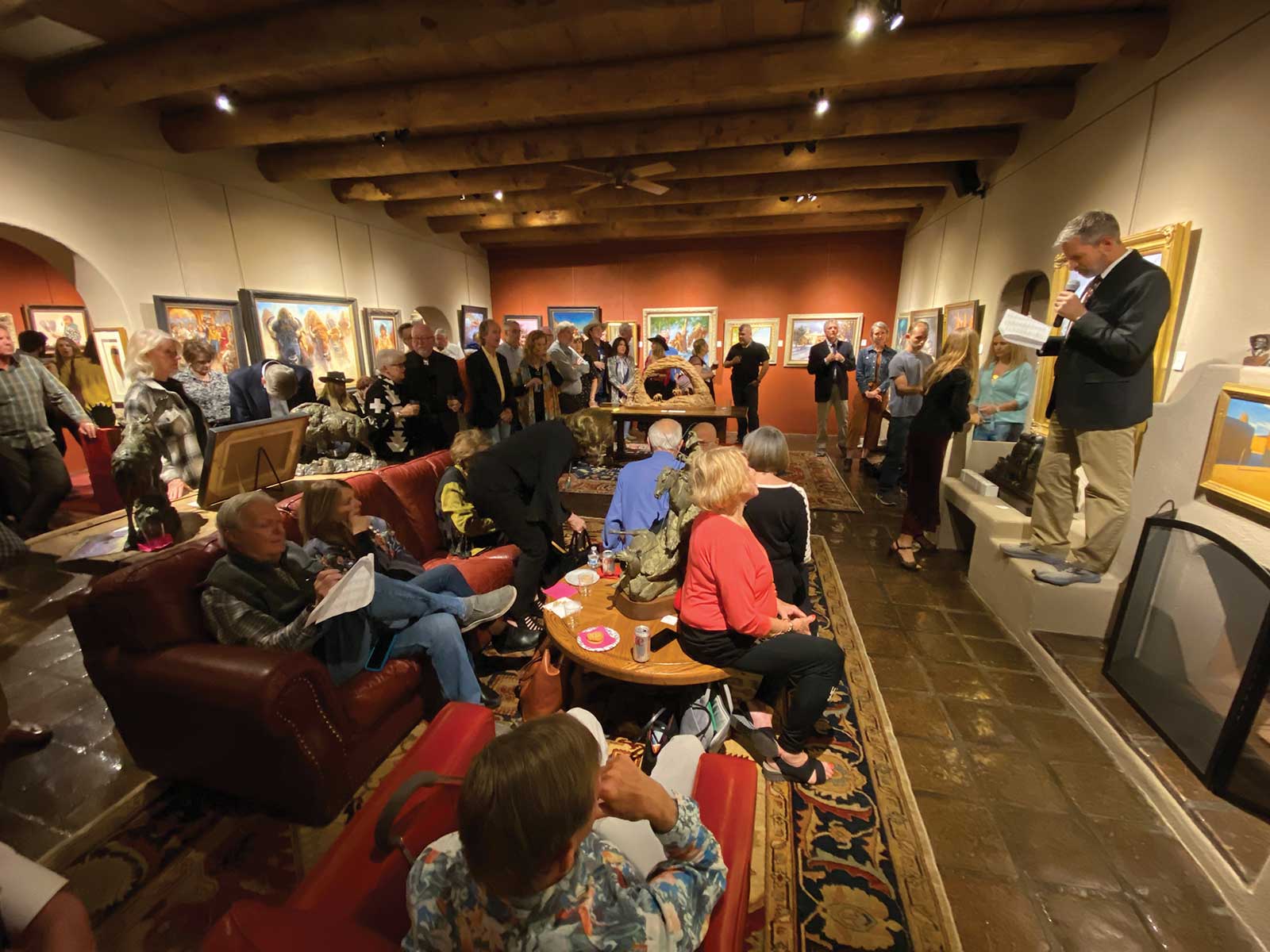 A crowd gathers to watch the draw at Settlers West Galleries’ 50th anniversary show in Tucson, Arizona, in November 2021. The sales total was more than $989,000.
And with the Covid concerns starting to somewhat ease up, we began to see more in-person Western art events. In April 2021, the Scottsdale Art Auction, with 401 lots, had a record-breaking sell-through of 99 percent with more than $13 million dollars in sales. And in June 2021, a very successful Prix de West had more than 600 extremely enthusiastic attendees at the National Cowboy & Western Heritage Museum in Oklahoma City, to take part in the weekend events. The show had sales that were just shy of $2.9 million, and it saw a Kyle Polzin painting top out at $100,000 during the live auction portion. At the end of July, the Coeur d’Alene Art Auction had a sell-through rate of 92 percent with more than $17.5 million in total sales.
Additionally, this past September, the Jackson Hole Art Auction realized sales of more than $8.7 million from a sell-through rate of 94 percent—with a Howard Terpning painting selling for $1.4 million. Then came Grelle’s one-man show on October 30 at Legacy Gallery, which exceeded $1.7 million in sales for 18 exceptional works of art, six of which were sold by live auction. And on November 6, the Cowboy Artists of America held their highly successful 55th annual exhibition and sale in Fort Worth, where they had sales totaling more than $1.2 million dollars. That was followed on November 13 by Polzin’s eight-piece artist focus show at Legacy, during which all of the works were sold via online auction. The results were remarkable, with the a sales total hitting $550,000, including one 17-by-17-inch painting of peonies selling for $140,000.
And finally, on November 20, Settlers West Gallery held its Great American West 50th anniversary show with 98 works by 57 artists. The gallery was filled, wall to wall, with enthusiastic collectors. By the end of the night, the sales total was $989,725. One highlight was the new Howard Terpning painting selling via silent bid at $550,000—$130,000 over retail.
So, in spite of the Covid pandemic that has dramatically and negatively impacted all sectors of the American economy—and contrary to the serious concerns which some observers may have had about the “state of the Western art market” in the not too distant past—it certainly is evident from the numerous strong gallery, auction and museum show sales that today’s Western fine art market is continuing to thrive and its future looks bright.
Because of this and much to the delight of all the dedicated Western art collectors, it is clear that today’s market remains very much alive and well!
Dan Corazzi is a retired public school superintendent and software company CFO. He is on the board of the National Cowboy & Western Heritage Museum and he is the chairman of the Prix de West Committee in Oklahoma.
Powered by Froala Editor