The Couse-Sharp Historic Site in Taos, New Mexico, is a treasure house of the art and ephemera of two founders of the Taos Society of Artists, as well as Eanger Irving Couse’s home and studio and Joseph Henry Sharp’s two studios. The remaining walls of Sharp’s home are incorporated into an adjoining building, which has become the Lunder Research Center, and is rapidly becoming a center for the study of the Taos Society of Artists.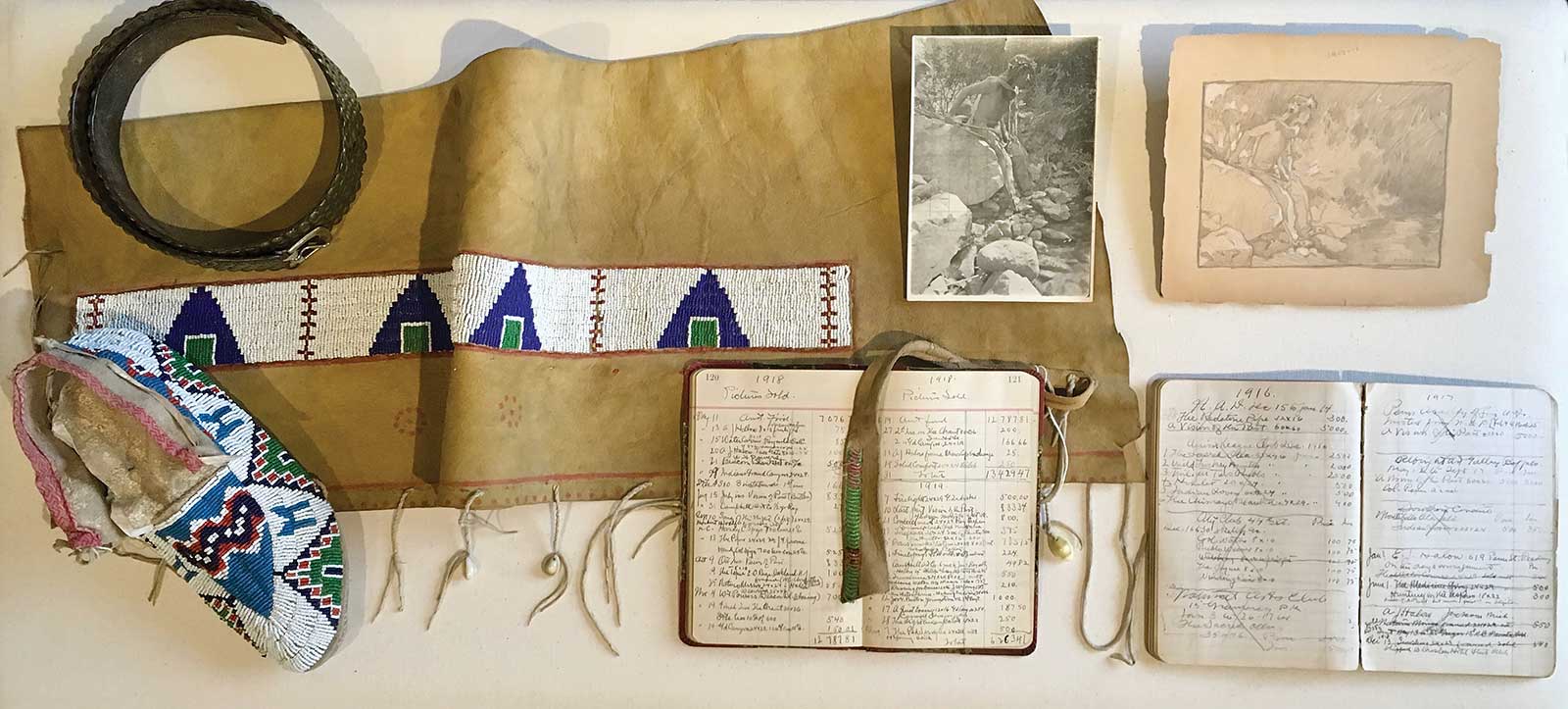 Eanger Irving Couse’s materials realted to the 1919 painting Sunlight/Sunshine.
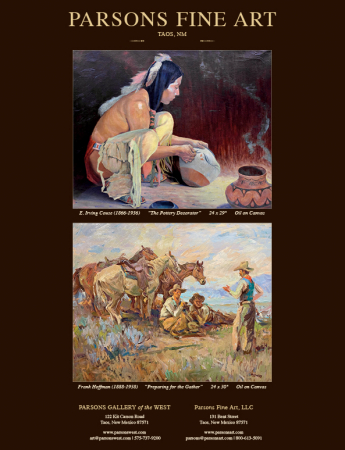
One photograph illustrates the depth of the Couse archives. It contains items relating to his painting Sunlight/Sunshine, a gift to the site by the Hillman Family. Davison Koenig, executive director and curator, notes, “We have in the Couse family collection the original photo study, compositional sketch, sales and exhibition records, and the moccasins, leggings and belt worn by the model Jerry ‘Elkfoot’ Mirabal for the painting. This is a great example of what makes the Couse-Sharp Historic Site a national treasure, and the Couse home and studio singular—the Couse collection of sketches, paintings, letters, photographs and archival materials combined with the Native American art, Hispano art and furniture, represents perhaps the largest collection of any artist of this national stature documenting an important artistic movement in Taos.”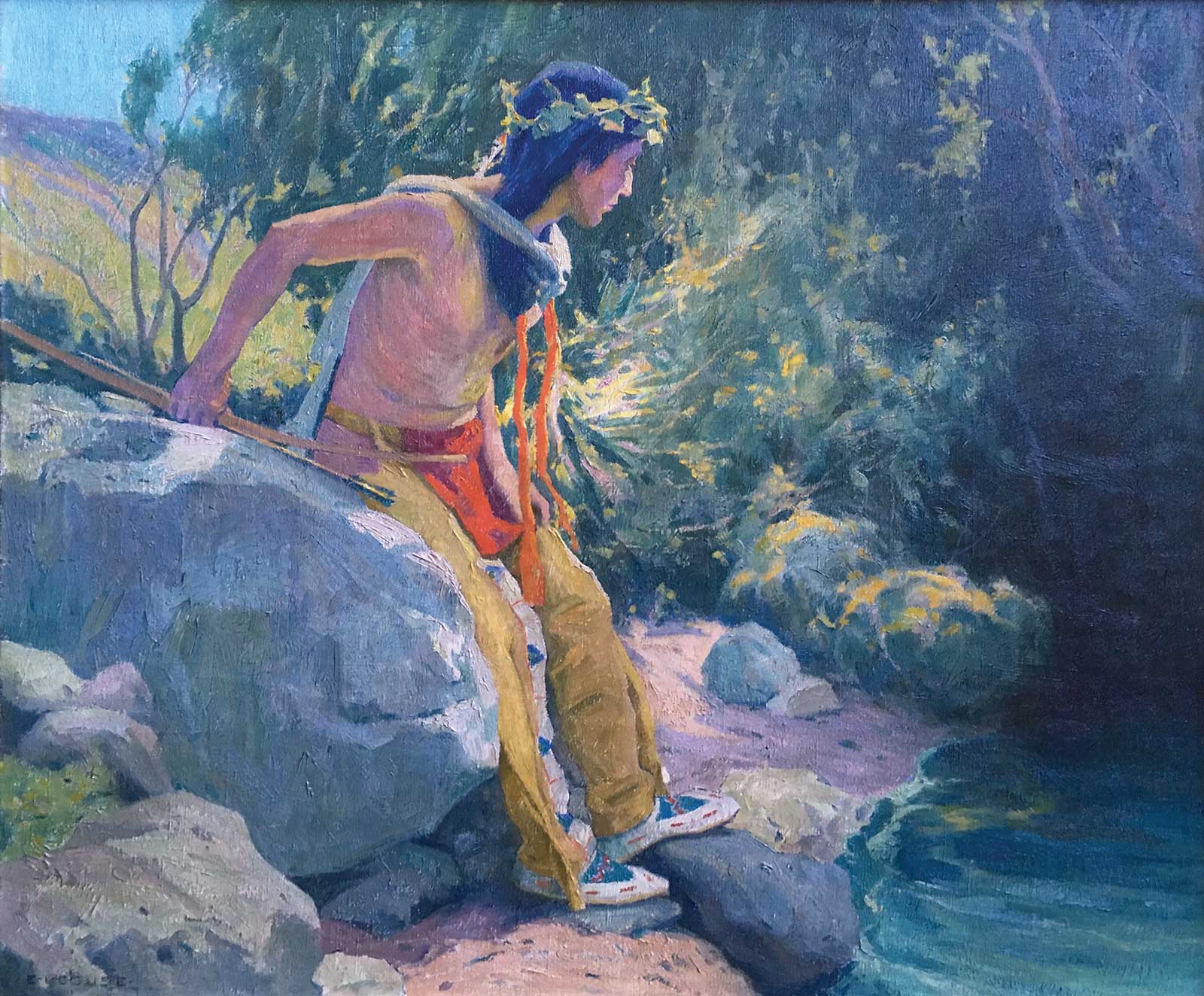 Eanger Irving Couse (1866-1936), Sunlight/Sunshine, ca. 1919, oil on canvas, 24 x 29”. Painting donated by the Hillman Family, 2017. Couse reproduction gold-leaf frame donated by Marty Horowitz of Goldleaf Framemakers, Santa Fe, 2017.
Among the Couse archives are 11,000 photographs, most of which have never been seen by the public. About 10,000 of them document the Pueblos and the Native people of the Southwest. About 6,000 of them are studies for paintings. Koenig and his staff have met with Hopi and Taos Pueblo representatives to exclude photos with cultural sensitivity such as tribal ceremonies from public viewing. Marissa M. Hendriks, archivist and collections manager explains that only about 300 images were deemed culturally sensitive.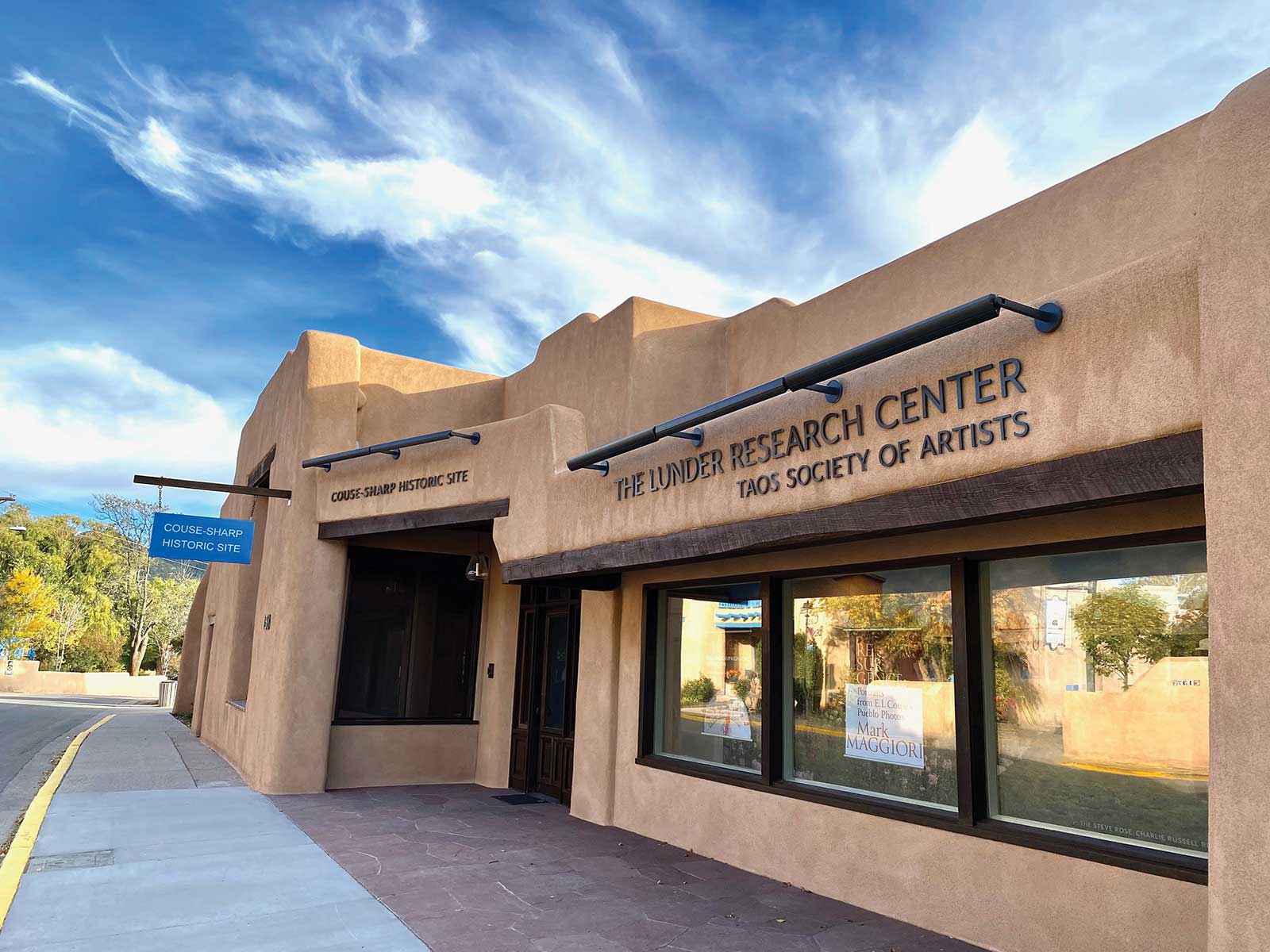 The Lunder Research Center at the Couse-Sharp Historic Site in Taos, New Mexico.
The photos have a role in the continuing role of the site and the Lunder Research Center as a place of continuing creativity. Mark Maggiori has been an artist in residence at the site, painting in Sharp’s 1915 studio. When he was introduced to the Couse photos, he says, “Right away, I felt transported in a time machine. I felt so lucky to be one of the first people to see this material that was being scanned for the first time. I couldn’t believe my eyes. Right away came this challenging idea of trying to repaint these images in color. Every detail on these photos is unique and a testimony of the life of Taos Pueblo in the early 1900s.”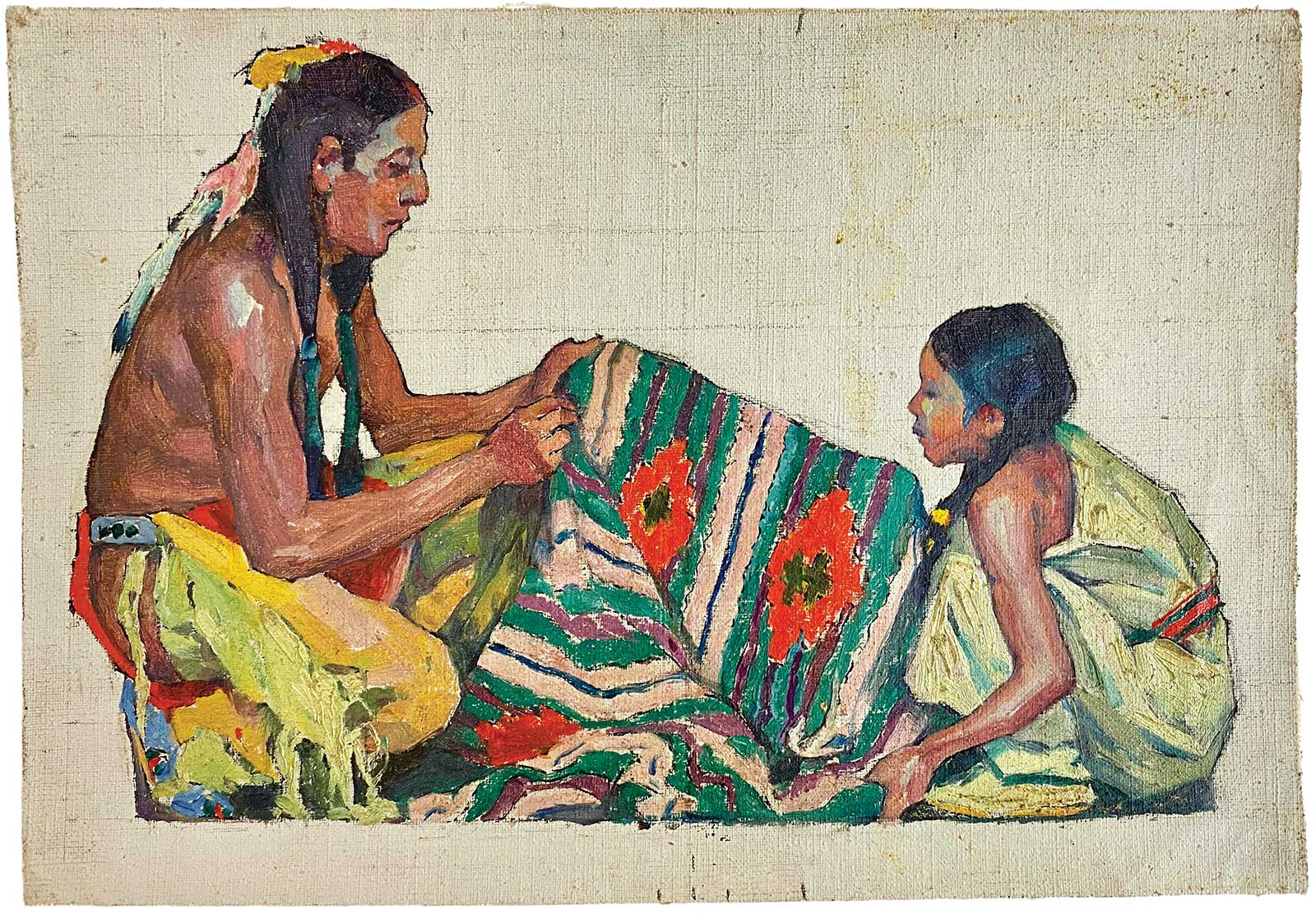 Eanger Irving Couse (1866-1936), Beacon Blanket store display, ca. 1916-1925
Resurgence: Mark Maggiori Portraits from E. I. Couse’s Pueblo Photos, is the inaugural exhibition in the Lunder Research Center and continues through January 8, 2022. Koenig notes, “Mark created a body of work atypical of his known work, more intimate portraits that are loose and emotive. We built an archive and research center for early Taos art so that artists, scholars and the public can be inspired. The legacy of the Taos Society of Artists, in many ways, rests with this new generation of artists.” Maggiori’s Buffalo Dancer has been purchased by friends of the site for inclusion in the collection. It is based on Couse’s 1919 photo of Antonio Lujan posing in Couse’s studio with his face and hands blackened for Taos Pueblo’s Buffalo Dance.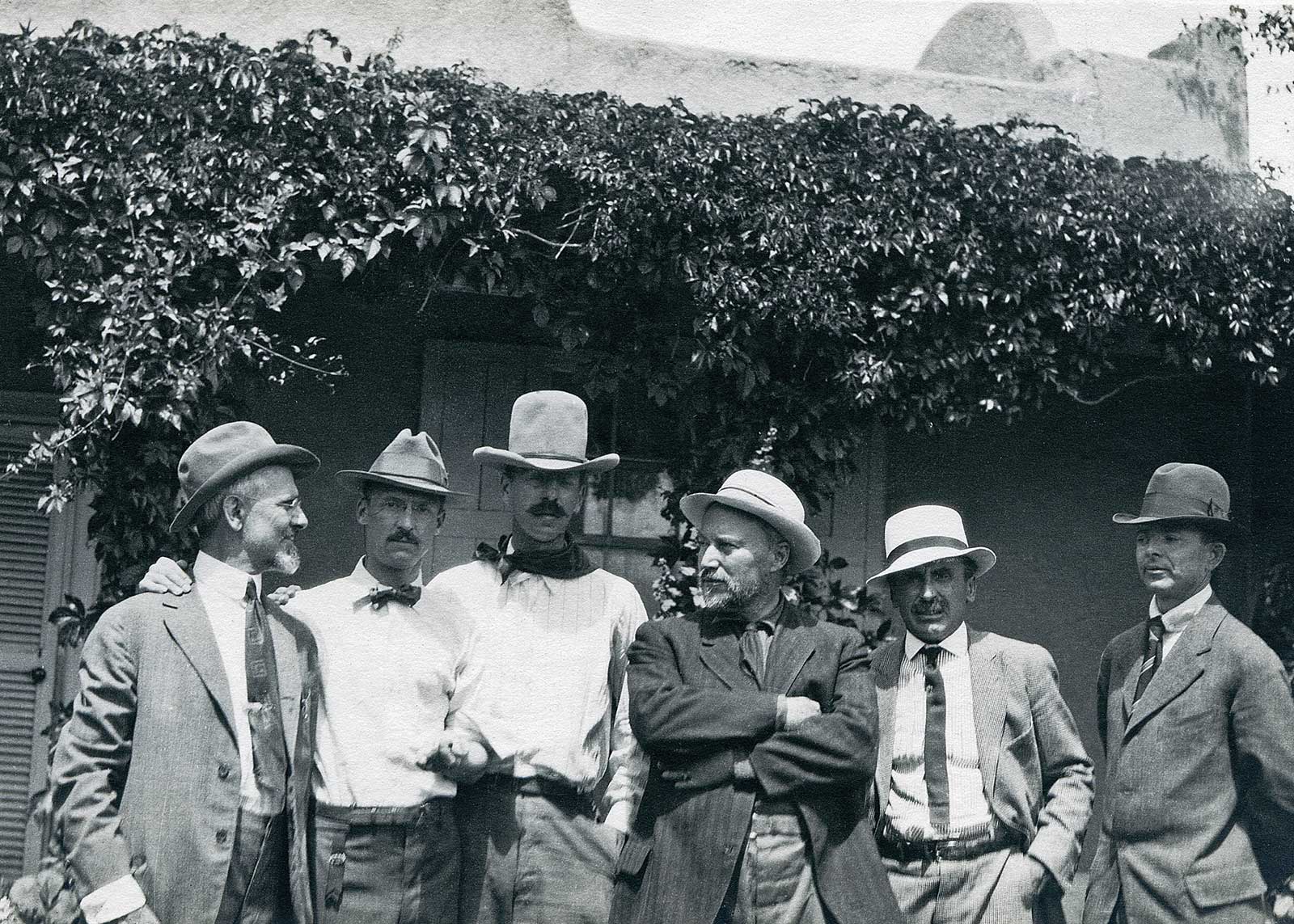 The Taos Founders: Joseph Henry Sharp, Ernest L. Blumenschein, William Herbert “Buck” Dunton, Eanger Irving Couse, Bert Geer Phillips and Oscar E. Bernghaus.
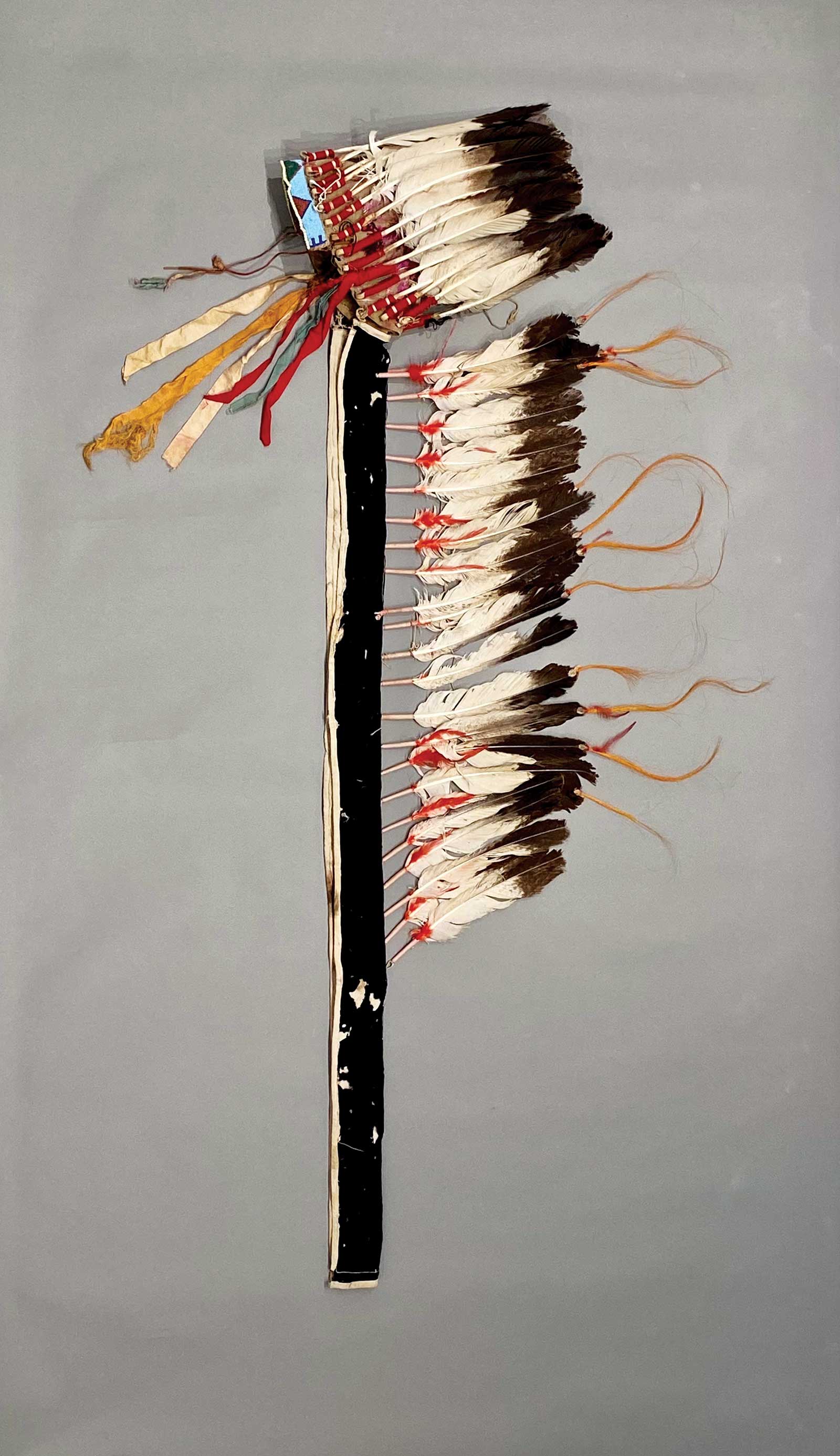 Western Plains-style headdress, ca. 1900, acquired by Joseph Henry Sharp while living on the Crow Reservation from 1898-1910. Donated by Lainey Reynolds-Keene, 2021A living archive for the site is Virginia Couse Leavitt, an art historian and granddaughter of E.I. Couse. Site coordinator Jacob Cisneros discovered a trove of rare books and Ginny Couse was able to confirm that her grandfather was a book collector.
There are container lists for the archives but not details of the contents. Marissa remarks that going through the containers is exciting because “we find new stuff all the time.” The site also works with galleries and auction houses who reach out when they have relevant material, which the site is able either to acquire or to obtain a facsimile.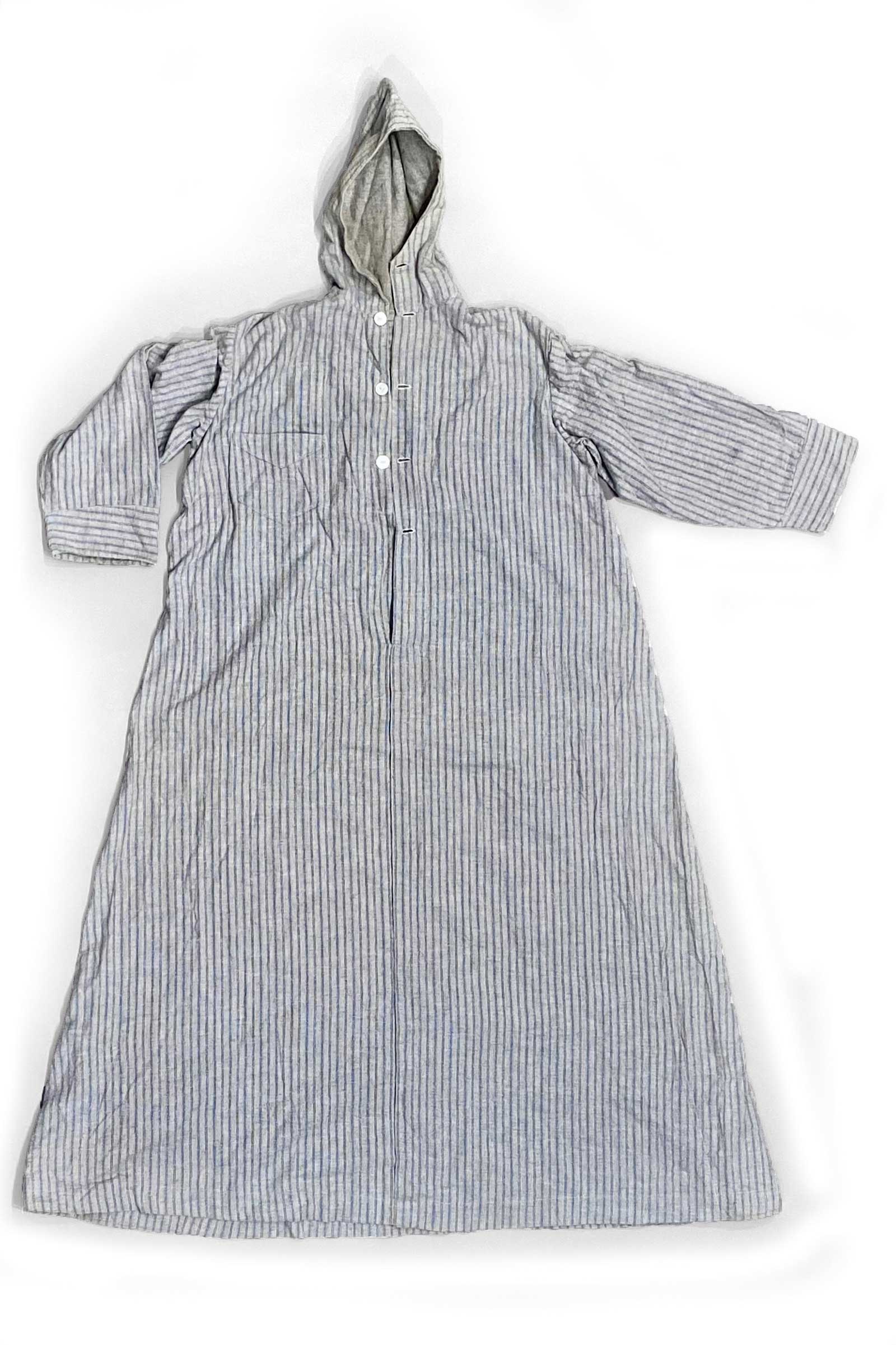 Joseph Henry Sharp’s pajamas, ca. 1900, fine cotton and wool blend hooded pajama or nightgown. Donated by Lainey Reynolds-Keene, 2021.
As word gets around that the site is seeking material relating to the Taos Society, collectors donate items from Sharp’s nightshirt to store displays for which Couse produced the artwork. Sharp’s hooded nightshirt was donated by Lainey Reynolds-Keene whose family acquired it after Sharp left Montana after 1910.
This year, Lainey Reynolds-Keene also donated a Western Plains-style headdress, circa 1900, acquired by Sharp while he was living on the Crow Reservation from 1898 to 1910. “It was given by Henry to his friend Samuel B. Reynolds, Indian Agent at Crow Agency,” according to Koenig. “Samuel Reynolds and his family were close friends of Sharp. The headdress is in need of conservation treatment, a museum mount and a custom exhibit case so that it may safely be installed in the Sharp studio,” he explains. “We are currently fundraising so that we may share this exquisite example of Plains history and culture with the public.”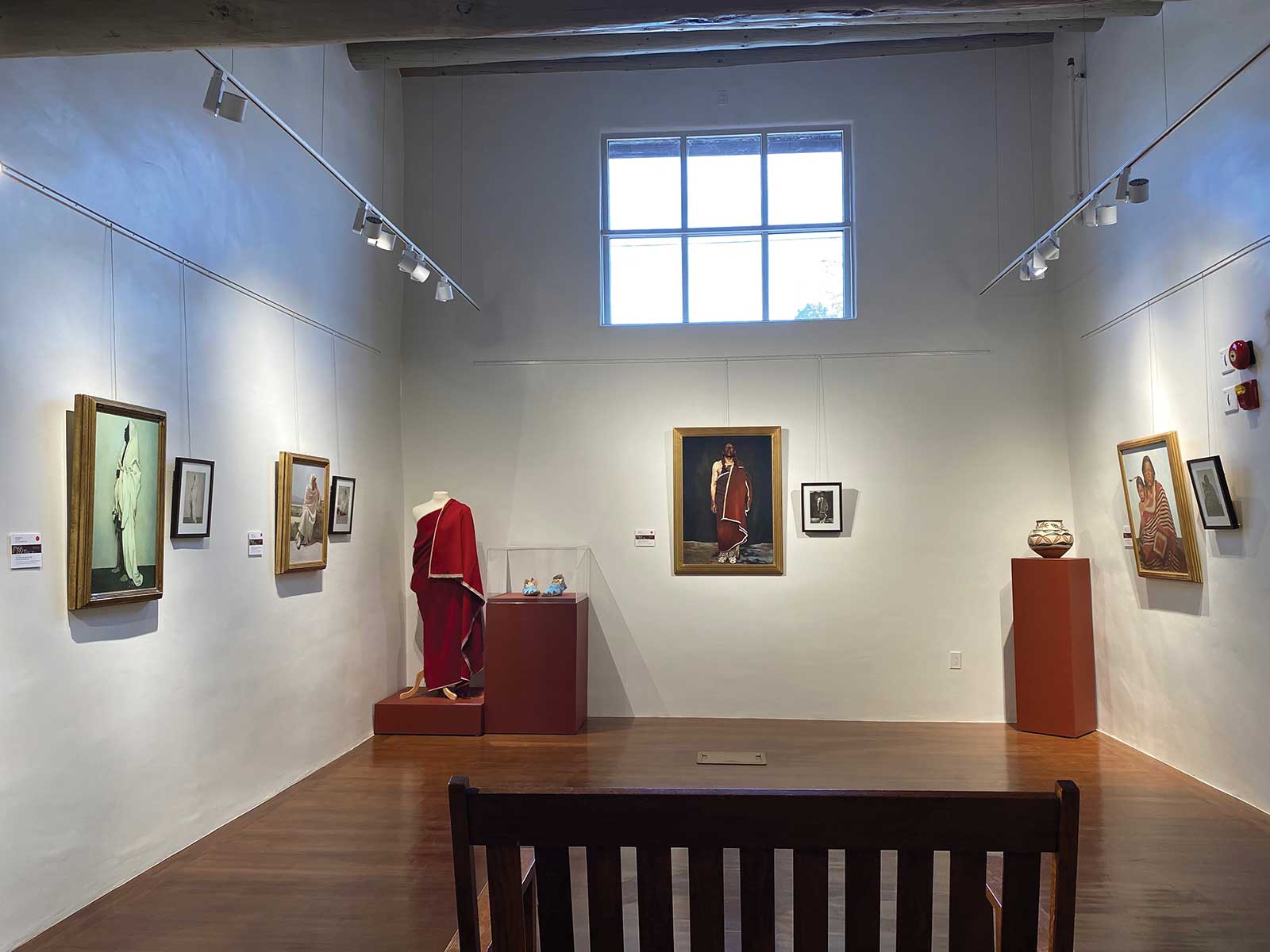 The Lunder Research Center at the Couse-Sharp Historic Site.
In 2020, the Bachhuber family won a Josh Elliott painting in the site’s 20th-anniversary celebration virtual door prize drawing. In conversation with Koenig, they said they had examples of Couse’s Beacon Blanket store displays, circa 1916-1925. The Beacon Blanket Company commissioned 14 paintings from Couse, “several of them were specifically designed to be used as templates for paper cut-out store displays promoting the Beacon ‘Indian’ blankets, in department stores across the nation,” Koenig explains. “We have in the Couse family collection correspondence between Charles D. Owens, of Beacon and Irving discussing the particulars of the displays, as well as sketches, maquettes and photo studies Couse produced. We are currently working with the newly revived Beacon Blanket Company…to produce a Couse blanket—stay tuned.”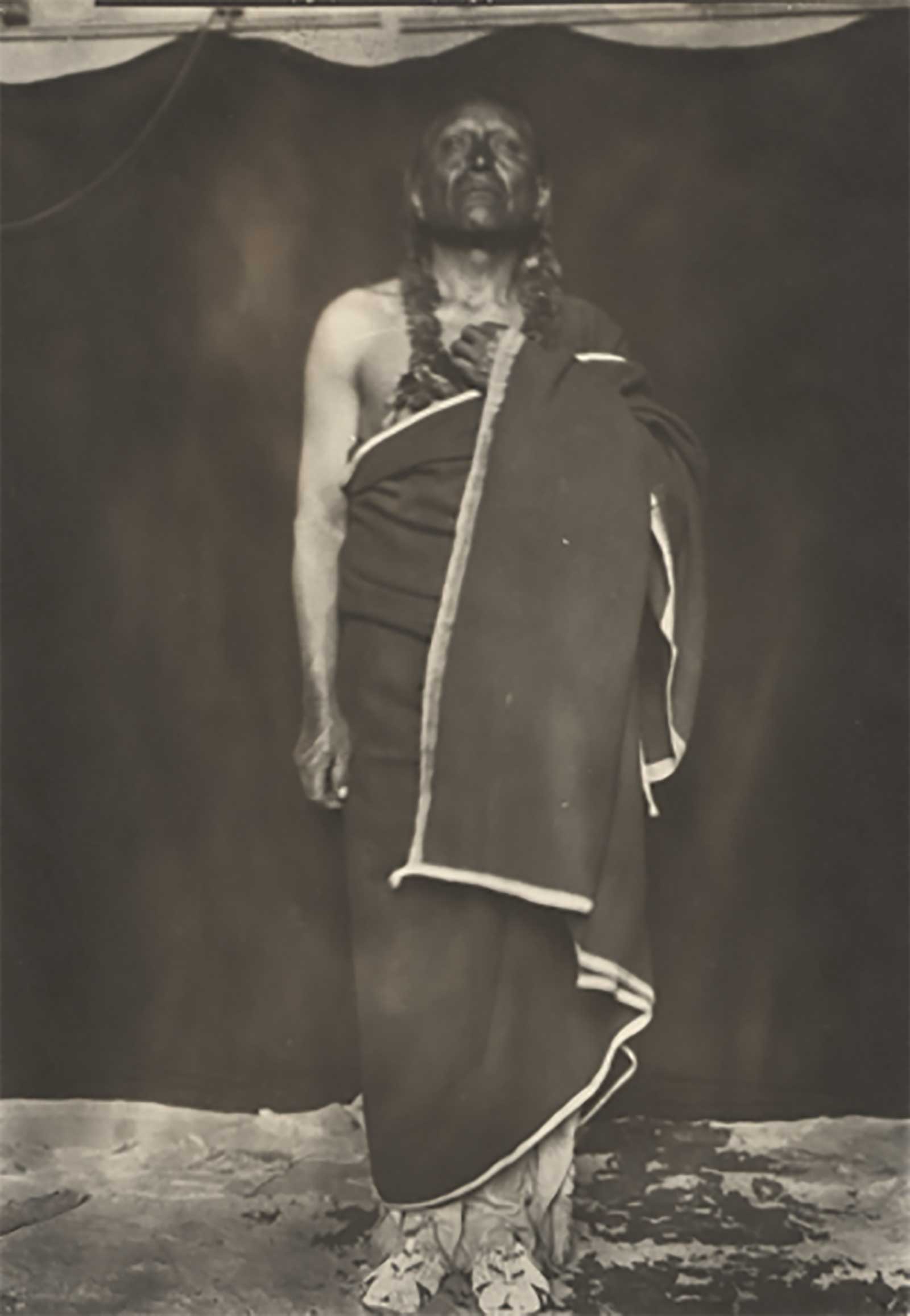 Eanger Irving Couse (1866-1936), Antonio Lujan in the Couse studio 1919, facsimile of contact print, 5 x 3”. Ms. Coll. 7, PI58, p. 4, item 2, Couse Family Photo Collection, Couse-Sharp Historic Site, The Lunder Research Center.
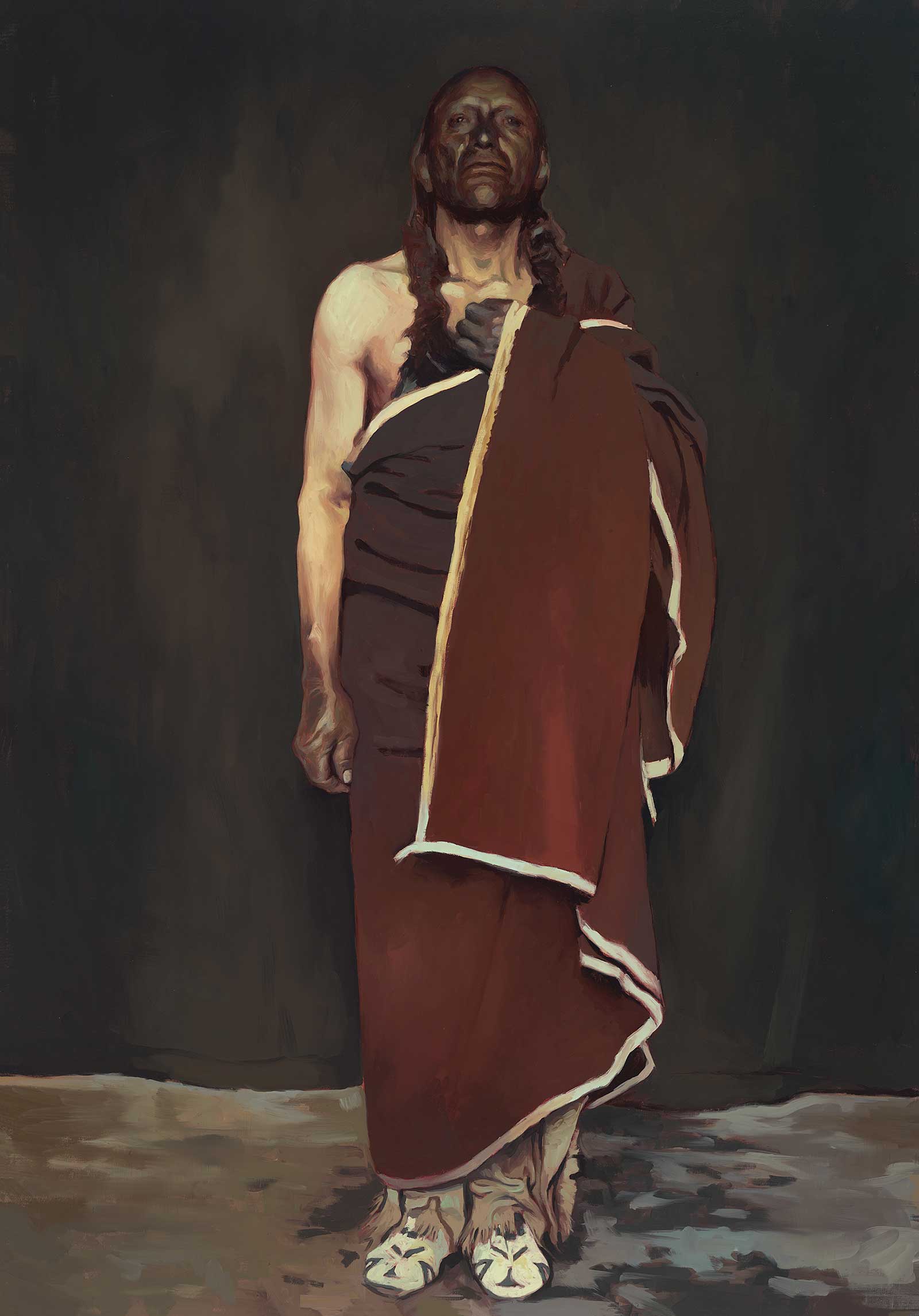 Mark Maggiori, Buffalo Dancer, 2021, oil on linen, 40 x 28”. Couse-Sharp Historic Site, museum purchase, 2021.
The site is working with other organizations to assemble additional materials either physically or digitally to tell the story not only of the Taos Society of Artists but the Native story as well. “We’d like to get more Native American students exploring the relationships between the Pueblos and the artists,” Koenig says. “The experience of the Taos Society of Artists was a lived experience. Painting their Native neighbors and friends made their work more profound. The models weren’t passive sitters, they were active agents of social change. The artists all had their favorite models who became lifelong friends. Couse’s models weren’t just posing, they were actually doing skilled work that enabled him to tell a story presenting their beautiful interior lives.” —
Powered by Froala Editor