Now open at the New Mexico Museum of Art is a new exhibition that brings into focus the culture, influences and fellow artists that Gustave Baumann interacted with when he came to the Southwest in 1918. The famous printmaker and painter, whose works speak to the beauty and color of New Mexico, will be the central subject in Go West Said a Small Voice: Gustave Baumann and Dreams of New Mexico. The title of the exhibition comes from one of the artist’s works that will be on view in the Santa Fe museum. 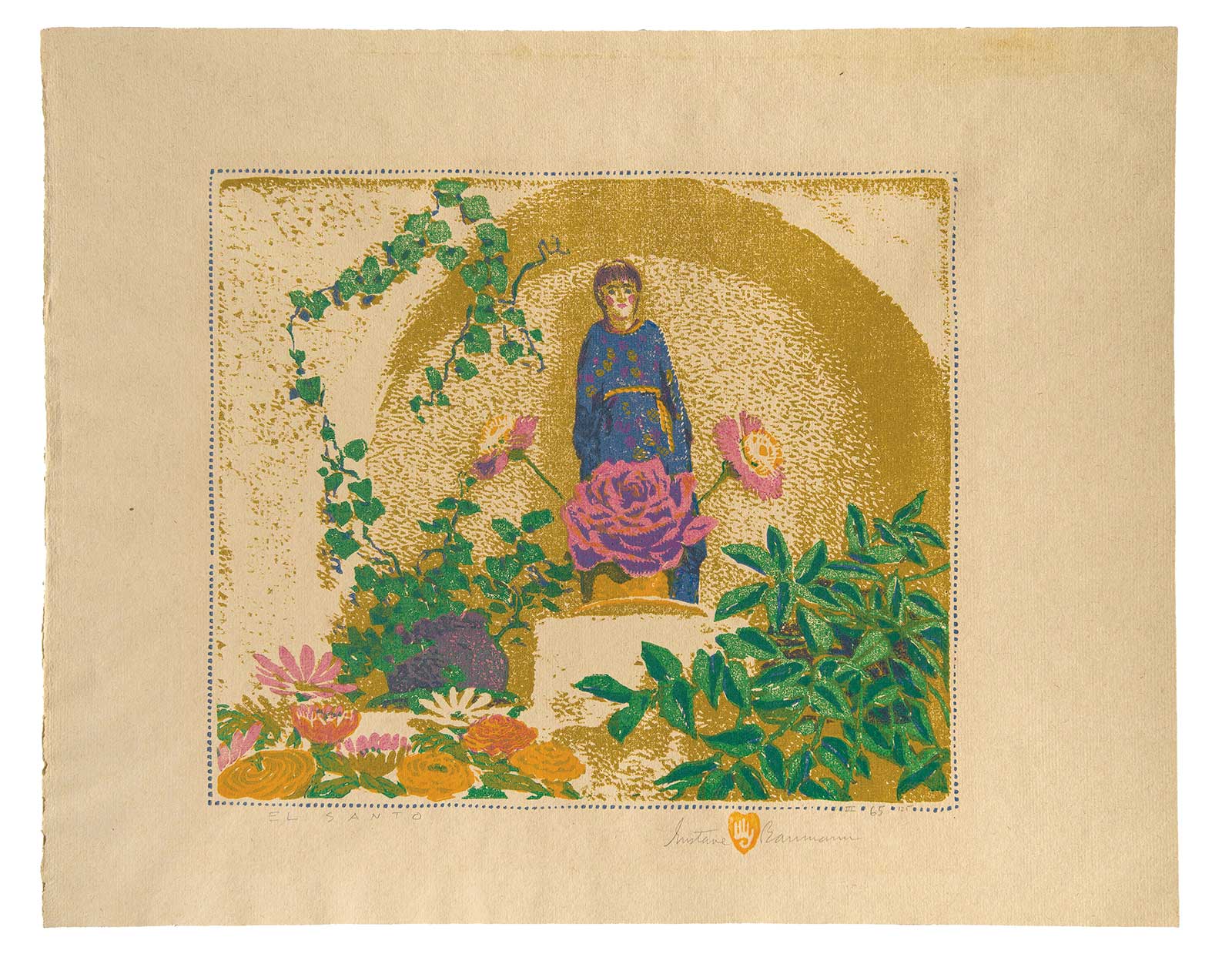 Gustave Baumann (1881-1971), El Santo, woodblock print, 20 x 21¼”
“The exhibition is really about setting the stage for Baumann being in New Mexico. We focus on his colleagues and the art he would have seen while he was living there, whether it was Native or Hispanic, and even some contemporary artwork as well,” says New Mexico Museum of Art assistant curator Jana Gottshalk. “The show will feature 40 to 50 works, including prints and paintings, as well as marionettes that Baumann was fond of making. Additionally we will highlight some of the commercial work he was doing in Chicago before he came West.”
For Gottshalk, the appeal of Baumann is his color palette. “It’s so unique and vibrant,” she adds. “It draws people to him.”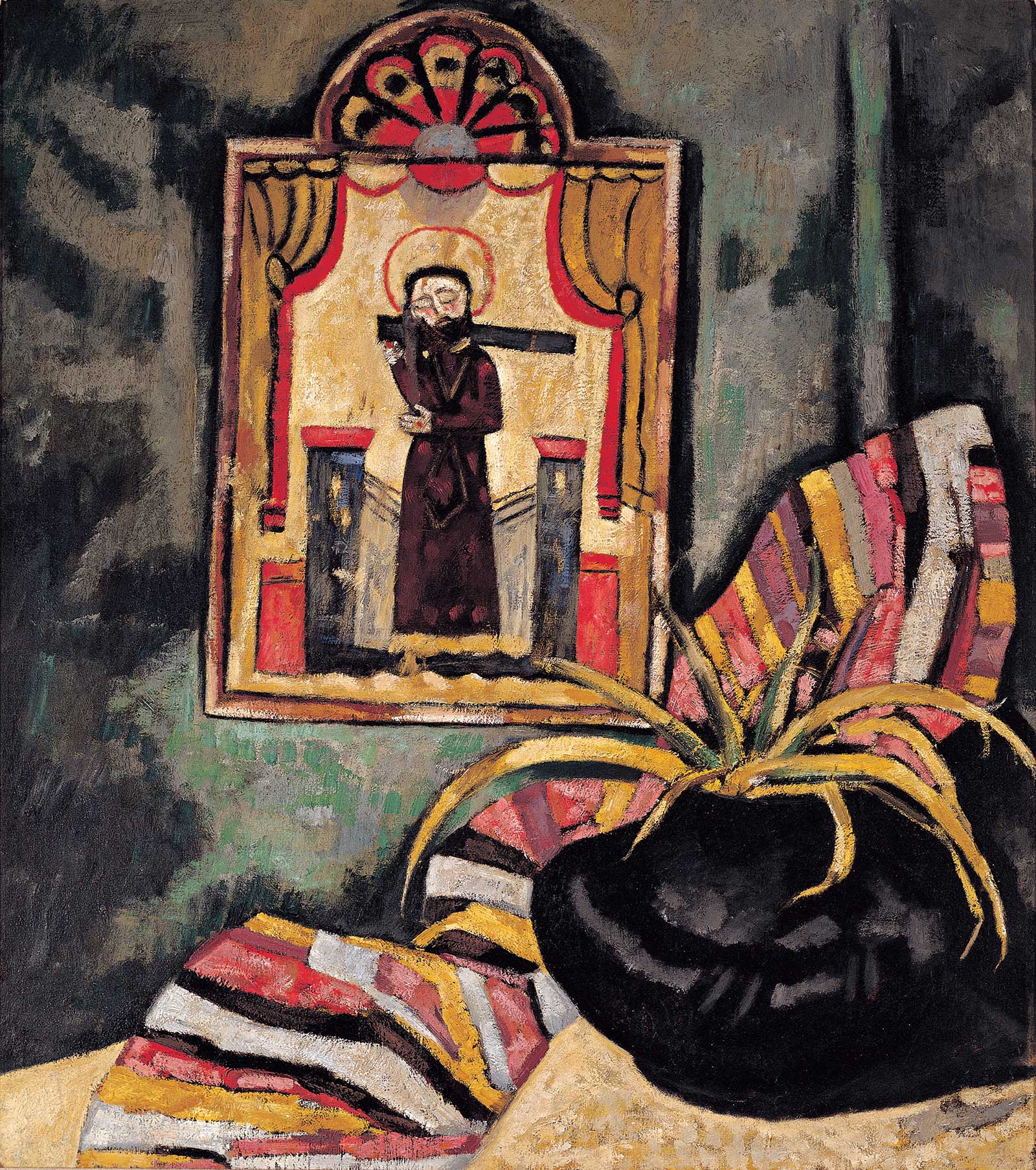 Marsden Hartley (1877-1943), El Santo, 1919, oil on canvas, 36 x 32”. Collection of the New Mexico Museum of Art. Anonymous gift from a friend of Southwest art, 1919 (523.23P). Photo by Blair Clark.
Key works in the show include pieces related to a series of saints Baumann was painting after he arrived to New Mexico and was struck by the Hispanic influences within the area. “People talk about Baumann’s landscapes a lot, but these works are certainly part of the culture he was experiencing when he came to the Southwest,” the curator says.
Works by Baumann’s contemporaries include pieces by Eliot Porter, Sheldon Parsons and contemporary artists such Vicente Telles and Armond Lara. A key highlight is a Marsden Hartley’s 1919 oil El Santo, a still life showing a potted plant, blanket and a picture of a saint on the wall. 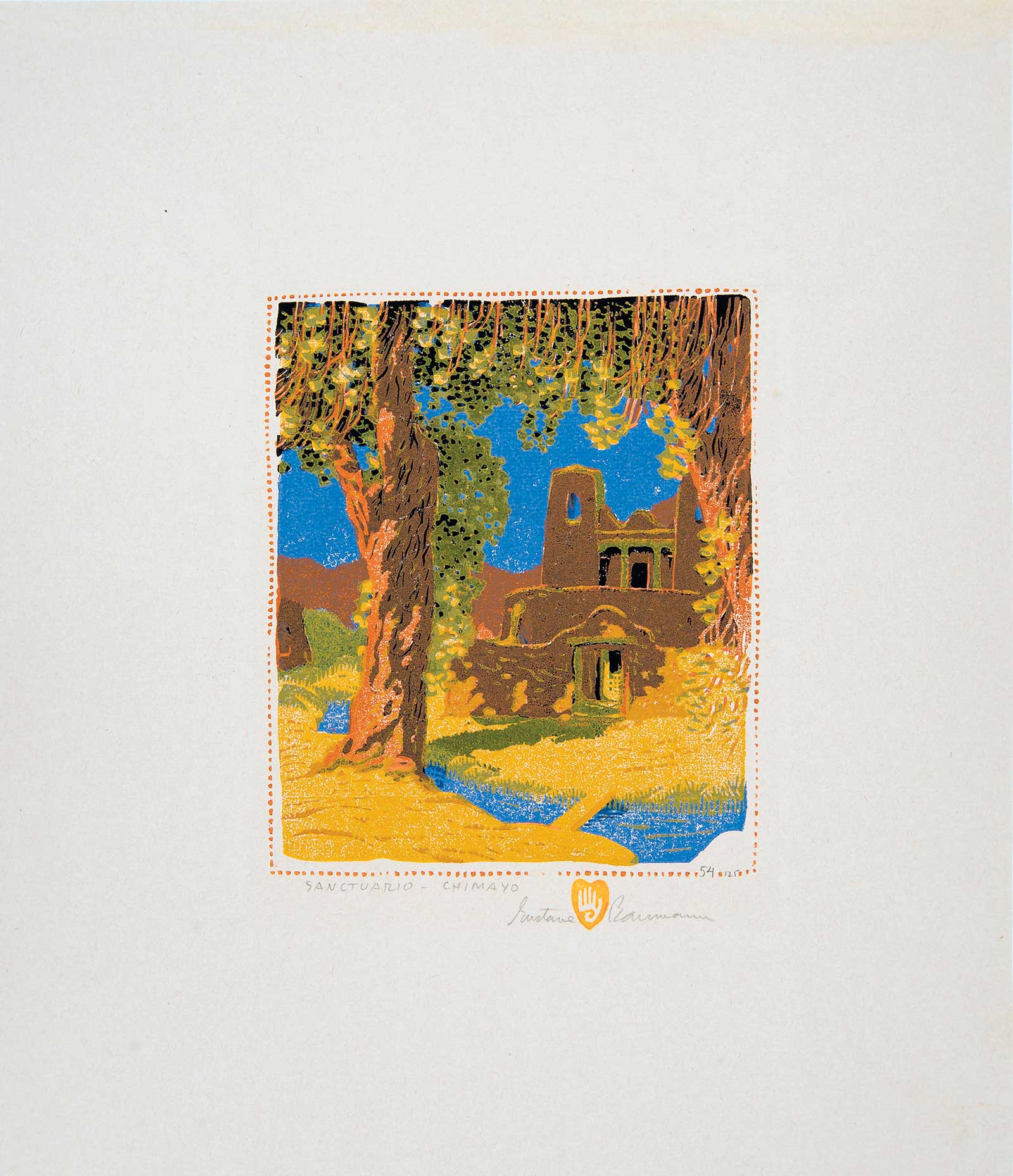 Gustave Baumann (1881-1971), Sancuario – Chimayo, 1924, color woodcut. Museum purchase with funds raised by the School of American Research, 1952. 889.23G.
“In 1918 Gustave Baumann moved to New Mexico where the formidable yellow and red landscapes and wide-open skies dramatically changed his aesthetic, shifting his palate from monochromatic neutrals to the brilliant and vibrant colors that have come to define his Western landscapes. Baumann also encountered a diverse cultural environment like nothing he had experienced before. From the carved and painted santos, the churches and chapels of the Hispanic Southwest, to the Native dances, and the Kachina figures from his personal collection, Baumann’s work was inspired by the diverse cultural range of the region,” the museums notes. “This exhibition explores not only Baumann’s iconic landscapes but also his interaction with the art of the mission churches and the cultures of the Native pueblos through his classic wood-block prints and his marionettes.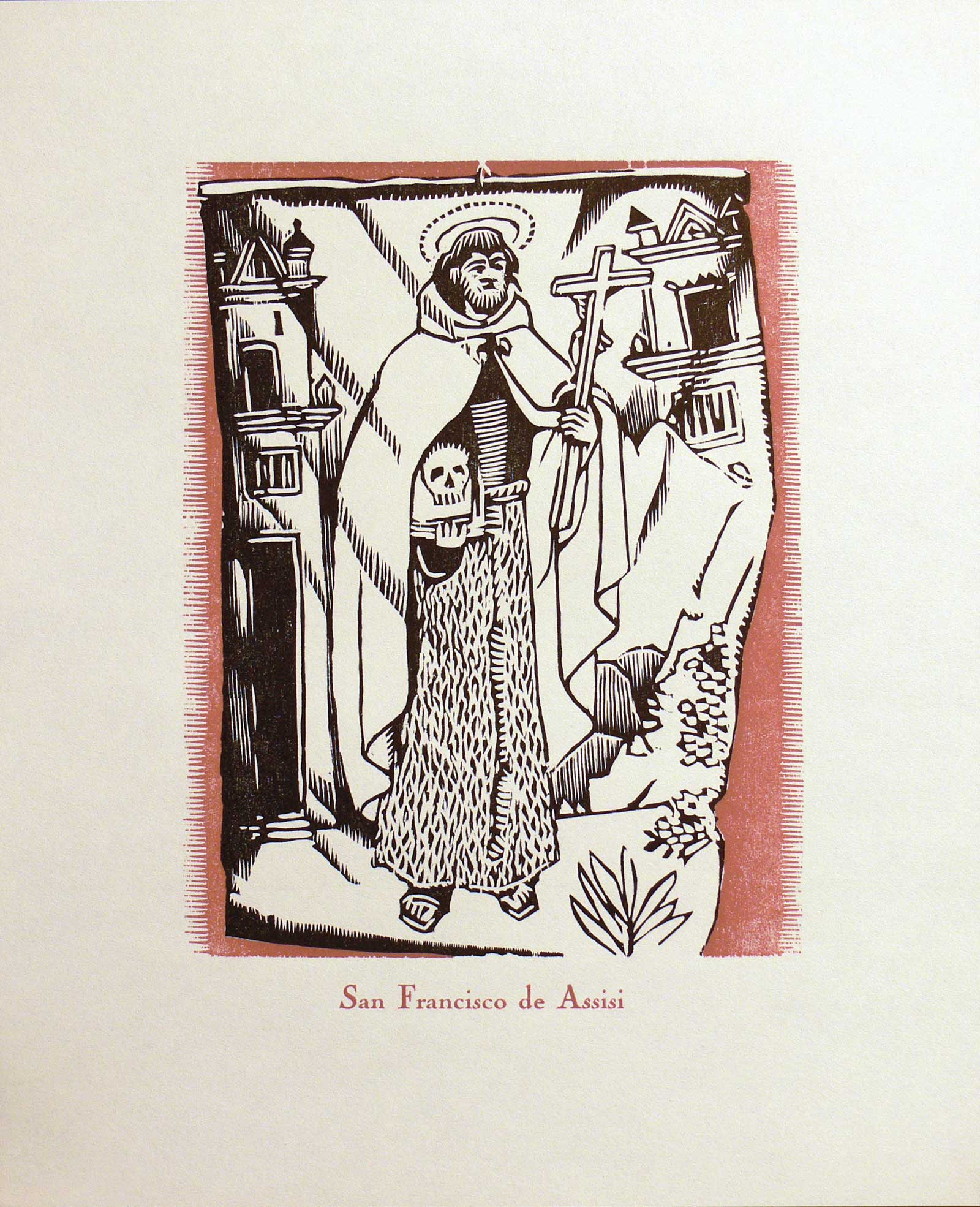 Gustave Baumann (1881-1971) and Willard F. Clark (1910-1992), San Francisco de Assisi (from New Mexico Santos), ca. 1928, printed by Linnea Gentry, 1983, color woodcut, 7 15/16 x 6 1/16”. Collection of the New Mexico Museum of Art. Gift of Ann Baumann, 2010 (2010.28.4). © New Mexico Museum of Art.Baumann was part of a movement of artists moving west and experiencing this part of the country both in similar and very different ways. The exhibits will make these comparisons, drawing on the works of Baumann’s contemporaries for a deeper conversation.”
The exhibition continues through February 12, 2022. —
Go West Said a Small Voice: Gustave Baumann and Dreams of New Mexico
Through February 13, 2022
New Mexico Museum of Art,
107 W. Palace Avenue, Santa Fe, NM 87501, (505) 476-5072
www.nmartmuseum.org
Powered by Froala Editor