If you believe in ghosts then the streets of Taos, New Mexico, are haunted. Not the kind of haunting that fills horror movies or campfire tales. Haunted in the sense that the spirits have never left, and their stories still reverberate down the streets, through the lush courtyards and into the adobe buildings they once called homes.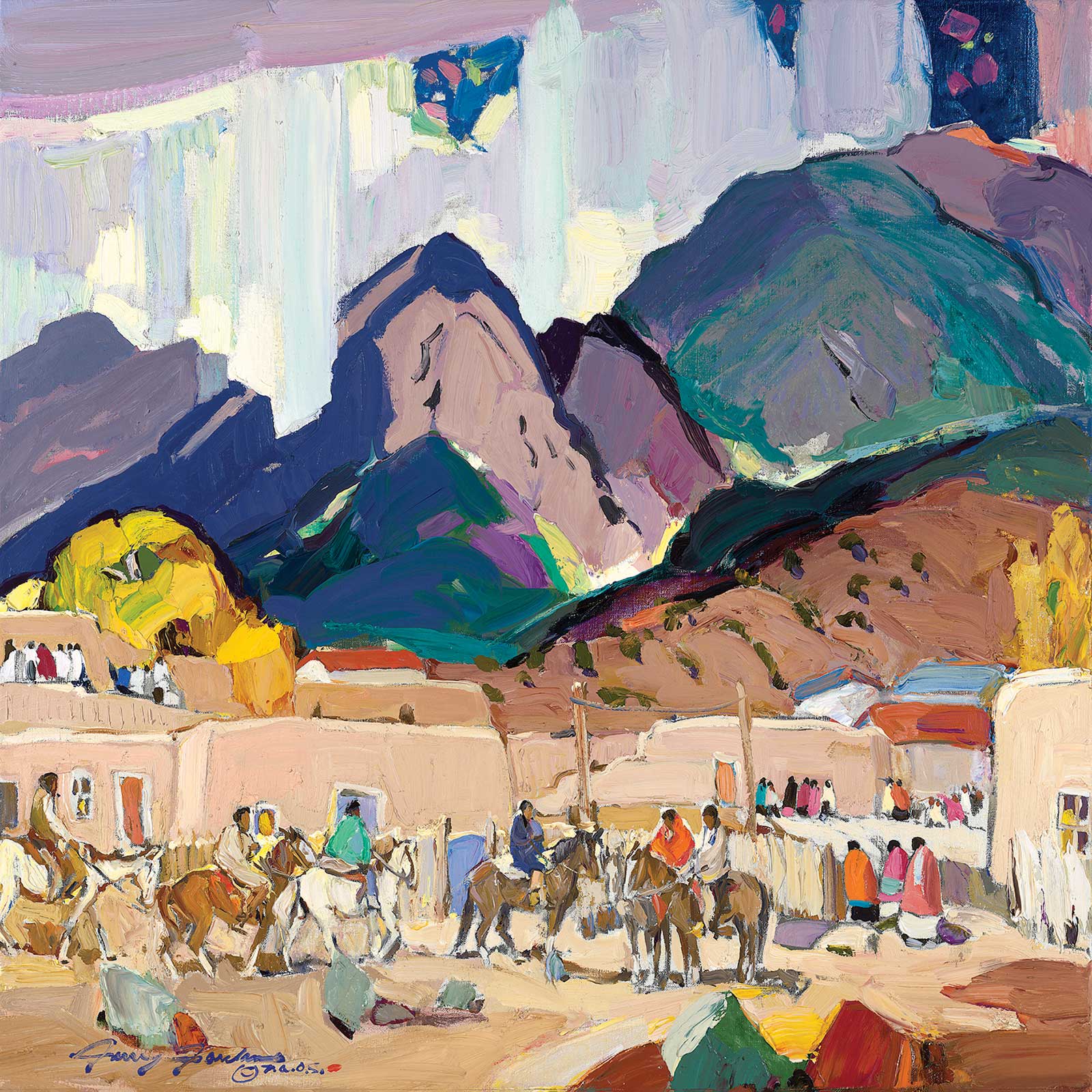 Jerry Jordan, The Fragrance of Rain, oil on canvas, 30 x 30”
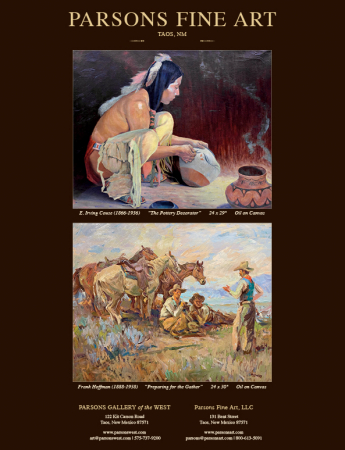
The names of these spirits may sound familiar: Eanger Irving Couse, Joseph Henry Sharp, Victor Higgins, E. Martin Hennings, William Herbert “Buck” Dunton, Oscar E. Berninghaus, Walter Ufer and many others. This is not another story on the founding of the Taos Society of Artists. This is a story about the legacy those artists left, and how one gallery is out to preserve that legacy on two fronts: by honoring the original Taos painters, and to give a voice to new generations of artists who are making the journey to Taos to bask in its warm glow.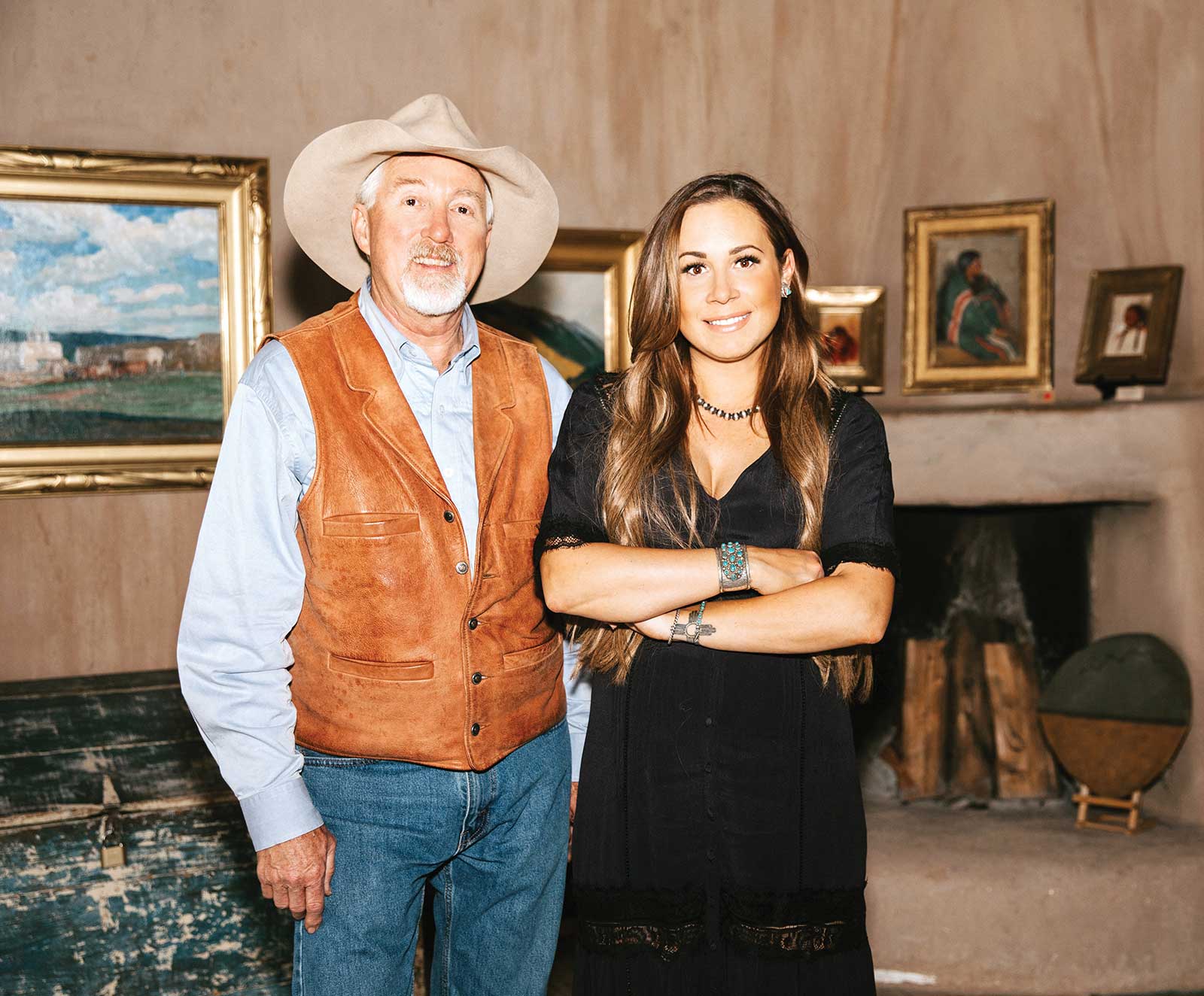 Robert Parsons and Ashley Rolshoven of Parsons Gallery of the West. Photo by Siouxzen Kang.
“People here in Taos can be very protective of this place because it’s so small. It’s teeny-tiny compared to Santa Fe. In many ways it’s like an island. A gorge wraps around one side and the mountains the other. It doesn’t feel like a city. More like a community,” says Ashley Rolshoven, who co-owns two galleries in Taos. “Some of it has to do with the sacredness of this place. All of the land here is sacred, so we’re protective of it.”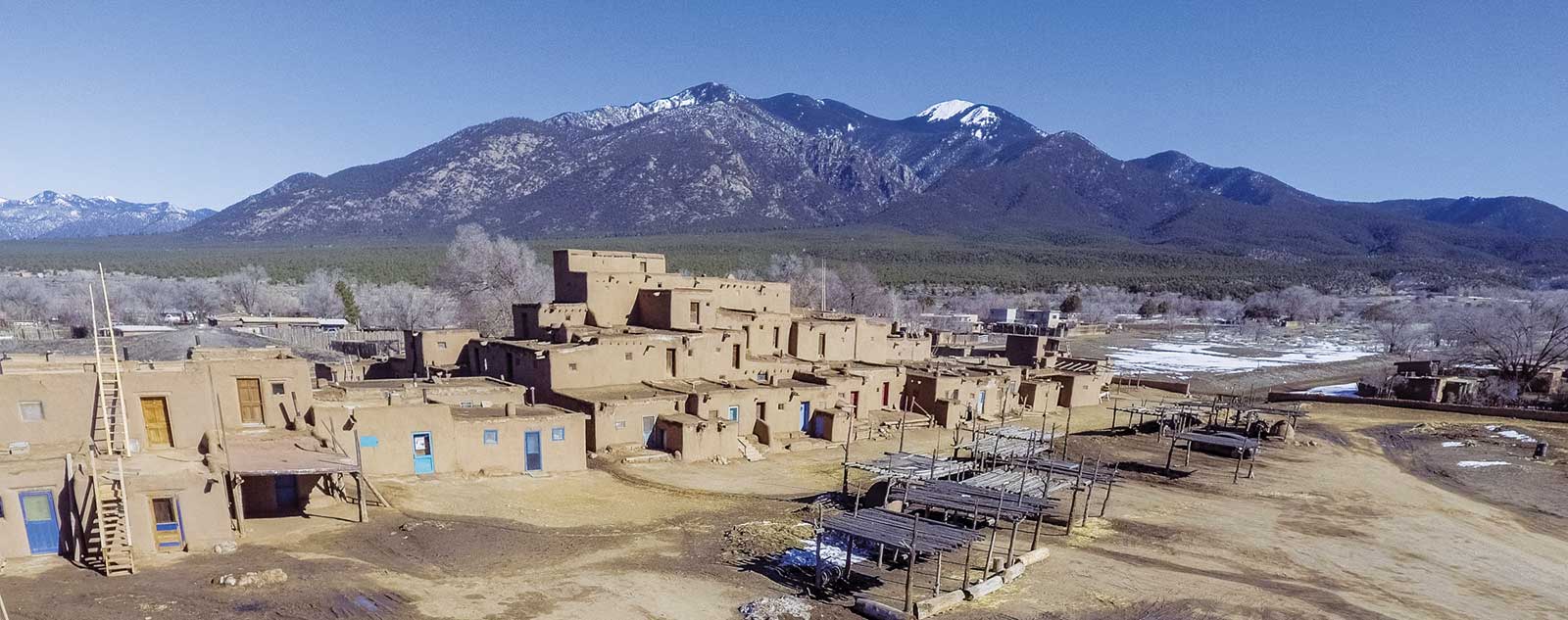 The Taos Pueblo, one of the longest continuously inhabited communities in the country.
Rolshoven brings that protective shield to her two galleries—Robert L. Parsons Fine Art is focused on historic Western art, and Parsons Gallery of the West is devoted to contemporary artists—not just because it’s good business, but also because she feels a responsibility to Taos, its residents and the future of art in the area. “Taos is one of the most important art colonies in America,” she adds. “Look who came here and it’s a who’s who of art. And they couldn’t arrive easily. There was no train. They had to take a wagon several days from Santa Fe. It was hard to get here, so everyone that was here wanted to be. And today we’re all tight-knit and we work together.”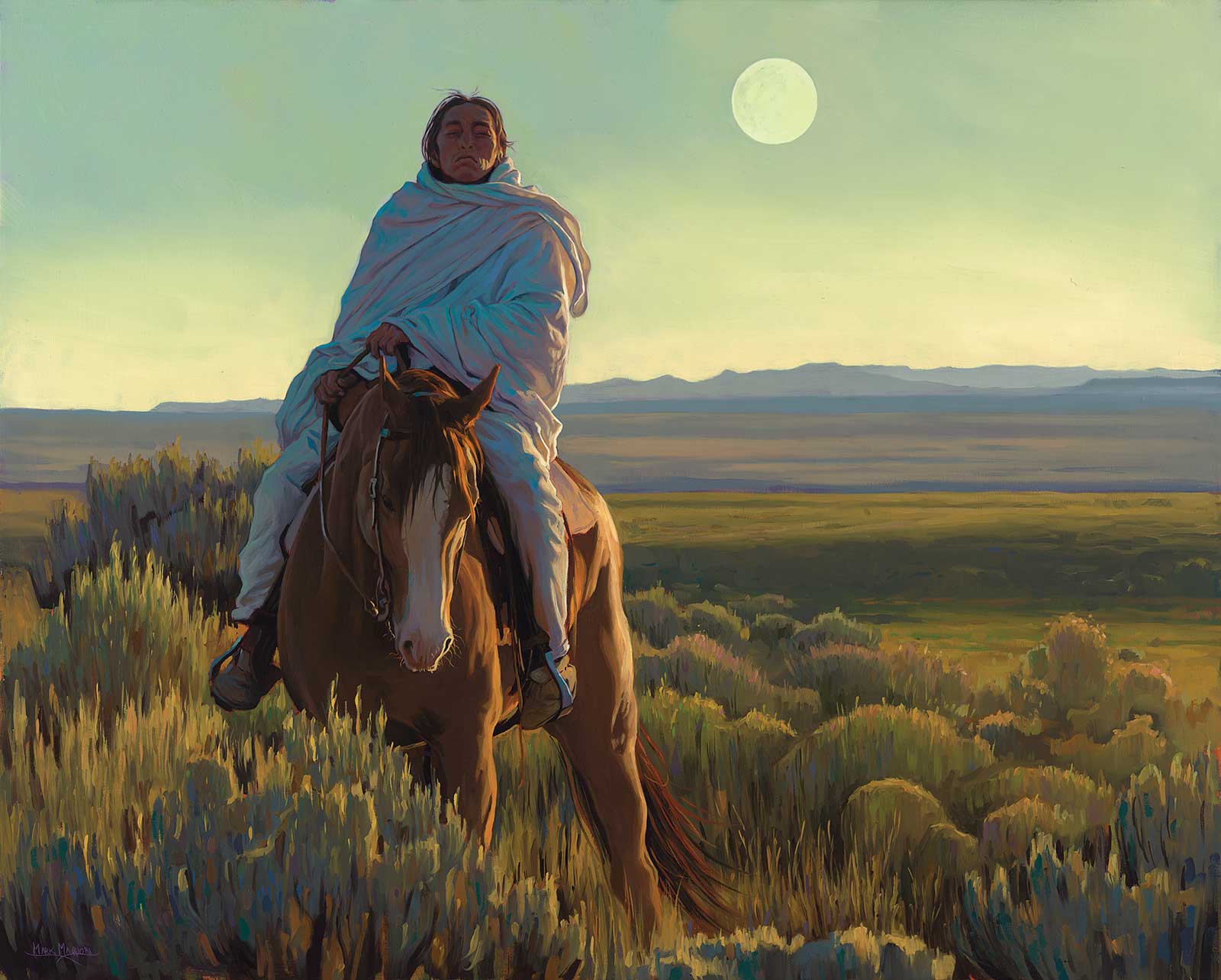 Mark Maggiori, Full Moon Rising, oil on linen, 24 x 30”
The gallery, which is celebrating its 30th year in business in February 2022, started in 1992 by Robert Parsons, Rolshoven’s stepfather. Though they were not related by blood, Rolshoven, herself a distant relative of Taos painter Julius Rolshoven, saw Parsons as a father, and worked with him for a number of years, even starting at age 6, before becoming a partner in the gallery. Back in 1992, Parsons—the man, not the gallery—was mostly dealing in antique American Indian material, including Navajo blankets, which had an explosive market surge in the 1980s and 1990s. Robert L. Parsons Fine Art was started to deal primarily in “traditional Taos art,” a phrase both Parsons and Rolshoven emphasize as part of the foundation of their galleries. Later, in 2006, came Parsons Gallery of the West on Kit Carson Road. The building it occupied was once a bookstore and was built around 1810. Their neighbor is the landmark art destination the Couse-Sharp Historic Site.
Today both owners of the gallery, Parsons and Rolshoven, emphasize that respect of the land, the Taos Pueblo people and their lifeways, and the history of the Taos history are core tenets of the gallery’s mission. “We are aiming for the highest standards,” Parsons says. “We can’t go in and act like this is 1915. It’s a different time and we have different standards, including ethical considerations.”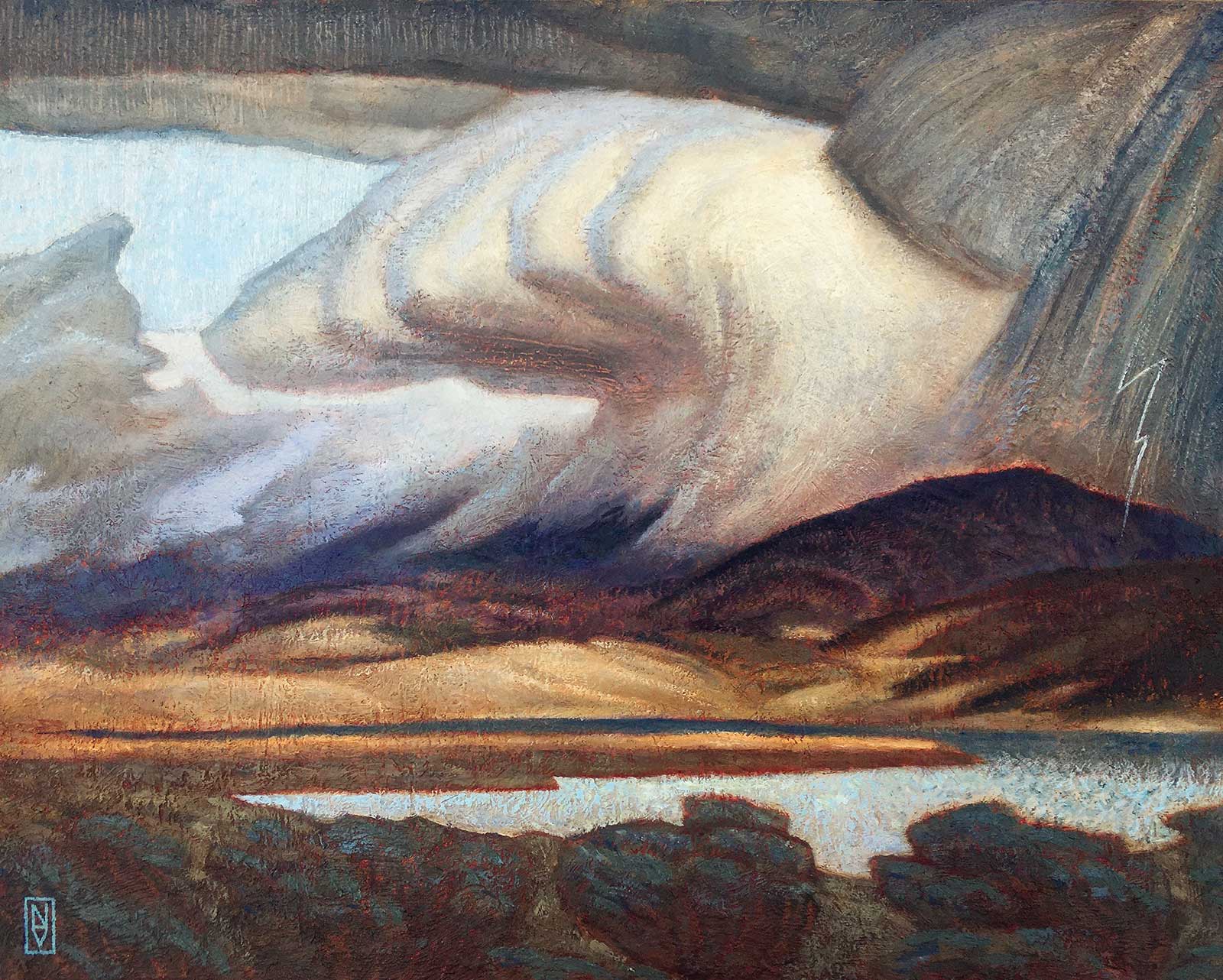 Nathanael Volckening, Eagle Nest, oil on board, 16 x 20”
Rolshoven explains further: “We encourage our artists to do everything by the proper channels. Every now and again you hear about an artist coming through taking photos and the models don’t even get a proper thank you, and then the artist leaves to go work on the paintings and we never see them here again. That doesn’t sit right with us,” she says. “We want to hold artists accountable, but also ourselves. We want to be a leader, which is why we encourage artists to ask permission, and talk to the Taos Pueblo leaders to do everything the right way. Artists should be giving back, not taking.”
One recent development by the gallery is the creation of the Taos Pueblo Art Education Fund, which directly benefits 82 students at the Taos Pueblo Day School. Not only does the fund, which is supported by the Couse-Sharp Historic Site, allow for the purchase of arts materials for students in kindergarten to eighth grade, it will eventually (when Covid has passed) fund art classes taught by professional artists. One artist who has already agreed to teach a class is painter Mark Maggiori, who moved to Taos in 2020.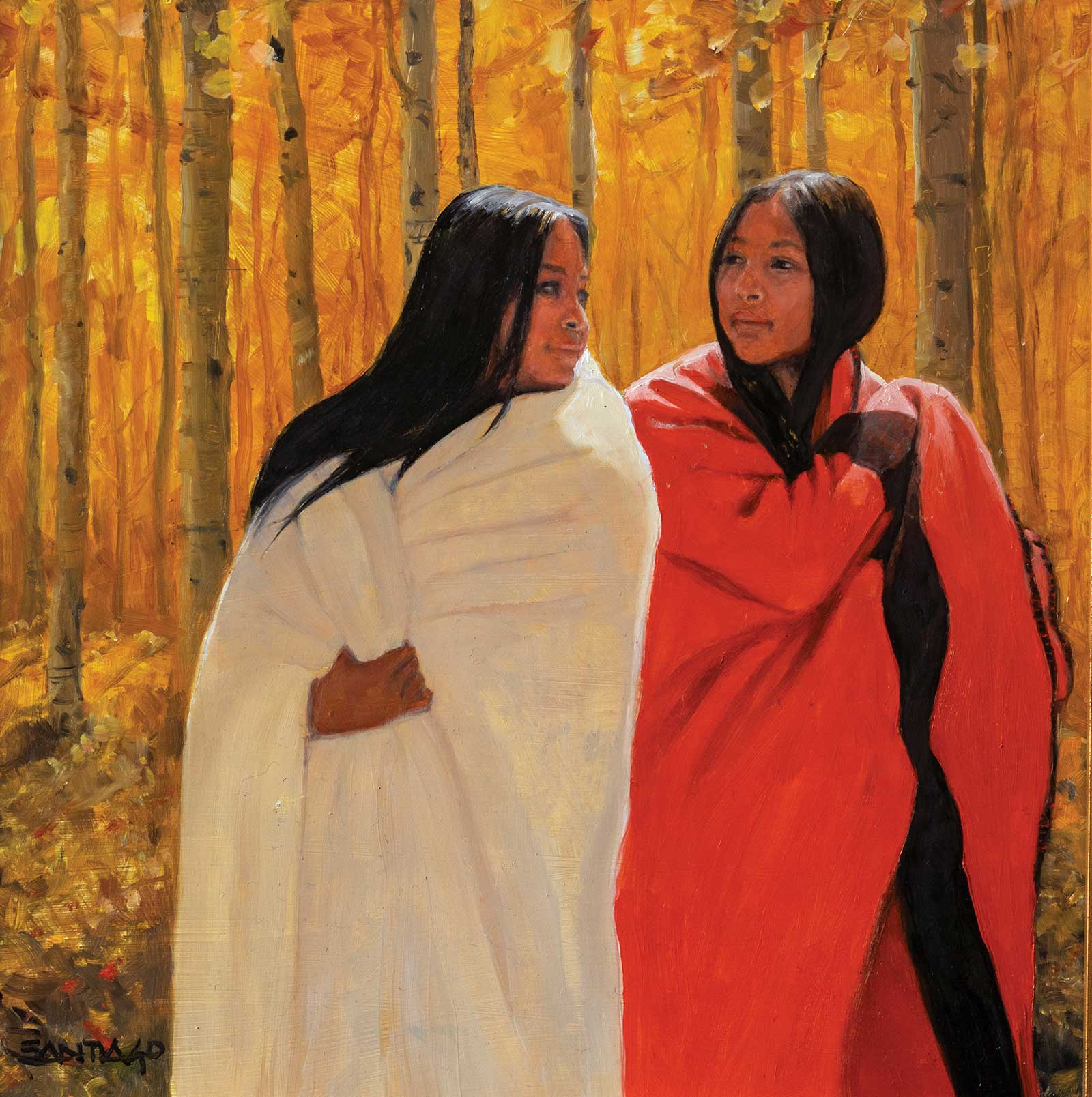 Roseta Santiago, Secrets, oil on panel, 12 x 12”
When Maggiori arrived to Taos and started painting the Taos people, he immediately started receiving pushback from a small number of people on social media. It was frustrating because he wasn’t just visiting Taos—had moved there with his family and begun to set down roots. He was also conscious about paying his models, asking for permission about where and what he painted, and then showing his subjects in a sensitive light. “They are a beautiful people and very peaceful, and I didn’t want to do anything that would suggest anything different. Anytime people go to another part of the world to paint or make art, they should be aware of the people and try to educate themselves. That became very important to me,” Maggiori says, adding that Rolshoven’s work with the Pueblo inspired him. “Every time I sell a painting with a Native American in it, a portion of the sale goes the kids at the Taos Pueblo Day School.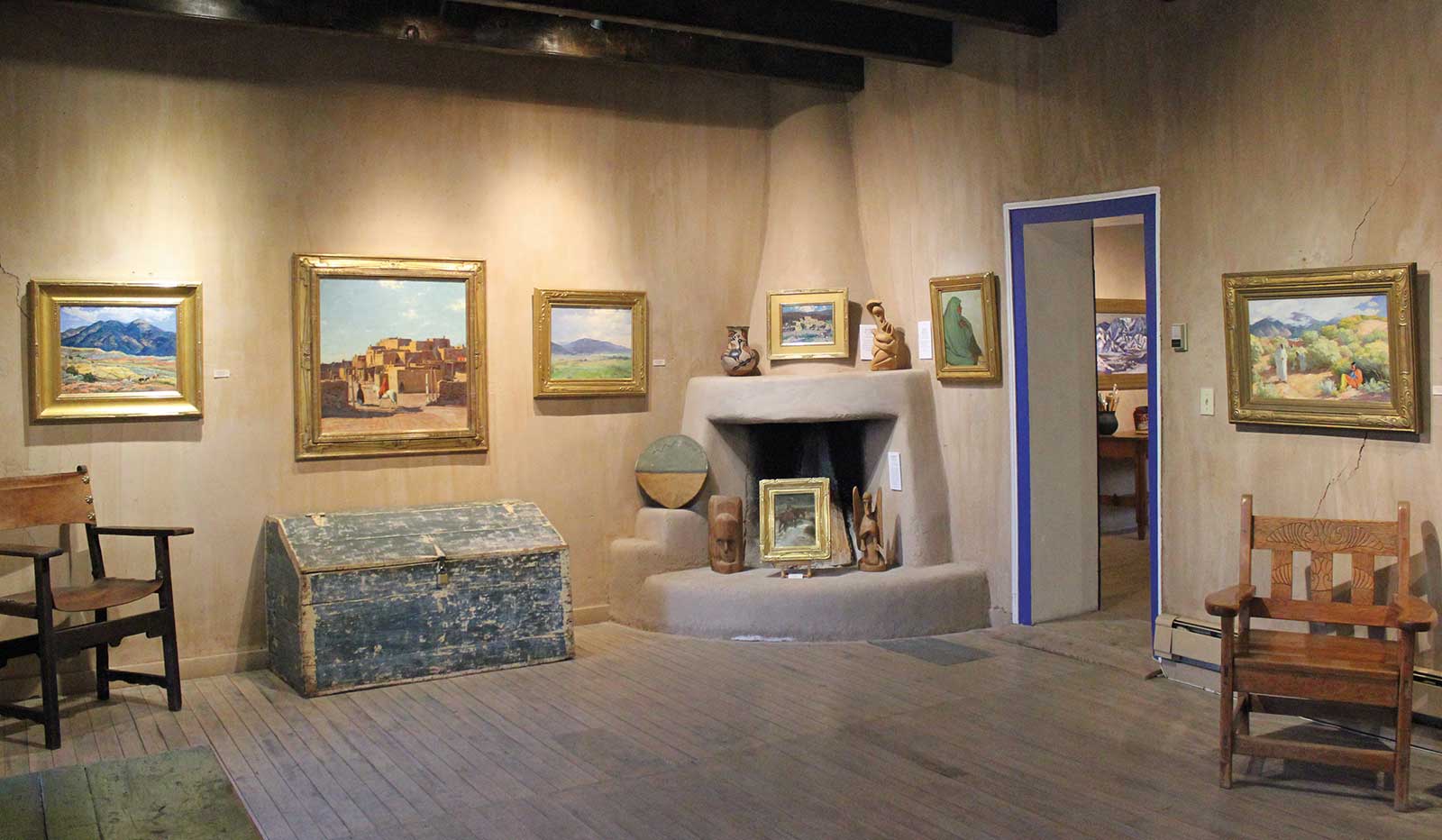 Inside Parsons Gallery of the West.
At Parsons Gallery of the West, where Maggiori occasionally shows new work, other artists have made conscious efforts to honor Taos and its people with artwork that speaks to the history, but also recognize the people not as relics of the past, but present-day members of the Taos community. Artists include Ron Rencher, Chloe Marie Burk, Brett Allen Johnson, John Moyers, Dean Porter, Nathanael Volckening, Roseta Santiago and many others. Another one of those artists is Jerry Jordan, a Taos resident whose work almost exclusively features the Taos Pueblo.
“Ashley is very conscious in bringing the issues of the Pueblo to the artists’ attention, and it’s very much appreciated, especially as she works to get funds to help their programs,” Jordan says. “It’s a community effort and there is enthusiasm for what she is doing.”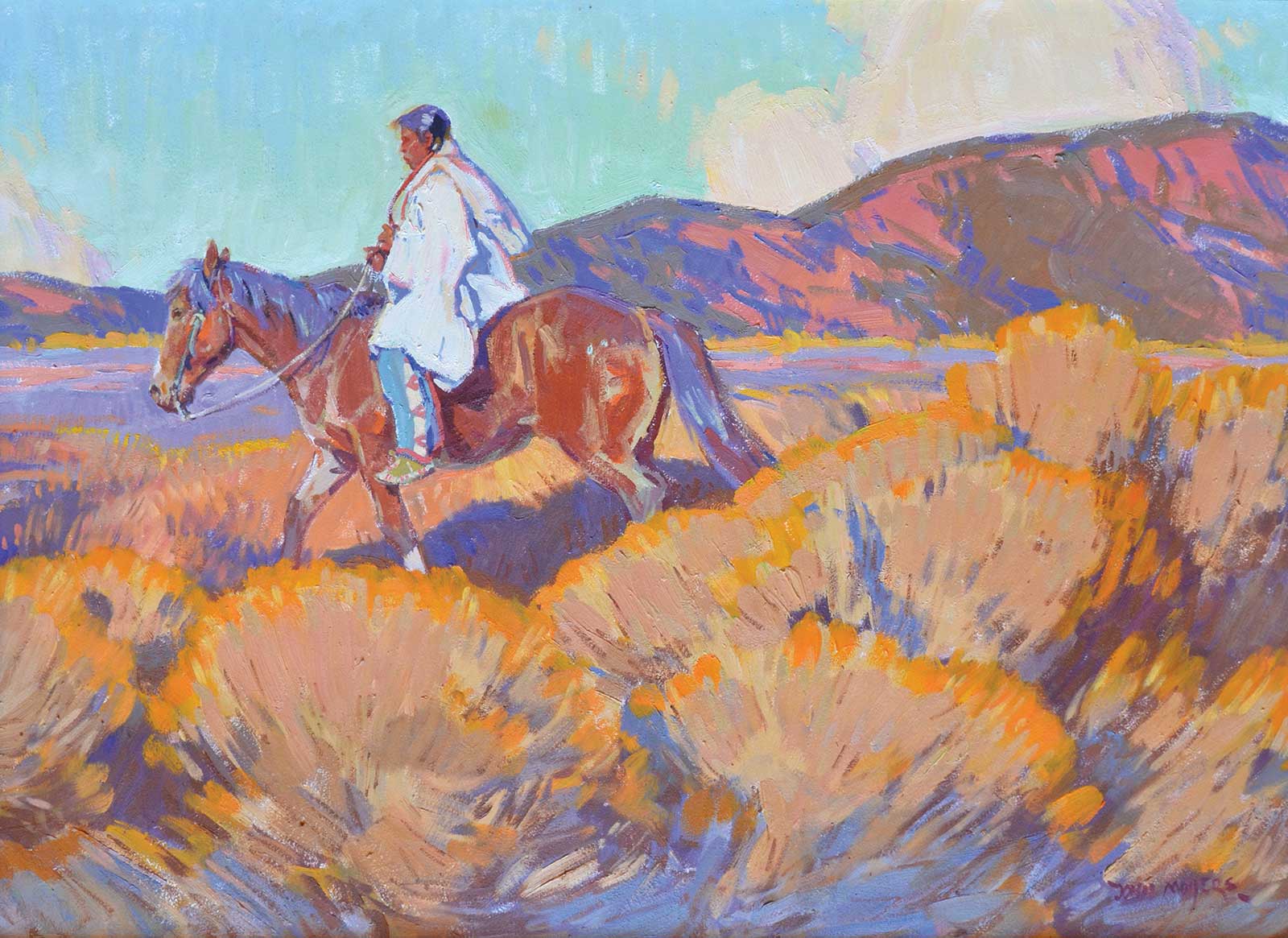 John Moyers, Old Chamisa Trail, oil on canvas, 22 x 30”
Rolshoven adds that not only does she stress strong communication between the artists and the people of Taos—all residents, Taos and Taos Pueblo—she encourages her artists to learn about the history of the area, its people and events, and use that to inform paintings. It makes the work stronger, she says, and it sets an important precedent for future artists.
“One of the things we did was get a signed Mutual Understanding Agreement with the Pueblo so they could see we were serious about the bettering of their people. Those are almost impossible to get, but we got one,” Rolshoven says, adding that the two galleries offer a look back and forward on Taos and its history. “We put our best foot forward. It takes some work, but it’s always worth it.” —
Powered by Froala Editor