Our collector has always liked the West, growing up in California and, later, living in Texas. He now lives in New Mexico surrounded by a lifetime of collecting, including the first painting he ever bought.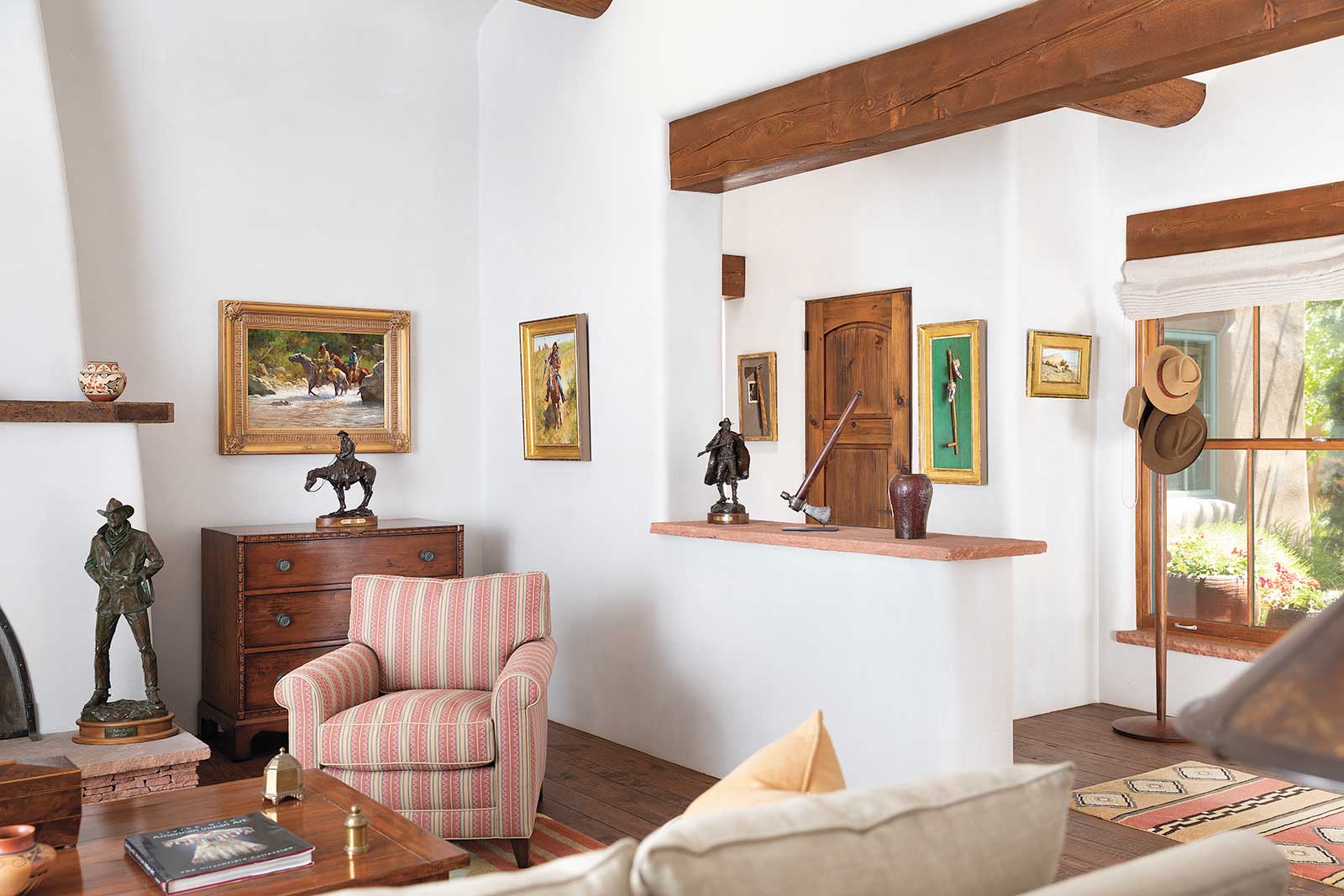 On the hearth is Grant Speed’s bronze Just Before Daylight. The sculpture on the dresser is his bronze Night Herding in the Rain. His bronze The Lonely Life of a Lawman is on the shelf to the right along with a Native American ax and a brass pot by Michael Adams of Aurora Studios. Two paintings by Howard Terpning hang in the corner, Followed, on the left, and Government Business. William Acheff’s For Future Generations, hangs on the right next to the door in the hallway. To the left of the door is his Home Protector. Tom Lovell’s Indian Scouts hangs next to the hat rack.
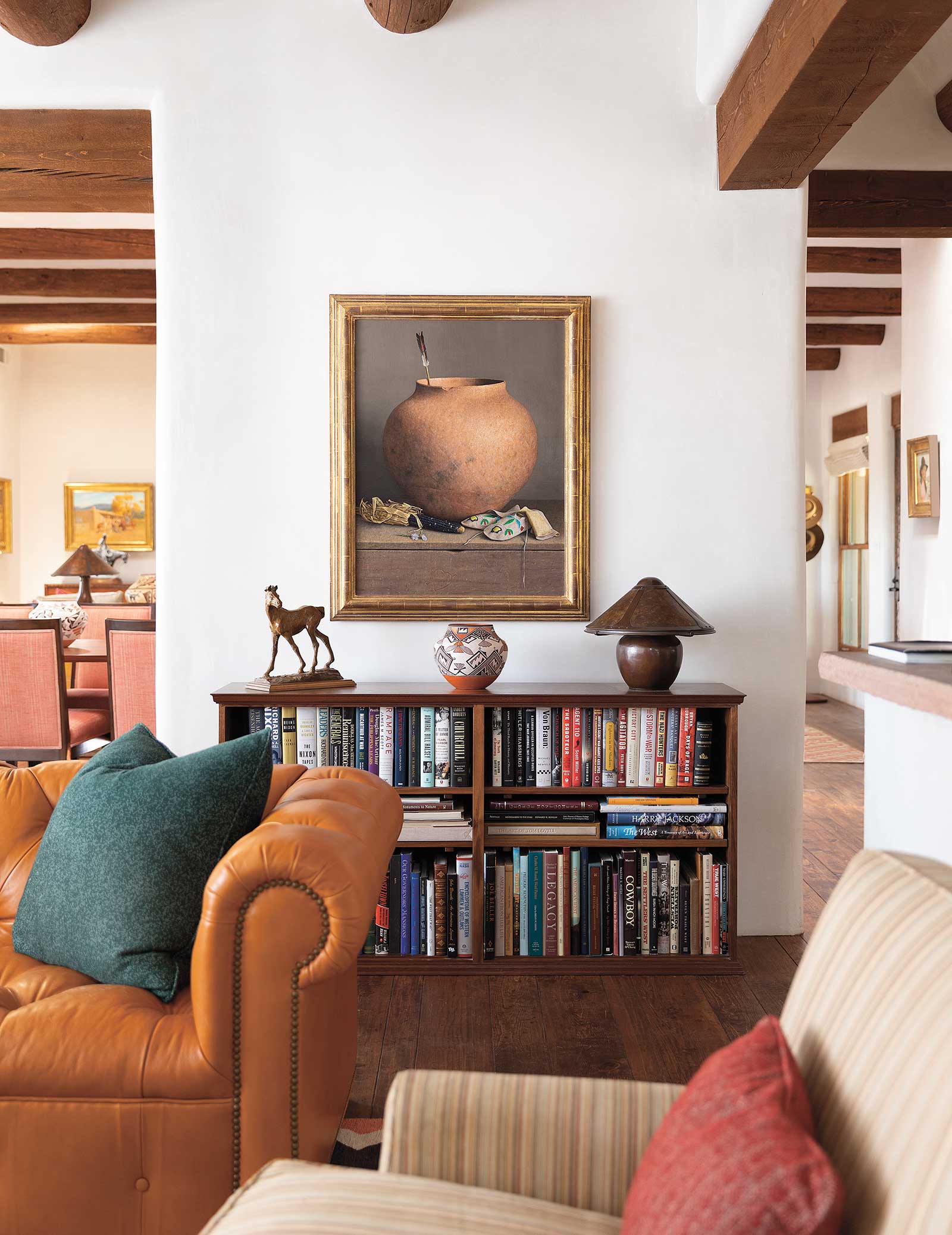 William Acheff’s Cupid’s Arrow hangs above the bookcase. On the bookcase are, left to right, a bronze by Sandy Scott, a contemporary Southwest pot and a copper and mica lamp by Michael Adams of Aurora Studios.“In my mid-20s I was living in Austin and used to walk by the Country Store Gallery which is the oldest fine art gallery in Texas. I would put my face up against the glass window to see the Western art inside. It piqued my interest. Later, when I was living in the Bay Area, I walked by the lit-up window of a gallery and saw a small painting of grapes by Bill Acheff. I liked the fact that the painting had a third dimension to it. His workmanship is incredible. I bought it for $37. I began reading and studying and looking at contemporary art, which was all I could afford at the time. Studying and looking, you learn what a good artist is and eventually learn what an individual artist’s best work is. When I see somebody new, I look at what they’re doing, their technique and the subject matter. It may have all of that, but if I don’t like the styleI don’t go for it.”
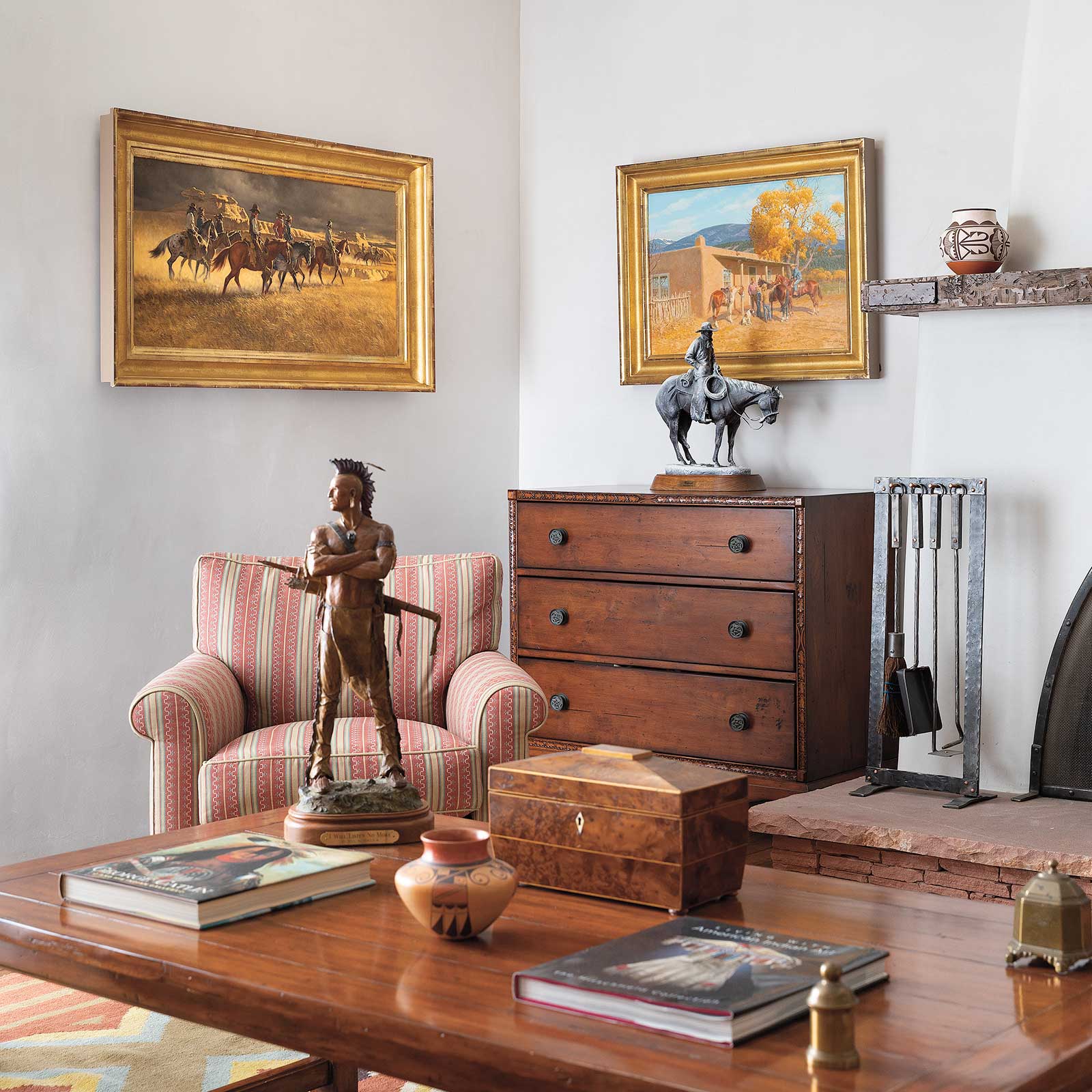 On the left wall in the living room is Heading Back by Frank McCarthy (1924-2002). Above the dresser is The New Saddle by Tom Lovell (1909-1997). On the dresser is Mehl Lawson’s bronze Windswept. In the foreground is Bill Nebecker’s bronze I Will Listen No More.
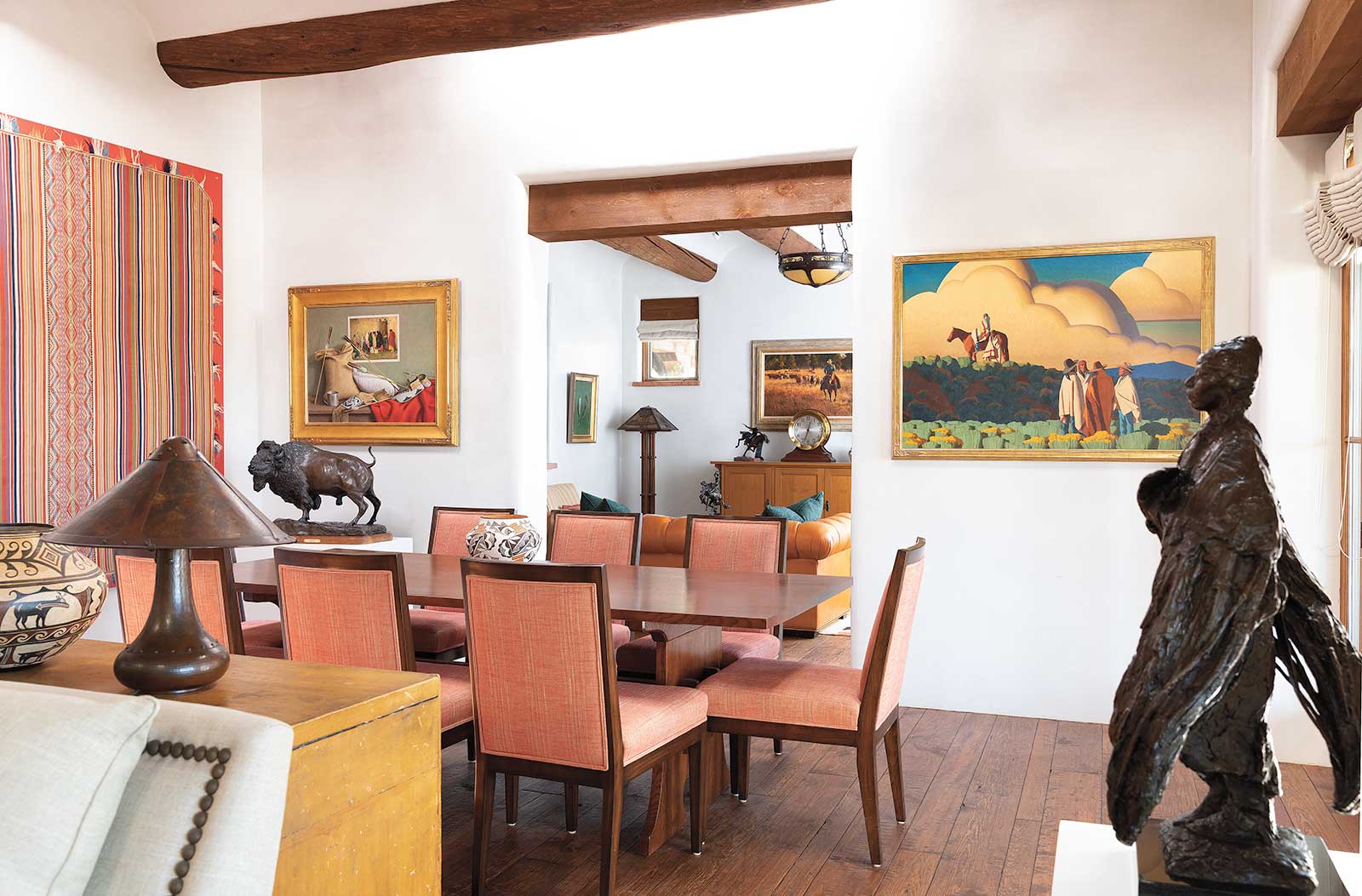 To the left of the doorway in the dining room is William Acheff’s From Warrior to Welfare. To the right is Logan Maxwell Hagege’s It’s a New Life. The bronze sculpture beneath the Acheff is Herd Bull by Robert Scriver (1914-1999). George Carlson’s bronze The Graceful Dance is in the foreground. The copper and mica lamp is by Michael Adams of Aurora Studios. All pottery in the collection is contemporary Southwest Native American.
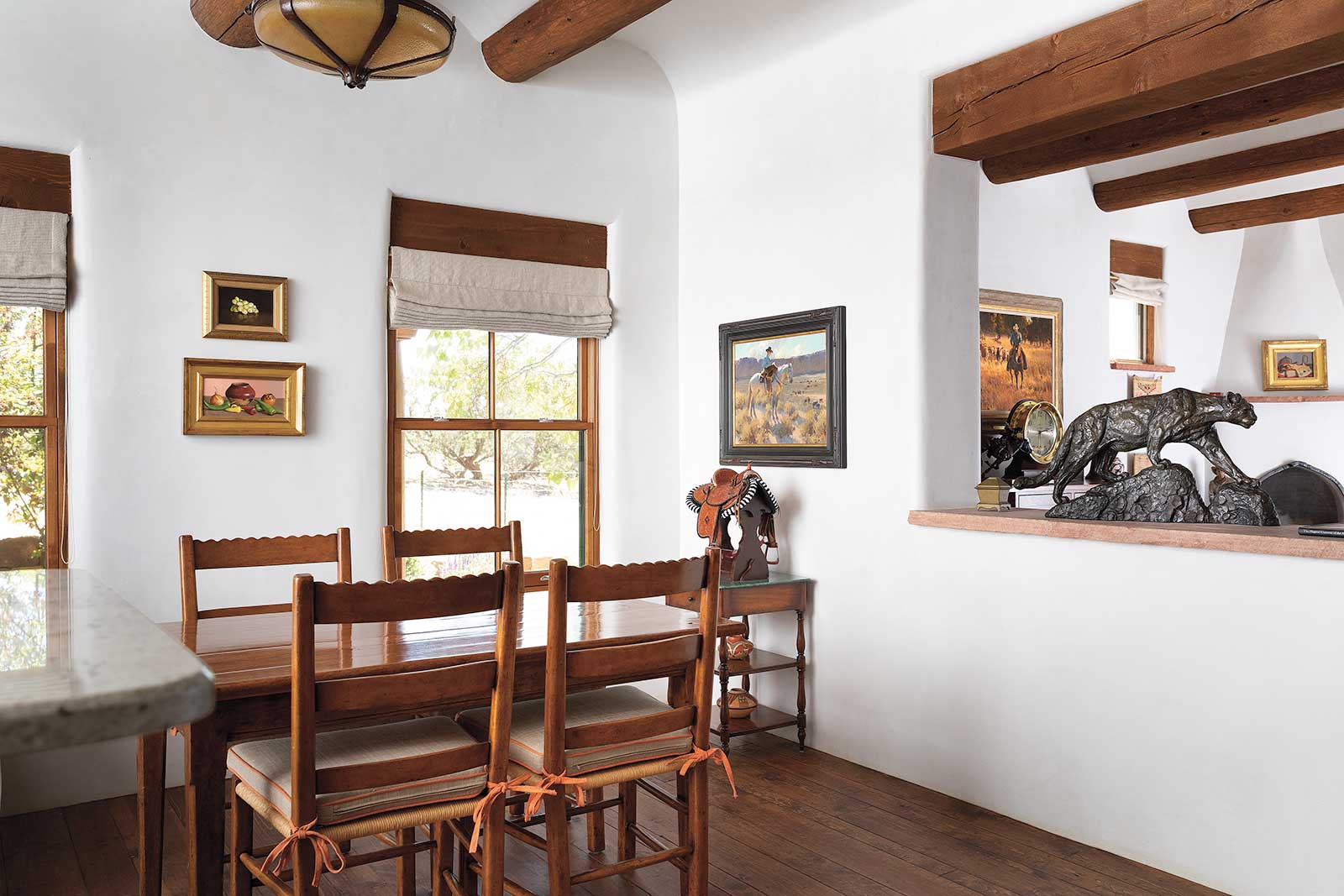 Between the windows are, top to bottom, William Acheff’s Green Grapes and Peppers and Pots. Kenn Bunn’s bronze, Rimrock Cougar is on the shelf. The mini replica of Tom Mix’s saddle is by Tad Mizwa (1927-2019).
On either side of the fireplace in his living room are paintings by Frank McCarthy, Tom Lovell and Howard Terpning. His enjoyment of the paintings is obvious as he talks about the stories the painters depict. A narrative as well as craftsmanship is important to him, more so than a name. “I don’t go for the name,” he says. “If I like a piece and if it’s a Howard Terpning, that’s even better.”
“Look at Terpning’s Followed,” he says. “There’s an Indian on horseback crossing a stream and he’s looking back. What does he see? An animal? An outlaw? The Cavalry? Howard’s other painting is Government Business. The intense guy on the horse in the foreground is a Native scout bravely charging ahead of the cavalry. He’s the hero. Just look at the expression on his face. The quality of the painting and the light in Howard’s paintings are incredible. He tells a story. It’s not just a picture.”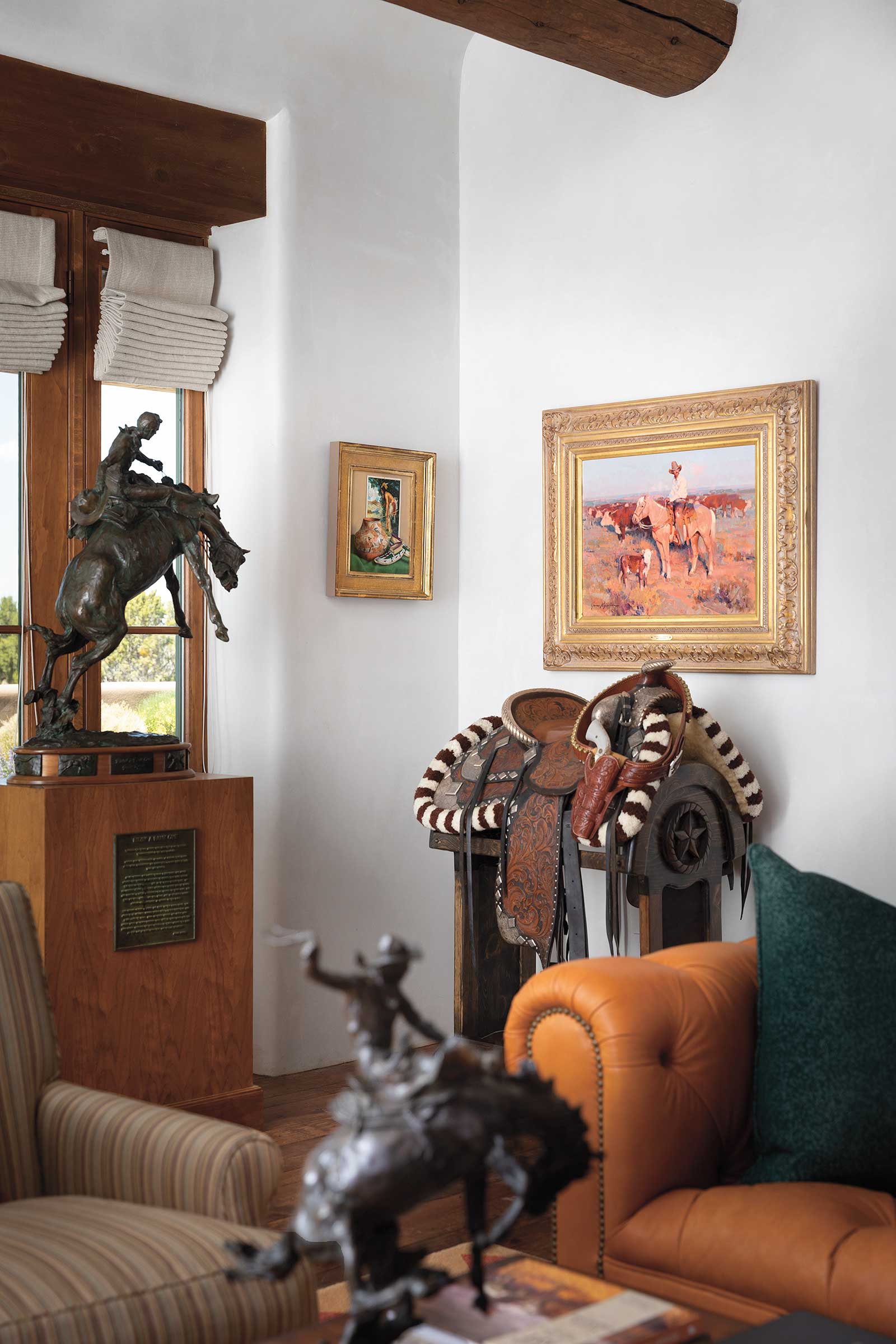 On the left is Grant Speed’s bronze Ridin’ a Rank One. Next to it are William Acheff’s Hunter Green and Victoria Cowboy by James Reynolds (1926-2010). The saddle is by Star Silversmiths in Reno, Nevada.
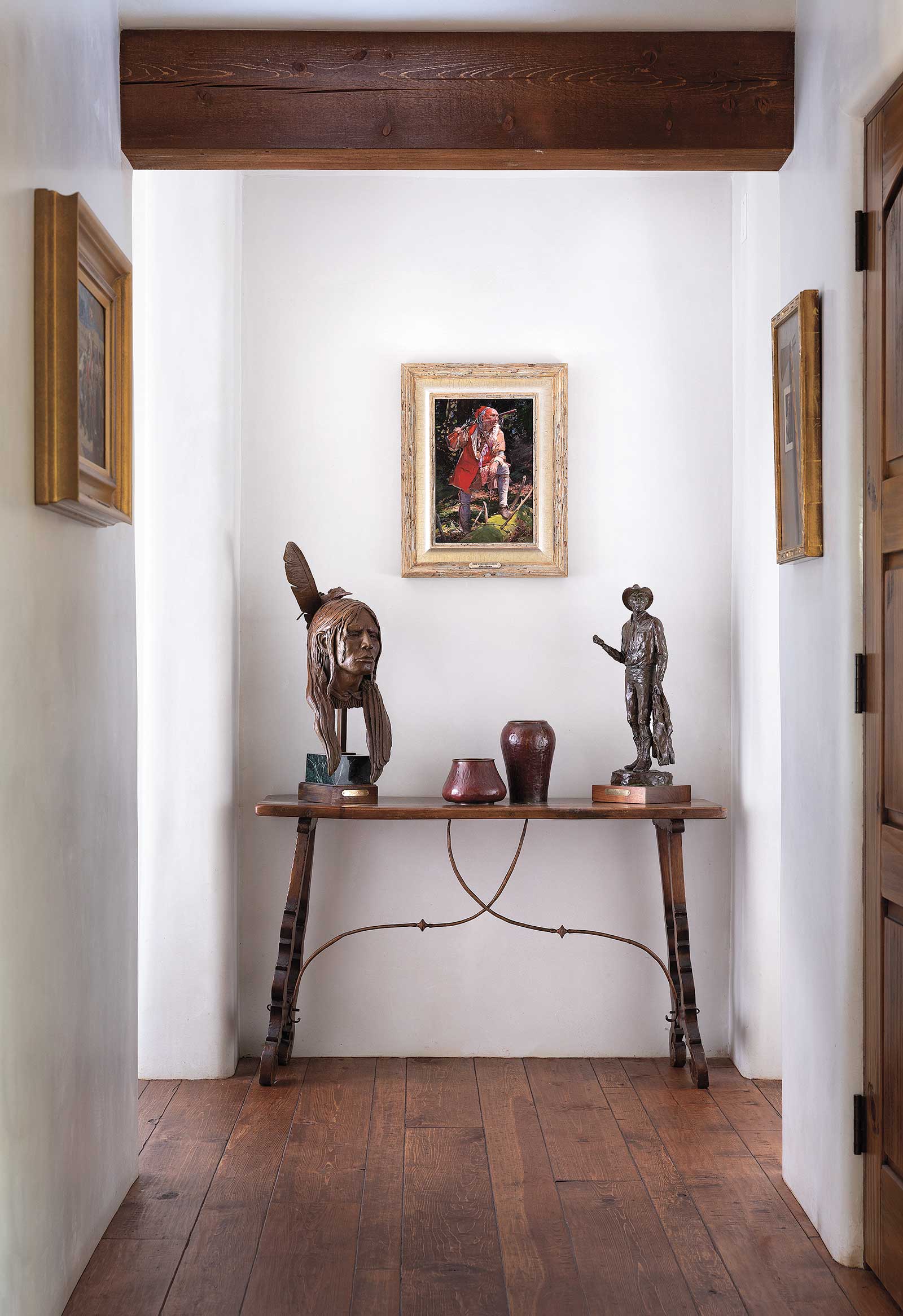 In the hallway are John Buxton’s Headin’ for Higher Ground, and, from left to right, Richard Greeves’ Cheyenne Man, two copper pots by Michael Adams of Aurora Studios, and Grant Speed’s Payin’ the Fiddler.
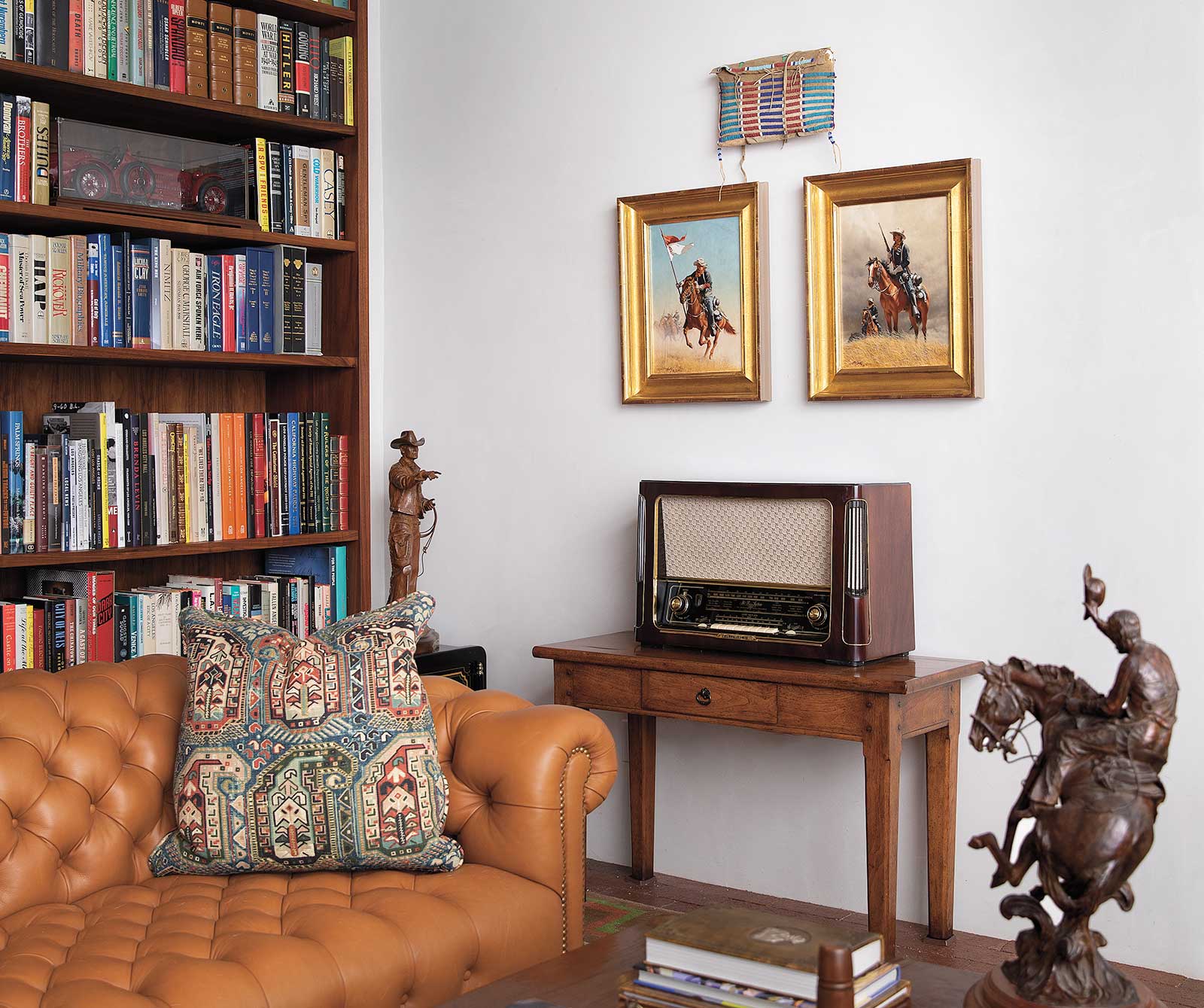 On the wall are two paintings by Frank McCarthy (1924-2002), The Charge and Traveler of the Plains. They hang beneath a Plains beaded bag. In the corner is Bill Nebecker’s bronze Tallyin’ in the Stock Market. On the right is Mike McFarland’s bronze Cowboy 1890.
A more bucolic narrative is depicted in Tom Lovell’s The New Saddle. The collector points out the gentle familial pride of the boy adjusting his new saddle and that of his father and grandfather who look on.
On the opposite side of the room he points out Bill Acheff’s From Warrior to Welfare which, he comments, “tells the tragic fact of Native Americans going from being proud warriors to welfare recipients.”
The rugged handmade quality of American Arts & Crafts Movement furniture and accoutrements lends itself to a setting for contemporary art of the American West. The collector has purchased and commissioned pieces for his home, including a number of copper lamps and other pieces by Michael Adams of Aurora Studios in Oswego, New York.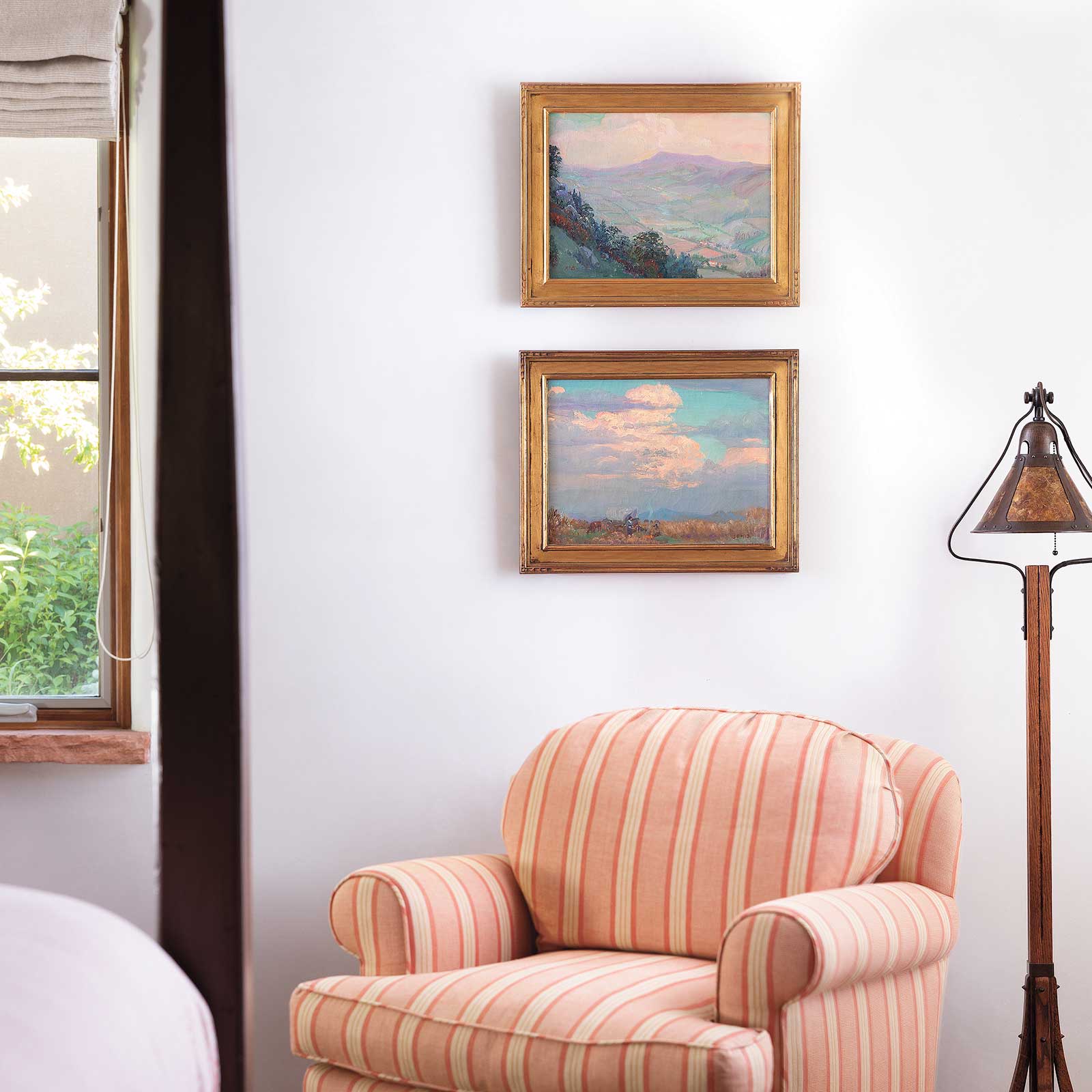 Hanging next to the window are two California plein air paintings from the 1920s. The floor lamp is by Michael Adams of Aurora Studios.
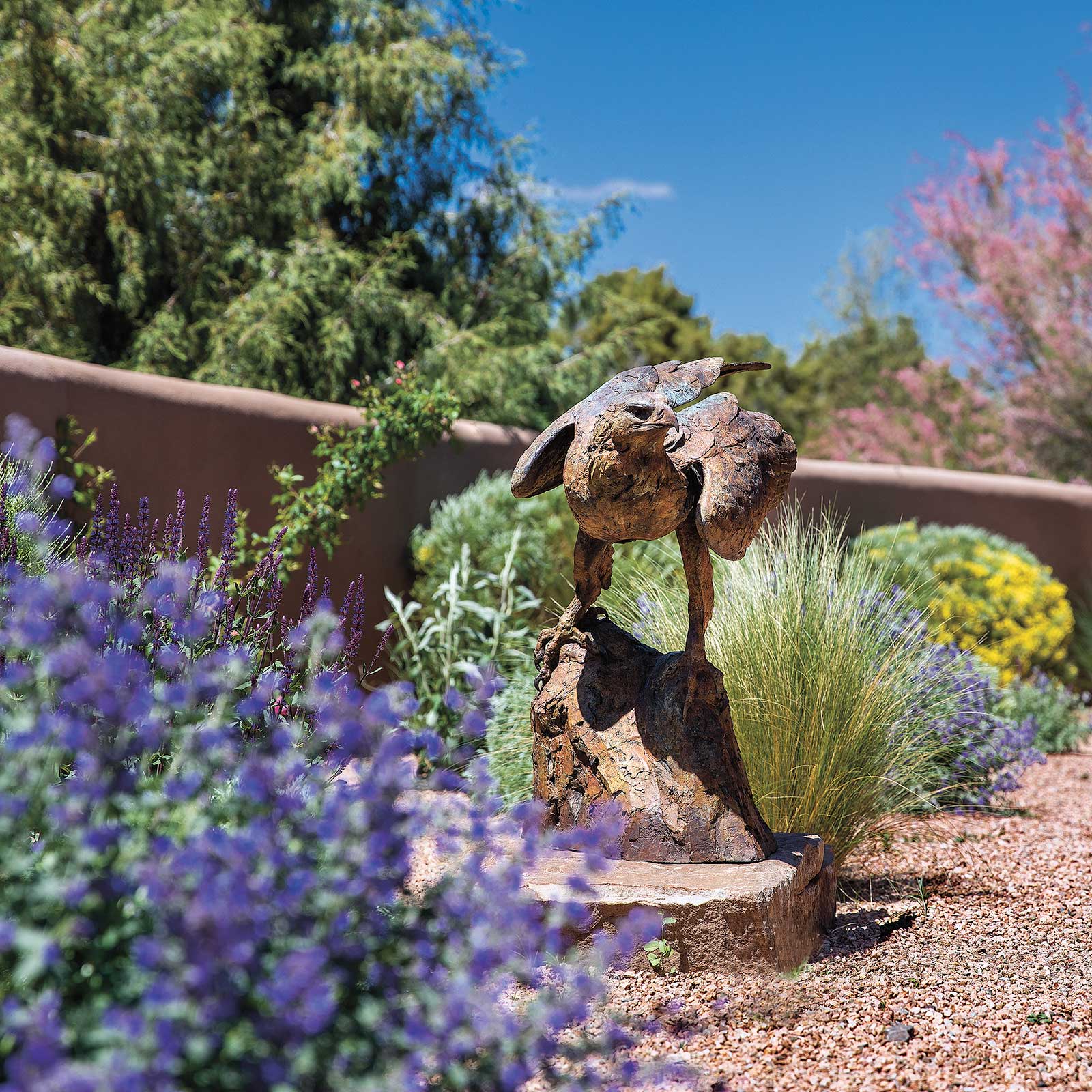 Walter Matia’s bronze Golden Rule is in the garden.
The collector met the late John Geraghty through his circle of collector friends. Geraghty was a writer for this magazine and a longtime trustee of the Autry Museum of the American West. At the time of his death, Jackie Autry, the museum’s founding board chair wrote, “John inspired all of us to not only learn about quality Western art, but also to appreciate the story it was telling along with its beauty.” Geraghty took him on studio visits and introduced him to a number of artists including Howard Terpning, who would become a close friend.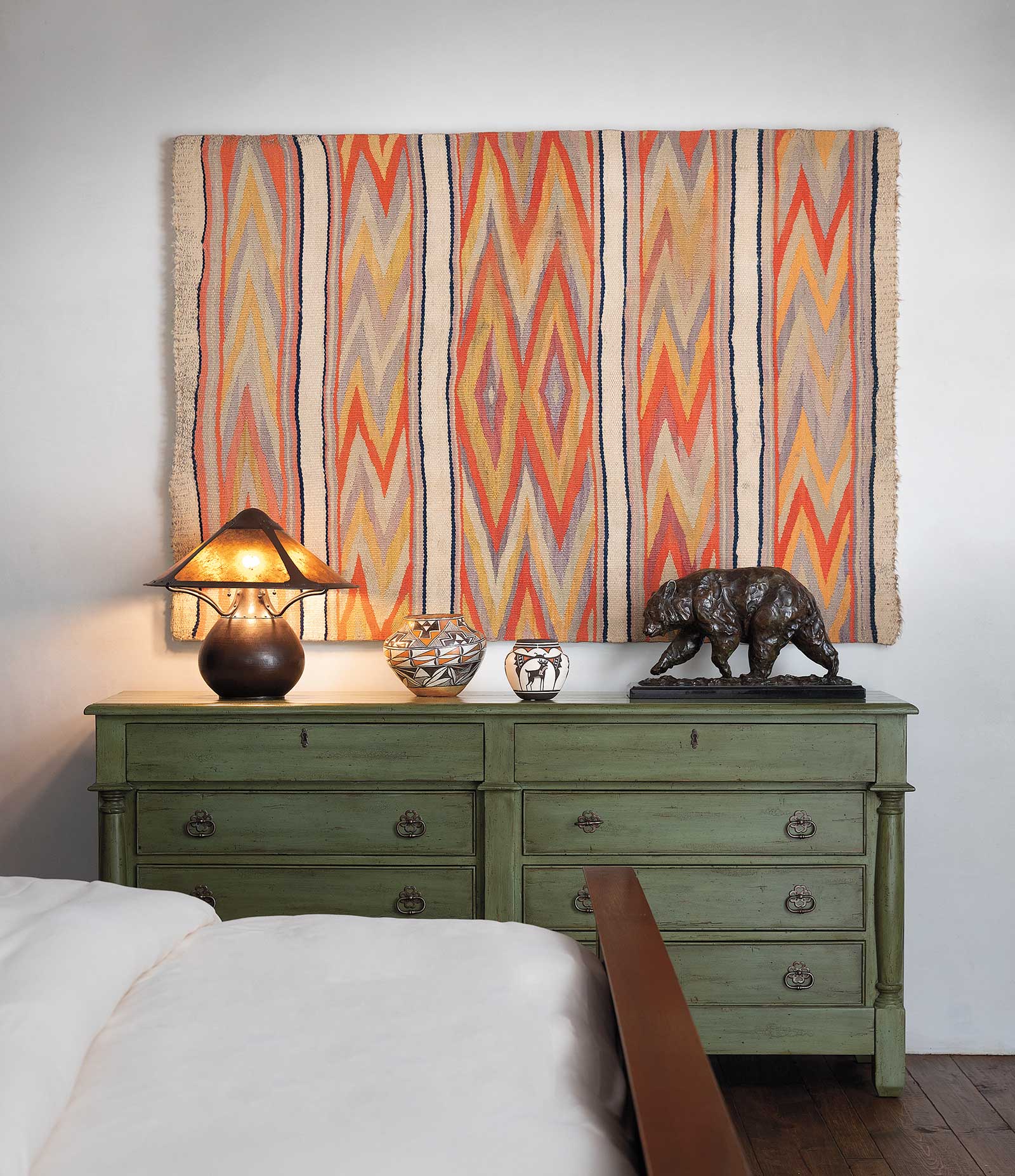 A Native American weaving hangs behind Kenn Bunn’s bronze Walking Bear and, from left to right, is a copper and mica lamp by Michael Adams of Aurora Studios and two contemporary Southwest Native American pots.
His own advice for collectors is simply, “Buy what you like. Do your research. Go to shows and galleries and talk with dealers and artists so you’re armed with some knowledge. Don’t buy the hype and be careful what you buy and who you buy from. You’re not going into it to make money but you want to buy something that’s going to be of value down the line. You don’t want to buy something for a dollar today that’s worth 5 cents tomorrow.”
“I often buy at auction. I saw a McCarthy at auction and bid on it but didn’t get it. It came on the market again later and I was able to buy it.”
Living with the art “is comforting,” he says. “It piques your memory about an event or something else. Whenever I look at a piece I always see something a little different.” —
Powered by Froala Editor