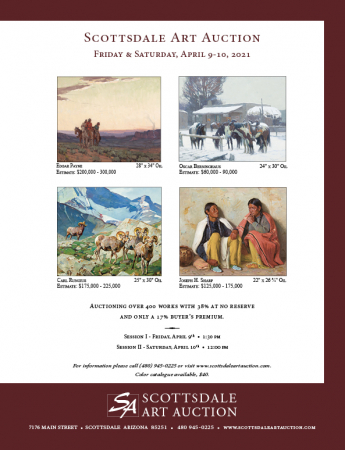
Joseph Henry Sharp (1859-1944) was one of the founders of the Taos Society of Artists. In 1897 after studying in Europe he began to spend summers in Santa Fe and Taos, New Mexico. He camped on the battlefield of Little Bighorn and made portraits of Plains Indians there. They were exhibited at the Smithsonian Institution, which bought 11 of them. Teddy Roosevelt later commissioned him to paint 200 portraits of Native American warriors who had survived the Battle of the Little Bighorn. Beginning in 1905, he lived in a cabin on the Crow Agency while he produced them. 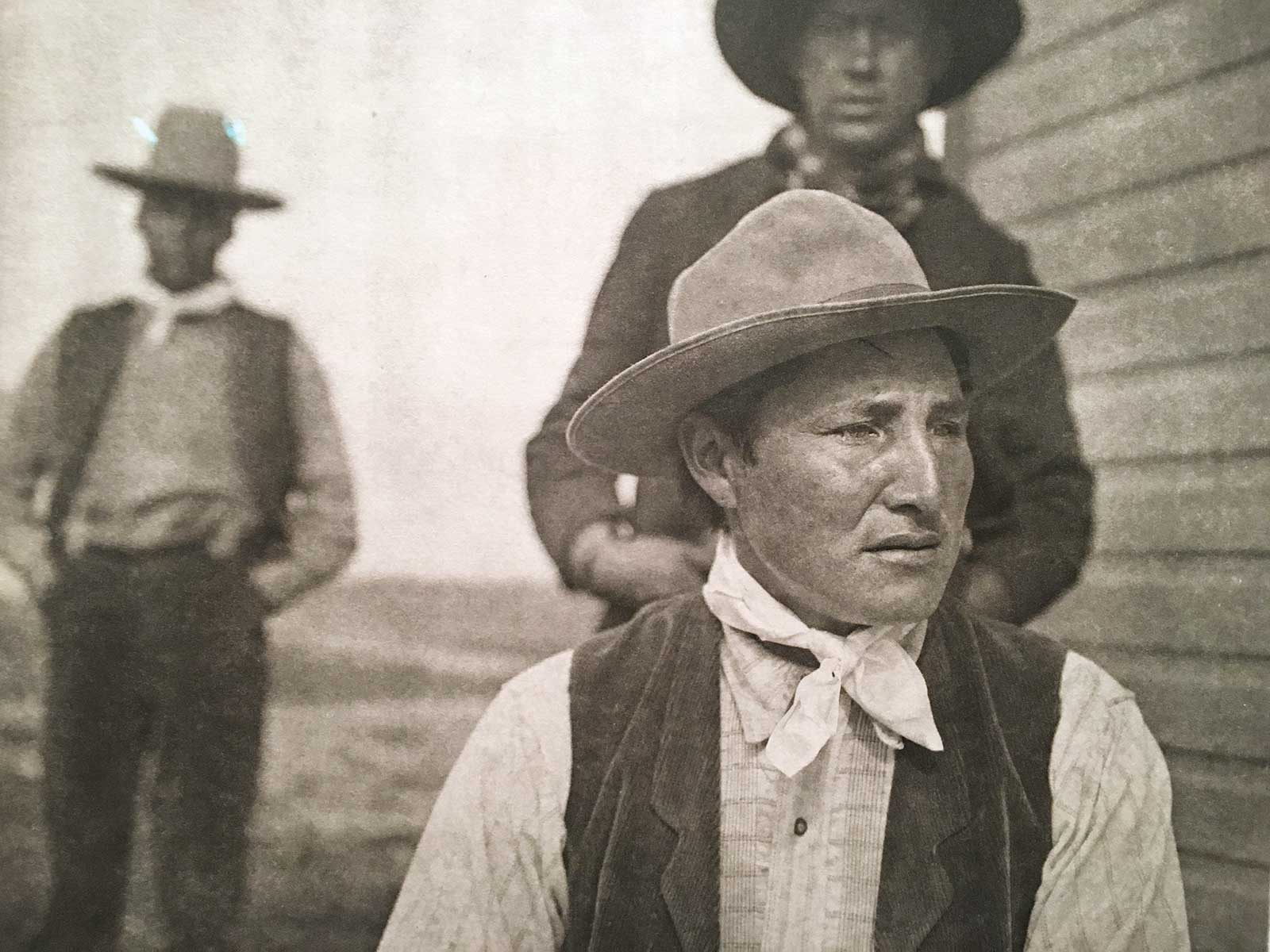 Three Men Next to a House, 1900-1910, printed 2020, photopolymer gravure. C.M. Russell Museum Collection.
Like other painters of the time, Sharp took myriad photographs of the landscape and Native people of Montana and the Taos area as documentation and as a resource for his paintings.
The Joseph Henry Sharp Photograph Collection at the C.M. Russell Museum in Great Falls, Montana, contains approximately 2,972 photographs, negatives, glass slides and ephemera. The museum has recently mounted an exhibition of 25 images printed in photogravure, a medium appropriate to the period. Through the Lens of Joseph Henry Sharp continues through May 23.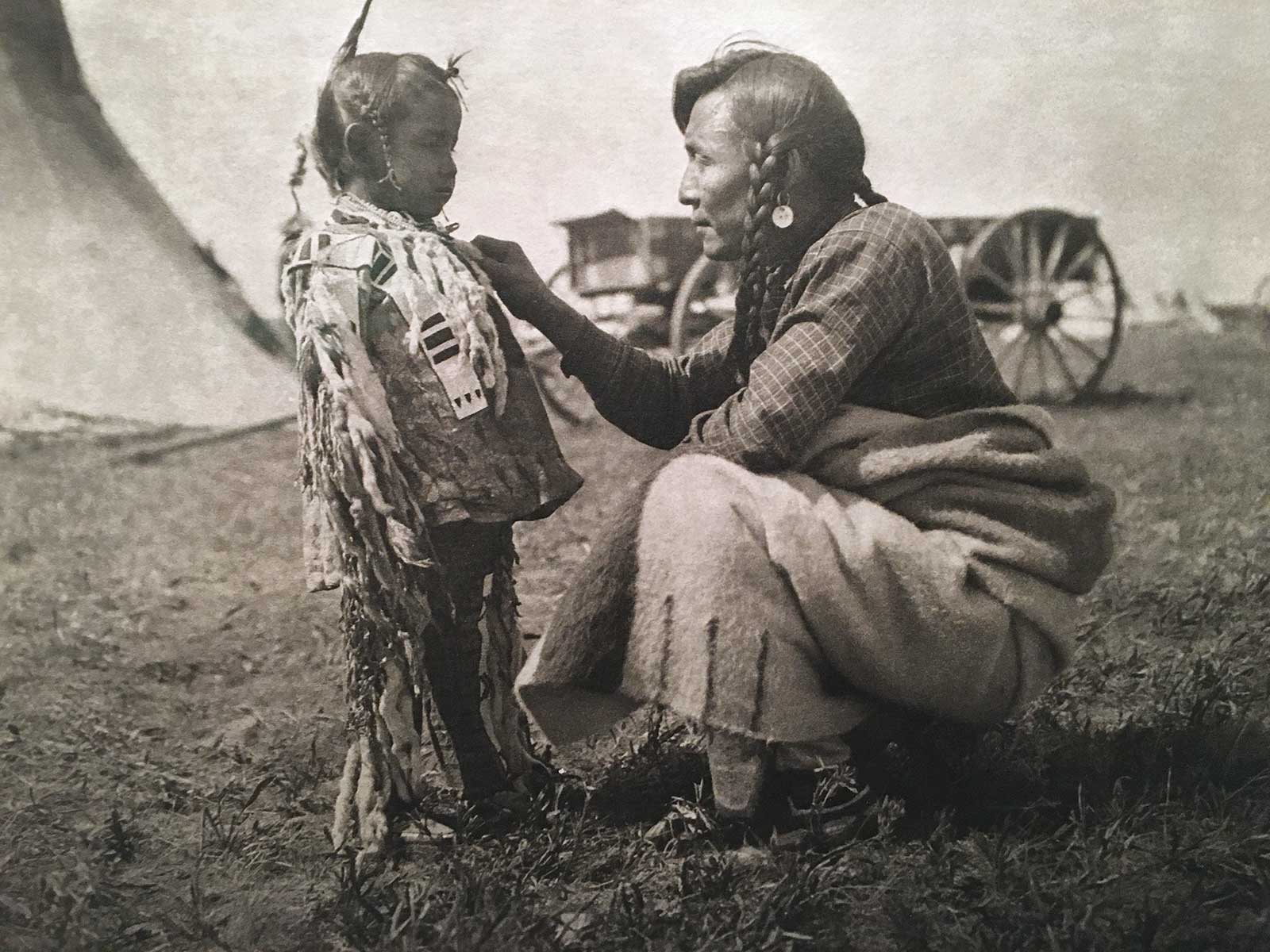 Man Helping Child with Regalia, Apsaalooke [Crow] Reservation, 1900-1910, printed 2020, photopolymer gravure. C.M. Russell Museum Collection.
Kathryn Kramer, archivist at the Russell Museum, oversaw the digitization of Sharp’s original cellulose nitrate negatives, now in refrigerated storage to offset their volatility and deterioration. The digital scans allow reproductions to be made without handling the original negatives.
Kimberly Humphries performed the scanning process of more than 1,500 negatives on a 2016 Dufresne Scholar Award Internship.
Kramer comments that she has seen reference photos in other collections that are utilitarian studies. She has found Sharp’s photos to be more accomplished in terms of technical skill and composition. “They don’t come across as intermediary media or simply reference photos,” she observes. 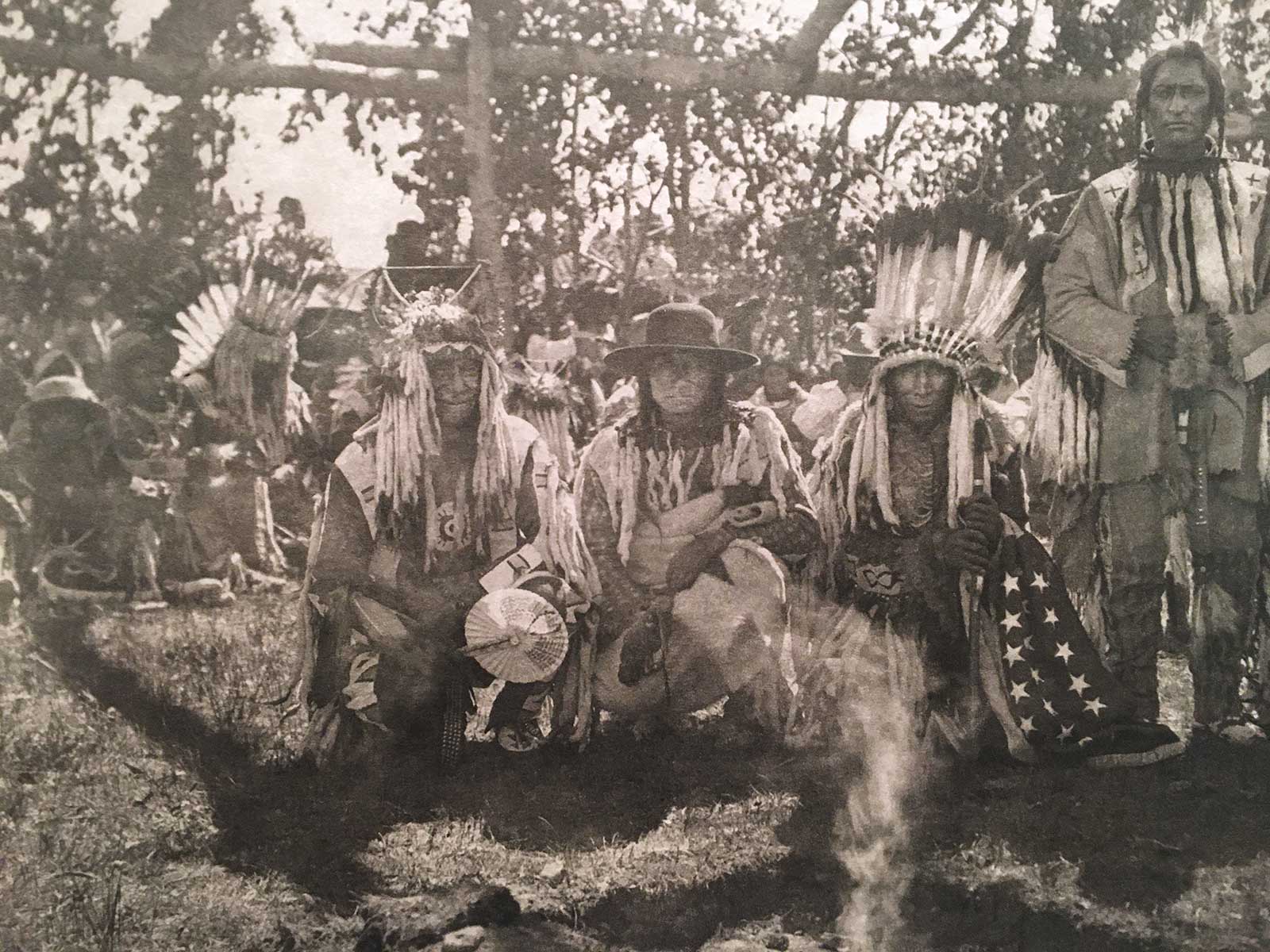 Four Chiefs Around a Fire, Apsaalooke [Crow] Reservation, 1900-1910, printed 2020, photopolymer gravure. C.M. Russell Museum Collection.
Sharp carefully posed his subjects rather than capturing candid moments. Kramer notes one image from the exhibition, Three Men Next to a House, an artful image in its own right. Centered on the right half of the image is the face of a man in full focus. Sharp’s deliberate use of a shallow depth of field, casts the men in the background out of focus.
Now that the images are digitized, Kramer envisions their being used in a number of ways as documents of the life and the people of the area, eventually being put online and included in the Montana Memory Project, an online source of digital collections.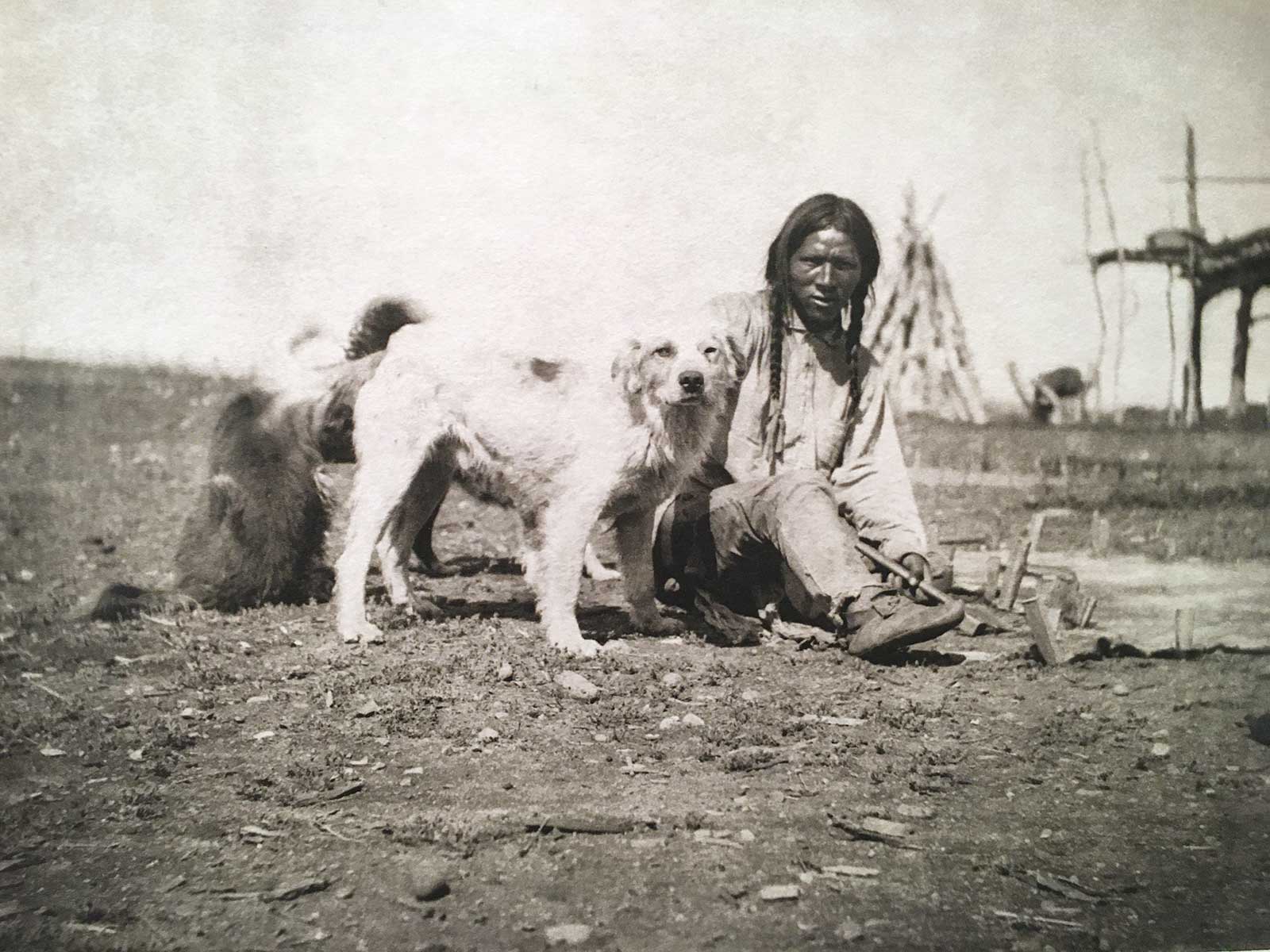 Seated Man Near Bison Hide with Dogs, Apsaalooke [Crow] Reservation, 1900-1910, printed 2020, photopolymer gravure. C.M. Russell Museum Collection.
The collection is part of the museum’s Frederic G. and Ginger K. Renner Research Center. The Renners’ own collection of research material on Charlie Russell runs up to 140 linear feet of shelf space and their card catalog served as the basis for the Russell catalogue raisonné, a collaboration with the Charles M. Russell Center for the Study of Art of the American West at the University of Oklahoma. —
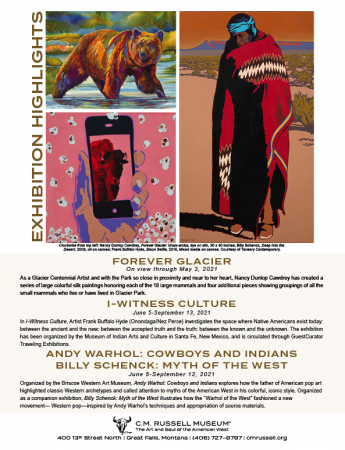
Through the Lens of Joseph Henry Sharp
Through May 3, 2021
C.M. Russell Museum, 400 13th Street North, Great Falls, MT 59401
(406) 727-8787, www.cmrussell.org
Powered by Froala Editor