It’s one of the most famous Western artworks by one of the celebrated Western artists. It’s available in posters and prints, and it appears frequently in many books, museum exhibitions and magazines articles. And yet there is a detail in Frederic Remington’s The Stampede that many people miss. Looking through the rain and the twilight of the scene, and the chaos of a full-blown cattle stampede, right there in the middle of the painting is a Black cowboy charging into the maelstrom.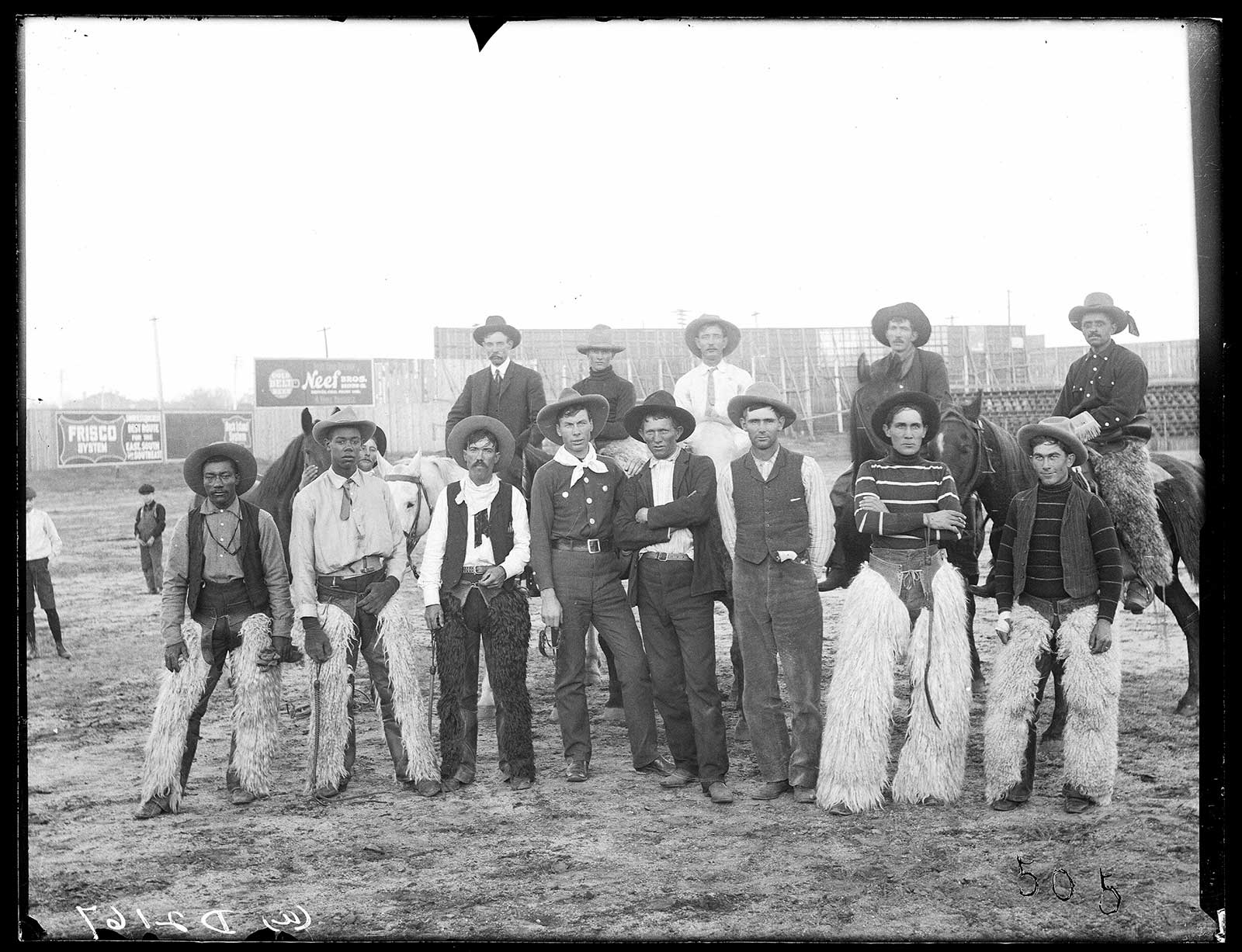 Solomon D. Butcher (1856-1927), Bunch of genuine old time cowboys and bronco busters at Denver, Colorado, 1905, glass plate negative. Nebraska State Historical Society. Courtesy Library of Congress.
Remington wasn’t the first artist to depict a Black figure in a piece of Western artwork, nor would he be the last. And today a new group of artists is painting the West as the diverse place it was—and still is today—and they are highlighting rich opportunities for storytelling with Black cowboys, immigrants from around the world, Mexican and Mexican-American subjects and authentic Native American perspectives. More importantly, the artists creating these works are as diverse as the figures, which creates a unique opportunity for representation in the Western art market.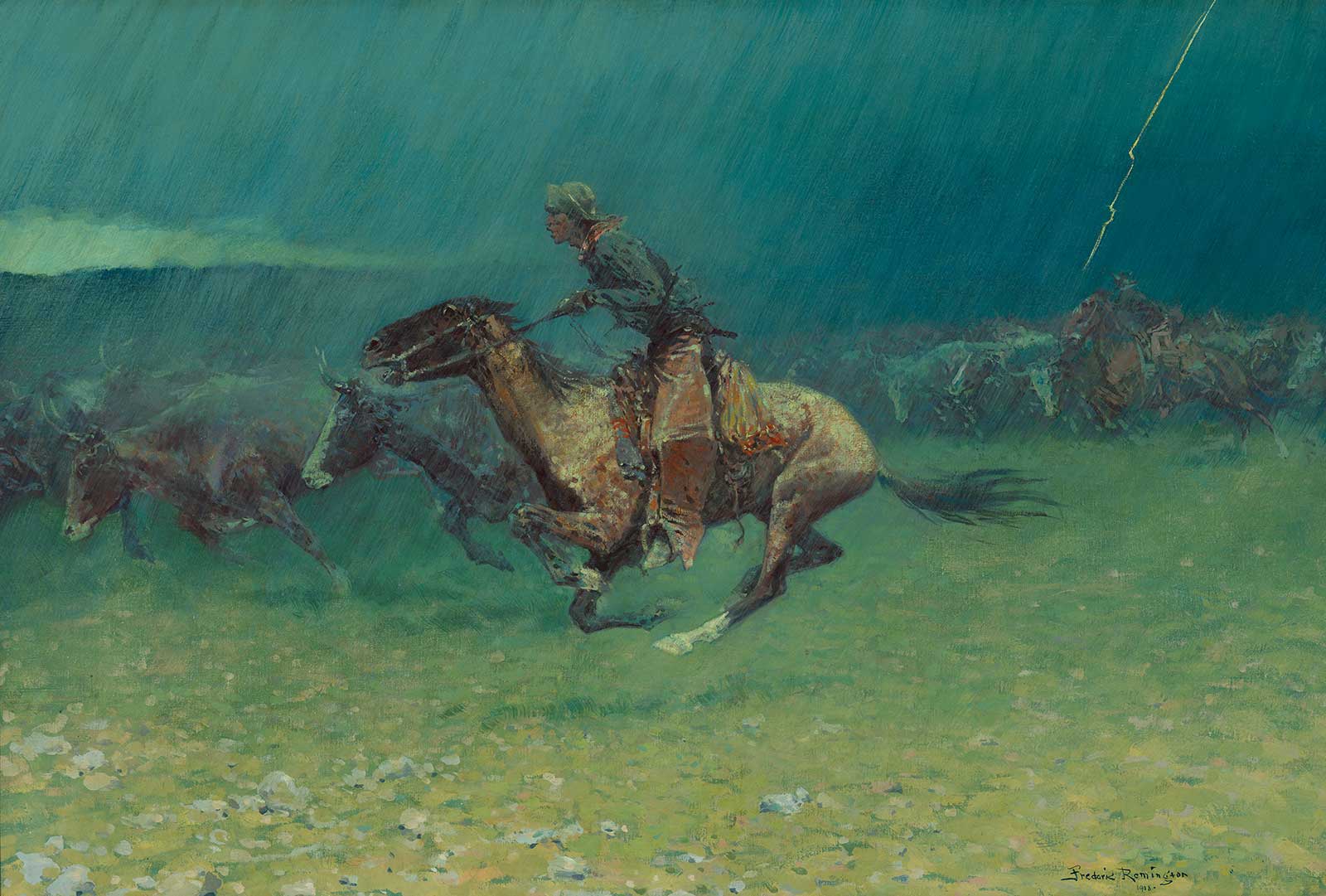 Frederic Remington (1861-1909), The Stampede, 1908, oil on canvas, 26½ x 39 3/8”. Gift of the Thomas Gilcrease Foundation, 1955. © Gilcrease Museum. 01.2329.
One of the artists creating remarkable work that speaks to the historical diversity in the West is painter Thomas Blackshear II out of Colorado Springs, Colorado. Blackshear, who is Black, came to Western art by way of illustration, and also a long career designing figurines for Ebony Visions. Although he depicts a variety of subjects in his painted work, Blackshear made a huge splash in Western art with his pieces showing Black cowboys. For him, these subjects were a way to represent an overlooked part of the historical record. “I’ve read that one of every four cowboys back in the day was Black, which makes sense since so many of the slaves were working with horses and carriages on the plantations. And then after the Civil War they migrated West because they had the perfect hands for the jobs. But by the 1950s and 1960s, with cowboys on TV, they excluded that history from the story of the West. But it wasn’t always that way, because Bill Pickett was the star of Buffalo Bill’s Wild West Show, and today he’s regarded as one of the great Black cowboys,” Blackshear says. “So when I paint Black cowboys, I’m just painting a snapshot of normal life. I want to capture that little slice of life. I also feel it’s time to show these other parts of history.”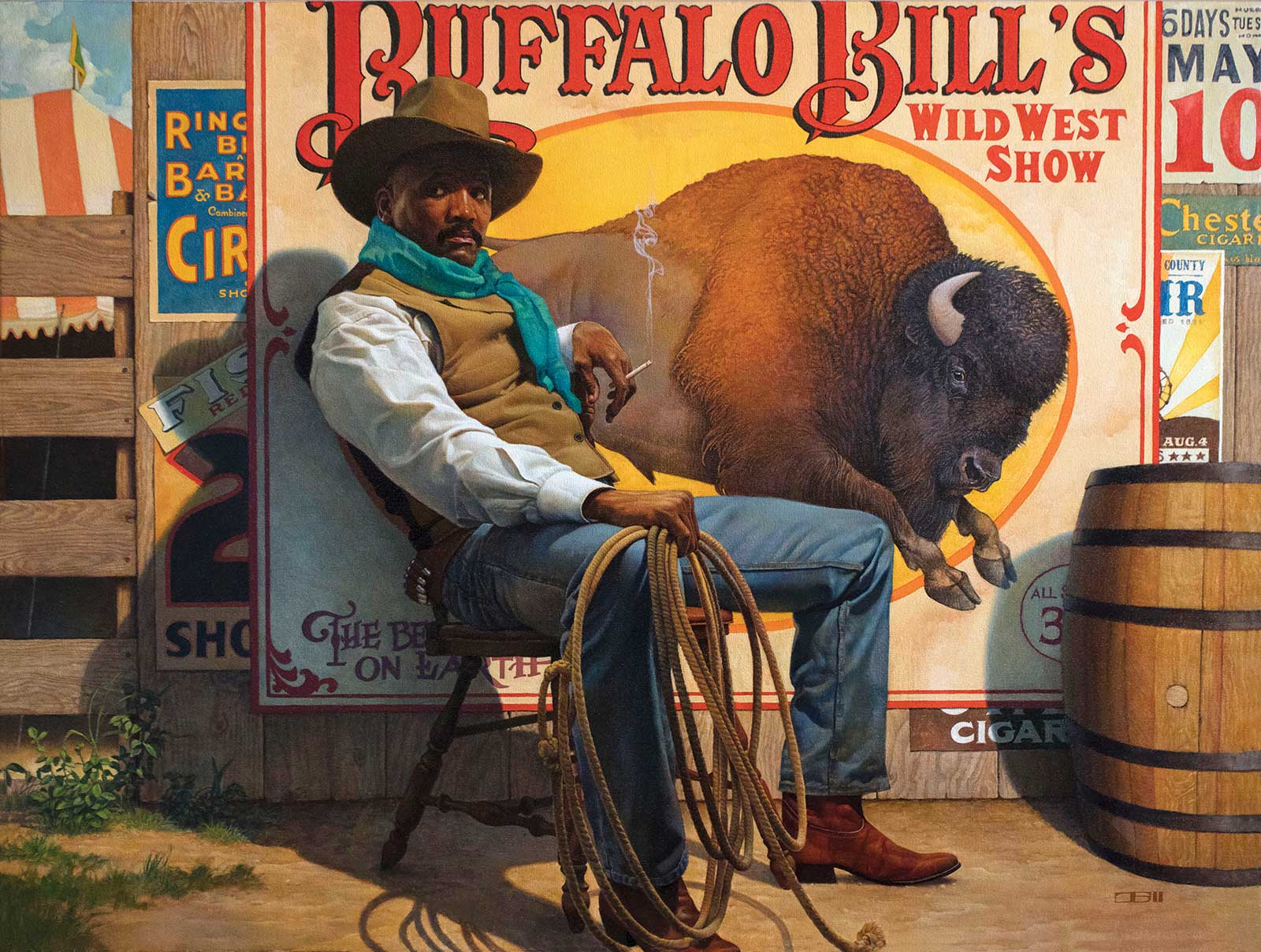 Thomas Blackshear II, Wild West Show, oil on canvas, 31 x 41”
The artist adds that several years ago he went to a Black rodeo and he never realized how popular and widespread they are. “They’re in every major city in the country, and I had no idea,” he says. “It really opened my eyes to a whole other part of the country.”
Like Blackshear, curator Larry Callies is one of the people opening eyes on the subject of diversity in the West. Callies is the owner and founder of the Black Cowboy Museum in Rosenberg, Texas, which aims to educate visitors about the role of Black cowboys in shaping the West. “Between 1820 and 1860, it was almost nothing but Black cowboys. Even the word ‘cowboy’ was something that was primarily used by the Black cowboys back then. The white people in Texas didn’t want to be called cowboys, instead preferring cowhand, cow wrangler or cowpuncher,” Callies says. “The museum really shocks people when they learn this stuff. Some people cry. We have a badge on display from the plantation police in 1855 that says ‘Runaway Slave Patrol.’ This history really hits people because Black lives didn’t matter in that time period, and yet so many cowboys were Black and made the West their home.”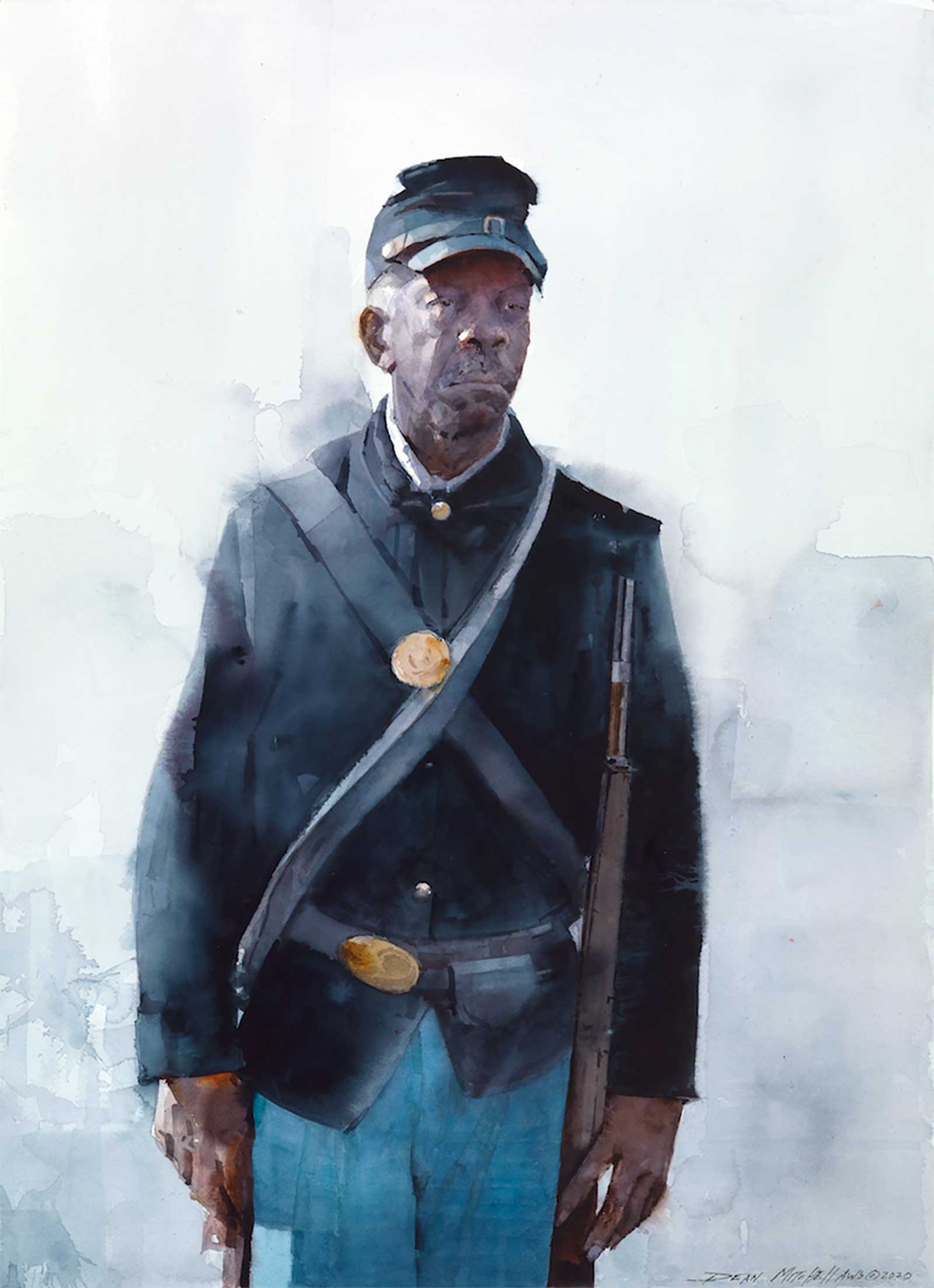 Dean Mitchell, For Freedom, watercolor, 30 x 22”
Some of the famous names in the museum include Charley Willis, Bass Reeves, Nat Love and even James Beckwourth, who was born into slavery in Virginia in 1798, freed in his late 20s and would later become a scout, fur trader and mountain man, and eventually adopted by the Crow people for 12 years. Another name worth mentioning is Frank Chisum, whose history intertwines with that of the famous Goodnight-Loving Trail. Born a slave, Chisum was bought by cattle baron John Chisum for $400 and immediately freed. Afterward took the name Frank Chisum and worked cattle for the rancher that gave him his freedom.
“There are so many stories that still need to be told,” says Callies, whose own story is rooted in the West. “I grew up in a family of nothing but cowboys. When I went to school, no one knew about Black cowboys, and it hurt my feelings a bit because the kids would say I couldn’t wear cowboy boots because I was Black. They didn’t understand where I came from…When it comes to Black cowboys, representation is important because people can see it. Whether it’s in a photograph or a piece of art, they have to be seen because they were part of this history too.”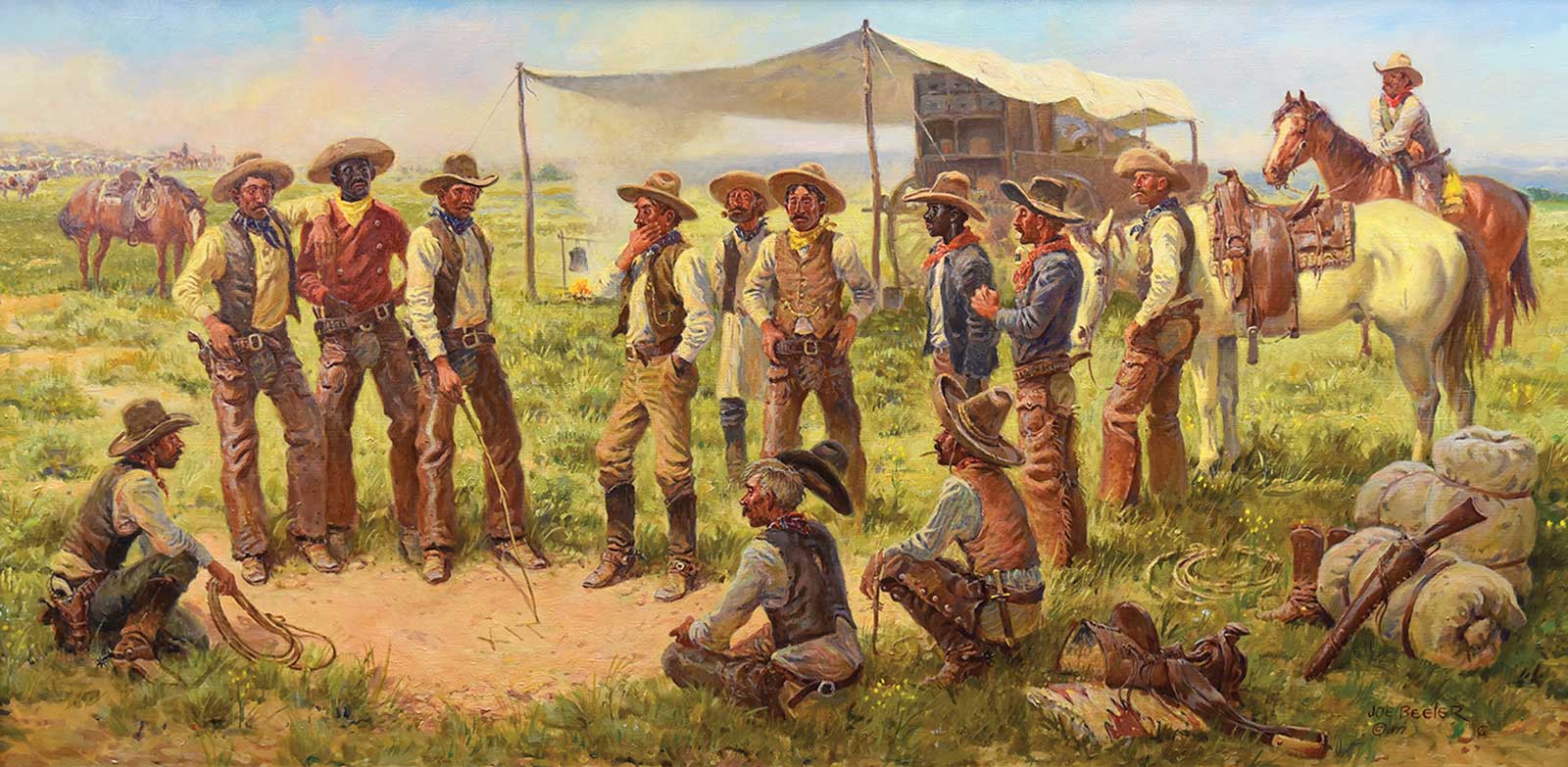 Joe Beeler (1931-2006), The XIT is Born, 1977, oil, 24 x 48”. The Eddie Basha Collection.
Representation of cultures and people is not something new in Western art. Certainly Remington did it with Black subjects, as did Charles M. Russell and later artists such as William R. Leigh and Joe Beeler, who painted two Black cowboys in his famous work The XIT is Born. More contemporary artists who have depicted these subjects include Joe Netherwood, Herb Mignery, Mort Künstler, Ed Dwight, Ezra Tucker and Mark Maggiori, who’s been documenting his own awakening on this issue with the hashtag #TheWestOfManyColors. Other artists are bringing their own histories and cultures into the West in really exciting ways, including Mian Situ, who painted Chinese-American workers contributing to the greatness of the West in his work Blasting a Route Through the Sierra Nevada Mountains, 1865, Central Pacific Railroad. The piece won the purchase award at the 2018 Prix de West in Oklahoma City.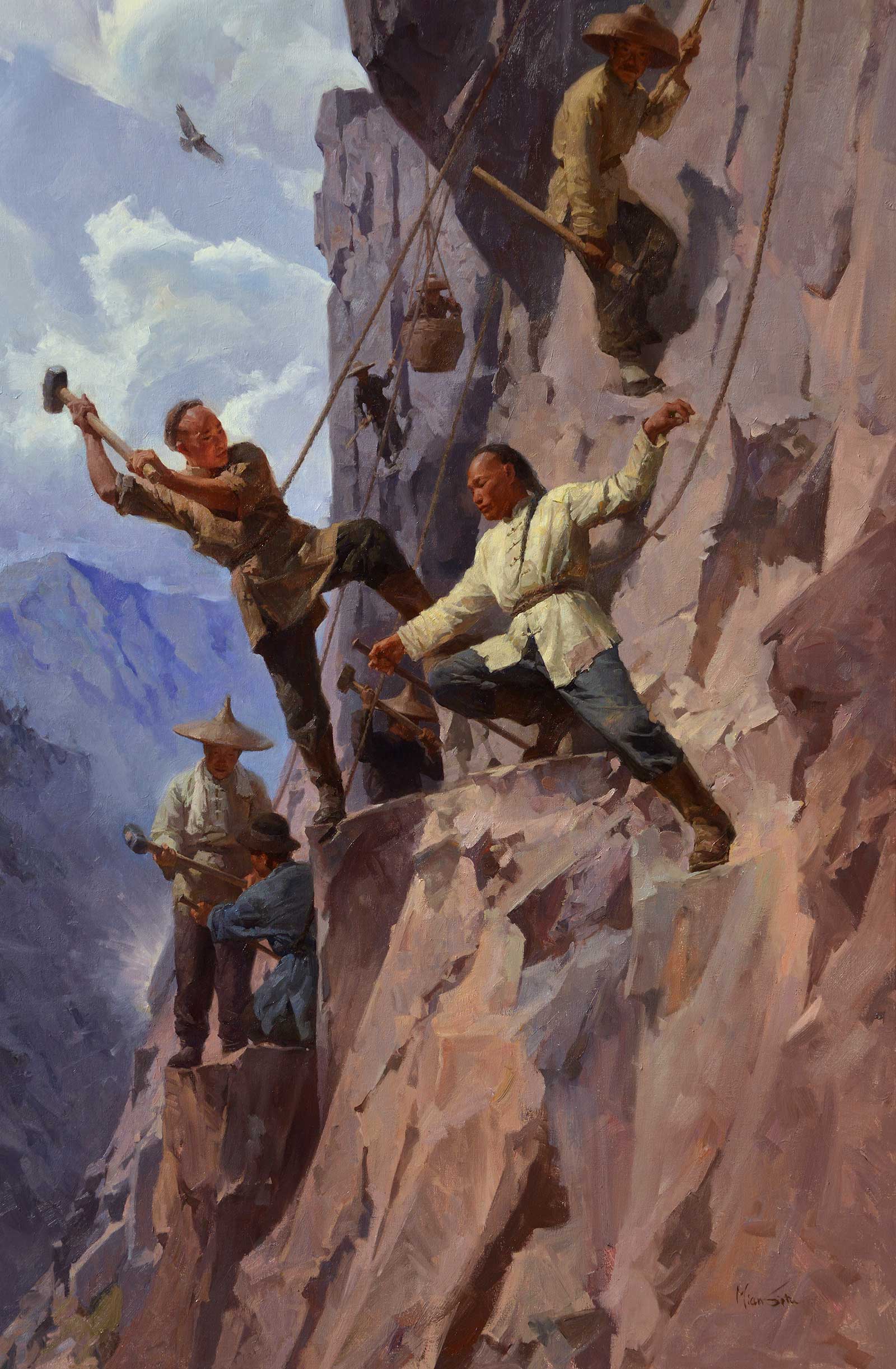 Mian Situ, Blasting a Route Through the Sierra Nevada Mountains, 1865, Central Pacific Railroad, oil, 48 x 32”
Another important aspect is Native American artists painting and sculpting the Native American experience in the West. Allan Houser, T.C. Cannon, Fritz Scholder and many others over the last 75 years have added considerably to the story of the West by creating works that speak to history, but from a Native American perspective. Those artists have led to an impressive pool of talent creating work today, including artists such as Kevin Red Star, Tony Abeyta, Kent Monkman, Mateo Romero and Ben Pease, whose website features a slogan that acknowledges his many roles: “Native American. American Indian. Mixed Blood. Indigenous. Husband. Father. Artist. American. Ethnic. Human.”
A number of these artists—including Blackshear, Abeyta, Red Star, Maggiori and, in past years, Situ—are showing work at this year’s Masters of the American West at the Autry Museum of the American West in Los Angeles. Amy Scott is the exhibition’s curator and takes great pride in the diversity of the show, adding that an inclusive roster of artists presents a broader and more accurate picture of the West.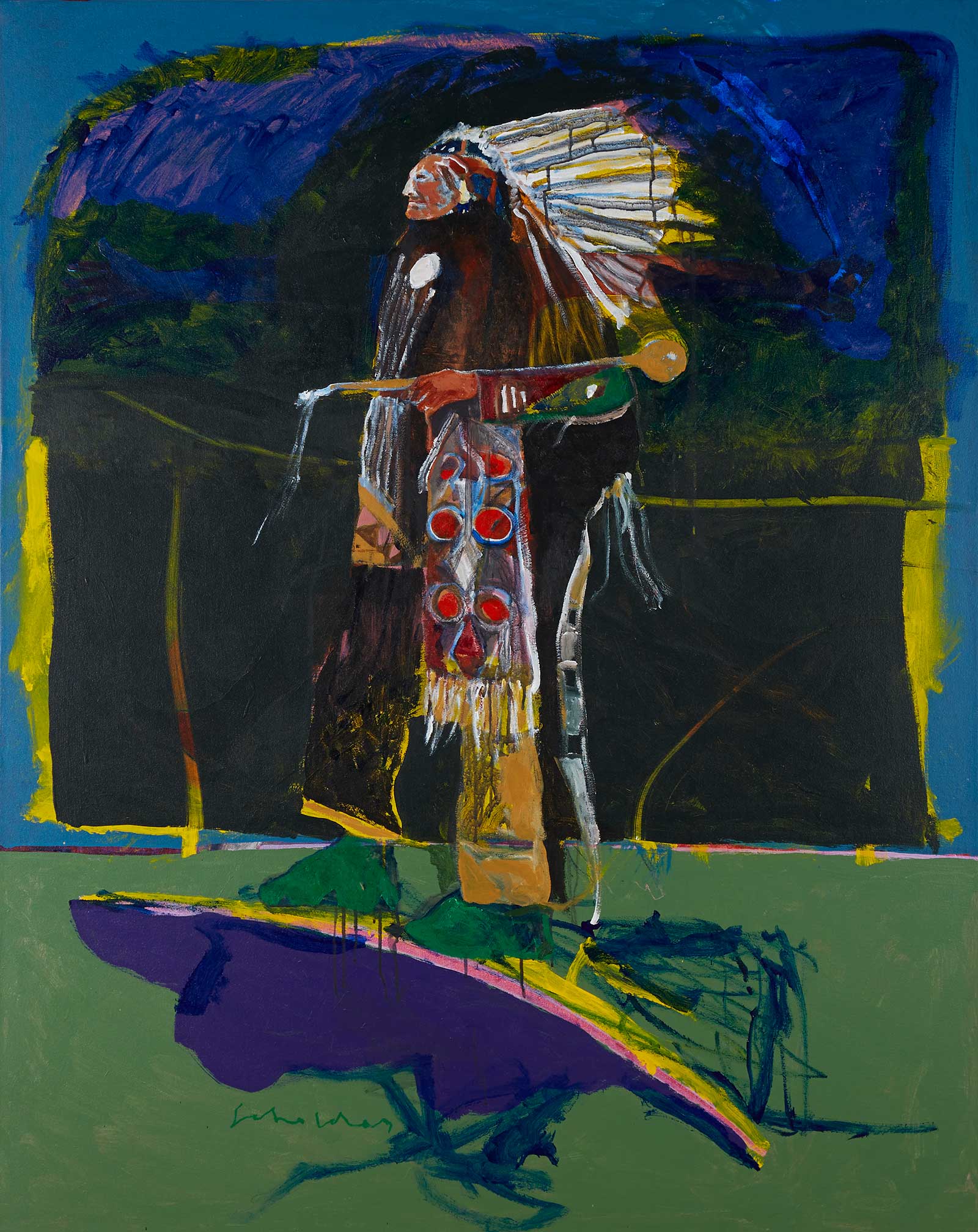 Fritz Scholder (1937-2005), Chief #1, acrylic on canvas, 60 x 48”
“We consciously sought out artists like Tony Abeyta and Mateo Romero and others. At the same time, regardless of their heritage and cultural background, they were already on our list anyway because they are tremendous artists. As stylistically complex the Masters is, part of the reason for presenting a culturally rich show is Los Angeles itself, one of the most ethnically diverse places in the world,” Scott says. “We stay relevant by serving this region. Masters isn’t a one-off—we want it to be an expression of the geography around us, including the Native communities.”
Scott adds that the show itself has a mandate to speak to a large audience, and it does so by including artists of color, artists from different regions of the country, artists of all genders, and also artists from every spectrum of contemporary art, from the traditional cowboy painters to the impressionists, modernists and cubists—everyone is represented and everyone’s voice is important. “And yet we also honor realism and storytelling at our core because those are our roots,” she adds.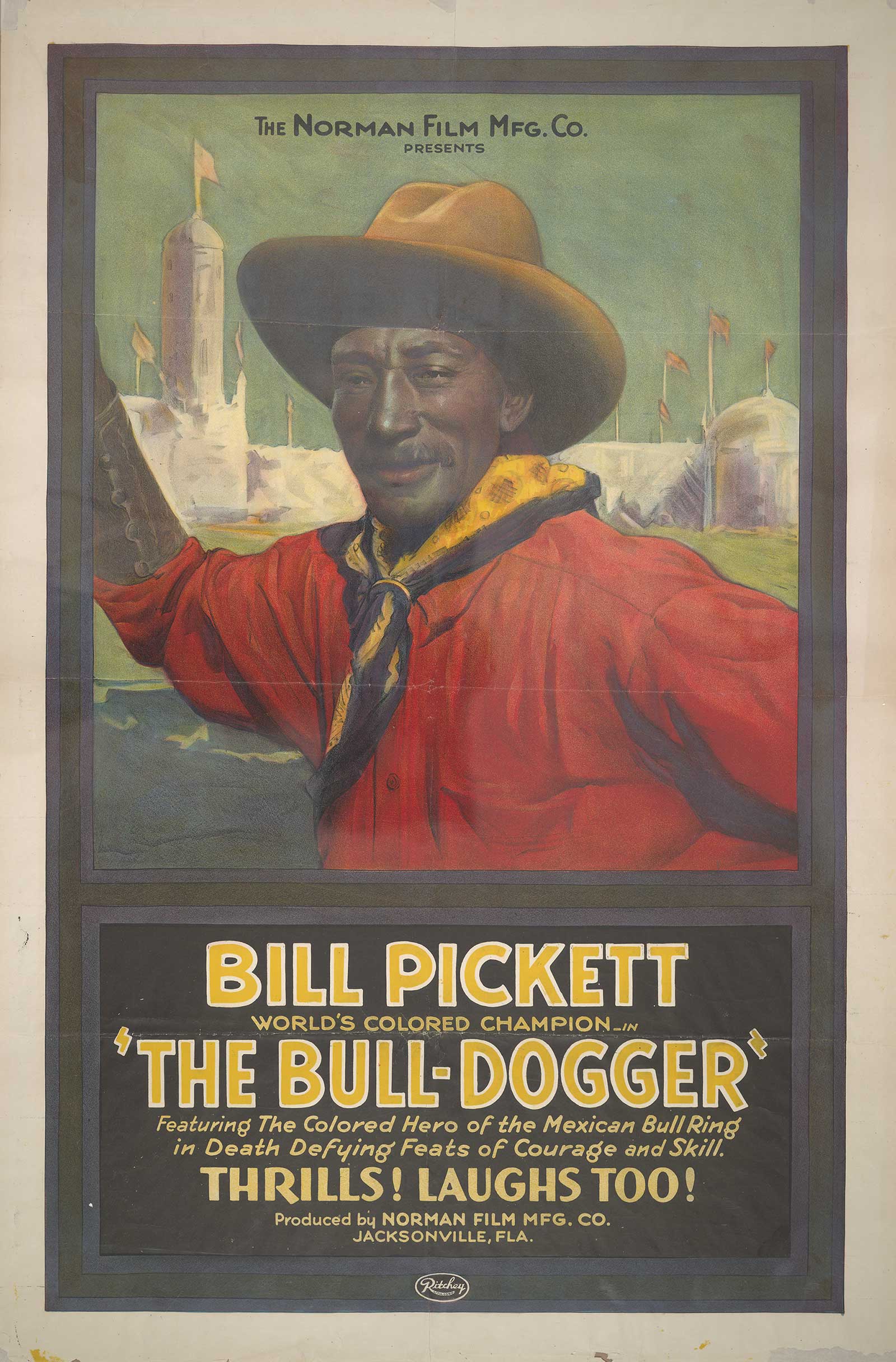 The Bull-dogger, 1923, color lithograph. Library of Congress Prints and Photographs Division Washington, D.C.
One of the most prominent artists touching on these issues of race and culture in the West is Florida painter Dean Mitchell, who is also a Masters artist. Mitchell is Black, though he doesn’t see himself as a Black artist—“I’m an artist first and foremost,” he says. He is regarded as one of the best watercolorists in the country, and frequently paints Black subjects, including Western subjects such as Buffalo Soldiers and other Civil War figures. He also paints Native American neighborhoods on reservations throughout the Southwest that show the deep inequality and poverty in those communities. “I do it to show an unromanticized version of the West, an honest view of what’s really happening in these places,” he says, “but I also do it because I grew up in poverty and I know what it’s like to experience that kind of marginalization.”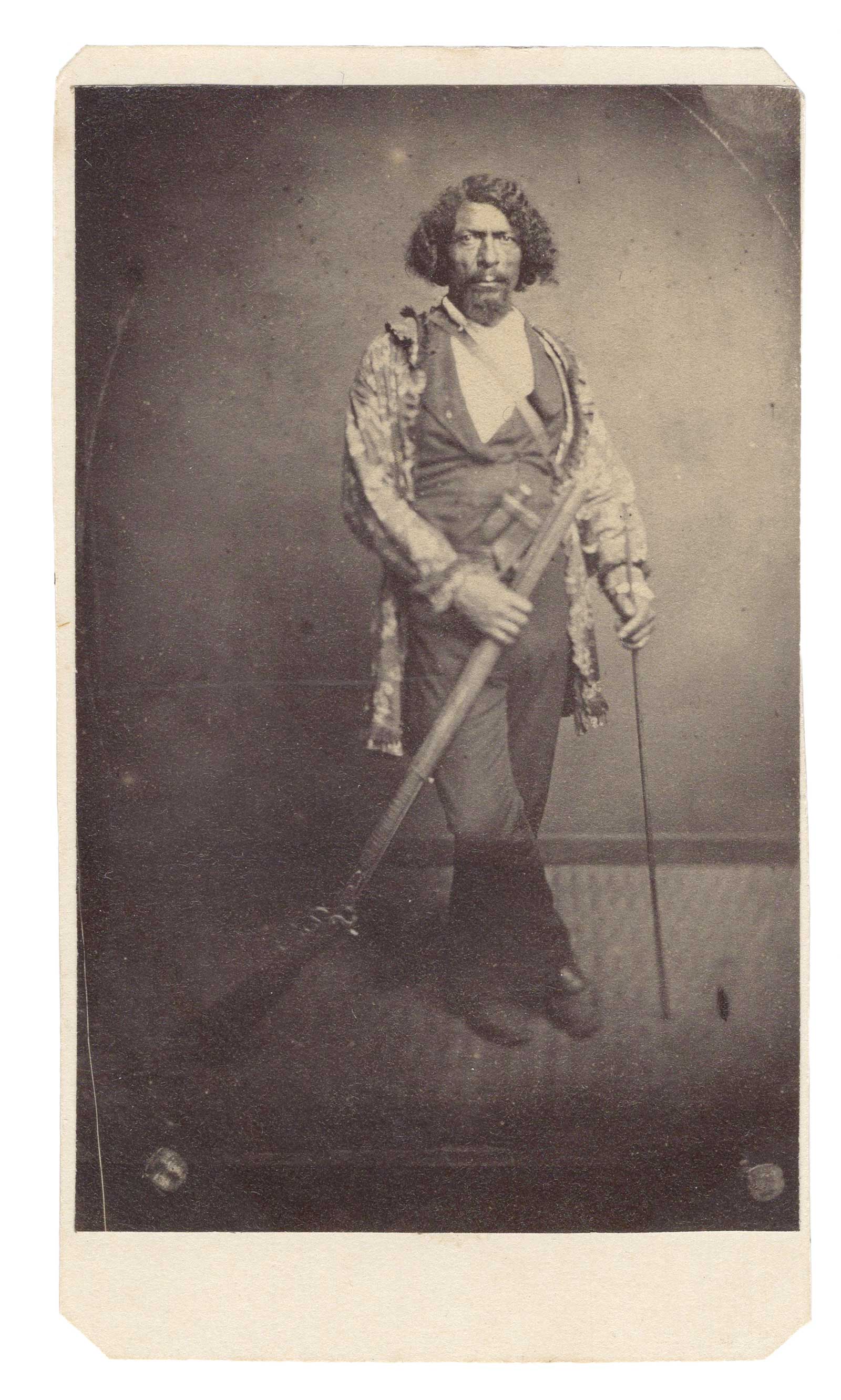 James Beckourth, carte de visite photograph, 3½ x 2¼”. From the Robert G. McCubbin Collection. Courtesy Old West Events.
Mitchell has become an outspoken force on these subjects and has slowly, over the course of several decades, pursued artwork that speaks to issues he’s passionate about. At times he’s ruffled some feathers, including with curators and critics, but he has won new fans by painting with honesty and without chasing success in the market. In a 2002 review of the exhibition Black Romantic, New York Times writer Michael Kimmelman singled the artist out with this praise: “Mr. Mitchell is a virtual modern-day Vermeer of ordinary black people given dignity through the eloquence of his concentration and touch.” Years later, Mitchell would be one of four finalists asked to interview with President Obama to paint his official portrait. Though the honor later fell to Kehinde Wiley, Mitchell’s presence among the pool of finalists, in the Oval Office no less, was its own reward.
Today Mitchell presents his work in Western art exhibitions, but also in contemporary galleries and museums around the country. At shows like the Masters of the American West and the Prix de West, his work featuring Black figures and poverty in America are displayed next to cowboy scenes, bronze wildlife, Western still life and Native Americans on horseback. And the best part is they are all vital stories of the West. Every one of them.
“The West is so much to so many of us. Whether it’s Native American communities or Black cowboys, or whatever else—these are things we shouldn’t hide from,” Mitchell says. “Some of these things are tough to talk about, but we need to have better conversations. And I think we’re getting there.” —
Powered by Froala Editor