2020 will be remembered for many things, but in the Western world, 2020 will go down as the year Maynard Dixon became the star of Scottsdale, Arizona. Throughout the year, Western Spirit: Scottsdale’s Museum of the West presented its hit exhibition Maynard Dixon’s American West. Then, in the summer and just around the corner and down the street, the Scottsdale Art Auction offered more than a dozen Dixon works to bidders. 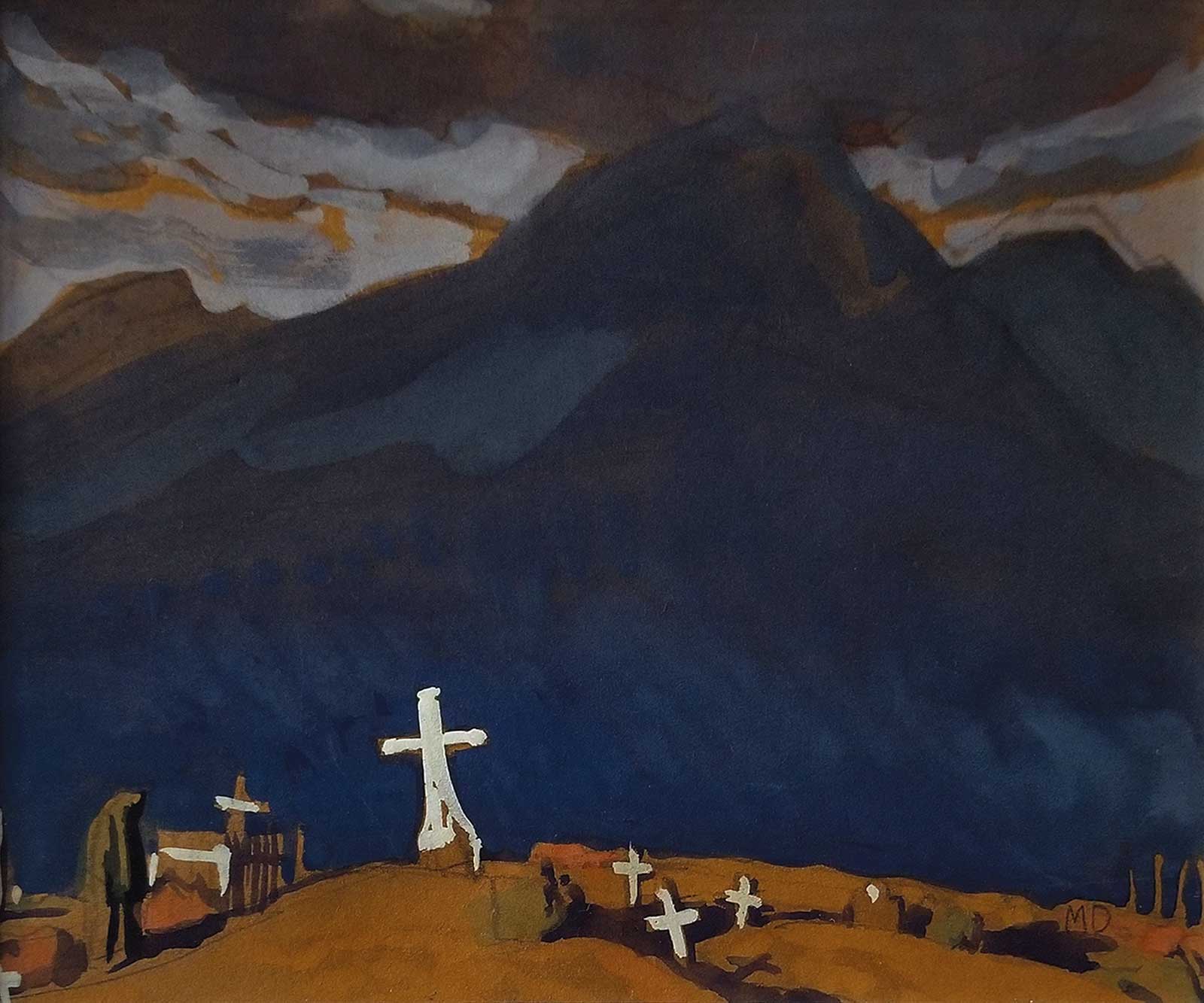 Study for Campo Santo, 1931, gouache on panel, 5¼ x 6¼”
Now, completing a trinity of Dixon showings in the Arizona city—Scottsdale’s appropriate nickname: the West’s Most Western Town—is Western Spirit’s A.P. Hays Family Maynard Dixon Collection. Hays, a prominent collector and supporter of the museum, has been a vocal advocate for Dixon and his work, and is excited to bring a selection of Dixon work to the museum’s visitors. “I started collecting art when I was 16 years old and my interests in art go on and on,” Hays says. “But why Dixon? He represented truth in art to me. He didn’t paint tricks. He just painted what he saw.”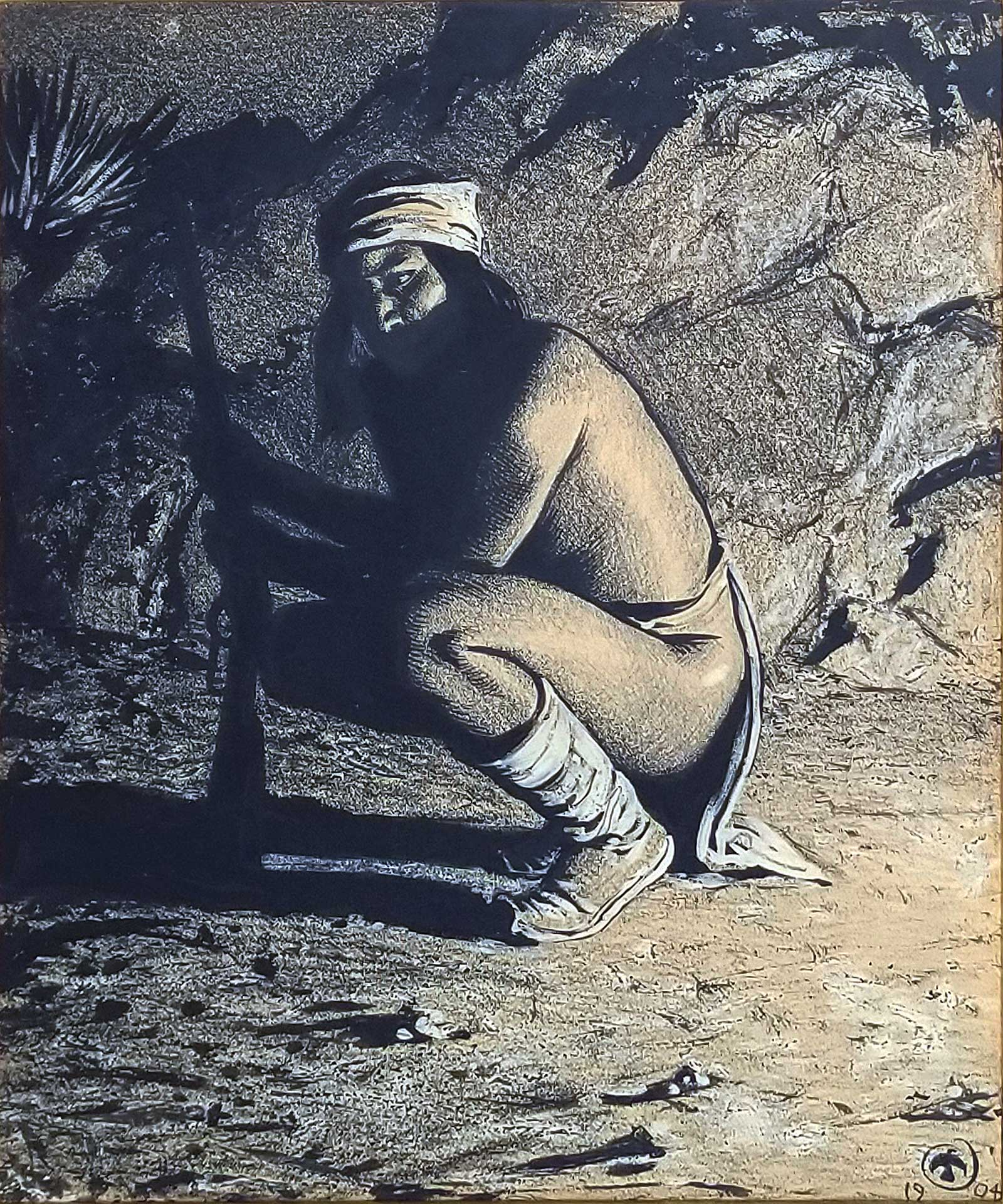 The Apache, 1904, mixed media, 12½ x 10”
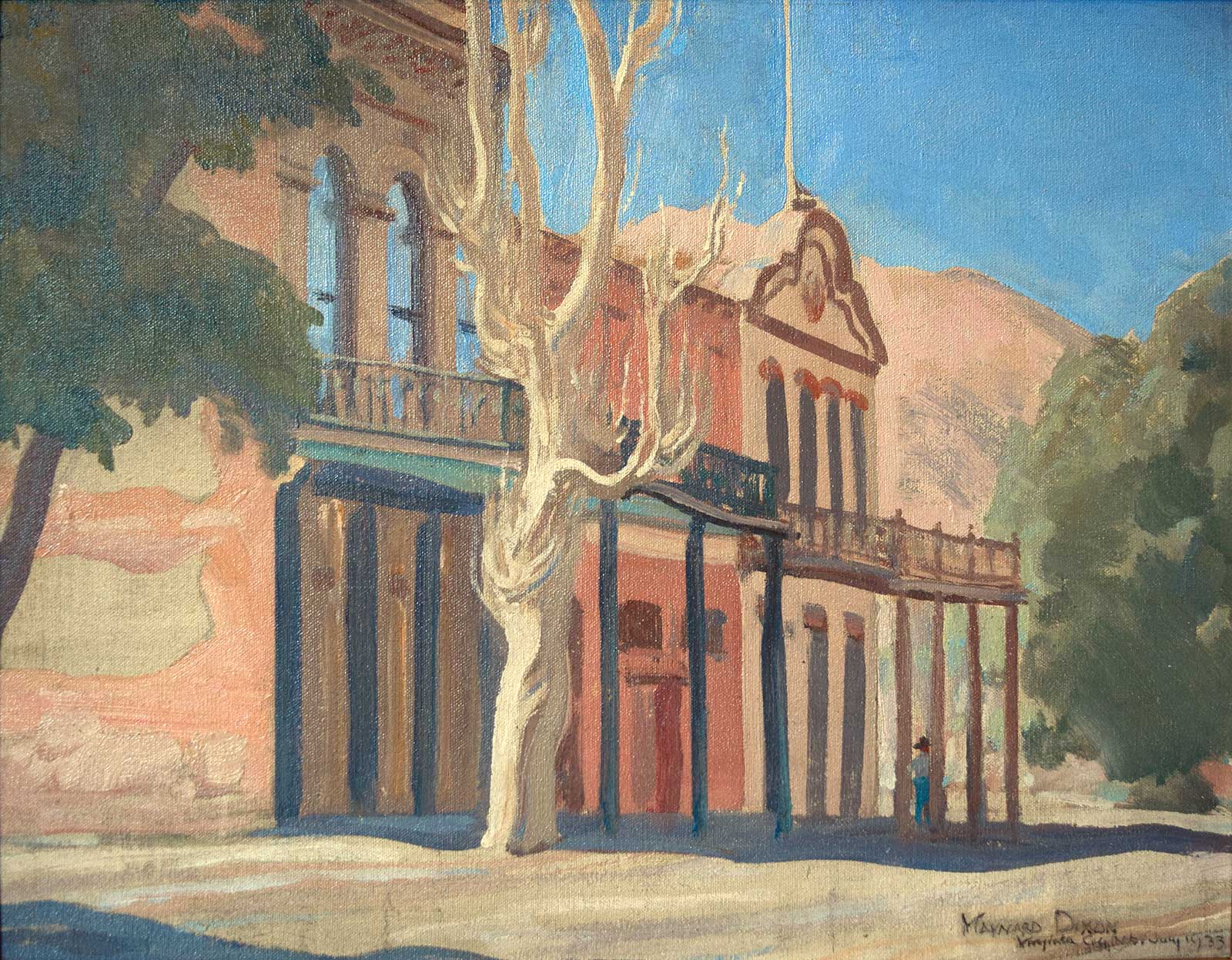 Virginia City, 1933, oil on canvas lined, 16 x 20”
Over the years, Hays has led numerous discussions and made presentations on Dixon and his work in the Southwest. A major turning point for the artist’s work came in 1976, when the artist’s Cloud World, widely regarded as his greatest masterpiece, was included in the exhibition The Natural Paradise: Painting in America, 1800-1950 at the Museum of Modern Art in New York City.
“In his essay ‘The Primal American Scene’ [from the catalog for the exhibition], Robert Rosenblum cited Dixon as one of the few artists after the turmoil of [World War I] to make a ‘retreat into private, pagan mythologies that sought out the mysterious secrets of nature as eternal truths that might oppose the grim facts of man-made civilization which, between 1914 and 1918, had collapsed under its own weight,’” Hays says. “Cloud World…was pointed out by Rosenblum, the New York University professor of fine arts, as one of great early merit, which was completed before other, more honored and later works by O’Keeffe, Avery, Dove, Hartley and Marin. Rosenblum also noted that Dixon’s reduction of the landscape in Cloud World to jagged patterns that mixed tree and mountains, desert and sky, shadow and substance, were advancing American art into the modern age.”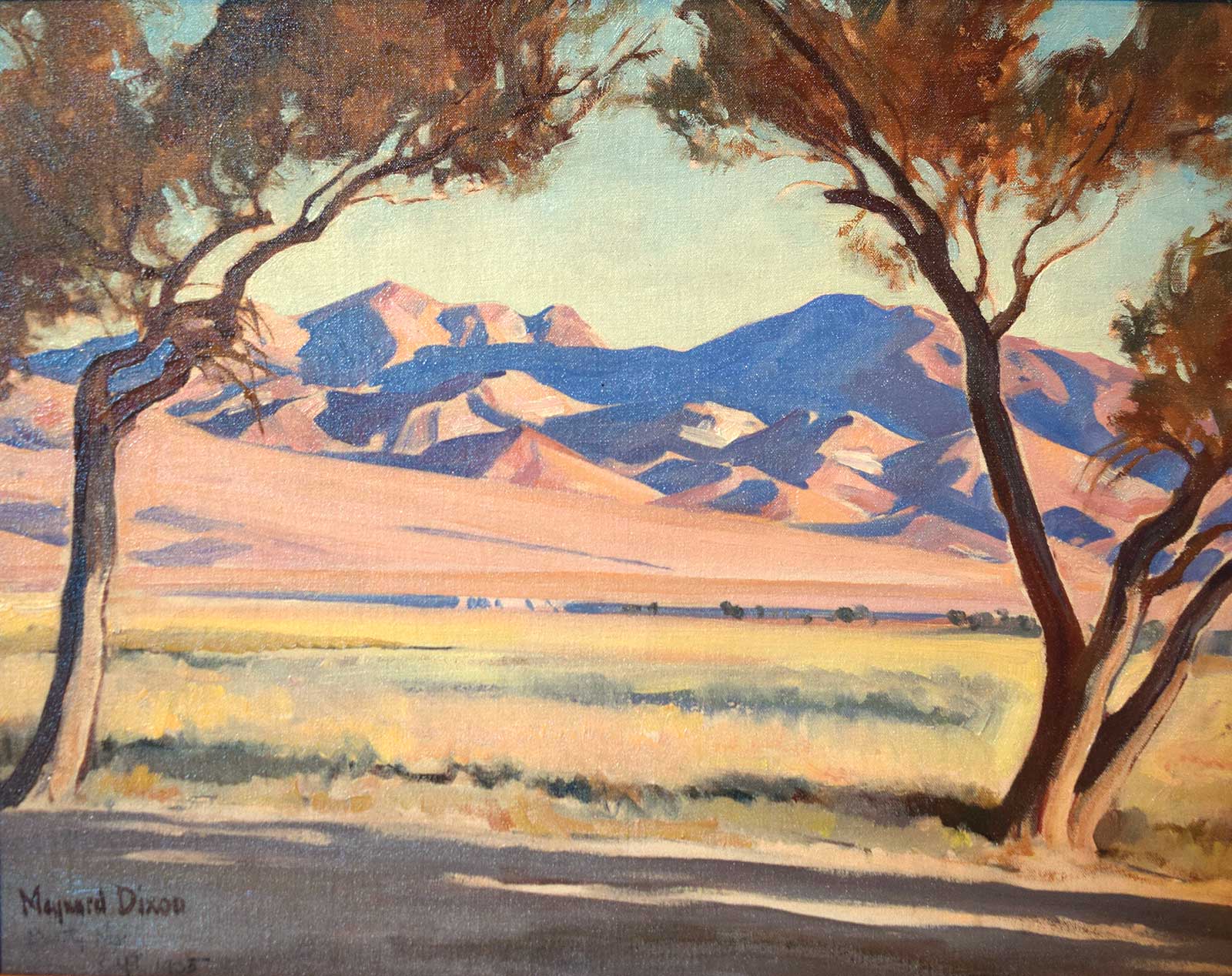 Oasis, 1935, oil on canvas board, 16 x 20”
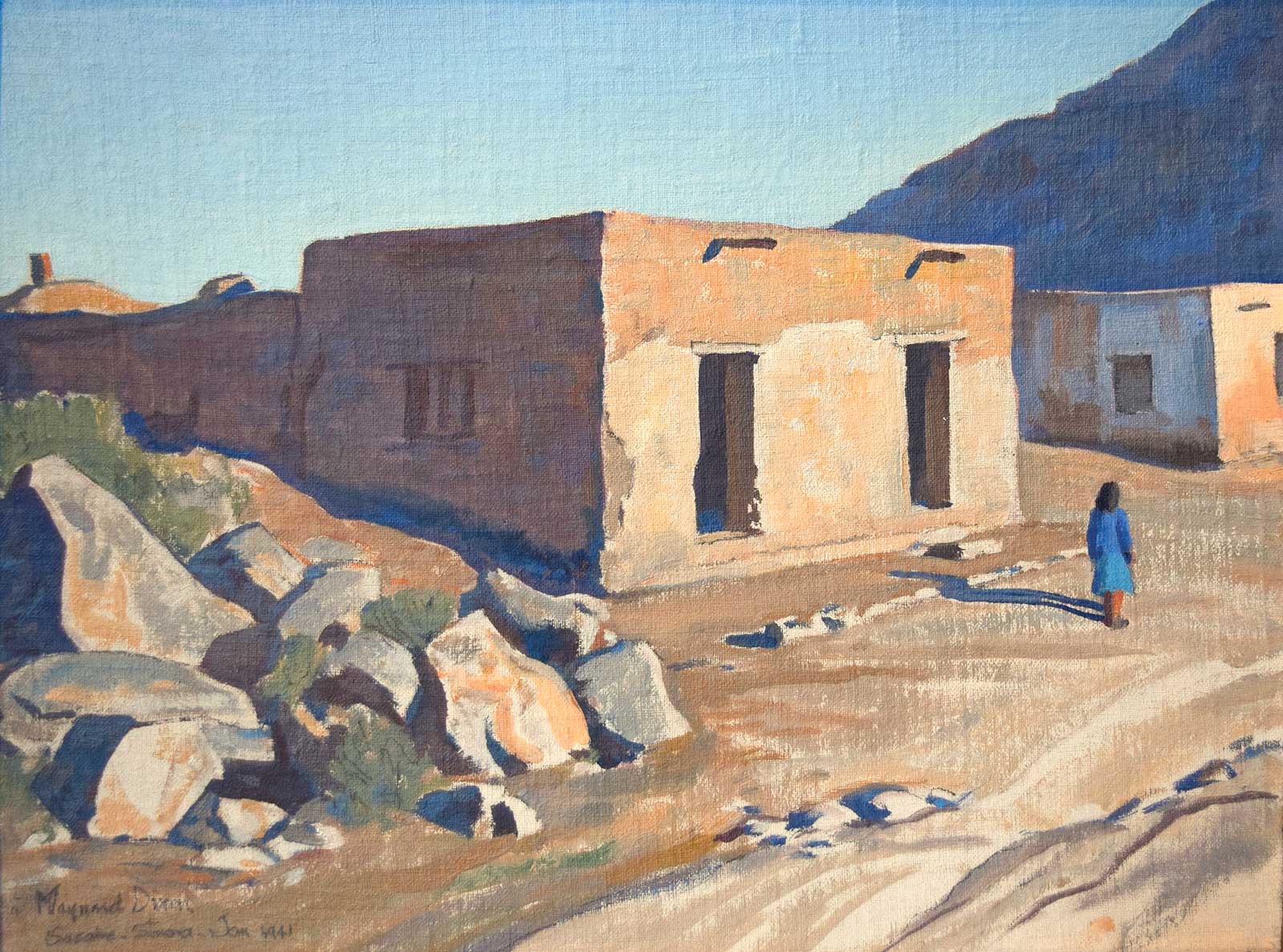 Sasabe, 1941, oil on canvas board, 12 x 16”
Cloud World, once owned by Hays, is not in the exhibition—it is in Maynard Dixon’s American West, just one gallery over at the museum—but it helps put Hays’ pieces, especially his many great 16-by-20-inch works, into context within the artist’s career.
“In paintings such as these, Dixon used desert light to visually flatten forms and collapse distances. His paintings do not rely on the illusion of linear or aerial perspective. He records form and space with the language of modernism,” Hays says. “Dixon did not resort to trite images of Southwestern themes that were so commercially popular. His approach was uncompromisingly honest. His studies of massive rock formations, deep canyons and endless valleys are views of the power of nature in an environment, which does not easily support habitation. His art establishes a very high standard for representing the enduring, indomitable natural structure of the desert that does not romanticize nor sentimentalize its geography.”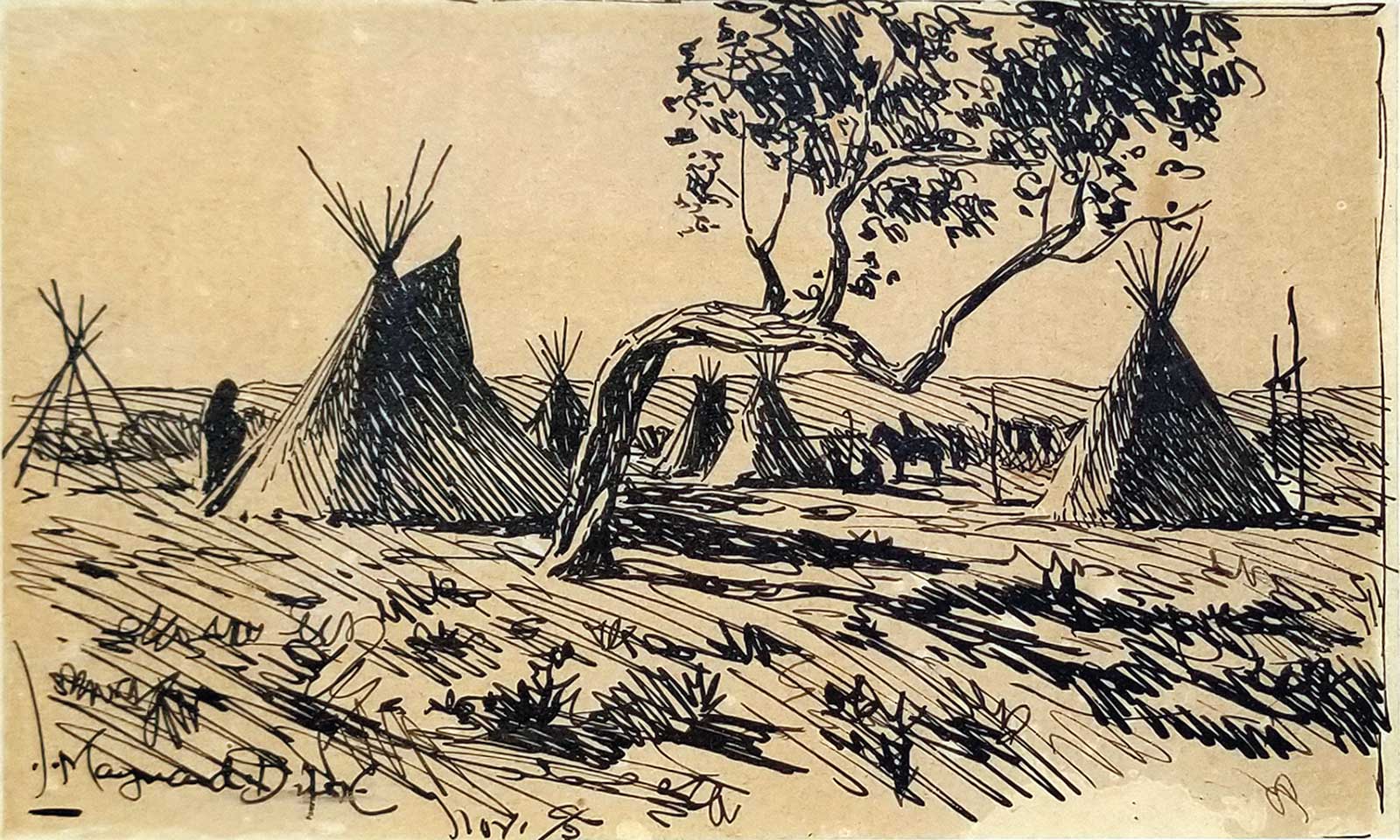 Indian Encampment, 1892s, pen and ink on paper, 3 x 5”
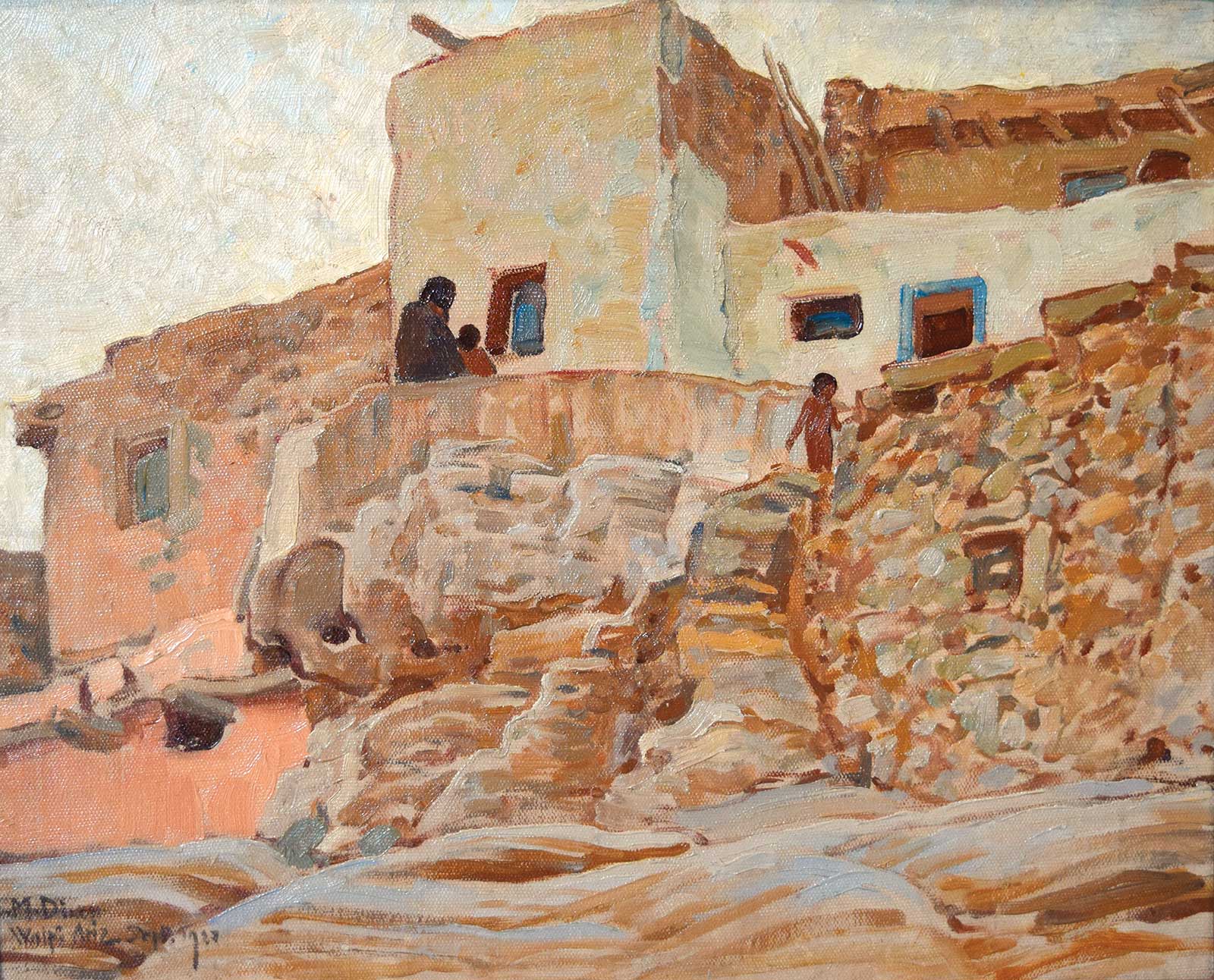 Walls of Walpi, 1923, oil on canvas, 16 x 20”
Works in the exhibition include Study for Camp Santo, a magnificent view of a cemetery with towering mountains in the distance; Oasis, a huge view of the Nevada desert framed by two trees that create a shaded foreground; and San Joaquin, a work he created on a trip with his second wife, photographer Dorothea Lange. In addition to landscapes, selections will also include figurative works such as Apache, a fairly complete drawing done in 1904. A number of them feature Native American subjects.
“In the early 19th century and later during the years of westward expansion, Indians were typically represented as aggressive, but noble, savages. This view was consistent with the idea of Manifest Destiny that, by definition, excluded the presence, and ignored cultural contributions, of Indian populations,” Hays says. “Early 20th-century artists, however, informed by modernist purposes, portrayed Indians as the dignified descendants of ancient societies that signified civilization, even, when defined by European standards…Dixon’s paintings of Indigenous Peoples of New Mexico, Nevada, Arizona and Montana are not nostalgic or heroic but, rather, show the psychological power they derived from a spiritual harmony with their austere environment.”
Hays continues, “A lifelong nonconformist in art as well as life, the fiercely independent Dixon scorned schools, fashions, trends and movement. His creed was simple: Find the truth in the West’s spirit, its vastness, solitude and power; interpret the land’s relevance to people and its dominance over their very spirit and lives; and, finally, with enormous clarity, simplicity and honesty, portray the culture of the Native Peoples and their special metaphysical harmony with the land, their gods and lives.”
A.P. Hays Family Maynard Dixon Collection is now open at the Scottsdale museum. It will continue through May 24, 2021. —
A.P. Hays Family Maynard Dixon Collection
Through May 24, 2021
Western Spirit: Scottsdale’s Museum of the West
3830 N. Marshall Way, Scottsdale, AZ 85251
(480) 686-9539
www.scottsdalemuseumwest.org
Powered by Froala Editor