It’s true what they say, “Distance makes the heart grow fonder.” Nine months removed from the last art show
I attended, and I miss them now more than ever.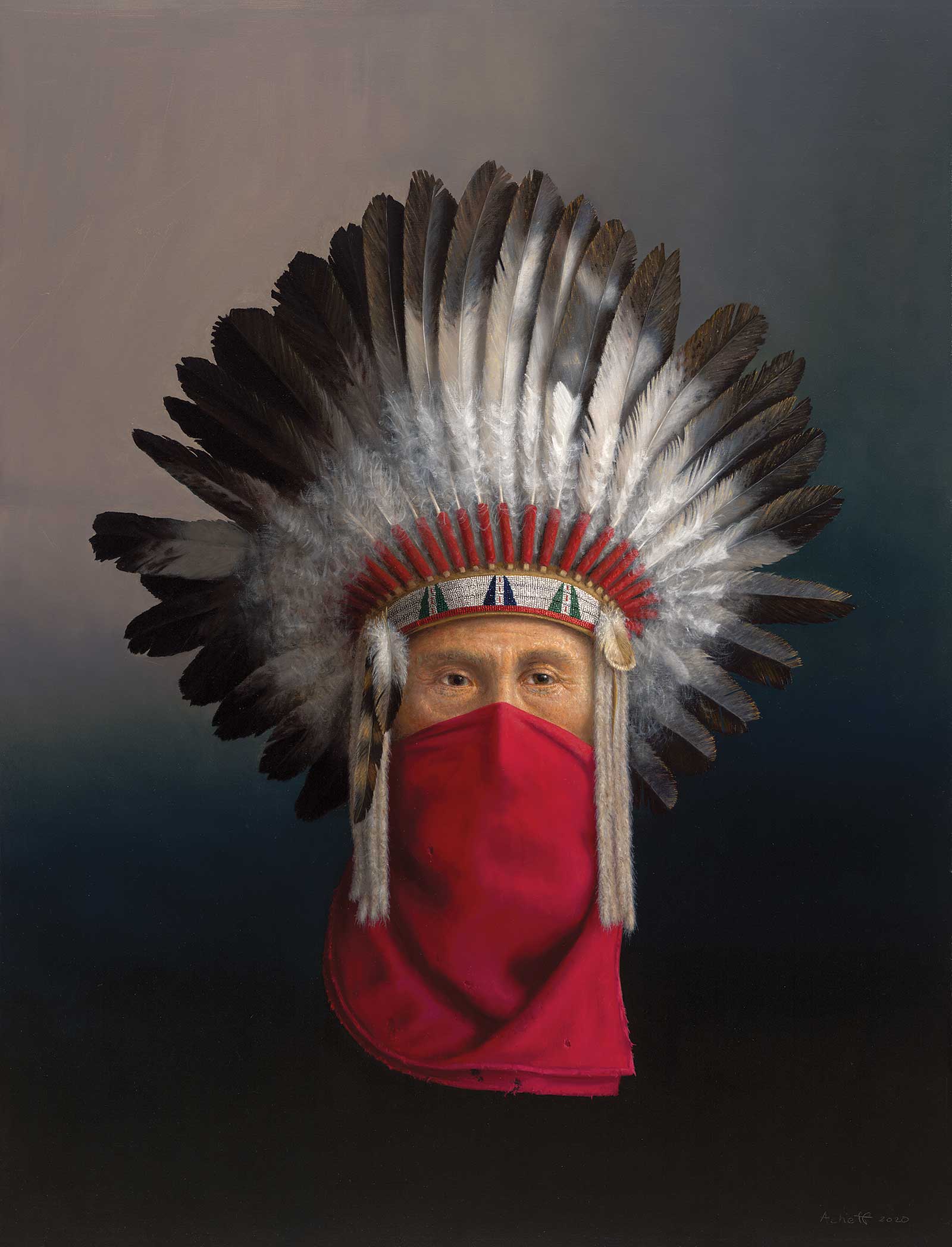 Opposite page: William Acheff, Protecting the Elders, 2020, oil, 34 x 26”
One of the last events was the Heard Museum Guild Indian Fair & Market in early March in Phoenix. We were still shaking hands back then, and hugging, and eating together, and living life together. That same weekend, Legacy Gallery hosted a phenomenal C. Michael Dudash show. Looking back on both events, I regret not staying longer. Mingling longer. Viewing the art with others longer.
It’s been said in this magazine already, but it bears repeating here: When it’s safe to return to shows again,
I don’t want to ever miss an opportunity to experience art with others again. Museums, fairs, gallery openings, studio events, paint-outs, auctions…yes, please. We can never take these experiences for granted again.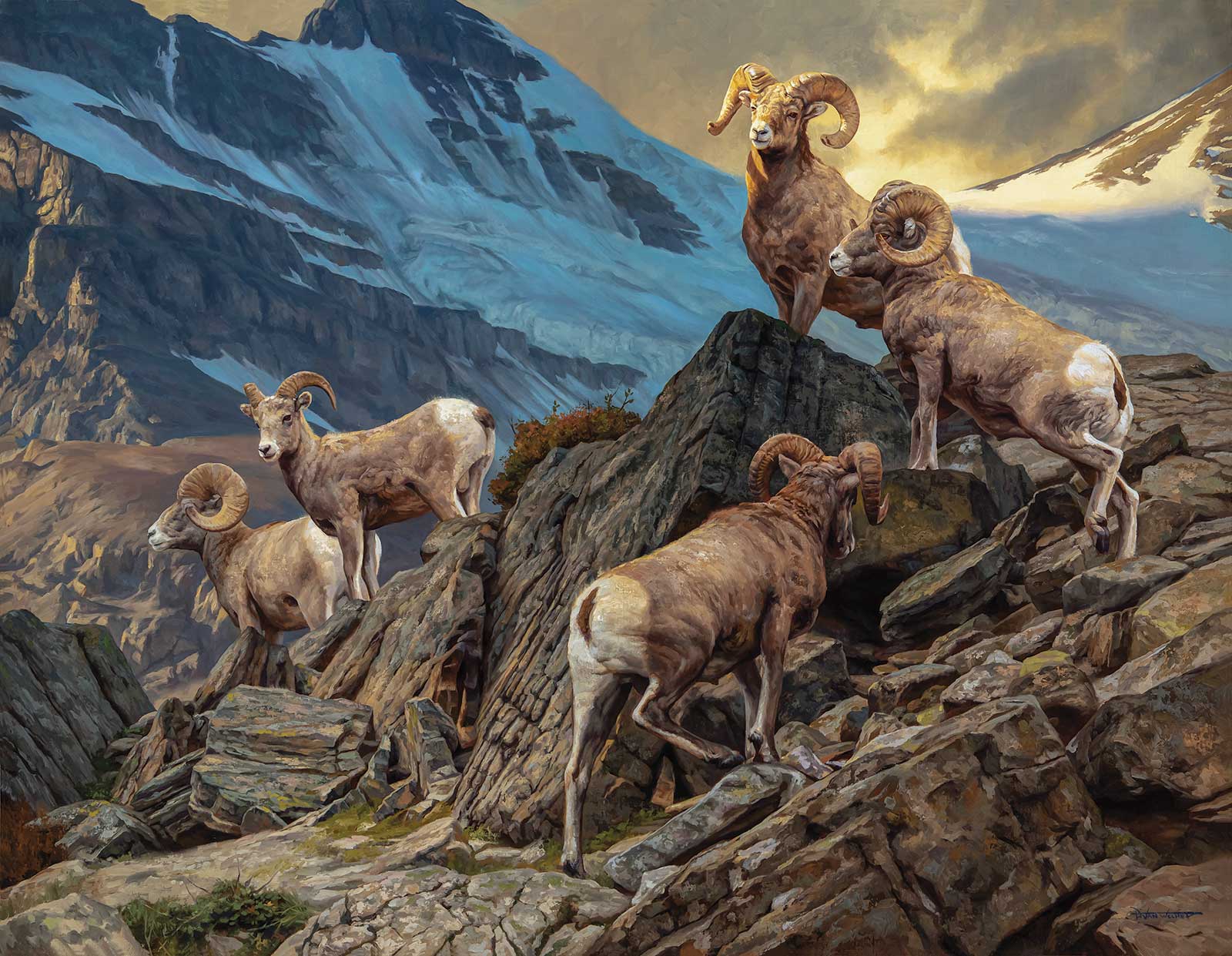 Dustin Van Wechel, A Pika’s Paradise, 2020, oil on linen, 45 x 58”
As we reflect back on 2020, and look ahead to 2021, we reached out to some of the top Western artists, as well as some rising stars, to find out how they are doing, what they’ve learned over the last year and what they’re expecting for 2021. Without exception, the artists we spoke to were experiencing the same feeling—hope.
“The Western art world is healthy, even now. We are fortunate to have great collectors, galleries, shows and magazines to support our work and community,” says landscape painter Josh Elliott. “Not to mention, there are some amazingly creative and talented artists out there producing work that is as good as anything in the past.”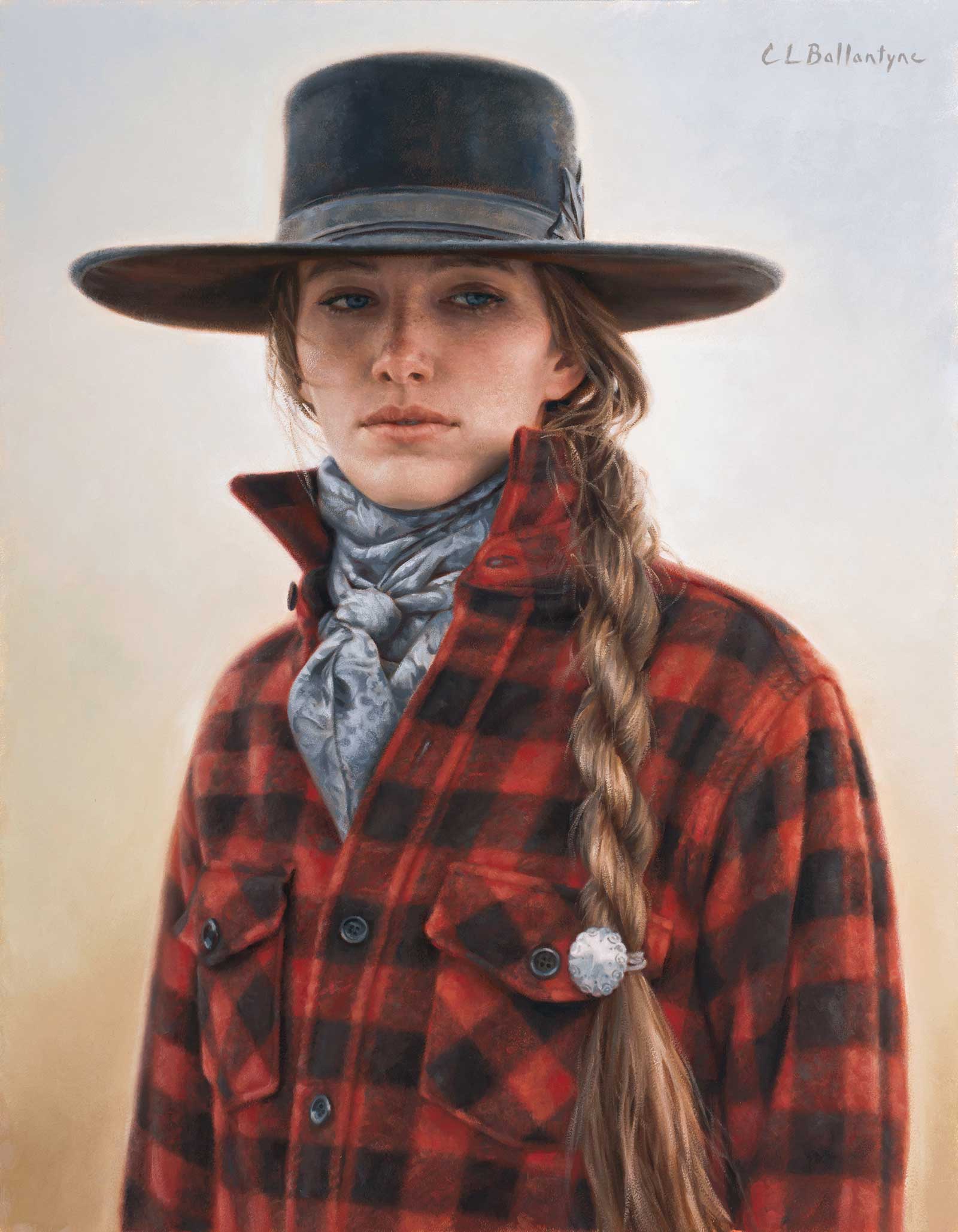 Carrie Ballantyne, Study in Subtlety, 2020, oil, 18 x 14”
The Montana-based painter, who is now finishing work for an upcoming show at Maxwell Alexander Gallery and an exhibition at the Woolaroc Museum, says he has maintained a steady workflow in his studio and when all else fails, he trusts his instincts. “I feel art can heal. I don’t want to suggest that it can end racism or take away fear of loved ones passing, but it can be a uniting and calming force,” he says. “I would hope my work would unite through the feeling of shared experience or joy in our natural world. I think nature can be a source solace and an environment to find our place in this world. We need beauty. I don’t think the events of 2020 influenced the direction of my work in particular, but I was aiming at bringing some of that beauty to viewers.”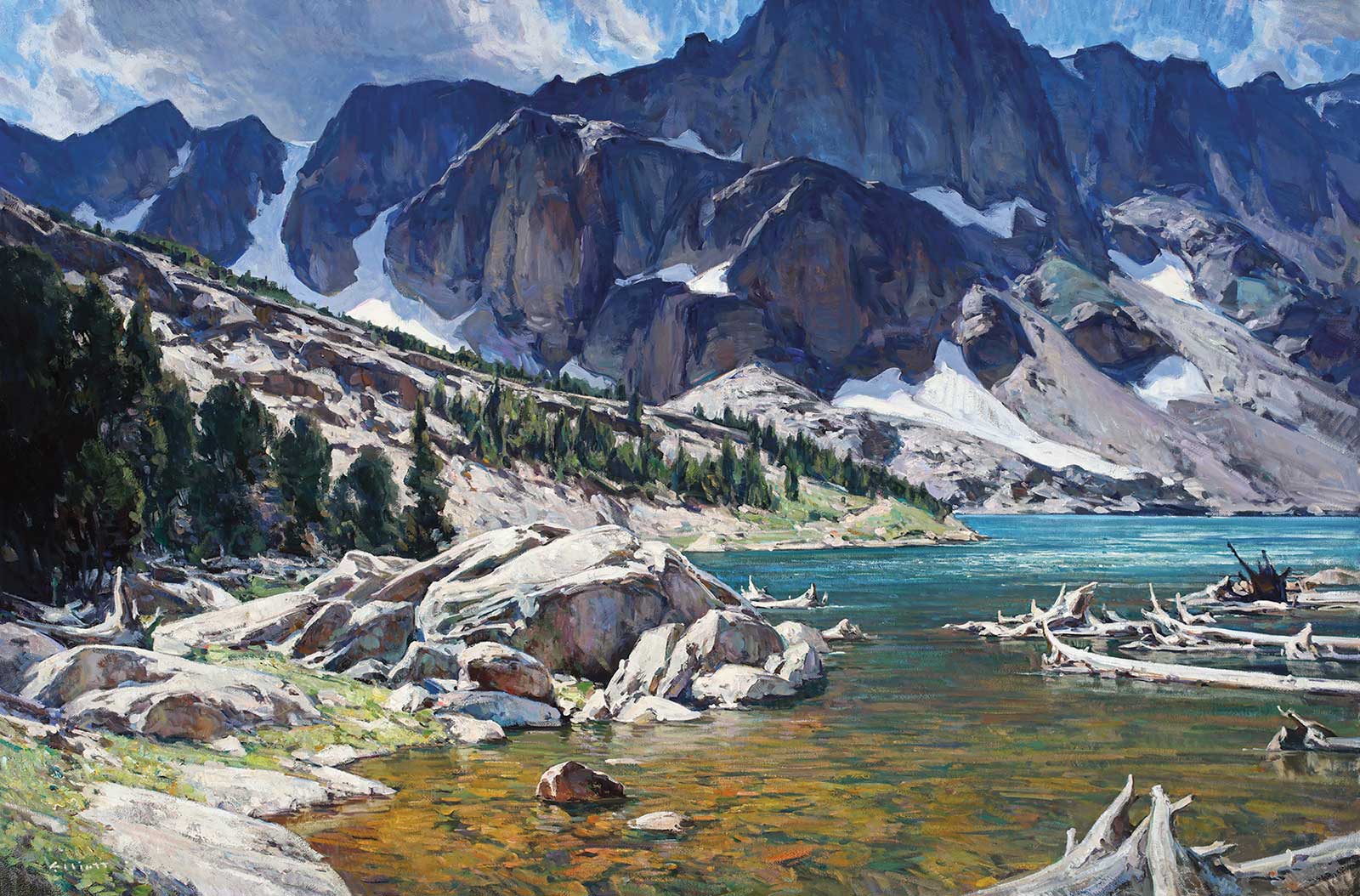 Josh Elliott, Mountain Air, 2020, oil, 36 x 54”
Another landscape painter, Arizona-based painter Darcie Peet, shares many of Elliott’s feelings about the market and her own studio. Like Elliott, she has seen the market adapt with the times, but is looking forward to a return to normal. “Though virtual events were certainly ingenious and valiant problem-solving, some were far more successful than others. In 2021 and even sooner, I’m so looking forward to galleries, events and shows open for art to be seen live, without restrictions and opportunities again for artists, staff and collectors to once more visit, share stories, communicate, educate and just plain do business as usual,” she says, adding that several of her galleries closed temporarily but have since reopened with expanded online offerings and new safety protocols. “…[T]hrough creative problem-solving I saw continued and innovative social media and website presence; collector phone follow-up and private appointments at galleries. I actually saw an increase in sales from one particular gallery, and I believe their sales over all were quite strong through such challenging times. So…there’s great hope for business recovering, [and] people back to work, getting together, reconnecting once more and going to a grocery store without a mask. Time for strength, courage, freedom and being American.”
We’ve heard from many artists who have noticed similar aspects: that the pandemic allowed them to work uninterrupted and at a greater pace, that their galleries are finding innovative ways to connect with collectors, and that collectors are still buying art, often times at a rate that is similar to or higher than
pre-pandemic levels. George Hallmark produced gorgeous works during the pandemic, including marvelous pieces that ended up at the Prix de West’s rescheduled show in September. Another Prix de West artist, William Acheff, directly referenced the times we’re all living in with his piece Protecting the Elders, showing a Native American chief wearing a mask over his mouth and nose. Dean Mitchell was also inspired by the events of 2020 and showed it in his paintings, including an image of a musician with her head down in a respectful bow, a painting of a ranch with an American flag at half-mast and an image of a man under large text, “VOTE.” Andy Thomas kept extra busy by starting work on a graphic novel tentatively titled The Mountain and The Sea and finished a monumental mural for his hometown of Carthage, Missouri. Kyle Polzin, fresh off a huge solo show in 2019, took some well-earned time off, which allowed him time to “sharpen the ax” and refill with new ideas and new inspiration. “But above all, 2020 has given me perspective. I realize how fortunate
I am to be able to pursue my passion. And now I’m excited about 2021 and the ideas I want to paint,” Polzin says.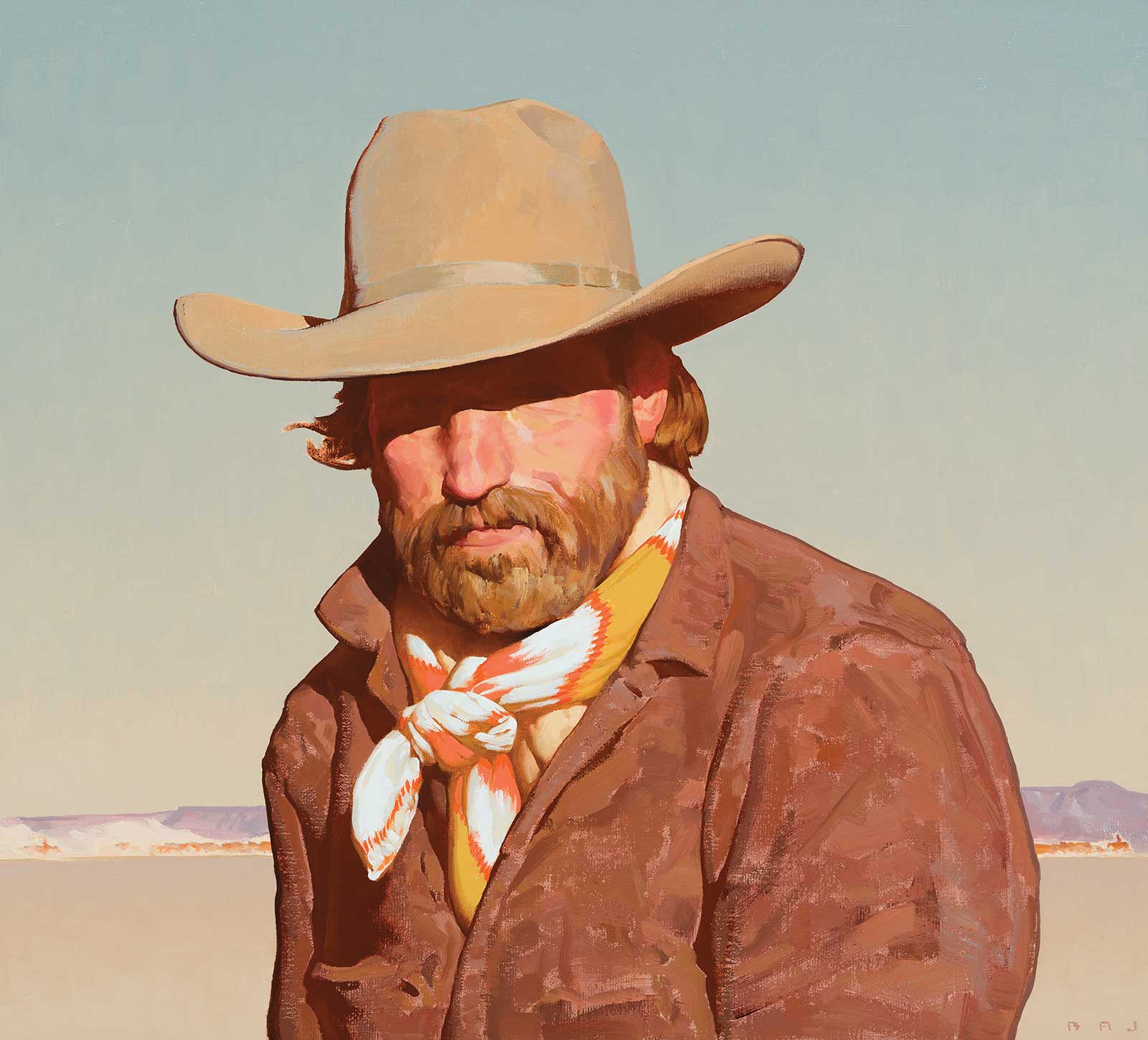 Brett Allen Johnson, Winds of Nevada, 2020, oil, 20 x 21”
For Dustin Van Wechel, who finished the absolute stunning wildlife piece A Pika’s Paradise, the lockdown has punctuated the unique qualities of an artist’s lifestyle. “If I learned anything in 2020 it was just how isolated being an artist can be. While the world closed around me, the nature of being an artist and working in the studio insulated me from a lot of the social impacts the pandemic had on other people. Things just didn’t change much for me. I don’t know if that was actually a good thing for me, but hopefully 2021 will bring positive change and I will make an effort to not isolate myself so much in the studio,” he says. “I believe things will still be very difficult for some time. Even if the pandemic subsides and social unrest quiets, the damage from all that has happened in 2020, just psychologically, will be a slow healing process. But I am an optimist at heart and do believe 2021 will be a year of healing and progress in the end.”
Wyoming figure painter Carrie Ballantyne is also cautiously optimistic in the future, but finds solace in the fact that people genuinely care about one another. “I’ve been a professional artist for 35ish years, which simply means I’ve managed to pay the bills through the sale of the artwork I have produced. I have never taken this privilege for granted, and 2020 really drove that feeling home like never before. Even with the fear of change on so many fronts, I realized anew the depth of my passion to paint and draw the human landscapes as I find them, which has strengthened and encouraged me in my work,” she says. “The pandemic helped me to realize just how much people need each other, and how important it is to work hard toward healthy and loving connectivity in our unique sphere of influence. We all need to be uplifted and edified. I pray and hope my paintings are doing just that—bringing beauty, tenderness, and introspection, as well as a subtle reminder that we are made for relationships.”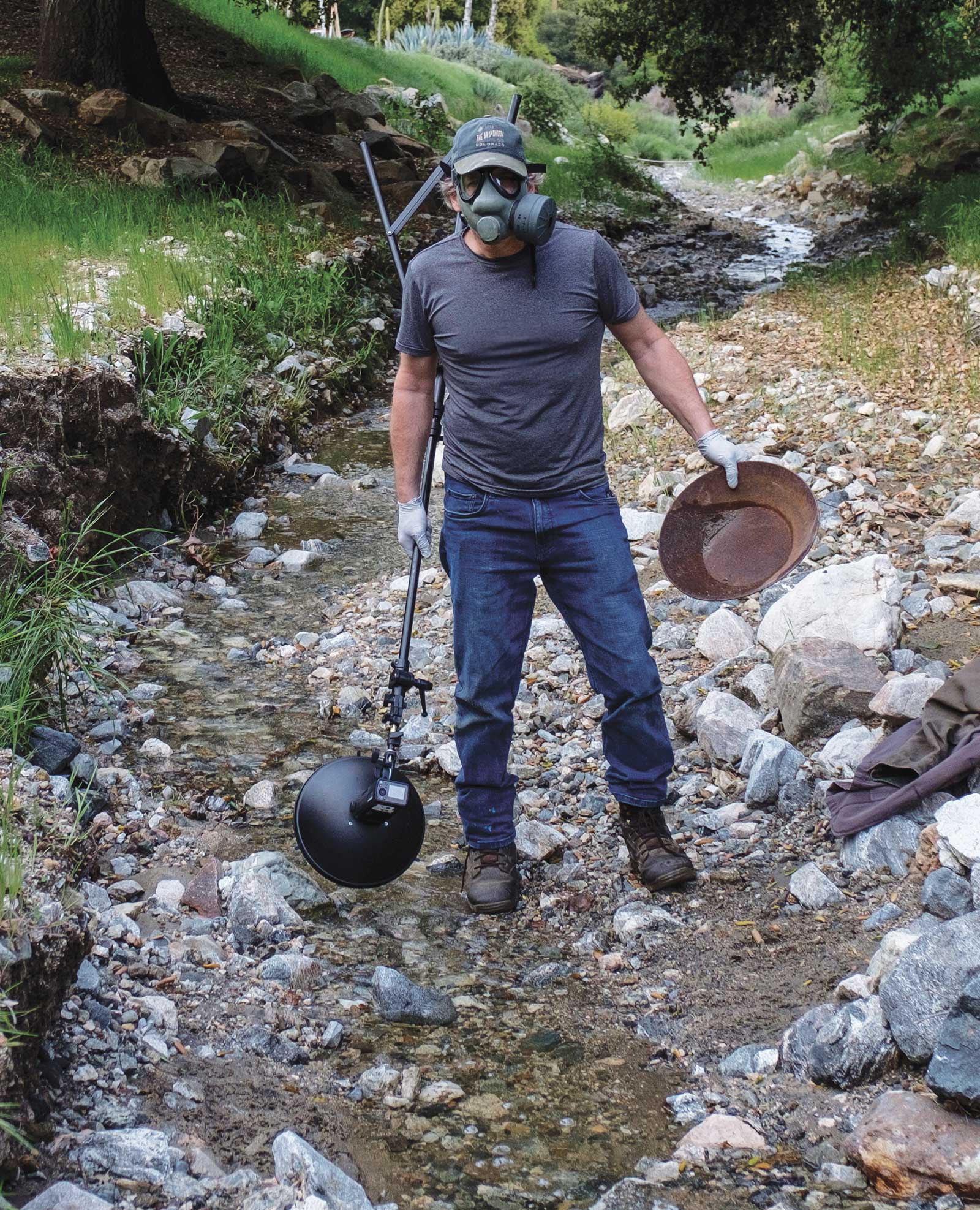 During the lockdown of 2020, Morgan Weistling found ways to stay safe during his reference shoots.
Over in California, Morgan Weistling is finding ways to connect with people safely and it’s allowed him to continue working. One safety precaution that’s been working for him: a heavy duty gas mask. “I learned that I could navigate around a pandemic and still get a lot of work done. When you work with models all the time and suddenly you are not allowed to be around people, it became difficult. But
I have some pretty serious ventilators that made my models feel safe,” he says. Weistling often paints large works, and there is a quality to his pieces—all artists’ pieces, really—that is lost on a computer monitor. It’s this loss that is one of the downsides of switching to virtual shows. “…The thing that really affected me along with all other artists was that our shows were all cancelled or put online. That really hurt us. Especially because I painted some larger-scaled paintings this year that would be best appreciated in person and I believed those shows would still go forward normally.
I don’t paint so they can be seen on a monitor. They are supposed to be seen with the size they really are with paint texture and subtle color changes and all nuances that only an original can provide. So I really hope we can have real shows again soon.”
Utah’s Brett Allen Johnson, one of the West’s fastest rising stars, has weathered through the tide of 2020 and also remained hopeful about the coming year with new endeavors already lined up. “I’m super excited for 2021. I was accepted into the Masters [of the American West] show at the Autry, and most importantly for me, I hope to push things further, get better, do even more, just like every other artist ever,” he says. “It’s a lifelong journey of becoming.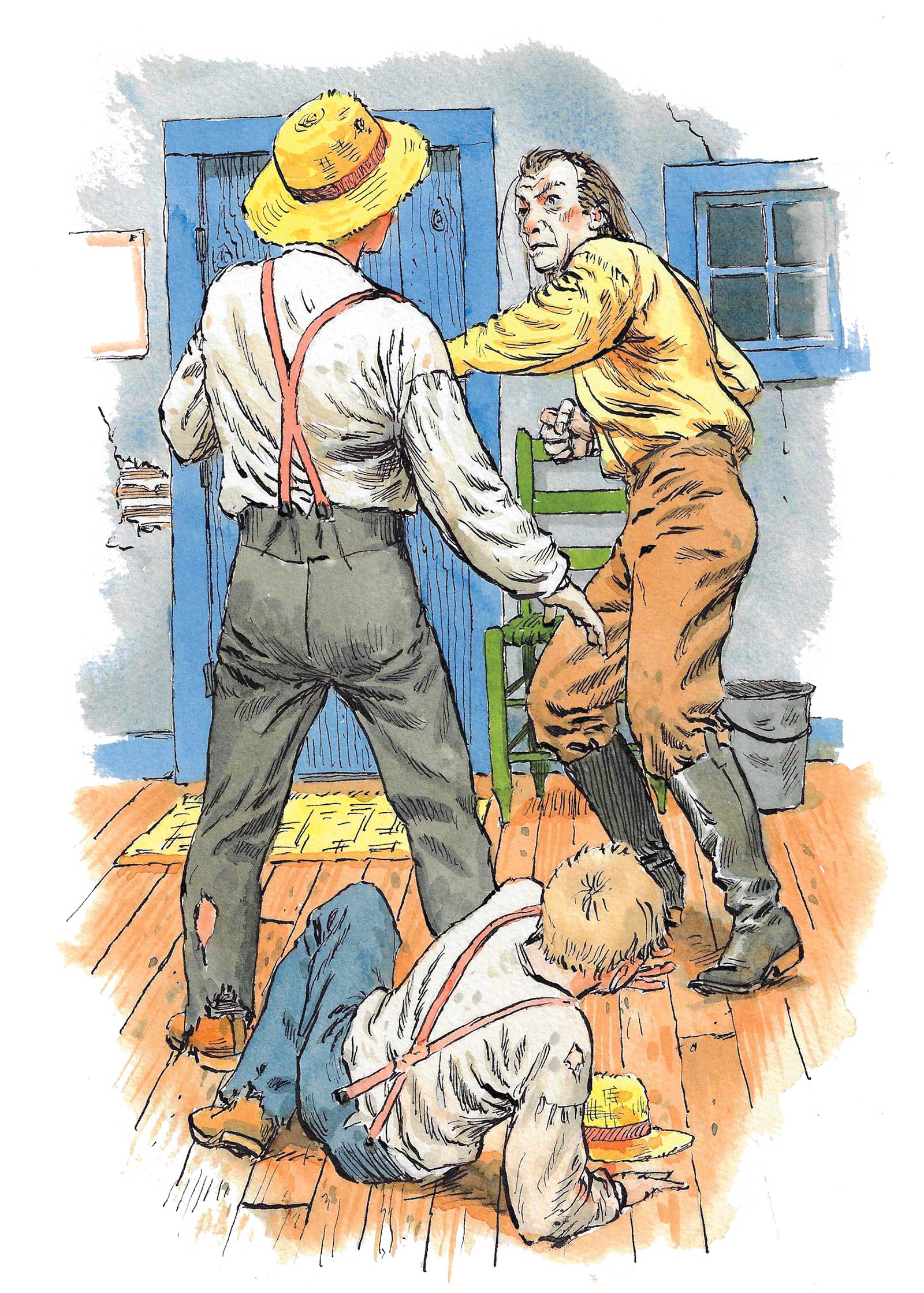 Andy Thomas, Untitled work for upcoming graphic novel, 2020, watercolor
I look to our ancestors and the incredible things they survived. It’s the human spirit. If it could be swayed by hardship, it wouldn’t be headed anywhere worth going. Long live the West!”
T. Allen Lawson, who’s working out of Wyoming these days, has been reflecting on the world, and admits that the isolation may have creeped its way into his work, including several paintings with solitary birds. “I have never considered myself a reactionary artist. But it is nearly impossible to be aware and alive in these times and not to be affected by them in some major way,” he says, adding that he works out of a large historic building that has essentially been vacant since so many people are now working from home. Lawson says he’s looking forward to visiting people again, returning to museums, traveling and allowing art to bring people together. “David Foster Wallace wrote, ‘In dark times, the definition of good art would seem to be art that locates and applies CPR to those elements of what’s human and magical that still live and glow despite the times’ darkness.’ That magic, that glow, is still out there—it still exists!”
Now we just have to wait for that glow to rise up over the horizon so we can step out into it, and into a new day.
2021, here we come! —
Critical Support
Booth Museum’s Seth Hopkins offers several ways to help support museums you love.
This summer, the American Alliance of Museums warned that as many as one third of all American museums were in danger of closing permanently during the pandemic and the resulting economic downturn. For Seth Hopkins, executive director of the Booth Western Art Museum in Georgia, that was a troubling warning.
“We’ve had people tell us that, in no uncertain terms, they wouldn’t be participating in much of anything until there was a reliable vaccine or the health concerns were significantly lessened. Obviously, if we can get through this, there will be a lot of pent-up interest in museums, art lectures, exhibitions and other museum programming,” he says. “The trick is making it through all this.”
Hopkins, who’s expanded the Booth’s online programming during the pandemic and museum closures, says there’s one thing that museums can use. “Cash. Be that through memberships, or gifts, cash is a great way of helping a museum,” he says. “Beyond that, patronage is important—show up to online events, and champion the museum and its programming to your family and friends. You can also donate art to the permanent collection, including art that can be sold to benefit the museum. These are all things that can greatly benefit a museum.”
He adds that many museums, Booth included, are amplifying their virtual offerings in hopes that they engage with online visitors, but much of the content is free, which means the museum is spending money, but not bringing any in. “If you can give to your favorite museum, that’s great,” Hopkins says, “but as much as possible let them know you appreciate them and what they’re doing.”
Powered by Froala Editor