The poetic naturalist and writer John Muir wrote, “Everybody needs beauty as well as bread, places to play in and pray in, where nature may heal and give strength to body and soul.” Michael Cassidy has a peculiar affinity for places of beauty. He immediately detects the spirit of a place and that of the people who live there and who immerse themselves in nature.
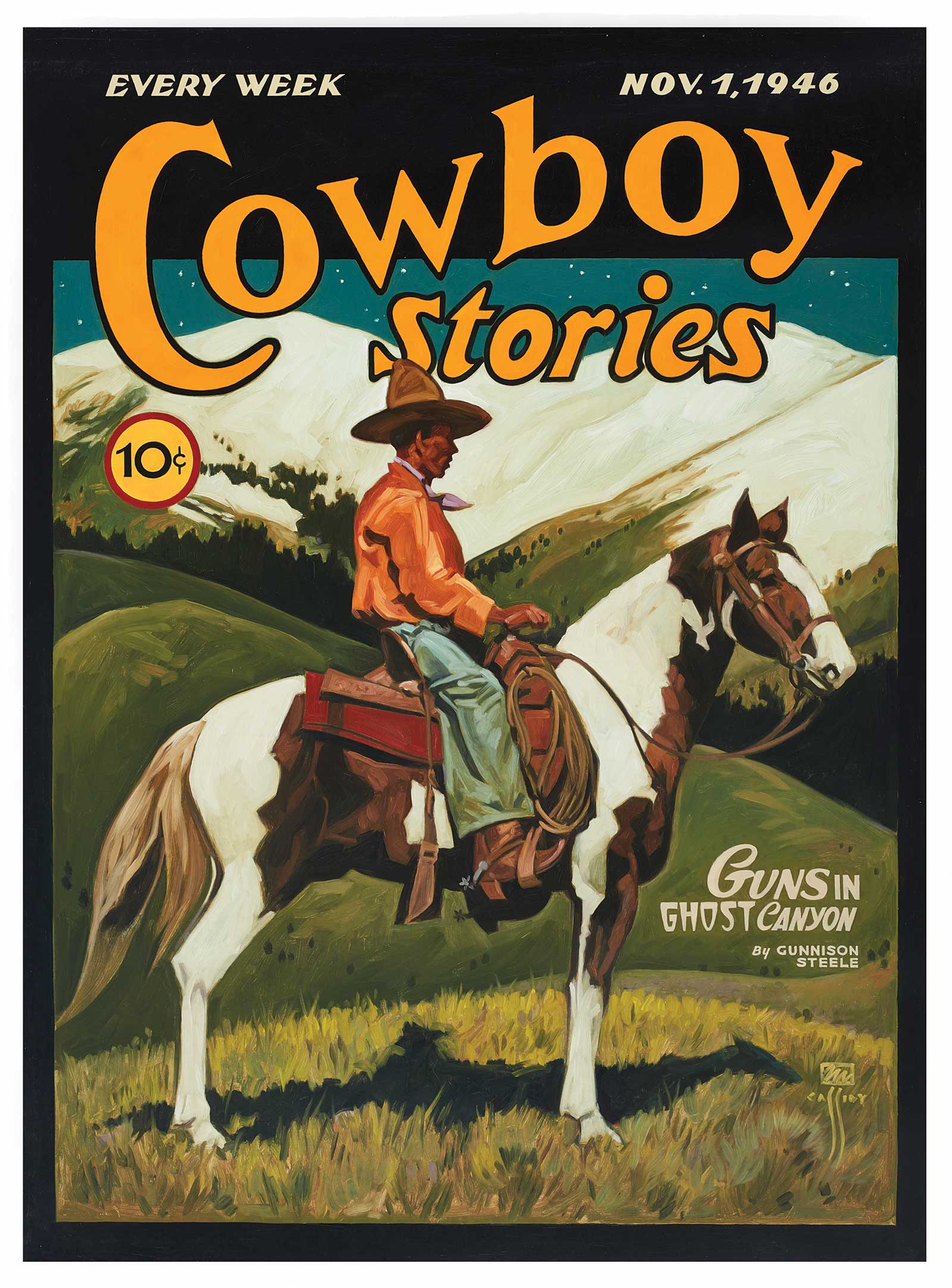 Cowboy Stories, Guns in Ghost Canyon, oil on linen, 70 x 50”
Growing up in Southern California he surfed and rode horseback. He went to art school and worked in commercial illustration for many years. He spent “25 years tromping the South Pacific” becoming a well-known painter of the earthly paradise of the islands, the people and, especially, the surfers. He has since turned his attention to the Old West and its people, a different kind of paradise. The West is a place where the Native peoples lived in touch with the land and where settlers arrived looking for new beginnings “with a willingness to work to make a life for themselves that was worth living.”
Yet, Cassidy believes, “There is no paradise on this earth. Believe me I’ve been looking for the last 30 years.” Commenting on experiences of paradise, he says, “They’re fleeting moments, brief looks from the mountaintop through foggy glasses. We don’t get nearly enough of those moments. Artists help us to pause and look for those moments. I paint pictures of paradise so that when I look at them I’m reminded of what I was made for. Somewhere in my soul I know beyond doubt I’m made for Paradise, for Heaven.”
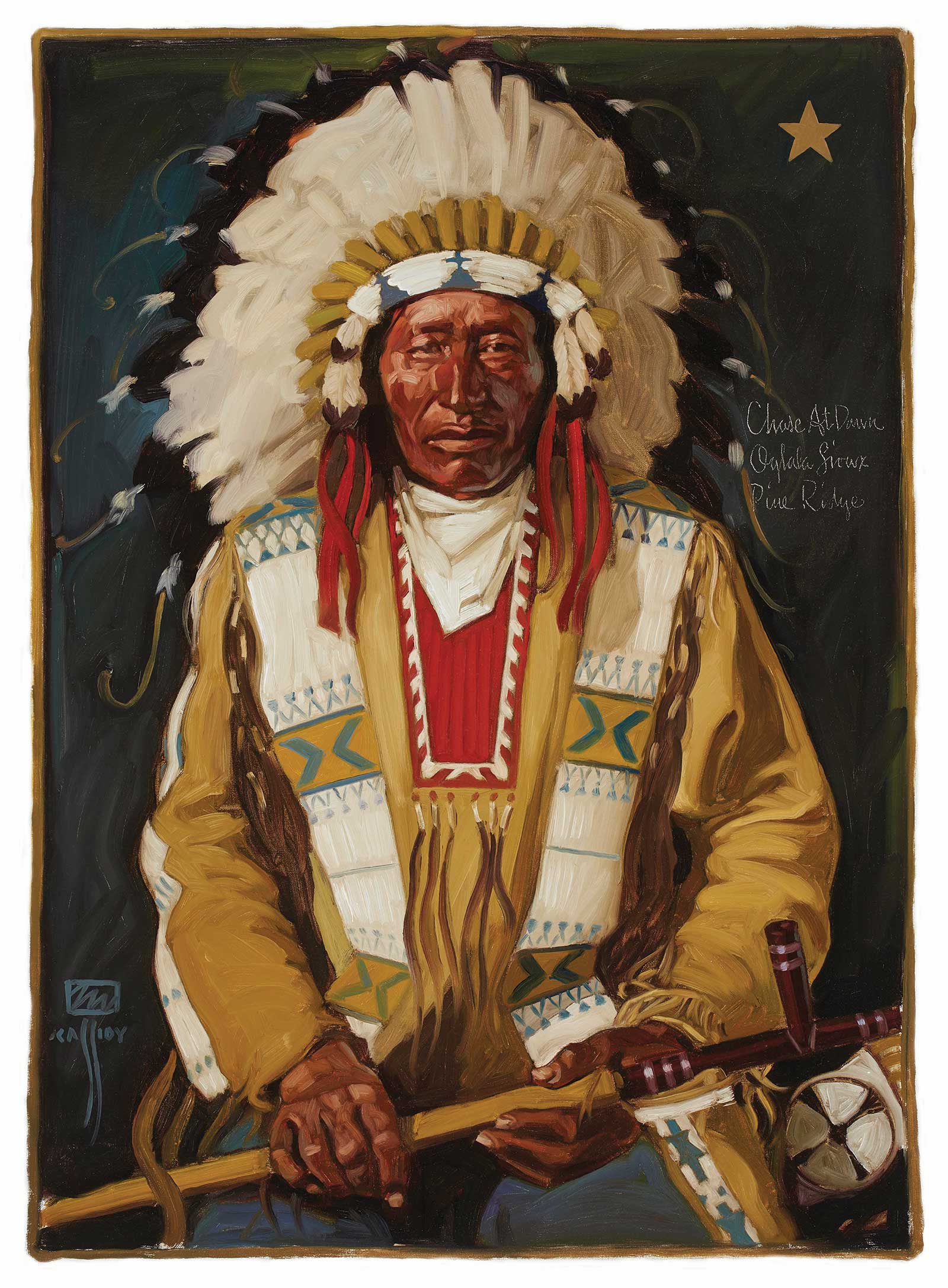 Chase at Dawn, Oglala Sioux, Pine Ridge, oil on linen, 38 x 27”
Every place has its story and every story is different. “When I was young I was fascinated by the South Pacific and cowboys and Indians,” he recalls. “I read books about history. When I got older I drove to the library to look at more books and I could travel to places to learn about them and the people who live there.
I try to absorb a place. Today, living in Oregon, all I need is a good atlas and a four-wheel drive to get to old cowboy towns and wild remote places. Typically, I drive all over the place.” And he continues to read, often returning to Osborne Russell’s Journal of a Trapper or Nine Years Residence among the Rocky Mountains Between the years of 1834 and 1843. Russell recounts his confronting the beauty and the brutality of the Old West.
As an illustrator, Cassidy has always been fascinated by the graphics and the romance of pulp Western novels. He says, “The West is a place but also a state of mind. There’s a reason why Western art is still popular today more than 120 years after the heyday of its subject matter. It represents something intrinsic to us. I acknowledge that the myth and the reality of the West are two different things. The reality was a beautiful but wild, harsh, brutal and unforgiving environment for all concerned. Today, the myth of the West may be more important than the reality. The West represents something crucial to living life to its fullest: beauty, romance and adventure. The things that really make us come alive.”
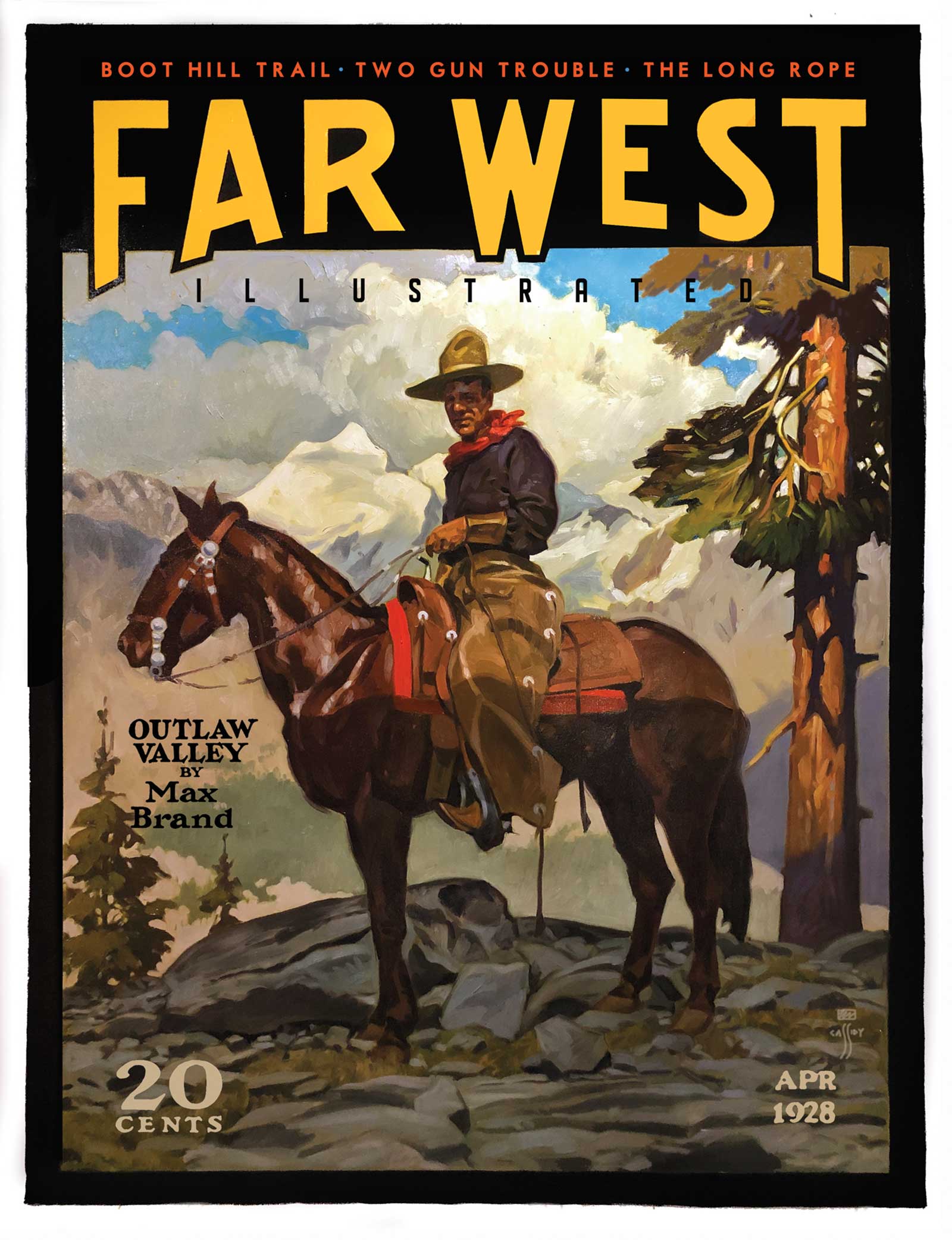 Far West, Outlaw Valley, oil on linen, 70 x 52”
His Western paintings are scheduled to be shown at Gerald Peters Gallery in Santa Fe, New Mexico, July 17 through September 26.
“I call these paintings Western Pulp,” he explains. “I like the look of the old Western dime novels, as well as early Western movie posters from the 1920s and ‘30s. I get a kick out of the covers and their over-the-top presentations. I thought it would be neat to be able to take some of the headers and put my spin on it, putting the header with some of my art and the titles of the old stories. These works are my idea of what the cover of a dime novel would look like on the scale of the old Western movie posters. My works draw on these rich and varied sources. Where I live on the eastern side of the Cascade Range in Oregon the cowboy life still exists. It’s called the Oregon Outback. The romance of the West is still here. Beauty, romance and adventure still exist if you take the backroads, slow down and spend some time to soak it in.”
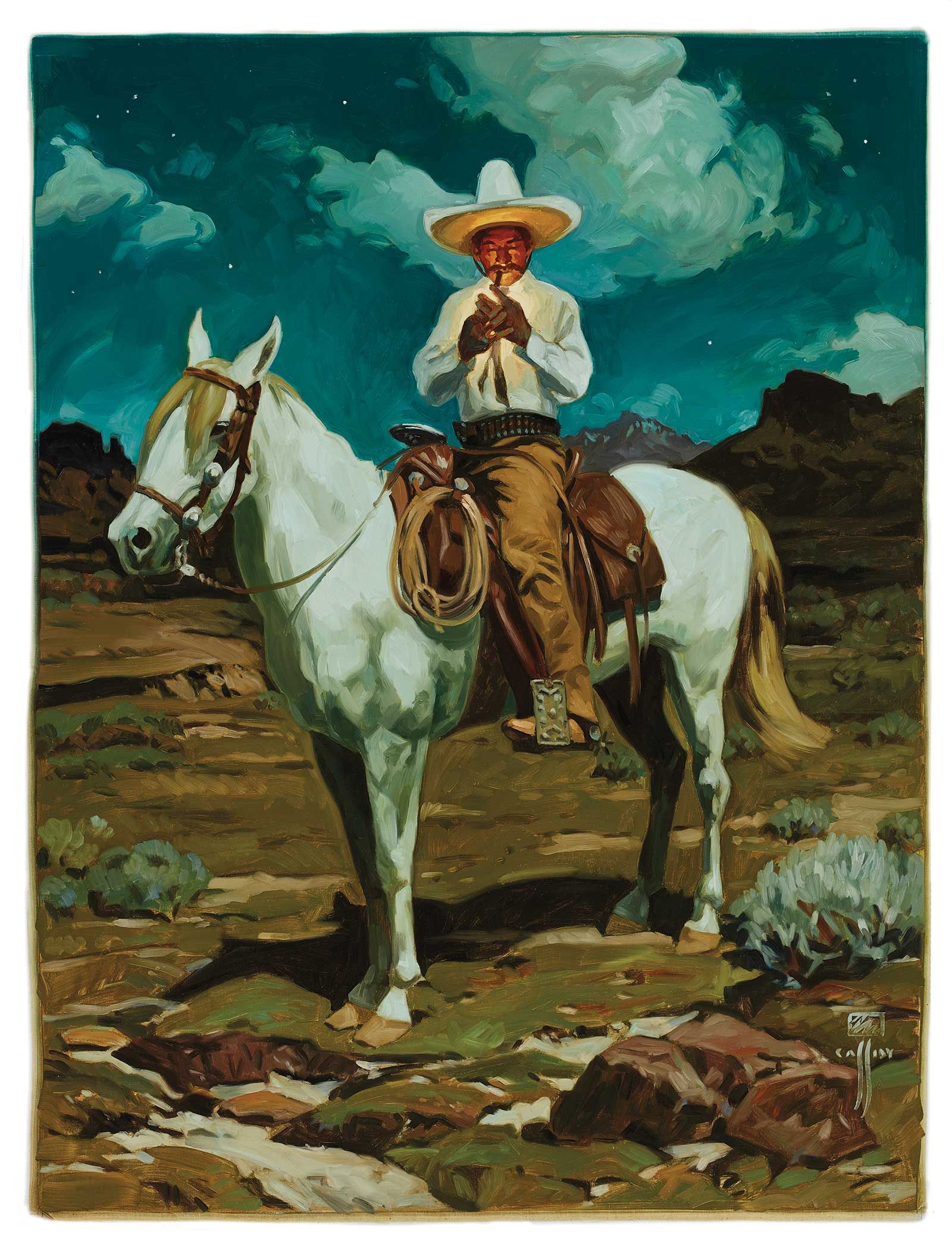 Ode to F. T. Johnson, oil on linen, 48 x 36”
Cassidy has assembled a collection of artifacts and old photos that are references for his paintings. He sometimes “mixes and matches” elements from photos that have the same light source and places them in a setting “from out in the middle of nowhere.” He found a black-and-white photo from 1909 of Chase at Dawn (Oglala Sioux). “The challenge was, what are the colors, but I had most of the reference material on hand,” he says. Steeped in the tragic stories of Native Americans around the turn of the 20th century, he paints portraits of pride and power.
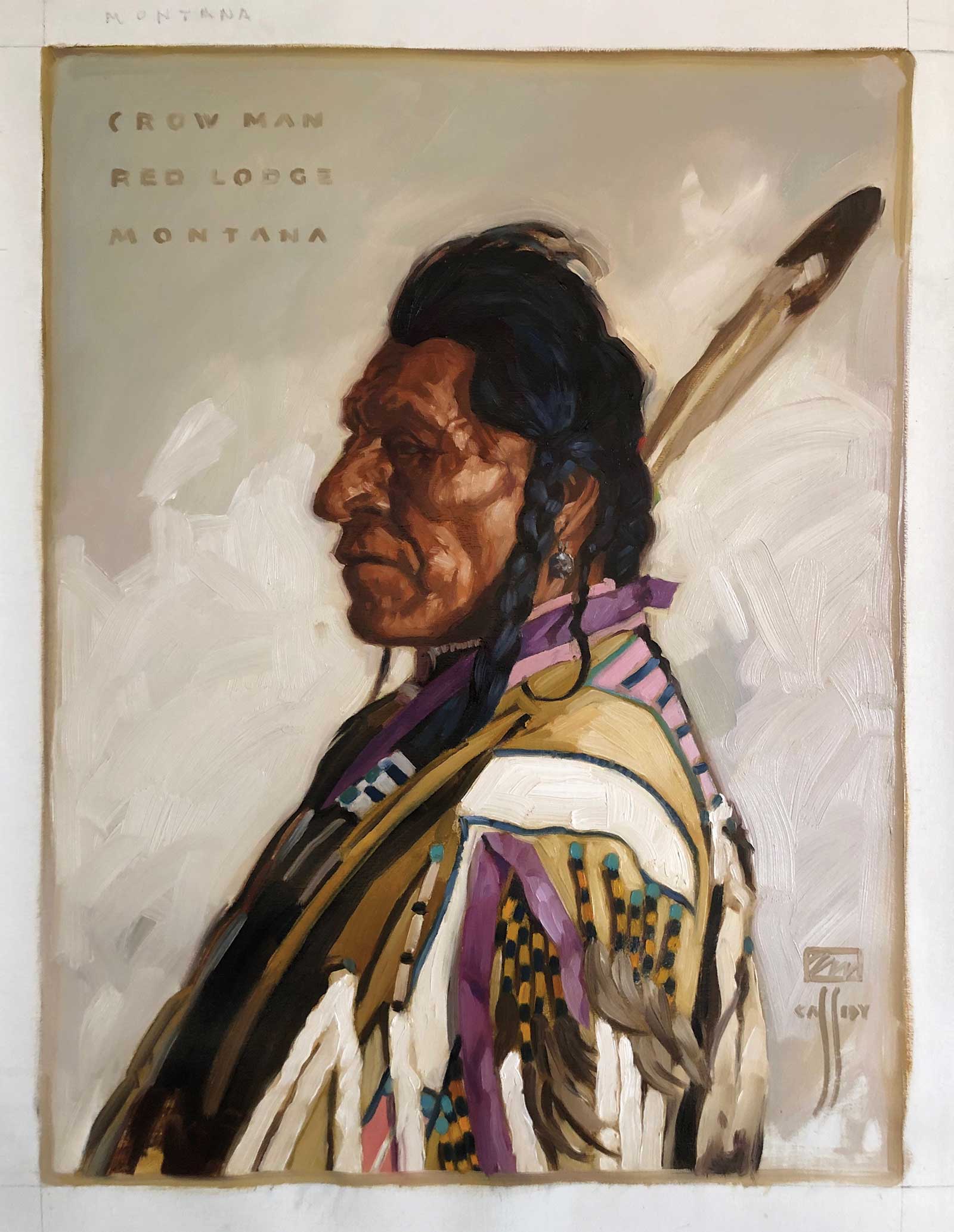 Crow Man, Red Lodge, Montana, oil on linen, 29 x 22”
Cassidy’s father died when he was young after the family had moved from Massachusetts to California. He enrolled in the art department at Palomar College in San Marcos “because it was cheap. But I found out it was a great art department. The teachers were figurative painters who had left the departments that were focused on abstraction. They became friends and champions for me. I was able to become what I dreamt to be…out of nothing. I believed I was supposed to be an artist and that God would make a way for me. People have helped me at every crucial point and have promoted me. It still happens,” he says.
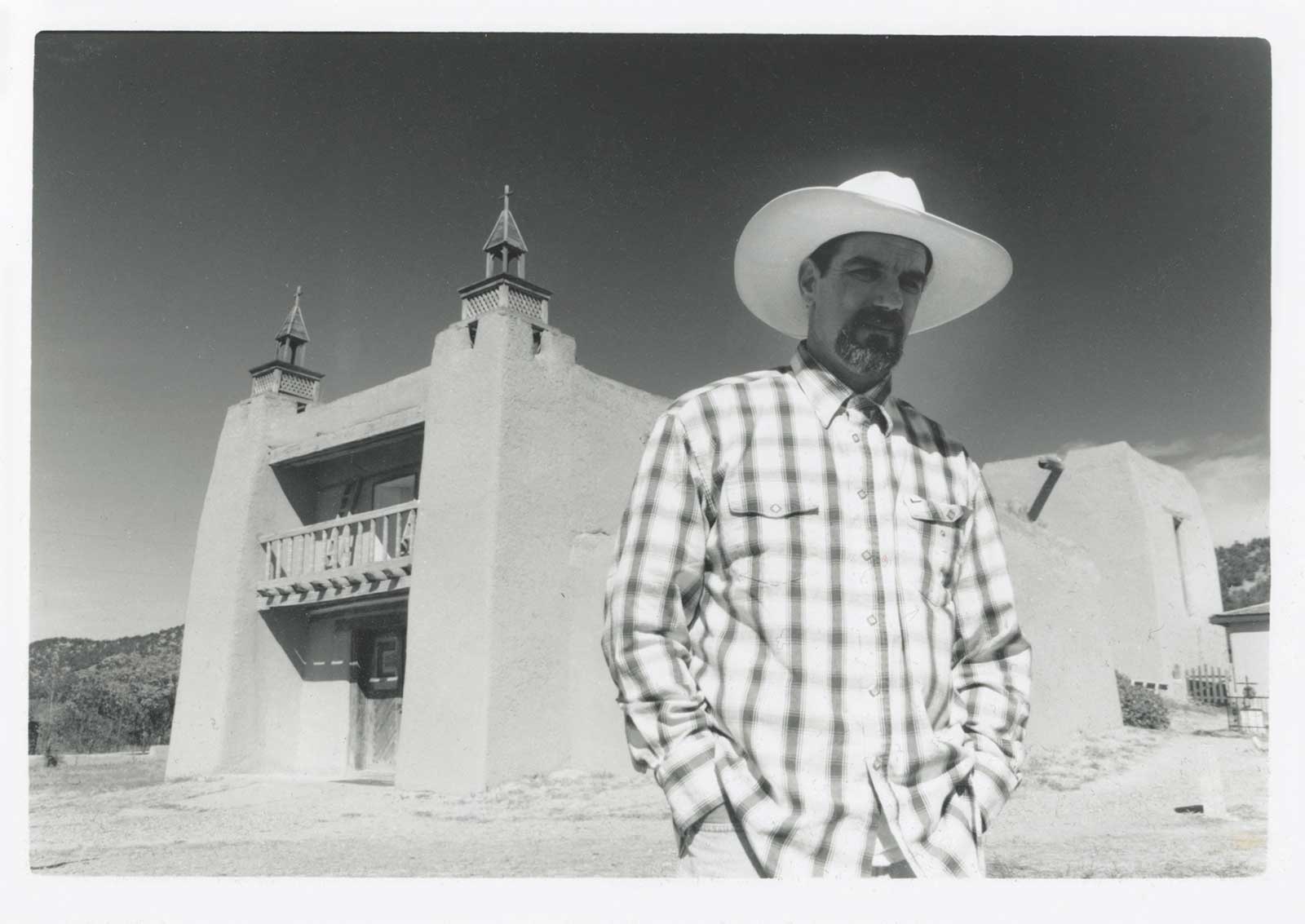 Michael Cassidy in New Mexico.
“Everyone has gifts in them that are world-class and how few of them get the opportunity to see those things realized,” Cassidy says.
“I live with beauty. I’m a minster of beauty for a world that doesn’t get enough of it. That’s an artist’s job.”
Far West: Paintings by Michael Cassidy
July 17-September 26, 2020
Gerald Peters Gallery, 1005 Paseo de Peralta, Santa Fe, NM 87501
(505) 954-5700, www.gpgallery.com
Powered by Froala Editor