If you’ve ever seen a white-tailed deer running across a field or through the woods, you know what “high-tailin’” means. The underside of their tails is white, which they display when they’re on alert. Cattle curve and raise their tails when they’re on alert as well.
Bill Nebeker began whittling animals when he was growing up in Prescott, Arizona. Today he is a member of the Cowboy Artists of America, an organization that has awarded him gold and silver medals. His father was a rancher and Nebeker has spent nearly 50 years bringing the activities of ranching to life in his sculpture.
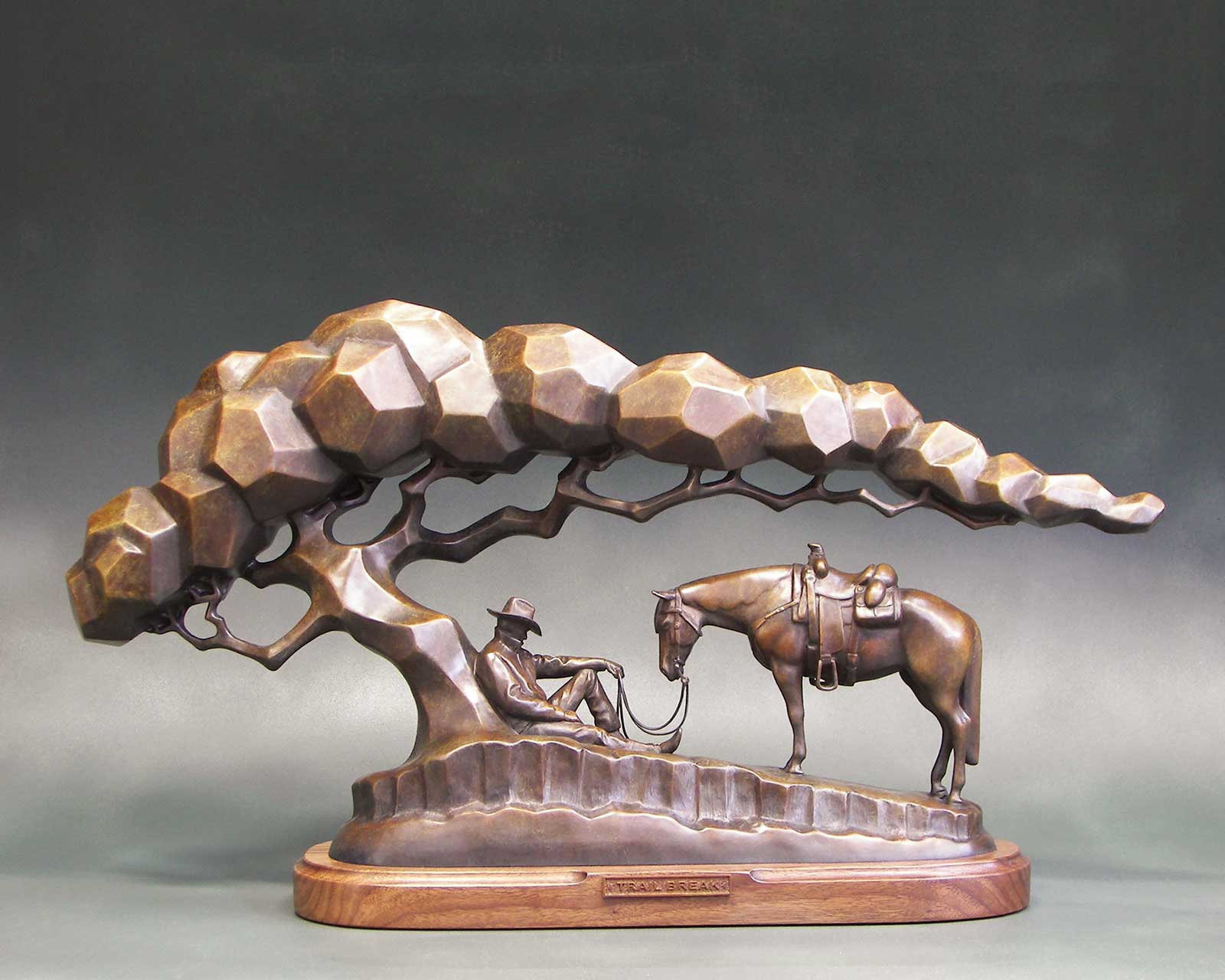 Legacy Gallery, Trail Break, bronze, ed. of 10, 13 x 27 x 7", by Rick Terry.
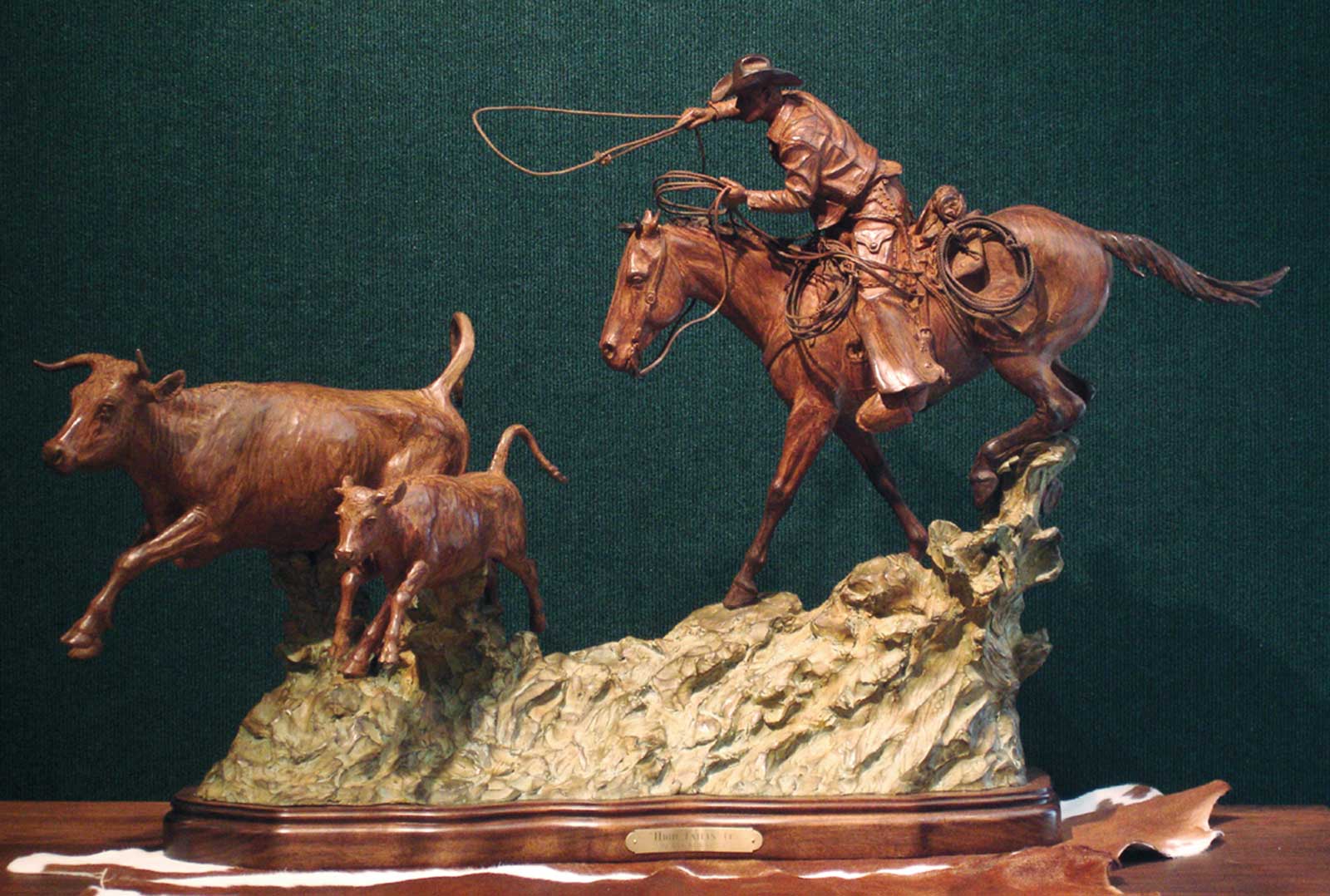 Trailside Galleries, High Tailin’ It, bronze, ed. of 30, 27 x 45 x 16", by Bill Nebeker.
The mission of the CAA is “to authentically preserve and perpetuate the culture of Western life in fine art.” Nebeker developed a reverence for this way of life through his father who was a cowboy in Prescott. The fine art aspect of his work began in 1964 when he saw an exhibition of sculptures by George Phippen (1915-1966) who was a co-founder of CAA. Nebeker set to work and when he showed it to Phippen’s widow, she hired him to work with her son to learn bronze casting.
High Tailin’ It depicts a cowpuncher hired to gather wild cattle missed in a roundup. The cattle’s determination to elude capture is no match for the cowboy’s own determination. In his sculpture, Nebeker shows the cowboy aiming his lasso first at the cow because if he captures her, he knows the calf will stay nearby.
Horses and cowboys need to rest. Rick Terry portrays this rare moment in his sculpture Trail Break.
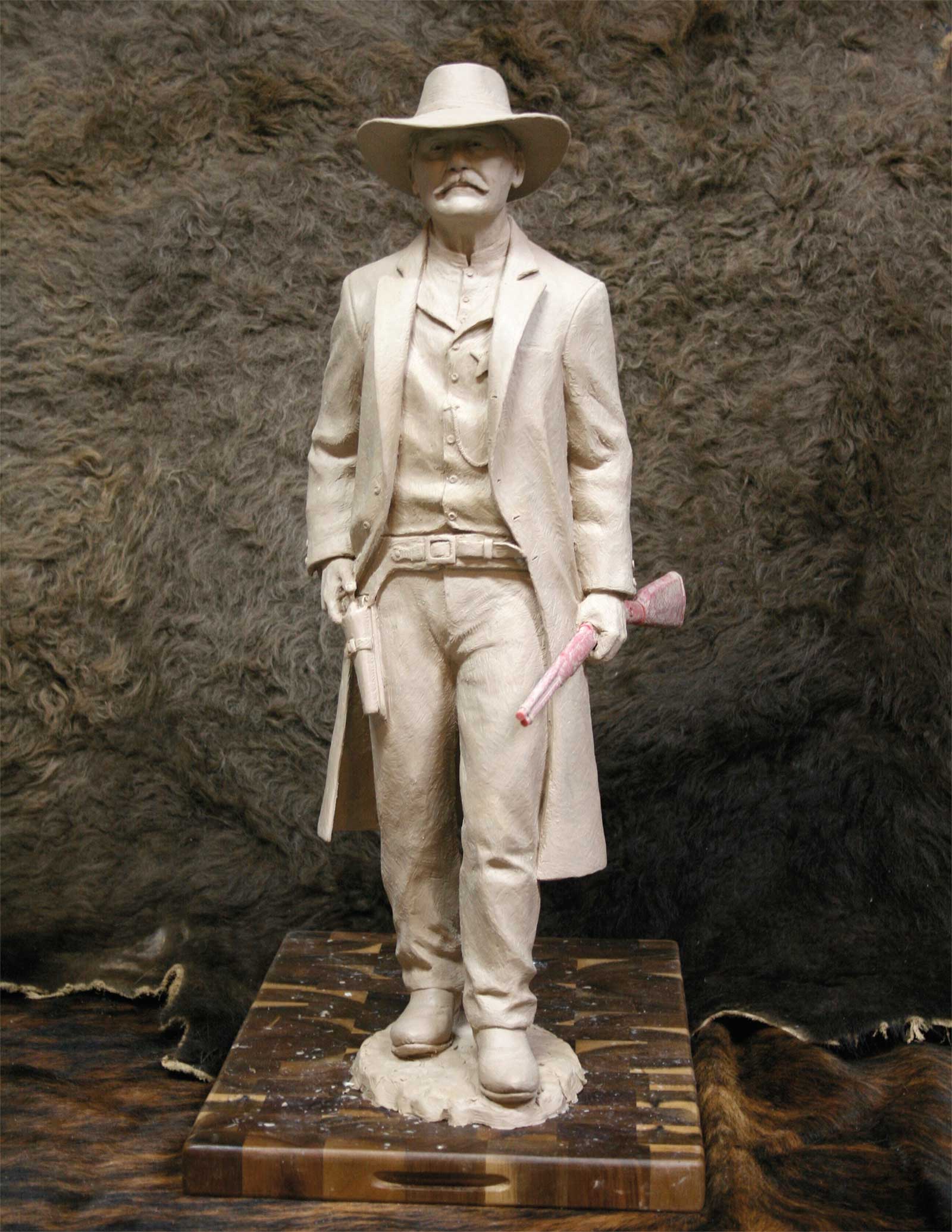 Raymond Gibby, Big Iron, bronze (still in clay process), ed. of 20, 26 x 9 x 12"
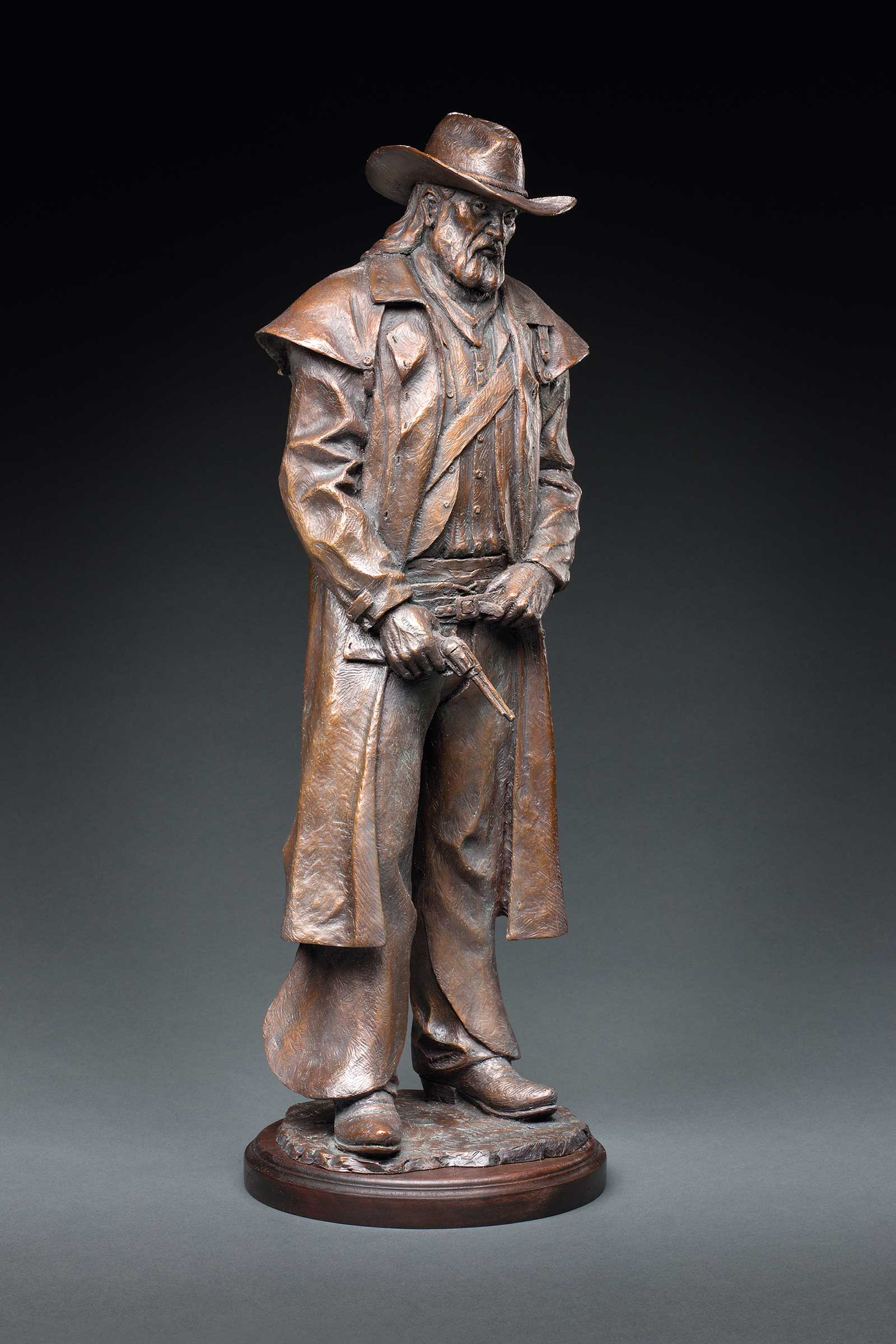 Raymond Gibby, Still Standing, bronze, ed. of 20, 25 x 11 x 12"
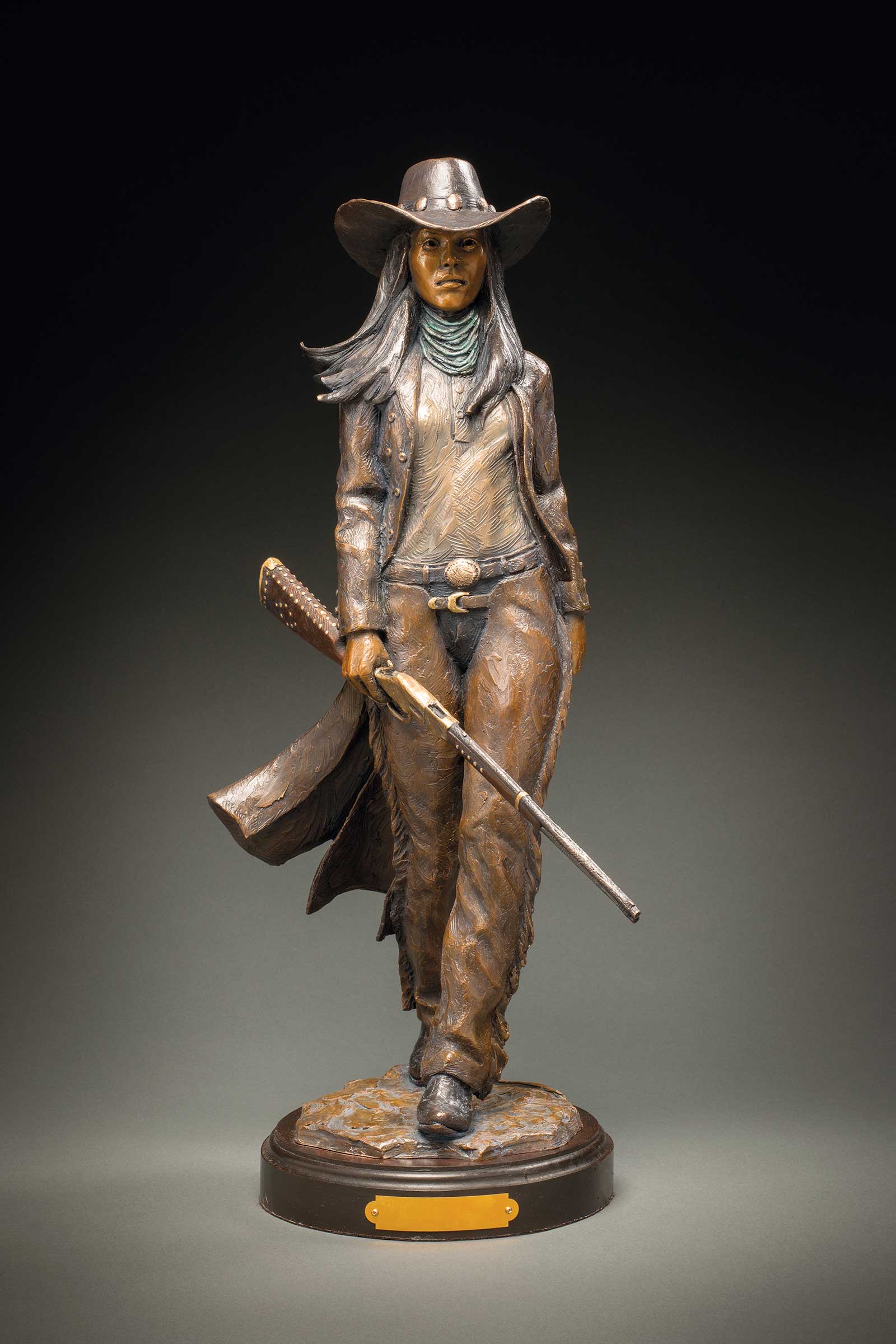 Raymond Gibby, Spirit of Strength, bronze, ed. of 20, 26 x 11 x 12"
For 10 years, Terry was a rancher in Montana. His art career took off when he secured a job in a foundry in Sedona, Arizona, and he graduated from firing his clay sculptures at a local pottery shop. Along the way he worked in the oil fields to make money while riding horses and bulls in rodeos. He received a boost from Blaine Gibson (1918-2015), an animator and sculptor for Walt Disney. “It was on Blaine’s recommendation to Disney,” he says, “that I was able to work for many years on sculptures for Disney’s theme parks.”
Trail Break embodies the stylized sleekness of Art Deco and a bit of cubism, characteristics that often appear in his sculptures. The cubist leaves and branches of the tree diminish toward the right and the horse faces left, bringing the eye back to the dozing cowboy.
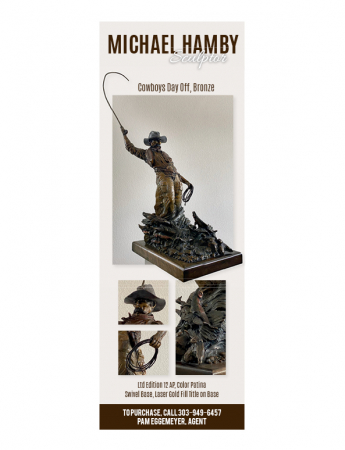
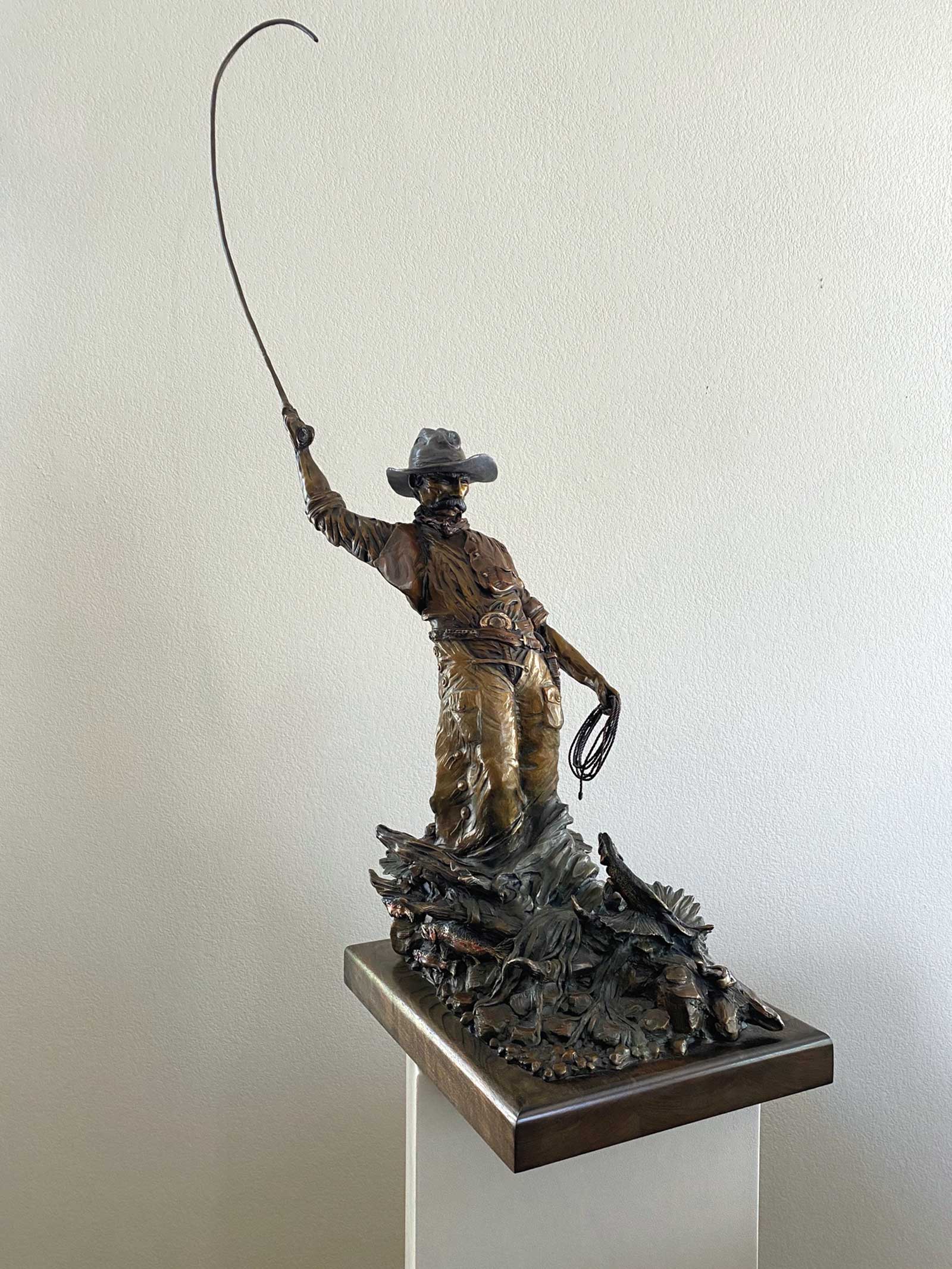 Michael Hamby, Cowboys Day Off, color patina bronze with walnut swivel base with gold fill title, limited ed. 12, 48 x 16 x 12". Available only through agent Pam Eggemeyer.
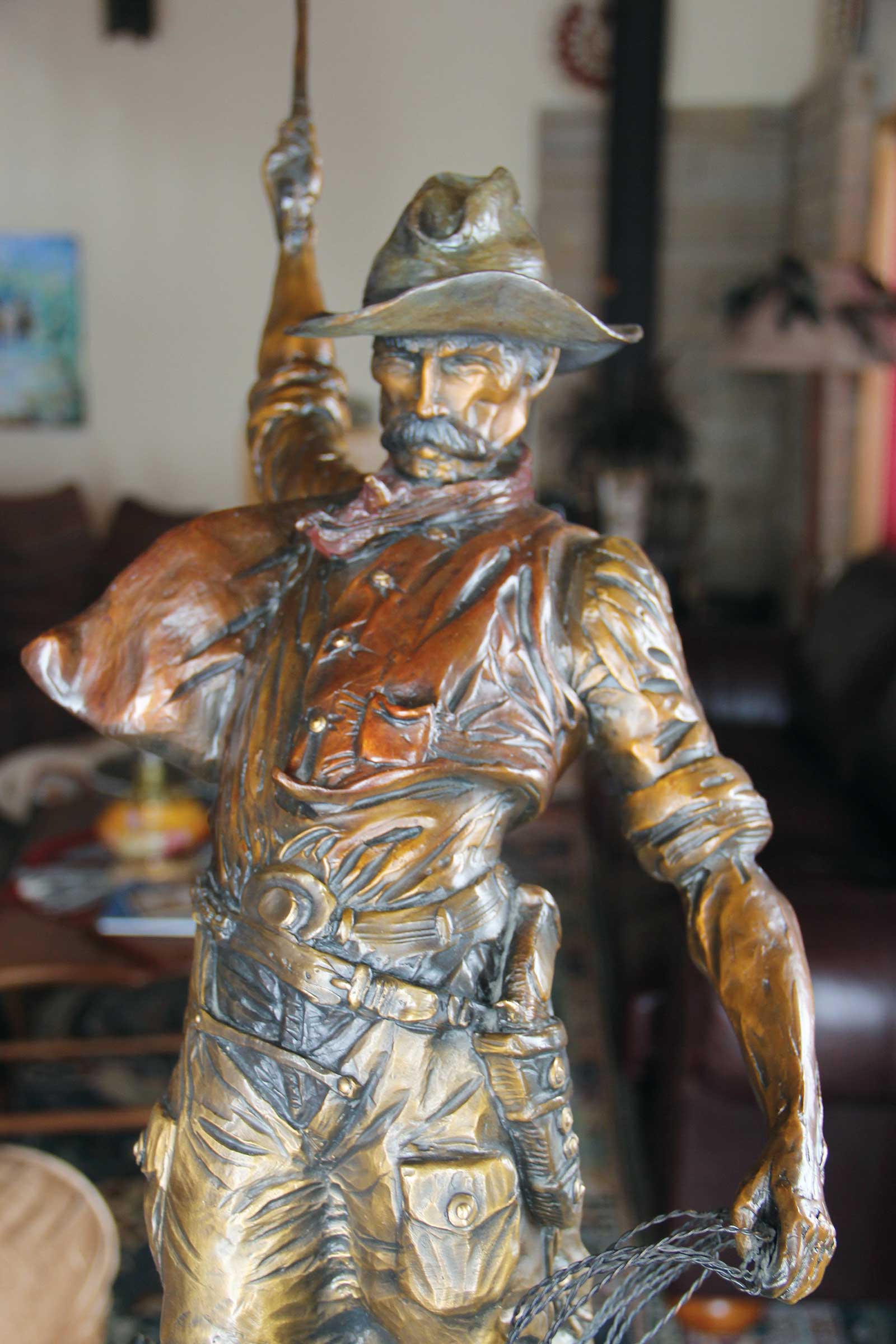 Michael Hamby, Cowboys Day Off (detail), color patina bronze with walnut swivel base with gold fill title, limited ed. 12, 48 x 16 x 12". Available only through agent Pam Eggemeyer.
Throughout this special section collectors can explore the talents of other Western sculptors, from bronze artists to wood carvers, crafting three-dimensional representations of Western life.
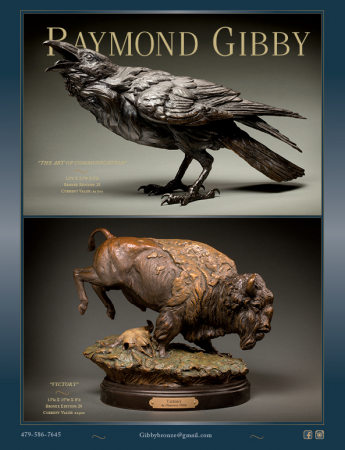
Bronze sculptor Raymond Gibby is well-known in the world of Western sculpture, creating both miniatures and larger-than-life figures. “It isn’t hard to find good subject matter since the history of the West is so rich with good stories. This is why I love this genre,” he says. “Creating and collecting this type of art easily takes us away to another time and place when the pursuit of freedom and a better life motivated incredible actions of grit, bravery and sacrifice.”
Available through agent Pam Eggemeyer is sculptor Michael Hamby’s work Cowboys Day Off. Hamby has a unique combination of talents he has actively pursued throughout his life—artist, musician, published illustrator and retired professional football player. Born and raised in Utah, Hamby has always had an appreciation for Native American culture, wildlife and the history that shaped the land that surrounded him, which he strives to incorporate into his art. “All my intensity and energy goes into my art now. I’ve found what I love to do,” says the artist.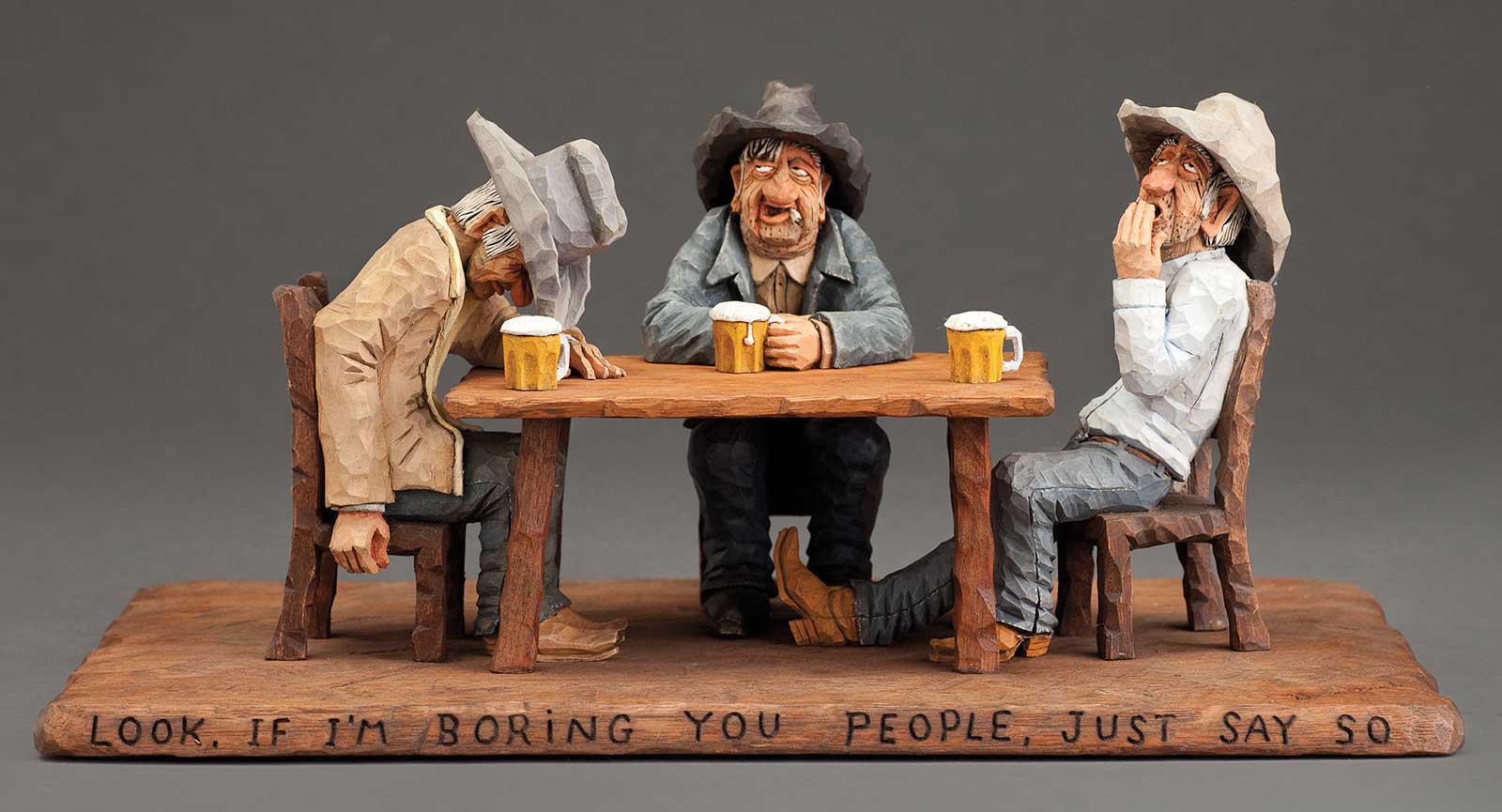 Museum of Western Art, Jenkins let’s go out and raise a little hell, woodcarving, 7½ x 12½", by Gene Zesch.
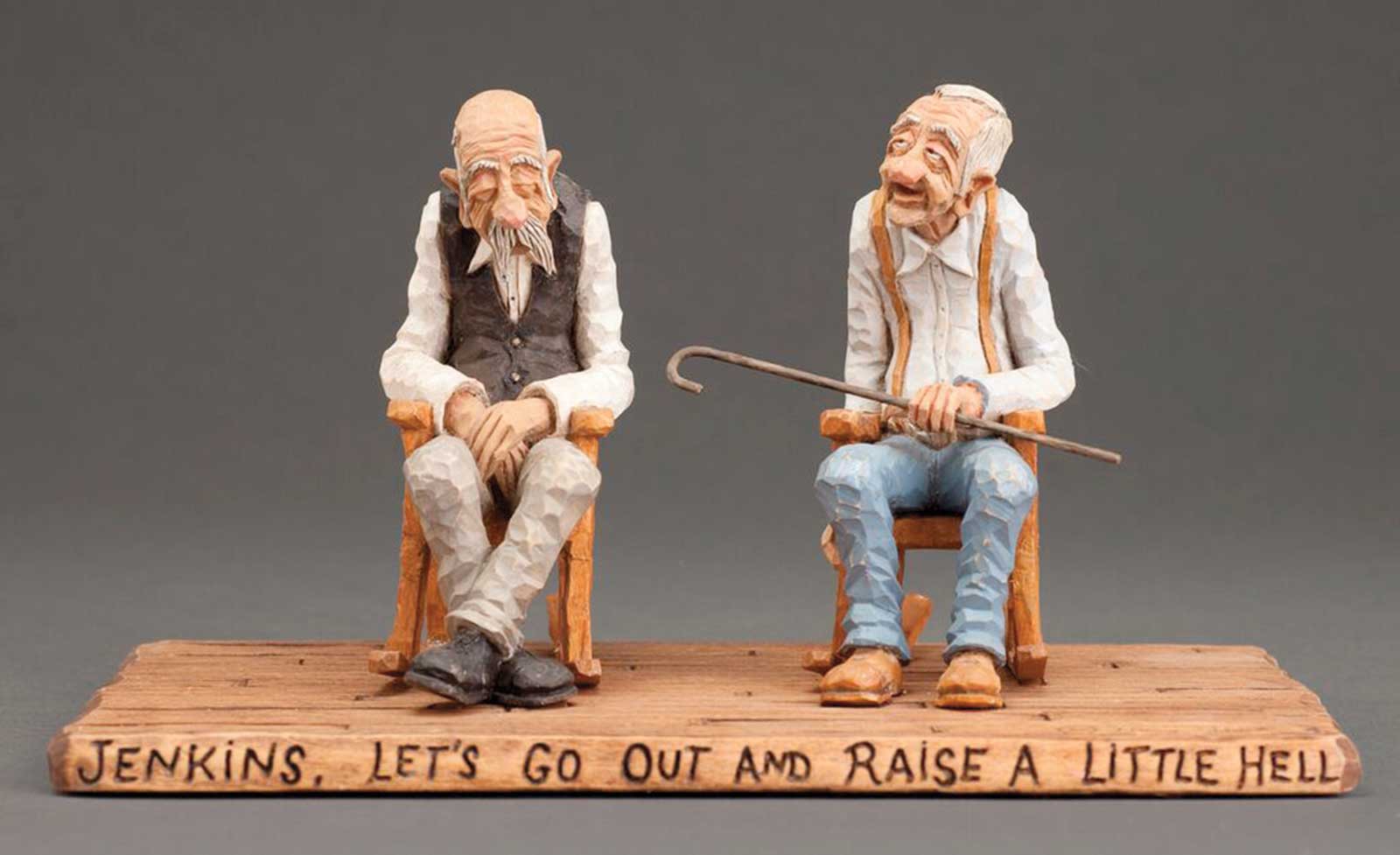 Museum of Western Art, Jenkins let’s go out and raise a little hell, woodcarving, 7½ x 12½", by Gene Zesch.
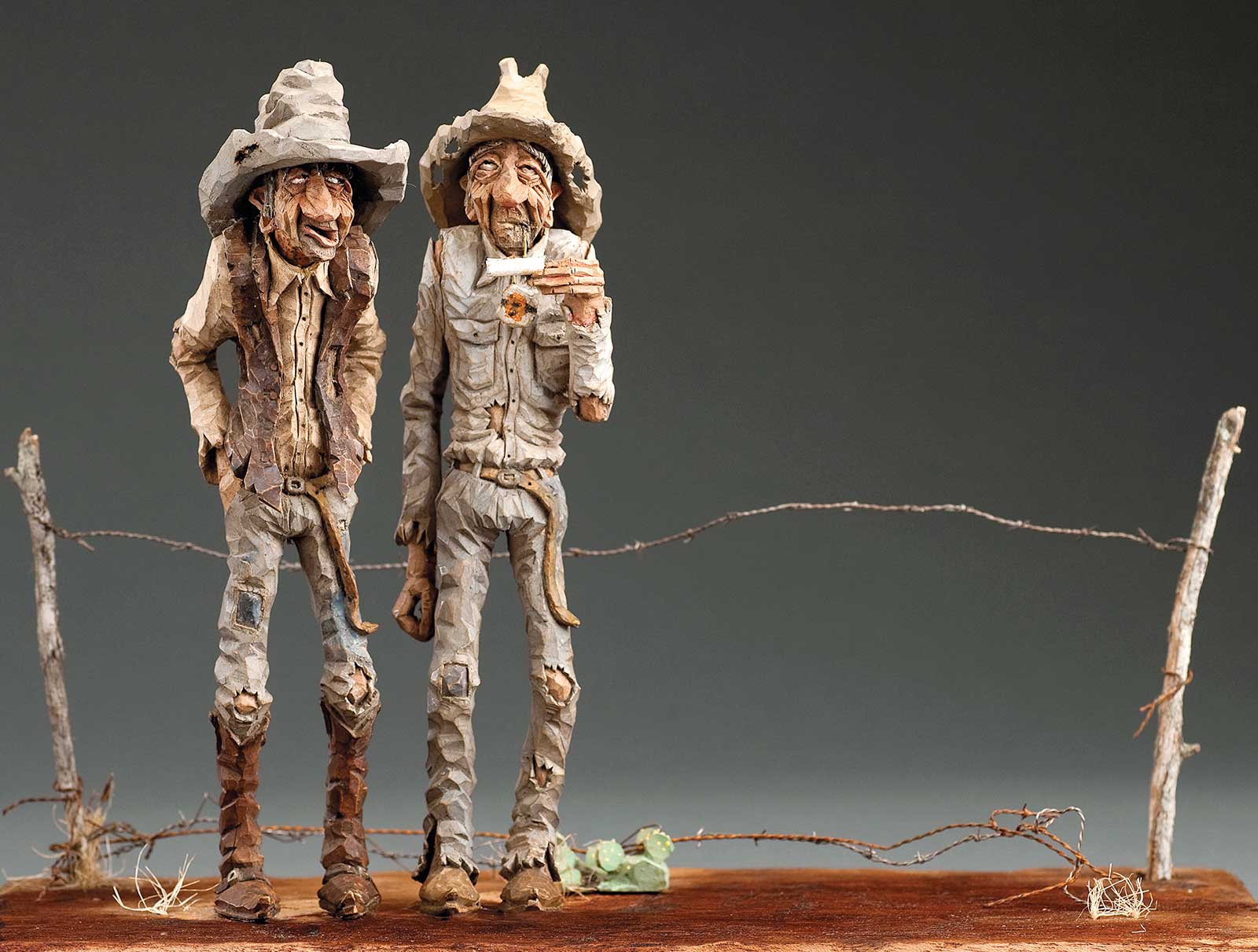 Museum of Western Art, Looks Like We’ll Just Have To Tighten Our Belts Again, 7½ x 15", by Gene Zesch.
The Museum of Western Art in Kerrville, Texas, holds an exhibition for the whimsical woodcarvings of Gene Zesch, titled Looks Like We’ll Just Have to Tighten Our Belts Again, running through August 1. Zesch started working as an artist in 1954 and has made a living out of carving caricature figurines of Texas cowboys and cattlemen. His work has been featured in one-man shows at prominent national museums and has been displayed in special exhibits at the Smithsonian Institution’s National Portrait Gallery and museums worldwide. The exhibition at the Museum of Western Art will be Zesch’s fifth one-person museum exhibition and will feature more than 50 of his original wood carvings.
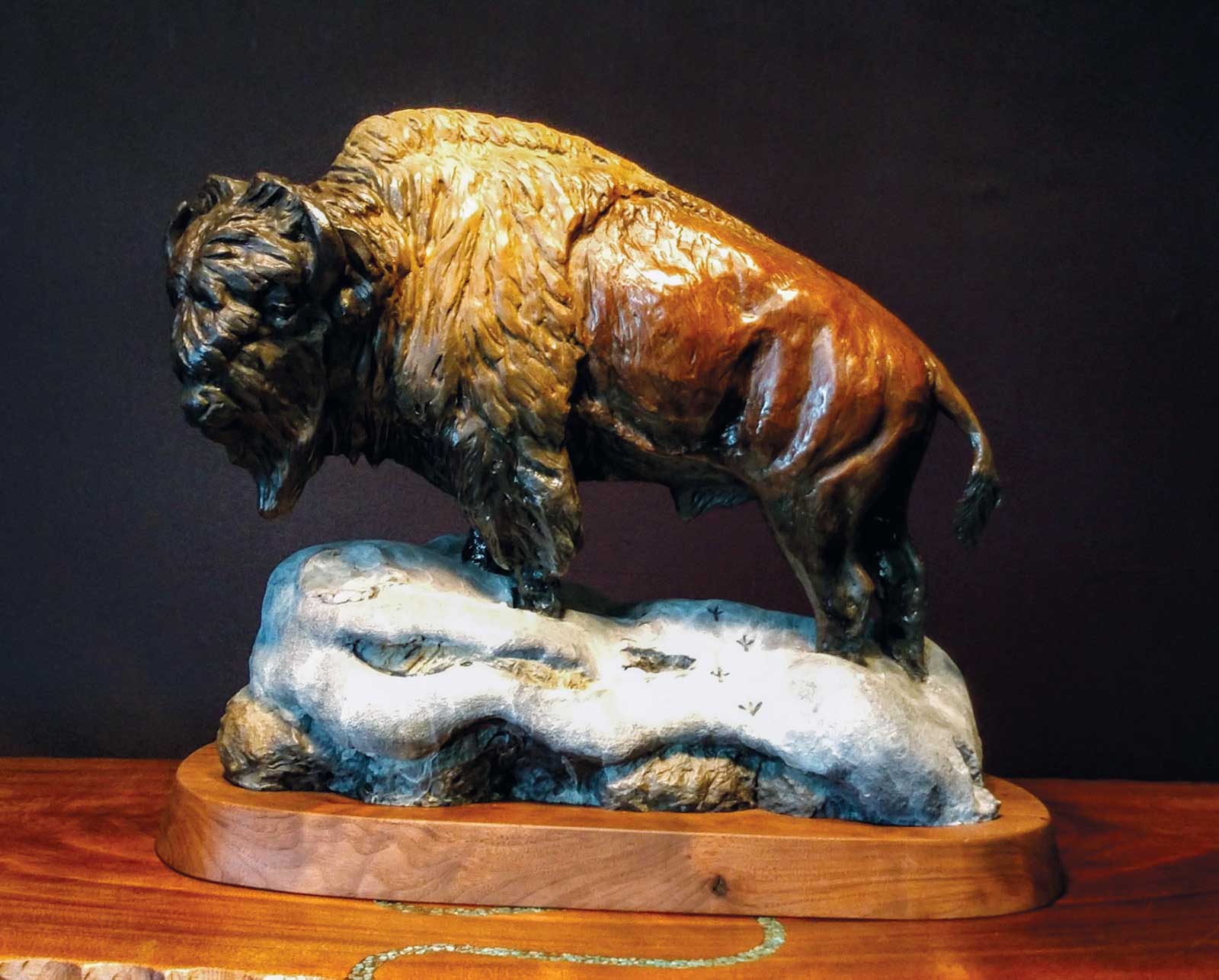 Daniel Parker Bronze, Early Snow, bronze, ed. of 49, 17 x 22 x 10", by Daniel Parker.
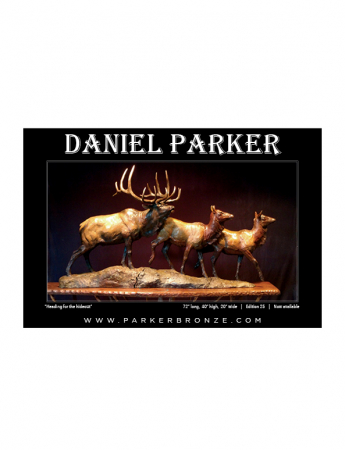
Daniel Parker of Daniel Parker Bronze captures the spirit of the West through his bronzes of cowboys on horseback, Native American figures and various North American beasts. Raised in northwestern Montana, Parker is a self-taught artist. His studio is the wilderness and National Parks that surround him. The artist has devoted much of his life to immersing himself in the woods, spending time with and studying each animal in its natural habitat.
Legacy Gallery in Scottsdale, Arizona, represents a range of esteemed Western artists, both historic and contemporary. Among the modern-day artists are sculptors Paul Moore, John Coleman, Scott Rogers and Tim Shinabarger, as well as Terry.
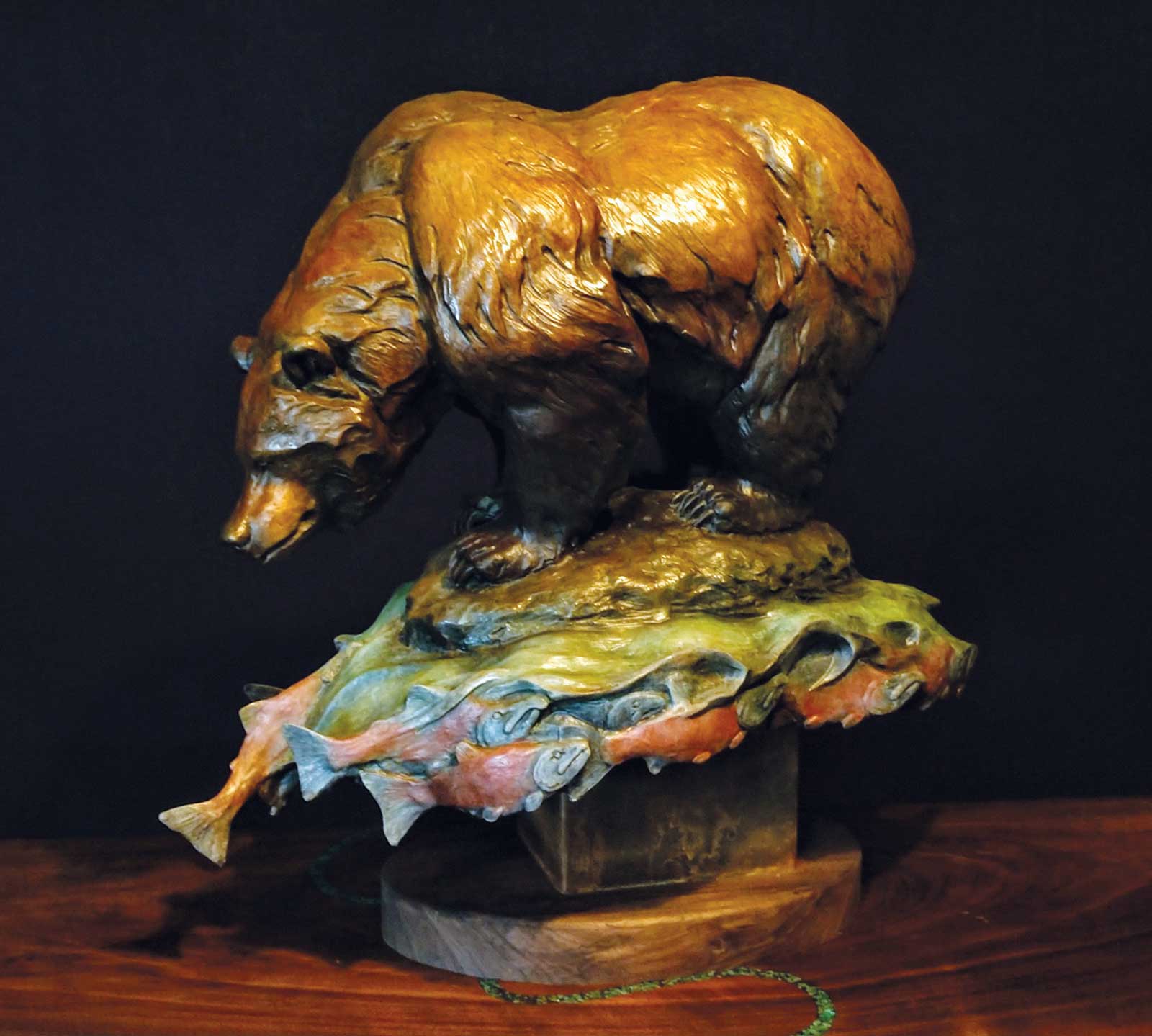 Daniel Parker Bronze, Just One More, bronze, ed. of 25, 17 x 23 x 10", by Daniel Parker.
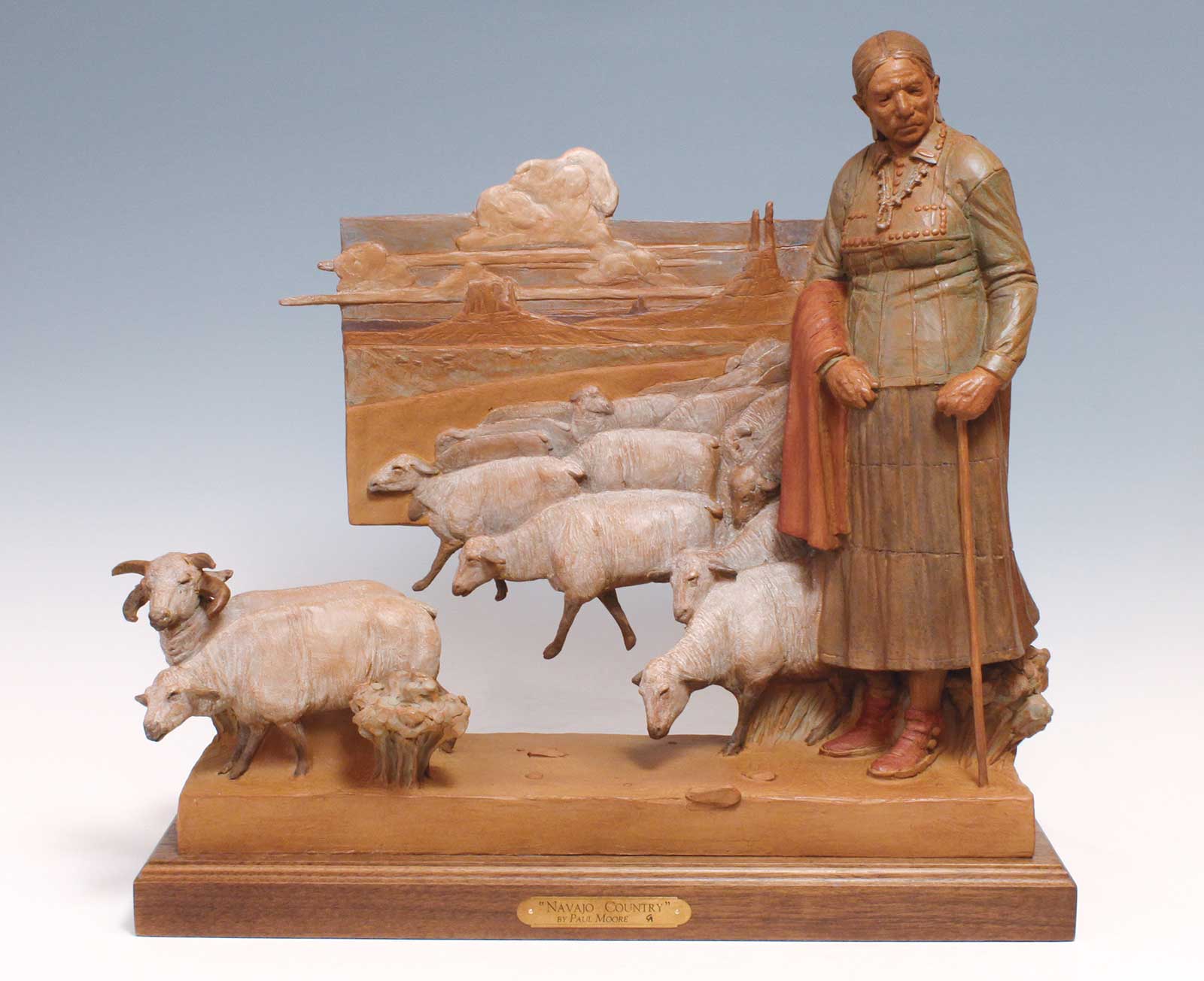 Legacy Gallery, Navajo Country, bronze, 20 x 21", by Paul Moore.
Moore is a fifth-generation Oklahoman and a citizen of the Muscogee (Creek) Nation. In the past 40 years, he has sculpted more than 150 commissions for numerous municipal, corporate, private and international collections. Moore is also a member of the CAA and a Fellow of the National Sculpture Society in New York City. He has garnered numerous awards including four Anne Marion Best of Show Award, the Stetson Award, two Ray Swanson Awards, four gold medals and five silver medals for sculpture at the annual Cowboy Artists of America Show & Sale. For the past 20 years Moore has been working on the Oklahoma Centennial Land Run Monument in Oklahoma City, one of the largest free-standing bronze sculptures in the world, which is approximately 365 feet in length with 45 life-and-a-half bronze elements.
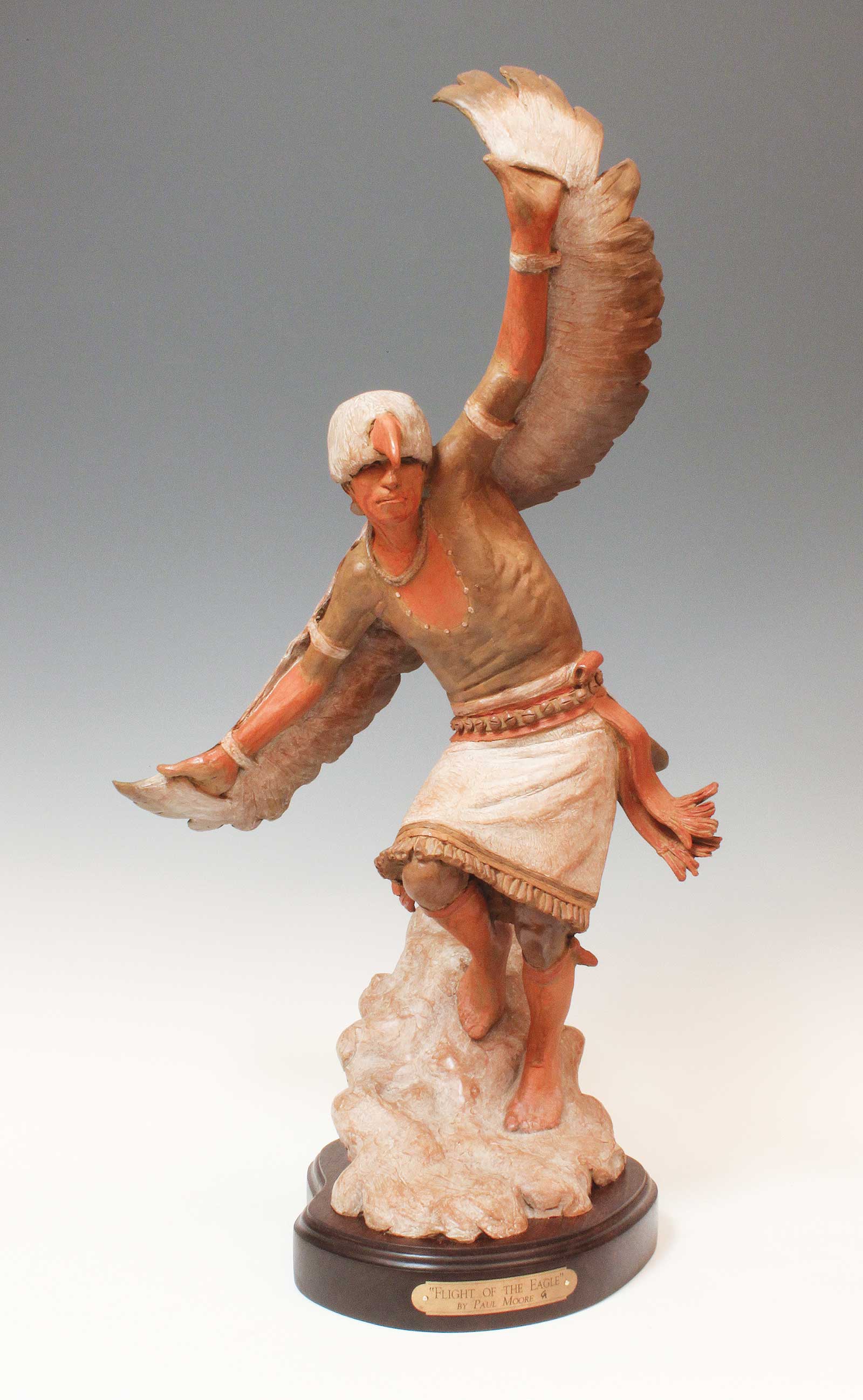 Legacy Gallery, Flight of the Eagle, bronze, 29 x 16 x 8", by Paul Moore.
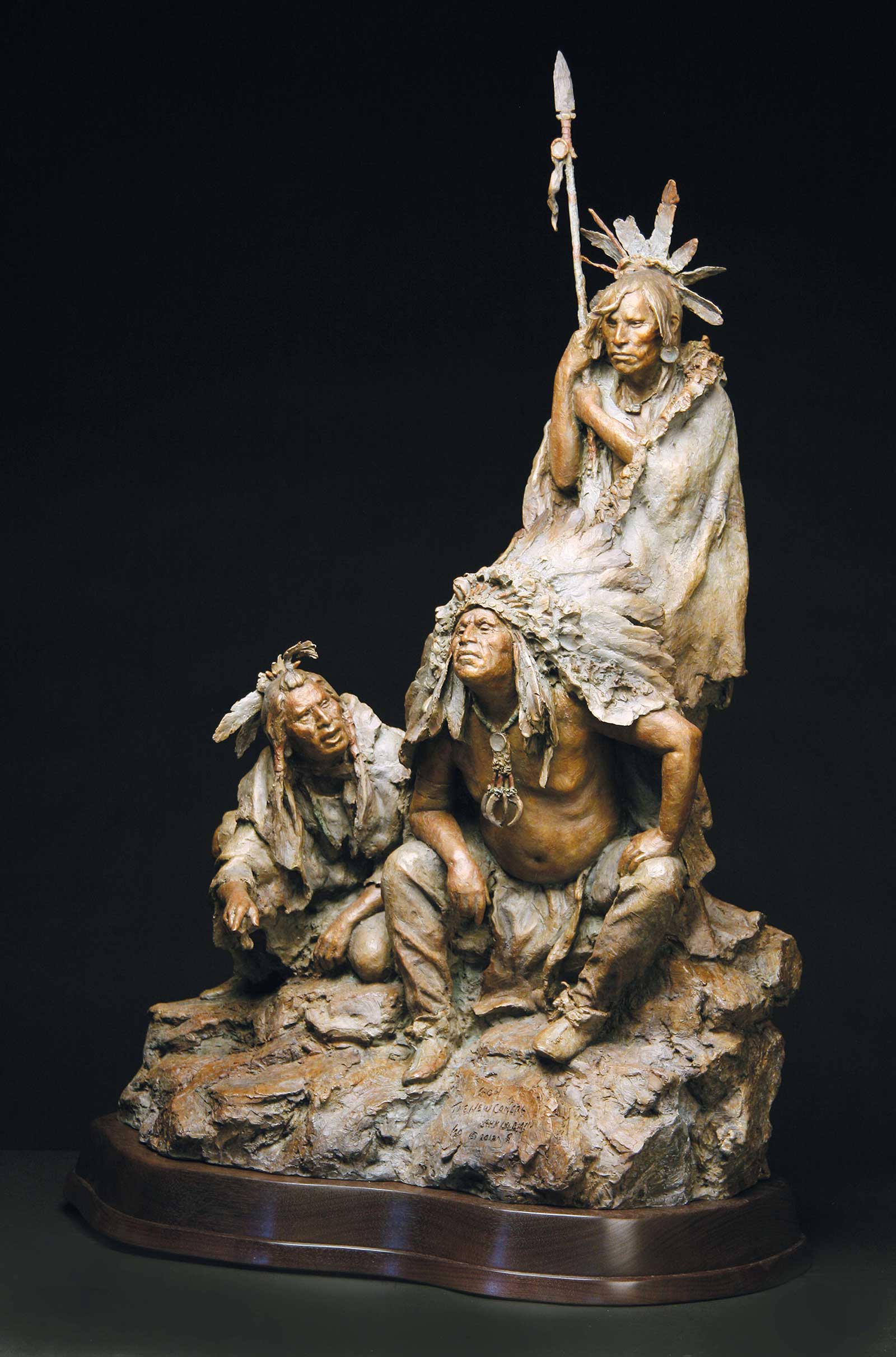 Legacy Gallery, 1804, The Newcomers, bronze, ed. of 20, 37 x 24 x 16", by John Coleman.
Coleman is also a member of the CAA and the National Sculpture Society. He most often portrays subject matter based on Native American imagery. He has a distinctive style of capturing mood and incorporating symbolism into each sculpture. He was awarded a scholarship to the Art Center for Design in Los Angeles but then became involved in his own contracting business, which satisfied his need to create things. In his 40’s, he decided to immerse himself in the field of fine art and has never looked back. He starts a sculpture with an emotional feeling, doing all of his sketches in clay. During the later stages when Coleman touches the clay with his tools, he is interacting with the material to create a feeling of life in the sculpture. His mission, he says, has to do with being a communicator more than being an artist. Coleman, who has won several prestigious awards, has become very successful at creating the emotional vision of telling a story.
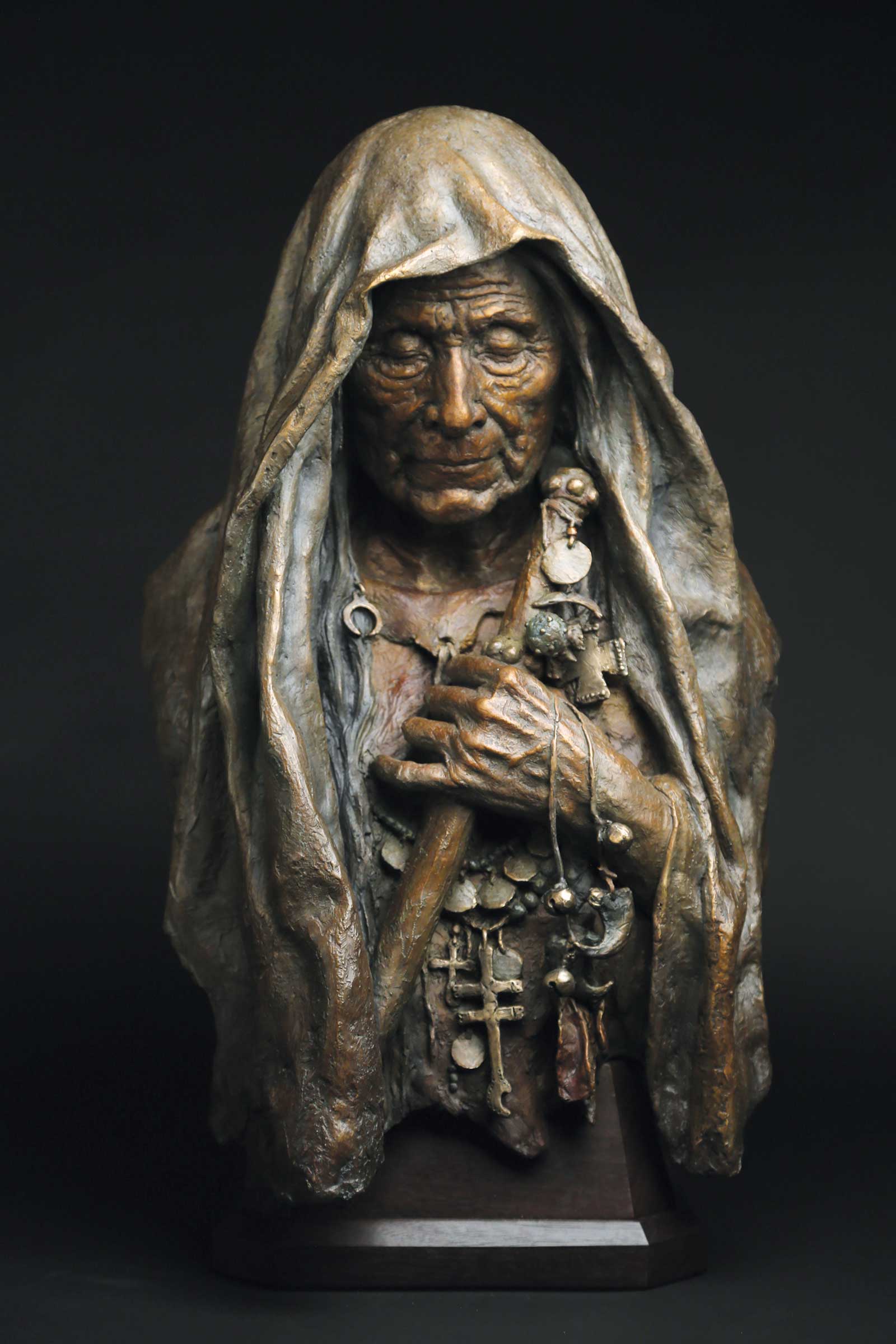 Legacy Gallery, Medicine of Mother Moon, bronze, ed. of 20, 25, x 14½ x 12", by John Coleman.
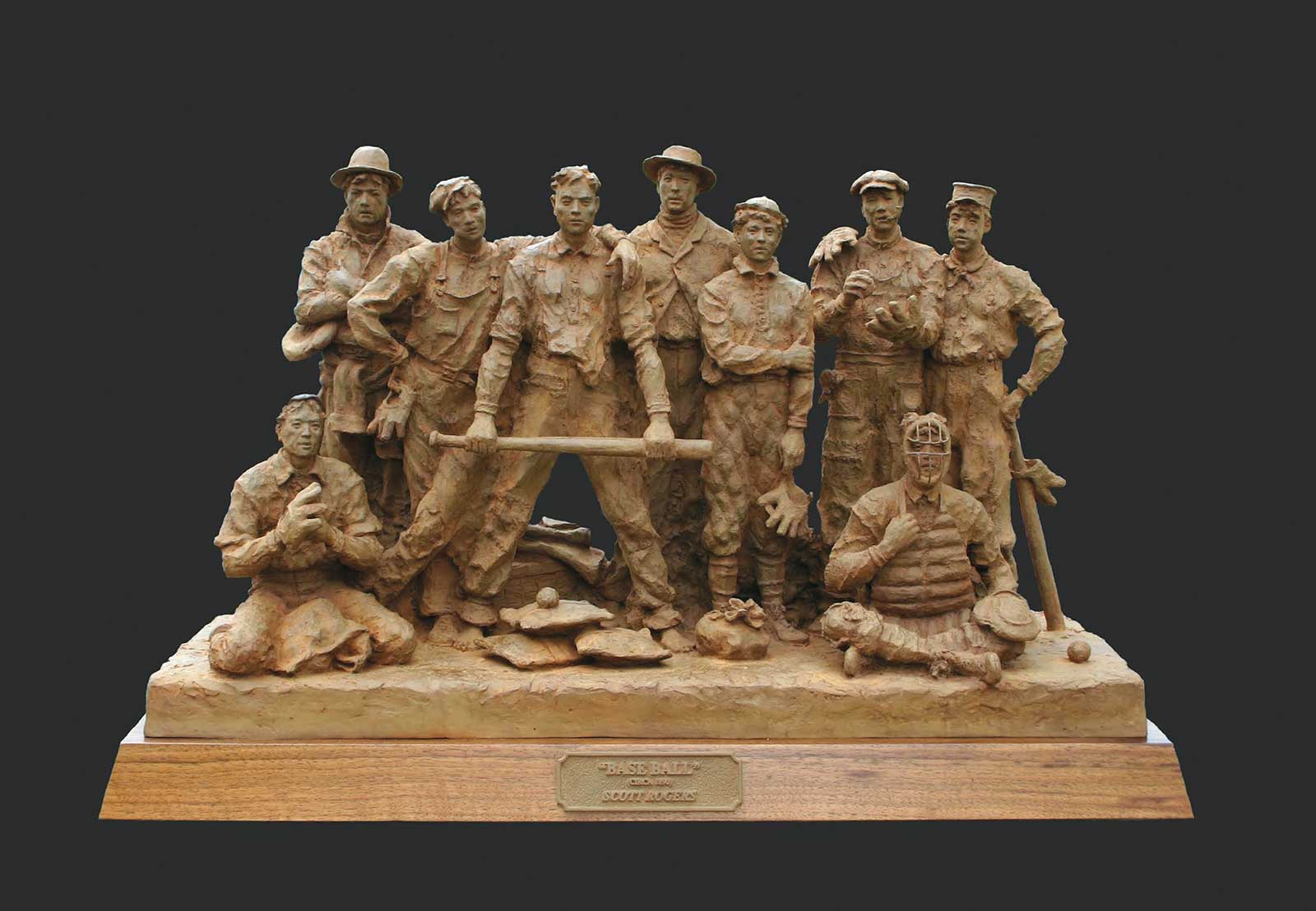 Legacy Gallery, Baseball, Circa 1890, bronze, ed. of 50, 19 x 32 x 11", by Scott Rogers.
Looking closely at Rogers’ sculptures, collectors will find a host of self-portraits. In some small measure, the artist’s unique experiences have found their way into bringing about the believability people feel in his work. After 20-plus years of sculpting full-time, Rogers is still an avid student and lover of the human form. He’ll slam on the brakes to see a unique face walking down the street. His eye, for instance, will not move from an old cowboy, who happens to be standing in some unique manner. Everyday poses catch his eye, all cataloged to later appear in his work.
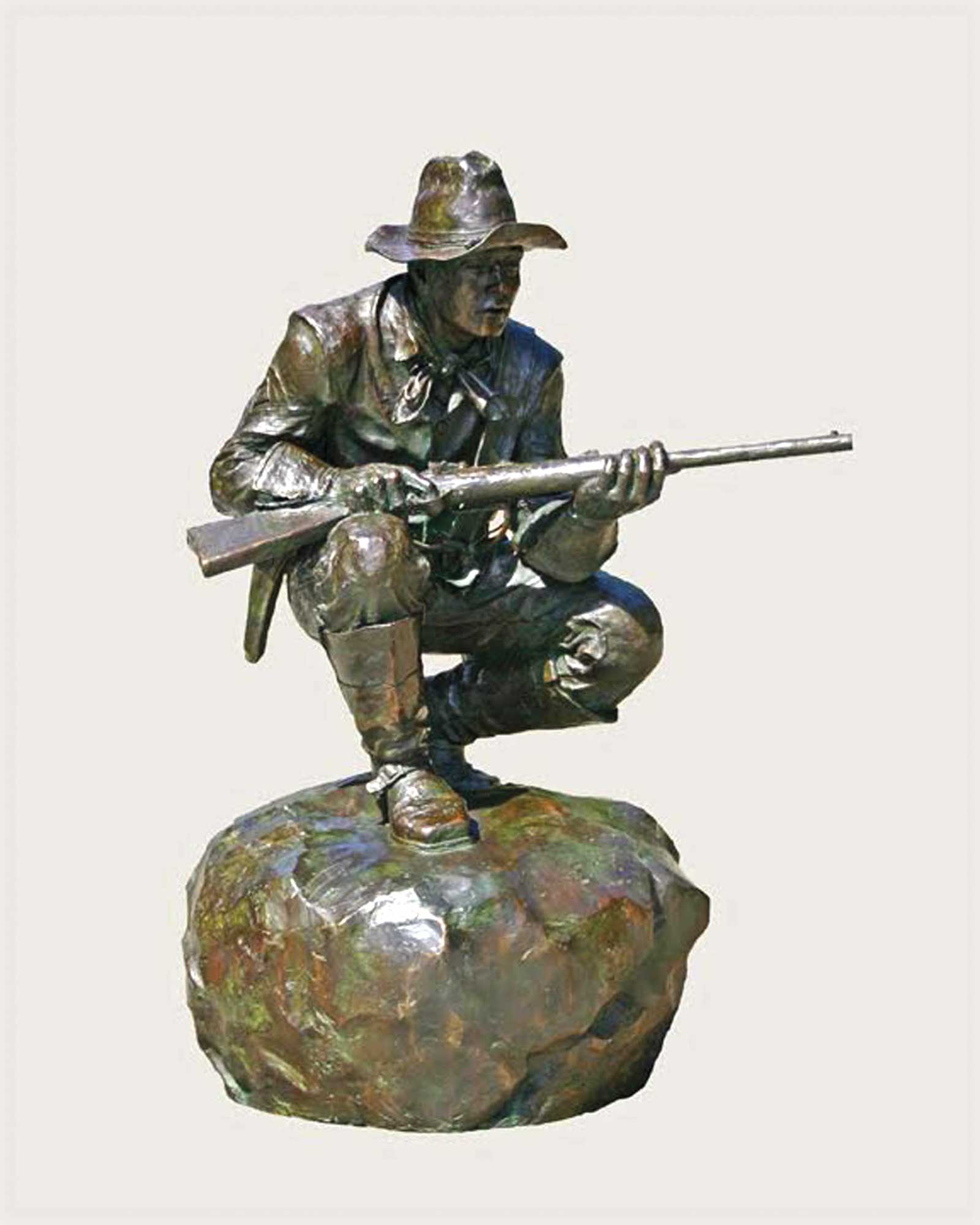 Legacy Gallery, The Trooper, bronze, ed. of 30, 42 x 30 x 21", by Scott Rogers.
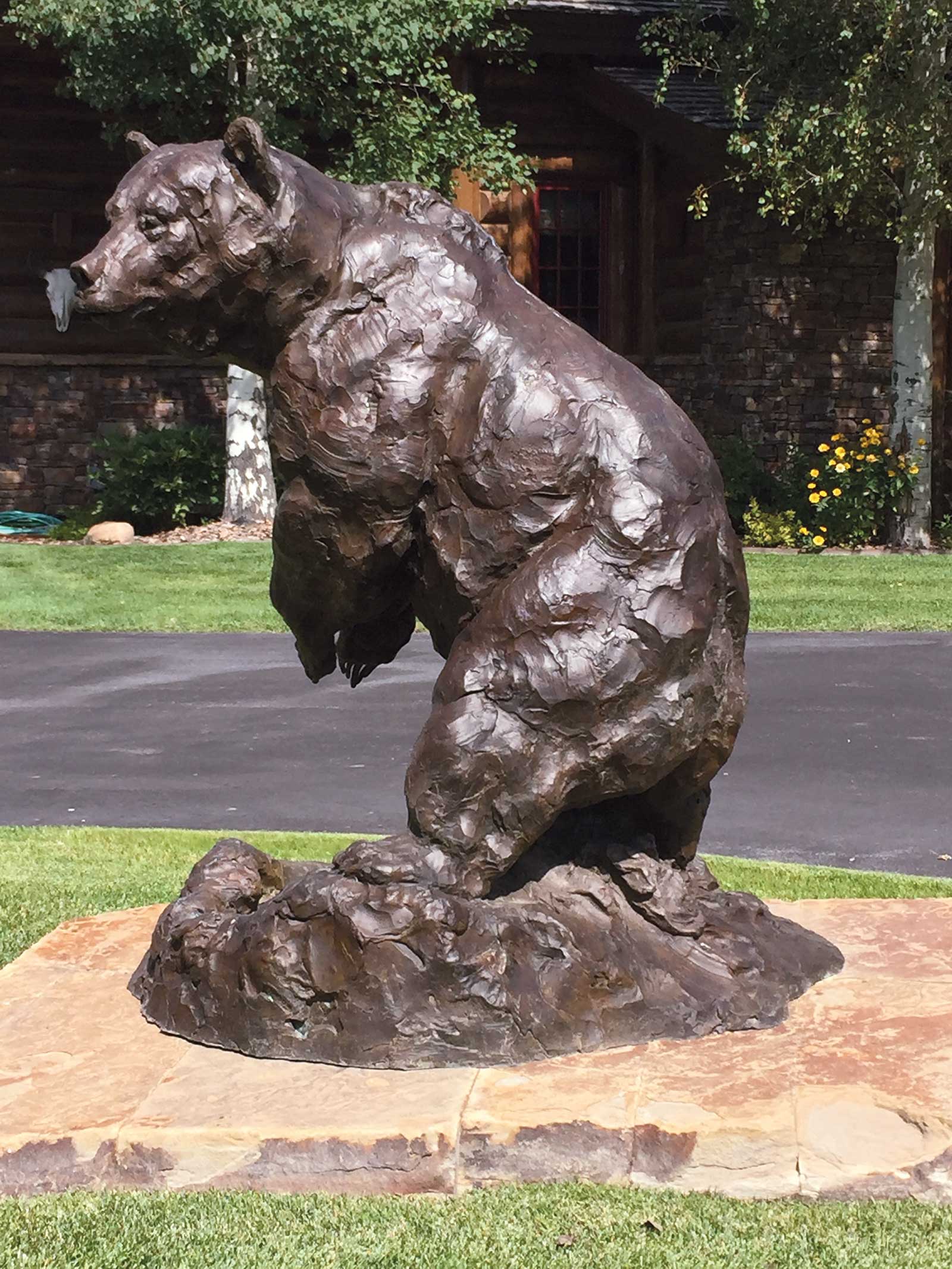 Legacy Gallery, Sik Sik Shell Game, bronze, ed. of 12, 58½ x 46 x 44", by Tim Shinabarger.
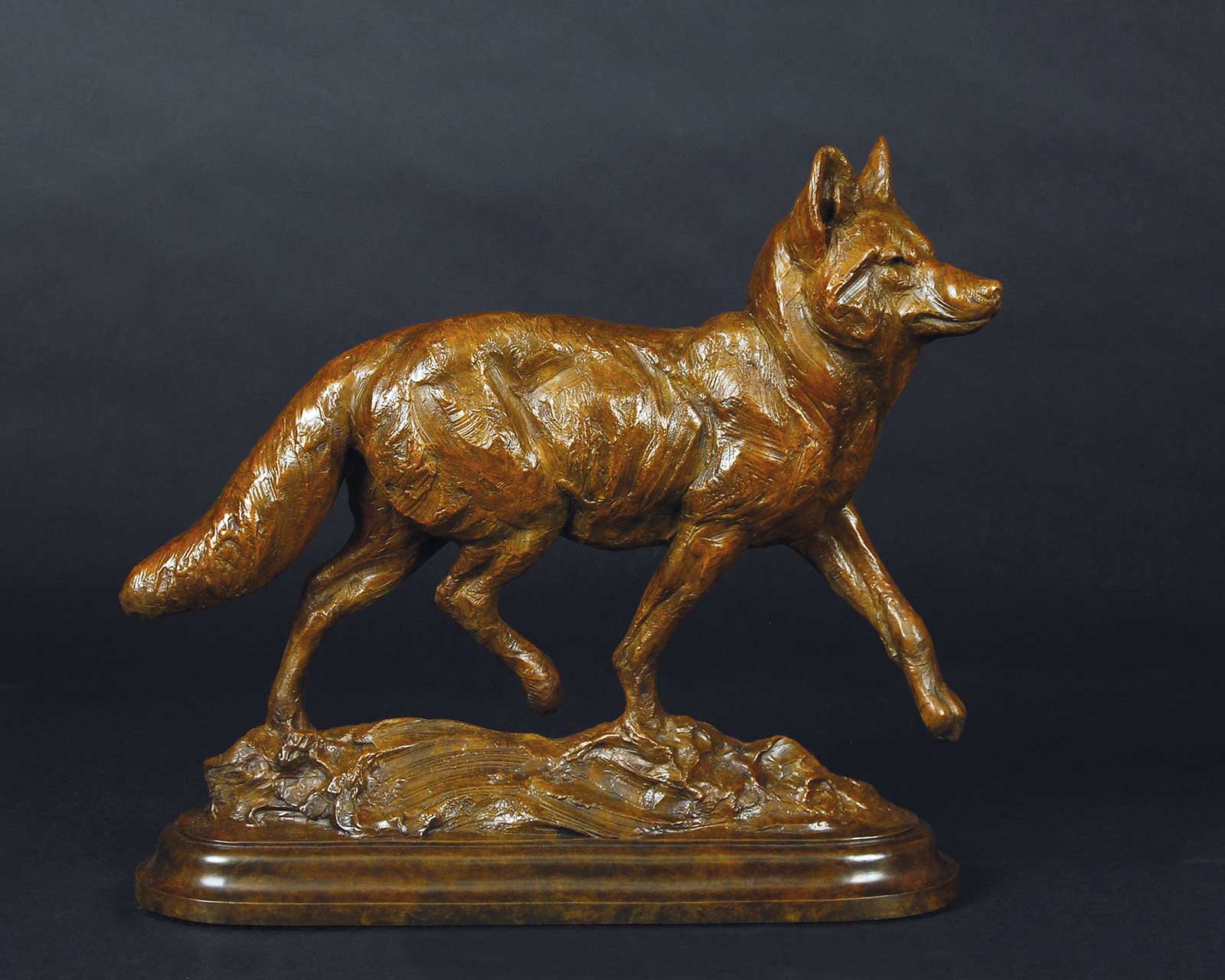 Legacy Gallery, High Plains Drifter, bronze, ed. of 12, 13½ x 16 x 4½", by Tim Shinabarger.
From an early age, Shinabarger developed an obsession with wildlife and wild places. He took a few art classes while attending Eastern Montana College where he received a Bachelor of Arts in business. He furthered his art education by attending workshops by prominent artists and studying the works of past masters. Following in the footsteps of such pathfinders as Carl Rungius and Belmore Brown, Shinabarger makes regular pilgrimages into the wilderness to gather ideas for new works. In order to convey the essence of his elusive subjects, he says it is necessary to put himself in a position to directly observe them in the wild. In 2015, he was featured in the Best of the Best Contemporary Wildlife Exhibition and Sale at the Woolaroc Museum in Bartlesville, Oklahoma. In 2014, he won the Major General and Mrs. Don D. Pittman Wildlife Award at the Prix de West and a bronze medal at the National Sculpture Society’s annual awards exhibition, among other major accolades.
Powered by Froala Editor