Sure, we in the West know our history. We know about Thomas Moran and his Green River and Grand Canyon paintings, about Charlie Russell and his red sash, about Frederic Remington, about the Taos Society of Artists and their broken wagon wheel, Maynard Dixon, Frank Tenney Johnson, William R. Leigh and many of the other colorful characters who are now the subject of lectures, books, symposiums and curated exhibitions.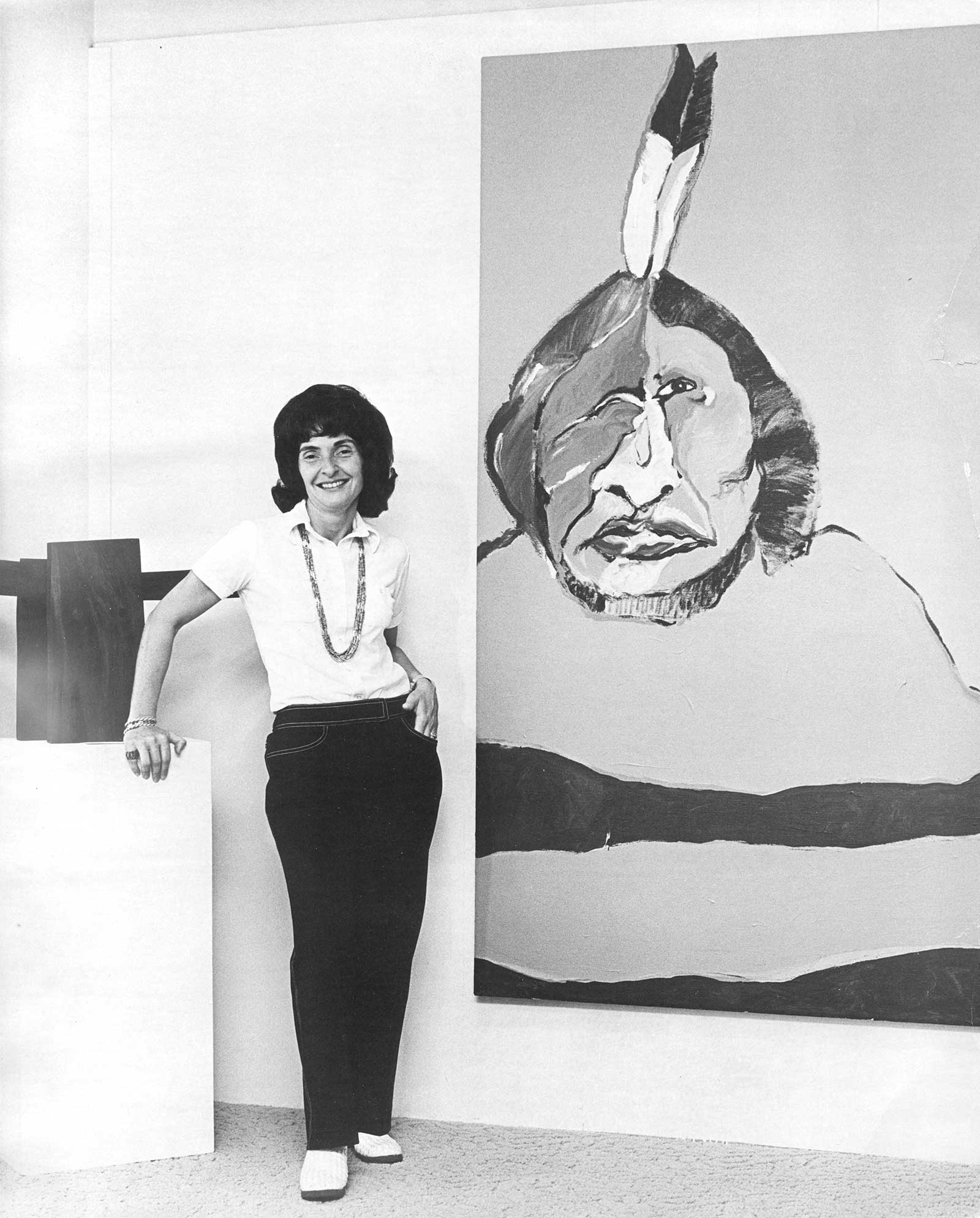 Elaine Horwitch with a Fritz Scholder painting in 1973.
But what, we say, about those who sold the art of the West? What about the dealers—another colorful group of people to be sure—who traversed the Southwest, from Scottsdale to Santa Fe to Sedona and all spots in between to ensure that collectors got wind of the latest and greatest works from Western artists over the last 50 years?
Southwest Rising: Contemporary Art and the Legacy of Elaine Horwitch recently opened at the Tucson Museum of Art and is one of the first exhibitions to tackle this subject while also wrestling with the restless concho belt-clad spirit of Horwitch herself. Horwitch hovers over the “New West” movement as the original founder, promoter, supporter, patron and champion, all done during the 1970s and ’80s from her galleries in Scottsdale, Santa Fe, Palm Springs and Sedona with a phone in one hand and a cigarette in the other.
From her galleries, Horwitch sold the work of artists such as Fritz Scholder, Joe Baker, Billy Schenck, David Bradley, Tom Palmore, Ben Goo, Woody Gwyn, Merrill Mahaffey, Howard Post, Earl Biss and Bob Wade, as well as some 200 other artists. Work from around 70 of these artists appear in the exhibition at the Tucson Museum.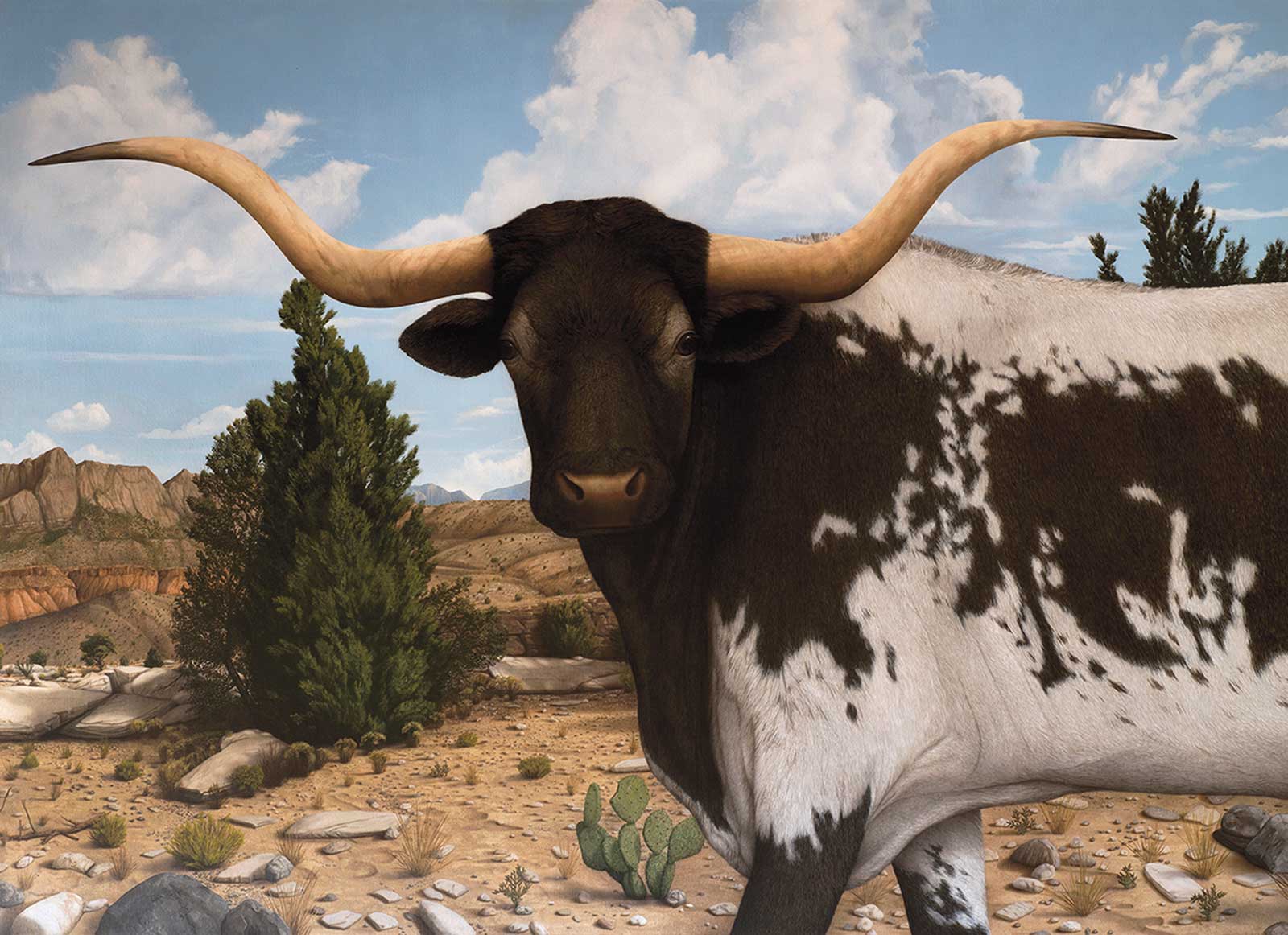 Tom Palmore, Texas Jack, 1988, acrylic on canvas, 72 x 96”. Private Collection New Mexico. Courtesy
of the artist. Photo credit: James Hart Photography, Santa Fe, NM.
“Horwitch was a major force in contemporary art in the Southwest from the early 1970s until her death in 1991,” says Julie Sasse, who not only curated the exhibition but also penned a 400-page tell released to correspond with the show. “She was responsible for launching the careers of hundreds of artists from the region and the nation. She championed contemporary Native American and Latino art as well as maintaining folk art, outsider art and craft into the fine art realm.”
Sasse writes and curates, for that matter, from an insider’s perspective. She worked for Horwitch from 1980 to 1995, much of that time spent as gallery director. And by insider’s perspective we mean she was present at all the legendary parties. Yes, all of them.
But first, a little history.
In 1964, after visiting New York City with her husband on a variety of business trips, Horwitch pitched an idea to her husband, Arnold. According to Sasse’s book, Arnold recalls the following moment that would soon become the stuff of legends—“Elaine came to me and said ‘I have an idea. You know how they sell Tupperware? You know, they have house parties and give away samples, and you bring women together at their house or your house, and then they take orders? Why can’t I do that with art?”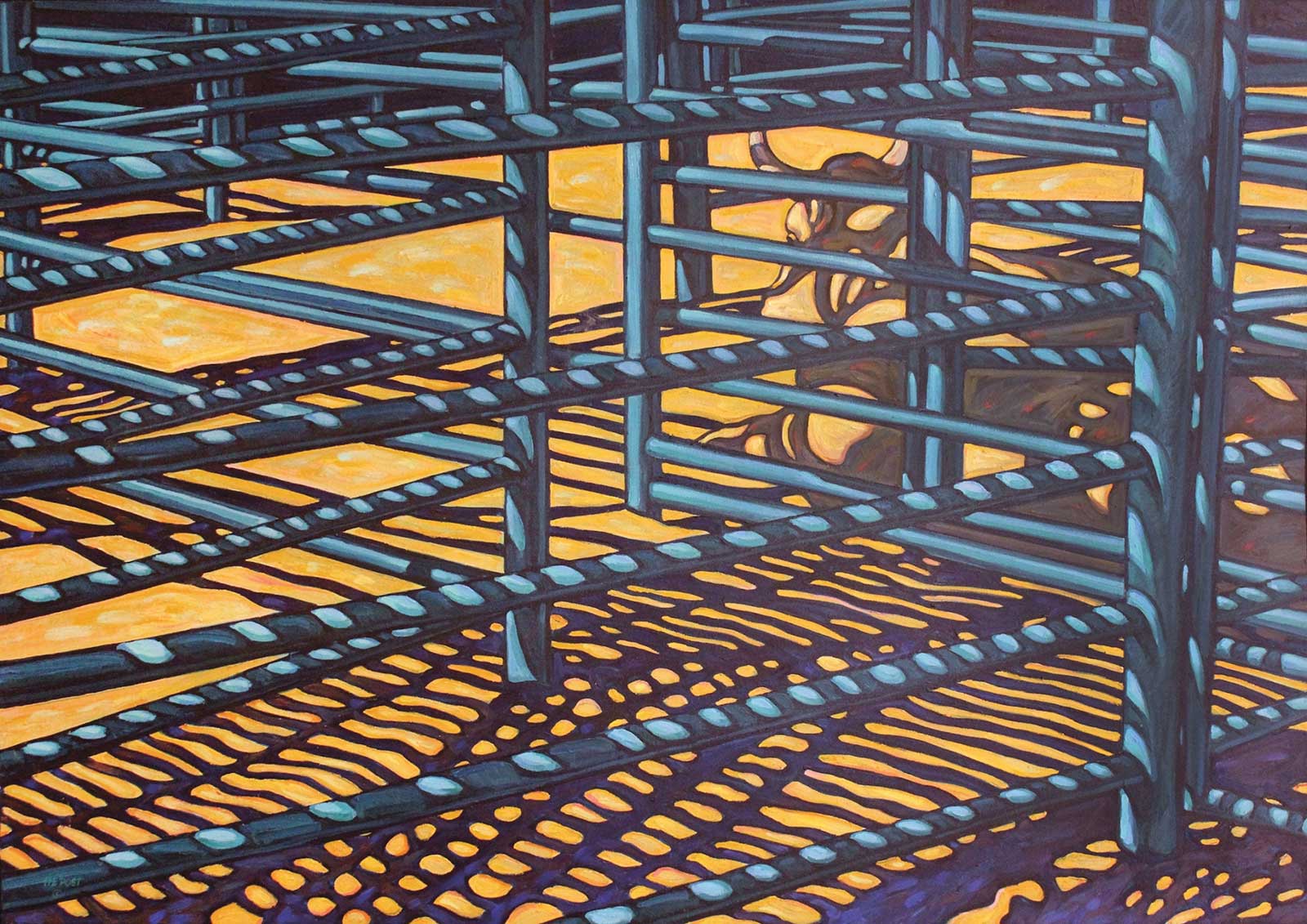 Howard Post, The Bull Pen, 1978, oil on canvas, 42 x 60”. Collection of the Tucson Museum of Art. Gift of Lynn Taber. 2000.58.1.
Horwitch then approached her friend Suzanne Brown with the idea and the two quickly formed a new business called the Art Wagon, because “they loaded up graphics, lithographs, etchings, woodcuts and serigraphs in their station wagons to take to women’s clubs, service groups and anyone interested to learn more about graphics or art in general.”
The business was very successful and, after only two years, they opened the Art Wagon Gallery on “East Main Street, next to the Kiva movie theater in downtown Scottsdale.” The two eventually split and, by the summer of 1973, Elaine opened the Elaine Horwitch Gallery at 7063 E. Main Street in Old Town Scottsdale, and her roster of artists included Scholder, Goo, Cook, Arnold Belkin and Mahaffey. She soon opened a much larger space at 4200 N. Marshall Way where her business, and legend, took form.
“There were celebrities everywhere,” says Sasse. “She used to keep a People magazine at the front desk so we would know who the people were who came in. To us, at the time, Scottsdale was our own little version of Paris. There was something buzzing, something new. The big housing developments were starting to be built and something special was in the air. After the openings, you would go to AZ88 and the whole restaurant would be filled with artists. People would table hop, everyone knew each other and the artists were held in such great reverence. The art walks were mobbed every week. It was just so exciting, so fun, and I looked forward to coming into work every day.”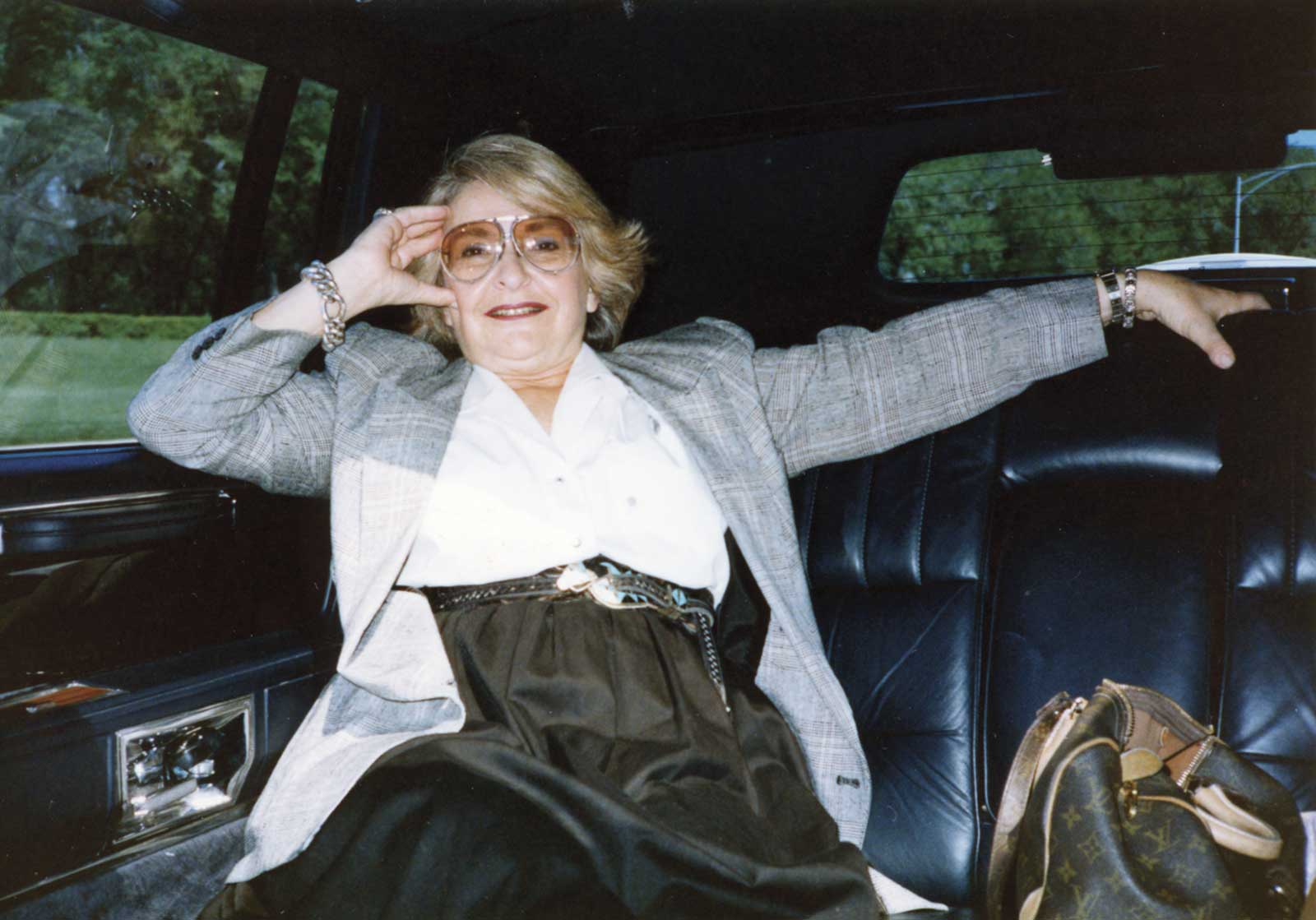 Elaine Horwitch in a limousine, circa 1987. Photo by Julie Sasse.
And Horwitch reigned supreme in her self-proclaimed role as the “Jewish Mother” to her misbehaving “bad boy” artists like Palmore, Schenck and James Havard. “That meant telling them to stop drinking, stop taking drugs and stop spending money foolishly and she would just say, ‘oh, those bad boys.’”
According to Sasse, Horwitch was largely responsible for the career of Scholder. “I kept immaculate records of everything,” says Sasse. “And of all the magazine advertisements she ran, I think 80 percent were for Fritz.”
But sales and magazine ads weren’t the only thing Horwitch arranged for Scholder. Once she surprised him with a Jaguar. As Sasse tells it, the car wasn’t to his liking and he gave the car to his wife. Appalled, Horwitch came back with a Rolls-Royce, similar to her own, but without the famous “Art Gal” license plate. Scholder kept this one.
“When the Institute of American Indian Arts started in Santa Fe, Lloyd Kiva New was the new artistic director and he hired Fritz to be a teacher,” says Sasse. “Everyone wanted to study under him. He taught Earl Biss too. People just clamored for him. When Elaine opened the Santa Fe gallery, Fritz was there every day holding court. The press covered everything. It was where the action was. There was wild openings, sell-out shows before the doors even opened. Everyone wanted to be a part of it.”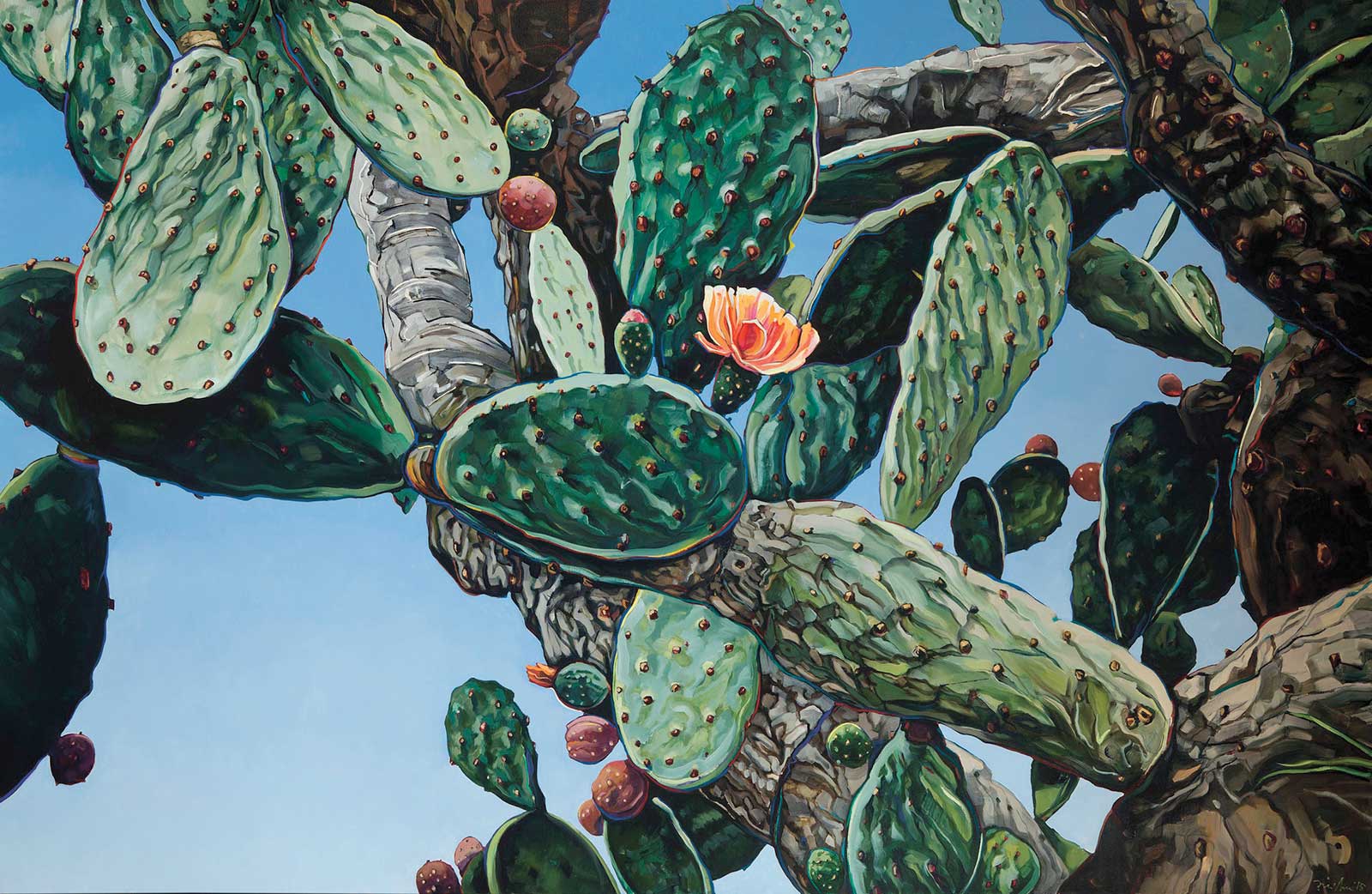 John Fincher, West of Roswell, 2014, oil on linen, 54 x 84”. From the Collection of Robin S. Black. Courtesy of the artist and
LewAllen Galleries, Santa Fe, NM.
Looking back, Scholder was the first contemporary Western artist. The “New West” which is still being discussed today, began with him. His early work, dating back to 1964, preceded the Horwitch school of artists by nearly 10 years.
“Before Fritz it was Dorothy Dunn and what these contemporary artists called Bambi art,” says Sasse. “But after the war, Native soldiers went to school on the GI Bill and they didn’t have to go to the Santa Fe School where art was taught a certain way, they went to regular art schools. Then, when IAIA started, Scholder taught students to be expressive, to absorb all kinds of expression, including Euopean art, Thiebaud, Bacon, Nathan Oliveira. Fritz himself got his MFA from University of Arizona and his work in the late 1950s was done in an abstract expressionist style. He embraced is own Native Americanness but on his own terms. It made things so much different.”
With Scholder as well as the others in Horwitch’s stable, the one thing that was constant was sales. Sales and more sales. Plenty of them.
“There were days where I felt like a cashier in a grocery checkout line,” says Sasse. “People were literally lined up holding the pieces they wanted to buy waiting for me to get to them. From the minute we opened up we were writing sales. There were so many works going out to the craters that we had to rent a holding space because they couldn’t keep up.
I remember one time David Bradley had a show and I literally had to yell out, ‘ladies, pick up the paintings you want and I’ll be right over to write them up.’ People would fight for pieces. It was all happening.”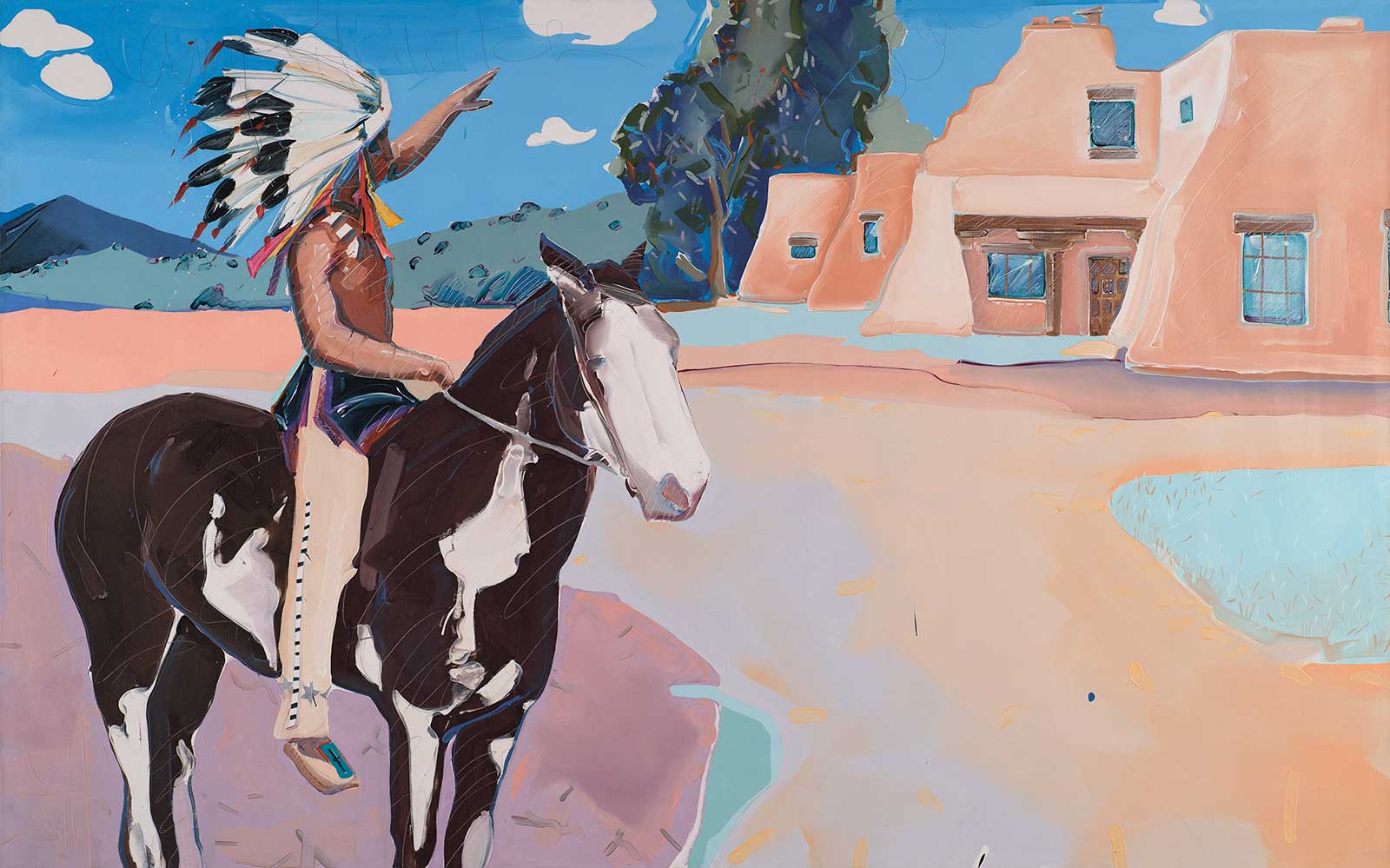 Joe Baker, Camp Horwitch, 1985, oil on canvas, 66 x 106”. Courtesy of the artist. Photo credit: James Hart Photography, Santa Fe, NM.
Like everything, the era came to an abrupt end in 1991 when Horwitch had a sudden heart attack and died at home. “The family tried to keep the gallery going for a few years after that, but it was clear that nothing was the same. The gallery was here. It was her personality that kept things going, that everyone wanted.”
The exhibition, scheduled to run until the end of June, “highlights the works of some of the Elaine Horwitch Galleries’ most popular artists.” Drawn from the museum collection as well as loans from New Mexico and Arizona “these paintings, sculptures and works on paper reveal the breadth of art and innovation that occurred in the Southwest at a pivotal time of change.” 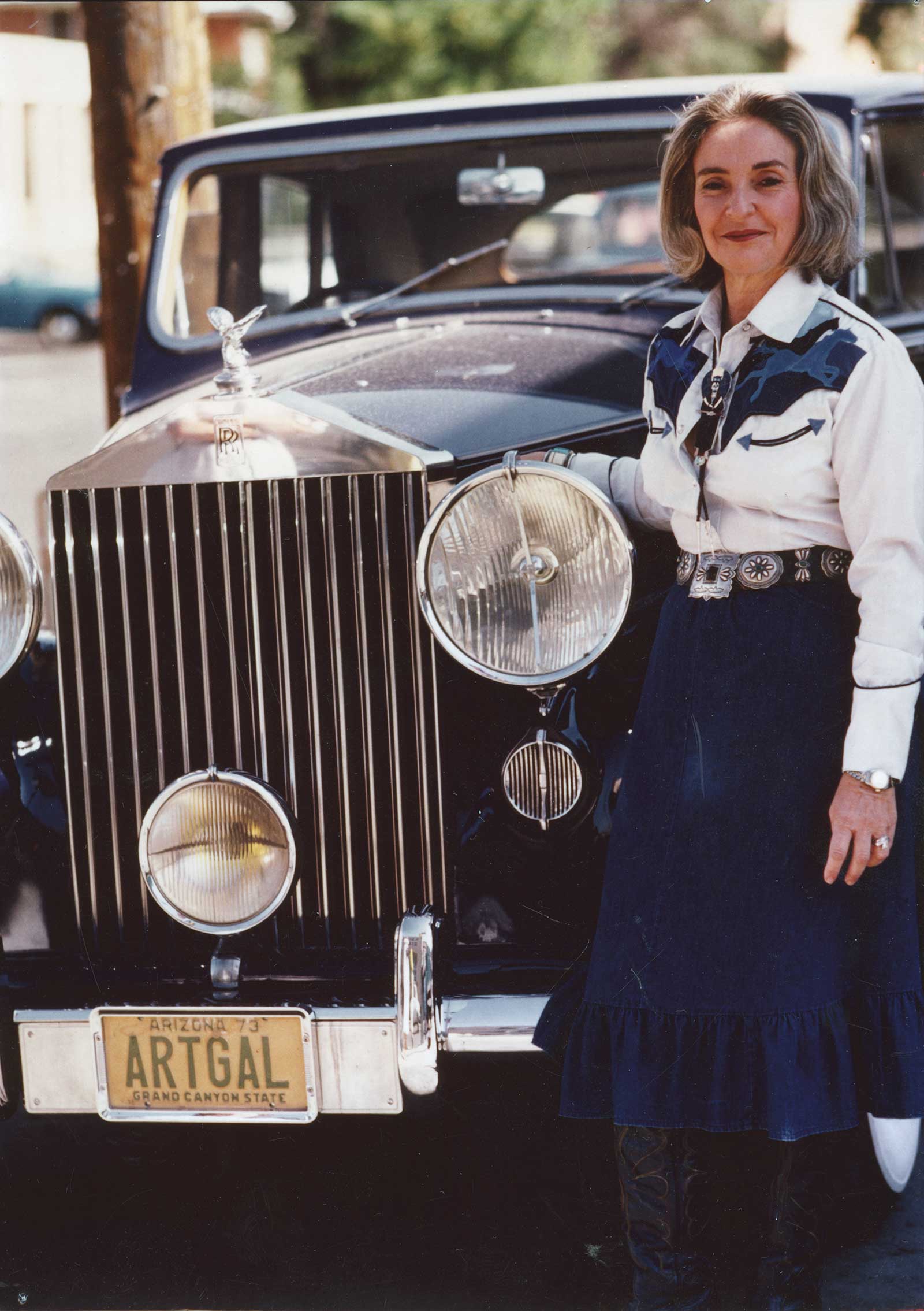 Elaine Horwitch with her Rolls-Royce, circa 1982. This image is the cover of Julie Sasse’s book, Southwest Rising: Contemporary Art and the Legacy of Elaine Horwitch. Courtesy of Deena Horwitch Semler.
Powered by Froala Editor