The C.M. Russell Museum in Great Falls, Montana, recently completed an extensive, yearslong conservation and restoration of both the home and studio of the museum’s namesake, Charles M. Russell. The goal of the project was to bring visitors deeper into the world of Charlie and Nancy Russell. Plexiglass stanchions were removed, rooms were opened up and the buildings were stripped of some of the barriers that prevented visitors from exploring the nuances of the home and studio.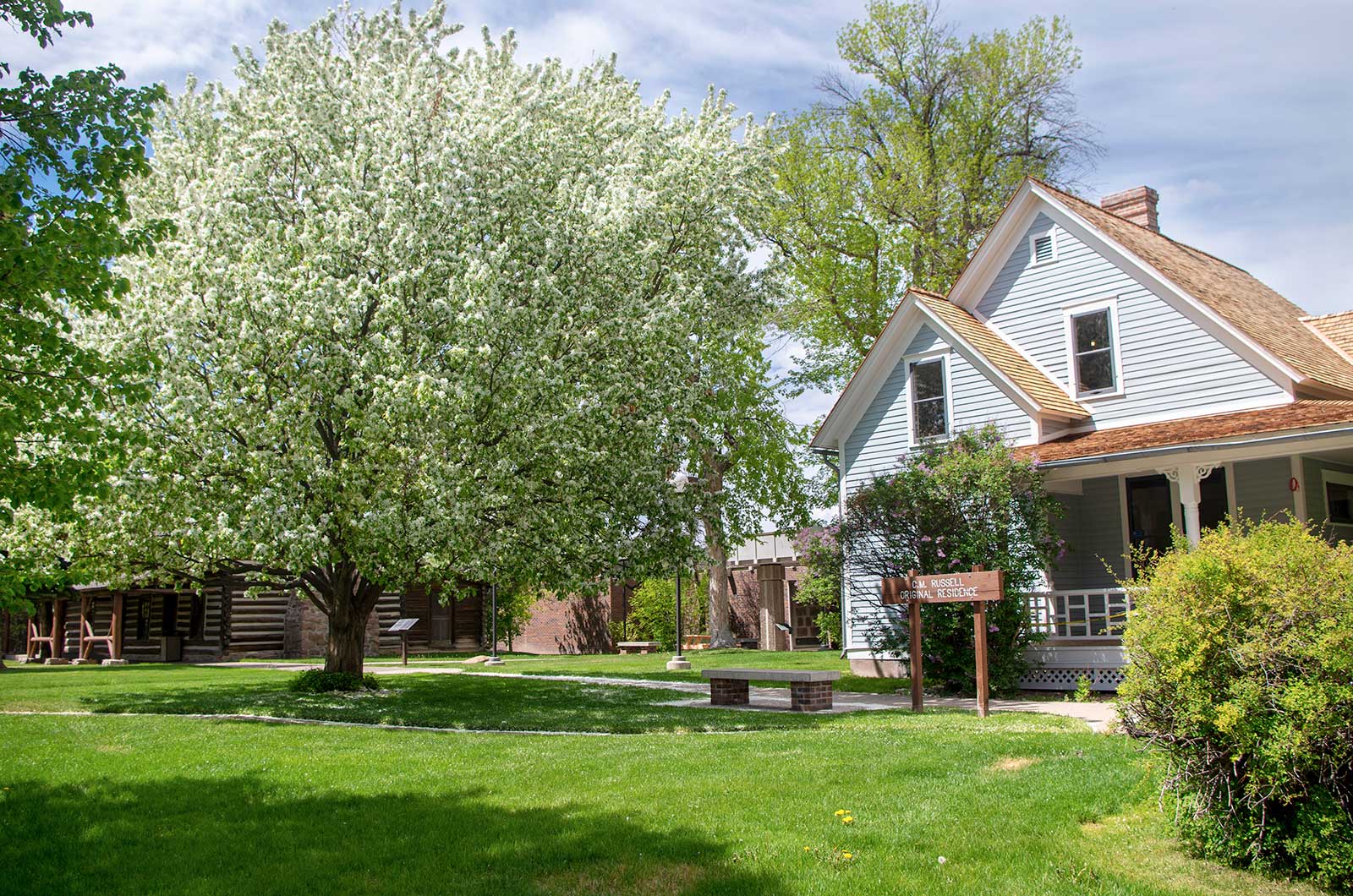 The Russell home, on the right, next to Charles M. Russell’s log cabin studio. The two buildings were originally closer together, but the home was moved 50 feet away from the studio in 1973.
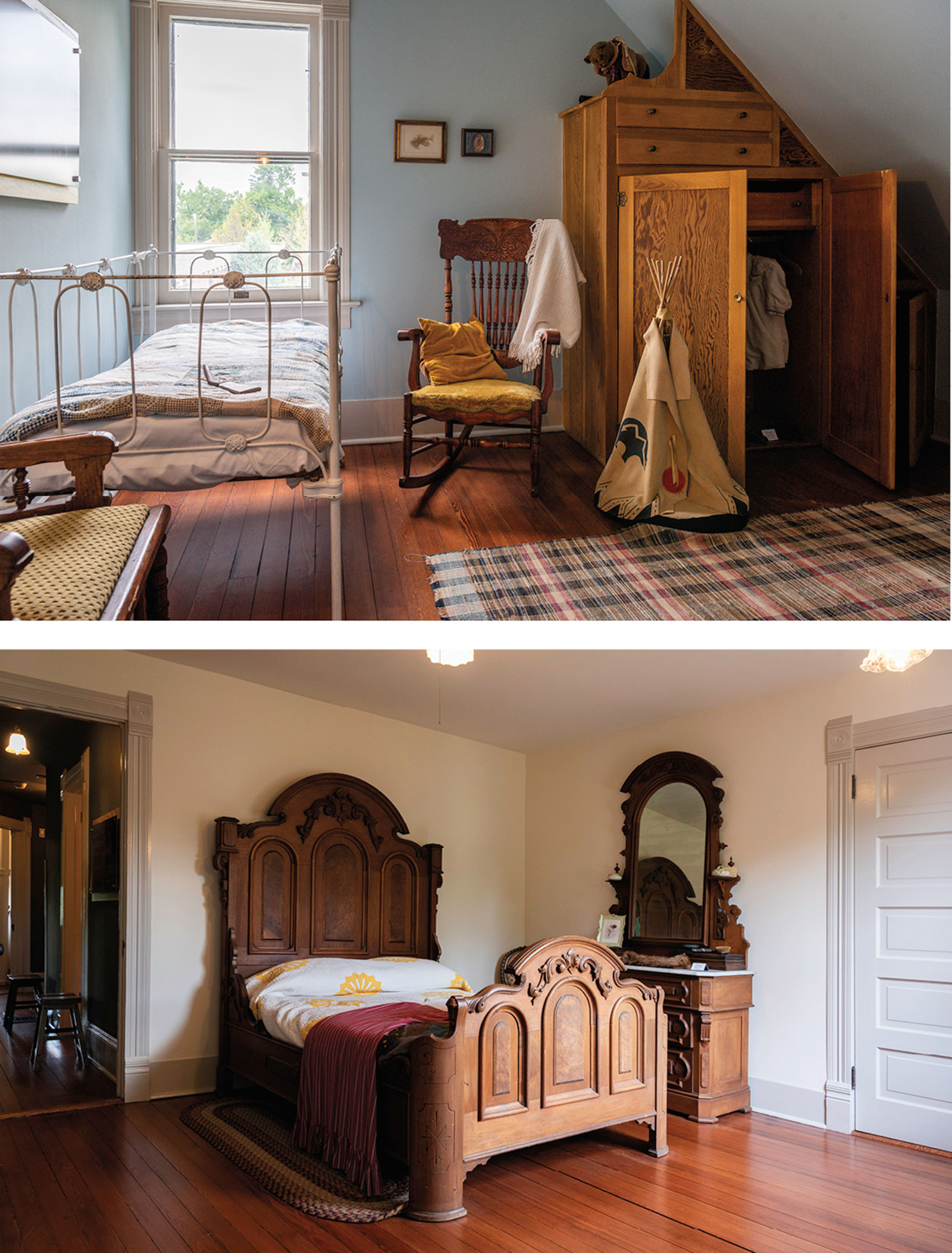
“We took it back, as close as we could, to what it was like originally,” says C.M. Russell senior curator Emily Wilson. “Where visitors couldn’t walk before, now they can. They can walk in and really appreciate where Charlie lived and worked.”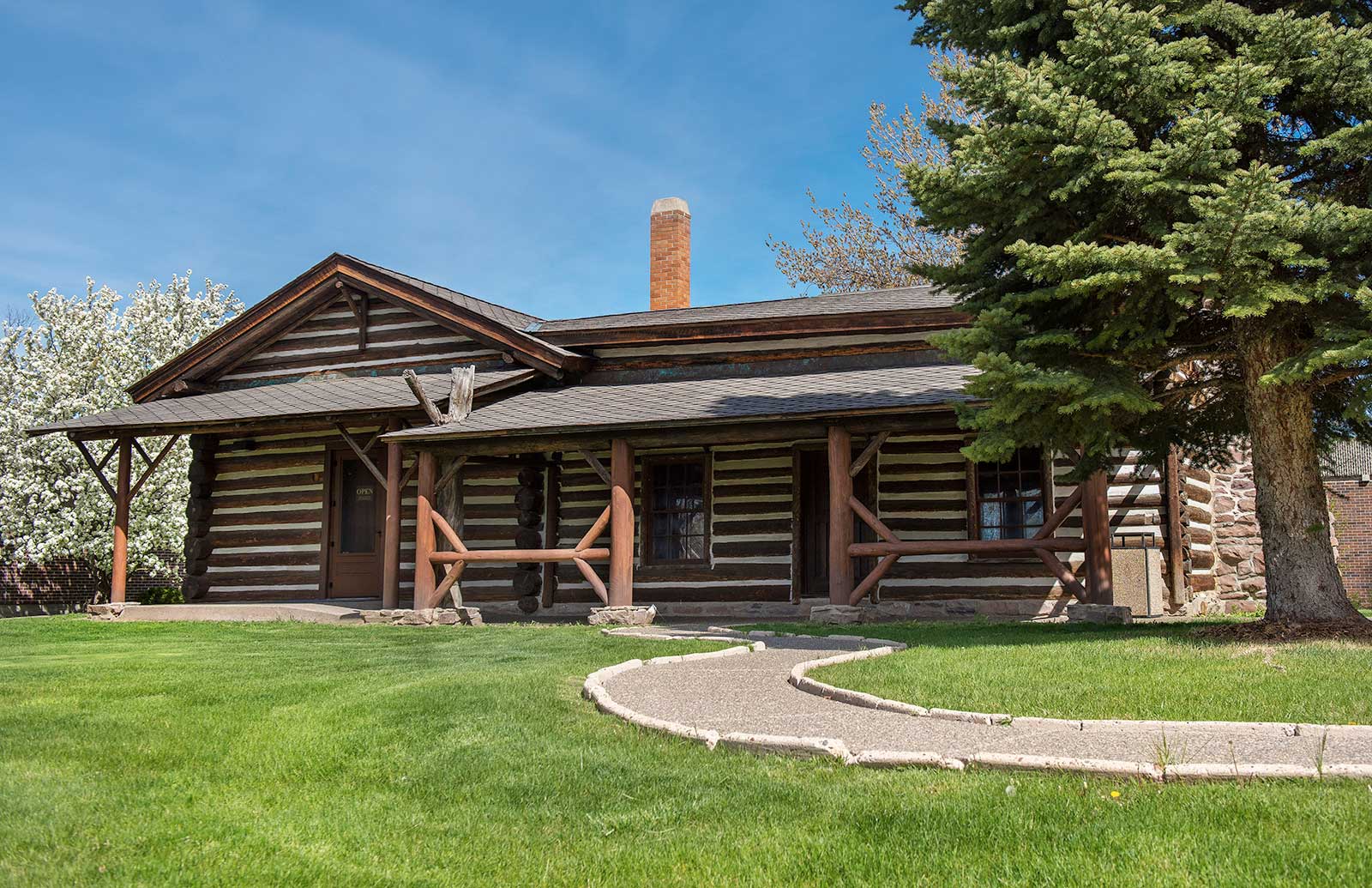 Charles M. Russell’s studio. Built in 1903, the building was remodeled several times, including when three logs were added to the height to accomdate a large mural Russell was working on for the Montana capitol building. A gallery addition was conceived in 1926, the year Russell died, and was completed in 1930.
The home was built in 1900, with the studio following in 1903. The Russells made significant changes to the buildings, especially the log cabin studio, which was made from telephone poles. In 1911 Russell raised the roof of the studio by three logs to accommodate a large mural that would eventually go to the capitol building in Helena, Montana. Then, in 1926, plans were made to add a gallery onto the studio. The artist died before the gallery could be finished; it was eventually completed in 1930.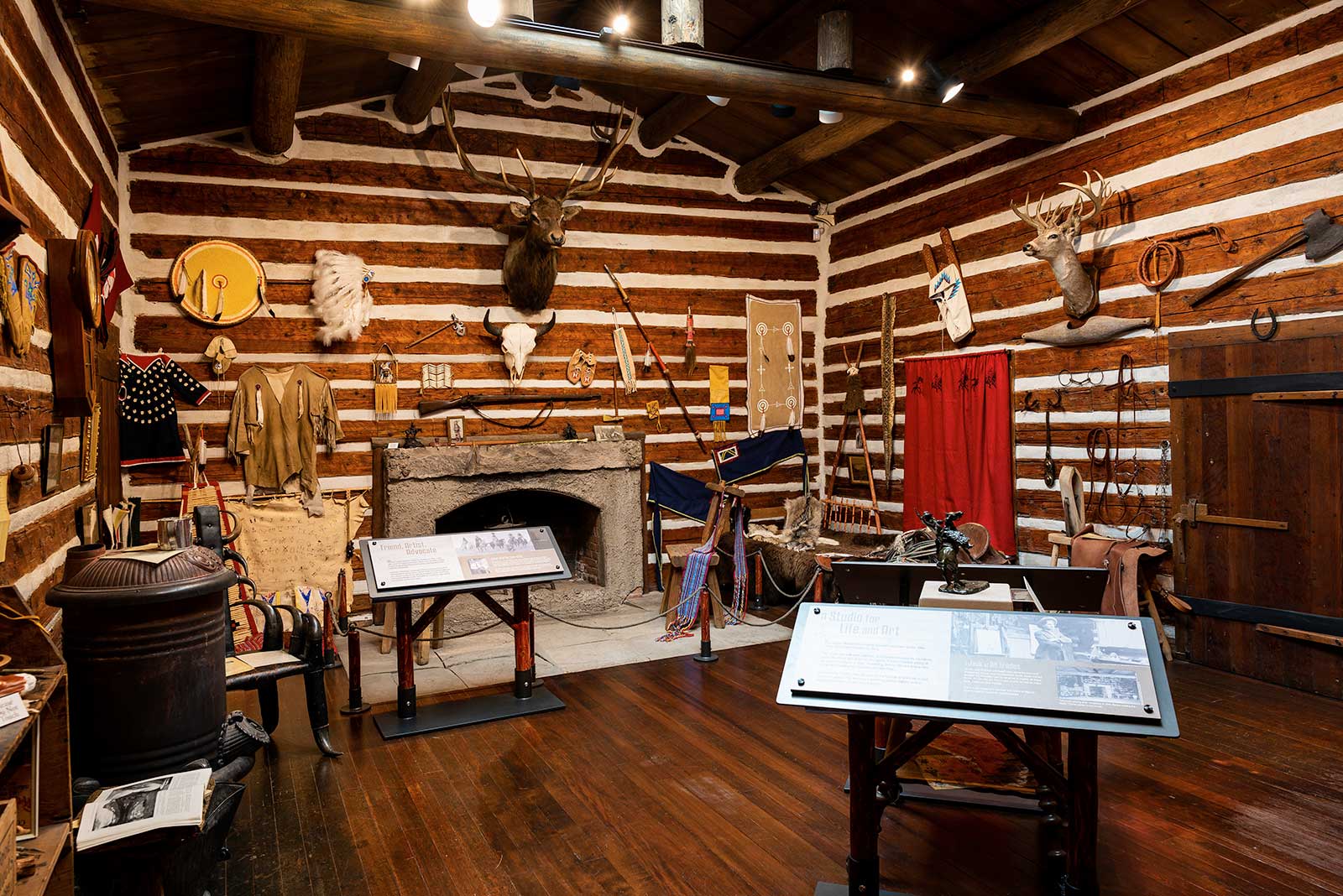 The C.M. Russell Museum removed Plexiglass stanchions to allow guests to have better views within the home and studio. Historic artifacts once housed in the home and studio were moved to the museum.
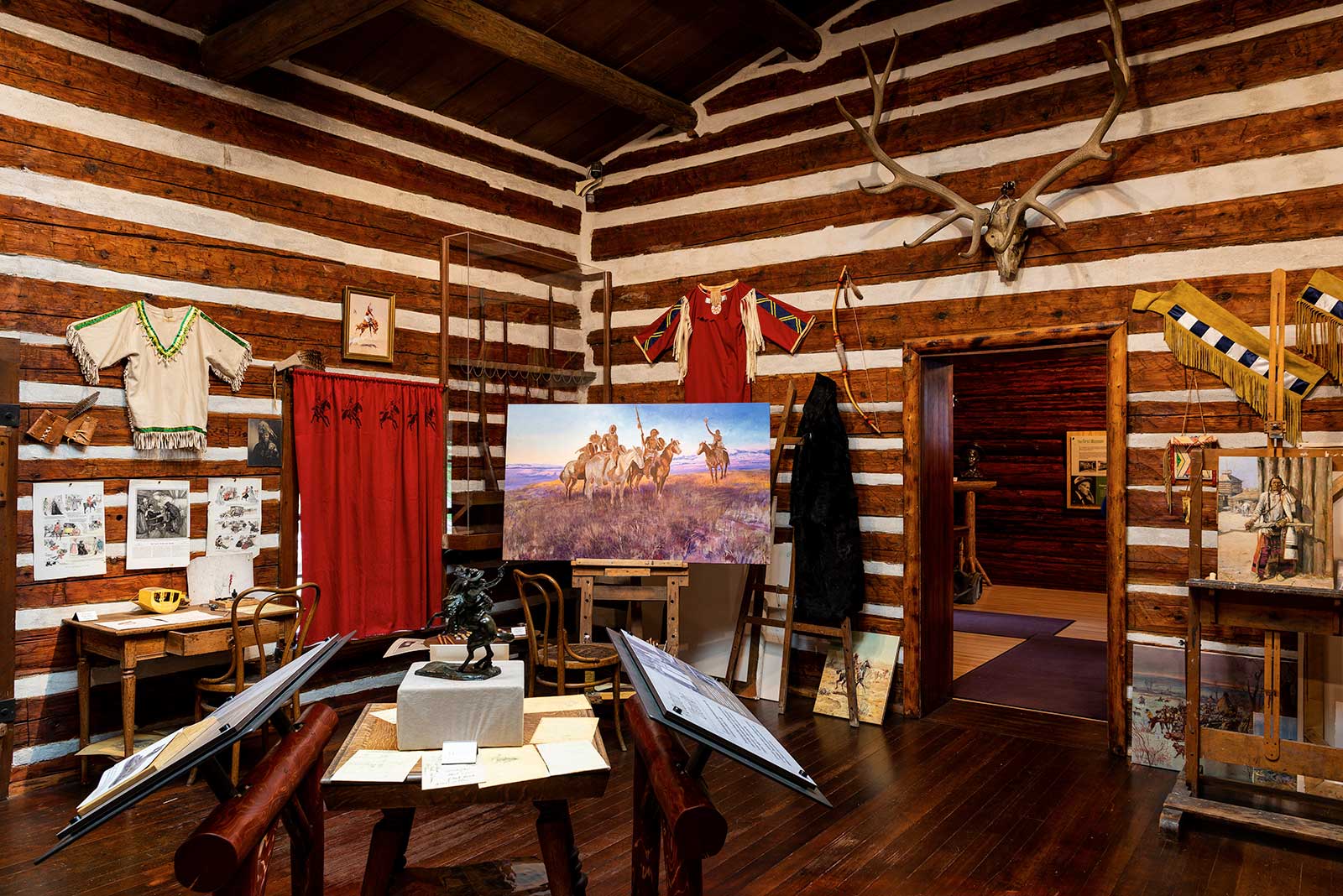 Previous presentations of the home and studio included historic objects owned by the Russells. By moving these valuable and fragile artifacts to the nearby museum, where they could be secured and protected easier, and replacing them with reproductions, the museum could open up the spaces in the home and studio in ways it previously couldn’t.
“We relied a lot on photographs. The goal was to make you feel like you were stepping into the studio just as Russell was stepping out, maybe to get a bite to eat or to go down for a quick drink,” says Brenda Kornick, collections and exhibitions director at the C.M. Russell Museum. “A lot of care and research was put into the project.”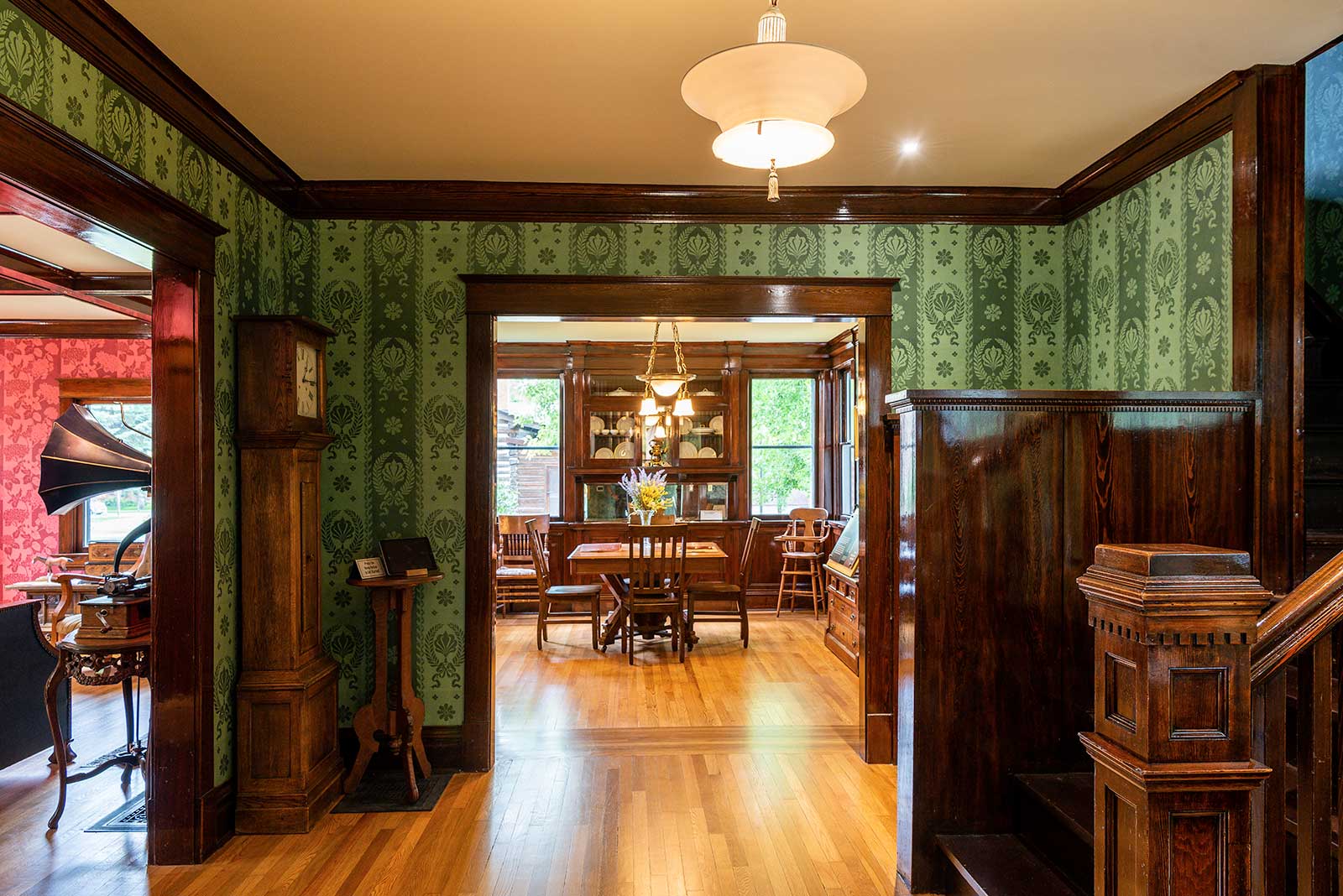 The living room area within the Russell home. From 1900 to 1903, Russell maintained a studio in the living room.
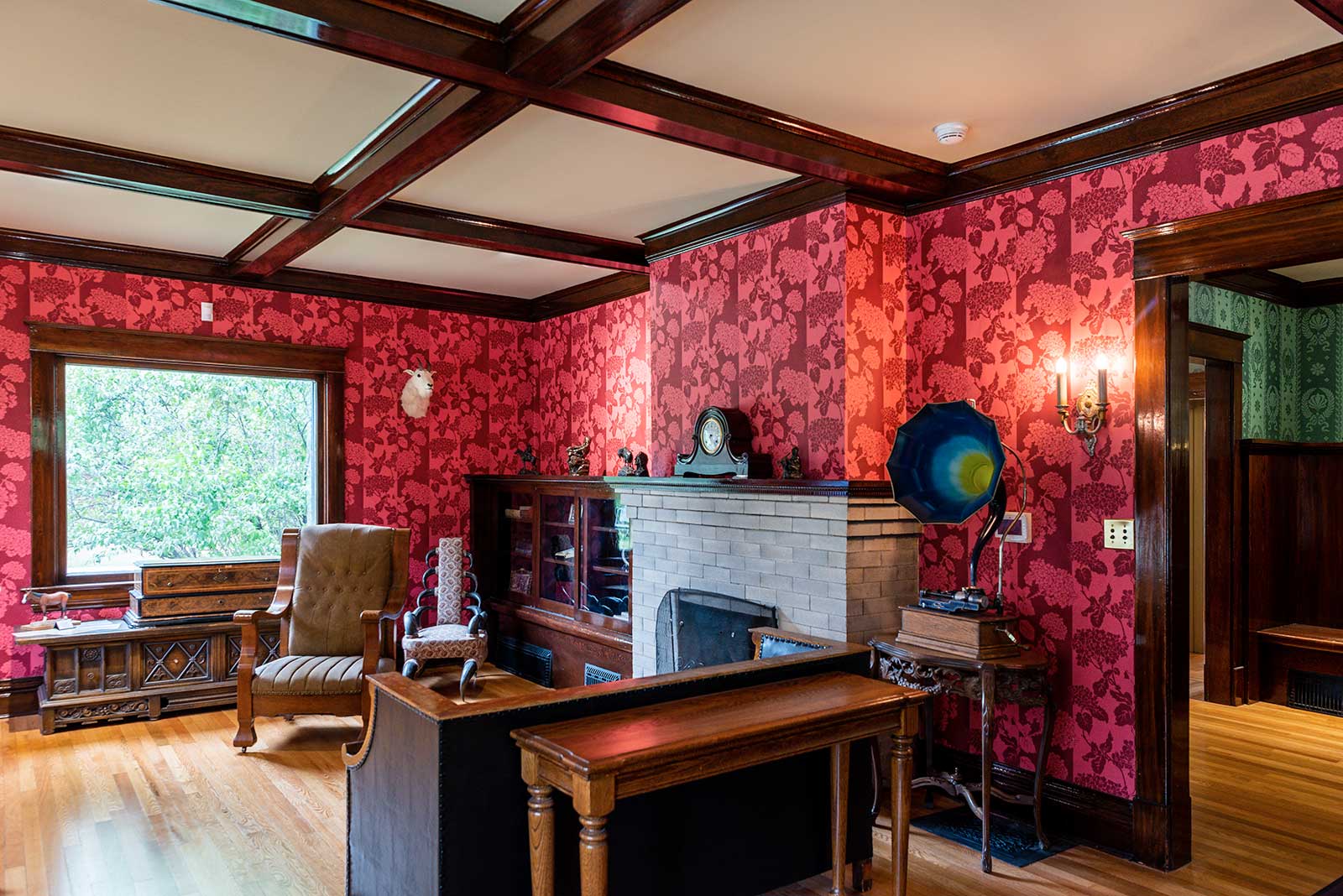 Several years were spent researching and reproducing the wallpaper in the Russell home. Curators and conservation experts stripped the walls layer by layer to get as close as possible to what the walls might have looked like in 1930.
The Russell home and studio are now on view at the museum in Great Falls.—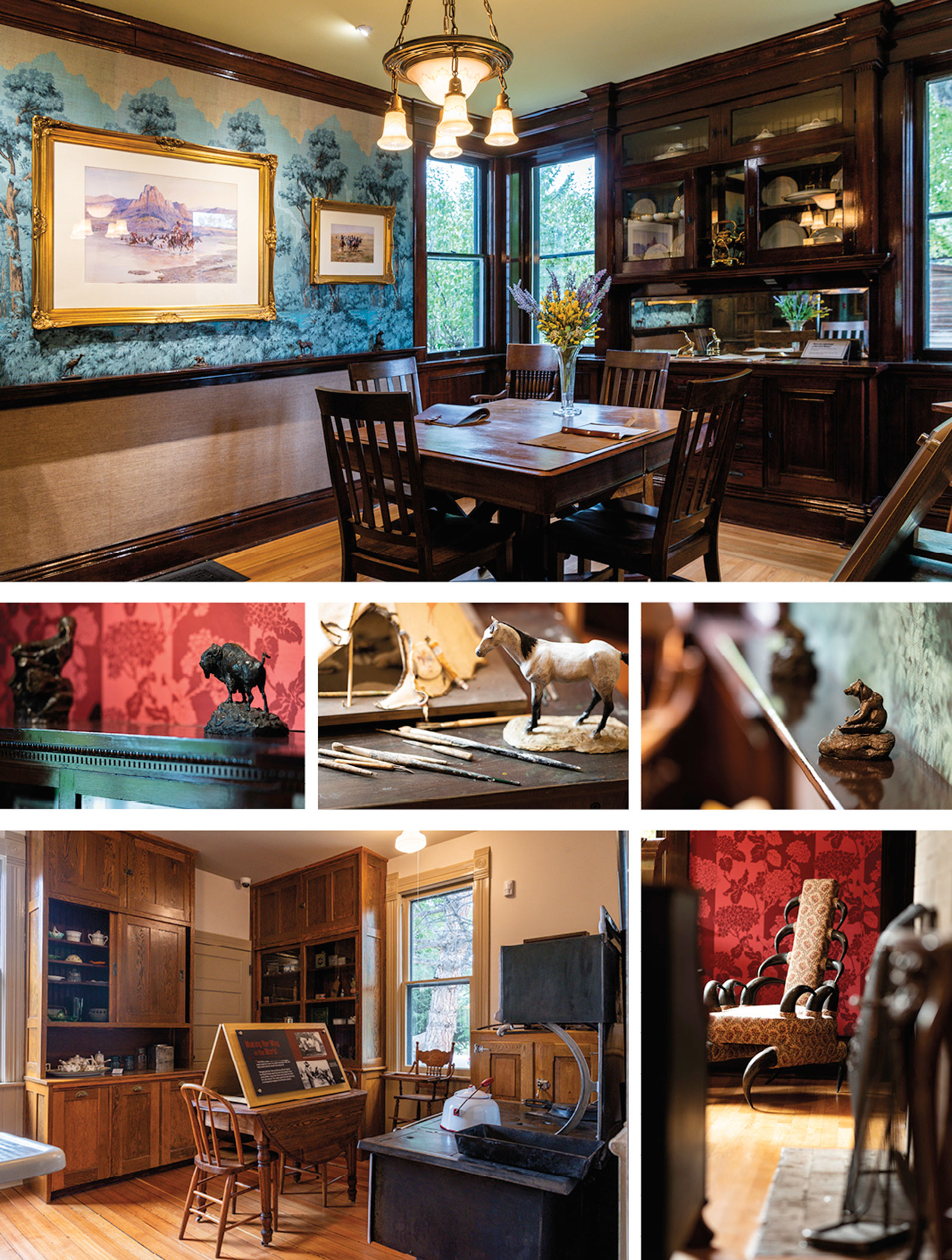
 All images courtesy C.M. Russell Museum, Great Falls, Montana
Powered by Froala Editor