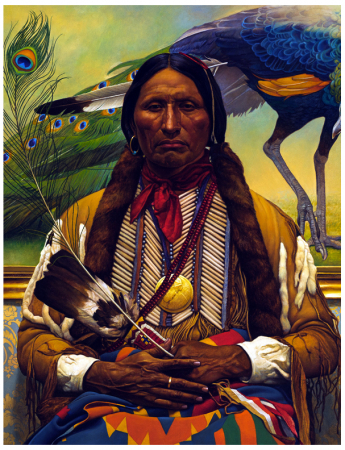
Wes and Chris Spiker moved to Montana with their two young children in 1981 and later established their marketing and advertising company, Spiker Communications. Fresh from a high-pressure “big-agency life” on the West Coast, they “left the rat race and set up shop in Missoula, Montana, trading our suits for hiking and wading boots.”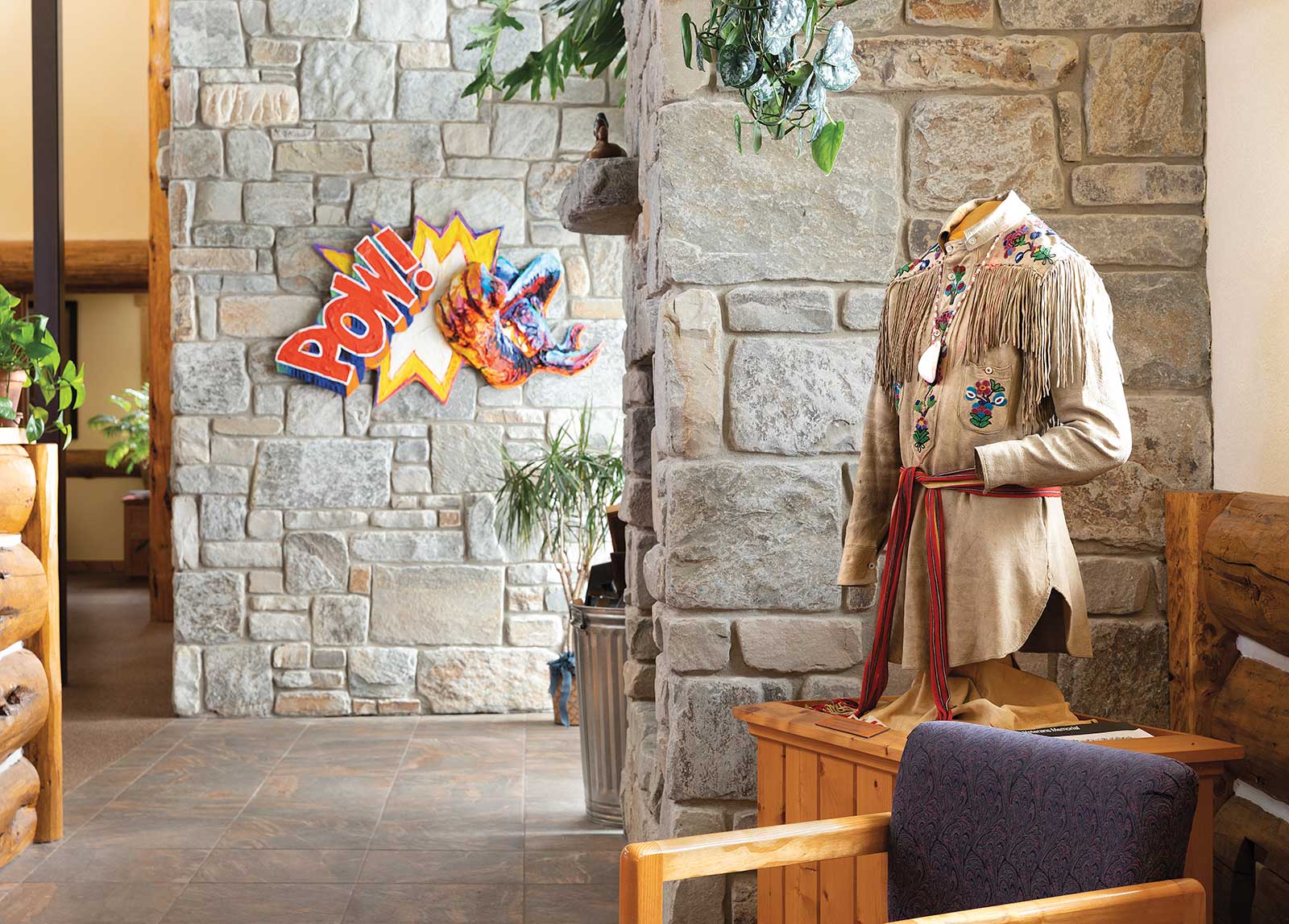 At the entrance to Spiker Communications is a Larry Pirnie cutout, Pow. The shirt is a family heirloom, a Salish buckskin and beaded man’s shirt, sash and beaded and abalone necklace, circa 1910.
The walls of their offices and their home are hung primarily with the work of Montana artists and others who embody the spirit of the West. “We bought a site and began designing a home,” Wes explains. “My goal was to have each room in the house represent some aspect of people’s perception of the West—the different views that other creative people saw. I’m from Ohio and my ideas of the West came from John Wayne movies, Quick Draw McGraw and Yogi Bear. The design became too expensive to build so there went my goal. Now there’s a mix of art throughout the house and in our offices. We have a creative business and we want to show creativity there.”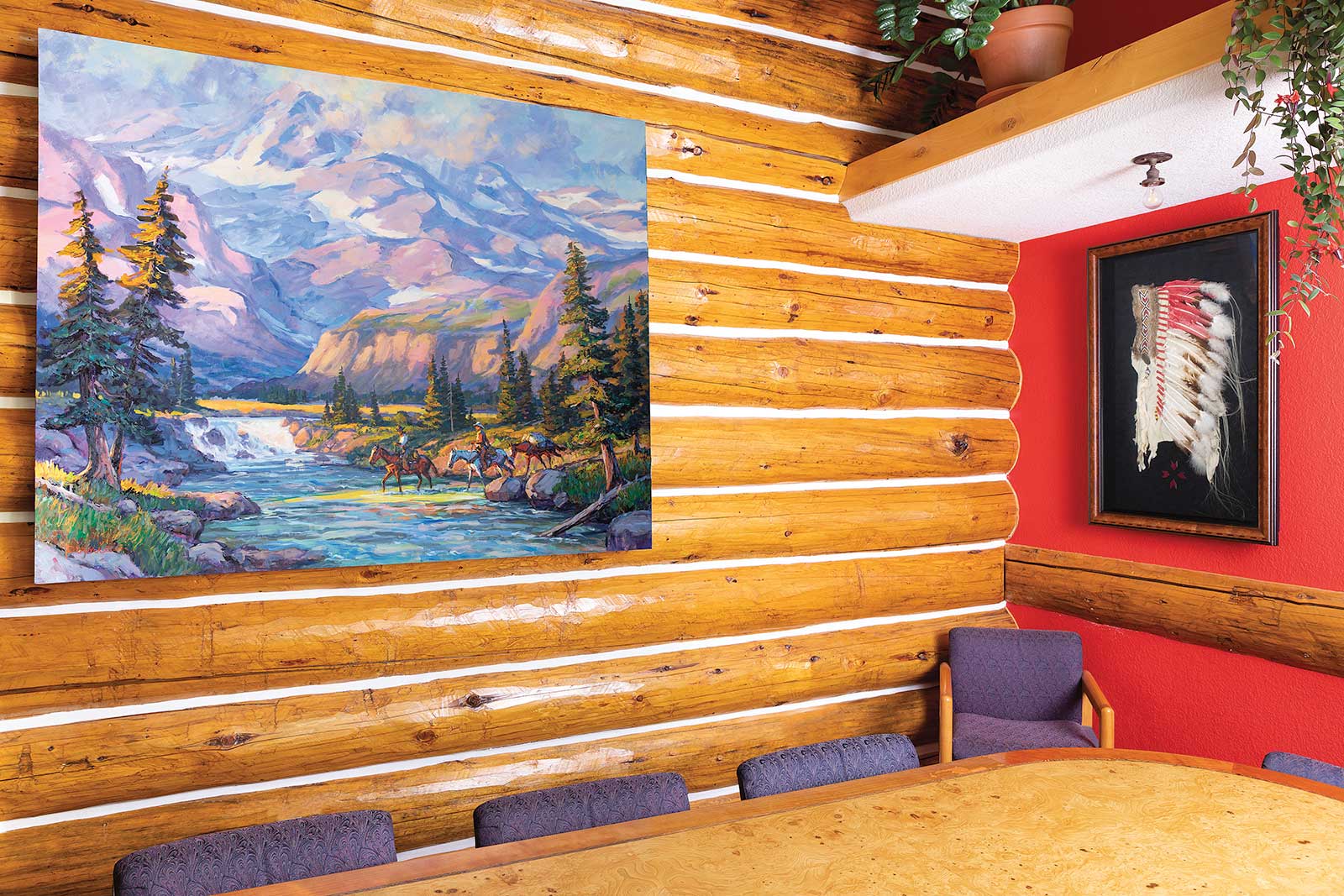 In the company’s conference room is Larry Pirnie’s acrylic on canvas, Journey in Paradise. The headdress is from Prairie Edge in Rapid City, South Dakota, which specializes in contemporary hand-crafted Native American ceremonial items.
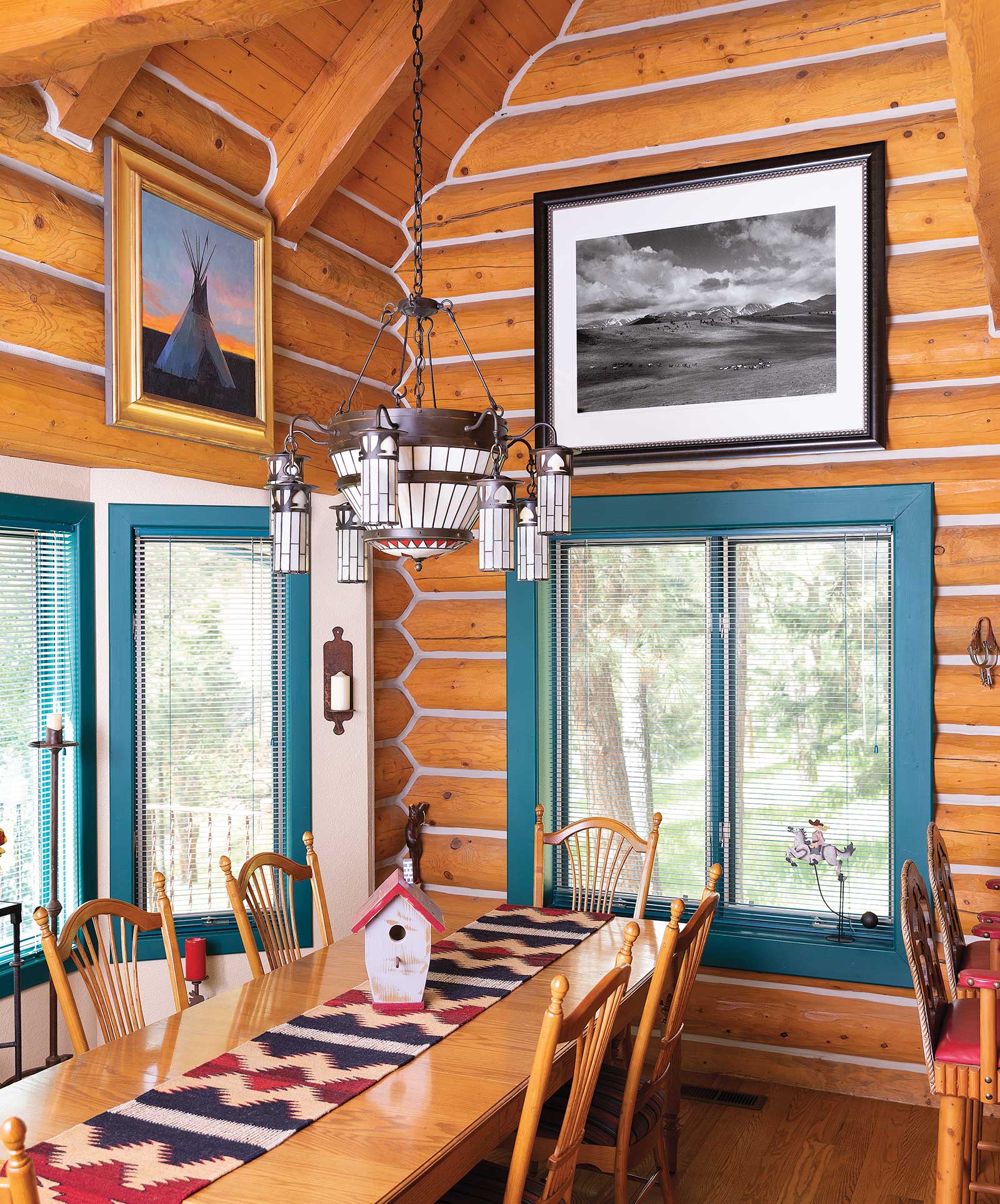 Red Sky, a teepee painting by Montana painter R. Tom Gilleon, hangs in the dining room. On the adjacent wall is Barbara Van Cleve’s When Everything is Almost Perfect.He continues, “When we first moved here we had our ideas for the collection. We went to an auction and saw a buffalo robe painted by a survivor of the Little Big Horn, depicting the battle. We were all gaga about it. We decided we could pay $50,000. The bidding started at $50,000 and the robe sold for over $1 million. We realized, ‘OK. We’re not big shots.’ We’re going to do the best we can with what we have.”
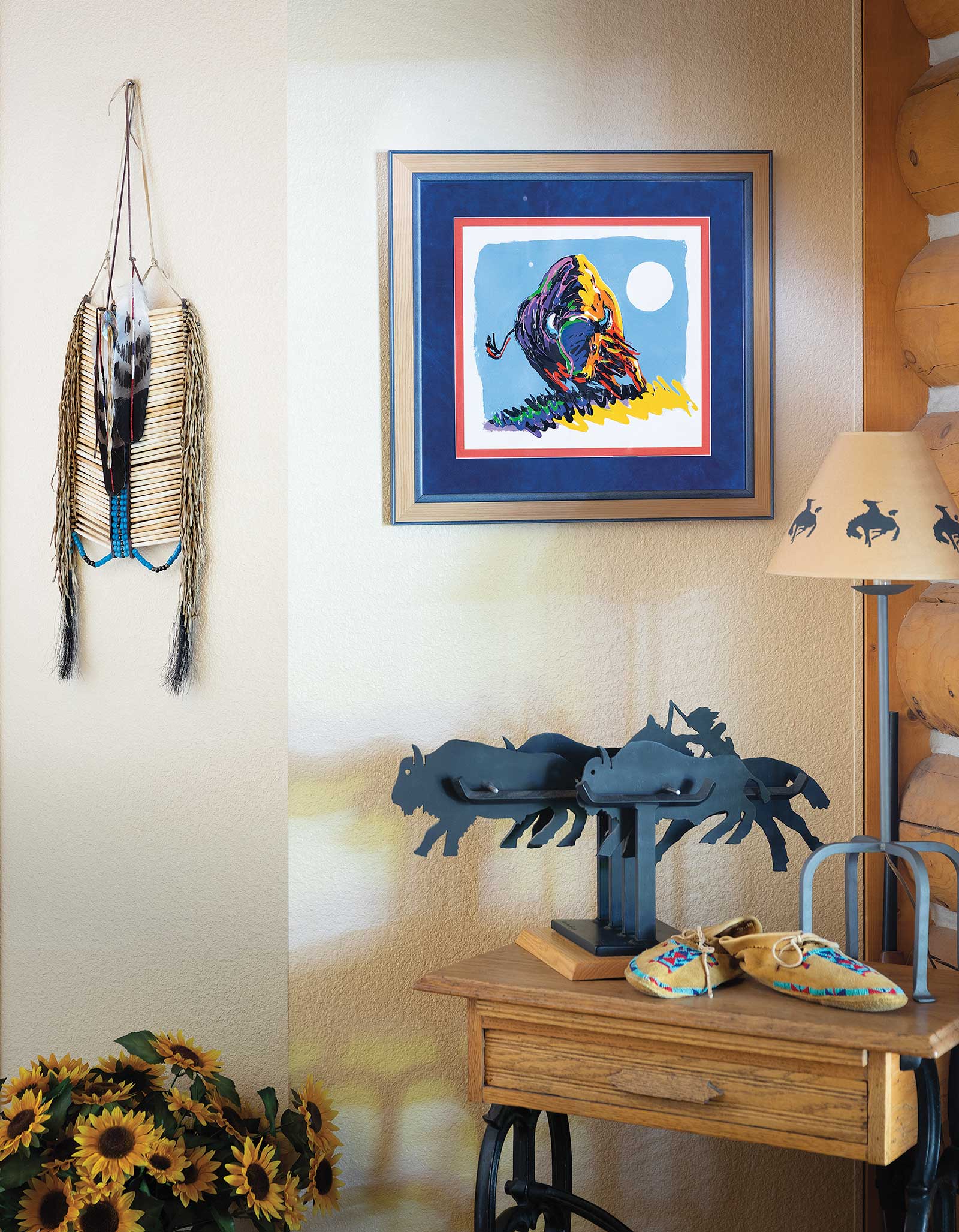 Larry Pirnie’s Buffalo was commissioned by the collectors—the first bison he had painted. Montana sculptor Charles Ringer’s kinetic sculpture Buffalo Hunt sits on the table. The beaded breastplate and moccasins are Salish.
One piece on display in the company’s entrance is an original Native American piece, however. “It’s a family heirloom,” Wes explains. “Chris’ uncles are part Salish and members of the tribe. Their father made the buckskin and beaded man’s shirt, sash and beaded and abalone necklace, around 1910. The family wanted it to be seen and have loaned it to us.”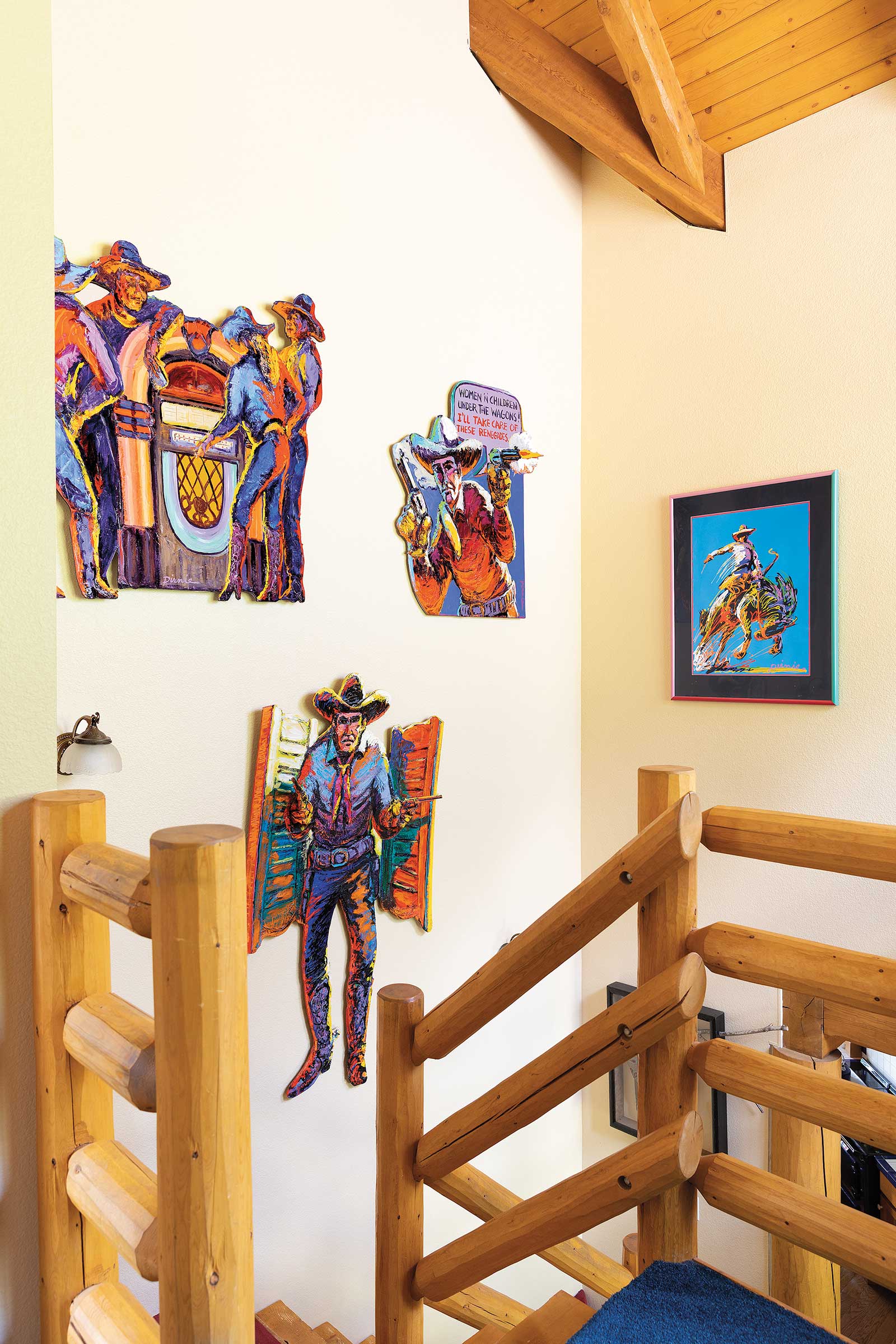 In the entryway to the collectors’ home are three cutouts by Larry Pirnie: Jukebox, on the left, and next to it Women and Children Under the Wagons. Beneath them is Lookin’ for Trouble. The painting on the right is Evening Workout, their first piece by Pirnie.
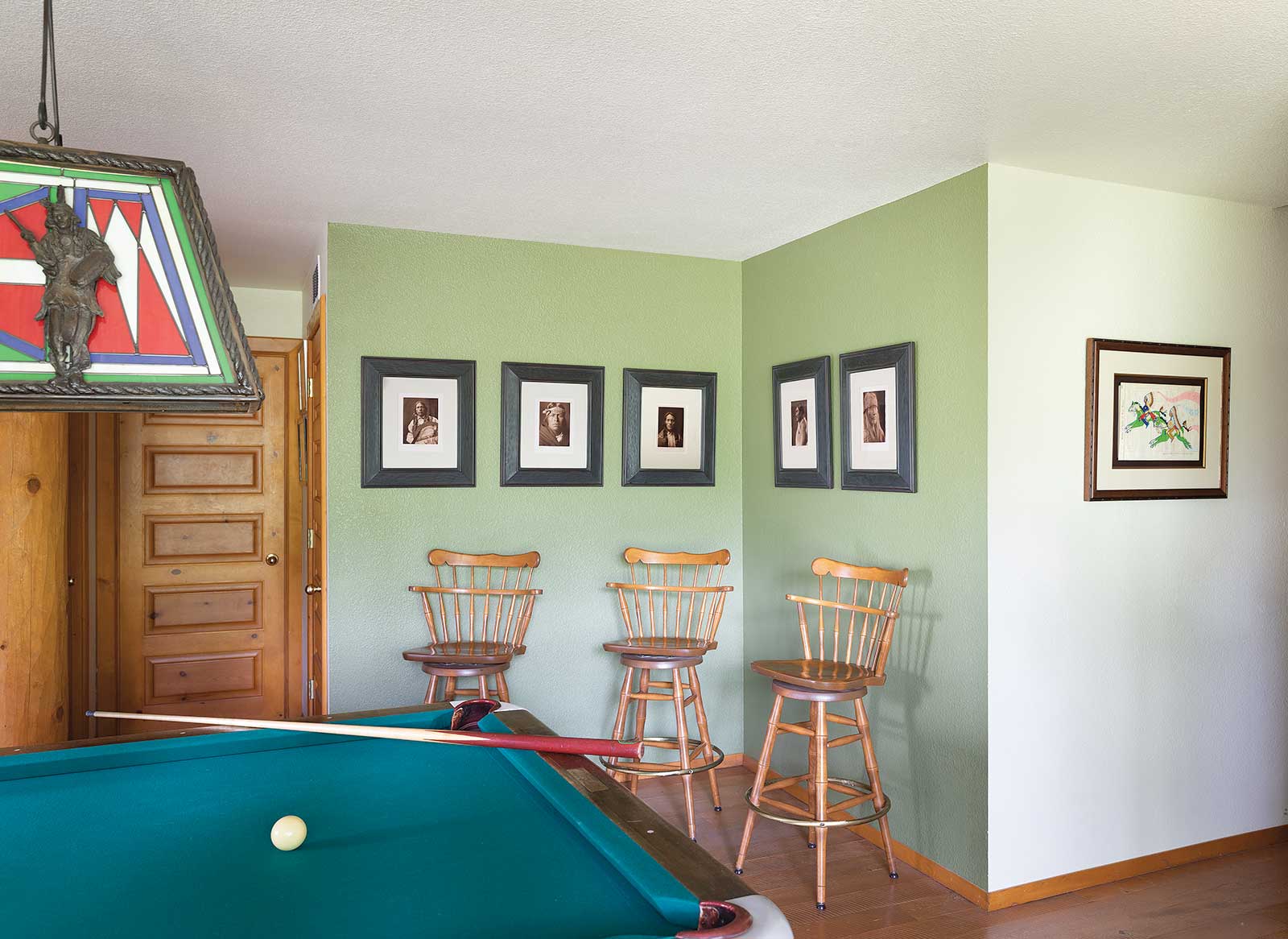 The five photos are from The North American Indian, circa 1907, by Edward S. Curtis (1868-1952). They are, left to right, Kó-pi (“Buffalo Mountain”)—San Juan, An Acoma Man, Kutenai Type, Suqitlaa – profile and A Sarsi Woman. On the right is a ledger drawing by Black Pinto Horse (Arikara/Hidasta), also known as Monte Yellowbird.The focus is also on Montana’s history. “Lewis and Clark came through here in 1805,” he explains. “We saw the photographs of Edward Curtis in Seattle and I fell in love with his work. Being in Montana, I have more interest in his photos of the Plains Indians, which is some of his best work. He was here in 1900.”
Curtis (1868-1952) was born in Wisconsin and moved with his family to the Seattle area when he was in his late teens and became a studio portrait photographer. He became interested in the Indigenous people of the area and between 1900 and 1930 produced the 20-volume work The North American Indian. In his foreword to the volumes, Theodore Roosevelt wrote, “He has not only seen their vigorous outward existence, but has caught glimpses, such as few white men ever catch, into that strange spiritual and mental life of theirs; from whose innermost recesses all white men are forever barred.”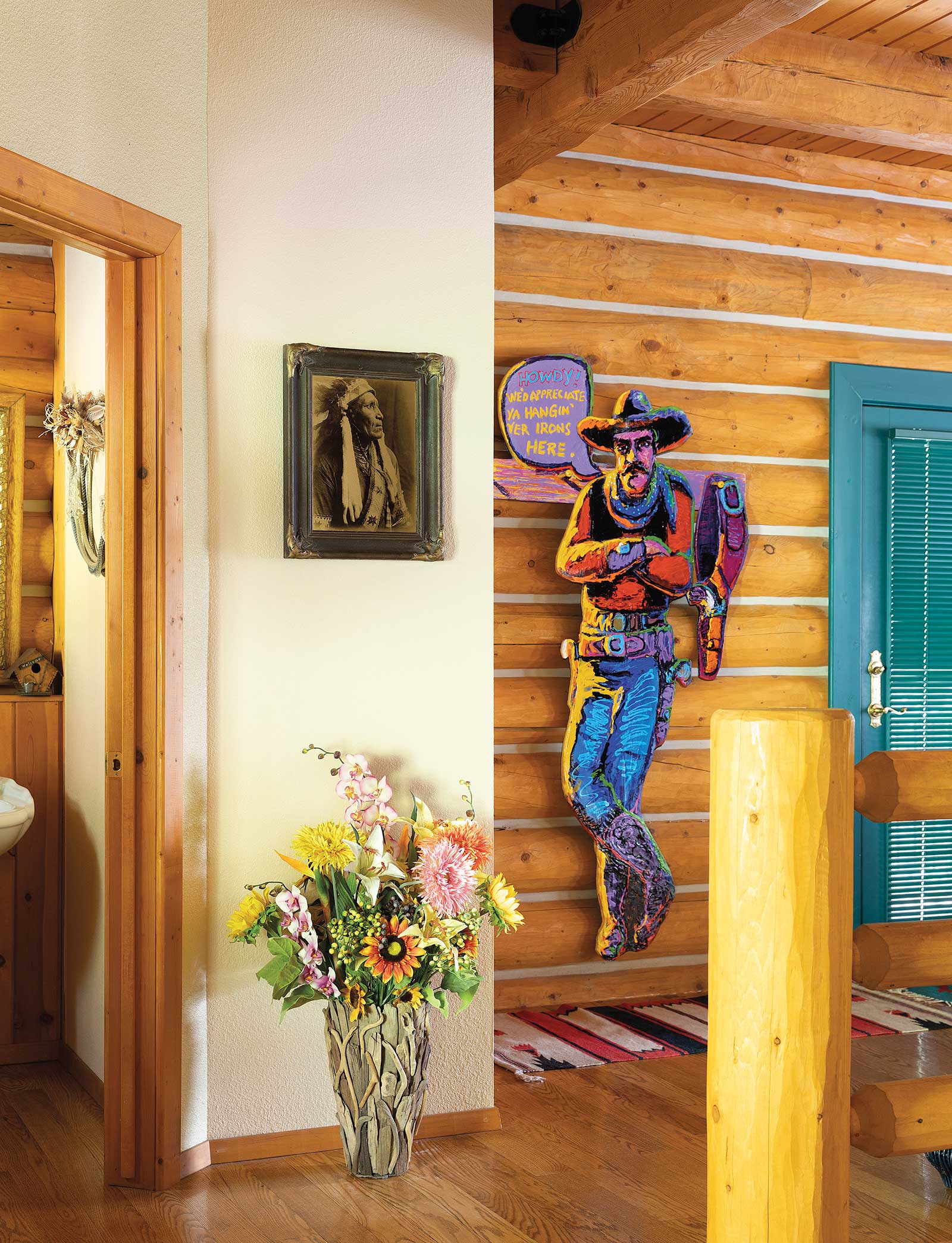 Raven Blanket, a photograph by Edward S. Curtis (1868-1952), is on the left and Larry Pirnie’s cutout Hang Yer Irons Here is on the right.
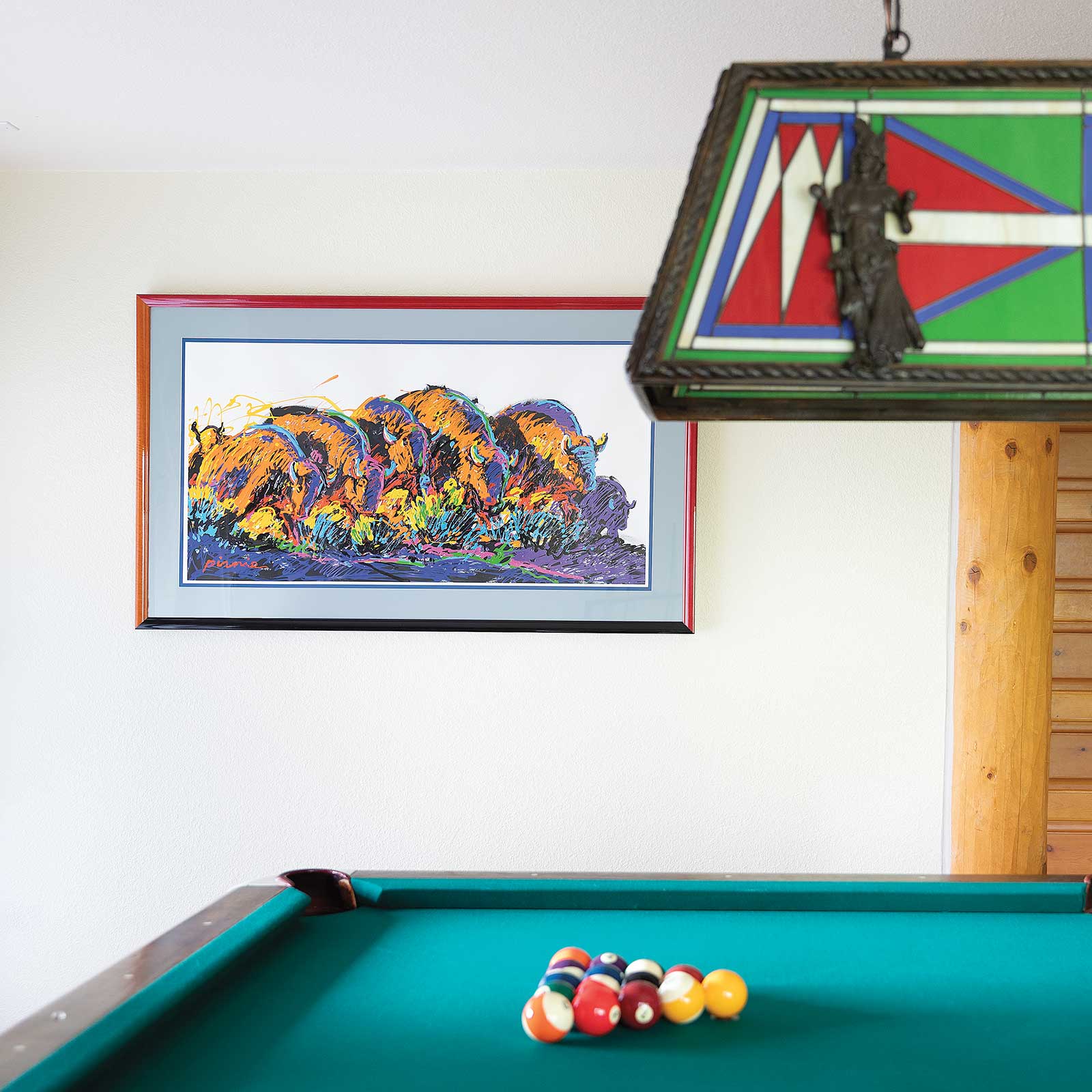 Behind the pool table is Brush Poppers by Larry Pirnie of Missoula, Montana. The shade on the light fixture is a parfleche design in stained glass by Peter Fillerup of Colorado.
Speaking of R. Tom Gilleon’s Red Sky, a painting of a teepee at sunset, Wes remarks, “I’ve always been taken by teepees and love looking at images of an encampment of them with the horses nearby.” Ironically it was a view of a Montana valley spread with over a thousand teepees that inspired Curtis to begin his monumental project.
Hanging next to the Gillion in the couple’s dining room is a photograph by Barbara Van Cleve, When Everything is Almost Perfect. He says, “It was taken on her family ranch, which was founded in 1880 on the slopes of the Crazy Mountains here in Montana. I took a photography workshop with her. I like color and she is 100 percent the opposite, working in black and white. We’ve bought three or four of her pieces.”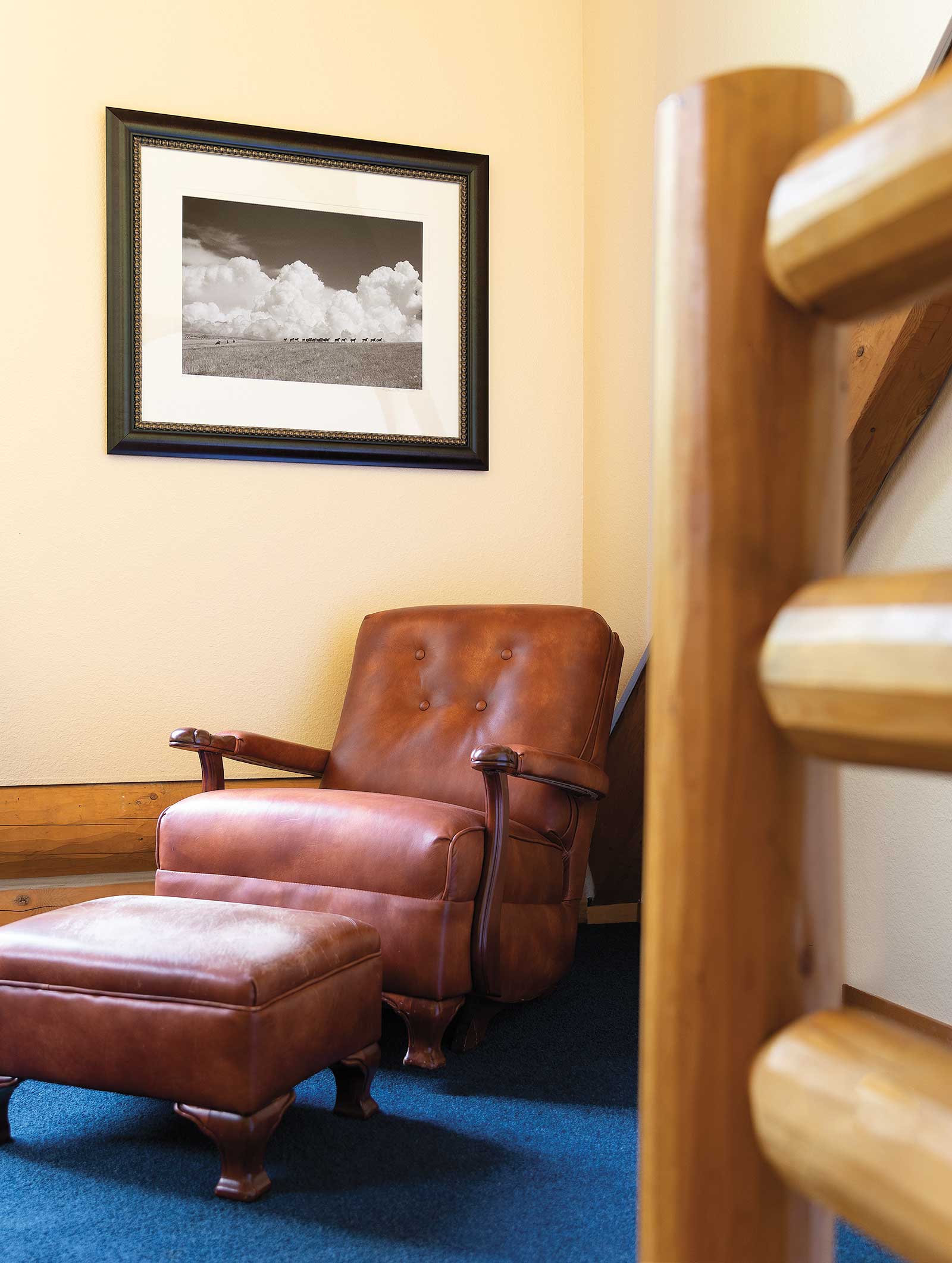 Montanan Barbara Van Cleve’s photograph Brewing Storm hangs above the easy chair.
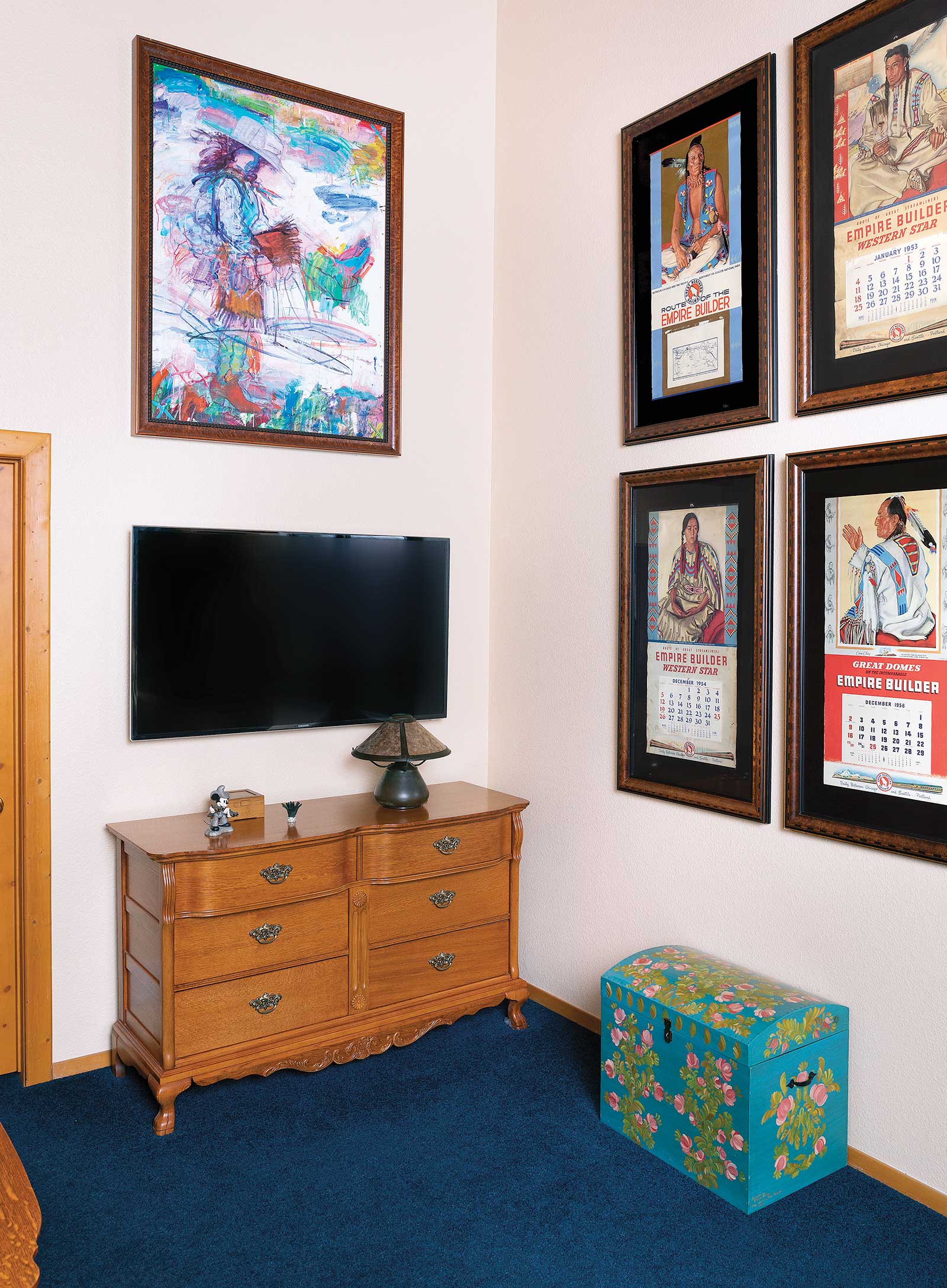 On the left in the master bedroom is Cowgirl Lasso by Walter Piehl. On the right are four calendars by Winold Reiss (1886-1953) commissioned by the Great Northern Railway to entice Easterners to come to Glacier National Park in the ’50s and ’60s.Color entered the collection in the first painting they bought, Evening Workout, by Larry Pirnie. Pirnie also left behind a career in advertising and moved with his family to Montana in 1978. “We have a lot in common with Larry,” Wes comments. “I met him when we were on the Garden City Ballet board. We bought Evening Workout in a gallery. Any time he has a show we walk out with something. He donates paintings to charity auctions. IfI think the bid isn’t high enough, I bid it up and sometimes end up buying the piece.”
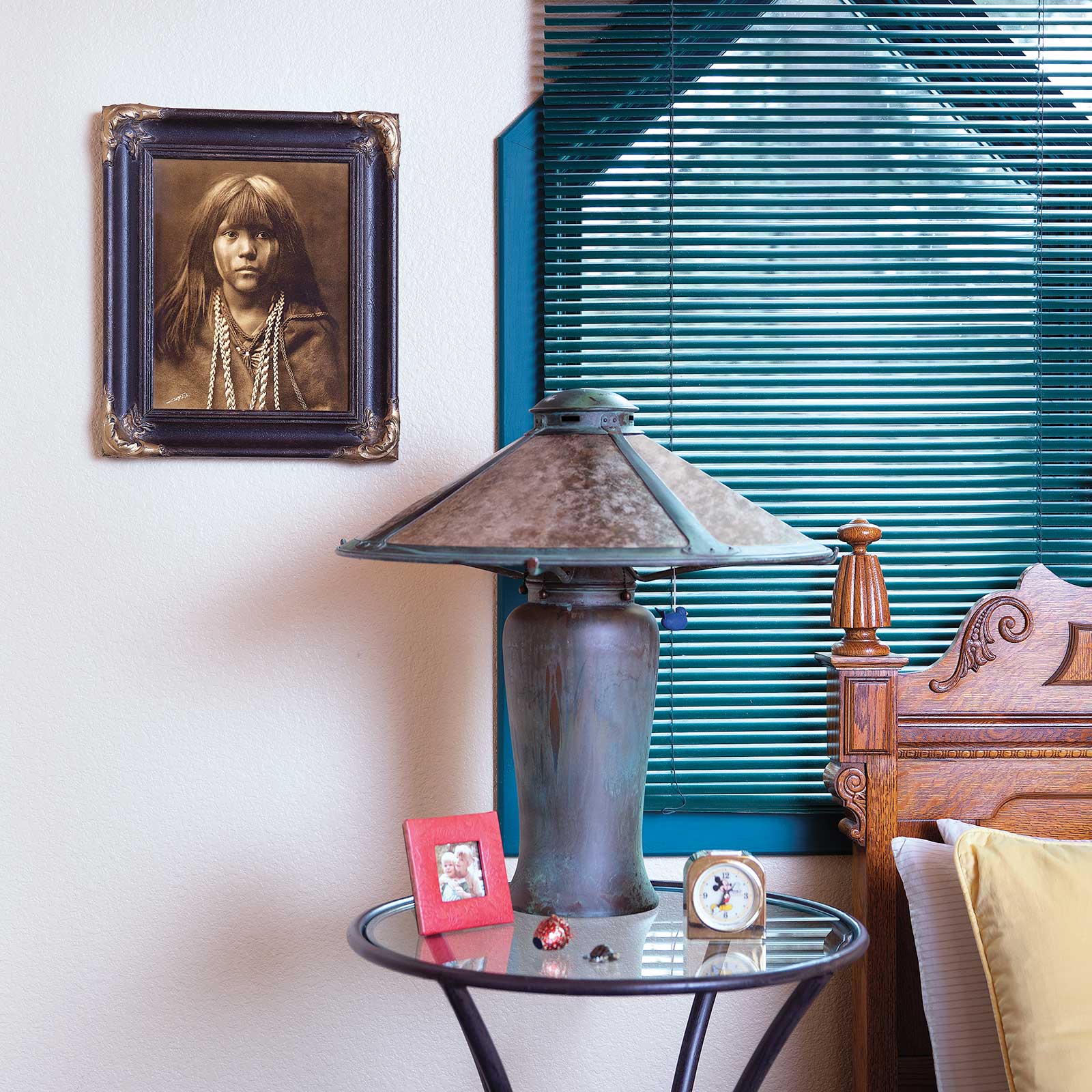 Hanging above the original mica and copper lamp is Mosa, Mohave Girl, 1903, by Edward S. Curtis (1868-1952).
Billy Schenck is another artist of the West known for his vibrant color. The couple commissioned him to paint a family portrait when they were in Santa Fe. Although Chris had her own hat, Schenck sent the family to a shop he knew to buy hats to wear when he photographed them.
“We’re self-made,” Wes comments. “The only consistent thing about me is that I’m inconsistent. If I like a piece I will try to get it. It’s one thing to think, ‘I wish, I wish.’ You have to get up out of your chair and buy it. Just do it! Art makes life worthwhile. We’re not here for a long time. We’re here for a good time.
“The art in our home and our offices is all about the creativity of the artists and how it makes people feel. Maya Angelou said, ‘I’ve learned that people will forget what you said, people will forget what you did, but people will never forget how you made them feel.’” —
Powered by Froala Editor