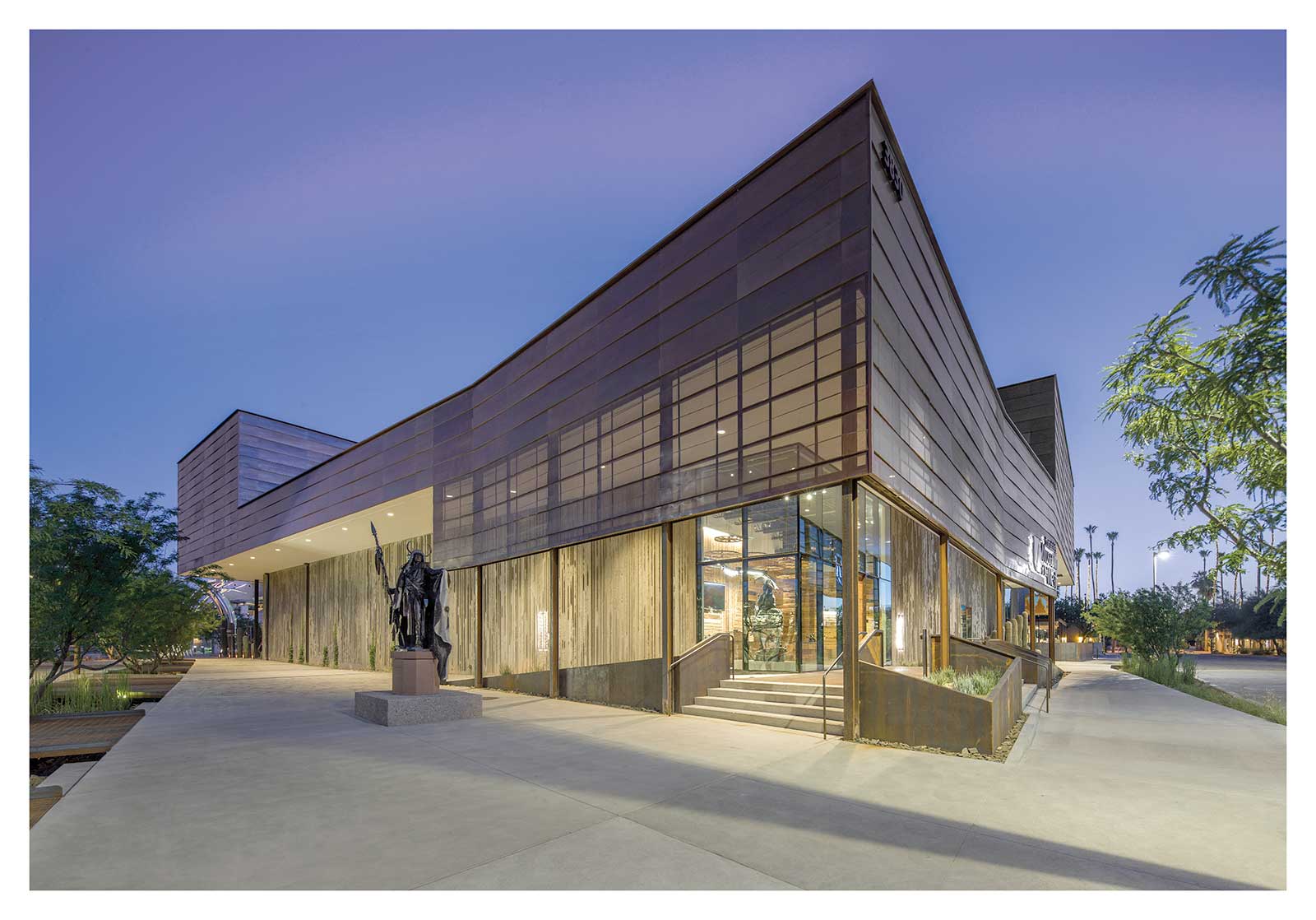
 Western Spirit: Scottsdale’s Museum of the West in Scottsdale, Arizona.
Dr. Tricia Loscher
Assistant Museum Director – Collections, Exhibitions & Research
Western Spirit: Scottsdale’s Museum of the West
Scottsdale, AZ
(480) 686-9539
www.scottsdalemuseumwest.org
What event (gallery show, museum exhibit, etc.) in the next few months are you looking forward to, and why?
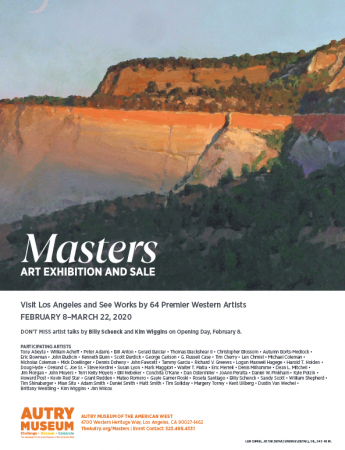
I’m looking forward to the LA Art Show in February of 2020. It is the event’s silver jubilee, and there will be exciting and thought-provoking international exhibits, programs, performance art and installations.
What are you reading?
Currently I’ve been looking at recent publications for children’s books. These provide an opportunity for young readers to explore diverse stories about artists through original art illustrations and engaging stories. The array of life stories helps to open doors for children to see into other worlds, exposing them to artists who may be lesser known. In particular, Julie Leung’s Paper Son: The Inspiring Story of Tyrus Wong, Immigrant and Artist tells Wong’s story by introducing 9-year-old Wong Geng Yeo (Tyrus Wong) who emigrated with his father from China to San Francisco. Wong worked for Warner Brothers as well as Disney animation studios, and his paintings that were inspired by Chinese Song Dynasty watercolor paintings served as the background models in the movie Bambi. These books serve also as another means to explore how to effectively create interactive exhibitions for children that tell compelling stories.
Interesting exhibit, gallery opening or work of art you’ve seen recently.
Interesting artwork I’ve seen recently is that of Scottsdale artist Robert McCall (1919-2010). I’m fascinated not only by his sci-fi paintings where he combines desert landscapes that include regions such as Monument Valley with futuristic spacecrafts, but also by his career as a production illustrator for Star Trek. He is credited with concept art for Star Trek: The Motion Picture where he created V’Ger. McCall worked with NASA where he created the Apollo Mission patches. He also did promotional artwork for 2001: A Space Odyssey.
What are you researching at the moment?
Currently, with our exciting Museum Square development moving forward, I am looking into ways to further bring SMoW into the community and researching how we can be more responsible and involved, allowing for effective dialogue with communities throughout our exhibitions. This is all the more timely given that our expanded facility will include a Western Region Institute to be dedicated to specific regional themes with corresponding Best of the American West permanent collections and supportive research information. SMoW will be the site for hosting regional, national and international conferences with attendees to be lodged in the new hotels within our Museum Square neighborhood.
What is your dream exhibit to curate? Or see someone else curate?
As we work a lot with historic and contemporary art and artists who create objects in clay that range from Hopi pottery to bronzes, I’m fascinated by the malleable adaptability of clay and its many uses from functional to fine art. This has led to my interest in the history of the car designer profession. I’d like to curate an exhibition on the lost art of clay car sculpting and pose fascinating questions such as “how does the designer know when to stop?” regardless of whether the final product is a car, vessel or sculpture. My thesis would be based on the history of Harley Earl who was recruited from his Hollywood customizing shop in 1927 to form the General Motors Art and Color section, the auto industry’s first full-time styling studio. His portfolio included a car with a saddle on its roof, designed for the Western movie star Tom Mix, along with his idea that the best way to design a car was to sculpt it in clay. It is reported that in 1927 when Earl formed the General Motors Art and Color section, the auto industry’s first full-time styling studio, form stopped following function for automotive designers. Although car designers today have computers and view their designs in 3D and virtual reality, they still create meticulously accurate clay models of full-size vehicles before putting a new design into production. This legacy began with Earl and his cars for the Hollywood movie stars. Along with the clay car models I’d integrate the movie posters that feature cars curated from our renowned Dr. Rennard Strickland Golden West Poster Collection.—
Powered by Froala Editor