In the exhibition Stretching the Canvas: Eight Decades of Native Painting, the Smithsonian’s National Museum of the American Indian in New York City challenges the traditional definitions of what people consider Native American artwork to be. Through nearly 40 paintings by 30 artists, the show explores how artists from around 1940 through today developed their own art that broke boundaries in many ways. First, these artists moved from the more familiar mediums of jewelry, pottery and basketry to painting, and second, they found freedom in their artistic visions.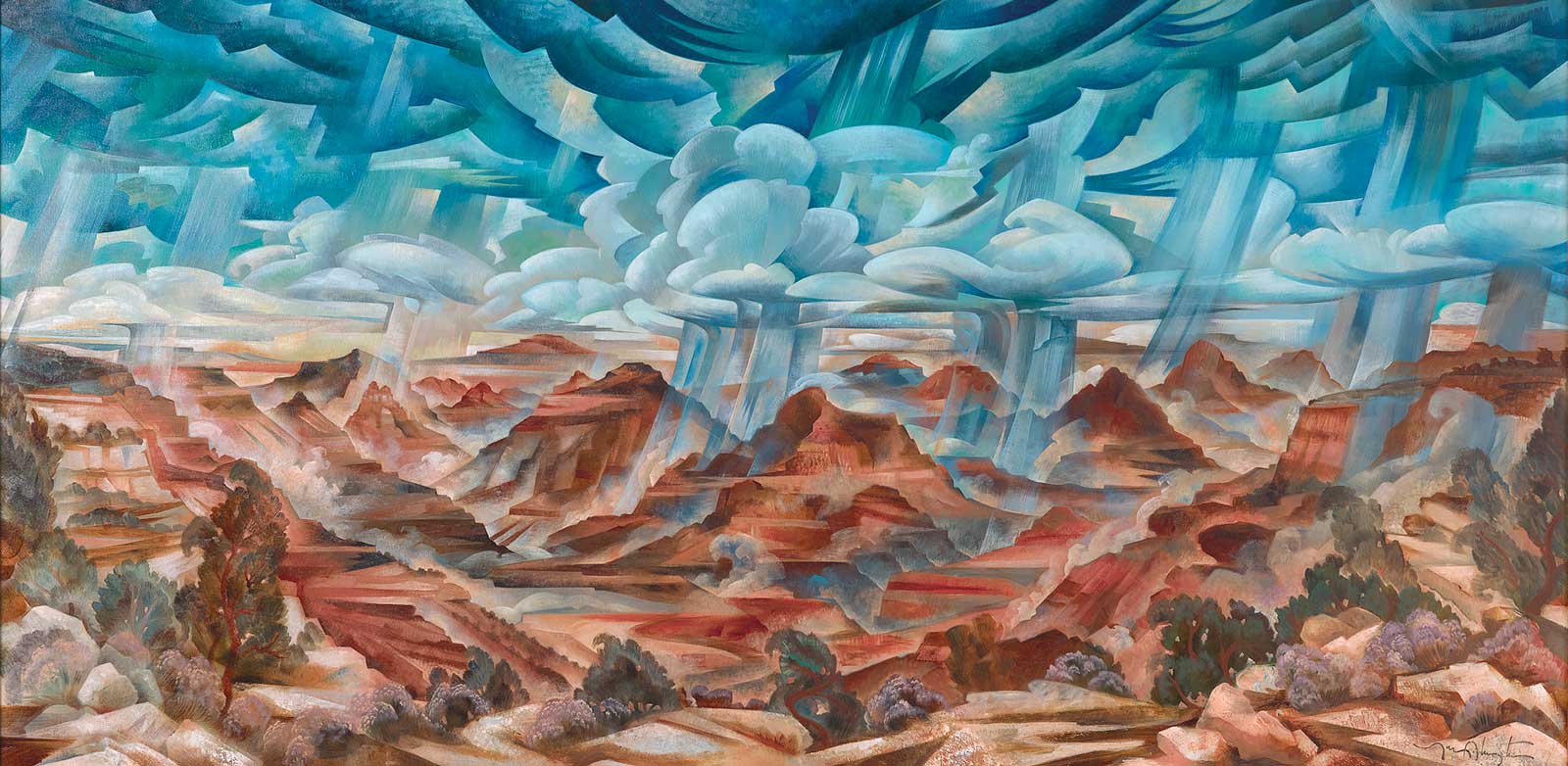 Tony Abeyta (Navajo), The Grand Canyon, 2015, oil on canvas. Museum purchase, 2015 (26/9620).
“It’s really quite amazing when you think about how stereotypes of Native people and romanticized or even caricatured notions have been imposed upon and controlled so many facets of our artistic expression,” says the museum’s director Kevin Gover (Pawnee). “Ironically, however, these structures of repression are often the impetus for the creation of many artists’ best work, because the desire to exist on their own terms is a potent form of resistence.”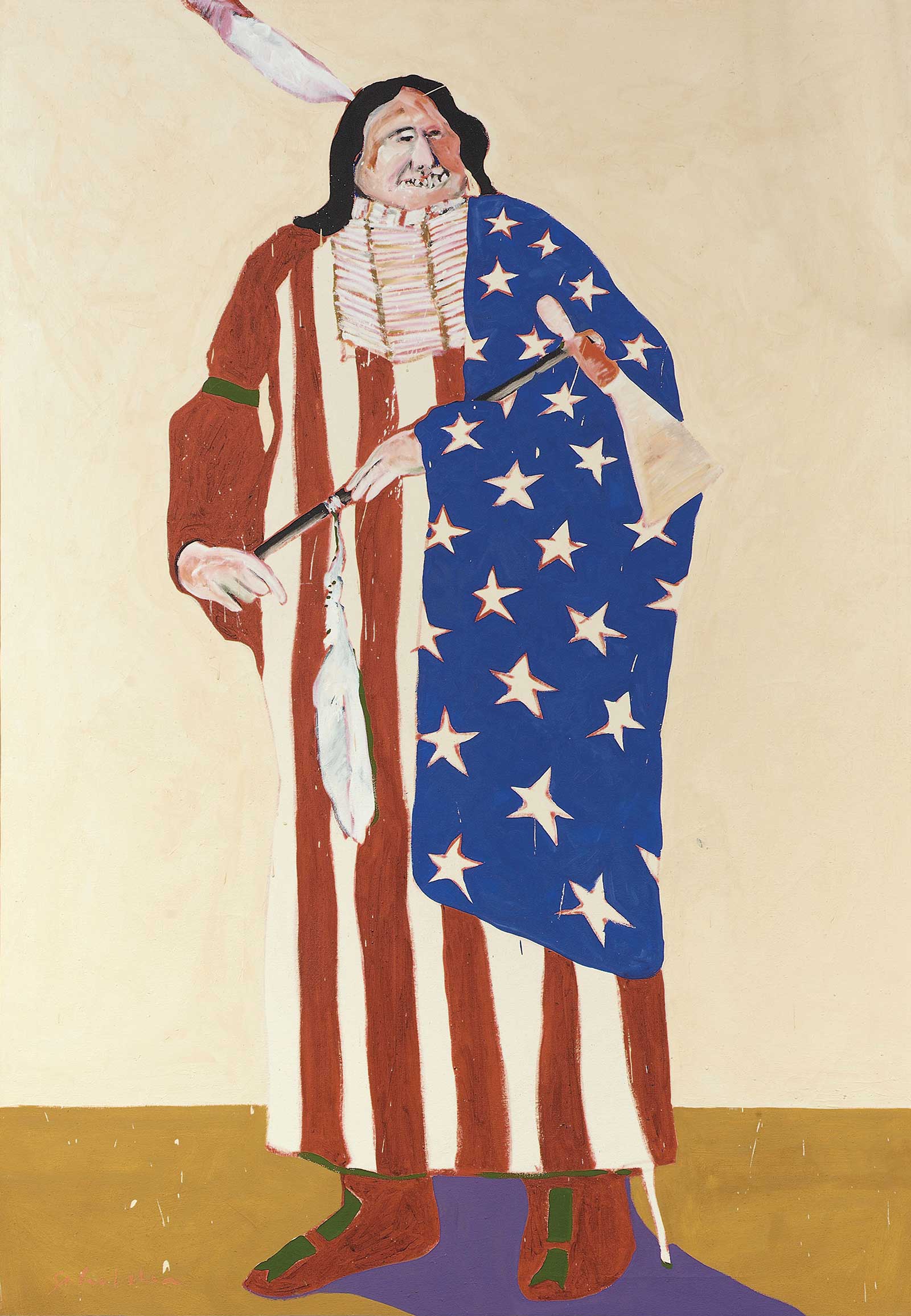 Fritz Scholder (Luiseño, 1937-2005), The American Indian, 1970, oil on linen. Transfer from IACB Headquarters collection, Department of the Interior, 2000 (26/1056).
The exhibition, which opened November 16 and is on view through fall 2021, is curated by David Penney, associate director of museum research and scholarship, with Kathleen Ash-Milby, Ann McMullen, Paul Chaat Smith and Rebecca Trautman. It pulls from the museum’s collection to highlight artwork that not only fits within Native American art, but also where it falls in American art history.
“Stretching the Canvas really stems from the generation of artists who began to look beyond the institutional structures and find what Native American painting could be,” says Penney. He adds, “We show the best of their work and how it’s conversant and equal to any American artist of that generation.”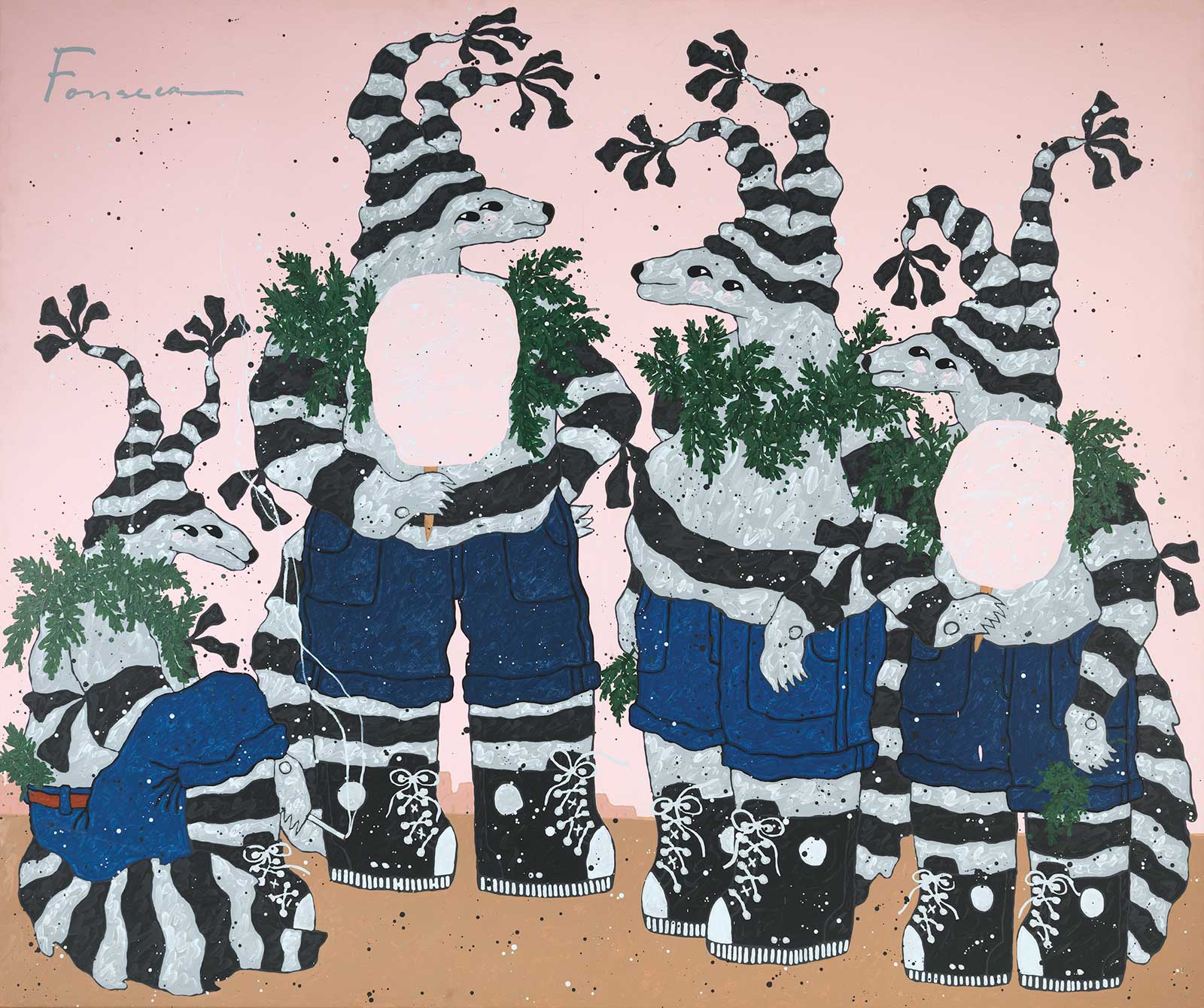 Henry Fonseca (Maidu/Native Hawaiian, (1946-2006), Dance Break, 1982, acrylic on canvas. Museum purchase, 2012 (26/8885).
The show will be divided into five categories that showcases some of the major trends across the artwork that will be on view. “Grand Ambitions” features the majority of the artwork in the show—these pieces do not fit within a specific category, but rather show the artists’ idiosyncrasies, as the museum explains. Included in the group is one of the museum’s most recent acquisitions, George Morrison’s White Environ #5, as well as pieces from Tony Abeyta, Fritz Scholder, Julie Buffalohead, Rick Bartow, Kay WalkingStick and Dick West, among others.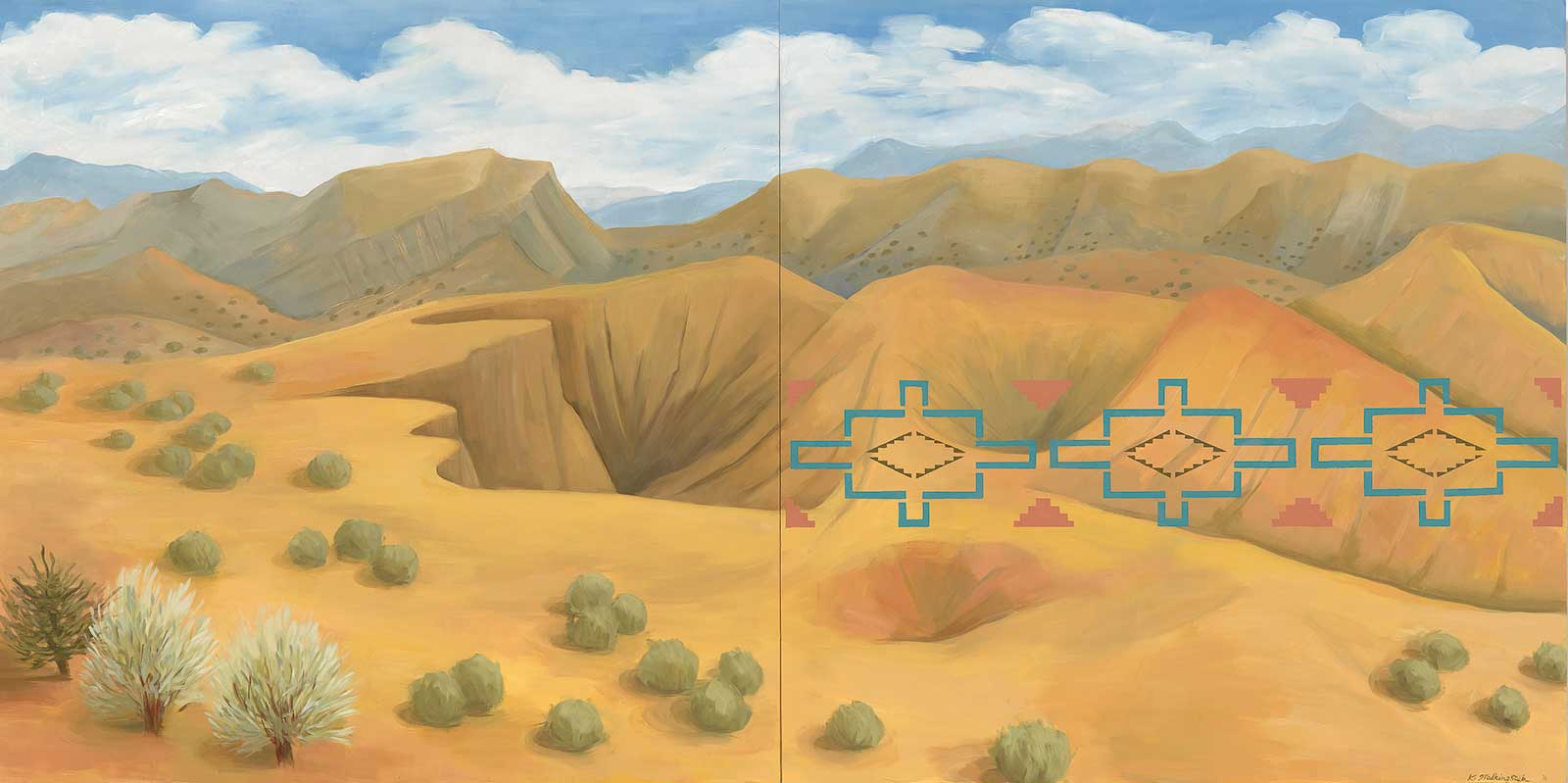 Kay WalkingStick (Cherokee Nation of Oklahoma), New Mexico Desert, 2011, oil on wood panel. Museum purchase with support from the Louise Ann Williams Endowment, 2013 (26/9250).
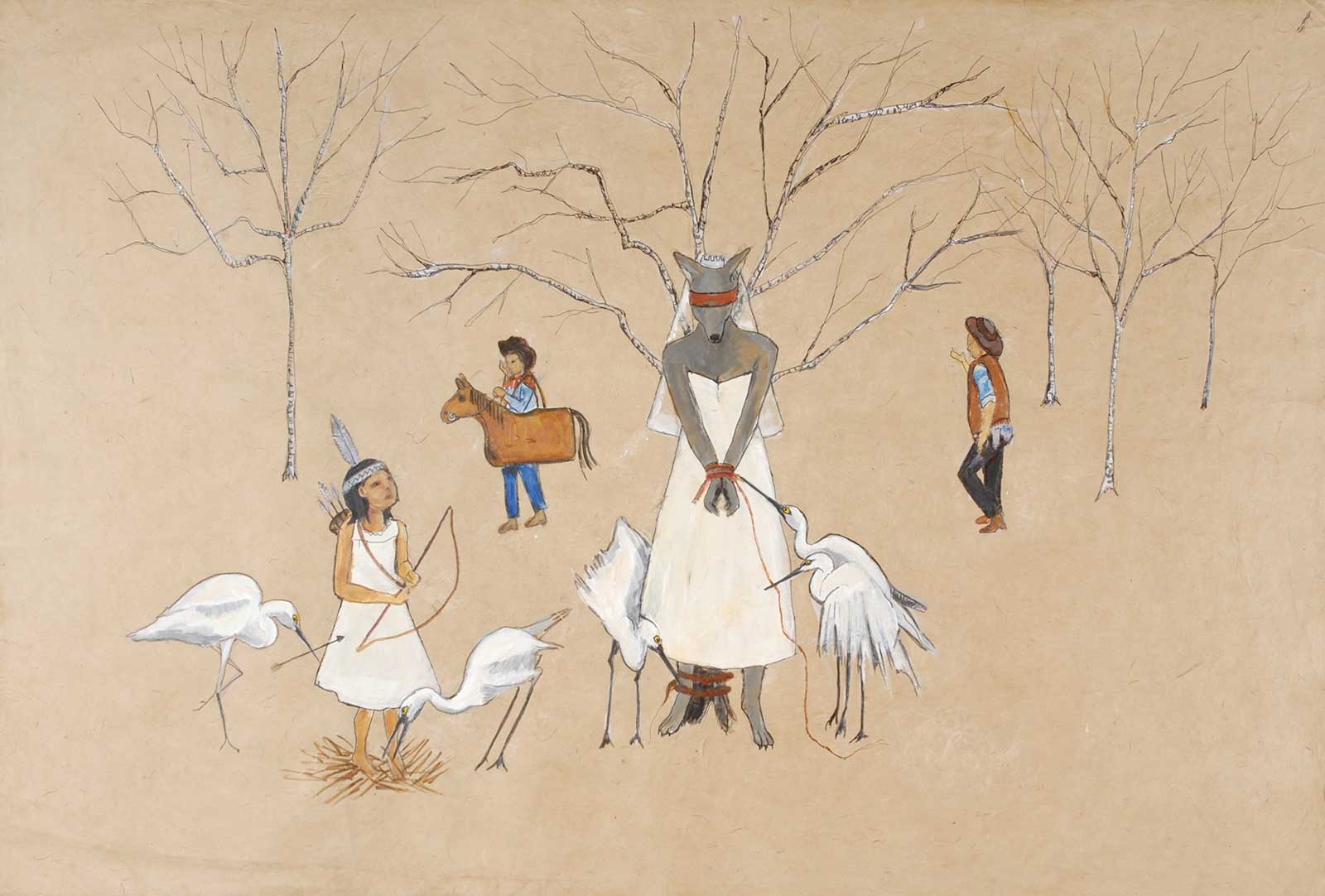 Julie Buffalohead (Ponca), The Confirmation, 2009, paint and pencil on paper. Museum purchase with support from the Ford Foundation (26/8613).
Other categories in the exhibition include “Training Ground,” which sheds light on the earliest teachings from Bacone College in Muskogee, Oklahoma, and Santa Fe’s studio style; “Reclaiming the Abstract,” a period after World War II where artists such as Helen Hardin and Pablita Velarde were moving from the flat style to a more abstract approach; and “Cosmopolitans,” which includes artwork that was created while Native American artists lived in New York City. In the latter segment is WalkingStick’s Homage to Chief Joseph (Chief Joseph #1) that depicts the Nez Perce leader “without overt Native references or symbols,” the museum explains.
Rounding out the show is the “Indian Pop” category that developed after 1962 when the Institute of American Indian Arts (IAIA) in Santa Fe was founded. Scholder taught graphic design and painting at the school. His work along with contemporaries such as Mateo Romero, Kevin Red Star and Dan Namingha will be included in the exhibition. —
Stretching the Canvas: Eight Decades of Native Painting
Through fall 2021
National Museum of the American Indian,
Alexander Hamilton U.S. Custom House, One Bowling Green, New York, NY 10004
(212) 514-3700, www.americanindian.si.edu
Powered by Froala Editor