Tom Nygard is an avid outdoorsman and sportsman whose interests are reflected in his collection of art. There is Ott Jones’s bronze, Claim to Fame, modeled on his bird dog Gus and a sculpture of one of his favorite pastimes, the bronze, Bonefish, by Hollis Williford (1940-2007). The collection more importantly reflects his 43-year career as a prominent dealer in the historic art of the West. 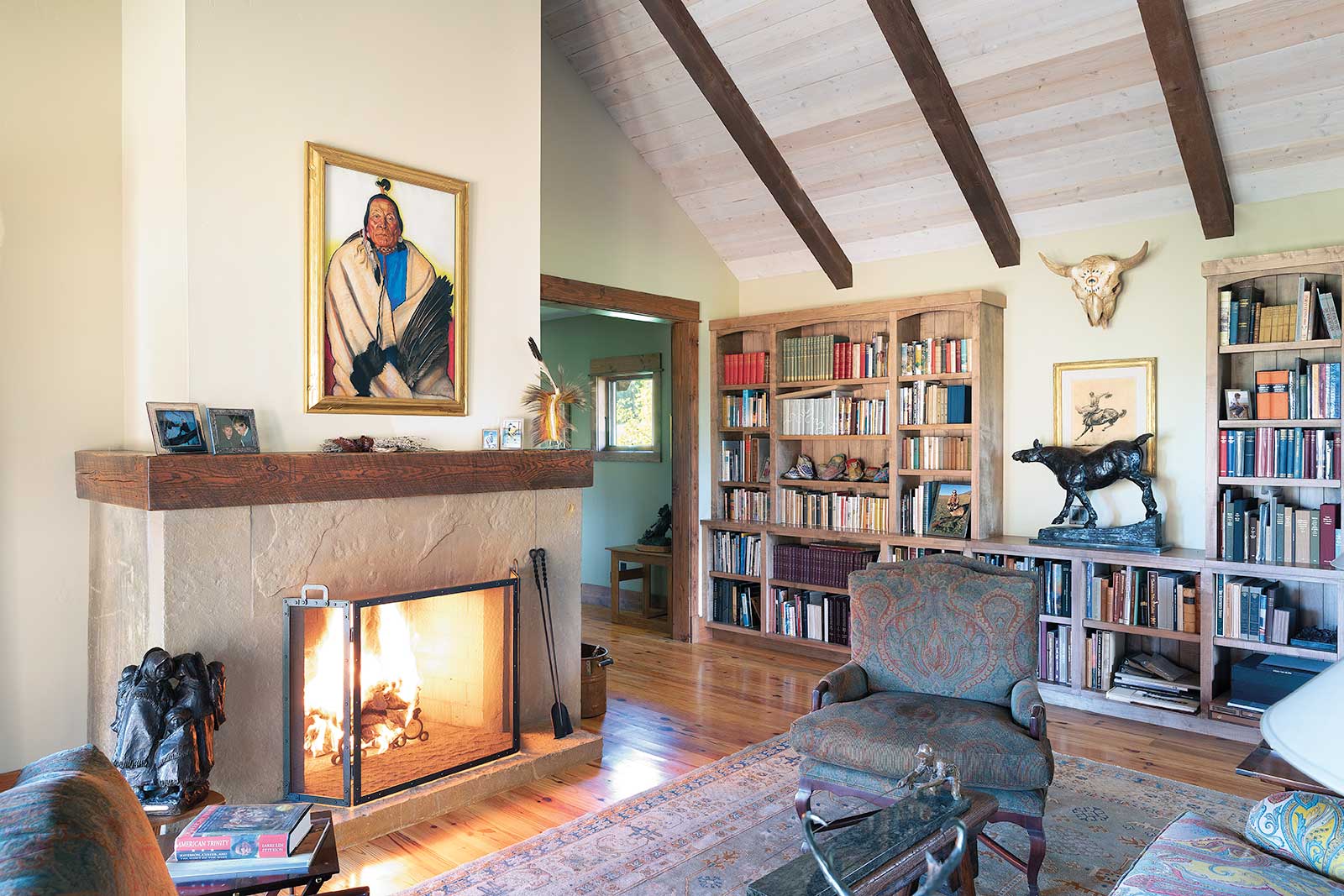 On the hearth is Richard Greeves’ bronze, Mothers. Above the mantle is a pastel and tempera, Big Face Chief, by Winold Reiss (1886-1953). On the mantle is a Northern Plains Hair Roach of deer hair, deer hide, deer bone and feather. On the bookcase wall are, top to bottom, Buffalo Skull, a buffalo skull decorated with an Indian shield and signed by Olaf Weighorst (1899-1998); Tearing It Up, charcoal and graphite on paper, by Will James (1892-1942); and George Carlson’s bronze, Frivoles. On a book shelf is a collection of Northern Plains beaded moccasins. In the foreground is a bronze, Bonefish, by Hollis Williford (1940–2007).
“There are noteworthy things that are the remnants of dealing,” he explains. “There are things that meant something to me, that didn’t sell, or
I didn’t try hard to sell. There are goodly remnants of deals I’ve done and nice things that have stayed.
“I have about 15 paintings by Donald Teague, for instance. He’s not in favor right now except in Carmel where he lived for 50 or 60 years. I published a book on his work in 1988 and recently gave the remaining books to the Carmel Art Association.” Teague (1897-1991) won silver and gold awards from the American Watercolor Society and was a renowned illustrator before turning full time to painting.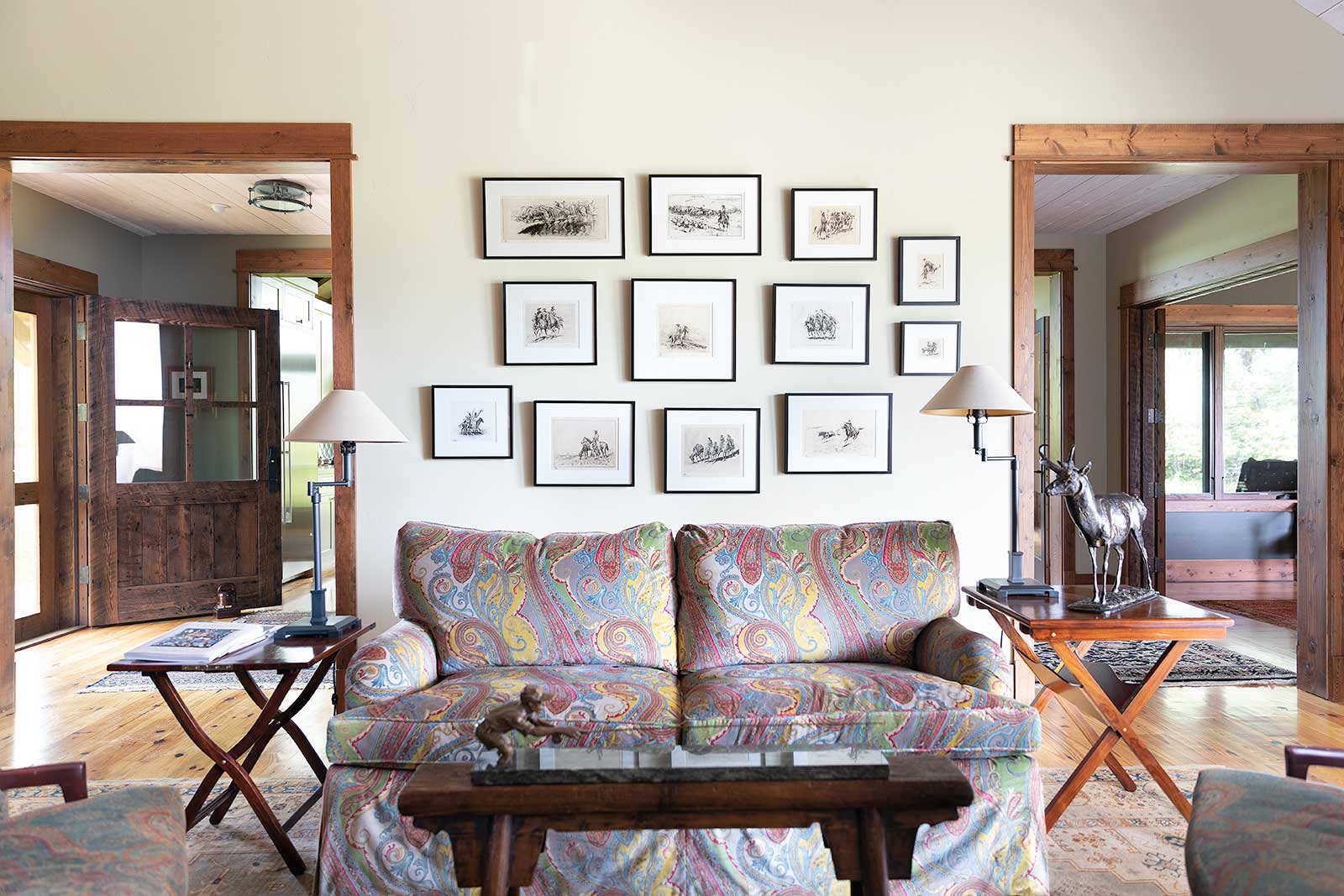 Above the sofa are signed and remarqued etchings by Edward Borein (1872-1945). The bronze to the right is Antelope by Mike Barlow. In the foreground is a bronze, Bonefish, by Hollis Williford (1940–2007).
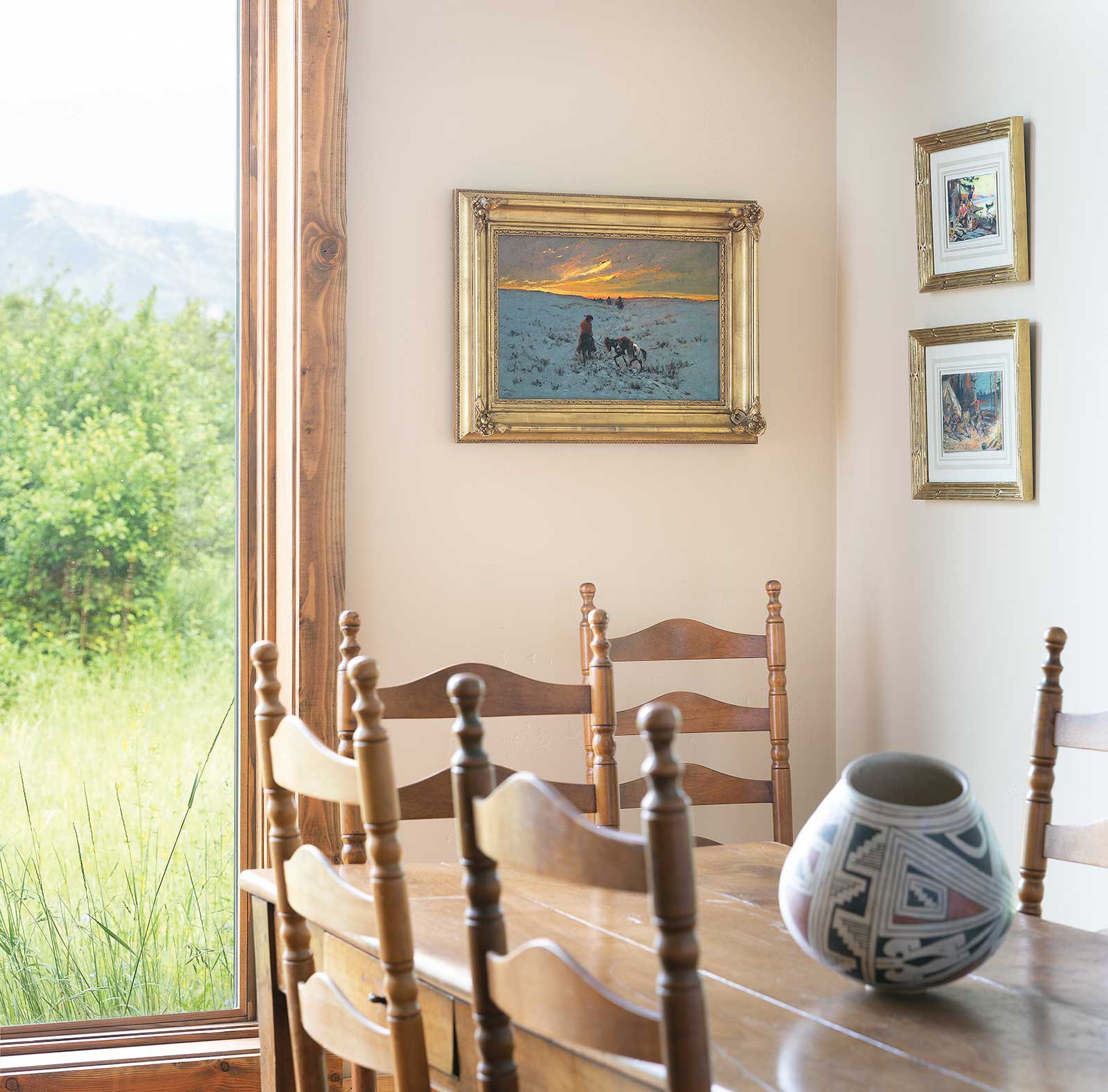 Winter Passage, Ute Reservation 1902, oil on canvas, by Frank Paul Sauerwein (1871-1910), hangs in the dining room. On the side wall are two watercolors, Losing the Canoe and The Way it Wasn’t, by Philip R. Goodwin (1882-1935). A Casas Grande polychrome jar, circa 1100-1200, rests on the dining table.
Prominent in the collection are signed and remarqued etchings by Edward Borein (1872-1945). Artists often added a small original drawing to the margin of their prints. Borein’s remarques are usually a horse and rider headed either left or right. Nygard points out one of his prints (Trail Boss in the center of the wall) on which Borein drew the entire composition of the print in the remarque. “Borein was a good friend of Charlie Russell, my favorite,” he says. “His watercolors are exquisite, but I only collected his etchings of the Northern Plains and only remarqued prints.”
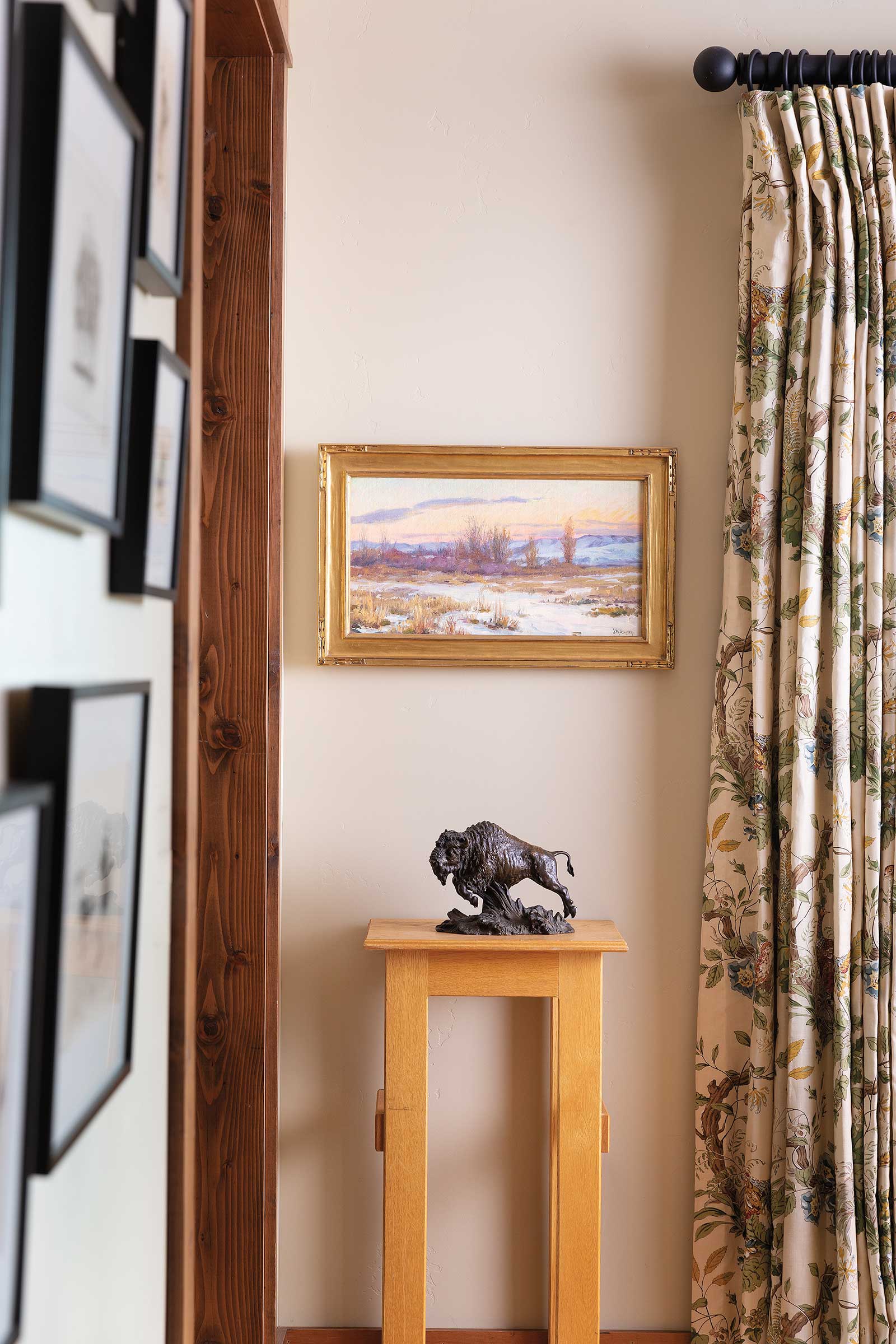 An oil on canvas, Foot of Custer Battlefield, by Joseph Henry Sharp (1859-1953), hangs above Buffalo, a bronze by Carl Kauba (1865-1922).
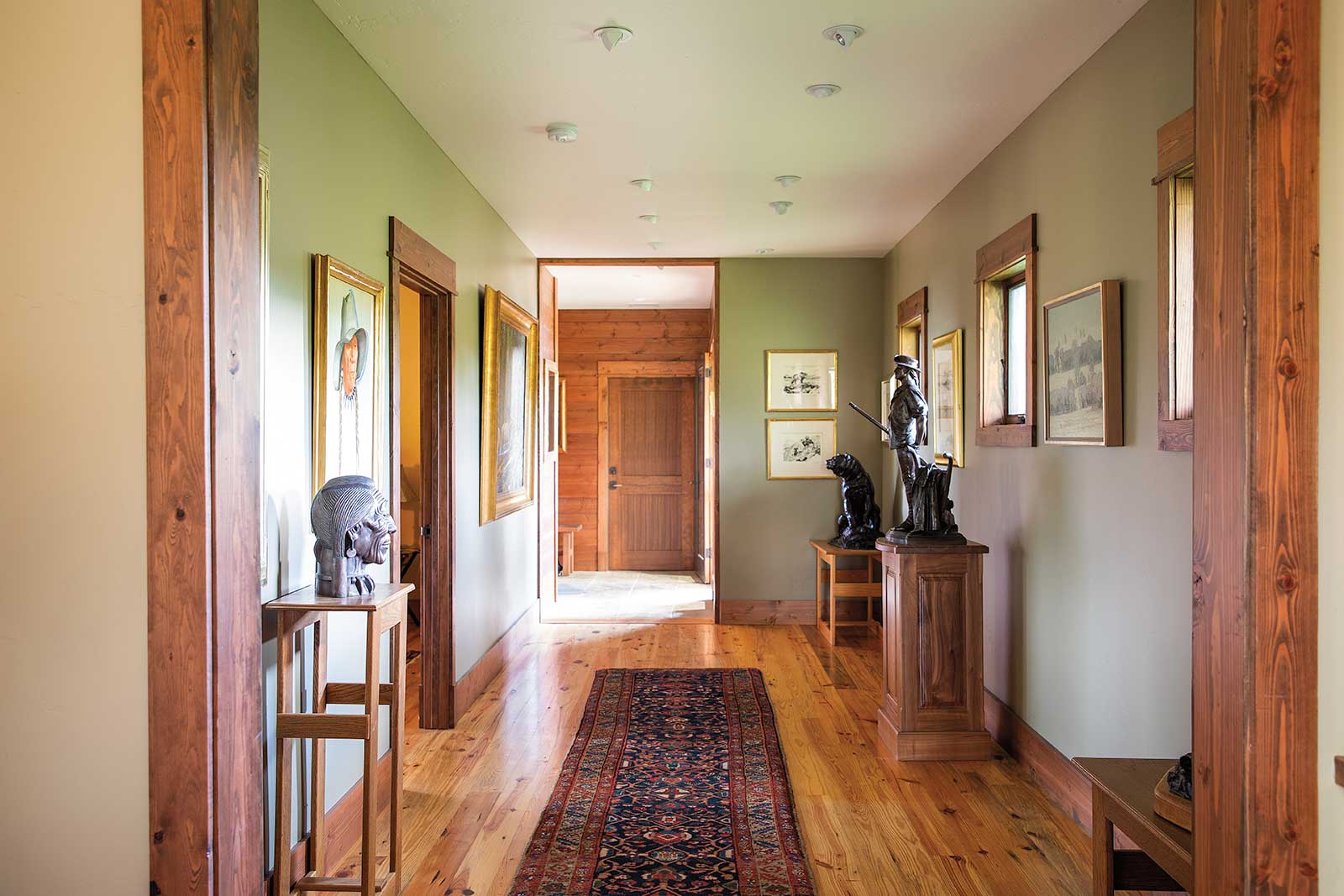
An unusual arrangement in his home includes two pastels by Winold Reiss (1886-1953) and a bronze by his brother Hans Reiss (1885-1968). He tells the remarkable tale of Winold arriving in Browning, Montana, the headquarters of the Blackfeet Indian Reservation, in the middle of a blizzard and asking for a room in the hotel near the train station. The clerk told him he could share a bunk with a “cowboy” upstairs. Winold climbed into the bunk and put his money roll under his pillow. When he woke up in the morning the “cowboy” was gone but his money roll was still there. He got up and looked out the window to see several Blackfeet standing below. Reiss wrote, “I went down at once, intending to make their acquaintance without knowing how, but, acting on impulse, I walked up to the tallest brave and slapped him on the back to his utter astonishment. Another, a half-breed who spoke English, asked what I wanted. I said I had come all the way from Europe to make the acquaintance of my Indian brother. The interpreter’s explanation brought a handclasp, smile and nod that passed all down the line.”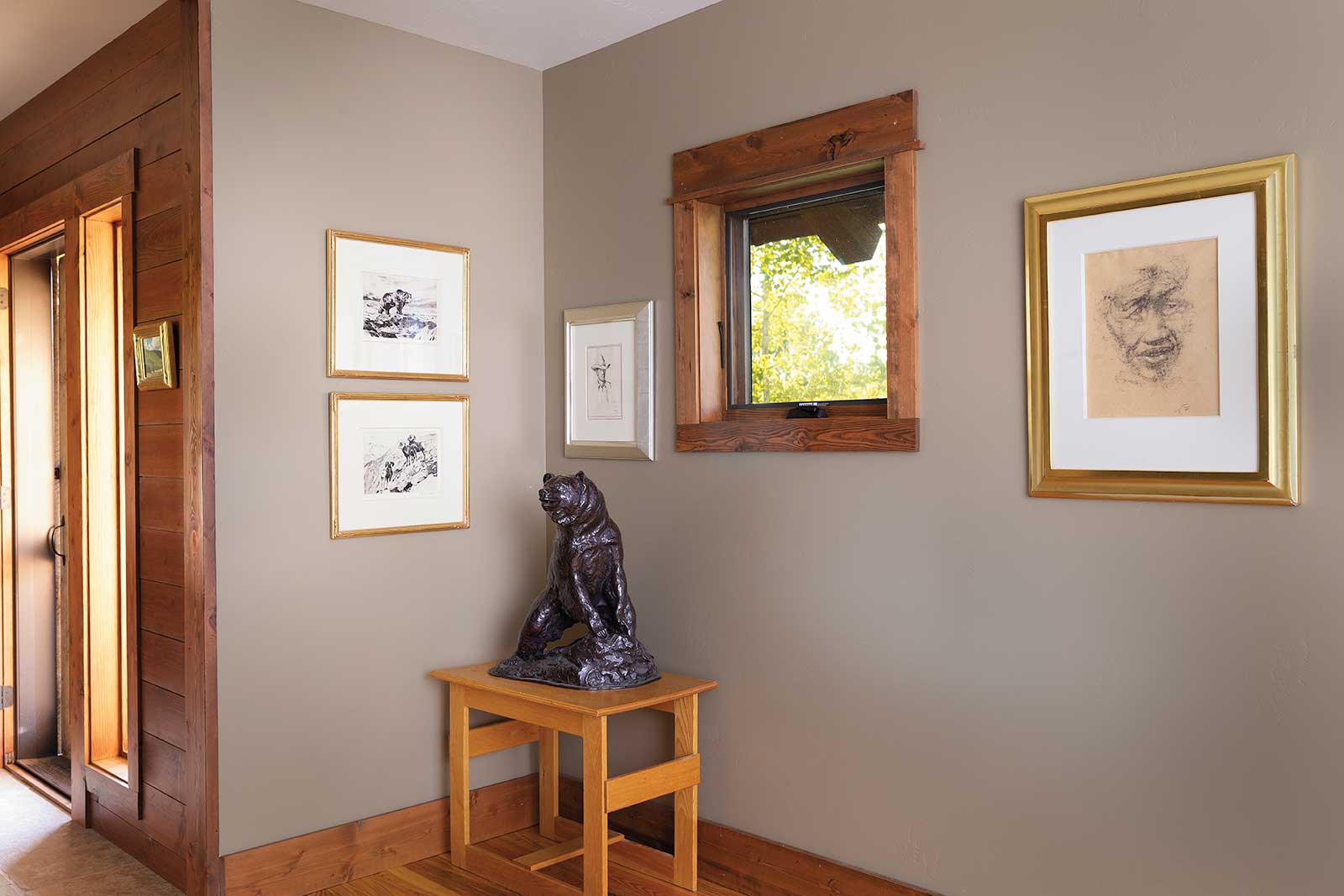 On the left are two drypoint etchings, Ivan, top, and Cliff Dwellers, by Carl Rungius (1869-1959). On the side wall are, from left, The Texan, charcoal on paper by William Herbert “Buck” Dunton (1878-1936) and Indian Head, charcoal on paper, by Nicolai Fechin (1881-1955). The bronze is Undertaker by Mike Barlow.
The 6-foot Blackfeet whose back he had slapped was Turtle who would become his life-long friend. “Reiss would paint him about a dozen times,” Nygard relates. “In this portrait he’s wearing a bear-claw necklace. He’s reputed to have fought a bear and won! Hans Reiss carved and modeled portraits of the Blackfeet tribe, forming bonds of close friendship in the process.”
Above the mantle in the living room is Winold’s original pastel, Big Face Chief, painted for the Great Northern Railway and reproduced in its calendar. 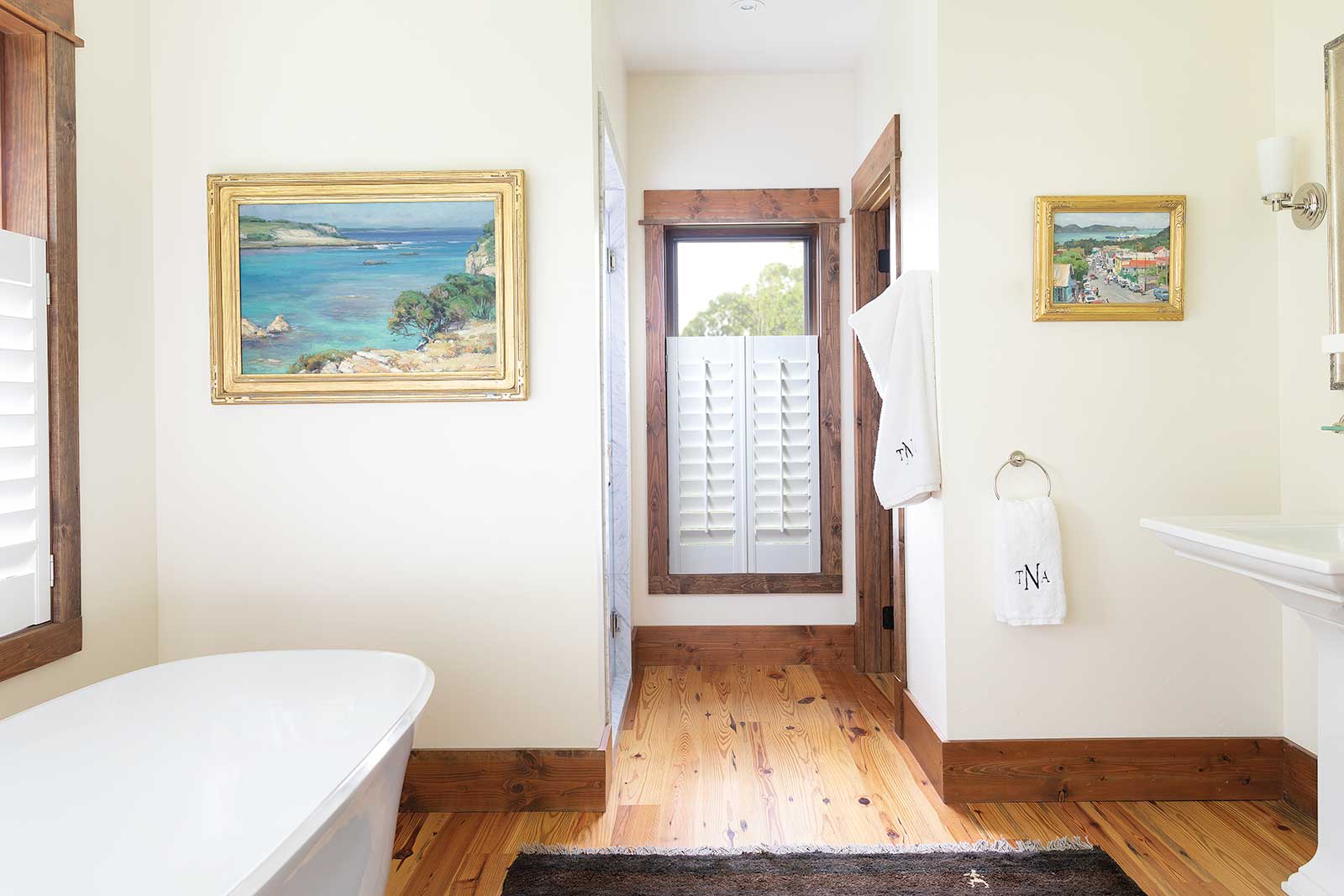 There are two oils on canvas by Clyde Aspevig in the bathroom: Long Bay—Antigua on the left and St. John—Antiqua.
Two unusual oils by Clyde Aspevig hang in the master bathroom. Aspevig, known for his scenes of the Rockies, was first represented by Nygard in 1978. A client wanted Aspevig to paint his home in Antigua in the early 1980s in trade for spending a couple of weeks there. Aspevig and Nygard and their wives went to the Caribbean island and returned with a number of paintings. The client chose what he wanted and Nygard staged an exhibition of the other paintings. Aspevig gave him the choice of two studies.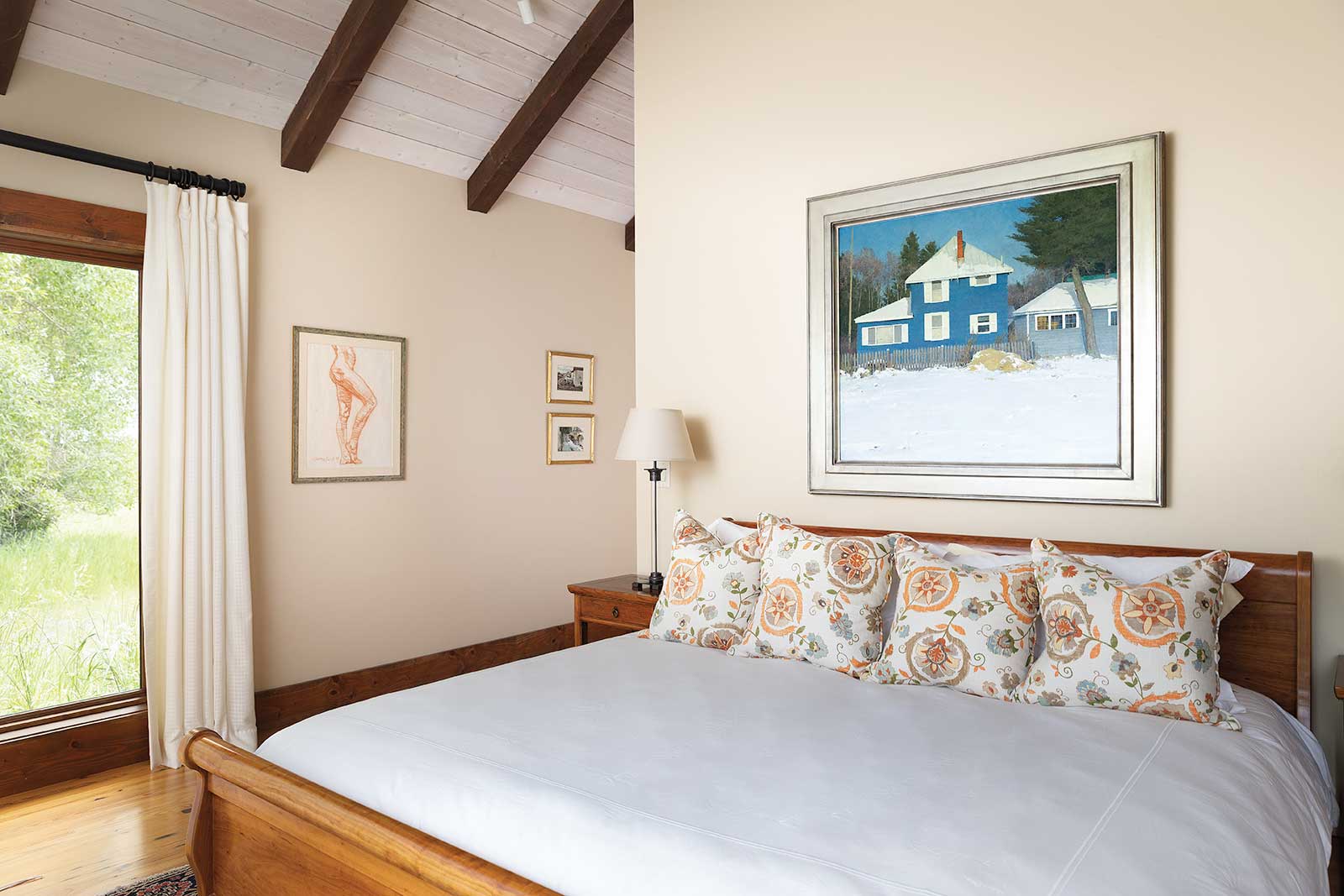 On the left is George Carlson’s conté crayon paper, Study of Legs. Next to it are two watercolors by Donald Teague (1897-1994), Rain over Cordoba, top, and Wash Day on the Seine. Above the bed is T. Allen Lawson’s oil on linen mounted on board, Inheritance.
He recounts that in the beginning of his gallery career the bigger name artists wouldn’t show their work with him. “I said to my then partner, ‘Let’s do a show of miniatures!’ The artists were willing to send a 6-by-9 or an 8-by-10. That got our foot in the door. We did the show for three or four years and then began getting what we wanted. We had limited edition wildlife prints from Bill Webster’s Wild Wings. I had gone to school with his son, Billy, and we were able to get prints at dealer’s cost. We also had prints from Mill Pond Press and Greenwich Workshop. We gradually moved from wildlife to the Western end of things and then to historic Western. Today my inventory is 90 percent historic.”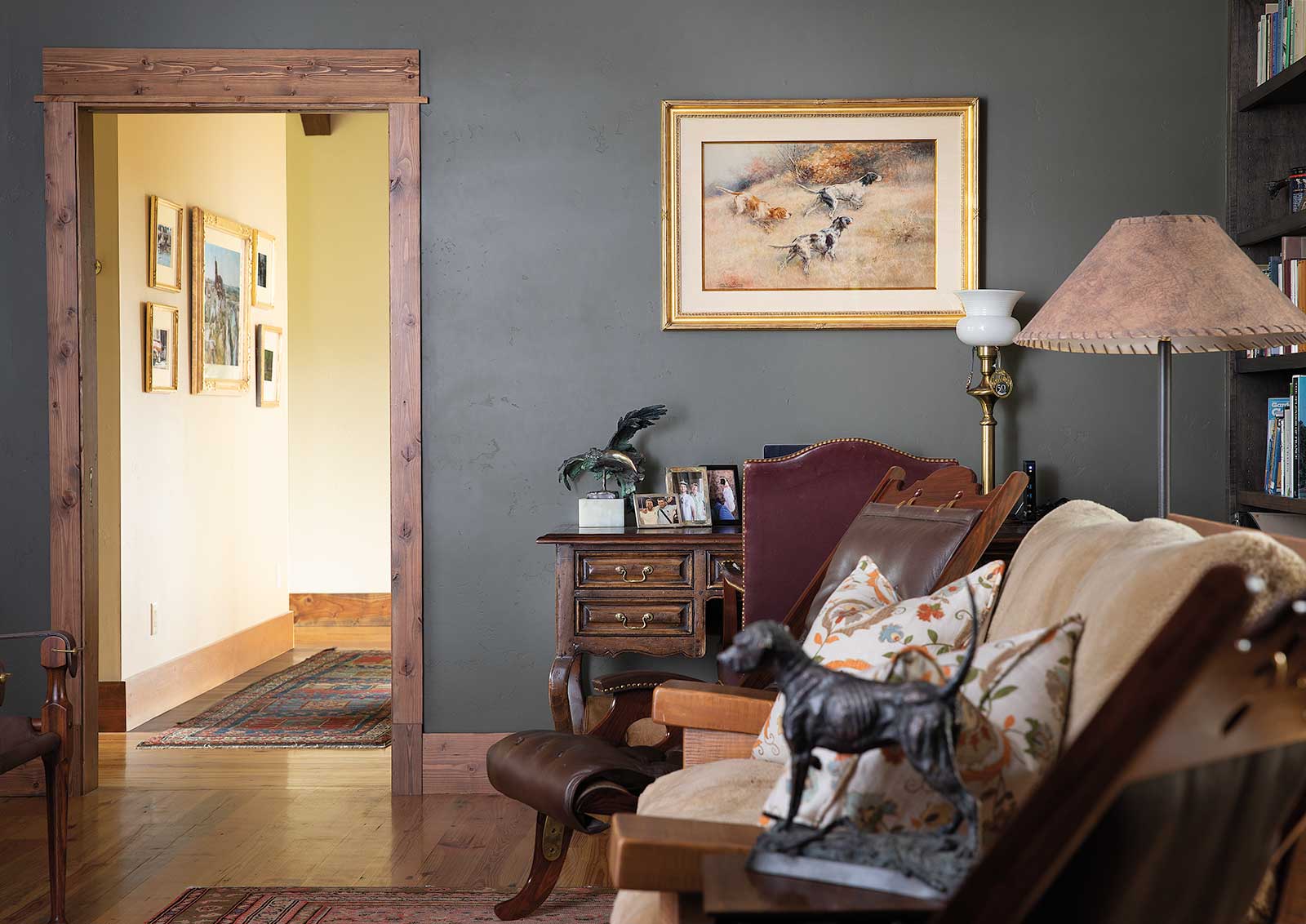 In the hall are watercolors by Donald Teague (1897-1994)—top to bottom, left to right—Cutler Harbor—Honfleur, Paris Corner, Toledo, Spain, A Canal in Chiogia and Berkeley Square. Above the desk is a watercolor, Three Setters on Point, by Edmund Osthaus (1858-1928). On the desk is a bronze, Toucan, by Sandy Scott and in the foreground is a bronze, Claim to Fame, by Ott Jones, a sculpture of one of the collector’s dogs, Gus.
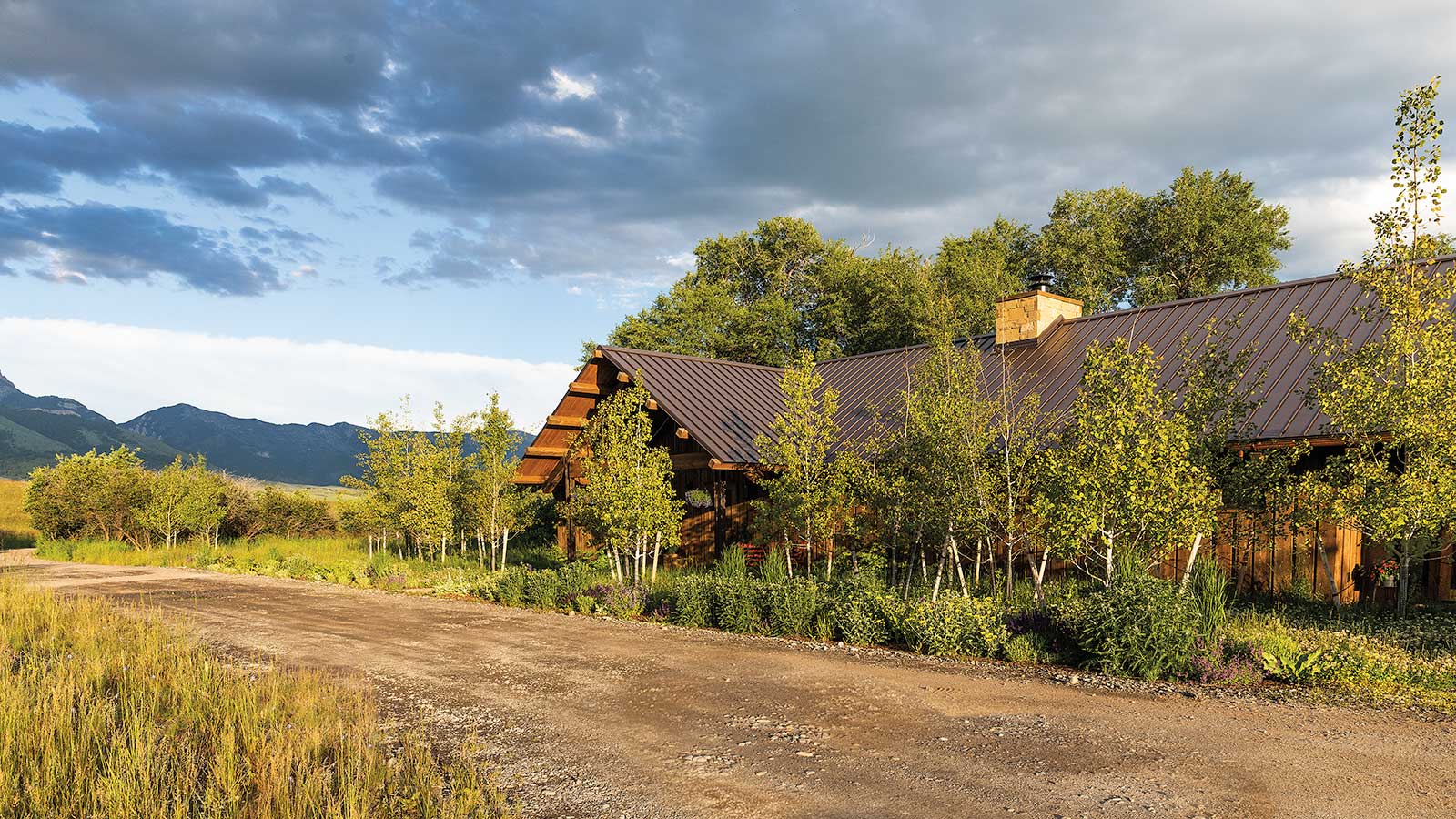 Tom Nygard’s Montana home.
He says, “When you live with art at work and don’t have it at home, you miss it. When you live with it at home and don’t have it at work you also miss it. I’m now working from home and live with it. As a dealer I’ve learned never to buy something I didn’t like because if it didn’t sell I’d have to live with it. If you go through life without art you don’t know what you’re missing.
“My father graduated from West Point and retired after 22 years as a lieutenant colonel. When I was growing up and didn’t know what I wanted to do he told me ‘Find something you love and you’ll never work a day in your life.’” —
Powered by Froala Editor